Gaming
My Top 10 Games of 2025 (GOTY)
My Top 10 Games of 2025, which includes my “B-Side”, Honorable Mentions, and favorite Remakes/Remasters of the year.
 UnexpectedGames
Just a friendly bear who works in financial reporting that would rather be playing, writing or talking about video games. https://twitch.tv/unexpectedenemy

My Top 10 Games of 2025, which includes my “B-Side”, Honorable Mentions, and favorite Remakes/Remasters of the year.

2025 was *gestures wildly at everything* A LOT. In 2024, the games industry was still in dire straits, but I’m here to report that things continue to look bleak. For an industry and medium that I love and adore, it’s difficult to feel good about it all when the people responsible for all of my favorite games are at the whims of an unjust, chaotic business model that just couldn’t care less about anything but the bottom-line. With that said, arriving at my Top 10 this year was just as hard of an endeavor as it was in previous years, if not more challenging. My Top 10 would have looked drastically different this year had I made time for particular games (hence the inclusion of my “B-Side”). I’ve said this before, but I do not put a lot of stock into making lists. It’s just a fun thing to do that’s been normalized by the gaming community at large and the process of making lists helps me organize my thoughts, so it’s a win-win for everyone.
I should mention that I’m still generally frustrated with how I write about video games. I continue to find myself “reviewing” games in a traditional sense, but I don’t rate games and give them scores nor do I have any intention to publish a review on Metacritic, for example. I often try to explain a game’s mechanics, but sometimes it’s relatively surface-level. Because I try to write about every game that I play/finish, I simply don’t have the time/energy to go “all-in” on every game, so to speak. When I read reviews, opinion-pieces and guides on various sites, I feel like I’m not being thorough, detailed or analytical enough, which then sends me in an imposter syndrome spiral where I question myself and ask, “What the fuck am I even trying to say anymore?” I do enjoy discussing a developer’s pedigree; what the studio worked on previously and how they likely arrived at their latest release, for example. I’m also still a completionist at heart, so I typically write about what I accomplished in a game from someone who has 100-percented more games than they would like to admit.
Finally, I try my best to incorporate personal stories for my writeups when I feel it’s appropriate. This year, for example, my husband and I visited and stayed at the tallest lighthouse on the west coast in the United States, and this was shortly after I finished Double Fine’s Keeper (a game about a sentient lighthouse). I also traveled to Louisiana/New Orleans for the first time this year, which made me reflect on my time spent with South of Midnight a bit more. My thoughts and feelings about certain games can change on a daily/weekly basis, so take the ordering of things here with a massive grain of salt. Similar to MinnMax’s “The Two Tens“, I continue to make Top 20s (10 Honorable Mentions along with the Top 10 games proper). To save time, I also copied what I had originally written for most of the games listed below, but with some slight editing. If you want to read what I had originally written about the following games in more detail during Q1, Q2, Q3, and Q4 of 2025, you can read about it here, here, here, and here, respectively! Also, if you want to read Part I of my companion piece to this post, you can find my overall thoughts on gaming in 2025 here. If you’d like the “TLDR”, scroll to the bottom of this post. So, without further ado, here are my favorite games from 2025.

A few years ago, I restricted my “B-Side” to ten games, but for 2025, it was once again too difficult of a task. So, here’s 20 games that my alter ego from another timeline would have finished and considered for my Top 10/Honorable Mentions.
I’m an old FROM Software head. I’ve been playing their games since the PlayStation 1 (PS1) days and while I’m thrilled that they’re still around and more successful than ever, a big part of me misses their diverse catalog of games. Sure, we’ve had a new Armored Core game (finally) and an experimental PlayStation VR (PSVR) game (Déraciné), but other than those two releases, they’ve more or less been a Souls-pumping machine, for better or for worse. I was super skeptical and mostly uninterested in ELDEN RING NIGHTREIGN when it was first revealed. A squad-based multiplayer title that borrows elements from modern-day battle royal games while also reusing assets from their own games? I was there for Chromehounds at launch, so I’ve made my mistakes in the past (okay, that game was probably really cool, but it just wasn’t for me). To my surprise, NIGHTREIGN somehow works and it’s actually really fun (at least with friends)! My group of three got to the very last boss, but we could not beat him before the end of the year. The game has been updated a bunch since I last played it, too. I’d love to return to NIGHTREIGN and finish it, but a “run” can be quite long, so you’ve got to be committed. NIGHTREIGN was one of my favorite multiplayer/co-op experiences of the year, though.
My husband did not grow-up playing video games and while he supports my obsessive hobby, he’s not as acclimated with the medium as I am, obviously. His biggest struggle is playing any game that requires the player to use both analog sticks, particularly when it comes to camera movement in a 3D space. Split Fiction looks family-friendly on the surface and clearly has broad appeal, but it’s actually a pretty hardcore 3D action-platformer that asks A LOT from the player! We only managed a section or two per sitting before he became too frustrated to progress. Split Fiction would have likely made my Top 10 this year, but my husband insists that he wants to see it through, so we’ll get there eventually. The same thing can be said for our time spent with Blue Prince, but for different reasons. While Blue Prince is a single-player game, it’s also a wonderful couch co-op experience. We would play a day (or three) before calling it quits, however. We never made it to Room 46 (which is apparently where the game “truly begins”), but we were taking notes and screenshots along the way. I will say that the randomness (RNG) factor sort of demotivated me from booting the game up on occasion. While there’s no “wasted” attempt, so to speak, it’s clear that the game will sometimes not give you what you’re looking for. We’ll uncover the secrets to the mansion one of these days.
Stray Children was one of my most anticipated games of the year. I am a huge fan of anything that Yoshiro Kimura puts out and I genuinely love Onion Games’ output. I think they are one of the most underrated “indie” developers at the moment, despite a lot of the staff having worked in the industry for a very long time. Stray Children came out at the end of October and it’s a fairly beefy game from what I understand, so I simply did not make the time for it. Speaking of games inspired by Toby Fox, who was in turn inspired by the developer who made Stray Children, I want to be an Undertale/Deltarune sicko more than anything else in life right now. I’ve restarted the game twice now and I always get as far as Snowdin before putting it down. I think my biggest mental block with Undertale is that I became aware of the “Pacifist” run before I played the game, so it has influenced how I approach my playthrough (because why wouldn’t I want to see the “true ending” first?). With that said, it was simply impossible to avoid any sort of discussion surrounding the game online unless you lived under a rock, so to speak, which I don’t hold against it.
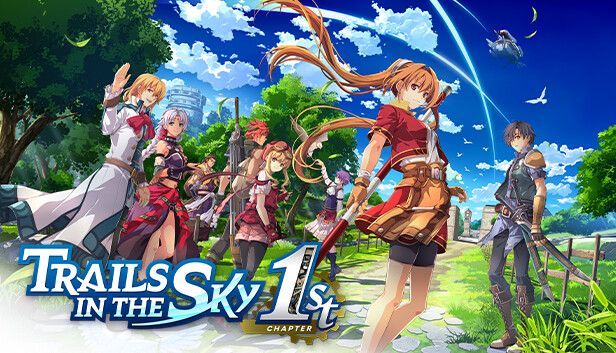

When I first played and finished The Legend of Heroes: Trails in the Sky back on the PSP, it quickly became one of my favorite RPGs of all time. All of the political intrigue and world-building reminded me of why I loved the Suikoden games. Trails in the Sky 1st Chapter is a gorgeous (and mostly faithful) remake of the original PSP game. Trails in the Sky is a big game and I only managed to play a bit of the demo (which allowed you to carry progress over to the final release) prior to the game’s official launch date last year. At this rate, similar to how frequent Falcom’s Trails games are getting released in the west, I’m likely never going to catch-up to the Yakuza/Like a Dragon series. At a quick-glance, Like a Dragon: Pirate Yakuza in Hawaii looks like the modern-day equivalent of Yakuza: Dead Souls back on the PS3; a spin-off to the mainline entries that’s arguably skippable in the grand scheme of things. I know it’s more than that, but I’m guessing I would have loved it if I was up-to-speed with Majima and the gang.
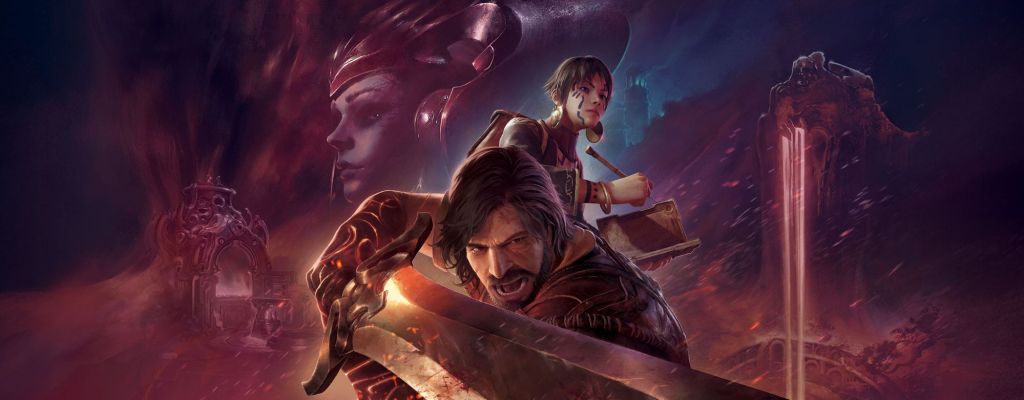
The First Berserker: Khazan is a competent, challenging souls-like with an anime art style. It’s also got Ben Starr in it (ugh). I wasn’t disliking my time with it, but I also haven’t finished Lies of P yet and that’s easily the best non-FROM souls-like at the moment. Maybe I should spend time with Pinocchio and friends when I’m in the mood for games where you drop your currency upon death and have to run back to a boss gate after respawning at some sort of bonfire-adjacent checkpoint. On the not-so-Souls-like action-game front, Blades of Fire is perhaps one of the most underrated games of 2025. It’s yet another 3rd-person action-game with an emphasis on blacksmithing and creating your own weapons. It’s also got a Skyward Sword-like battle system where you target enemy body parts based on the direction of your swing. It’s mapped to the controller, however, so there’s no waggle here (it’s actually not far from how the Switch version of Skyward Sword plays with the traditional control method selected). I completed the first major area before the end of the year, but I hear it’s yet another unsuspectingly long-ass game. I wrote about its bestiary and enemy designs in my “Year-In-Review” post, but I want to play more of it and (hopefully) finish it this year.
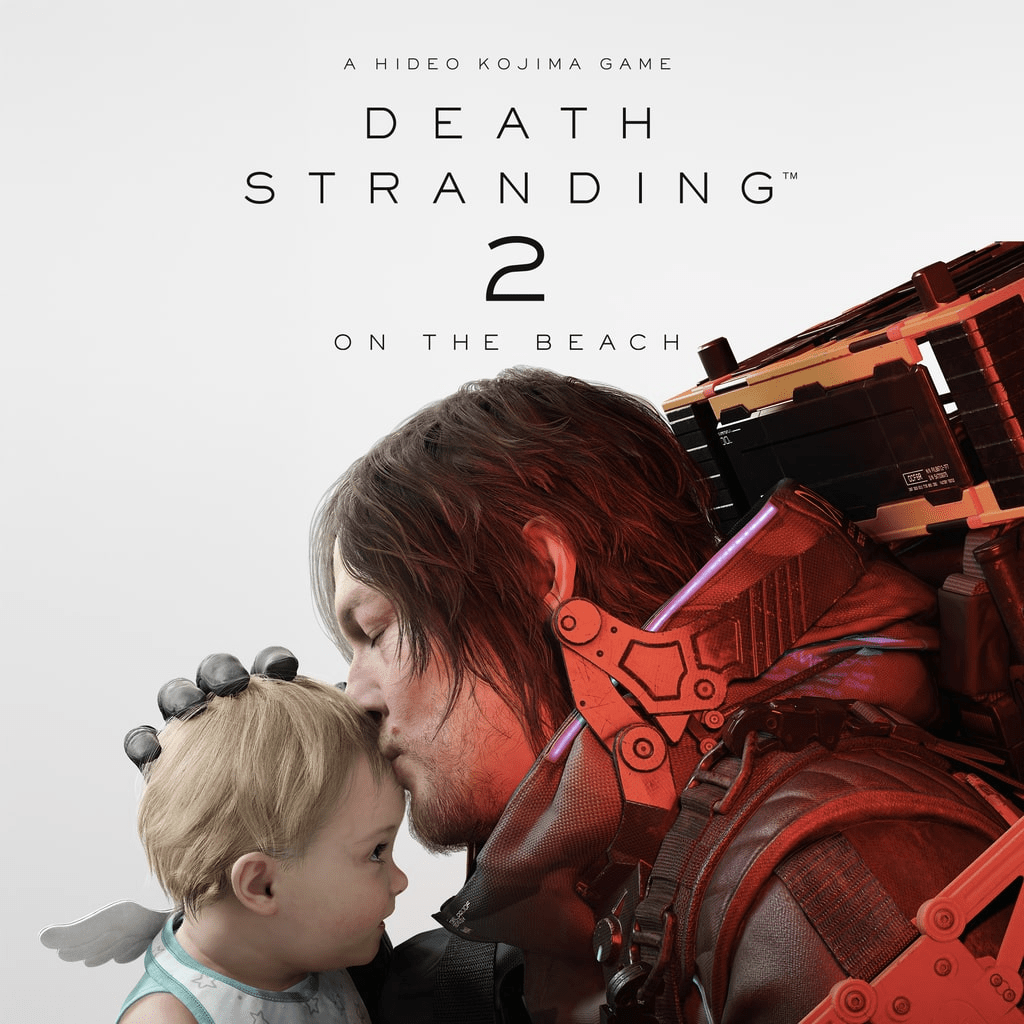
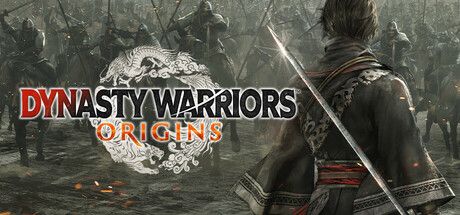
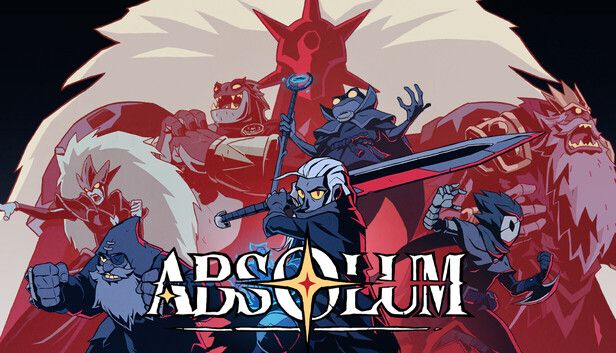
I restarted the original Death Stranding for the second (third?) time this year. Every fiber of my being wanted to finish the first game before DEATH STANDING 2: On the Beach came out, but it just wasn’t in the cards. I’ve gotten the furthest than any previous attempt (I’m somewhere in Episode 6, I believe?), so I will finish it, but I know the sequel would have been up there for me this year if I had managed to play it. There’s just something about the actual act of playing DEATH STRANDING that I don’t find enjoyable. I love the characters, setting, music and world-building, but a big part of me just refuses to wrap my head around all of the online/community-sharing aspects of the game. I bought DYNASTY WARRIORS: ORIGINS at launch and played a decent amount of it. It’s the first Dynasty Warriors game I’ve enjoyed in a very long time. I really like the one-character focus as opposed to having a huge roster of playable characters at your disposal. Absolum is a 2D beat ’em up with rogue-like mechanics from the creators of Streets of Rage 4. The animation is (obviously) beautiful and the game has an awesome OST comprised of many guest composers. I managed to defeat the first major boss in Grandery before the end of the year, but if I’d played more of it, it would likely have broken my Top 10 (or Honorable Mentions, at the very least).
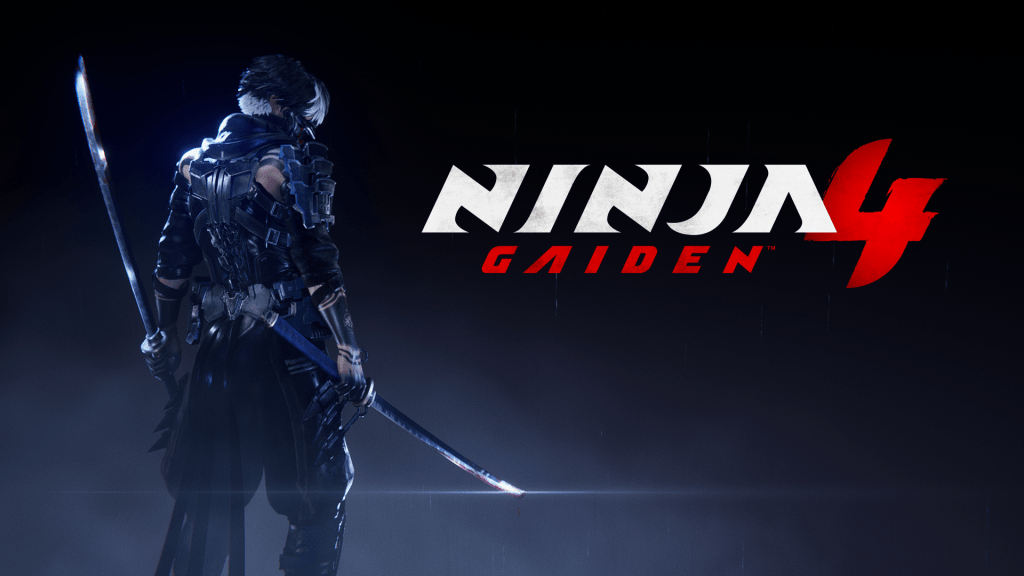
I’m also here to report that I couldn’t finish Ninja Gaiden 4. I got halfway through the game on Hard difficulty and while the combat feels great and dismembering enemies is as satisfying as it’s ever been, the story and tone of the game was insufferable and the level/mission design leaved a lot to be desired (the incessant rail-grinding, air-gliding, and surfboard-riding segments HAVE GOT TO GO). About a decade or so ago, I was praising Platinum Games to the roof. They’ve had their ups and downs over the years (more so now than ever), but they were one of the most prolific action-game developers in the industry. Then Babylon’s Fall happened and I think it’s been mostly downhill since (although, I did love Bayonetta Origins). I don’t feel the same way about Platinum Games as I used to, and that’s okay. The staff that made some of my favorite character-action games have more or less moved on to greener pastures, so to speak, and so have I. A lesson I learned a long time ago; follow the people who made your favorite games, not the companies behind them.
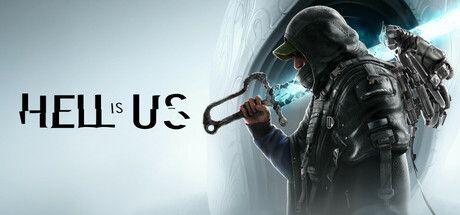
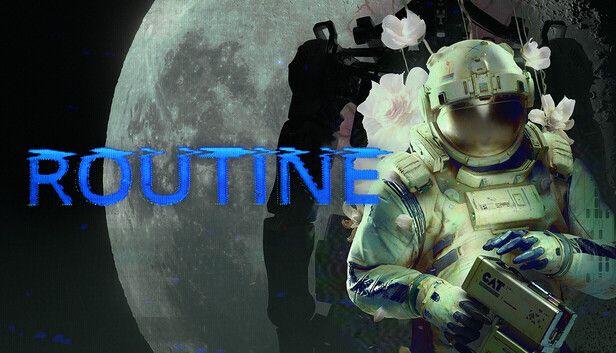
Hell is Us is a 3rd-person, action-adventure game set in a world that’s rooted in science-fiction and political intrigue. Two fictional countries are in a civil war and you play as a mercenary/soldier of sorts who’s been captured by a mysterious force. The game is sort of framed through an interrogation scene that has taken place, so it’s more like you’re experiencing a series of flashbacks or recollections from the main character’s past. It’s a fascinating game that covers themes and topics that feel a bit too close to home at the moment. I only managed to play the game for about 10 hours before 2026 rolled around, but I want to get back to it in the new year. Speaking of SCI-FI, Routine released way too late in the year, but it’s an atmospheric, first-person horror game that takes place on the moon? Sign me up, please. This is yet another game that will likely get ported to PS5 before I get around to playing the Xbox version I just purchased at the start of the new year.
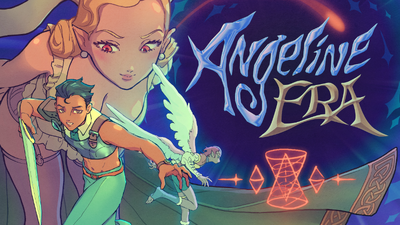
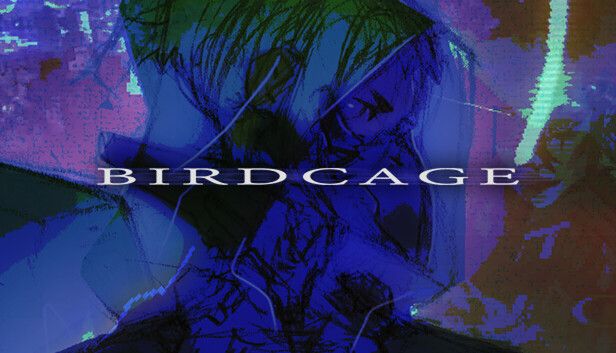
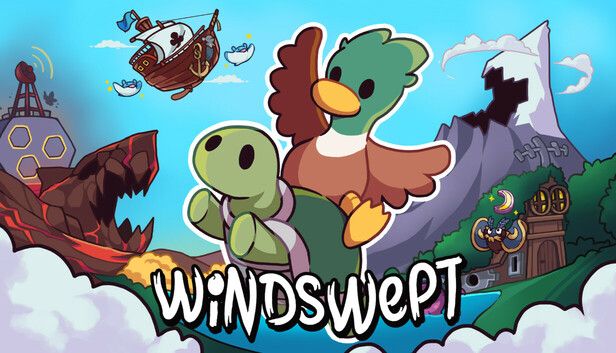
I think Analgesic Productions is one of the most interesting indie developers at the moment. I sometimes don’t quite understand what the message/meaning is behind games like Anodyne, Anodyne 2: Return to Dust, or Sephonie, but I’d like to think I vibe with whatever they’re trying to say. Angeline Era was another late release in the year and launched exclusively on PC/Steam. I prefer to play my games on consoles first, so I held off on buying it in hopes of a PS5 port in 2026. It looks like it’s completely up my alley, though. An old Ys-inspired action-RPG that’s evocative of the PS1 era? Yes, please. Since we’re talking about philosophical space operas, BIRDCAGE would have easily made my Top 10 if I managed to finish it before the end of the year. I only beat four of the six stages in Story Mode before I got distracted by other games. I was close to beating it, but it’s a tough game (and this is coming from someone who semi-regularly plays shoot ’em ups during any given year)! Windswept is a 2D platformer in the same vein as Donkey Kong Country (DKC). I actually played the majority of it last year, but didn’t manage to roll credits. It’s a buddy-duo adventure where you play as a cute little duck and turtle. There’s been a handful of DKC-likes over the years and almost all of them fail to understand what made DKC the classic 2D platformer that it is. Windswept, despite its sort of generic-looking art style, understood the assignment. The levels are not only themed appropriately, they’re short & sweet, chock-full of hidden secrets and collectables to discover. I’m looking forward to finishing it in 2026.
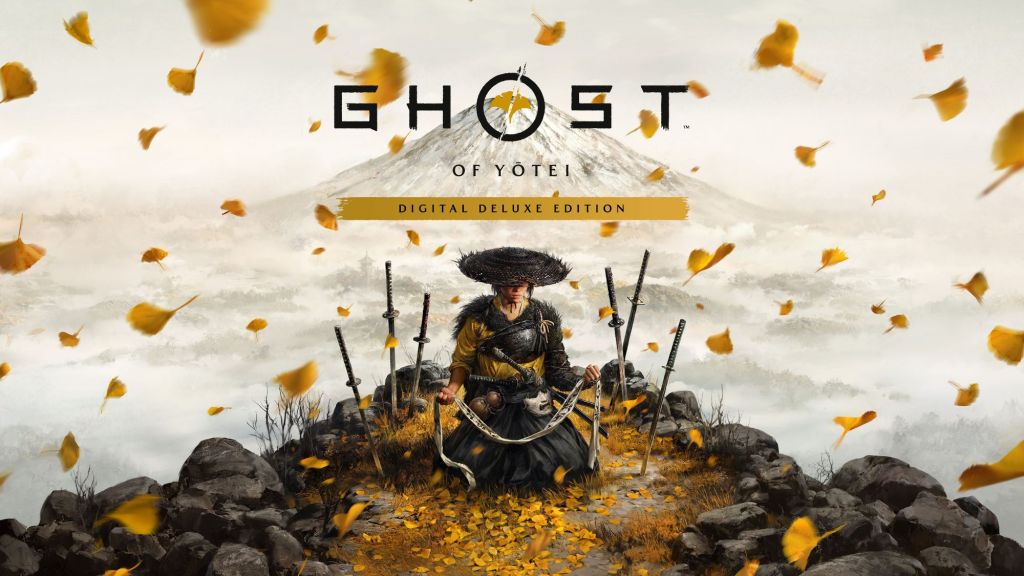
I liked Ghost of Tsushima, but didn’t love it. With that said, I’ve been a fan of Sucker Punch since the original Sly Cooper game, so I’m always interested in what they’re working on. I played around 20 or so hours of Ghost of Yōtei before the end of the year rolled around and while I was enjoying my time with it, I was playing on Lethal difficulty, which can be quite exhausting at times. Fighting “The Oni” on this difficulty left me totally spent afterwards, so I stopped right before the start of my next Yōtei Six target. Fortunately, Ghost of Yōtei is easy to pick up and play (particularly because the game boots you into your save file as soon as you launch the application), that I’ll have no issue jumping back in for more in 2026. Consume Me is a semi-autobiographical, mini-game compilation of sorts (think WarioWare) about a young woman’s relationship with food, told through the lens of Jenny Jiao Hsia and AP Thomson. As someone who’s struggled with their weight (and continues to), this game seems to depict the struggle a lot of people have with food, but in a humorous (yet also serious) sort of way. I played about a week of the in-game calendar before I got pulled away from it. I’d much rather play the game on my PS5 with a controller, but it’s definitely more suited for mouse and keyboard.
My favorite games that got remade/re-released during the year.
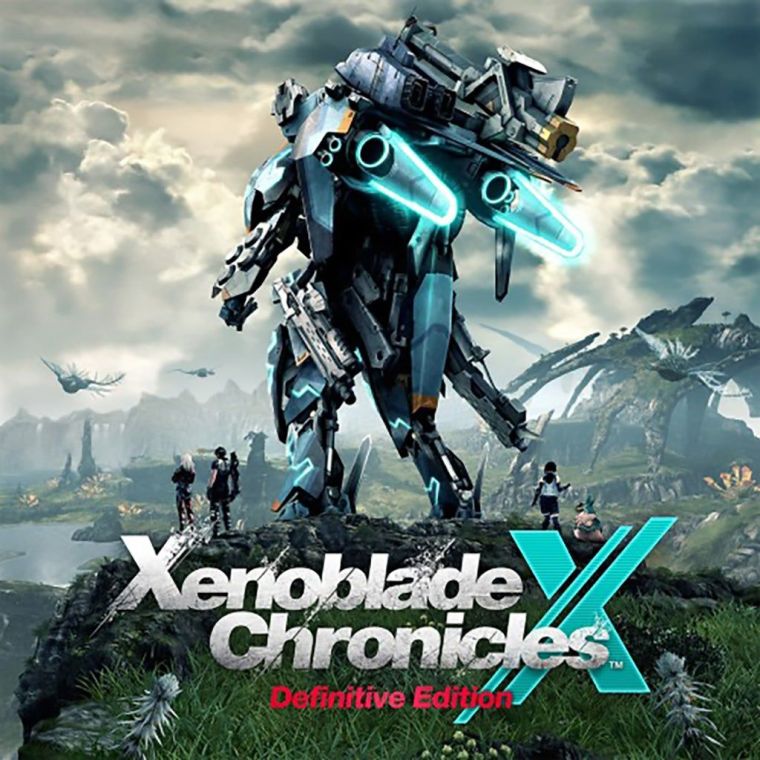
Remakes/remasters continue to be the “thing to do” if you’re an established developer/publisher. In 2025, we saw the likes of Metal Gear Solid Delta: Snake Eater, Donkey Kong Country Returns HD, Dragon Quest I & II HD-2D Remake, Suikoden I & II HD Remaster, Yooka-Re-Playlee, Freedom Wars Remastered, Gears of War: Reloaded, and Super Mario Galaxy 1+2, just to name a few. I didn’t like the way the character models looked in Metal Gear Solid Delta, but the quality-of-life (QoL) updates sounded nice. I did play through Donkey Kong Country Returns HD. It was fun to play that game casually without feeling the need to do the Shiny Gold Medal runs (been there, done that)! I did not get a chance to play the Dragon Quest I & II, Suikoden I & II or the Super Mario Galaxy 1+2 re-releases, however. It’s great that there’s a convenient way to play a lot of these older games now, though. With that said, I just wish the original versions were included or also available digitally for posterity/preservation reasons. I’ll write more about Yooka-Re-Playlee in Part II of my “Year-in-Review” post, but it was perhaps my most disappointing remake/game/whatever of the year.
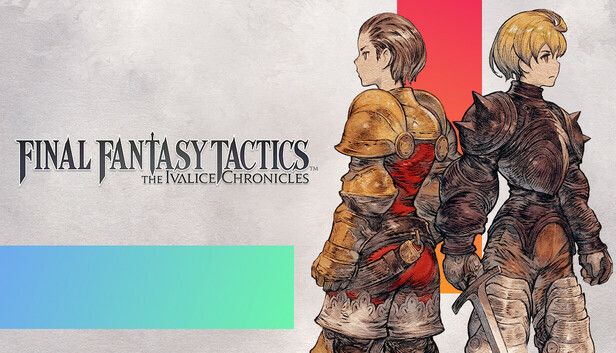
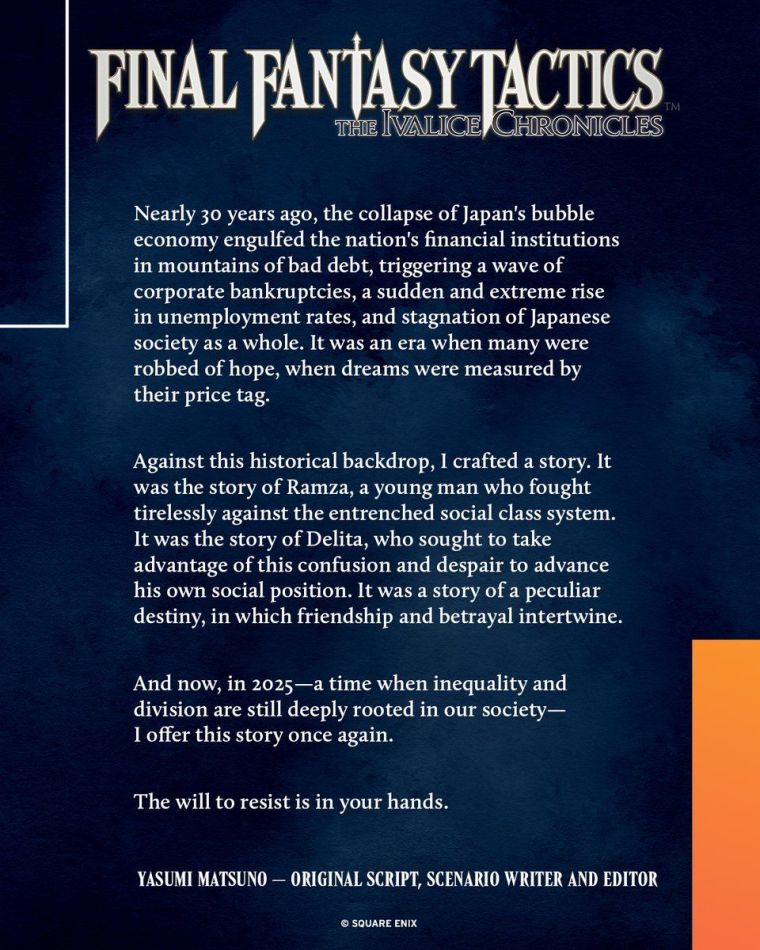
I hate to say it, but there’s no real clear winner for me this year. Instead, it’s more or less a three-way tie between Xenoblade Chronicles X: Definitive Edition, Trails in the Sky 1st Chapter, and Final Fantasy Tactics: The Ivalice Chronicles. Although I didn’t finish any of these remasters/remakes, I’ve played their original releases extensively. Xenoblade Chronicles X is arguably my favorite modern-day Xeno-game (I put well over 200 hours into the original Wii U release). The 8-4 localization is still exceptional, the soundtrack is superb (I don’t care what anyone has to say about Hiroyuki Sawano!), and it doesn’t carry any of of the emotional baggage from the previous games (but why is the text so small still). Playing The Legend of Heroes: Trails in the Sky back on PSP was arguably a formative moment for me. Falcom’s world-building and attention to detail reminded me why I loved the Suikoden games so much. 1st Chapter looks gorgeous, too. Finally, I’m so glad The Ivalice Chronicles did not opt for the HD-2D art style. While the remake looks a bit too smoothed-over/grainy, the added VO makes the game feel fresh and new (although, I really do miss the death wail sound effects from the original version). Final Fantasy Tactics also feels just as relevant today as it did when it first released back in 1998. In fact, Yasumi Matsuno had this to say at the launch of The Ivalice Chronicles:

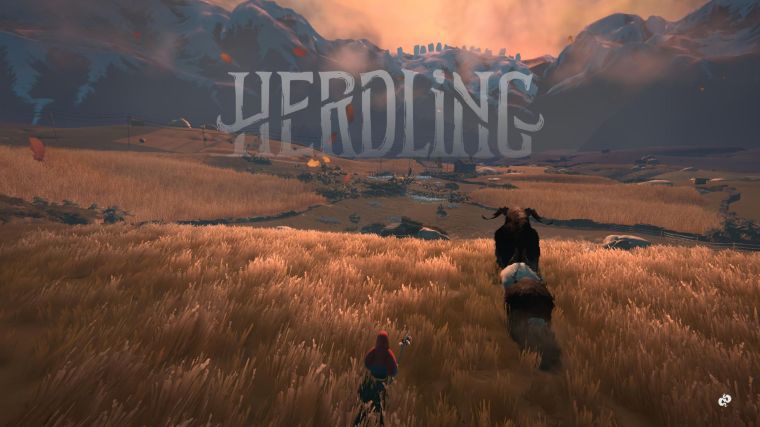
HM #10. Herdling, developed by Okomotive, is an adventure game about herding a bunch of yak-like creatures through dangerous wildlife and environmental hazards. The game begins in a city where you see a little boy (girl?) sleeping in an alleyway, presumably unhoused. As they wake and stumble out towards a parking lot, they discover a creature in need of help. After naming the animal and finding a stick to herd them, you’ll slowly discover a few more friends before you find your first mural. The mural’s depiction suggests that your ancestors guided similar-looking creatures to their true home. As you make your way out of the city with only a handful of the creatures in tow, you’ll open the city gates to a lush, grassy field just as dawn breaks. As you slowly make your way up the hill, music begins to swell and the title of the game appears making Herdling one of my favorite title-card sequences from any game in 2025. Speaking of the music, the developers released some behind the scenes videos on the making of the game’s soundtrack on YouTube. Herdling’s OST is exceptional and one of my favorites of the year.
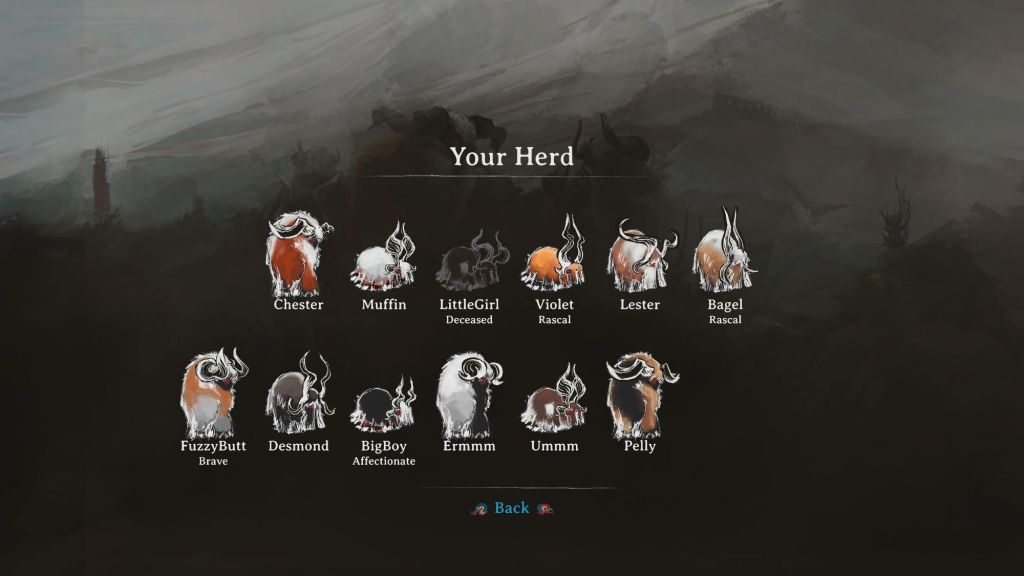
From there, you’ll trek across grassy fields, dense forests, frozen tundra and icy cliffs. There’s technically no fail state in Herdling, but your yak-like creatures can take damage (and even die!). In the forest level, for example, giant bird-like creatures will harm your animals if you knock over (what appear to be) bundles of straw, so you have to navigate the environment slowly. If your creature dies, they will appear as ghosts for the rest of your journey. I’m not sure if it’s random or not, but I noticed the ghosts of my deceased animals showing up at the campfire scenes specifically. I named all of my animals after my family’s cats, most of which have since passed. I named one of the creatures “Little Girl”, who my mom was still looking after back home. In the game, she was the only animal I lost during my first playthrough. In the icy cliff area, the ledge gave way and she fell to her death (I swear this is unavoidable). Oddly enough, not too long after I finished the game, my mom called me to let me know what Little Girl wasn’t doing well. She shortly passed away after that call. RIP.
The most interesting and unique thing about Herdling is its controls. Herding the animals feels both natural and finnicky due to the control scheme. You never truly feel like you are in control; they’re animals, of course. By holding down one of the triggers, if you move to your right, the animals will start to turn left and vice versa. As you move your herd through special blue flowers, they’ll gain a charge that let’s you dash through the environment (the mechanic feels similar to the carrots from The Legend of Zelda: Ocarina of Time when controlling Epona). If you guide your creatures into thick bushes, they will get sticks and other garbage stuck to their fur. You can clean-up your yak-like creatures at any time and you can also equip them with hidden ornaments and harnesses you find throughout the game. The collectable gear is purely for aesthetic purposes. You can only carry one item at a time and you must equip it to one of your animal’s appendages. You can pet them too, of course. There are a handful of “challenges” to complete in the way of trophies to earn, but there’s no in-game trackers or anything other than a chapter select to choose from. I completed it with the Platinum trophy earned and loved it! I’ve yet to play the developer’s previous FAR games, so I’ve got some homework to do between Herdling and (hopefully) their next release.
HM #9. Clair Obscur: Expedition 33, developed by French studio Sandfall Interactive, is a turn-based RPG heavily inspired by games both new and old. Expedition 33 (E33) posits a world where a giant entity known as “The Paintress” paints a number on a monolith each year. Anyone above that number dies, which the game calls, “Gommage”. When the game begins, the world is comprised of 32 year-olds and younger. Those who have remained set out on expeditions each year in an effort to destroy the Paintress, but no one has been able to defeat her let alone return from their journey. The denizens of this world have turned this event into a ceremony of sorts as it’s become a part of their culture and way of life. You begin the game as Gustave and Maelle, who are getting ready to set out on their own expedition. Gustave is saying goodbye to his ex-lover (who’s about to be Gommaged) while Maelle, who’s technically not old enough to embark on an expedition yet, prepares for the journey ahead. Each character in the game has their own perspectives and worldview; some are scared of disappearing while others welcome their demise or are indifferent to the harsh reality of the world that they live in. Without spoiling anything major, that’s the gist of the story, but the game throws plenty of curve balls at you, particularly at the conclusion of each chapter. The story definitely goes places and I was mostly here for it.
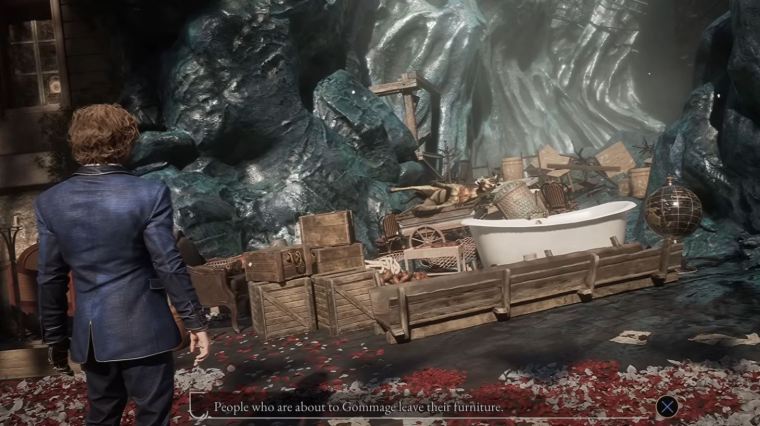
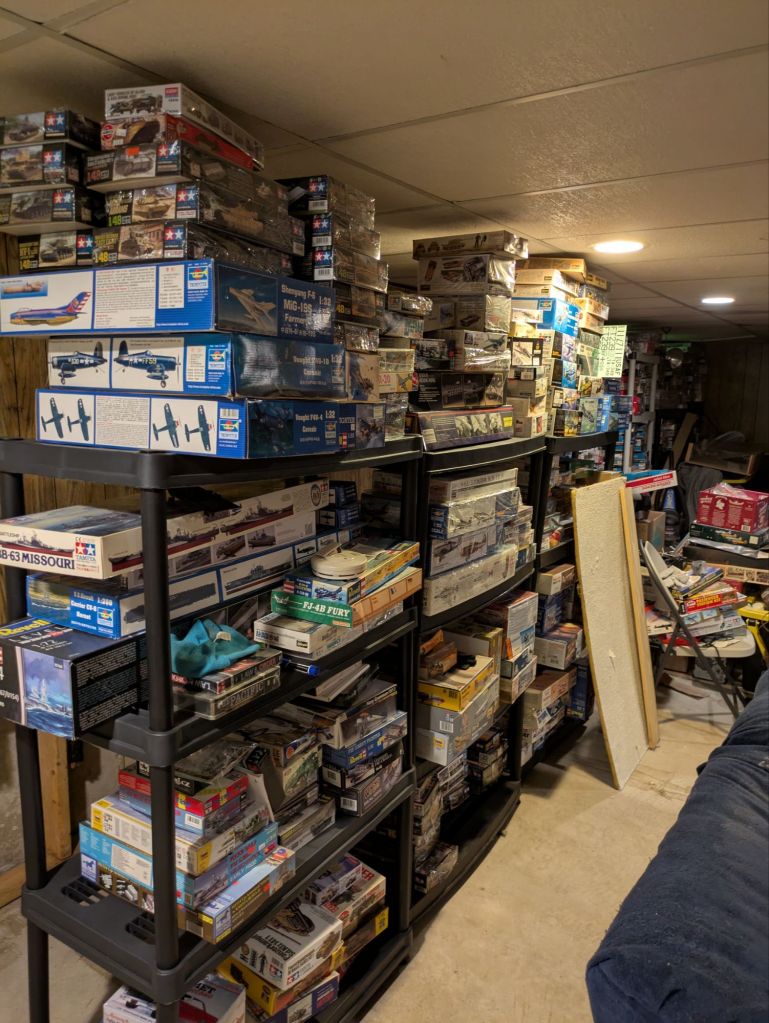
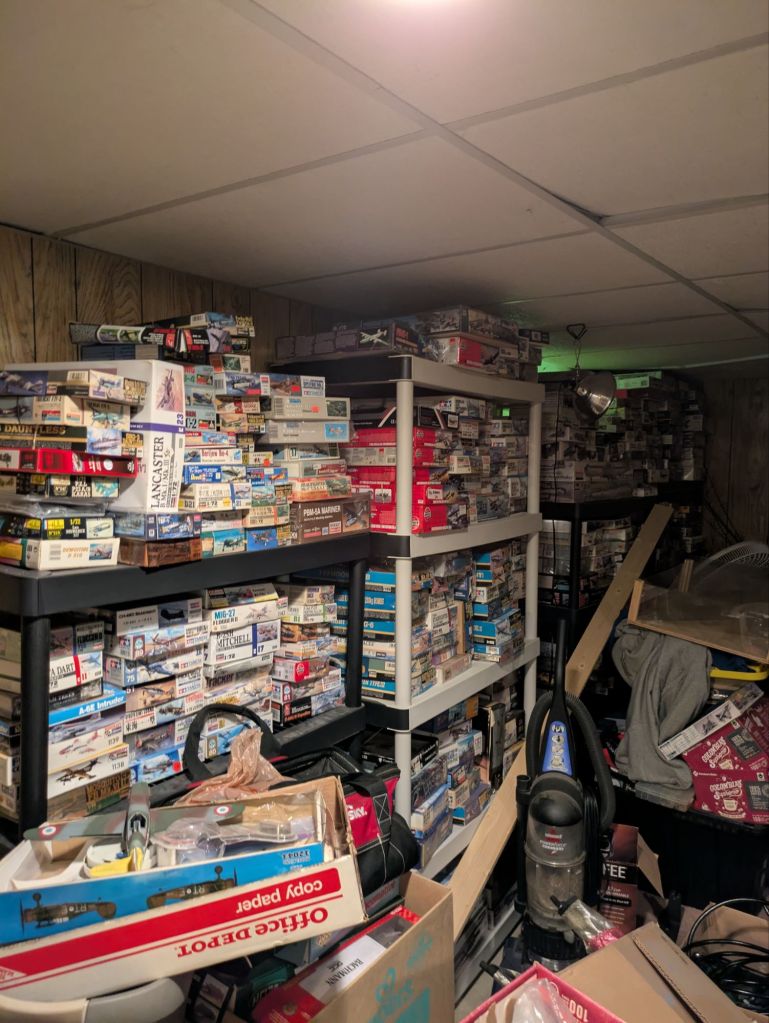
A lot of the themes and story beats in E33 aren’t entirely new to the genre, but for a lot of people, the presentation of it all seems to have been more relatable than a lot of the RPGs that came before it. With that said, I didn’t really connect with the game as much as I’d hoped to. There’s a moment during the introduction scene that made me think about my father, though. It’s been a little over a year now since my dad passed away. In the city streets at the beginning of E33, there are piles of furniture and belongings littering the pavement. Because so many people die each year, their “things” get left behind for “…those who come after” (a pivotal mantra that’s more or less the reason for being for every person in E33’s world). My siblings and I have been dealing with my father’s estate for well over a year now. He had A LOT of stuff, particularly hundreds of model plane, train and tank kits, many of which are still in their boxes. My dad loved building models. He had so many projects in-progress before he passed, but now it’s all there, just sitting unfinished in his basement. Despite going through our own house fire and losing nearly all of our material possessions (which is ironic given one of the game’s key story elements), I’ve been collecting physical copies of video games for decades and have a fairly large collection. Who am I going to leave my mess for? Do I unburden myself now before it gets out of control like it did for my father? If anything, E33 made me reflect on my past year or so. Long story short, getting older sucks.

One thing E33 does do well is that it’s a relatively well-paced adventure that doesn’t overstay its welcome. The game tries to get the player invested almost immediately, although a lot of the story is told through the campfire scenes and Expedition Journals scattered about the game. It’s also somewhere in the ballpark of 30-50 hours long, depending on how much of the side content you engage with. I do think E33 is just a bit too combat-heavy, which is something I thought I would never say about an RPG. There’s very little to do outside of fighting enemies. E33’s take on the active turn-based combat system is certainly engaging and layered with a lot of ideas. While a lot of the battle system elements have been done before in games like Shadow Hearts or the Mario & Luigi/Paper Mario series, the developers have made some tweaks to the tried & true formula. In E33, you can parry or dodge almost all enemy attacks. You can even jump over particular moves! Enemies (try their best) to telegraph their attacks both visually and audibly. If you want to learn an enemy’s attack pattern, you can simply dodge its attacks until you start to feel more comfortable. If you’re confident in your abilities, you can outright parry attacks and deal massive damage back to the enemy. Excluding basic attacks, all special actions require AP (Action Points), which can be increased by landing regular attacks, using items, or even parrying. There’s also a Free Aim mode where each character can use their ranged attacks to hit weak points on particular enemies, which is typically the best approach at the start of a battle.
Like with most RPGs, there’s a slew of buffs and debuffs that can be applied to your party and enemies alike such as “Berserk” (increased damage every turn up to 12 times) or “Freeze” (prevents the player/enemy from acting. You can even stack debuffs like “Burn”, which adds up quite a bit of extra damage over time. There’s even “Shields”, which blocks all damage until they’re destroyed (which also reminded me of the shielded enemies from Ys X, unfortunately). Over the course of the game, new mechanics and techniques are introduced to keep battles engaging and for the most part, it all sort of works. Each character also has a unique fighting style and their skill trees revolve around these battle stances, so to speak. One character utilizes a Devil May Cry-style ranking system where as you land basic attacks, your rank increases from “D” to “S”, which gives you access to new abilities and increased power. One of your character is more or less a Blue Mage from the Final Fantasy games, too. This character learns enemy transformations when a unique monster is defeated in combat, although he has to be an active party member when the enemy is vanquished. With that said, I found it incredibly difficult at times to read most enemy attacks. Generally speaking, I found the “readability” of the game to be somewhat questionable. Do I parry the particle effects that wash over my character or the weapon/limb itself hitting me instead? It’s not always super clear to the player, which leads to a lot of trial & error. The game didn’t have a “Retry” option for battles until a more recent patch too, which would have been helpful from the start. With that said, I think the boss battles are a highlight of the game. The developers took that post-FFX approach where a lot of the bosses have a unique mechanic or gimmick to exploit. The Lampmaster boss, which is in the first half of the game, had you targeting hanging lanterns from the bosses many appendages in a specific order, for example.
Then there are the Pictos, the game’s primary progression system. When equipped, these upgrades grant temporary passive/active bonuses to your character, many of which synergize with each character’s unique abilities. Take the “Full Strength” Picto, for example, which increases your damage output by 25% if you’re at full health. Towards the end of the game, you’ll gain “Painted Power”, which removes the 9,999 damage cap (and that’s when the game truly opens up). After a few battles with a Picto equipped, you’ll learn that ability permanently, which can then be equipped in a separate menu utilizing Lumina Points, which can be increased by finding special items or other means (think FF9’s ability system overall). The problem, however, is the menu navigation and presentation of it all. There’s also perhaps far too many options here. The menus aren’t great in E33, either. I can’t tell you how many times I’d open the menu never knowing where my cursor was. Similar to my issue with Final Fantasy VII Rebirth, when you want to “overhaul” your character, you’ll have to spend a ton of time in the menus moving Pictos around between characters. Forget about it when/if you decide to reset your character’s skill trees because you want a build that synergizes with your new Pictos/Luminas arrangement. While the customization is welcome and cool (you can seriously break the game, too) there had to be a better way to present and organize all of these systems and menus to the player. It’s an overwhelming mess that becomes even more unmanageable as the game continues, even with the various sorting options you have at your disposal.
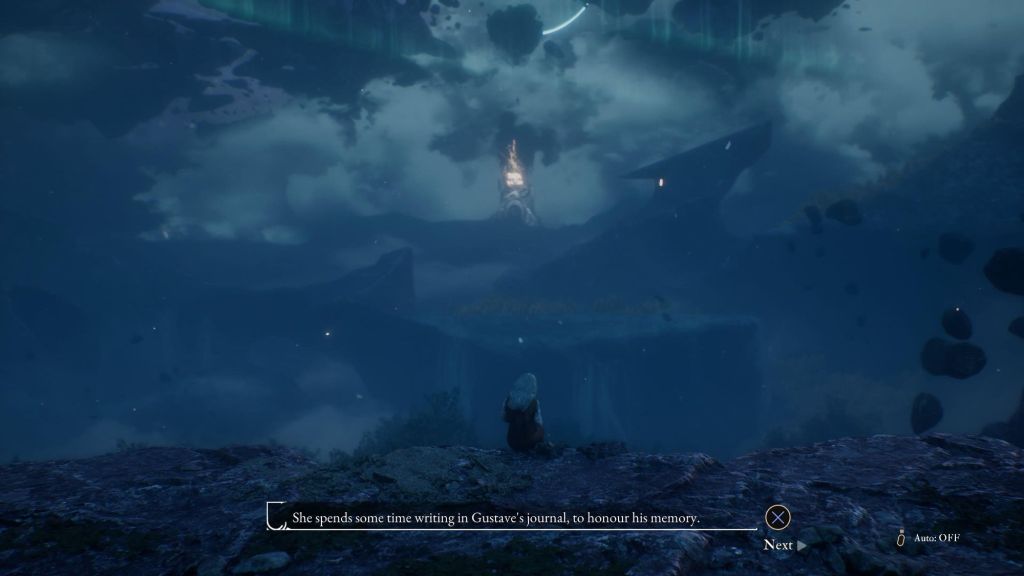
This issue sort of extends to how I feel about other aspects of the game, particularly the world map and the areas/dungeons themselves. I love the fact that they went for a “traditional” overworld, something you would have seen out of the SNES/PS1 era, for example, but it’s not always fun to navigate. I do like how one of your party members more or less becomes your means of transportation. Your “imaginary friend” becomes a boat and then an airship of sorts in the latter half of the game. There are areas on the map you have to backtrack to once you get more traversal upgrades, which I did enjoy doing as it tickled that Metroid/Zelda-like itch I’m always look to scratch. With that said, there are a lot of areas on the world map, despite its relatively small size, many of which are strangely just a single screen. Because the game is loaded with optional bosses and things to come back for, you’re not always ready to “exhaust” an area until way later in the game. Good luck figuring out where you’ve been already, though. The areas/dungeons don’t have in-game maps and while the game isn’t that big and the areas/dungeons themselves aren’t super intricate, returning to old areas isn’t made any more enjoyable because of these tiny design and interface issues. You’re better off literally running through every area/dungeon from the beginning when you reach the end of the game because who knows what was in there the first time around. You know what could have solved this issue, an in-game journal? Perhaps an Expedition Journal!? And that leads me to my next gripe with the game…
One of my biggest issues with E33 is the lack of quest journals or any sort of indication that “something has been completed”. Outside of finding hidden Gestrals (which actually does come with a fraction of how many there are in the world) the game doesn’t show you much of anything in terms of progress tracking. The world map utilizes a weird swirling effect on each area/dungeon in the game. If it’s red and says “Danger”, you’re most likely not ready for it level-wise. I wish these indicators changed colors if you completed an area, but they don’t. Maybe the swirl could have turned green when you collected and did everything in the area? Give me something! What’s even more frustrating is that your main character takes time to physically write notes in an Expedition Journal when taking breaks at the campfire. It’s cool that this action ties into the narrative, but from a gameplay perspective, I wanted more from it. Why doesn’t the main character draw sketches of the enemies you encounter along the way so it acts as a bestiary of sorts so the player can reference? There’s an argument to be had here that the sort of featureless nature of the game and its lack of bells and whistles, so to speak, has an old-school appeal to it (not every game “back then” had modern-day quest journals, bestiaries and checklists), but I still found the Expedition Journal to be a missed opportunity as a whole. If MercurySteam’s Blades of Fire can have a fully detailed journal with beautifully illustrated monster entries, then so can this game, especially for a game that’s about painting and being an artist!?
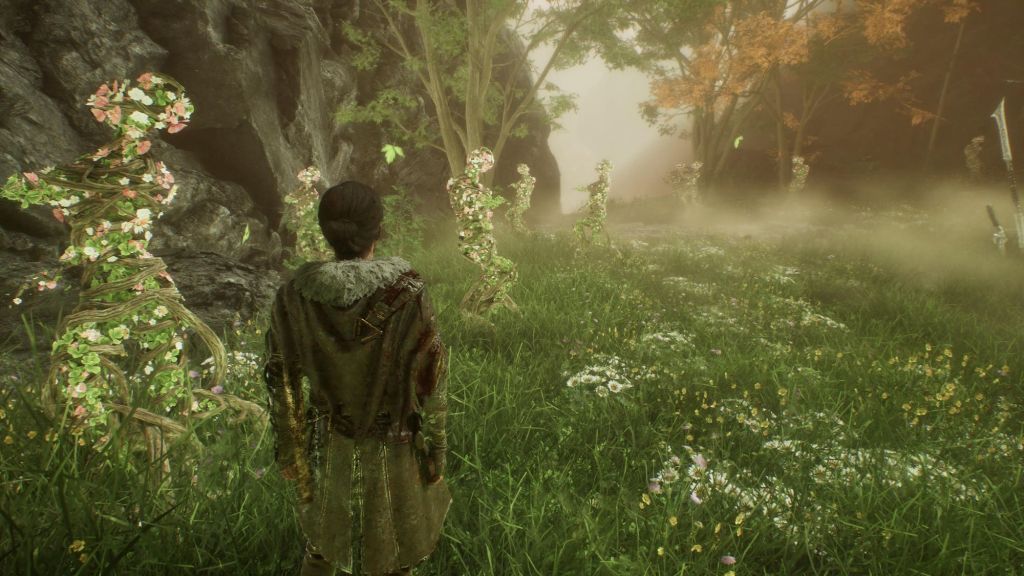
One thing the game does well is its world-building. Since the game revolves around previous expeditions setting out to stop the Paintress, you’ll discover journals, footholds and flags (which act as save points) scattered about the world showing what the previous groups experienced or left behind during their travels. One journal that stood out to me described Expedition 35’s exploits and an encounter they had with a particular group of Nevron (the game’s main baddies). As mentioned earlier, one line that persists in E33’s world is “…for those who come after”. This particular expedition couldn’t defeat these creatures, but they used their bodies to build a bridge of corpses for the next set of expeditioners, you know, for “…those who come after”. With that said, I just don’t particularly enjoy running around or simply being in any of the game’s spaces. I found the camera/POV to be a bit too close and the pathing in most areas/dungeons wasn’t great (which has nothing to do with the fact that there’s no mini-map). You’re constantly running up against uneven geometry and when you fall from a high height, your character drops stiff like a rock. It’s also not the type of RPG where you want to chill out in a town and listen to the game’s music while NPCs walk around. You could argue that’s what the Gestral Village is for, but I don’t really want to spend time there? Then there are the Gestral beaches where you can partake in the occasional mini-game or platforming challenge (most of which aren’t great, but in a janky, PlayStation 2 (PS2) era sort of way). One particular beach had you traversing a giant tower of floating furniture and platforms. It was sort of fun, I guess? It felt like it was inspired by that Moonfire Faire Tower from FFXIV. Some of the more playful spaces in E33 feel like they are from a social space from some MMO, almost Destiny-like in its controls and approach.
I would be remiss if I didn’t mention the game’s soundtrack, composed by Lorien Testard. As boring as it is to say, Alicia and Lumiere are some of my favorite tracks in the game. Spring Meadows – Nightfall has a sort of early RPG forest dungeon feel to it. Ancient Summer Sanctuary – Gestral Summer Party is a really unusual battle track that sounds more like a modern pop song? I also really like the campfire themes for each character. Sciel’s really stuck with me for whatever reason. A lot of people seemed to resonate with this game’s soundtrack, but it’s not something I find myself listening to outside of when I’m playing the game. I ultimately completed the game on Expert difficulty with max relationship levels, which meant I completed all of the campfire character quests. These were probably the highlight of the game as they not only explored each character’s backgrounds, but they often led to a unique area/dungeon with a challenging boss battle. With that said, there are just too many other games I want to play for the first time or get back to and the end-game content isn’t super compelling to me, outside of potentially learning a bit more of the game’s world and characters. I would also feel more inclined to “do everything”, so to speak, if there was some sort of in-game quest list or better indicators when I’ve completed an area. I liked E33, but I didn’t love it. With that said, it must have done something right as, for whatever reason, I decided to stick to this RPG over other ones I had in-rotation at the moment. I am very interested in seeing what these developers do next, whether that’s additional content/DLC, a sequel or something completely brand new. We continue…
HM #8. South of Midnight, developed by Compulsion Games (known previously for Contrast and We Happy Few), is a 3D action-platformer set in the American Deep South. You take on the role of Hazel Flood, a young girl (and former track star in her hometown of Prospero), who’s living with her mom and just trying to get by. The game begins with an argument between the two as a hurricane hits the area. After a short introduction sequence which acts as a tutorial of sorts, Hazel’s home is swept away by the raging water, along with her mother who’s still trapped inside. Over the course of the adventure, Hazel learns that she is destined to become a “Weaver”; a powerful individual capable of magical powers, mending bonds and calming spirits. “Stigma”, a sort of physical manifestation of pain and sorrow, has enveloped the Deep South and Hazel must untangle the webs of trauma as she journeys across the land to find her mother. The story, characters, setting and music are my favorite things about the game. The cast, although not very large, is great. Hazel’s grandmother plays a big role in the story and her performance, like all of the other characters, is excellent. Hazel is biracial and comes from a blended family and while the game doesn’t completely focus on this aspect, it’s nice to see it represented here to a degree. The Catfish steals the show, however.
Visually, the game uses a stop-motion technique for its cinematics and for the gameplay, the developers emulate a reduced framerate-look in order to keep the combat snappy and responsive. I think the environment design and overall aesthetic is generally pleasant to look at, although I would have preferred a bit more fantastical set-dressing considering the game’s setting. At one point, there are giant peaches growing on trees and you’ll see a lot of twisted, almost Tim Burton-like thorns wrapped around the environment, but the majority of the game has you exploring rather generic-looking swamps, forests and valleys. The soundtrack, composed by Olivier Deriviere, however, carries the entire game. I’ll talk about it more further along, but at the culmination of each chapter, you’re treated to these beautifully layered vocal tracks that sort of evolve and take shape as you progress through a chapter. The track about The Tale of Two-Toed Tom is an exceptional piece. I love the use of organs in this track.
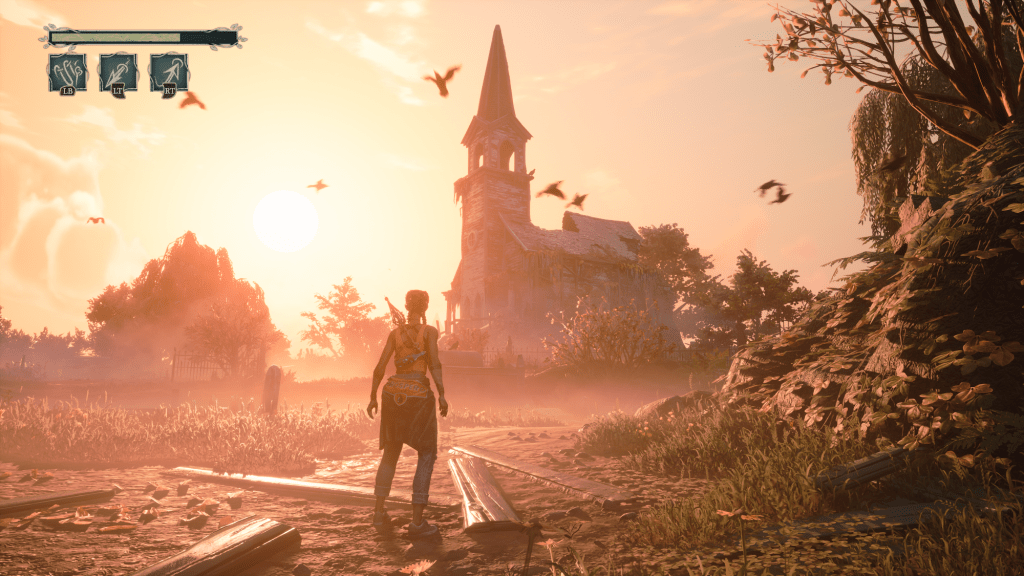
South of Midnight is a 3D action-platformer at its core. Hazel can run, dash and jump around the environment. You’ll eventually learn the ability to glide short distances, double jump and run along special walls, but it’s not the type of game where you’ll backtrack to access new areas with your traversal abilities. South of Midnight is a linear, chapter-based adventure and each scenario more or less follows a similar format throughout; complete a chapter or two to learn about a character who has been wronged in life, witness how their troubles have impacted the land, resolve their trauma, and then fight their twisted manifestation during a boss battle. The narrative, along with the music, carried me through the game, but I wish what you were actually doing in the game sort of matched the storytelling and context of the situation. The platforming sequences and set-pieces just aren’t very exciting to navigate. At the culmination of each chapter, you’ll travel to these Crash Bandicoot-style platforming sequences where a dark presence chases after you from behind. These segments go on for entirely too long and there’s just so little energy or threat behind what’s happening, despite the incredible music that’s playing in the background.
In one of the early chapters, you learn about a young man who has some sort of disability and was treated poorly by others because of his differences. His brother grew annoyed and impatient with his sibling as he thought his disability was holding him back from living his life. One day, he brought his brother to a tree and nailed him shut inside a hollow part of its base. It’s an incredibly sad and compelling moment in the game. In the culmination of this scenario, you’ll find yourself climbing the tree where this brother was laid to rest. As you make your ascent up the tree, you’re confronted with some fairly basic platforming sequences while an incredible vocal theme starts playing. One of the most interesting things about the audio design in South of Midnight is that most lyrical tracks develop and evolve as you’re playing through a chapter. As you learn more about the character you’re trying to save, new lyrics and verses are introduced at fixed-intervals. The music isn’t dynamic in a traditional sense where say an exploration track transitions seamlessly to a battle track (à la Final Fantasy VII Rebirth or Visions of Mana, for example). The lyrics in each chapter more or less reflect the story and characters you just learned about. I was always looking forward to hearing the next vocal track in the game, even when things started to become a bit too formulaic.
Then there’s the combat system, which is serviceable, but not great. Throughout Hazel’s adventure, she’ll battle physical manifestations of pain and sorrow called “Haints”. Battles take place in fixed, enclosed combat arenas, à la Devil May Cry/Bayonetta. There are no enemies wandering around the levels outside of these areas. Hazel can perform basic combo attacks with her pair of weaving hooks and use abilities like Strand Pull and Stand Push, which pull and push enemies, respectively. Her dodge can also acts as a proximity bomb of sorts, which feels pretty good to pull off. All abilities are also on a cooldown. I think the combat could have used a ranking/scoring system, again, something more akin to the Devil May Cry/Bayonetta games. There’s even hidden/optional combat encounters, but they only award the player with Floofs (the collectable currency required to upgrade your abilities). Finally, there’s Crouton, Hazel’s childhood stuffed animal, who Hazel discovers after being washed away from the hurricane floods. Crouton is mostly used to solve navigation-type puzzles, such as crawling through tight spaces Hazel can’t otherwise access. As cute as Crouton is, they sort of feel like an afterthought, as their segments are short-lived and not very engaging.
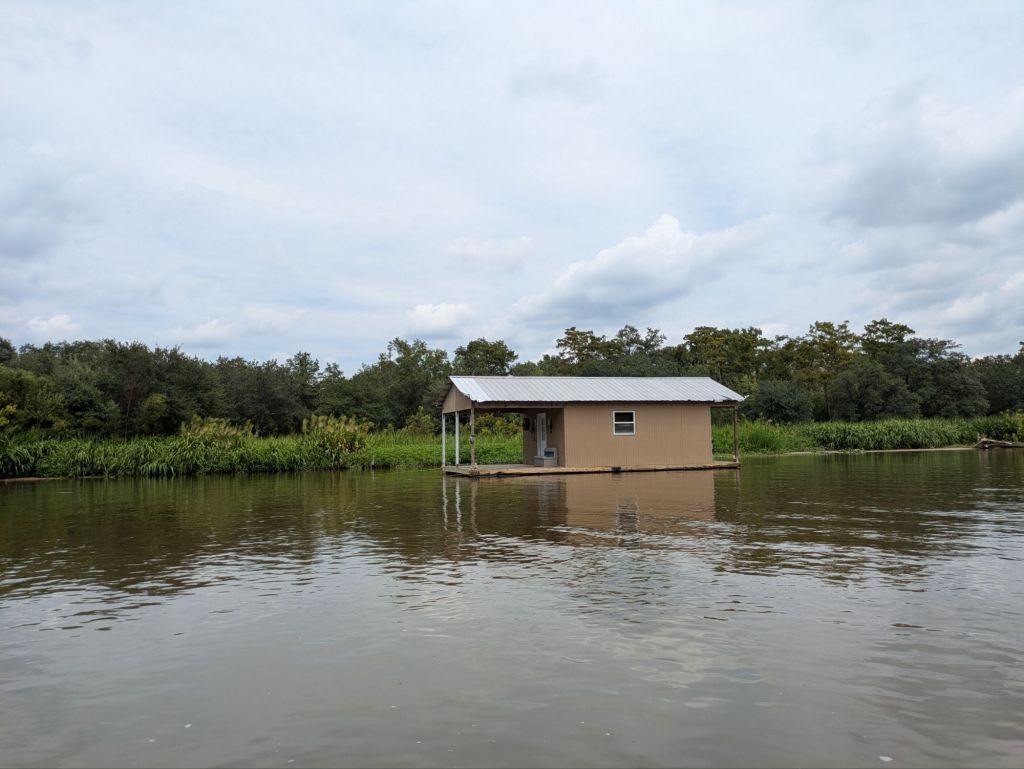

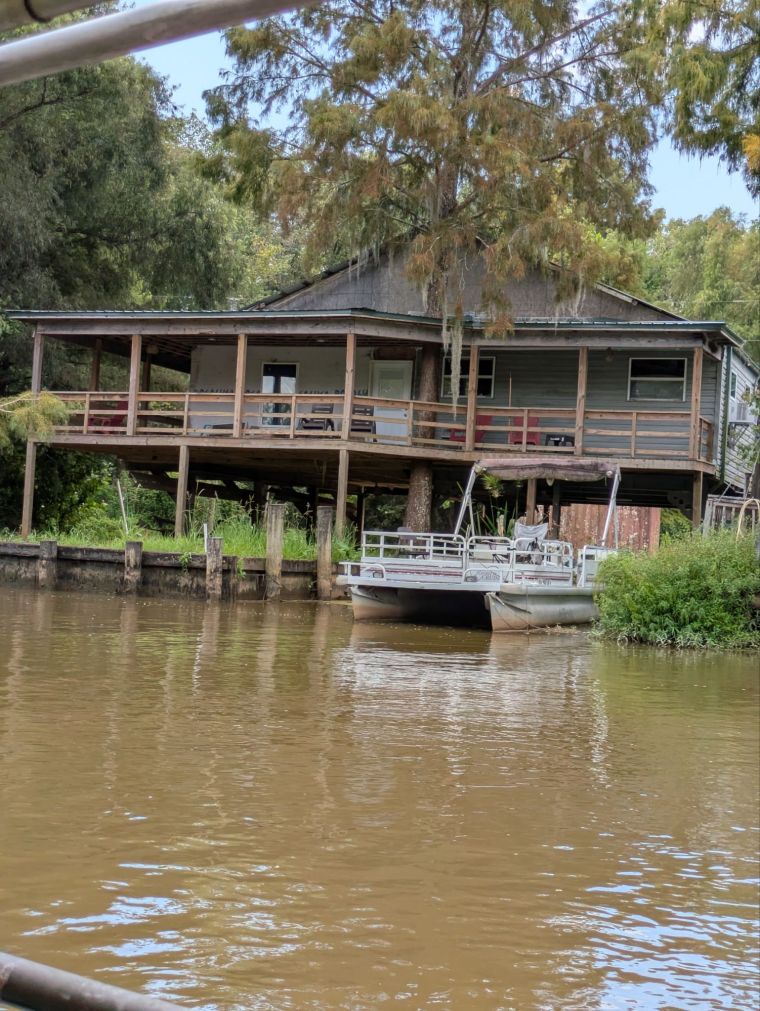
On a semi-related note, I visited New Orleans, Louisiana for the first time this year. Outside of visiting Alabama for a few days many years ago, this was my second time in the “Deep South”. For part of our trip, we took a boat tour through the swamplands to see alligators and other wildlife. One thing I learned from our tour guide is that many houses had to be lifted off of the ground, post-Hurricane Katrina. During the introduction sequence of South of Midnight, Hazel’s house has clearly been raised. Ironically, all the other houses in her neighborhood are not, yet it’s her house that gets swept away! With that said, Hazel’s house did sit fairly close to a nearby river. I also learned about the “Whiskey Tree”, which were secret meeting places for smugglers of alcohol only accessible by boat. While South of Midnight didn’t touch on this particular tree of legend, bottle trees were a key aspect of the story in the game (by placing painful memories into a bottle and putting them on a tree, a person’s soul could be at peace). In addition to the bottle trees, South of Midnight showcases other Southern American legends such as Two-Toed Tom, Altamaha-ha, and Huggin’ Molly, for example.
South of Midnight was a huge surprise for me considering the fact that I did not like the developer’s previous output. It’s also one of the rare occasions where I typically did not feel the need to play/finish their previous games before touching their latest game. Even though South of Midnight is a standalone title, I typically like to play a developer’s previous works to get an idea of their design sensibilities. I did download Contrast at the launch of the PS4, but never finished it. I have little-to-no interest in We Happy Few, considering the type of game that it is. I enjoyed my time with South of Midnight, but I think the overall gameplay and platforming set-pieces could have been a bit better. I also didn’t like the fact that if you replay a chapter, none of your upgrades/abilities you purchased further in the game carry backwards. I played the game on Grand Weaver difficulty, which became more frustrating than fun at times. The boss battles in particular are a bit of drag and if you’re trying to get the no damage achievements, just put it on the lowest difficulty to save yourself some time. I completed the game at 100% with all achievements unlocked on my Xbox Series X.
HM #7. Monster Hunter: Wilds, developed by Capcom, is the latest entry in the long-running Monster Hunter franchise. Since Monster Hunter (MH) World, the games have become more approachable and user-friendly. The series has seen its fair share of QoL changes, from no longer requiring expendable pickaxes to mine materials to paintballs being no longer needed to track monsters. Wilds takes things further by introducing hunts that can be triggered organically out in the open, having the ability to carry two different weapons at a time, and a mount (the Seikret) who will automatically guide you towards the monsters, just to name a few. New to the series is “Focus Mode”, which allows you to perform “Focus Strikes” on enemy wounds. While monsters have always had weak-points, breakable parts, and severable tails, for example, it’s never been this convenient before. From what I could gather post-release, many fans feel that a lot of these changes, mechanics and features overcompensated to the point where the game is no longer challenging. While there is a relatively healthy post-game with harder monsters to fight (in addition to the ongoing updates and special events), veterans have claimed that Wilds is much too simplified and not engaging enough.
I’m a fairly casual MH fan. While my first entry was the original game back on the PS2, I barely played it. It wasn’t until Monster Hunter Tri for the Nintendo Wii when I fell in love with the series. From there, I would dip my toes into the numerous portable entries, but it would be rare if I would ever take them beyond the mandatory questlines. While the story is pretty dumb (Wyvern Milk, seriously?), I think 8-4, as always, did a great job with the localization. A part of me really enjoyed the walk-and-talk, Gears of War style missions, too. The cutscene direction is classic Capcom era stuff, so even though the story wasn’t great, I liked watching it all play out on the big screen, so to speak. It’s certainly the most cinematic entry to date. The beginning of the game also felt reminiscent of Breath of Fire IV’s (BoF IV) intro. Both games begin with characters travelling on ships in a desert, when suddenly, monsters attack. In BoF IV, it’s a dragon that attacks Nina and Cray. In Wilds, it’s these worm-like creatures that can burrow in and out of the sand, which are arguably dragon-adjacent in the MH universe? It’s probably a stretch to say that it was a nod, but I’d like to think it was to a degree.
When Wilds was first revealed, it looked like the series was maybe having its BotW moment. The reveal trailer showed herds of endemic creatures being chased by mammoth-like predators while a giant sandstorm approaches. There’s a shot of what would become known as the Windward Plains at the end of the trailer, which shows animals grazing in a large, sun-drenched field of grass. A giant mountain carved by some unnatural force can be seen in the distance, begging for an explorer (or perhaps a hunter) to question how it was formed. The prospect of a huge open world Monster Hunter game with dynamic weather effects, strange anomalies, and other emergent gameplay ideas sounds like a dream, but I don’t think Capcom fully delivered in that respect. The Windward Plains is probably the most realized area in the game. I think the Scarlet Forest is nicely designed too, but any area after that felt disappointing to explore, both from a narrative and environmental perspective. It didn’t help that the game was marred with performance/graphical issues across the board at launch.
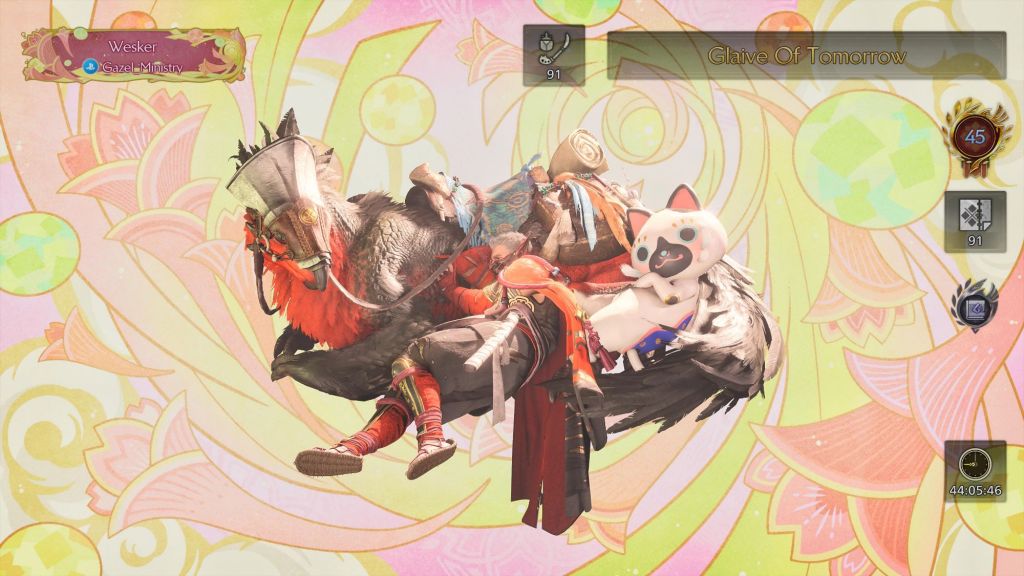
At the end of the day, there’s still nothing quite like Monster Hunter in terms of bashing foes and carving monster bones. Since the Insect Glaive was first introduced back in MH 4, it’s been my weapon of choice. I love extracting monster juice to temporarily buff my character and having the extra maneuverability in the air simply feels too good to pass up. I completed all Low/High Rank main missions and logged somewhere around 45 hours or so before I put the game down. Monster Hunter games aren’t quite “forever” games, but you can easily put well over 100+ hours into any of the entries. I did partake in the “Blossom Festival” this year, earned all of the exclusive gear and such, but I haven’t turned it on since. A part of me wishes I spent more time with Wilds this year than I did with Destiny 2, but that’s a conversation for a later date. There are far too many other games I still want to get back to or play for the first time, so I’ll likely participate in an event from time to time until the next mainline entry releases.
HM #6. DOOM: The Dark Ages, developed by id Software, is the third entry in the modern-day DOOM trilogy(?). The first game, DOOM 2016, felt like the franchises’ Metroid Prime moment. The complete visual identity of the series was overhauled, the structure of the game, although still mission-based, had you backtracking to previous levels to find hidden secrets, and Glory Kills (melee finishes) were introduced. The Glory Kills would give you health back and your chainsaw would make monsters drop ammo, which provided a particular gameplay loop/feel not seen previously in the series. DOOM Eternal ran with this idea, but introduced new weapons and a combat flow that felt more in-line with a character-action game, with divisive reception. DOOM: The Dark Ages feels like a compromise between the first two games. The biggest addition, mechanically, is the shield, which can not only be used to toss at enemies and objects in the environment, but for parrying enemy attacks as well. The other big change was the size of the maps and the volume of enemies. At times, it feels like you’re fighting on a massive battlefield. The scope of the game feels next-gen, but the levels are still designed in a way that resemble the older games; tight action sequences, lock & key progression, and nooks & crannies filled with secrets and power-ups.
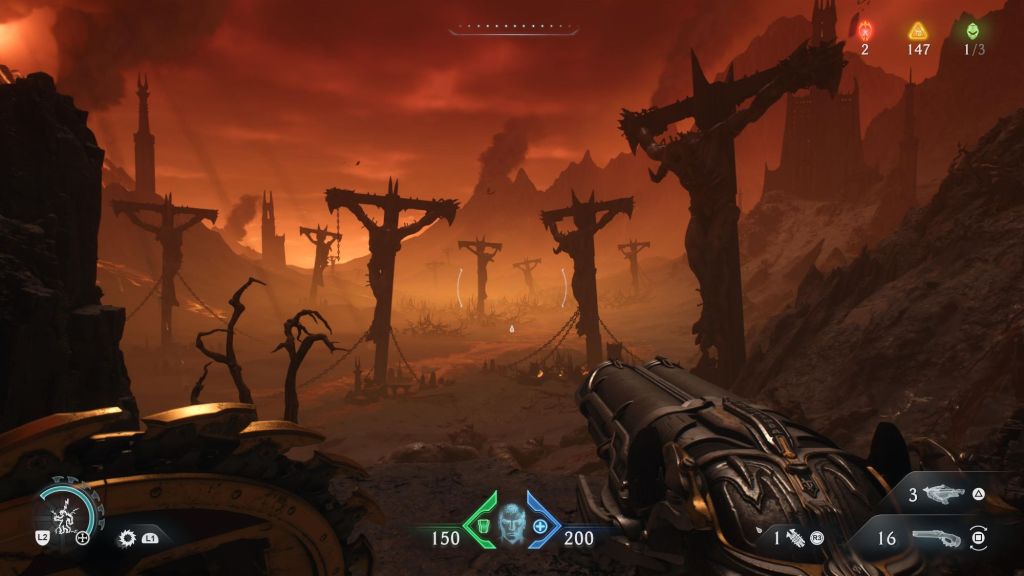
One thing I noticed is that I always found myself looking at the map instead of exploring on my own. I can’t say I’m a big fan of the soundtrack, either. None of the tracks really spoke to me and I found the enemy grunts/sounds lacked a distinct voice (perhaps the mixing was off?). In the older games, when you entered a room, you knew when a Demon or Cacodemon was there because of the sound they made. In The Dark Ages, there’s just too much going on at any given moment and because of the fast-paced combat, you can kill an enemy before they even make their presence known. Despite the game showing you what you’ve been killed by, I don’t feel like I ever really knew what killed me. Parrying green projectiles with your shield feels good and looks satisfying, but it’s incredibly easy to pull off. If you have one of those revival items and refuse to use them, you’re constantly being bombarded with the menu/screen upon death asking you to use the item, too. I played on Nightmare difficulty with the parry window options tweaked to the lowest setting and it honestly wasn’t too bad. I completed the game at 100% with everything collected and the Platinum trophy earned. I’ll always be down for new DOOM, but I am ready for id Software to move on from whatever was first established (and has been tweaked) since 2016.

HM #5. Silent Hill f (SH f), developed by NeoBards Entertainment, is the latest SH entry in the long-running franchise. SH, just like Resident Evil, has had its dark period of releases. From Silent Hill Origins to Silent Hill Downpour, many western developers have tried to capture what makes Silent Hill, Silent Hill. Silent Hill: Shattered Memories is arguably the most respectable out of the bunch, but the original trilogy from Team Silent hasn’t really been surpassed. In SH f, you play as Shimizu Hinako who lives in the rural Japanese town of “Ebisugaoka” during the 1960s, particularly during the women’s rights movement. Visually, the environments and character models look great. The cast is expressive and the performances are good. I don’t think the fog technology here is as dense or impressive as what Bloober Team did with the SH 2 remake, but the town and its surrounding locations are appropriately dense and moody. I do want to bring attention to the Journal. The illustrations and descriptions for both the characters and monsters are beautifully drawn and written.
I love the “dungeon” design in SH f, but most of the combat encounters ruin it. SH games are typically known for having “town” portions and “nowhere” segments. It’s really no different here, despite the game not taking place in the titular town. Towards the end of the game, the encounters become so miserable and relentless, almost all of the good will established earlier in the game vanished for me. The combat isn’t bad in SH f, but it’s not exactly what I’m here for when playing a SH game. SH f introduced a stamina system along with weapon durability and perfect dodges. I love character-action games, but I don’t necessarily need these mechanics in a survival horror game. My problem with the enemies is more so their placement and volume, although the enemy variety isn’t great, either. Far too often you’ll find yourself in tight spaces fighting three to four enemies at once and it just doesn’t feel great. While you can upgrade your health permanently and equip accessories for passive bonuses and the sort, some fights can still feel a bit unforgiving.
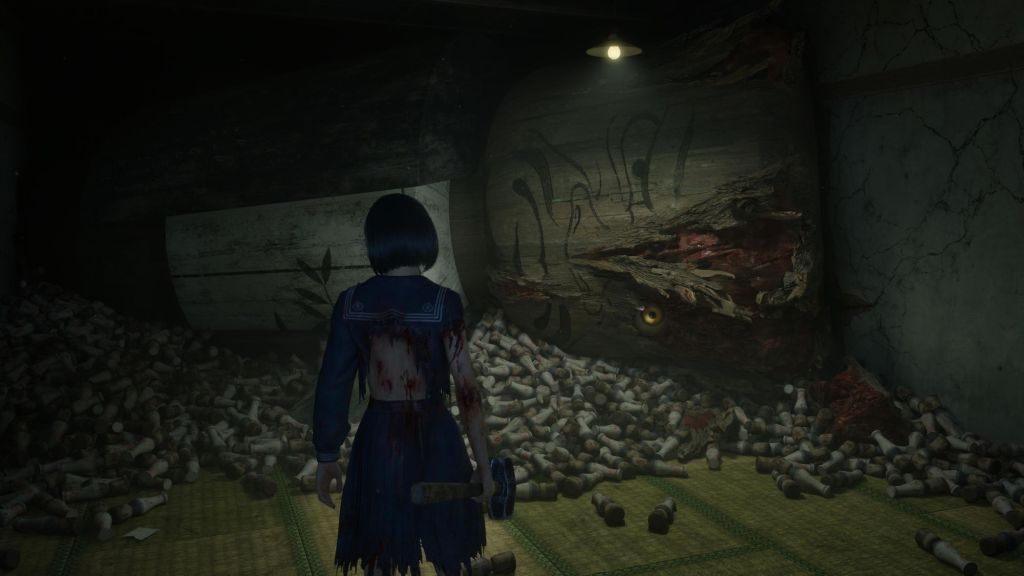
SH f is probably the best non-Team Silent, Silent Hill game (not that that’s a hard bar to clear). I’m not the biggest fan of having to replay a game multiple times to see its “true ending” though, even if it’s built into the narrative. While I “have the time” for it, I don’t necessarily want to “make the time” for it. I do love how this is the first SH game to show you the requirements for each ending within the game. I really appreciate it when developers try their best to keep the player from going online and looking at guides or a forum to figure things out. I completed SH f with the Coming Home to Roost ending on Hard difficulty for both Action and Puzzle. I thought the puzzles were mostly great, actually. I did make a mistake and started the game on Lost in the Fog puzzle difficulty, though. The puzzles on the highest difficulty are far too cryptic and obtuse (I gave up and restarted on Hard after encountering the “Secret Box” puzzle). We’ll see if I’ll make a return trip in 2026 to witness the rest of what the game has to offer.
HM #4. Metroid Prime 4: Beyond (MP4), developed by Retro Studios, is the highly anticipated sequel to Metroid Prime 3: Corruption and the first game from the studio in over ten years. The game begins with Samus picking up a distress signal (classic) from a nearby Galactic Federation base. After a brief tutorial section that feels ripped out of an early-to-mid 2000s campaign shooter, Samus, along with her dumb space marine friends, are transported to an alien planet called “Viewros”. It’s here where she learns of her destiny and purpose for being called to this world. MP4’s prime (pun intended) new gimmick is the psychic abilities you acquire over the course of the game. These new powers more or less play around with the existing upgrades you’d find in the older games. The Psychic Bomb, for example, can be placed, grabbed and tossed to charge receptacles that are out-of-reach. Then there’s the Psychic Lasso, which allows you to rip off enemy shields or pull grates off of walls. I thought the new powers felt a bit underutilized in both combat and exploration, sadly.
Visually, the game looks stunning. The art direction in general is very good and serves as a reminder that the artists over at Retro “still got it”. The use of HDR is also implemented exquisitely to bring certain areas to life. One of the first major “dungeons” in the game, Volt Forge, is powered-down when you first arrive. When you charge its generators (by using the lightning storms surrounding the facility), the place comes to life. Previously unlit corridors radiate from the electrical currents flooding its walls. The Ice Belt, the second major region in the game, has been completely frozen over, including the lab where experiments took place. When you restore heat to the complex, the ice begins to melt and a warm glow permeates the space. It’s during these moments where the music shines as well. The tracks that play in these dungeons will change when they’ve been restored. The tempo increases and the music feels more energized, as if restoring the power to these zones also somehow affected the composer.
MP4 peaks in the first half of the game and after a strong start, it’s all down hill from there. Fury Green, a lush jungle biome, acts as the starting area to the game. What’s sort of disappointing about this first area is that while it’s arguably somewhere in the ballpark of 10-15 screens, it feels like you only really explore 5 of them. Why this area wasn’t larger and more complex is a mystery to me. Instead, you’ll find yourself riding across a mostly-empty desert that connects each area in the game on a motorcycle. Speaking of the bike, which is called Vi-O-La, the area where you acquire it, the Volt Forge, is one of the best parts of the game (outside of the weird F-Zero-like race track where you learn how to control the bike). MP is known for its scanning and it’s here in an abundance. While it can feel a bit exhaustive at times, the amount of detail and volume of descriptions that have been written for each scan is staggering. As silly and dumb as the plot may seem, the world-building and justification for everything you’re scanning, down to how and why each part exists, does not go unnoticed. It’s all very cool.
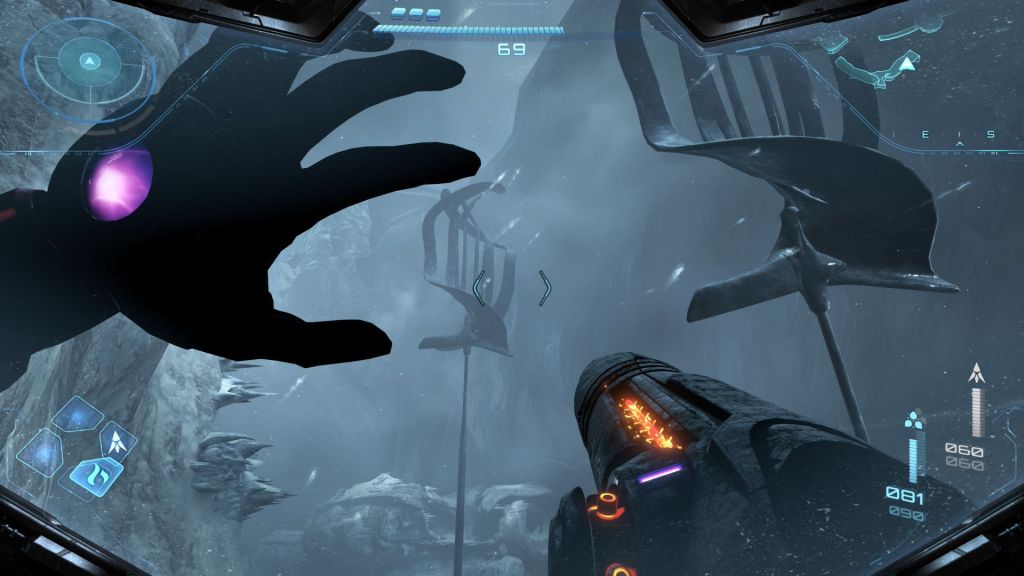
The game is more or less divided into four major sections. The second half of the game has some baffling design decisions, unfortunately. The last two areas are more heavy with the NPC interactions, as you’ll find yourself escorting and protecting your allies from waves of enemies far too often. These areas are also strangely linear and while the game does ask you to go back and forth between old areas with new power-ups to find secrets and the like, it ultimately feels like padding due to the overall structure of the game. The return trips to each area should have introduced new enemies or boss encounters, but they rarely do. In one trip back to the Volt Forge, for example, you’ll fight the same mini-boss you fought during your first visit and there’s really no difference to the encounter. The game introduces these potential moments of brilliance, like when the volcano erupts and causes “Green Energy” rain to transform the monsters in the desert, but it all feels so inconsequential. In the Great Mines, if you shoot a missile at the walls, the sound will attract enemies. It’s a really cool idea that feels entirely throwaway, however. I didn’t even realize it was a thing until the NPC that you were escorting there commented on it during a combat encounter. Although I didn’t care for the NPCs, their character models looked great and the facial animations were expressive. I do agree that it was a poor decision to keep Samus silent, even if she never really speaks in any other game (outside of Metroid: Other M).
I think the bosses are generally a highlight of the game (outside of Sylux because I couldn’t care less about him), but the enemy variety is lacking. I’m exaggerating when I say this, but it feels like you fight the same two enemies (and their variants) the entire game, both the Grievers and Psy-bots. Sure, there are the non-combative bugs and endemic creatures crawling around the environment, but the world feels less-populated than any of the previous games. It doesn’t help that you can kill most enemies with your normal power shots. The game throws A TON of weapon upgrades at you too in the way of elemental shots. What’s wild is that you need to first discover a “chip” and bring it back to Myles at your “base” so that he can install the upgrade into your cannon. Did Samus ever need someone to upgrade her suit? I suppose it’s alien technology so an engineer is needed, but that’s a bit of stretch here, all things considered. From there, you can upgrade each elemental shot a total of THREE TIMES. By discovering and completing BotW-like shrines out in the open desert, you’ll upgrade each elemental shot. The Ice Shot, for example, will bring flying enemies down to the ground when frozen. The Thunder Shot appears to vaporize machine-type enemies, but I always questioned whether or not these elemental shots were doing more damage than the regular shots, especially on bosses.
I’ll (Metroid Prime 2) echo the general sentiment I read online; it’s a game of high, highs and low, lows. Metroid Prime 4 ultimately felt like a compromised experience. With that said, something compelled me to complete the game at 100%. Maybe I still can’t help myself but grin when I blow-up debris with a morph bomb to reveal an Energy Tank. Or perhaps its short run-time and name alone helped me power through what was otherwise a mediocre experience. There was this overwhelming, almost palpable sense of morbid curiosity that I simply could not ignore as the game lingered in its final (underwhelming) hours. “This couldn’t have been it?”, I said to myself as I approached the final boss. Yes, this is what we waited 10+ years for. Metroid Prime 4: Beyond should have been the system-seller for Switch 2, but it’s not. I truly hope Retro Studios simply had to “get the game out” and that their next title is a return to form. Or maybe the studio is a shell of its former self and the Prime games should have just stayed d(r)ead and buried.
HM #3. Little Nightmares III, developed by Supermassive Games, known for Until Dawn and The Dark Pictures Anthology, take on the Little Nightmares (LN) franchise. I was super skeptical of this game not being in Tarsier Studio’s hands (the previous developer), but it’s actually not a total disaster! LN II was one of my favorite games of 2021 (it even made my Top 3!). Although the second game was a single-player experience where you controlled one character, you eventually meet a friend who accompanies you along the way. LN II almost felt like ICO at times, as you could hold the hand of your partner and even shout out to them. In LN III, you now have two playable characters and it features a multiplayer component (you can only play with another person online as there’s unfortunately no local co-op play). In LN III, you control Low and Alone, two children who once again find themselves in a dystopian world full of larger-than-life monstrosities. The game more or less plays like a “Greatest Hits” of the previous games, however. There’s nothing particularly “new” here, but it does introduce some interesting ideas, mechanics, and theories, even for the most devoted fan. Without spoiling anything major, the item you pick-up in the final chapter introduces a unique mechanic that’s not found in the previous two games, for example.
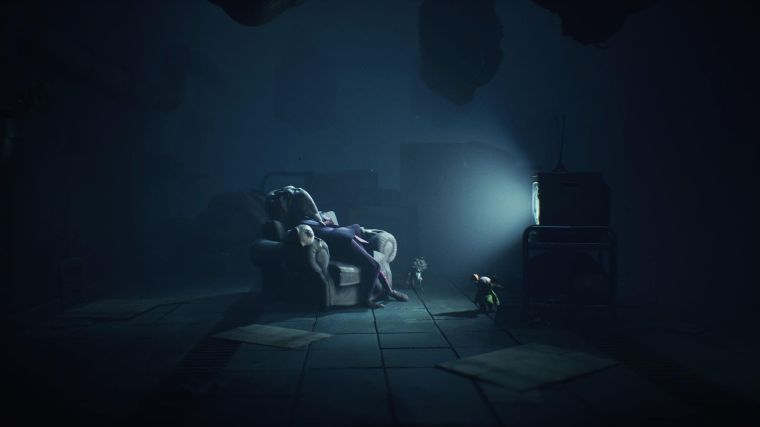
I think LN III peaks in the floating carnival chapter, however. Half-way through the game, the two children find themselves escaping a nightmarish theme park filled with dangerous rides, cheap games, and disgusting concession stands. At the culmination of the chapter, you realize that the entire carnival takes place in the sky on an airship. The first game took place in a massive underwater submarine-like facility while the second game more or less takes place on the surface. The thought that the people of this world could engineer something like this had my head spinning. As the chapter concludes, both kids float away in a hot air balloon in the middle of a thunder storm and it’s one of my favorite moments/shots from any game in 2025. I had so many unanswered questions walking away from this chapter, which is exactly how I should feel when playing a Little Nightmares game. With that said, I do feel like the chapters were way too short and there were too many empty hallways connecting rooms together. I wouldn’t say the pacing is bad (as the game is really short), but it does feel like the designers struggled to piece together the few novel ideas they did have.
I think one of the more interesting aspects of LN III is that there’s actually combat encounters in the game. LN II toyed with this idea briefly, but combat was never a focus in either game. Alone has a wrench, which they can use to destroy objects in the environment and fight enemies with. Low has a bow and arrow, so they can target switches and the sort that are out of reach. One of my favorite things about these games is how the camera, sound and music is used to elevate certain moments to enhance the atmosphere. When the camera starts to slowly zoom back and the music begins to play, I can’t not put the controller down to soak in the vibes. The LN games are also known for the monsters that chase you and while there’s nothing here you haven’t really seen before, they’re still relatively memorable and frightening. LN III still finds a way to capture what I value most from the series, even if it sort of feels like a shell of its former self. I think it’s always risky business when you pass an IP to a new studio, especially for something like Little Nightmares that’s all about tone, atmosphere, and feeling. I thought LN II was incredible, so they had a lot to prove here. LN III is good*, but with a huge emphasis on the asterisk. I completed the game once, but did not collect everything and still have a bunch of trophies to unlock. I wouldn’t say no to another Supermassive Games title, but if I’m being brutally honest, I’m sort of ready for REANIMAL, the “real” Little Nightmares III.

HM #2. ENDER MAGNOLIA: Bloom in the Mist, developed by Adglobe & Live Wire Inc., is a 2D Metroidvania and a follow-up to ENDER LILIES. The game begins with your main character, Lilac, waking up in a test tube of sorts after a mysterious woman tells you to “Seek out the other Attuners and… save the Homunculi“. Eventually, you find a Homunculi named Nola, who’s discarded in the corner of a cavern close to where you’ve awoken. The Homunculi agrees to join you, but only if you decide to get the two of you out of this abandoned place and that’s where the game begins. “Fumes” have enveloped the land, which is not unlike the “Rain of Death” (or Blight) from the first game. Apparently, the Homunculi go mad when exposed to it for too long (which should sound familiar if you’ve played the first game). Over the course of the adventure, you’ll learn about two houses in conflict and how they’re tied into the overarching story. ENDER MAGNOLIA, just like the first game, isn’t too heavy on the story, however. Most of the background lore is found in note pick-ups or conversations you have with your Homunculi crew when you’re chilling out on benches (which are the game’s save/fast-travel points).
I’ve always felt that the first area theme in a Metroid-like/Metroidvania is super important. Although it’s not as well-liked as the other entries in the series, Castlevania: Harmony of Dissonance has one of the best fist-level tracks of all time. So, in ENDER MAGNOLIA, after you meet Nola and they join your party, this track starts to play, and it’s honestly one of the best pieces in the game. The music throughout is very good and far more memorable than anything from the original game. In fact, the same can be said about ENDER MAGNOLIA as a whole. It’s the quintessential sequel; a follow-up that improves upon the game that came before it in almost every way. Traversal not only feels better to get around due to the snappier controls, you unlock Fast Travel relatively quickly too (although, perhaps not as fast as you do in BLADECHIMERA – are all of these developers competing on who can get to some sort of quick-travel the quickest?). Most notably, you no longer take damage by walking into enemies, which is huge (and welcome) change compared to the first game (and a topic of contention when it comes to the recent release of Hollow Knight: Silksong)!
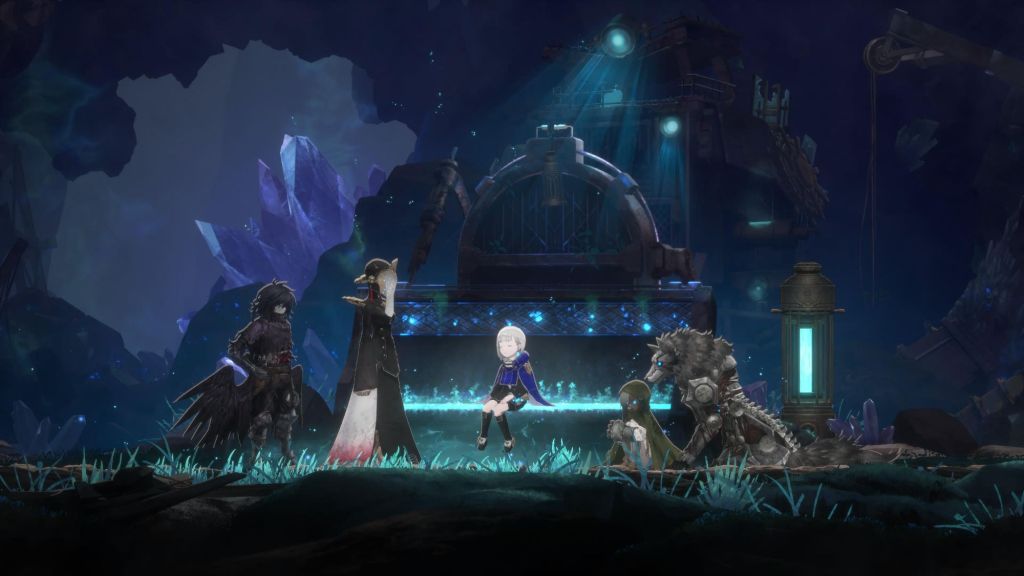
The combat in ENDER MAGNOLIA is very similar to the first game. The Humonculi you acquire are once again your familiars and can be assigned to the face-buttons. Some of their abilities are categorized by being on a Cooldown while others apply Pressure or are considered Auto types, for example. Pressure abilities deal damage over time (like a flamethrower). Auto abilities linger on the field while doing damage within a certain proximity. All of the Humonculi can be upgraded, too. Then you’ve got your Equipment and Artifacts, which more or less boost stat parameters like defense and the sort. Like any good Metroid-like/Metroidvania, there are maximum HP items to collect and other goodies to find, along with new traversal abilities that let you backtrack to new areas. The overall character progression is good and feels much more rewarding than the first game. ENDER MAGNOLIA’s visuals have also received an overhaul since the first game. There’s better use of color with its neon blues, greens, and reds.
I completed the game on Hard difficulty at 100% with the Platinum trophy earned, but there’s still things to do and stuff to unlock. Similar to how I approached the first game, I did not complete the Boss Rush mode nor did I even consider the new game+ options. I’m not the biggest fan of difficulty sliders/scales. I’d rather have a set/designed difficulty by the developer, which this game does have. You can further tweak certain parameters like “Enemy maximum HP” or even the “Enemy attack frequency” and by doing so, you can earn more Fragments, which can be used to unlock images in the Gallery page. I’d have to grind regular enemies or engage with the Boss Rush to earn the required Fragments needed to unlock all of the Gallery images, however, it’s not required for the in-game 100% completion or Platinum trophy. I was really impressed by ENDER MAGNOLIA. The developers clearly learned from the first game and swung for the fences. I would gladly play a third entry in this series, so here’s hoping the game sold well enough to warrant a sequel.
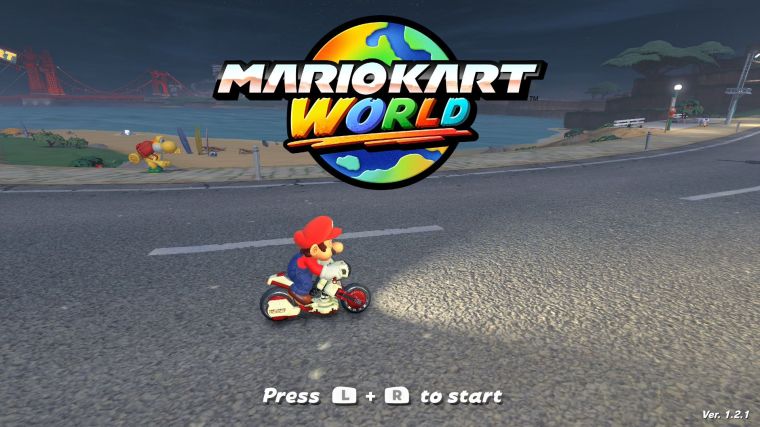
HM #1. Mario Kart World, developed by Nintendo, is Switch 2’s debut Mario Kart title. My brief history with this series; prior to Mario Kart World, the most time I’ve spent playing Mario Kart was probably Mario Kart 64 on the N64. Before that, Super Mario Kart on the SNES. I’ve dabbled with the portable games, most notably Mario Kart DS on the Nintendo 3DS and I suppose I played a decent amount of Mario Kart 8 on Wii U (before it got ported to the Switch). I’ve never touched Mario Kart: Double Dash on the Nintendo GameCube (GC) and I maybe turned on Mario Kart Wii once or twice. So with that said, when Mario Kart World was first introduced and the Free Roam mode was revealed, I started to feel excited about Mario Kart again. I’m not a huge racing game fan, so the standard Gran Prix formula isn’t supper appealing to me anymore. Free Roam, which is the game’s adventure mode of sorts, looked enticing leading up to the game’s release. Some people thought this was going to be the return of something more akin to Diddy Kong Racing on the N64. Perhaps Nintendo was hiding a campaign of sorts with cutscenes and other surprises in this mode. The reality, however, was not exactly what people were asking/looking for…
First and foremost, Mario Kart World looks incredible. For the system’s debut release, it paints a fairly nice picture for Nintendo’s first-party games going forward. The game is extremely colorful, performs like a dream, and has beautiful lighting, especially at dawn and dusk as there is a day & night cycle. New to this entry are seamless track transitions where you’re more or less driving from one point of the large open world to the next. Because of this, some of the courses are more or less straight paths which connect the drivers to the next course. Typically, the second course in a Grand Prix will only contain a traditional course track in its final lap, which many people found extremely disappointed after the fact. I was mostly okay with how it was implemented, but I will say the world itself and the general art direction feels a bit safe and boring. It’s not as dry as say the earlier New Super Mario Bros. games, but it’s somewhere in-between those games and the creativity and “weirdness” we saw in Super Mario Bros. Wonder or even Odyssey, to a degree. The game has been patched a lot since the time of writing this, but I mostly played through and 3-starred Grand Prix prior to the developer’s nerfing the “unfair” AI. It was pretty ridiculous, mind you, more so during the Knockout Tour races. To place first in the Knockout Tour races was a lesson in frustration; the worse you played, the better off you were towards the end of the rally as the AI’s rubber-banding wouldn’t play as aggressively. To earn a 3-Star rating at the end of the rally, you have to be in first at each checkpoint, which is quite the feat (until you realize you don’t really have to cut corners or use fancy rail/wall grinding techniques to stay in first place). What a mess!
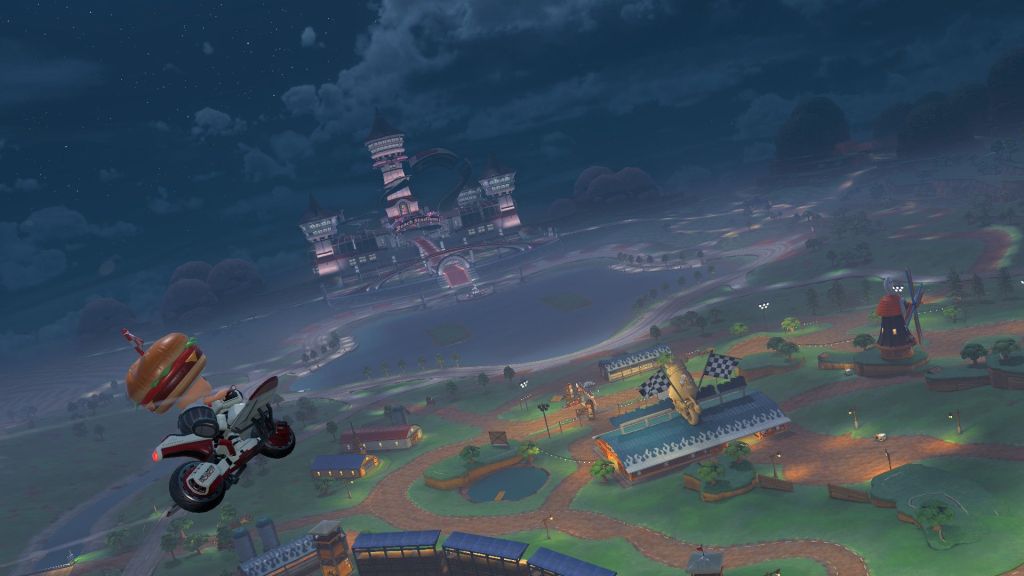
The saving grace in Free Roam is the soundtrack. The composers went to town on Mario Kart World and some of the best music in the game is oddly (but thankfully) housed in the game’s Free Roam mode. I think Mario Kart World is worth playing for the OST alone. I wasn’t quite sold on Free Roam after my first few hours with it, but the more I played, explored (and listened), the more it started to speak to me. I became addicted to finding the ? Panels, especially. Each of the main courses, which are organically placed within the open-world, can be fully explored outside of the traditional racing parameters. Each course hides these ? Panels which ask the player to simply ride over them in order to activate them. Your reward? A lousy sticker, of which only one can be placed on your kart at a time (ridiculous). Discovering the ? Panels is the reward in and of itself, though, as lame as that sounds. The courses are designed in a way to make you utilize Mario Kart World’s newest techniques, such as the rail and wall grind maneuvers, in order to find many of the hidden collectables. Not only are the ? Panels placed in tucked-away corners or on walls, there are hidden Peach Medallions to find and P-Switch challenges to complete (which are the equivalent to MKDS’s Mission Mode, from my understanding). The Peach Medallions require the most skill to collect in terms of “platforming”, but the P-Switches feel like uninspired, throwaway challenges that sometimes last less than a minute.
I completed all of the Grand Prix/Knockout Tours on 150cc/Mirror Mode with 3 Stars. I also beat all of the Time Trials, unlocked all of the characters (thanks to a recent update involving the usage of the secret UFOs…) and got all of the ? Panels in Free Roam. I did collect and complete my fair share of Peach Medallions and P-Switch challenges, respectively, but I wasn’t in any rush to complete the game at 100% due to the time commitment required (while some of the P-Switch challenges are challenging, the majority aren’t particularly interesting to engage with). It will interesting to see if Mario Kart World will be the long-term, never-ending investment that Mario Kart 8 Deluxe was for the original Switch. I’m not convinced that will be the case here, but it was the system’s launch title, so it’ll no doubt have legs for a very long time. For now, I think it’s an essential title for the Switch 2 and an interesting peek into the future of the hardware and what we can expect from Nintendo moving forward.

#10. Lumines Arise, developed by Enhance and Monstars, is the latest entry in the long-running Lumines series. Lumines first launched on the PlayStation Portable (PSP). At the time, I wasn’t really playing a whole lot of puzzle games. Needless to say, Lumines Arise is the first Lumines game I’ve played for more than an hour. I played through the game in PSVR2 and just like my time spent with Tetris Effect, it was an audio/visual tour de therapy. In Arise, Journey mode is what sets this entry apart from the previous titles. Lumines is a simple Tetris-like puzzle game where blocks fall from the top of the screen, but there’s more here if you dig a little deeper. You’ll play through a series of stages with unique visual themes, like two chameleons dancing on either side of the screen or two giant hands made of wires pulling strings. It’s mesmerizing (and a bit distracting), but I was always looking forward to the next stage’s visual element. The objects you’re clearing are always based around the theme of the level, too. In one stage, you’ll be clearing red and green apples while in another instance, you’ll be rotating clocks. Your objective is to match similar styled/colored blocks to get rid of them before the screen fills-up. A line, called the “Timeline”, moves from left to right on fixed intervals and as it passes over blocks you’ve matched, they’ll be erased from the “board”. By aligning blocks and creating combos, you can earn a lot of points if played properly. After spending 20 hours or so with the game, I found that the Timeline moved too quickly for my brain, even on Normal difficulty!
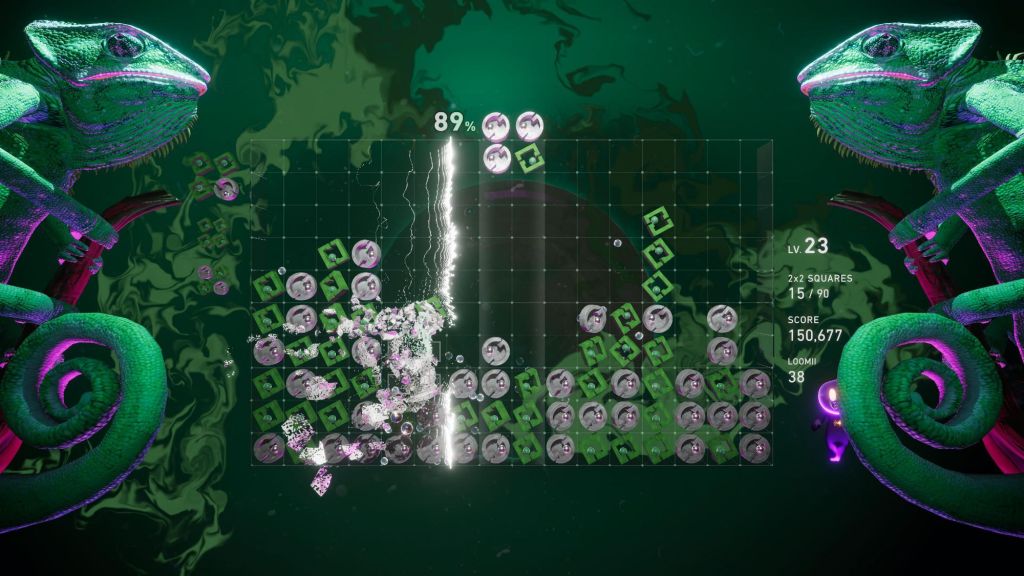
What’s new to this entry is the “Burst” technique. As you clear blocks, a percentage bar fills and once it hits 50% (or 100% for a longer period of time), you can slow down time and push blocks off of the field by stacking similar styled/colored blocks (if I understand it all correctly). If you don’t “crash out” (as the kids would say) during a particular set of stages, you can continue playing through to the next set of levels, maintaining your high score. Although you can restart on the stage you fail, I found myself restarting from the first level of a set so I could practice and potentially net a higher rank. It’s hard to describe some of the game’s mechanics, so if any of this sounds cool or interesting, I’d suggest just playing it yourself to get a feel for it all. There’s also an extensive tutorial mode where you can learn both the basics and more advanced techniques, which I should probably revisit. Just like with Tetris Effect, there are weekly events where rewards can be unlocked for your avatar and profile based on community participation. I played a bit of the “Burst Battle” mode online (where you compete against another player to see who can earn the highest burst value), but got mostly destroyed by other players who have clearly been around the block (pun intended). I completed the Journey mode on Normal difficulty (while only managing C Ranks because I still don’t fully understand how to play the game). At this point, I would take a new game from Enhance every year. The soundtrack is pure catharsis.
#9. Earthion, developed by Ancient, is the latest arcade shooter/shoot ’em up by Yuzo Koshiro and company. My very first arcade shooter/shoot ’em up was Toaplan’s Sky Shark on the NES. I have a very faint memory of walking into a Toys “R” Us with my father and brother after spending the day at some theme park (that wasn’t Hersheypark). For whatever reason, we grabbed the ticket for Sky Shark, perhaps because my father loved model airplanes, World War II and was in the Marines. Fast forward to Christmas a few years later and my parents gifted us the Sega Genesis (with Sonic the Hedgehog packed-in) along with Taito’s Sagaia, which is technically a Darius game. If you’re not familiar with the franchise, Darius is a horizontal (side-scrolling) shoot ’em up which predominantly featured giant mechanized fish. The game also had branching paths, so there was a ton of replay value. At that point, my love for side-scrolling/vertical shooters was solidified. Years later, my brother and I somehow received the Lords of Thunder promotional tape in the mail, which we became obsessed with. We were likely never going to own (or know someone) who had a TurboGrafx-CD/TurboDuo, but we watched that tape over and over again until we memorized the lines.
There has been a surprising amount of shoot ’em ups/arcade shooters over the past few years, particularly from the indie space, so what does Earthion do to differentiate itself from its contemporaries? I would say that it’s simply an authentically-made shoot ’em up, perhaps a step above other recent games in this space. Most importantly, Earthion’s controls are tight and responsive. You get three credits on Normal difficulty, which you cannot increase (only your starting lives can be adjusted from within the options, up to six). You have a normal shot, a shield and a special weapon. Special weapons are dropped from enemies, along with green crystals which increases both your normal shot and special weapon power levels (up to 3 levels at the start). The shield regenerates over time, if you don’t get hit, but it also recharges if you collect the green crystals. There’s a really interesting upgrade system between stages where if you collect a special item (I forget its name, but it takes up a weapon slot and doesn’t do anything else otherwise) and finish a level, you can upgrade your normal weapon, shield and special weapon capacities. You can also exchange the special item for an extra life instead. There’s a nice risk/reward system at play here, if you’re confident enough to get through a stage and its boss with only one special weapon. You can upgrade your ship to unlock more special weapon shots or increase your normal shot/shield levels instead, so you can more or less make your own build based on your play style.
Interestingly enough, I don’t think there’s a way to earn extra life’s/credits for hitting certain points thresholds, which is usually a shoot ’em up staple. There are hidden items in the levels (some of which carry 1-ups!) along with invisible items/green crystals if you shoot at “empty” spaces (usually a nook) within the stage. Levels are also the perfect length with the occasional sub-boss or unique stage gimmick (like blowing up skyscrapers in an overgrown city so that they fall down and you don’t crash into them). Passwords are notorious with old-school games, but they don’t exactly work how you’d expect them to here. The game has a unique “Password” system too where when you exhaust all of your credits on a run (or when you finish the game), a PW is generated which when inputted, you’ll start with whatever power-ups and ship upgrades you had (the game sort of tells you after you beat the game to use the password when starting a higher difficulty)!
There’s four difficulties and the steam achievements/trophies ask you to defeat certain bosses with specific special weapons, so the game does ask the player to experiment with the various power-ups at your disposal. Earthion is extremely colorful, has nice art direction, detailed illustrations, and a great use of parallax scrolling. One of the biggest draws here is that the music is composed by the legendary Yuzo Koshiro. I think the soundtrack is great and it sounds like something you’d hear out of the 16-bit generation, but I can’t say a single track stayed with me after beating the game, unfortunately. There’s also a Challenge mode, but I haven’t touched it yet, so there’s definitely some good replay value here outside of leaderboard chasing. I was going to wait for the physical release before I played this on PS5, but I couldn’t resist (so now I own both versions digitally). Earthion was one of my most anticipated games of the year and it more or less met my expectations. I finished the game on Normal difficulty while using one credit and nearly all of my lives on my second credit. Ultimately, I’d love to 1CC the game, but for now, I’m happy to blast off into the sunset.
8. Cronos: The New Dawn, developed by Bloober Team, is a 3rd-person survival horror game. In Cronos, you play as an entity called the “Traveler”. The game takes place in a sort of post-apocalyptic, SCI-FI world set in 1980’s Poland, which is interesting considering it’s the developer’s home country. You’re sent back in time to extract important people’s consciousness for a shadowy organization called the “Collective”. I really liked the Traveler character. She reminded me of a cross between the Terminator and the protagonist from Returnal; calm, cool and collected, but direct when she needs to be. Like another game on this list, I think my biggest issue with the game stems from its enemy variety and encounter design. There aren’t a ton of enemy types in Cronos, but it does feel good to shoot them (although the stomp doesn’t feel as effective as it does in Dead Space). You have one primary weapon that can more or less transform into other weapon types, including a shotgun and an automatic pistol. Each weapon does take its own inventory slot, but your space is limited, so you’re going to have to make some choices when venturing from one save room to the next. Your suit can be upgraded with maximum health upgrades, more inventory space and the like, but the materials needed aren’t easy to come by.
Another mechanic/gimmick Cronos somewhat “borrows” from The Calisto Protocol is the fact that the monsters can merge and evolve with other enemies. Similar to the original Resident Evil remake, to dispose of a body permanently, you need to burn an enemy’s corpse. Your suit’s gauntlet comes equipped with a “Torch” device that can incinerate enemies. When you down an enemy and don’t burn them, other monsters will charge towards the corpse to begin the transformation process. If you don’t interrupt them, prepare to use a lot more ammo to take them down. In almost every encounter, red barrels are almost always present, too. While I welcome their explosive benefits, it feels a bit archaic in terms of encounter design. Cronos isn’t easy, either. I was shocked how difficult the Normal difficulty was. Positioning your character, grouping enemies together and utilizing those explosive barrels if key to your survival. You also don’t get a ton of ammo, although enemies will drop ammunition when you need it.

I was super skeptical of Cronos leading up to its release. Bloober Team miraculously nailed the Silent Hill 2 remake, but their older games are a bit questionable. There’s a bit of Resident Evil 4 and a whole lot of Dead Space here, but Cronos does just enough to differentiate itself from its contemporaries. I tried A LOT of horror games this year, particularly on the indie side of things. I liked aspects of Post Trauma, Sorry We’re Closed, and Heartworm (just to name a few), but they ultimately didn’t do it for me. I completed the game on Normal difficulty with a “C” Rank and saw two of the endings. There’s a new game+ and a harder difficulty you unlock after beating the game, but at the time, I had to move on to the two dozen other games I’ve yet to finish. SUCH IS OUR CALLING.
#7. to a T, developed by uvula, is Keita Takahashi’s adventure game of sorts about self-acceptance. You play as a boy who’s “stuck” in the shape of a “T” who’s just trying to live their life and go to school. Because kids are the absolute worst, you’re bullied for being different than everyone else. Although you have a supportive mom and a few devoted friends, you can’t shake the feeling that there’s something’s “wrong” with you. Without spoiling anything, the story definitely goes places. The game consists of eight or so chapters that are presented like a Saturday morning cartoon, complete with an intro and outro song. Each chapter introduces a new scenario or challenge for the child, like getting through gym class, learning ballerina, or getting a haircut. Each morning you’ll have to dress yourself, use the bathroom and eat breakfast. Your daily routine, so to speak, is accompanied by simple mini-game sequences that typically uses the right analog stick and right/left triggers. It’s perhaps not the most “fun” game to play in a traditional sense (it’s certainly not as immediately gratifying as a Katamari game in the gameplay department), but it makes up for it by having a whole lot of heart.
If you have a favorite TV show, anime, or cartoon, it’s likely blasphemous to skip both its intro and outro theme. I surprisingly didn’t watch a ton of anime growing-up, but I did play a lot of JRPGs, the Tales of franchise, among them. I loved the intro animations and themes to these games. I’d rarely, if ever, skipped the opening sequences whenever I booted them up. Fast forward to 2014 when Swery’s D4: Dark Dreams Don’t Die released on the original Xbox One. Its intro solidified my love for opening sequences with credits. Then there was Keita Takahashi’s to a T this year. Its Saturday morning, cartoon-like intro theme made me want to sit in my pajamas, eat cereal and remain a kid, indefinitely, for the rest of my days. to a T’s theme song also provided us with this gem of a video. What else is there to say?
After you roll credits, you can freely explore the town in a post-game chapter. From there, you can play and beat the high-scores for each mini-game, purchase any remaining piece of clothing, find all of the hidden haircuts, and more. I had to look-up 3-4 of the haircuts, however, as a few people are extremely well-hidden. There are 100s of pieces of clothing to purchase as well. To earn money, you have to collect coins scattered around town. Fortunately, there’s a spot where a high-value coin spawns indefinitely, but your currency maxes out quickly (99,999), so you’ll have to make trips to each store frequently to purchase everything the game has to offer. The town (game) feels fairly barebones, but I honestly loved being there. I should say that it’s not exactly easy to navigate the town, though. Although you can ride around on a sentient unicycle to get around faster and you unlock an ability to turn into a tornado to fly around, your pathing is sort of restricted to 2D planes. It helps that the music is really pleasant to listen to, so I didn’t mind trekking it from one side of the town to the other. I completed the game and unlocked all but the one (super grindy) clothing-related trophy. Considering Sony recently bought a portion of the Peanuts brand, I’d say give Keita Takahashi a budget and let him go to town!
#6. Kulebra and the Souls of Limbo, developed by Galla Entertainment, LLC (Galla), is an adventure game of sorts in the same vein as Paper Mario (but without the combat). The game primarily comes from two brothers from the Dominican Republic, but who are now based in Illinois. Kulebra is a colorful and hopeful yet somber journey through the underworld. The game begins with Kulebra, a boney snake, waking up in Limbo with no memory as to how he got there. A strange, bird-like lady guides you to the doorsteps of the valley of the dead and tells you that in order to find out what happened to you, you’ll need to help those in need. After a short introduction sequence, you’re introduced to a mother and daughter who can’t seem to sell the plants they have at their shop. Something is keeping them there and it’s your job to figure out why they can’t move on. Kulebra utilizes a Majora’s Mask-like time cycle split between day, evening and night; NPCs have routines and certain story beats can’t be progressed unless you meet particular conditions, although it’s not as strict as anything you’ll find in Majora’s Mask. If you run out of time, the day repeats itself, although you can leave permanent “Soul Marks” on people so you don’t have to repeat all the steps. I really liked the soundtrack in Kulebra as well. Composed by Zach Striefel and Clayton Tapp, each time of day has its own variation on the area theme, which is very cool. I especially liked The City of Plaza track.
It’s undeniable that the game looks and feels like a Paper Mario title, however. The characters and objects in the background are paper-thin but the buildings don’t fold and collapse as you enter areas and establishments. Kulebra is an adventure game at its core. There’s no combat in the game per se, but there are “boss” battles in a sense. Usually, at the culmination of a chapter, you’ll face off against the “darkness” version of the character you’re trying to help. A lot of the time, it’s more or less a menu-based “battle” that consists of multiple choice questions and the sort. The questions are mostly easy if you’re paying attention to the story, but if you need to recall any details, you have a Journal you can refer to which logs important information about each character in the game. Sometimes, a small puzzle or set-piece-like sequence is involved in order to “defeat” the boss. During these sequences, there’s a “Darkness” meter that slowly builds. If it hits 100%, it’s Game Over. The penalty for “failing” is almost negligent, however, as you’re usually placed right before the section you failed (the checkpoints are very generous). These end-of-chapter scenarios are extremely well-crafted and packed with a lot of emotion. They’re some of the best moments in the game.

Although Kulebra is a mostly linear game, there are some optional quests and things to collect to extend its relatively short runtime. There are Bottled Messages to collect that contain messages (which is usually some sort of affirmation, a cute drawing or a note from the developer). In some of the late-game chapters, there are lost souls who need assistance before they can “pass over”, so to speak. A lot of these sidequests are more or less fetch-quests, but there’s not a lot of them, so they’re a welcome distraction between story bits. Finally, there are Pearls to collect which can be traded for various items throughout the game. These Pearls are the major collectable in Kulebra and can usually be found shining on the ground in tucked-away corners. Other times, you’ll have to roll into various objects like barrels, signs and trash cans to unearth them. The game does keep track of how many there are in each area, which is very much appreciated. There’s a surprising amount of items to purchase, some of which are required for sidequests, but they can also be used to temporarily boost your parameters. One item can increase Kulebra’s movement speed, which can be helpful during the game’s many stealth sequences, although it’s rarely required.
I completed the game at 100% with all achievements unlocked at 1000/1000. I actually bought the game first on Nintendo Switch, but later realized it was also on Game Pass, so I re-downloaded it there and finished the Xbox version. I did have to look up a hint for one of the hidden bottles, but nothing appears to be (thankfully) missable. I do think the game ends rather abruptly. When the credits roll, there’s an epilogue of sorts that feels like it sets the story up for additional content/DLC. You can freely explore the entire game at this point and finish/collect anything you may have missed. Ware there always plans to make an expansion or add content over time? Who knows, but I do hope the game did well enough to warrant some sort of expansion, a sequel or even a brand new game. This is one developer I will keep an eye on going forward. So many indie developers have tried their hands at making something akin to Paper Mario. There’s games like Bug Fables, Born of Bread, or even the troubled Outbound Ghost. I’ve played a bit of Bug Fables, but not the other two games, so I can’t speak to them. I just don’t think any other game in this particular style has captured the spirit and true essence of Paper Mario (and Yoshiro Kimura’s games to a degree) quite like Kulebra and the Souls of Limbo has. It’s easily one of my favorite games of the year.
#5. Keeper, developed by Double Fine, is a cinematic adventure game of sorts where you play as a sentient lighthouse. As I’ve gotten older, I’ve become more drawn to lighthouses for reasons I can’t fully explain. Perhaps it’s the isolation and calmness that emanates from their towering, steadfast beacons of hope. On a deeper level, I feel like us humans love going to or being near the beach because there’s a primordial call to “return to the ocean” baked into our DNA. Back in November, my husband and I stayed at the tallest lighthouse on the west coast in California for our anniversary. It was an incredible experience. I got my lighthouse passport stamped for the second time, too! It’s about time Double Fine made a game along the lines of something like Another World, Heart of Darkness or INSIDE; the cinematic adventure game. While the developer has been known for their traditional point & click adventure games in the past, I’m thrilled they’ve finally made a game in this sub-genre of sorts.

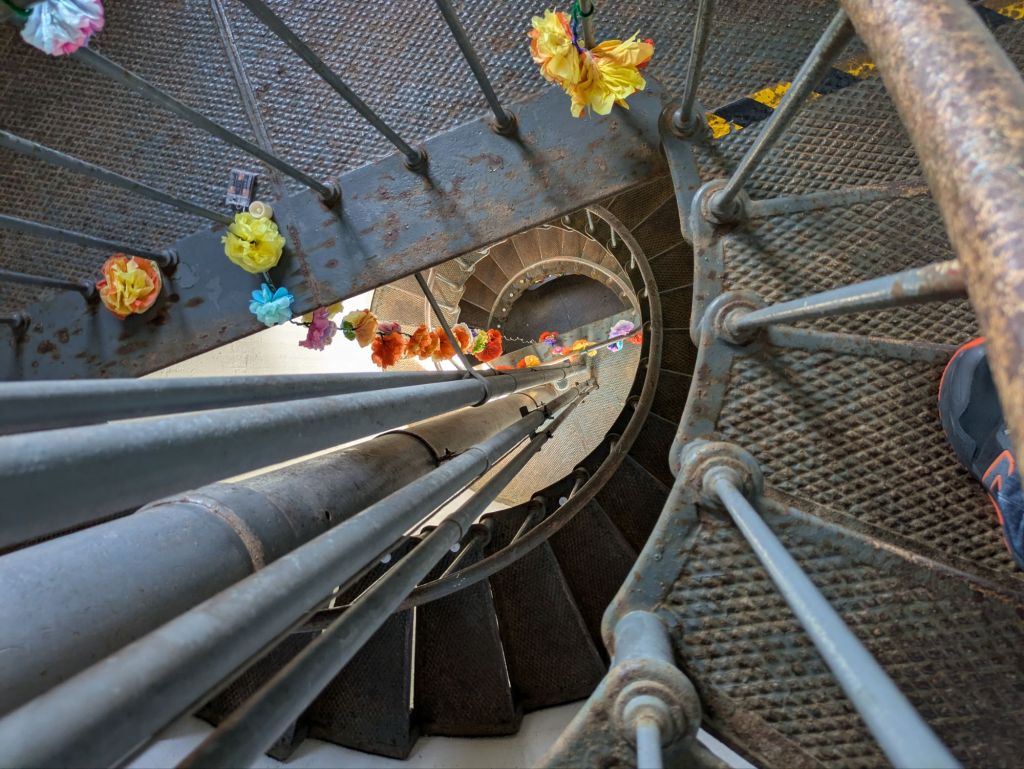
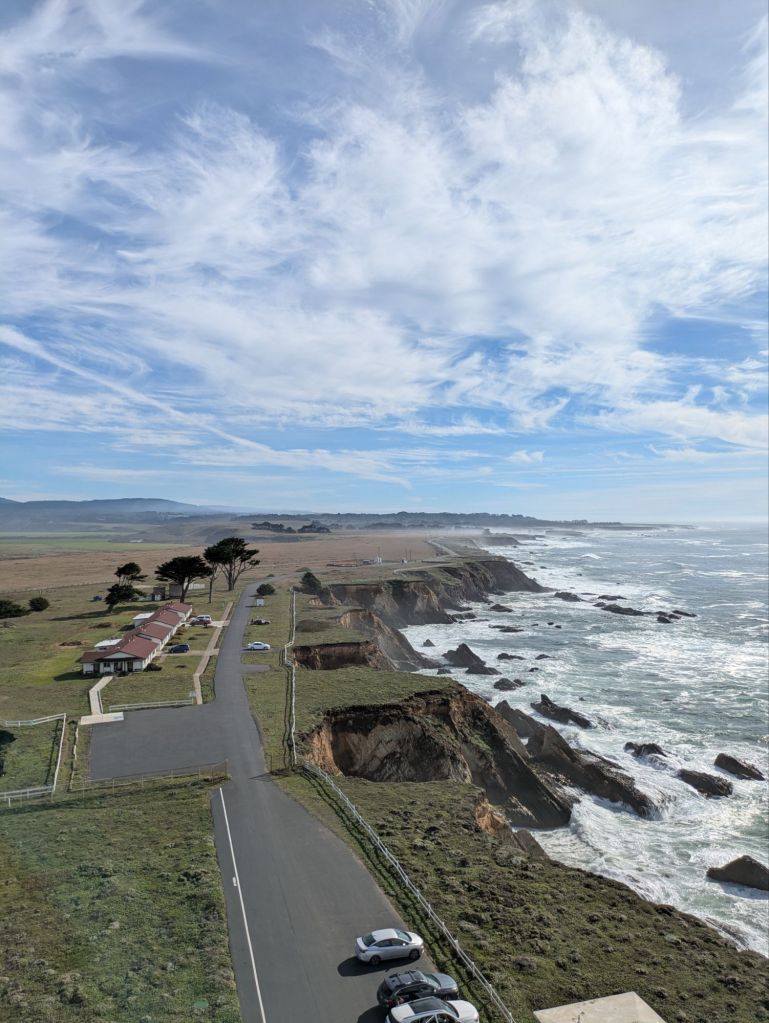
The gameplay is fairly simple in Keeper. You can walk and dash around as the lighthouse, but you’ll be primarily using your Fresnel Lens (the beam) to solve environmental puzzles. You’re also accompanied by a green, prehistoric bird named Twig. The bird sort of acts on its own, but you can control and guide the little guy to pull switches and grab items, for example. My favorite thing about Twig is how he sort of just hangs around and nests on the lighthouse. There’s a ton of personality packed into both characters, even when there’s no spoken dialogue in the game. Keeper also has impeccable art direction and perhaps my favorite visuals from any game this year. It’s brimming with beautiful colors and the use of lighting and shadows is eloquently implemented. The soundtrack is very unique, almost otherworldly and abstract in its sound. The interesting use of instrumentation and the atmosphere it creates had me putting my controller down just to listen on more than one occasion.
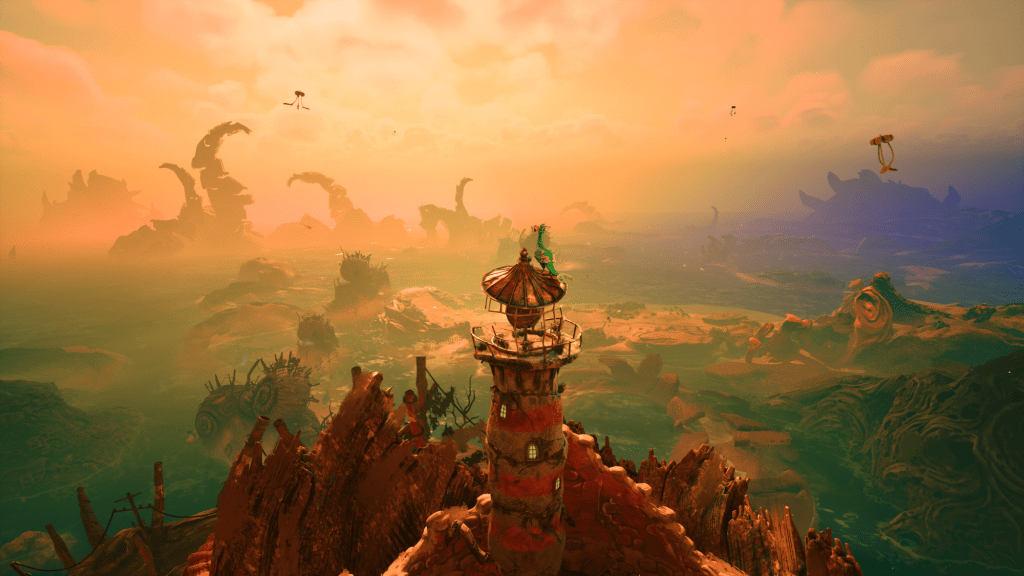
I completed Keeper with all achievements unlocked, but wished there was more to “do” as I didn’t want to leave this world. At the same time, it’s kind of perfect how “pure” of an experience it is (which is how I feel about another game that will grace my Top 10 for the year…). There are really no collectables or optional objectives in the game. All of the achievements are tied to discovering these monoliths built of rocks that provide some subtle world-building, but they’re always placed just slightly off-the-beaten path. Keeper was one of my favorite games of the year. With how terrible of a company Microsoft has been lately, I’ll simply leave you dear reader with the following: Protect Double Fine at all costs.

#4. Öoo, developed by Nama Takahashi, is a 2D puzzle-platformer where you play as a tiny caterpillar that can produce bombs from its body. The game begins with a caterpillar resting in their cozy little home. After what appears to be a good night’s rest, you wake up and crawl out to the branch extending from your tiny abode. A juicy red apple appears in sight, when suddenly, a giant bird comes and snatches you away. From there, the game begins in the mouth of the giant bird that gobbled you up. The developer’s previous game, ElecHead, was also a 2D puzzle-platformer, but instead of using its body to navigate rooms and solve environmental puzzles, the character used their head (naturally). This developer clearly likes to marry its playable character to the game’s core mechanics. What’s shocking about Öoo is that there is little-to-no character progression. It’s technically a Metroid-like by design, but not in a traditional sense. The most impressive thing about the game is that you technically have all of your abilities at the start. The game, however, will teach you new maneuvers organically as you progress and by learning how to manipulate your bombs (and surroundings), previously inaccessible areas will suddenly become accessible. A lot of the time, you’ll come to a room that splits to the left or right. The left path is clearly a dead-end, but the right path is solvable. By the time you reach the end of the right path, however, you’ll discover yet another dead-end. This room will likely contain a teleporter so that you can fast-travel (likely to a point right before the aforementioned room split). At this point, you should have learned how to solve the previously “unsolvable” room on the left path, which is when the game showed its true genius.
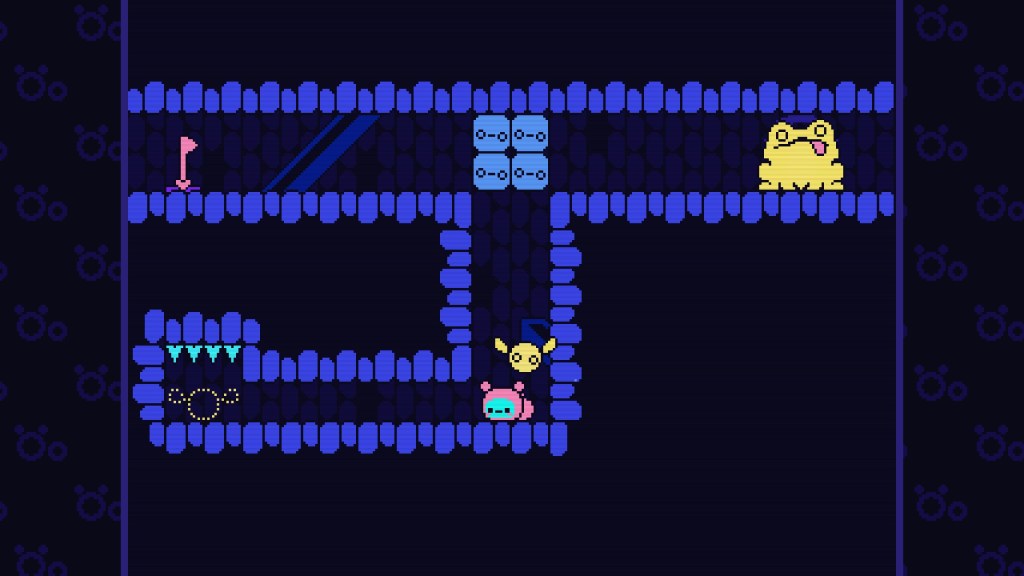
Öoo is, once again, a masterclass in minimalism. It’s better if I don’t write about every little detail here so that you, the reader (and hopefully future player), can discover all of its mysteries on your own. One tiny detail I will share — I loved that the music changes when you collect a fly (which is one of the game’s primary puzzle “items”) or even when you acquire your second bomb (which is arguably the only actual upgrade in the game). When a fly is collected, the music will layer a sort of buzzing sound to it. It’s these subtle details that really make the difference for me. Each area has a unique theme that sort of builds on the previous tracks; Area 6 is especially my favorite. If I had to fault the game for anything (and I’m really grasping at straws here) is that it’s perhaps a bit too short. There are also no hidden collectables or anything to find (outside of an Easter egg that references the developer’s last game), so it’s a rather linear, one-and-done experience. I completed the game with all Steam Achievements unlocked at around four hours. With that said, it’s one of the most agreeable games I’ve played all year. If you’re a 2D puzzle-platformer fan to any degree, you MUST play this game. It’s simply the perfect palate cleanser to all of the horrible things in 2025. Finally, on BS (that’s Bluesky for Tim), the developer recently stated that he already began work on his next project. I sent him a message saying that I hope they name their next game “Project Butterfly” and I that they retain the stylized way of writing the game’s name, accent mark and all. So, here’s to ʚїɞ, or whatever comes next. I’ll be there day-one.
#3. Promise Mascot Agency (PMA), developed by Kaizen Game Works, is a semi-open world, sim-management game where you run a mascot agency on a cursed island as a former Yakuza named Michi (AKA, “The Janitor”). At the start of the game, your matriarch sends you out to perform an important job, but after a 12 billion yen deal falls through, you’re banished to a forgotten town to earn back the money and respect you’ve lost. Your goal is to resurrect a failed mascot business, pay off your debts and restore the glory to your family name. The most ridiculous thing about PMA is that the mascots are simply not people in costumes. These mascots are living beings, one of which, a severed finger called Pinky, becomes your protegee. Within the first few hours of the game, you learn that a corrupt mayor has taken over the town and run its businesses into the ground. Over the course of the game, you’ll slowly re-open establishments, attract people back to the island, and uncover a larger conspiracy involving your family. Oh, and there’s a card-based battle system in here for good measure, too.
One of the most interesting aspects of PMA is that you simply control a Kei Truck as your means to “getting around”, so to speak. There’s no on-foot action here. In fact, the game sort of straddles the line between being a visual novel and an adventure game. You’ll be doing a lot of reading, but fortunately, the writing is poignant, witty and funny. Michi, voiced by Takaya Kuroda, is serious and stern. He more or less embodies Kiryu from the Yakuza series, unironically. It’s rare for dialogue in a game to make me laugh or smirk, but most conversations between Michi, Pinky and the gang managed to pull one out of me on more than one occasion. You’ll learn more about the mascots as you send them out on jobs to promote local business and after specific milestones are reached, you’ll be treated to brief story vignettes where you’ll learn about their past. It’s here where you’ll find some of the best writing in the game. Although the mascots are otherworldly entities, they’re undeniably human, sharing their hopes, dreams, feelings of self-doubt and other insecurities.
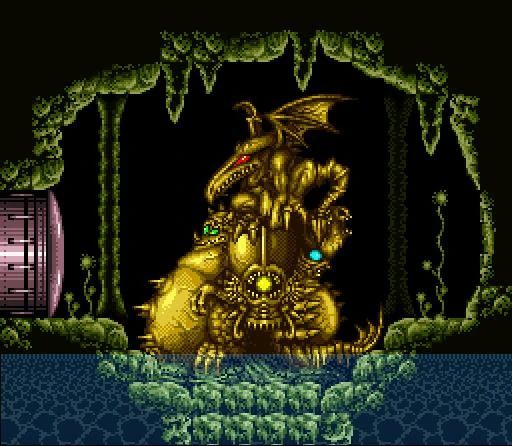
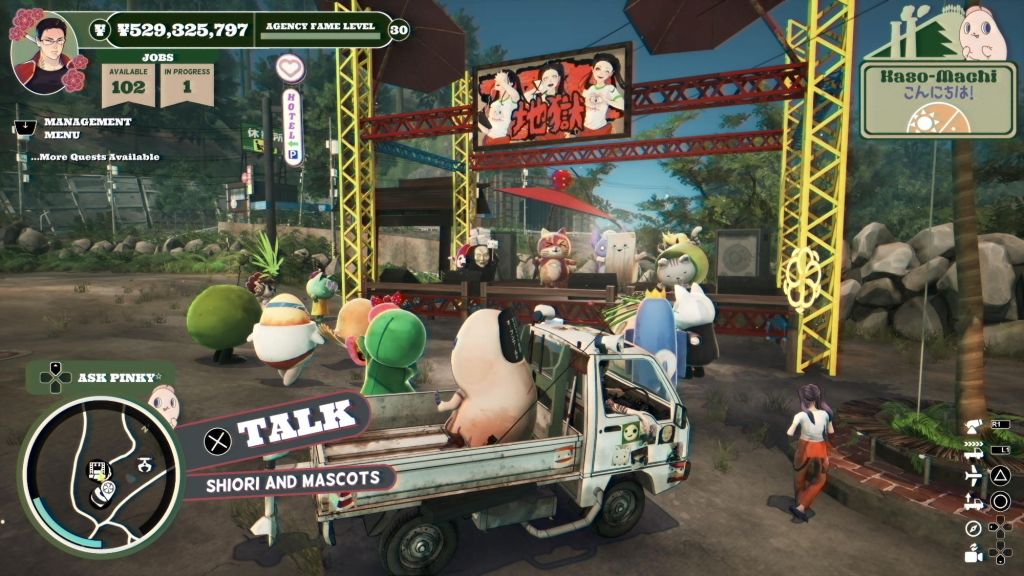

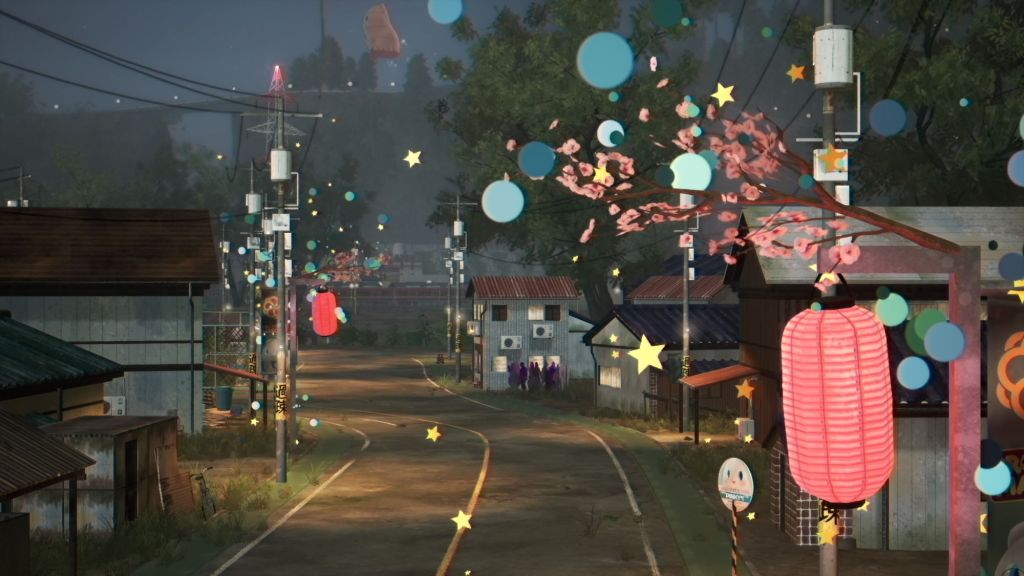
I’ve been workshopping a new term for one of my favorite things in gaming; “Environmental Visual Progression” (EVP) or “Visual Meta-Progression” (VMP). I want to say this was first established for me in Super Metroid (SM) with its golden boss statue. When you beat a boss in SM, the eyes in the golden boss statue go dim and turn grey. So, this term is for any fixed element in a game to change/update visually based on actions made within the game. PMA is loaded with EVP/VMP (is that enough abbreviations for you!). At the start of the game, the evil mayor’s signs (one of the game’s many “collectables”) are plastered all over town. One of your objectives is to quite literally drive over them. When you do this, they’re replaced with signs of your beloved Pinky (who also ends up running for mayor in the latter half of the game). In addition to this, you’ll meet a mechanic who tasks you with hunting down and capturing spirit foxes around the island. When you find one, your truck gets upgraded with additional exhaust pipes and the sort, including wings which let your truck fly like an airplane! There are also hidden stickers littered around the map and once collected, they get stamped on the exterior of your vehicle. Finally, as you re-open businesses, lanterns, billboards, flags and more breathe life back into the island. As the town develops, you’ll also start to see citizens return to the island, which are represented by featureless silhouettes of people standing along sidewalks and around buildings. It’s certainly a clever (yet stylish) cost-saving measure to make the world feel more alive.
As you send mascots out to promote business, they will sometimes encounter “issues” on the job. Perhaps your favorite mascot is out promoting “S-Rank Ramen” when suddenly, a swarm of bees attack. Maybe a stray dog crashes the party or the stage where the venue takes place falls apart because you tripped over a piece of equipment. To tackle these problems, you partake in card-based battles. As you progress through the game, you’ll have opportunities to purchase or find “Hero Cards”. Each card (which are based on the characters from the game) come equipped with attack values and other stats. More often than not, a card will grant you your turn back or add more cards to your current deck. Your goal is to defeat the problem before time runs out. If you successfully resolve the issue, you get paid, and you’re going to need that money! At regular intervals, your matriarch will require payments to pay off your debt. This is compounded by the daily overhead cost of running your mascot business; each mascot has their own salary (that you negotiate) and those lights aren’t on for free! I played through the game with the recent Hard difficulty update and in the early portions of the adventure, I was barely scraping by. I typically don’t like card-based battle systems and found the whole process to be extremely confusing at first. I’ll be here all day trying to describe all of the layered mechanics at play here, but once you wrap your head around it all, it becomes an incredibly addicting and satisfying collection of systems to engage with.
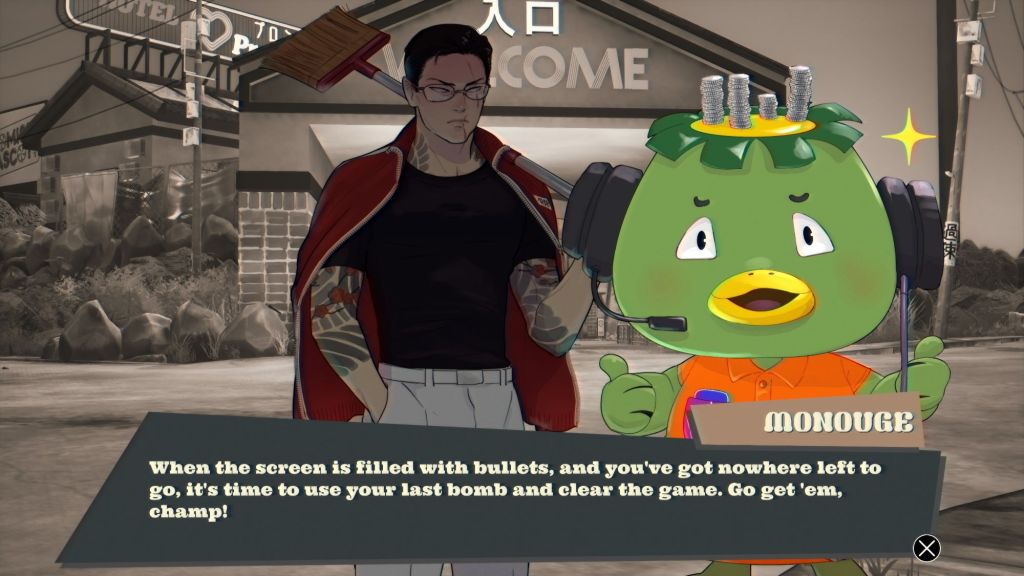
I’d be remiss if I didn’t mention the soundtrack, which feels heavily inspired by the PS2 era Shin Megami Tensei (SMT) games, specifically Persona 4 (according to one of the composers). The soundtrack is exceptional. I mean, listen to this bassline! I can’t fully describe how it makes me feel, but listening to this game’s music transports me to simpler times. In a post-launch patch, there was an update that added Time Trials where you can earn gold medals based on how quickly you complete them. I managed to earn gold medals on a handful of races, but a lot of them are fairly challenging. In the last act in the game, you’ll also gain access to making deliveries to local shops/establishments. By collecting “Gacha” merchandise scattered around the island (which the game, once again, has a narrative reason for), you can use various crane machines (UFO Catchers) to collect the figures. From there, you can sell them and make a profit from participating retailers. Some places are looking for specific collectables, so you’ll get more money if you decide to send certain figurines to specific locations. It’s yet another layer to the sim-management aspect of the game and a great way to earn some additional daily income.
I only got a few establishments to three stars, which is the highest rank needed to earn a trophy, but if I wanted to fully complete the game at 100%, I’d have to max them all out. There’s also a super secret unlockable Hero Card for paying off the 12 billion yen debt before you reach the post-game/epilogue. It’s a completely unrealistic goal for any normal player, so I don’t think I’ll ever unlock the card legitimately. I sort of wish the game gave you an option to pay it off on your own after you finish the game, but there’s no trophy tied to doing this. I completed the game with the Platinum trophy earned and loved every second of it. I’ll be revisiting the developer’s first game, Paradise Killer, in 2026, as I’ve heard nothing but great things about that game, too. I can’t wait to see what Kaizen Game Works does next, though. They have instantly skyrocketed to the top of my “keep an eye on this developer” list. Promise Mascot Agency doles out new ideas and dopamine hits like a Blackjack dealer at your favorite casino. It’s a game about community and amplifying marginalized voices, which is more important today than ever, because, well, *gestures wildly at everything going on in the world*. I can feel it. I understand Fighting Dreaming.
#2. Donkey Kong Bananza, developed by Nintendo, is the first 3D Donkey Kong platformer in over 20+ years. I wrote about this previously, as I just finished a replay of Donkey Kong Country Returns HD, but 2D/3D platformers are my bread & butter. They are my ultimate comfort food gaming, so to speak. Donkey Kong Country (DKC) might not be as important to me as an adult compared to when I was a kid, but I’m still rather fond of the series as a whole. I can recall the Christmas where I got the Super Nintendo Entertainment System (SNES) game as a kid and I played all the way up to Gorilla Glacier in a single sitting. I’ve gotten 101% numerous times over the years and while Donkey Kong Country 2: Diddy Kong’s Quest is arguably a better game/sequel, I’ll always have a soft spot for the first game. I more or less share a similar sentiment for Retro Studio’s DKC titles. I haven’t revisited Donkey Kong 64 since I was a teenager, but I have really fond memories of that game, despite its divisiveness amongst the fanbase. There was definitely a Thanksgiving where I played DK64 for hours and loved every minute of it. When Nintendo finally announced a new 3D Donkey Kong game, developed by the Super Mario Odyssey team (which they took forever to confirm), I was beyond elated. Bananza’s opening starts off the shores of DK Island on the remote Ingot Island. DK and his fellow apes are mining for bananas when suddenly, a giant drill-like meteor descends from the sky and creates a massive hole, taking DK and everything else along with it. After finding an odd, purple rock (who later becomes Pauline — she’s on the cover of the game and the reveal happens very early, so this isn’t really a spoiler), the game begins.
DK’s move-set is relatively simple; he can run, jump and smash forward, downward and upward. The main “gimmick” in Bananza is its nearly completely destructible terrain. DK can quite literally obliterate each environment in the game. I think from afar, you could argue that it all looks a mess. When you’re smashing through the environment with no disregard, creating tunnels through the game’s many spaces, leaving chunks of land suspended in air (which I do take slight issue with), the landscape from a bird’s-eye view can look like a child tore through a playpen. With that said, it’s super impressive how the level designers incorporated traditional stage design within semi-open environments that are all nearly completely destructible. Due to the different types of (unbreakable) terrain, the designers managed to carve-out interesting platforming sequences and scenarios, which also typically make use of the animal transformation you’ve just unlocked. In one of the game’s worlds (layers), for example, there’s acid rain falling from above, so you need to grab hardened terrain and hold it over your head so you don’t take damage. If you rip a chunk of sand, however, it will dissolve too quickly than if you were to use rock-type terrain. It’s clever ideas like this that carry throughout the adventure as you journey further into the depths. I do wish, however, that these stage ideas lasted a bit longer than they do.
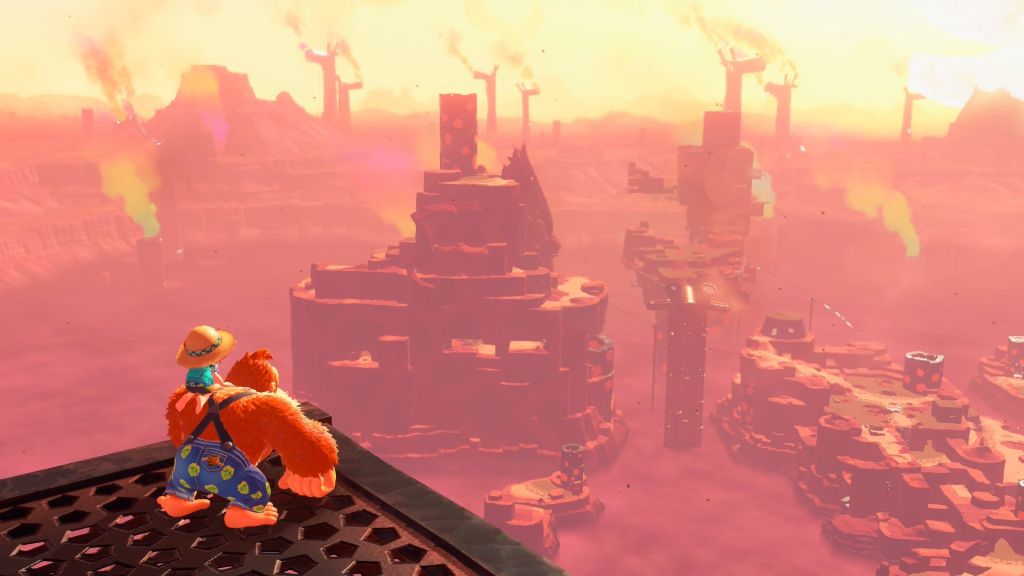
Speaking of the depths, between each major new world (layer), there’s typically a “Sinkhole” area which leads to the next level. The track that plays in these spots is this sort of dissonant, unsettling, atmospheric piece that carries a tone that’s both mysterious and foreboding. The music in general is fairly memorable (especially in the final few hours of the game, along with the credits theme, which sounds like something out of a Xenoblade Chronicles game). The first world, Lagoon Layer, has the most perfect opening track. This piece instills a great sense of adventure and carries some of the older DK soundtrack motifs. I think the art direction is generally good, too. In the Canyon Layer, for example, there are smoke stacks in the shape of giraffes that can be seen in the distance. I will say that perhaps each world lacks a thematic focal-point most mainline 3D Mario games have, especially when compared against the kingdoms from Super Mario Odyssey, for example. There’s nothing in Bananza that quite captures the moment when you land in Seaside Kingdom and see the giant soda fountain in the distance. But take the Forest Layer, for example, which more or less positions a giant, egg-shaped hotel at the center of its world. The golden exterior of the hotel glistens from the artificial sun (lights) in the sky (yes this is actual lore teased within the game), just begging for a giant ape to tear down its luxurious walls. I think Bananza does it best to provide memorable visual landmarks, but because you can literally destroy most of the terrain and structures in the game, I’d imagine it was difficult from a designer’s perspective to create landmarks that were meant to leave a lasting impression.
Each layer contains these bite-sized “aha” moments nestled within the stages (particularly in the sub-layers of each world, which almost act as traditional “stages”), but for whatever reason, the developers seemed to opt for extremely tight-pacing instead. On top of that, while there are a ton of unique bosses in the game, they’re far too easy. DK can eat through boss phases if you’re skilled enough, which was one of my biggest disappointments with the game. Similar to how I felt about the Power Moons from Super Mario Odyssey, the Banandium Gems, the game’s primary collectable, still feel somewhat unrewarding to collect. With that said, I can’t deny the hit of dopamine you get when you discover one, along with the accompanying, “Oh, Banana!”, which is yet another callback to DK64. When you’re down to the last few Banandium Gems, the game, however, turns into a randomly generated digging-fest. When you’re breaking/digging through any layer of terrain, a treasure chest can appear. The contents of the chest might contain a Balloon (which saves you from pitfalls), gold, or even a map. On the rare occasion, you’ll obtain a Treasure Map, which puts either a Fossil or Banandium Gem you’ve yet to discover on your map. I think the game is more fun if you don’t fixate on looking at the map, but once you’re down to the last few collectables, the act of finding the Fossils and Banandium Gems starts to become a bit tedious.
I was 100%’ing each layer as I progressed until I hit a certain point. Halfway through the game, I decided to mainline the primary layer objectives so I wasn’t potentially spoiled on the final “reveal”. The last few hours of Donkey Kong Bananza is sort of incredible and perhaps one of the greatest moments in Nintendo’s history. I still can’t believe Nintendo went there, but they did. I hope the path they’ve carved is just the beginning in terms of potential sequels/games, but I’ll leave it at that for now. I didn’t really touch on the new group of baddies, VoidCo (they’re okay), or how you collect music records for giant animal DJs who grant you new transformations, which is interesting considering the game’s focus on music. I will add that I loved diving into a sinkhole, chasing after one of those large banana bunches that falls into the pit after beating a boss (I love the brief piece of music that plays when this happens, too). That sense of “what’s next” or “what is the next layer going to look like?” felt exciting and kept me playing. I completed Donkey Kong Bananza with the “true ending” and collected over 600 Banandium Gems. I’ve since dabbled with the DK Island & Emerald Rush DLC (that was conveniently released shortly after the game’s launch), but I talked about that in my “Year-in-Review” post. A big part of me would have enjoyed 100%’ing the game, but there were just too many other games I wanted to play for the first time. I hope I don’t shelve Bananza for another 8 years (like I did with Super Mario Odyssey’s post-game), but when I’m ready to munch on some Banandium Gems again, I’ll have a whole lot of game left to sink my teeth into. Now, I’m ready for whatever is next for Mario.
#1. Hollow Knight: Silksong, developed by Team Cherry, is the highly anticipated sequel to one of the most treasured indie darlings of our time. I am a huge Metroidvania/Metroid-like fan and I’ve played a lot of them over the years. Last year, I wrote about the “Souls-ification of the Metroidvania Sub-Genre“, which still feels relevant when talking about this game today. I picked-up the original Hollow Knight at launch on Switch, but didn’t stick with it for whatever reason. I didn’t play through the game properly until 2024. Before that, similar to my time spent with Undertale and Death Stranding, I’ve started and stopped the game at least three times before my most recent playthrough. I’m not sure what made my attempt two years ago click, but it did. I walked away from completing Hollow Knight thinking it was something special, but I wouldn’t say it’s one of my favorite games of all time or anything like that. Compared to other games I’ve played in the sub-genre before it, it’s certainly up there. Silksong, though? It’s a masterpiece.
I wrote about this for “and Roger” in a previous post, but if you scrolled to the end just to read my thoughts on Silksong, I’ll reiterate a few details here; I grew-up Catholic and went to a private grade school for eight years. While I’m not a religious person today by any stretch of the imagination, to quote Benoit Blanc from the latest Knives Out movie…
“Well, the architecture, that interests me. I feel the grandeur, the mystery, the intended emotional effect. And it’s like someone has shown a story to me that I do not believe. That is built upon the empty promise of a child’s fairy tale, filled with malevolence and misogyny and homophobia. And it’s justified untold acts of violence and cruelty while all the while, and still, hiding its own shameful acts. So like an ornery mule kicking back, I want to pick it apart and pop it’s perfidious bubble of belief and get to a truth I can swallow without choking. The truth can be a bitter herb to swallow. I suspect you can’t always be honest with your parishioners.”

So eloquently put, detective, but what does that passage have to do with Silksong, you may ask? Silksong is divided into three acts. Act I feels like a reprisal of the first game. It’s an impossibly polished trek through bug-ridden tunnels and caverns overgrown with moss, but it’s ultimately familiar territory. Then there’s Act II. When I first stepped into the Citadel and made my way to the Choral Chambers and High Halls, I had to put my controller down. The music that plays in these locations, composed by Christopher Larkin, sent chills down my spine. It feels like, at times, Larkin is channeling the legendary Hitoshi Sakimoto with some of these pieces. When I saw a group of rank and file bugs marching towards me dressed in divine garbs, it was over for me. If you already didn’t know, I love Bayonetta. Silksong captures one of my favorite things about the Bayonetta games and that’s the importance that was placed on the enemy designs/bestiary. The enemy placement and the sort of hierarchical structure of the bugs you face, their purpose and place in the game’s world, reminded me of why I felt so enamored by the angels in Bayonetta. These bugs have placed their undying faith into a cosmic entity that has stripped them of their free will, yet I found myself too, as the player, transfixed (haunted) by the beauty of the architecture, the mystery behind the weave, and the music that permeated its halls.
One of my favorite things about the game are the rosary beads found throughout the world. While they’re considered one of the game’s currencies, there’s just piles and piles of them scattered everywhere that tell a different story. Sometimes, you’ll find beads strung-up on wires set above traps placed by tricksters. In other instances, you’ll discover them neatly contained within a shrine of sorts constructed by a devotee. For the less fortunate, you’ll find a bug’s rotting corpse curled up in the background with rosaries strewn across the floor, indicating that although they didn’t survive the ascent, they never gave up faith. Then there’s the broken church pews, run down from endless worship and prayer, and the overworked maintenance bugs on the perimeter of the Citadel who tirelessly clean the rust, soot and sin away. You could praise Silksong’s world-building and environmental storytelling for days. On top of all of this, you just have an immaculately-made Metroidvania. The new Crest system (Reaper all day, everyday) and the accompanying Tools allows for interesting builds and different playstyles. The sense of progression along with the new Wishwall questlines creates an experience that’s hard to put down.
I have a very short list of issues with the game. In general, my take-away from playing Silksong was that I had “no notes”. If I had to critique the game, however, here are a few areas that could have been improved: When you obtain a new Crest, the game automatically equips it. By doing so, you’ll lose your previous build temporarily until you can find a bench again. As soon as I unlocked the Compass tool, I put it on all of my Crests immediately. The compass shows exactly where you are on the map (and I can’t imagine playing this game without it). When you obtain a new Crest, it can become a bit disorienting when your Compass is disabled. Also, perhaps the cost or frequency of rosary bead requirements for unlocking benches and fast travel points could have been reduced a bit. With that said, I prefer it when there are many opportunities to dump your currency (no one wants a Twilight Princess situation here). There’s nothing worse than having more money in a game than you need and nothing to spend it on. It also creates engaging risk/reward situations as you need to pick & choose what you’re going to spend your cash on, in this case, your rosary beads. With that said, I completed the game at 91% and intended to 100% it before the end of the year, but time got away from me. Hollow Knight: Silksong is my favorite game of 2025 and I simply can’t wait to see what Team Cherry does next.

If you jumped to the end of the post to get the “TLDR”, here you go:
10. Herdling
9. Clair Obscur: Expedition 33
8. South of Midnight
7. Monster Hunter Wilds
6. DOOM: The Dark Ages
5. Silent Hill f
4. Metroid Prime 4: Beyond
3. Little Nightmares III
2. ENDER MAGNOLIA: Bloom in the Mist
1. Mario Kart World
10. Lumines Arise
9. Earthion
8. Cronos: The New Dawn
7. to a T
6. Kulebra and the Souls of Limbo
5. Keeper
4. Öoo
3. Promise Mascot Agency
2. Donkey Kong Bananza
1. Hollow Knight: Silksong

See you next year…
-Matty

Just a friendly bear who works in financial reporting that would rather be playing, writing or talking about video games. https://twitch.tv/unexpectedenemy
 UnexpectedGames