Just a friendly bear who works in financial reporting that would rather be playing, writing or talking about video games. https://twitch.tv/unexpectedenemy
Gaming in 2025: In-Review Part I of II, which includes writeups for my favorite “WARNING Screens”, “Bestiary/Enemy Books”, “Environmental Visual Progression”, “Title-card Sequences” of the year and more…
Year-In-Review
I played a lot of games in 2025. If I played a game for even an hour or two, I tried to write a sentence or two about it, but that’s not what you’re getting here today. Back in 2024, I wrote, “I’m hoping to take a step back and not start so many games unless I intend to finish them during the year“. I unfortunately did not stick to my words and once again started far too many games in 2025. I did manage to roll credits on 60 games this year, however, many fell to the wayside. It’s still very difficult for me to not “check something out”, especially when I have a broad range of interests, numerous digital storefronts at my fingertips, and games that sometimes cost less than the price of a movie ticket.This post acts as a sort of catch-all for all of the granular aspects of gaming that I love. I debated making my “Year-in-Review” a single post this year, but it’s now going to be a two-part affair. With that said, I’ve included some new fun categories for my 2025 “Year-in-Review”, so without further ado…
My “Favorite WARNING Screens” of 2025
My favorite “WARNING” screen that displays when a boss is approaching.
When I first purchased the original Xbox One, I adopted the online tag of “UnexpectedEnemy”. While it sounds somewhat juvenile on paper, there were a few reasons why I chose this online persona. For one, I wanted to start fresh with a new profile and it sounded ambiguous enough as it did not reference anything directly. For those who may not know, it is actually the name of one of my favorite tracks from the classic Sega Saturn title, Panzer Dragoon Zwei, named “Unexpected Enemy“. I’ve also been a fan of RPGs since I was a child. As I explored the genre and played many different games over the years, I realized I had a love for plot-twists involving unsuspecting, non-playable characters (NPCs) suddenly becoming antagonists. Falcom’s The Legend of Heroes: Trails in the Sky FC was a game that solidified my love for what can otherwise be known as an “Unexpected Enemy”. Finally, in a lot of old-school arcade shooters/shoot ’em ups (games like Sagaia, Darius, and R-Type, for example), most stage bosses appear with some sort of “WARNING” message followed by text underneath saying something along the lines of “An unidentified enemy is fast approaching”. “UnexpectedEnemy” is essentially paying homage to the classic arcade shooters/shoot ’em ups of yore!
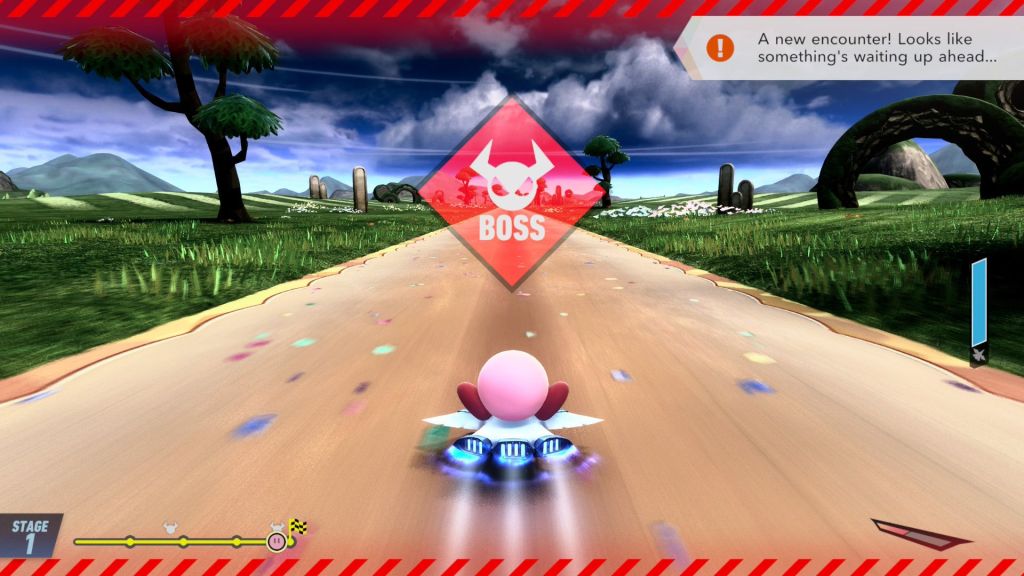
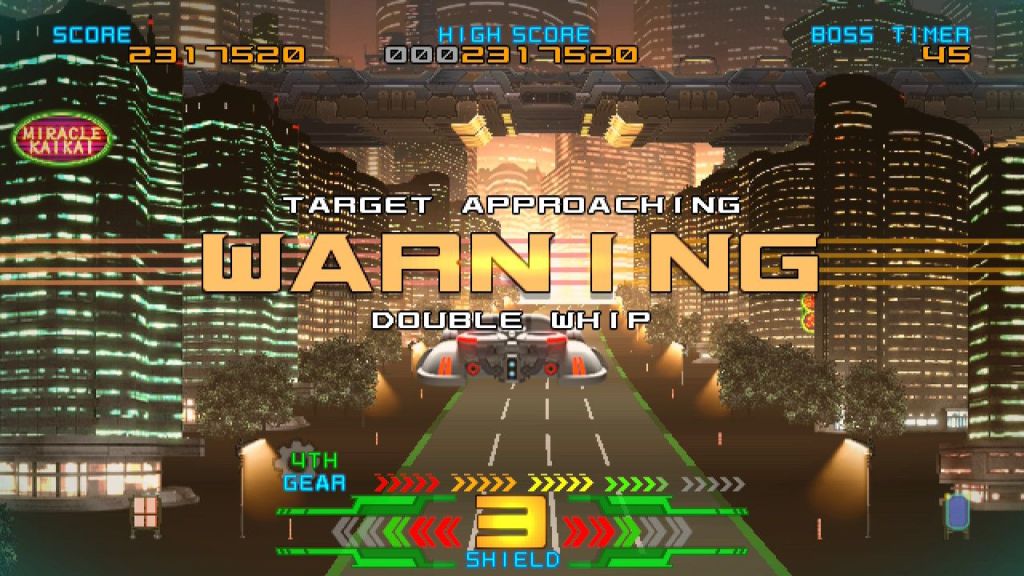
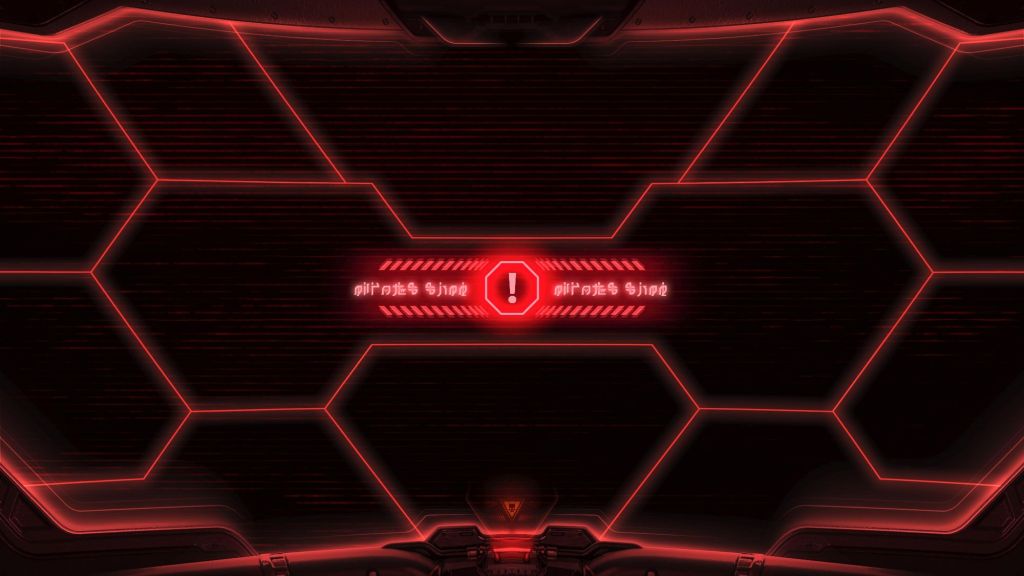
So, that brings our Vic Viper to 2025. This year had a shocking amount of “WARNING” screens. Let’s start with a few unexpected honorable mentions of sorts. These games contain “WARNING” screens that don’t quite count in my book, but more or less represent what I’m looking for. Kirby Air Riders rode onto the scene late last year. In its “Road Trip” mode, which is the game’s “story mode” equivalent, when you’re riding along the path and your next destination is a boss event, a 4-sided polygon (quadrilateral) appears in the center of the screen with a horned face icon in the middle of it. Underneath the face icon reads “BOSS”, along with two red caution strips on the top and bottom portions of the screen. NIGHT STRIKER GEAR, the sequel to the 1989 arcade shooter, contains what I’d consider one of the more traditional “WARNING” style screens. You’ve got a “TARGET APPROACHING” in white text, along with a golden “WARNING” label in large font with four transparent strips behind it in the same color. Underneath the “WARNING” label is the boss’ name, in this case, “DOUBLE WHIP”. This one is a bit of a stretch, but in DOOM: The Dark Ages, when you board the Atlan Mech, you get what appears to be a “WARNING”-like display across your visor. The display is made-up of numerous quadrilaterals, but at the center is a red exclamation point placed within an octagon with ancient/alien language behind it. Very cool.
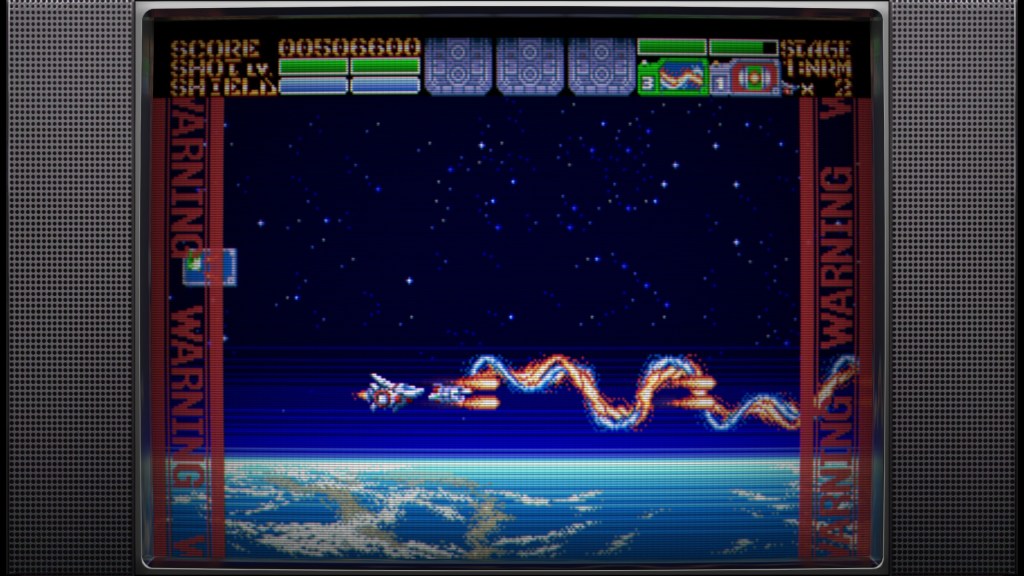
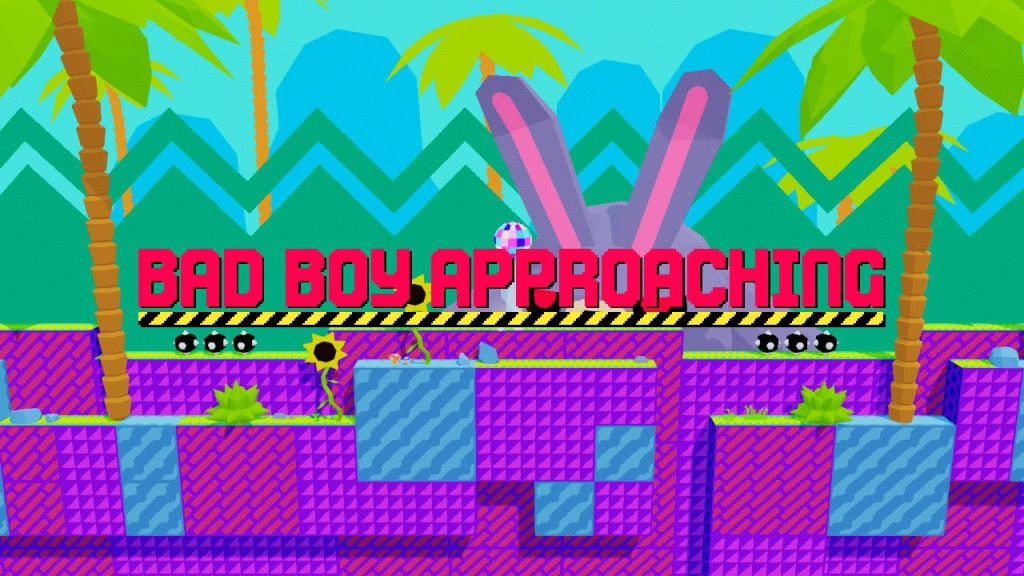
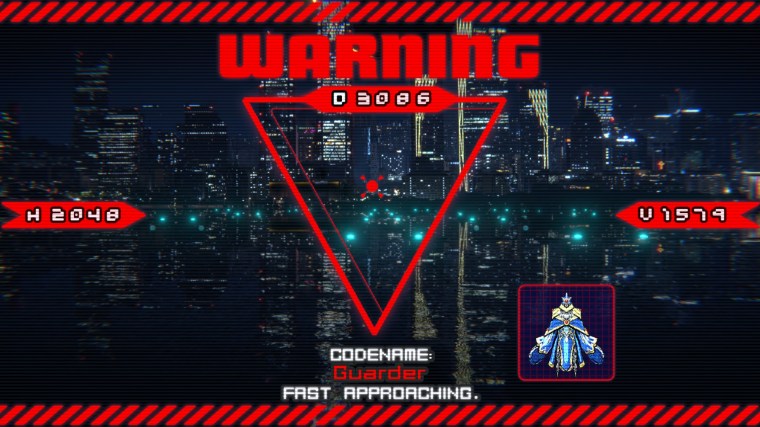
When I saw that Ancient Corp’s Earthion was finally releasing, I was salivating at the thought of what the “WARNING” screen was going to look like (okay, maybe I’m exaggerating a bit). Earthion’s “WARNING” label was somewhat disappointing to me, though. It’s simply two vertical strips, one on each side of the screen, with the “WARNING” label itself in bold, dark red font. Dunkadillo was the last game I expected to see a “WARNING” label in. It’s very rare for a 2D action-platformer to utilize a presentation style that’s typically reserved for arcade shooters/shoot ’em ups. In Dunkadillo, the “WARNING” label reads, “BAD BOY APPROACHING” in a bright red font with a thin, yellow and black caution tape strip below it. 閃攻機人アスラ – ASURA THE STRIKER – is a cool game, clearly inspired by Space Harrier, but I don’t really like the “WARNING” label used here. An upside-down red triangle is centered over the boss along with red tags surrounding it, which are coordinates, I think? There’s red caution tape along the top and bottom part of the screen as well. Bottom-centered aligned is the boss description, which reads “CODENAME: Guarder FAST APPROACHING”, at least in the example I shared above. It’s fine, but not quite what I’m looking for.
WINNER: BIRDCAGE
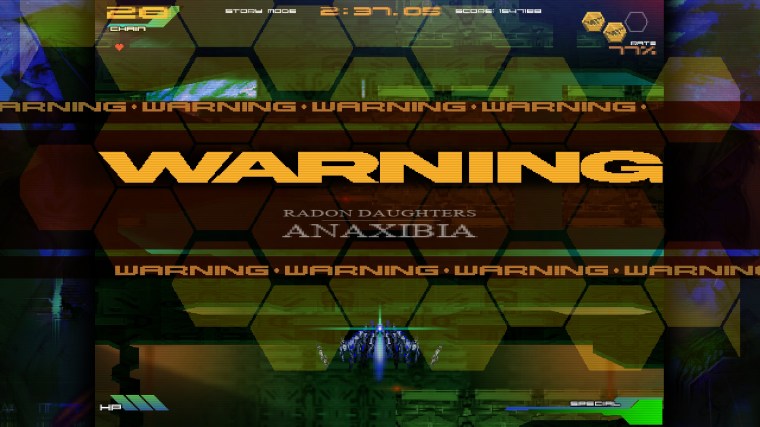
Although I haven’t finished BIRDCAGE yet, this PlayStation 1 (PS1)-inspired arcade shooter contains my favorite “WARNING” screen of 2025. For one, the use of brown and yellow is a nice change from the typical red “WARNING” labels. I love the consistent collage of hexagons in the background, too. The boss names are also deliciously ridiculous; “RADON DAUGHTERS ANAXIBIA”, for example, is someone you’ll face. I think the only thing I would have changed was the additional “WARNING” label rows above and below the main strip. I was hoping for something along the lines of “BE ATTITUDE FOR GAINS” from Radiant Silvergun, you know, the type of ridiculous nonsense Treasure would employ for their shoot ’em ups. For those with a keen eye, in Earthion, a horizontal shooter, the “WARNING” label is a vertical strip. In BIRDCAGE, a vertical shooter, the “WARNING” label is horizontal.
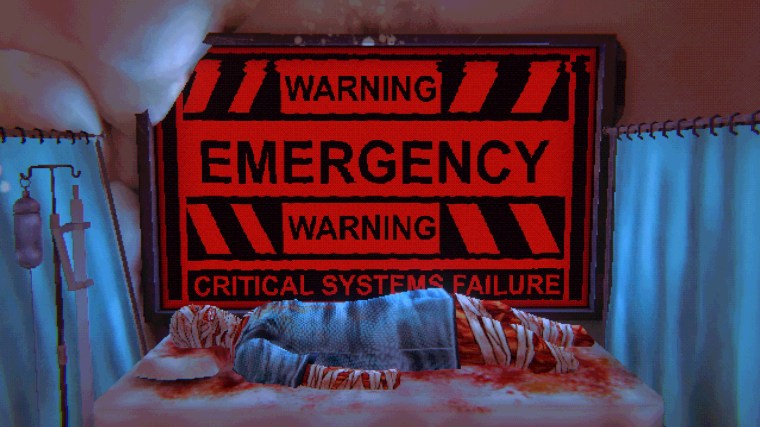
Finally, as an added bonus, although Mouthwashing released on PC/Steam in 2024, I didn’t play it until January of 2025. Pictured here is one of the main characters from the game, wrapped-up in bandages on a table, severely burned and on the verge of death. In the backdrop, a static screen in large, black font reads, “WARNING EMERGENCY WARNING CRITICAL SYSTEMS FAILURE”. Perhaps a sign for the things to come here in the United States of America and democracy as a whole (spoilers, it’s already here). Even though it makes me really depressed, it’s one of my favorite “WARNING” screens of 2025.
My “Favorite Bestiary/Enemy Books” of 2025
My favorite bestiary/enemy book of the year. The quality of the presentation style, descriptions and illustrations weigh heavily on whether or not I shall pour over its contents.
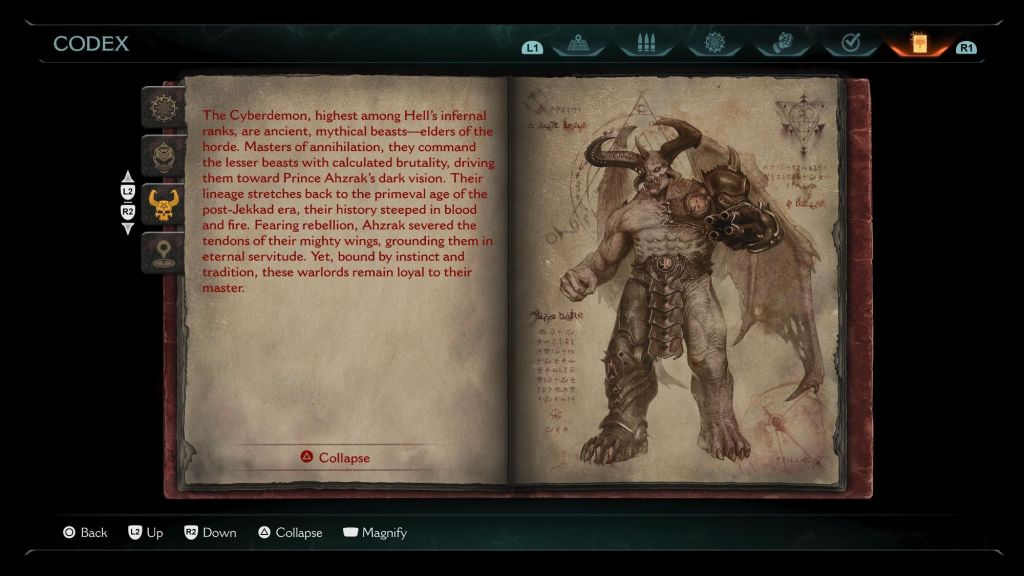
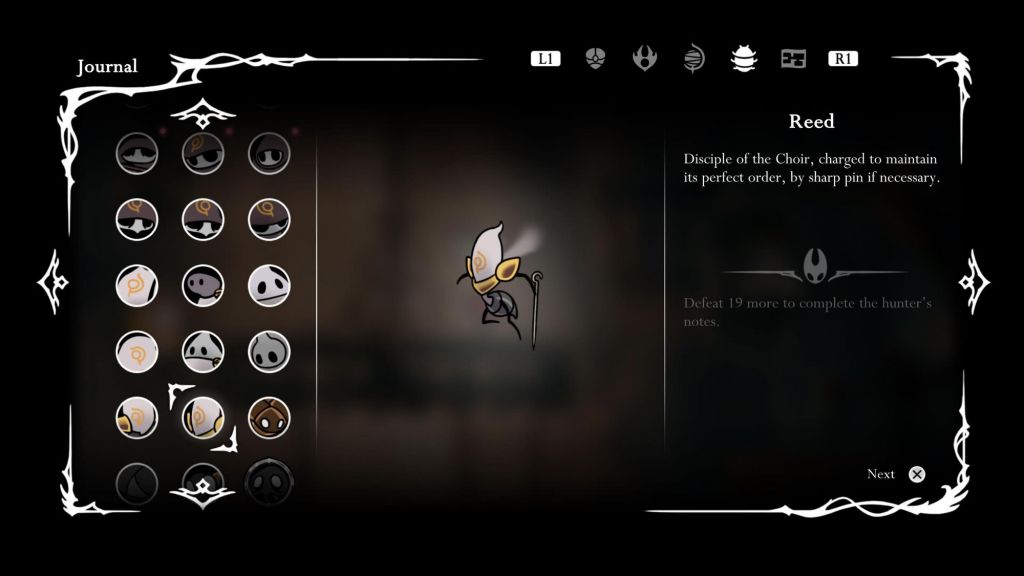
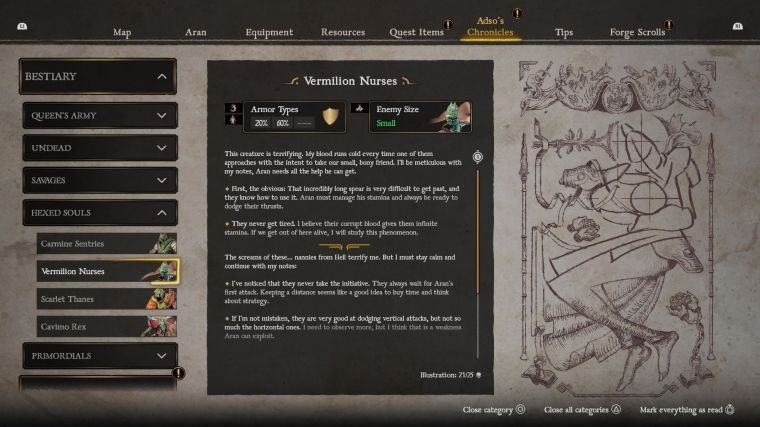
First, let’s discuss some honorable mentions. The Codex from DOOM: The Dark Ages contains some of the better writing/descriptions in the game along with some really nice illustrations of the characters and demons from the game. As much as I loved Hollow Knight: Silksong, the Hunter’s Journal isn’t too different from the first game. Hornet’s descriptions and flavor text are certainly welcomed, but the actual menu design itself is very basic and a little barebones visually. My last honorable mention that nearly won this category would be Adso’s Chronicles from Blades of Fire, particularly the Bestiary page. Not only is it contextualized within the game (your little buddy, Adso, will literally pull out a journal and begin to draw mid-battle), the art itself and the accompanying descriptions are wonderful. As you kill more enemies of the same type, the illustration will become more detailed, showing Adso’s artistic progress as both characters learn more about their foes. It’s awesome. The Vermillion Nurses are also some of my favorite enemies from any game in 2025.
WINNER: BLADECHIMERA
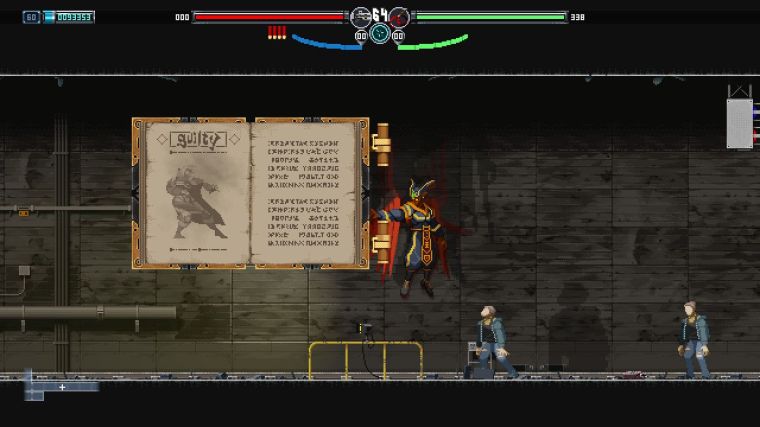
My favorite bestiary/monster book from 2025 comes with a bit of a catch, however. While BLADECHIMERA does have a fairly traditional “Demon Encyclopedia” with the usual type of info you’d come to expect, it’s one particular enemy that stole the show for me. “King Enma”, described as “The king of the underworld” and someone who will “…pluck out the tongue of anyone who lies in his presence”, has a move that will capture and encapsulate the main character inside of a book, making you an entry in his very own bestiary! This is an instant GAME OVER as well if you’re caught by his trap. It’s the coolest shit I’ve ever seen. Also, shout-out to BLADECHIMERA for bringing back extremely rare drop rates not seen personally since the PS1 days.
My “Favorite Environmental Visual Progression” of 2025
My favorite instance(s) of visual elements changing in an environment because an action was made.
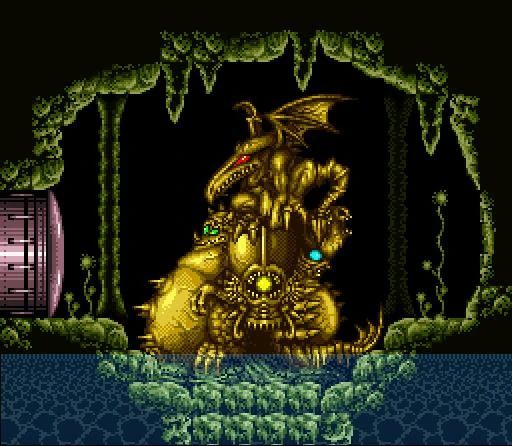
I’ve been workshopping a new term for one of my favorite things in gaming; “Environmental Visual Progression” (EVP) or “Visual Meta-Progression” (VMP). I want to say this was first established for me in Super Metroid (SM) with its golden boss statue. When you beat a boss in SM, the eyes in the golden boss statue go dim and turn grey. So, this term is for any fixed element in a game to change/update visually based on actions made within the game. For the purposes of this blog (and more so for readability), I’m going to refer to these occurrences as EVPs from this point forward. Unfortunately, I came to this realization halfway through the year, so this will not be a comprehensive list (I do have a full-time job, sorry!). Trust me, this category would have been STACKED if I made the proper notations at the time. Video games have been incorporating EVP’s for decades, so here are a few that really stood out to me this year.
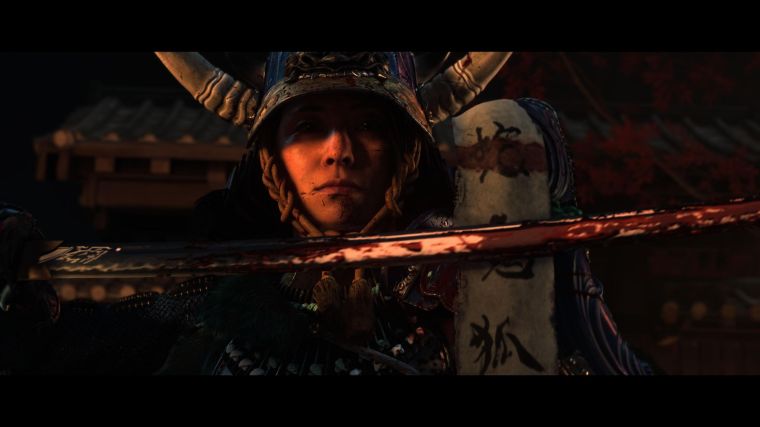
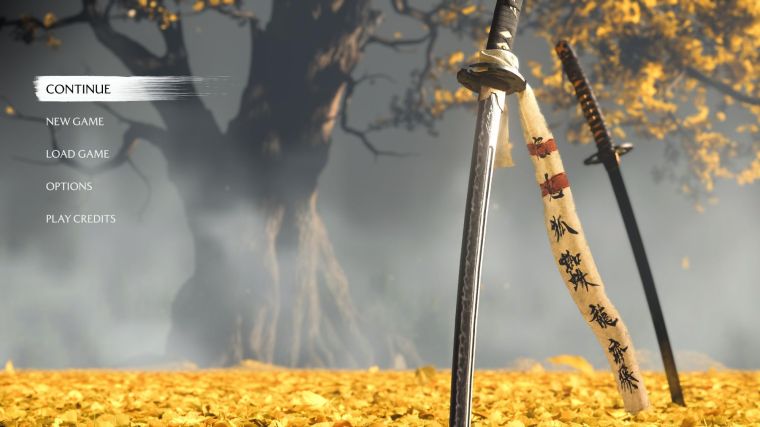
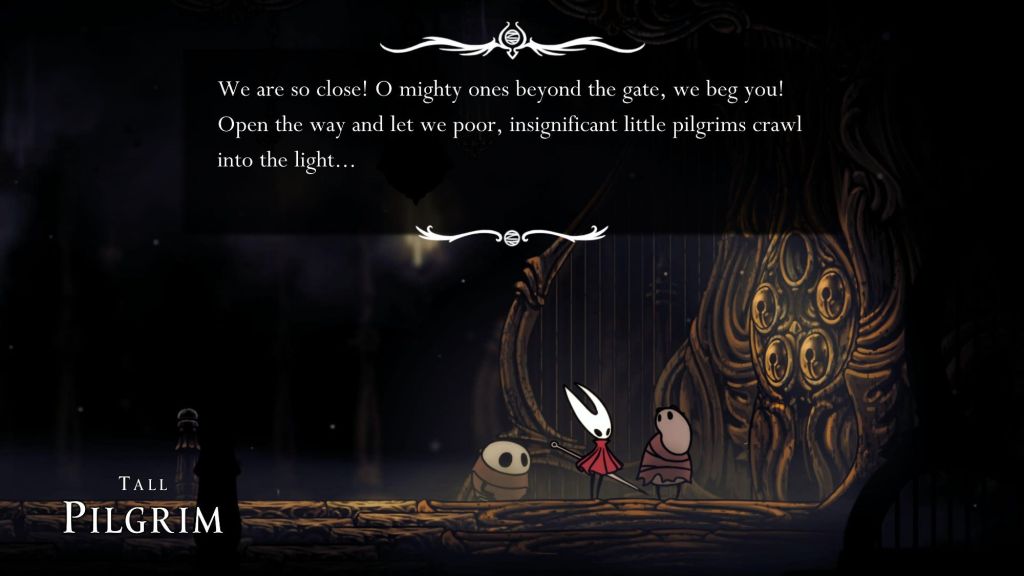
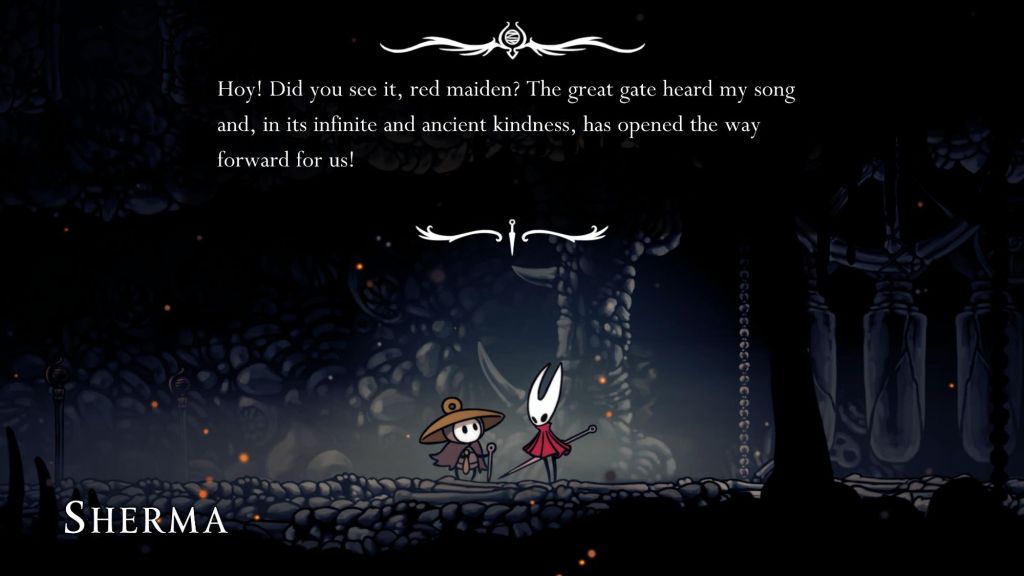
In Ghost of Yōtei, when you defeat one of the Yōtei Six, Atsu will wipe their names off of her cloth with their blood. It’s a) incredibly badass and b) a perfect example of EVP. The best part about this EVP is that it’s shown on the title-screen to remind you of your progress (even though the game immediately boots you past the title screen when you launch it). In Hollow Knight: Silksong, one of your first objectives is to locate and ring five large bells scattered across the lower lands of Pharloom. When you ring one of the larger bells, a tiny bell is slotted inside of a circular hole on the Grand Gate, which is the entrance to the Citadel, AKA, the best part of the game. Outside of this gate you’ll typically find other bugs, including the loveable but naïve, Sherma, standing and praying in front of it, wishing the door would open so that they could continue their holy pilgrimage.
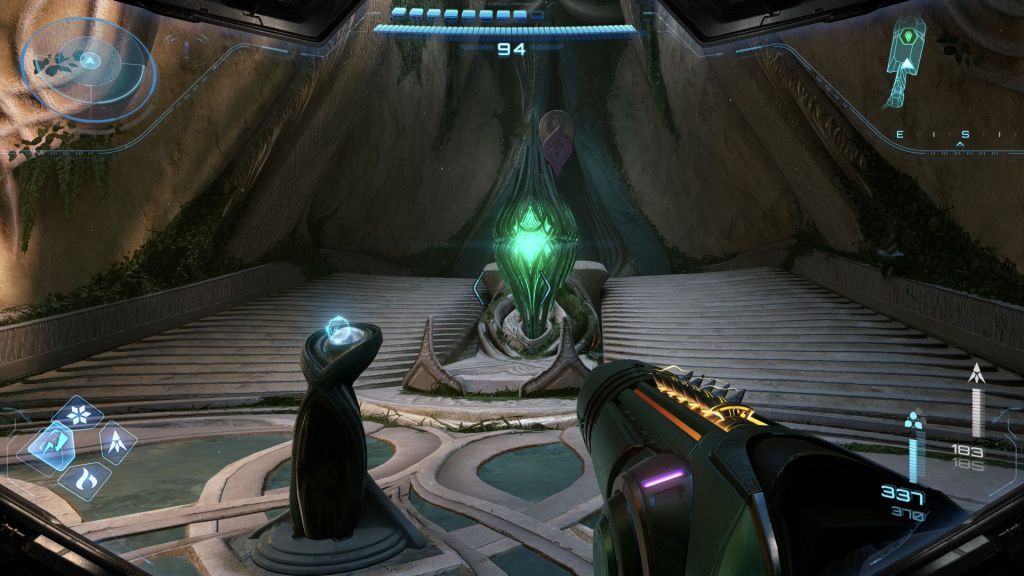
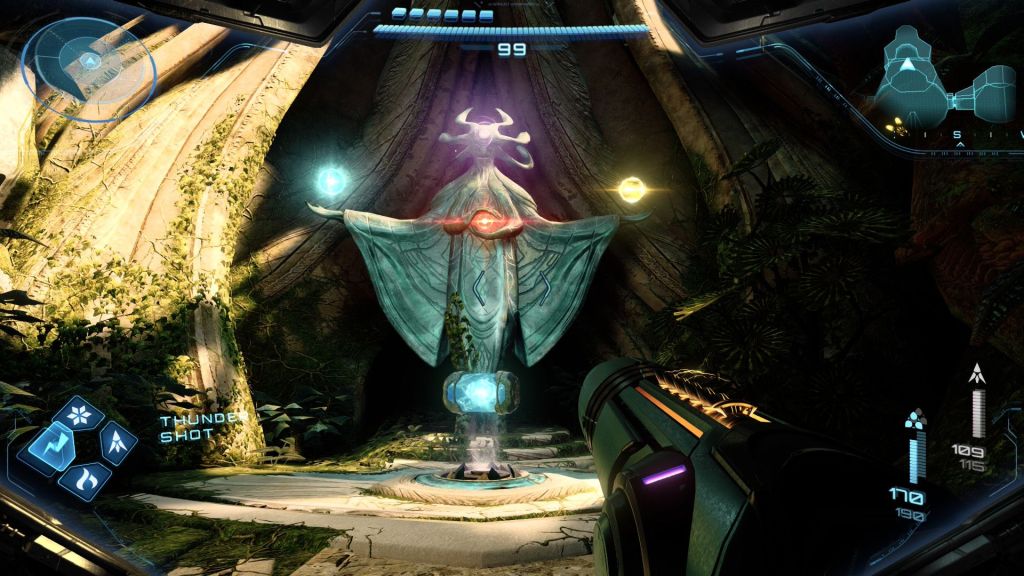
A few other games that incorporated some degree of EVP, but didn’t quite make the cut, would be Metroid Prime 4: Beyond(MP4), Shinobi: Art of Vengeance, and DOOM: The Dark Ages. I already wrote about MP4 and why I found it to be relatively disappointing, but an effort was made at the very least. The much-hated “Green Crystal” hunt has you bringing back the crystals you find out in the desert and dumping them into an alien receptacle of sorts. Even though it’s one of the worst aspects of the game, I sort of enjoyed seeing the meter, for lack of a better term, fill-up with its puke, neon green color. Additionally, as you unlock new elemental shots, there’s a puzzle-like shrine near your base that requires the usage of your newly acquired abilities. When you solve each elemental puzzle, an orb of said element will appear on the statue and once all three have been lit, you’re rewarded with a new Energy Tank. Very cool.
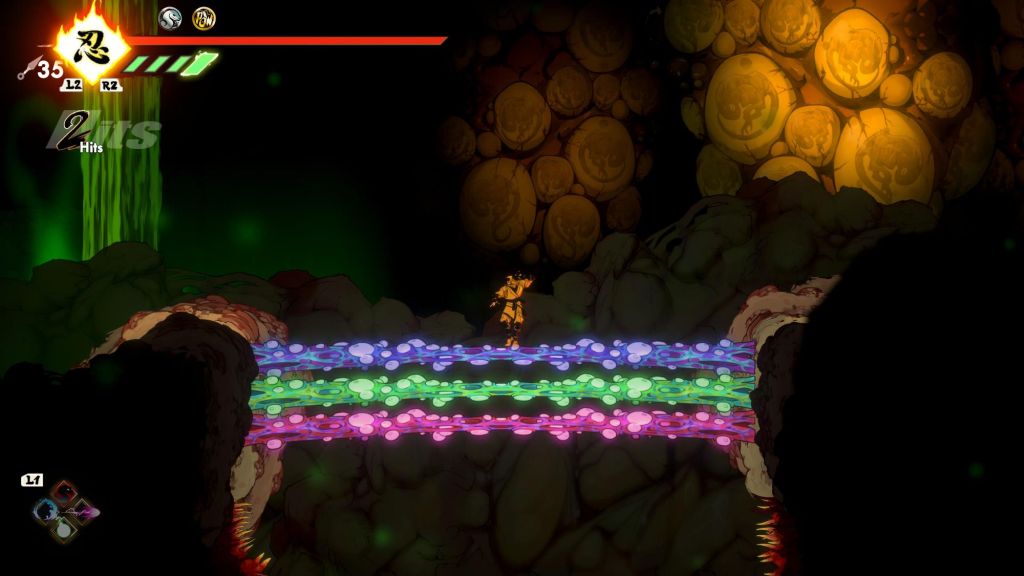
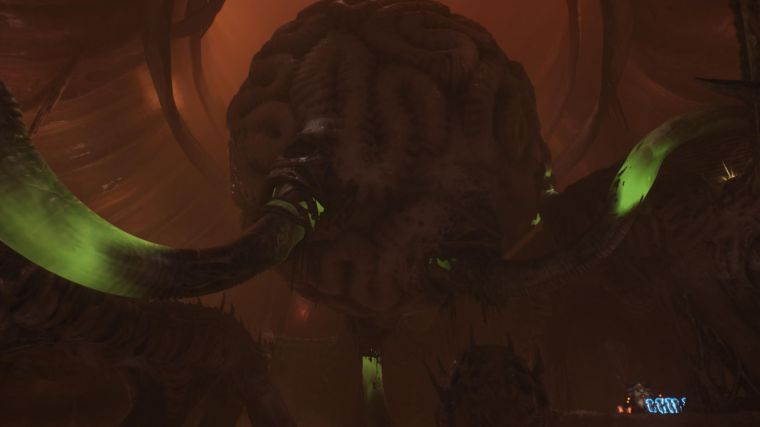
Art of Vengeance has a level or two where you need to destroy barriers in order to progress. You’re usually tasked with destroying an inanimate object or some enemy to make the “thing” go away. There’s one stage where multi-color bands of organic mass impede your progress. It’s the laziest and most uninspired usage of EVP, dating back to the type of design elements you’d find during the NES era (not that there’s anything with that). In DOOM: The Dark Ages, towards the end of the game, you’ll find yourself in the “belly of the beast”, so to speak. There’s a lot of good EVP in The Dark Ages, but in this level, you need to punch these green puss bags, which destroys tentacles attached to a heart/brain in order to progress. It’s arguably not very different from what you were doing inside the giant “Kaiju” from Art of Vengeance, but the setup is way cooler and it’s far more visually pleasing.
WINNER: Promise Mascot Agency
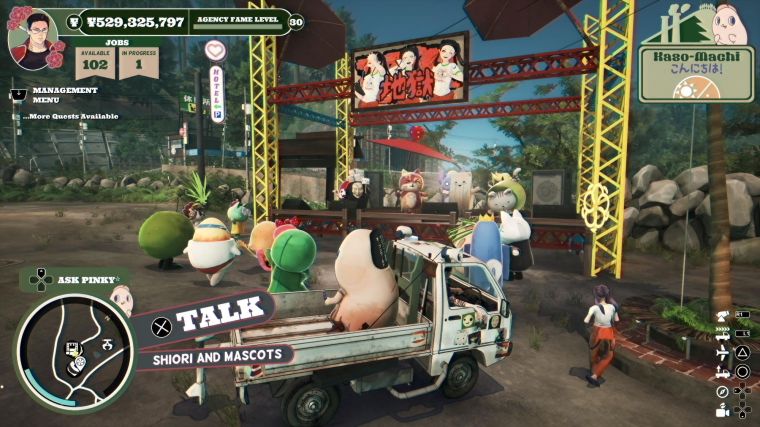
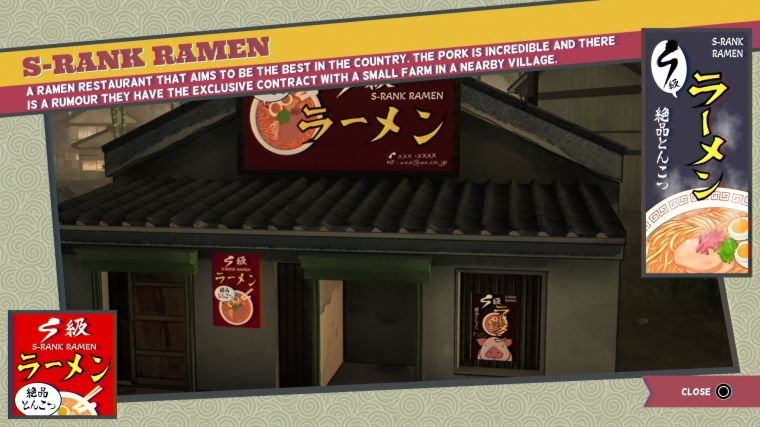
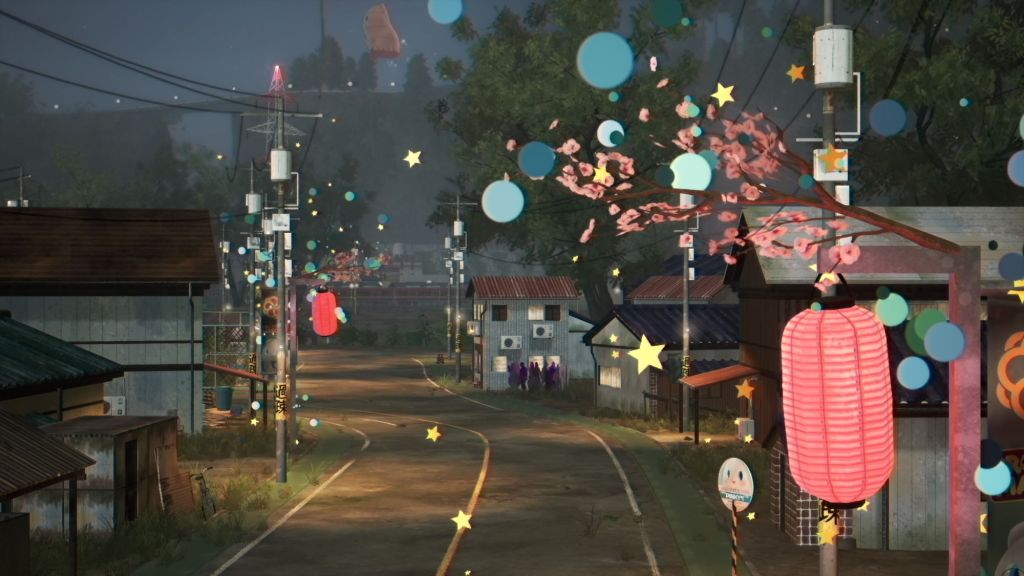
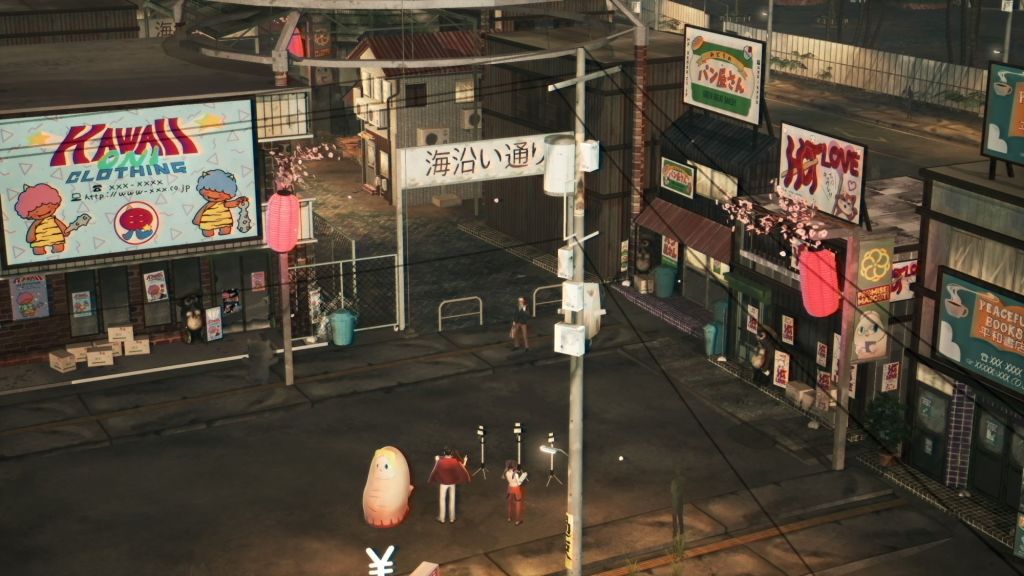
Promise Mascot Agency (PMA) is loaded with EVPs. At the start of the game, the evil mayor’s signs (one of the game’s many “collectables”) are plastered all over town. One of your objectives is to quite literally drive over them. When you do this, they’re replaced with signs of your beloved Pinky (who also ends up running for mayor in the latter half of the game). In addition to this, you’ll meet a mechanic who tasks you with hunting down and capturing spirit foxes around the island. When you find one, your truck gets upgraded with additional exhaust pipes and the sort, including wings which let your truck fly like an airplane! There are also hidden stickers littered around the map and once collected, they get stamped on the exterior of your vehicle. Finally, as you re-open businesses, lanterns, billboards, flags and more breathe life back into the island. As the town develops, you’ll also start to see citizens return to the island, which are represented by featureless silhouettes of people standing along sidewalks and around buildings. It’s certainly a clever (yet stylish) cost-saving measure to make the world feel more alive. The town/island itself from PMA is my favorite EVP of the year.
My “Favorite Title-card Sequences” of 2025
My favorite opening sequence from the year where the title of the game is shown.
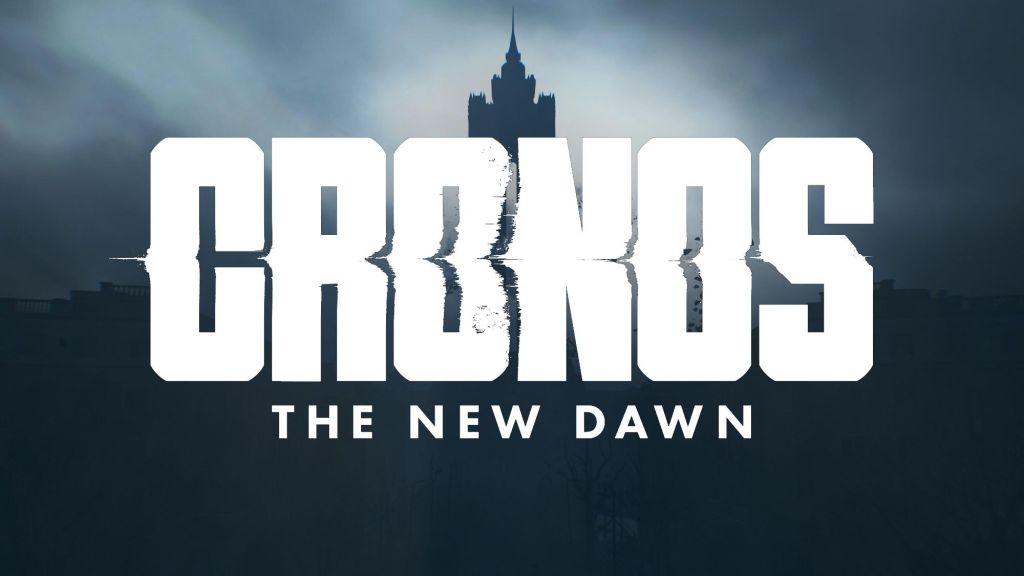
Seeing where a director wants to display the title of their project is one of my favorite things to witness as a viewer of various forms of entertainment. In terms of video games, it feels like a statement from the developers, an establishment of what’s to come and when the “true Dark Souls starts here” moment occurs, so to speak. Ghost of Yōtei, just like Ghost of Tsushima, has an incredible opening sequence involving horseback riding. As Atsu gallops through fields of flowers and foliage, she comes to a halt at a precipice before her. As she gazes towards Mount Yōtei in the distance, the title-screen is then displayed in all of its magnificence. Since it’s a retread of the first game, I’ve got to knock it down a few pegs, sadly. The title-card sequence in Cronos: The New Dawn is fairly unceremonious, but I liked it. After an introduction sequence and a tutorial area of sorts, your main character will arrive at a large staircase. As you climb the steps, the camera takes control and slowly zoom towards a giant building in the distance, torn in half by some sort of anomaly. I always appreciate a good staircase that cinematically funnels the player towards a point of interest and Cronos nailed it.
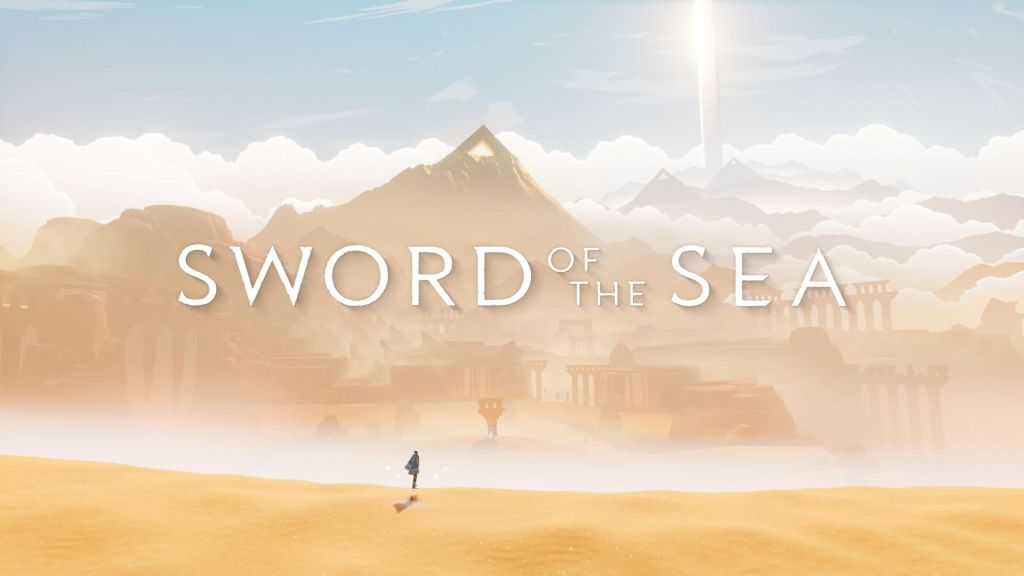
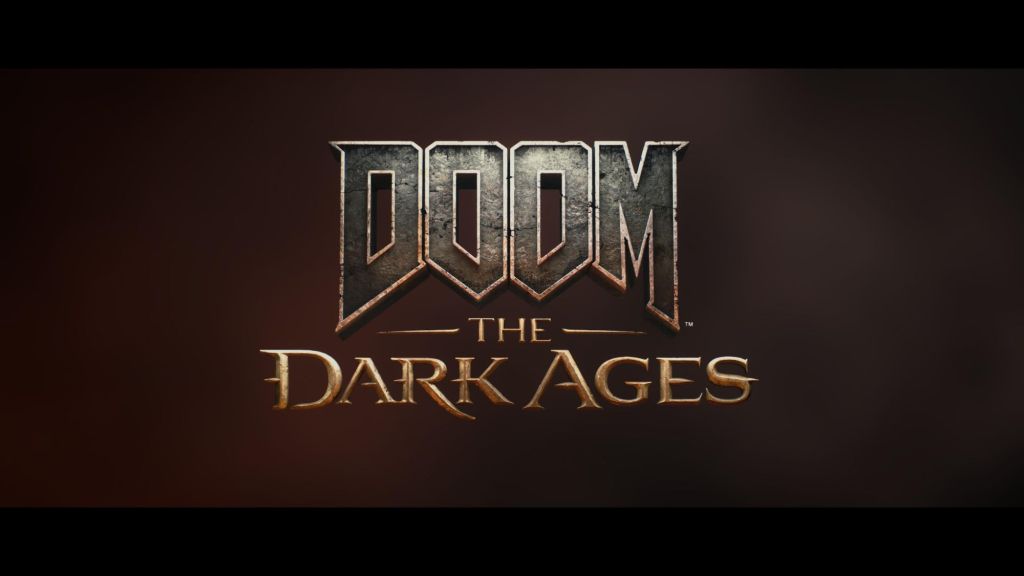
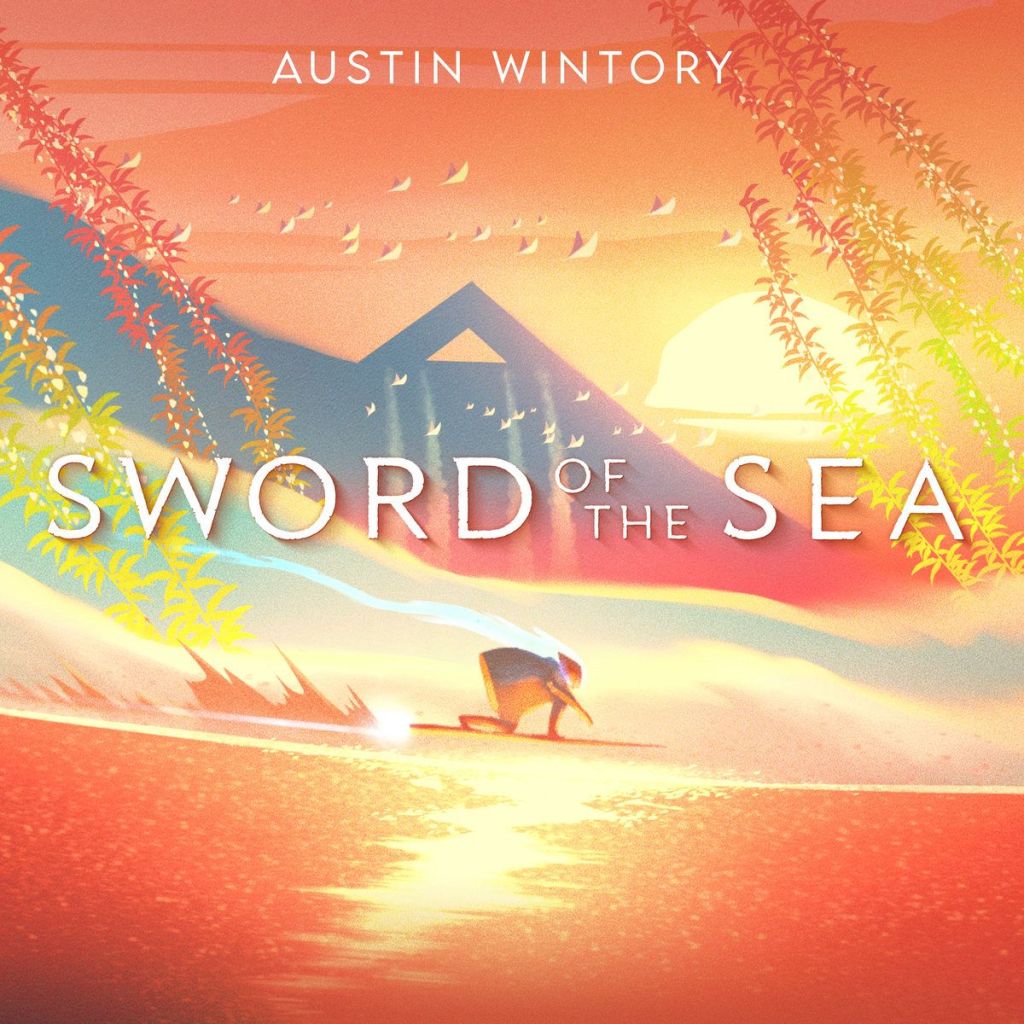
After yet another short introduction sequence, in Sword of the Sea, you’ll sword surf up a giant sand dune and at its peak, you’ll be greeted by the game’s logo along with a beautiful shot of the first area of the game. You can even see a mountain in the distance that resembles a certain other game that’s loosely associated with it (it’s not hard to guess). Austin Wintory’s score certainly elevates this moment, too. The intro cinematic in DOOM: The Dark Ages is probably the best scene in the game and the best use of the composer’s music (even if I’m not a fan of the soundtrack as a whole). After a ridiculous setup that feels like a story out of a modern Mortal Kombat game, the Kreed Maykr’s Assistant gives a direct order to “Launch the Slayer”. With shield and shotgun in-hand, the DOOM Slayer is launched from his captivity in orbit, slams into the surface, stands-up, and looks at the player… *cue title-card and djent guitar chords*.
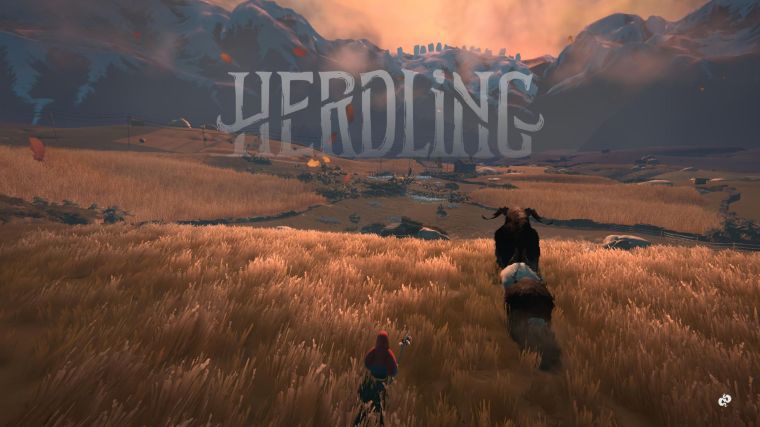
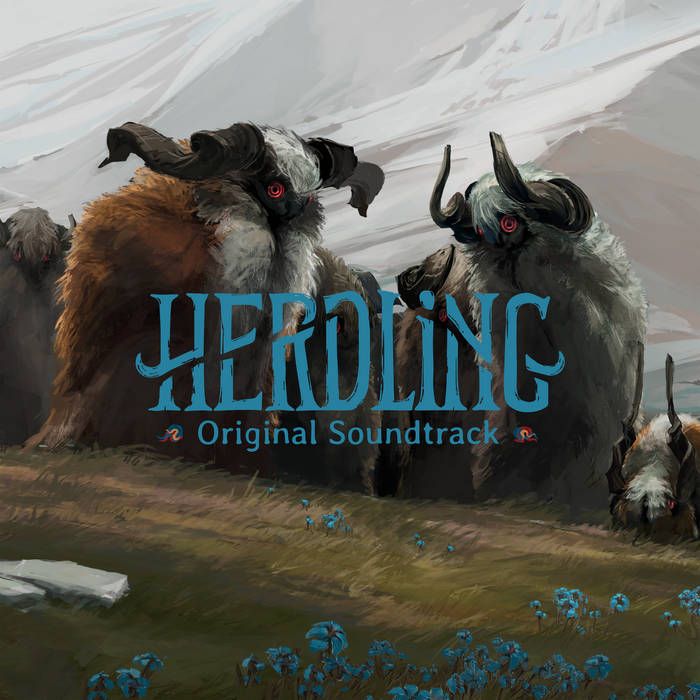
There were three games that I’d consider strong honorable mentions in this category. I unfortunately did not capture the footage for these examples myself, so please excuse the shameless YouTube links. Silent Hill f has a beautiful, yet haunting opening sequence. The track, “Mayoi Uta”, composed by Akira Yamaoka, has hints of a motif from the first game’s self-titled intro track. Hell is Us has an opening sequence that feels like you’re watching an Apple TV Plus SCI-FI show.Herdling was another strong runner-up for this category and just like with Sword of the Sea, it’s yet another game that displays its title-screen at the top of a hill. As you make your way out of the city with only a handful of the creatures in tow, you’ll open the city gates to a lush, grassy field, just as dawn breaks. As you slowly crest the top of the hill, the music begins to build towards a crescendo and the title of the game appears. You can actually see one of the late-game destinations beyond the mountains in the distance. It’s quite breathtaking (even though the game doesn’t run very well)!
WINNER: to a T
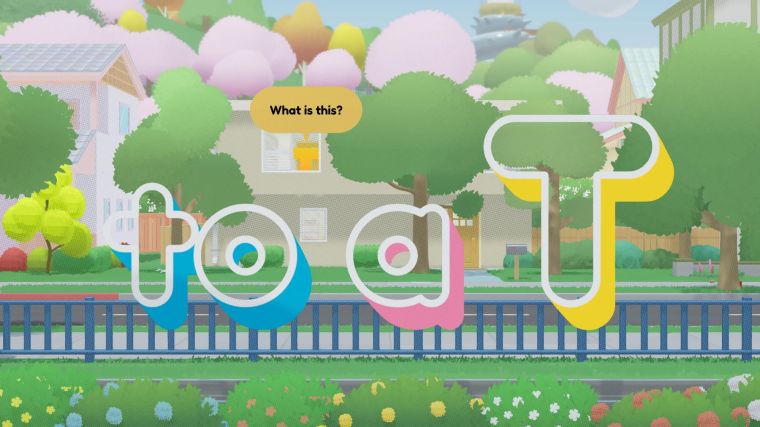
If you have a favorite TV show, anime, or cartoon, it’s likely blasphemous to skip both its intro and outro theme. I surprisingly didn’t watch a ton of anime growing-up, but I did play a lot of JRPGs, the Tales of franchise, among them. I loved the intro animations and themes to these games. I’d rarely, if ever, skipped the opening sequences whenever I booted them up. Fast forward to 2014 when Swery’s D4: Dark Dreams Don’t Die released on the original Xbox One. Its intro solidified my love for opening sequences with credits. Then there was Keita Takahashi’s to a T this year. Its Saturday morning, cartoon-like intro theme made me want to sit in my pajamas, eat cereal and remain a kid, indefinitely, for the rest of my days. to a T’s theme song also provided us with this gem of a video. What else is there to say?
My “Favorite Results/Ranking Screens” of 2025
My favorite post-credits Results/Ranking screen from a game this year.
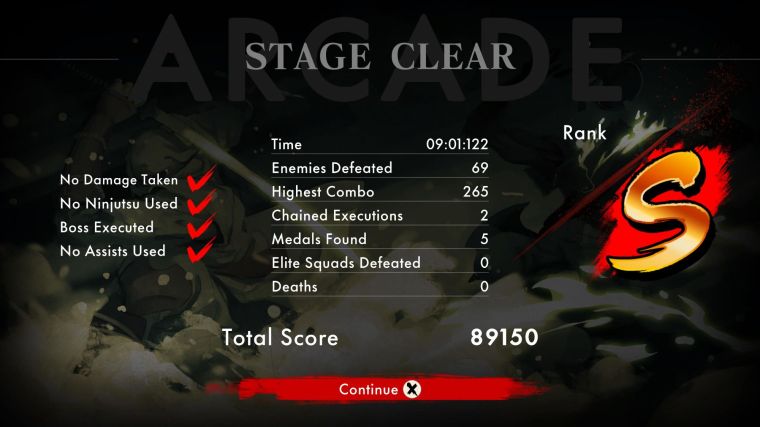
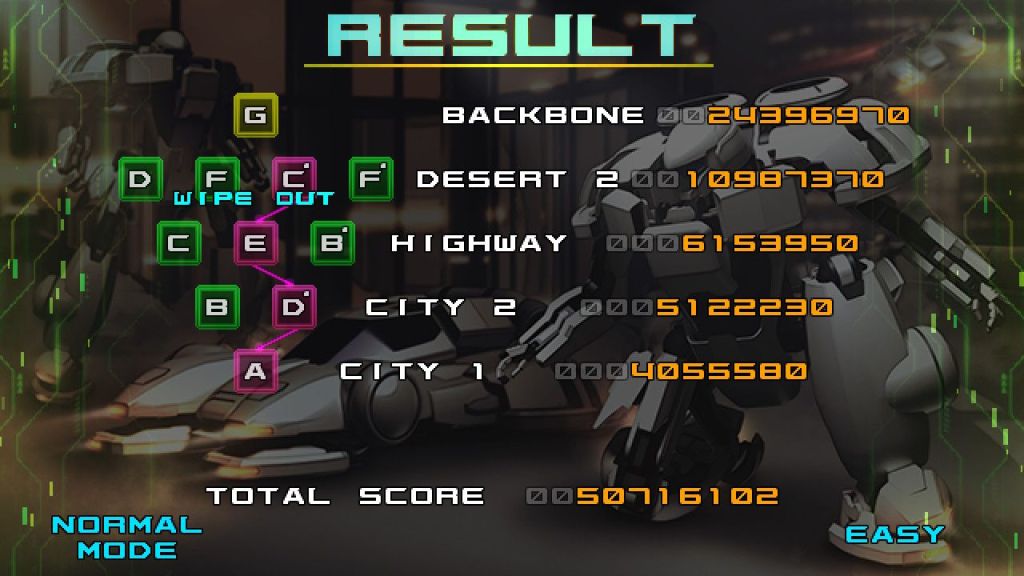
I’ve loved results/ranking screens since the older Resident Evil and Devil May Cry games. Whether it’s individual mission rankings or entire playthrough summaries, there’s nothing cooler than seeing a breakdown of how a game is judging you. Bayonetta’s “Play History” screen also solidified my love for these types of screens. Results/ranking screens were surpassingly plentiful this year. Shinobi: Art of Vengeance‘s Arcade Mode ranks you based on a plethora of criteria for each individual stage. The stats are written in a simple, white font, but the actual icon for your rank is large and detailed, with “S” being the best. NIGHT STRIKER GEAR incorporates a Darius-like stage structure where you pick your path through the game. Levels are represented as letters A through G. GEAR’s “Result” screen shows the path you took through the game, along with the individual stage scores, which are then totaled at the bottom of the screen. Both games’ results screens show slightly dimmed artwork in the background, too. Classic!
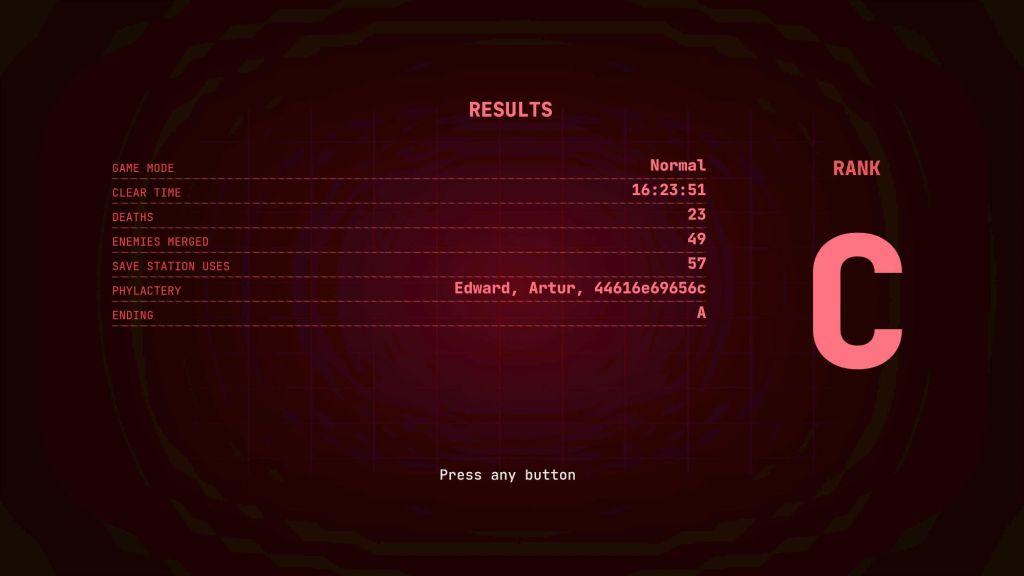
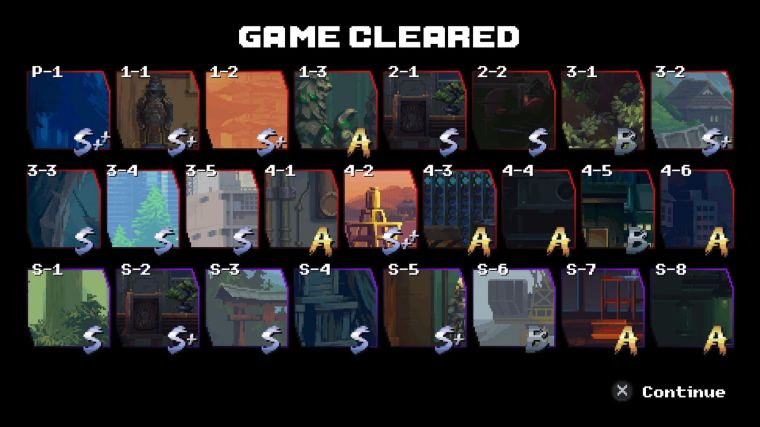
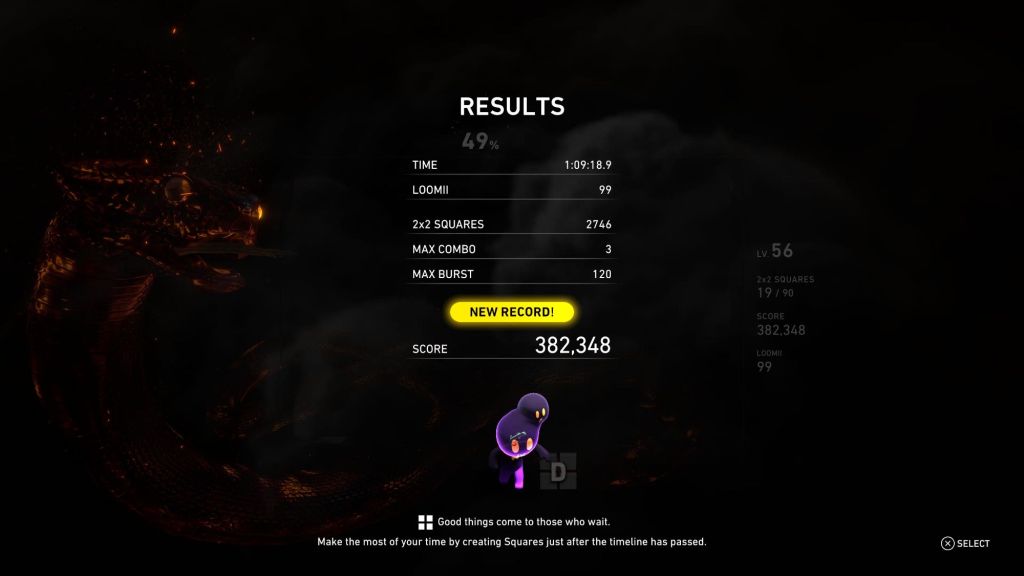
Cronos: The New Dawn’s “Results” screen has got some red on red action and it’s honestly a little hard to read. I do like how large the icon is for the rank you earned and it does show you which peoples’ consciousness (Phylactery) you “saved”. NINJA GAIDEN: Ragebound has a “GAME CLEARED” screen which shows thumbnails of each stage along with your highest rank earned. It’s very close to Bayoneta’s “Play History” menu, which I appreciate. Ragebound goes to “S++” rank, but it’s infuriatingly strict to achieve. I much prefer Art of Vengeance’s requirements as there is more wiggle-room to earn the highest rank (I wrote about both games’ ranking systems in-depth here and here). Lumines Arise’s “Results” screen isn’t much to write home about, unfortunately. It’s a fairly standard-looking menu, almost the size of a cell phone screen, and uses, yet again, a simple, white font. I do like how your customizable avatar hangs out at the bottom of the screen, though.
WINNER: Sorry We’re Closed
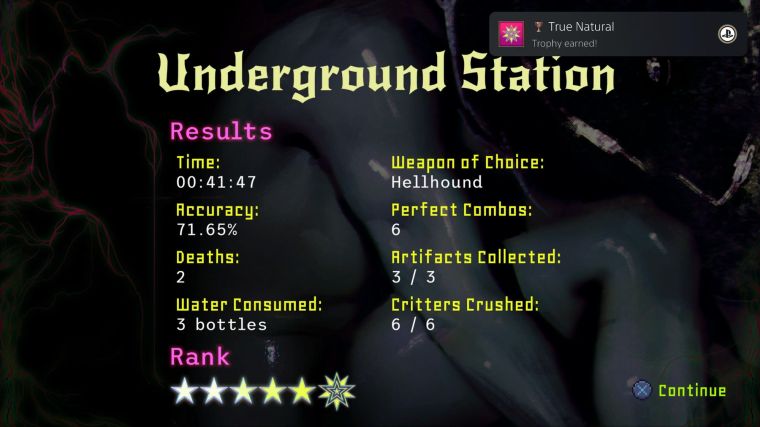
Sorry We’re Closed is a really cool, queer survival horror game that went under the radar this year. Admittedly, I didn’t play beyond the first “dungeon”, for the lack of a better term. While the game’s story seemed intriguing from the start, there’s a lot of dialogue and running back and forth within the first hour or so of the game. It can feel like a bit of a slog if you’re not in the right mindset (which I wasn’t at the time). When things do “get going”, there’s a really interesting, old-school survival horror game here wrapped around a Killer7-like combat system. Each dungeon is structured like a mini-Resident Evil style location, complete with fixed camera angles, puzzles to solve, keys to find, and enemies to defeat. The game utilizes a star rating for its ranking system, which felt reminiscent of the older Silent Hill games. I also like the font choice for the area/dungeon name at the top of the screen along with the usage of yellow and pink for the various category descriptors. It’s pretty classy!
My “Favorite Unlock Screens” of 2025
My favorite post-credits unlock screen from a game this year.
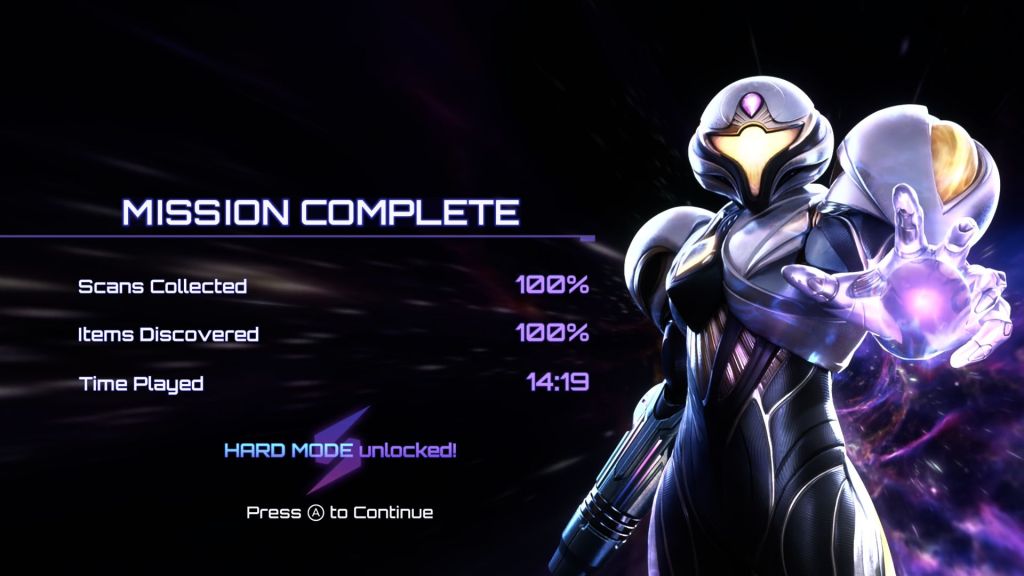
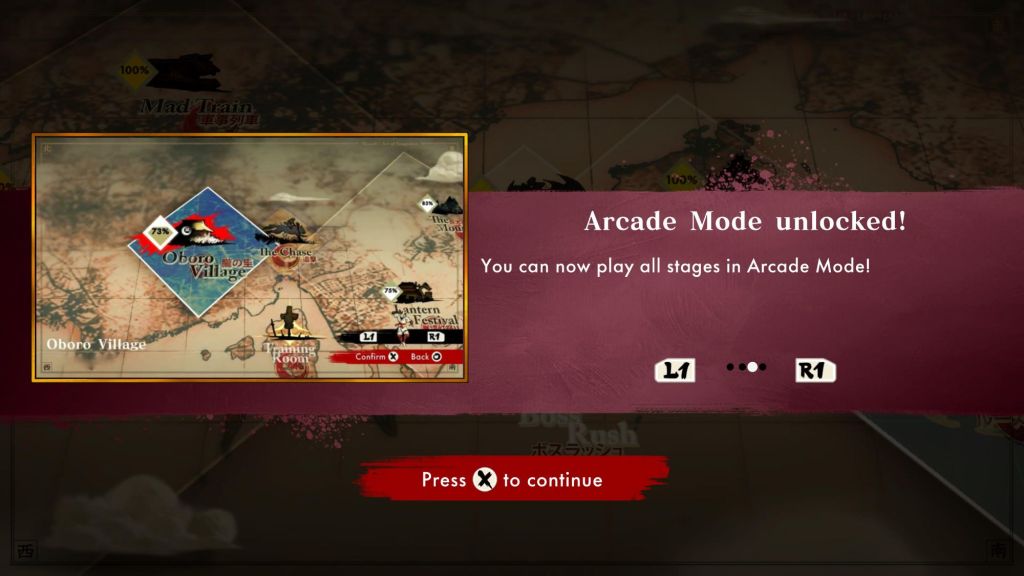
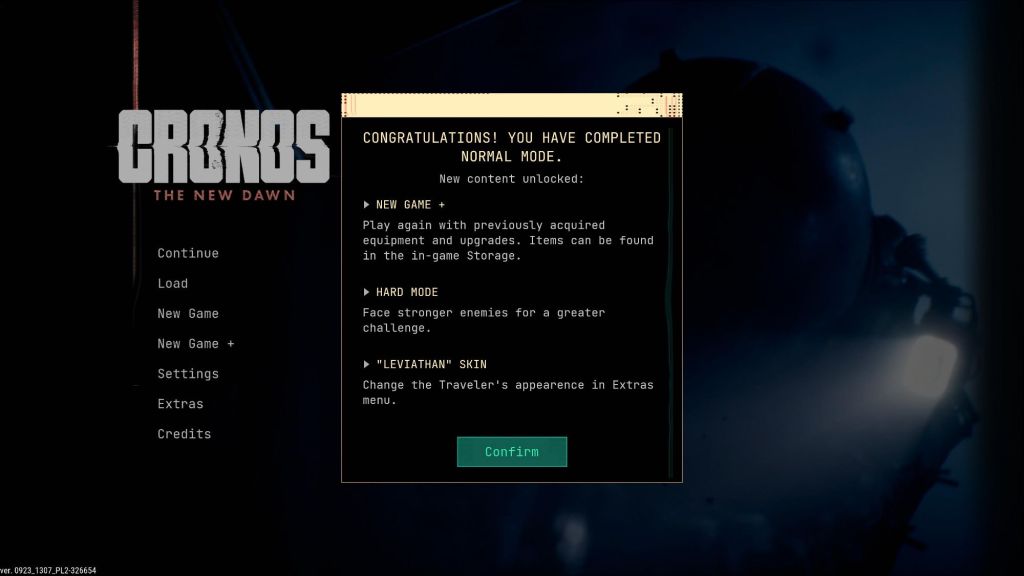
I love a good unlockable. It’s even better when the game has a screen for it! The “Mission Complete” screens from the Metroid series could arguably be both a “Results/Ranking” screen or an “Unlock” screen, for example. For the sake of this blog post, I’m going to consider it an “Unlock” screen, mostly due to the fact that “HARD MODE unlocked” is shown below where your Scans, Items and Time Played stats are shown. Metroid Prime 4’s “Mission Complete” screen is fairly simple (and very purple), but it still tells me what I want to know. I do wish Samus was more animated on screen (and perhaps helmet-less for 100%’ing the game), but you can’t have everything, I suppose. The “Arcade Mode unlocked” screen from Shinobi: Art of Vengeance feels almost like a tutorial menu of sorts. It’s curious that both Art of Vengeance and MP4 write “unlocked” in lowercase, too. In Cronos: The New Dawn, the unlock screen pops up when you’re booted back to the title-screen after finishing the game. It’s fairly clinical-looking, which can describe the games atmosphere at times, so perhaps it’s well-suited in this instance.
WINNER: Silent Hill f
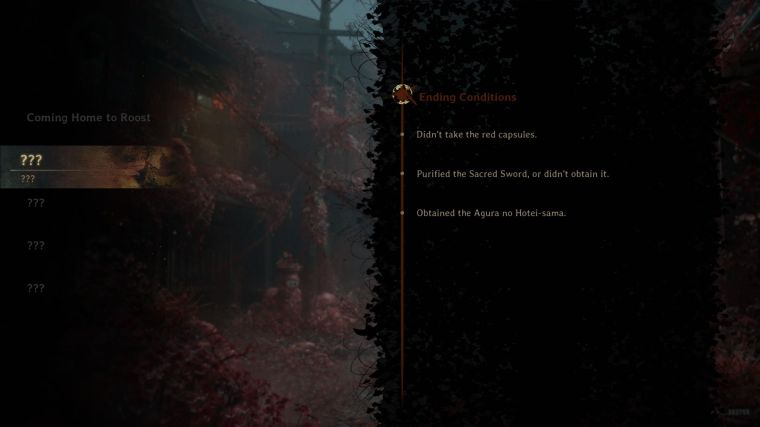
It’s very rare for a game to show you the in-game requirements for multiple endings. It’s even more rare for a game like Silent Hill or the survival horror genre in general. I love when everything (or mostly everything) a game has to offer can be discovered within the game somewhere. I really don’t like using guides, but I’m still a completionist at heart. I’m also old, so, as the kids would say, “Ain’t Nobody Got Time for That!”. In Silent Hill f, when you beat the game for the first time, you unlock a “View Endings” menu which can be accessed on the title screen. Here, you can highlight the “???” entries, which show the “Ending Conditions” on the right-hand side of the screen. I liked Silent Hill f, but didn’t love it. Did it make me want to replay it immediately? No, but when I’m ready to start my second playthrough, at least I don’t have to go to GameFAQs.com to see what’s up.
My “Favorite Video Game-Related Thing” of 2025
My favorite video game-related thing that made me laugh the most during the year.
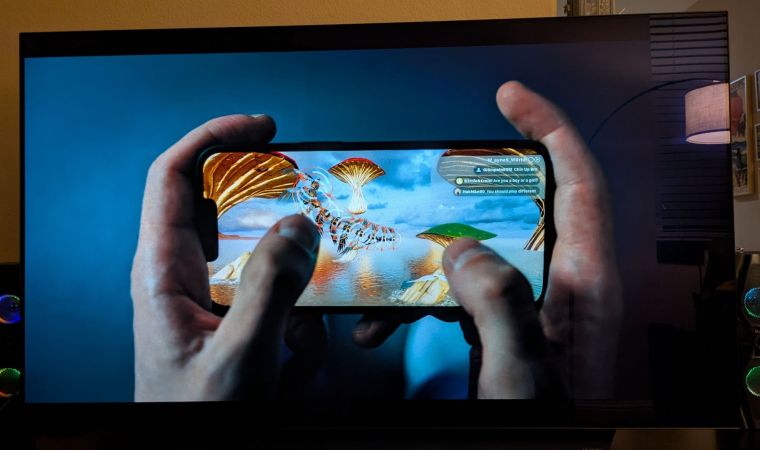
My husband stays on top of a lot of new TV shows. I often play a portable on the side while he watches them. For decades, TV shows/movies have been transposing “fake” games on screens because they do not want to pay the licensing fees, there’s likely some copyright issue, or perhaps the showrunners just don’t know any better. I feel like this topic could be an entire blog, honestly. In Down Cemetery Road, at one point, a character is shown playing Air Twister on mobile with what appears to be a fake streamer chat overlay. Is this legal? Did they get permission from YS Net and Yu Suzuki to do this? Who is this person and why am I not hanging out with them right now? What is happening here!?
My “Favorite Real-Life Moment That Happened to Involve a Video Game” of 2025
It’s all fun and games until it’s not!
I’ve been in the process of moving to the west coast for the past 2-3 years. A year or so ago, I shipped 90% of my physical goods from my mother’s house to my new home. Thankfully, nearly everything arrived intact. Last year, I finally shipped my car across the country using a “highly reputable” car-shipping company. I won’t name names here (as my car thankfully arrived safely), but it was an unnerving experience, to say the least. For one, I booked my initial “pick-up” with a representative from the company, but it was through one of those customer service chat windows that feels like you’re talking to a bot. I had asked for an “enclosed” carry, as the car was traveling the entire length of the country and I figured the extra protection was worth the additional cost. I naturally booked months in advance, so I was told that the car carrier would be in touch closer to the initial pick-up date I provided.
Last summer, my husband had a work event in the city I grew-up in. Because my job was back on the east coast (despite being a remote worker for now) and my family still lived there, it was a convenient opportunity to touch base, so to speak, with both my family and my work, while also getting my car shipped. I was only visiting for about two weeks, so I had planned to have my car picked-up right before I was going to fly back to the west coast. Fast forward to a few days before my flights and I receive a phone call from a potential carrier saying they had availability in the next few days. I reiterated that I wanted an “enclosed” carry and, for whatever reason, they were not fully aware of that request. Great. At this point, I figured I’d be back on the west coast by the time they showed-up, so I instructed my 70+ year-old mother what to do in case I wasn’t there for the pick-up.
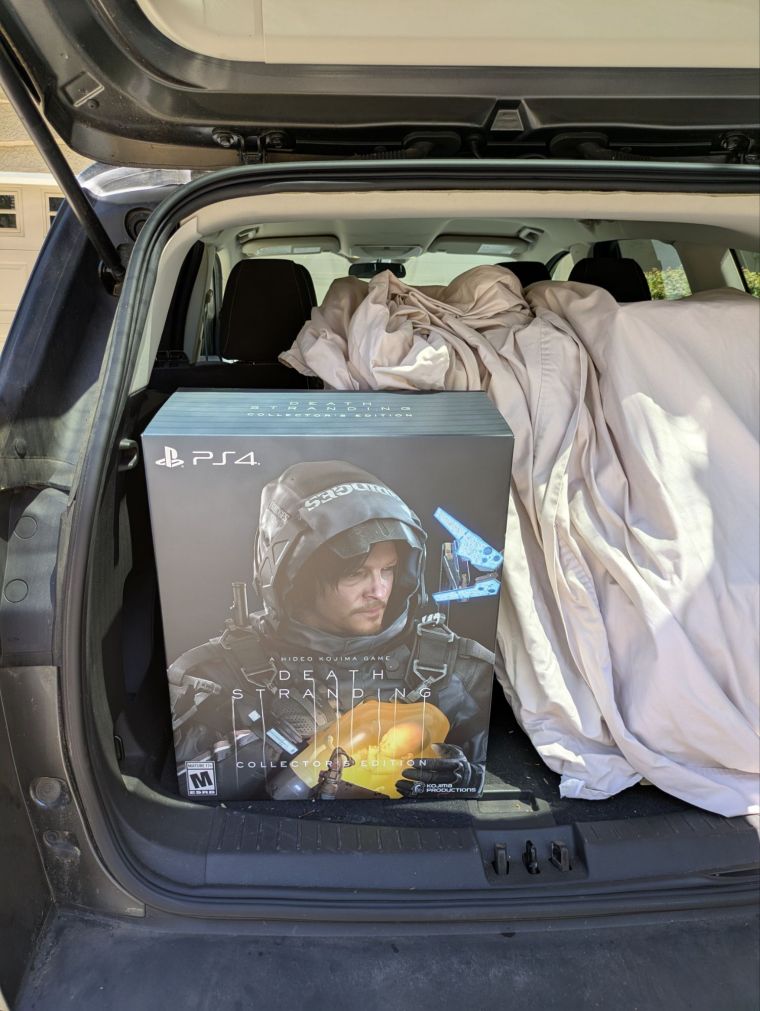
Prior to heading to the airport, as any responsible car owner would do, I got a car wash. I had asked the car-shipping service company if packing my car was allowed. They said yes, but up to a certain amount of weight, which might result in additional costs. For whatever reason, I had left behind a handful of collector’s editions for certain games back at my mother’s house, one of which was for DEATH STRANDING. For those unfamiliar with the game, DEATH STRANDING is more or less about one man’s journey from the east coast to the west coast. It’s also a game about carrying precious cargo and making deliveries. Ironic, right? As I’m standing in-line at the airport, about to board the plane, my phone rings and it’s a number I don’t recognize. A reluctantly answer the phone and a man tells me that he can have my car picked-up at 11:00pm tonight. I didn’t know what to say, so I muttered, “Okay, sure…”.
I quickly texted my mom saying that someone was going to come pick-up my car late tonight and if that was okay. Thankfully, she was understanding and supportive. Moments later, I received a text from the same guy telling me that they were going to show up early in the morning the following day instead. Fine. I got on my first plane with my husband and we were on our way; out of sight, out of mind, right? After a long trip back home and a late arrival on the west coast, I had no trouble falling asleep despite my anxiety about the car. Due to the three hour time difference, I woke-up the following day to a cavalcade of texts and missed phone calls from my mother. She confirmed that a handful of men showed-up, took my keys, drove my car into a trailer that was attached to the back of a pick-up truck, and took off. I didn’t know what to expect (as this was my first time shipping a car out of state), but my mom’s description of the exchange didn’t put my mind at ease.
I went back and read the various communications and emails I had from the shipping company. There was language referring to “handing the keys to the right person” and I began to panic. The thought of someone not authorized coming to my house to take my car raced through my mind. As someone who’s both extremely anxious and pessimistic about most things in life, I seriously began to worry. “Did my mom just hand my car keys to scammers and thieves!?”, I thought. It gets worse. I called the shipping company and gave them the number that called/texted me on the night of my flights. The person that reached out to me (and presumably ended up taking my car) was not the contact they had listed on their end. Game Over. My car was gone and all of my stuff inside stolen. It was either being dissembled for parts or auctioned at a car show in the city.
After numerous phone calls, providing the various phone numbers, texts and names that I had accumulated, the shipping company confirmed that it was ultimately “one of their guys”. Apparently, carriers can change last-minute and communication between all of the various parties can become complicated. Wonderful. I had no idea that the shipping company more or less contracted third-party carriers to ship their cars. I fully expected one of those big car-carrying tractors to show up at my house with someone wearing a polo with the name of the company I booked embroidered on their shirt, but it was anything but that! When my car finally arrived (about a week later), all was well. I opened the trunk to my 2017 Ford Escape and Norman Reedus was there to greet me. It was as if Sam Porter Bridges was the one carrying my precious cargo across the United Cities of America. Now, getting my out-of-state license renewed? Woof. Perhaps that’s a story for another day…
My “Favorite Game Soundtracks” of 2025
The game OSTs I’ve continued to listen to the most outside of actually playing the game.
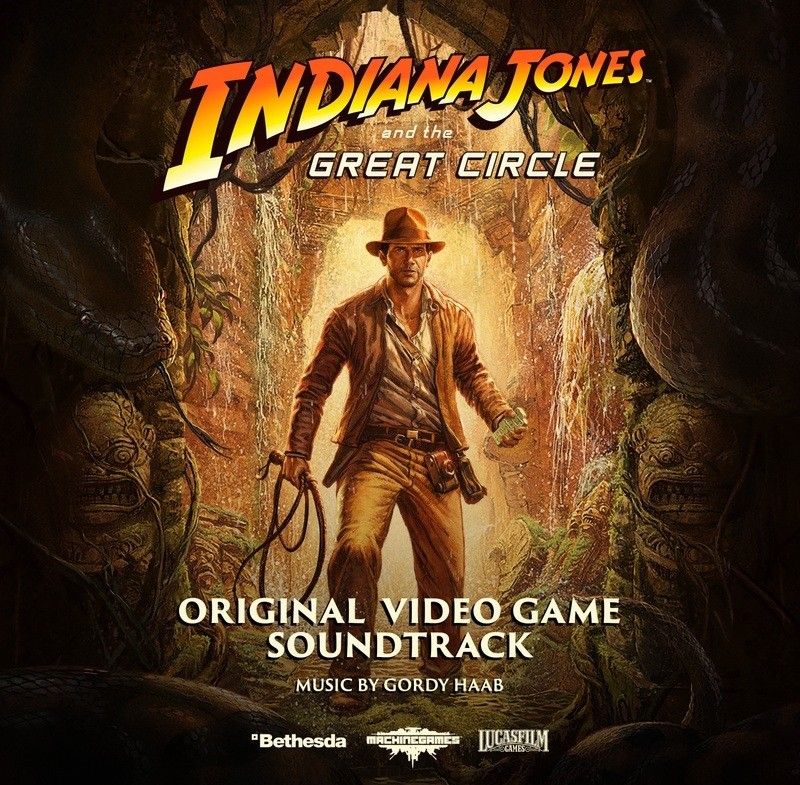
Although Indiana Jones and the Great Circle released in December of 2024, I didn’t play it (like most people it seems) until 2025. This was also the year the PS5 version released, so it counts! In fact, I played my Xbox more this year than any other year in recent memory. Microsoft is a trash company, but my Xbox Series X will likely remain the last bastion for Xbox 360 era exclusives that are backwards compatible, like Blue Dragon and Lost Odyssey. Anyway, the soundtrack, composed by Gordy Haab, sounds like something you’d hear from an Indy film, but I can’t say anything stayed with me after finishing the game. I suppose I do really like A New Adventure Awaits, though. It’s got that Indy theme leitmotif in there, which I never grow tired of hearing.
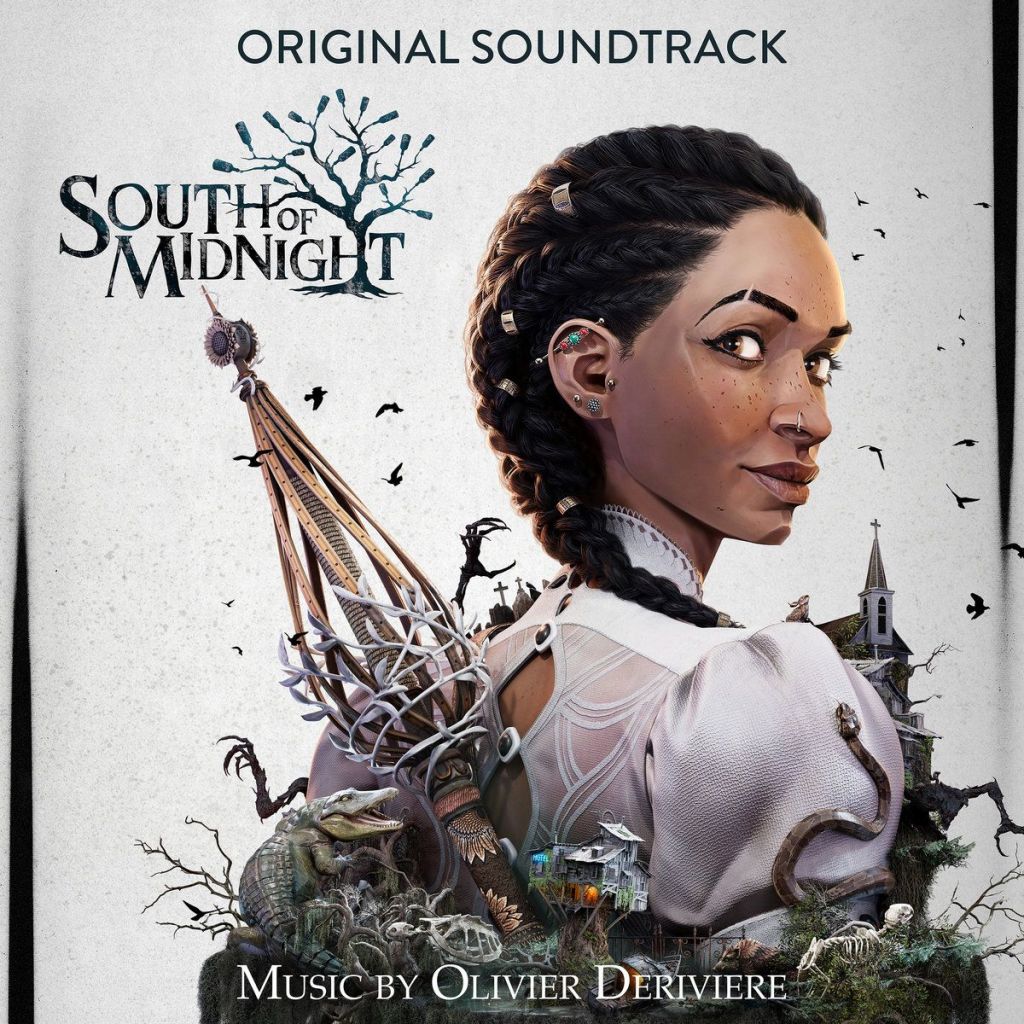
South of Midnight’s soundtrack, composed by Olivier Deriviere, however, carries the entire game. At the culmination of each chapter, you’re treated to these beautifully layered vocal tracks that sort of evolve and take shape as you progress through a level. The track about The Tale of Two-Toed Tom is an exceptional piece, for example. I love the use of organs in this track. In one of the early chapters of South of Midnight, you learn about a young man who has some sort of disability and was treated poorly by others because of his differences. His brother grew annoyed and impatient with his sibling as he thought his disability was holding him back from living his life. One day, he brought his brother to a tree and nailed him shut inside a hollow part of its base. It’s an incredibly sad and compelling moment in the game. In the culmination of this scenario, you’ll find yourself climbing the tree where this brother was laid to rest. As you make your ascent up the tree, you’re confronted with some fairly basic platforming sequences while an incredible vocal theme starts playing.
One of the most interesting things about the audio design in South of Midnight is that most lyrical tracks develop and evolve as you’re playing through a chapter. As you learn more about the character you’re trying to save, new lyrics and verses are introduced at fixed-intervals. The music isn’t dynamic in a traditional sense where say an exploration track transitions seamlessly to a battle track (à la Final Fantasy VII Rebirth or Visions of Mana, for example). The lyrics in each chapter more or less reflect the story and characters you just learned about. I was always looking forward to hearing the next vocal track in the game, even when things started to become a bit too formulaic. Keeper was one of my favorite games of the year and the soundtrack is very unique, almost otherworldly and abstract in its sound. The interesting use of instrumentation and the atmosphere it creates had me putting my controller down just to listen on more than one occasion.
But enough Xbox, have at you! Speaking of Castlevania: Symphony of the Night, I’ve always felt that the first area theme in a Metroid-like/Metroidvania is super important. Although it’s not as well-liked as the other entries in the series, Castlevania: Harmony of Dissonance has one of the best fist-level tracks of all time. So, in ENDER MAGNOLIA, after you meet Nola and they join your party, this track starts to play, and it’s honestly one of the best pieces in the game. The music throughout is very good and far more memorable than anything from the original game. Like it or not, but Promise Mascot Agency’s soundtrack feels heavily inspired by the PlayStation 2 (PS2) era Shin Megami Tensei (SMT) games, specifically Persona 4 (according to one of the composers). The soundtrack is exceptional, though. I mean, listen to this bassline! I can’t fully describe how it makes me feel, but listening to this game’s music transports me to simpler times. One of Earthion’s biggest draws is that the music is composed by the legendary Yuzo Koshiro. I think the soundtrack is great and it sounds like something you’d hear out of the 16-bit generation, but I can’t say a single track stayed with me after beating the game, unfortunately.
It’s now time for the Nintendo Music Corner. Between each new world (layer) in Donkey Kong Bananza, there’s typically a “Sinkhole” area which leads to the next level. The track that plays in these spots is this sort of dissonant, unsettling, atmospheric piece that carries a tone that’s both mysterious and foreboding. The music in general is fairly memorable (especially in the final few hours of the game, along with the credits theme, which sounds like something out of a Xenoblade Chronicles game). The first world, Lagoon Layer, has the most perfect opening track. This piece instills a great sense of adventure and carries some of the older DK soundtrack motifs. The saving grace in Mario Kart World’s Free Roam is the soundtrack. The composers went to town on Mario Kart World and some of the best music in the game is oddly (but thankfully) housed in the game’s Free Roam mode. I think Mario Kart World is worth playing for the OST alone. I wasn’t quite sold on Free Roam after my first few hours with it, but the more I played, explored (and listened), the more it started to speak to me. Sure, it’s more or less a collection of arrangements, but the sheer volume of tracks makes it an interesting piece for 2025.
In Metroid Prime 4, the Ice Belt (the second major region in the game), has been completely frozen over, including a lab where experiments took place. When you restore heat to the complex, the ice begins to melt and a warm glow permeates the space. It’s during these moments where the music shines as well. The tracks that play in these dungeons will change when they’ve been restored. The tempo increases and the music feels more energized, as if restoring the power to these zones also somehow affected the composer. I couldn’t get myself to finish Ninja Gaiden 4 before the end of the year. I’ll write more about it eventually, but I wasn’t particularly enjoying myself (which is shocking, because I loved Platinum Games “back in the day”). With that said, I love the game’s soundtrack. It’s certainly in the same vein as Metal Gear Rising: Revengeance, but it’s also clearly inspired by modern-day progressive metal/djent music. The shop track is my favorite. This track sounds like something Tim Henson/Polyphia (one of my favorite guitarists/bands) would have composed. Some of the boss tracks rule, too. This piece sounds like a Periphery song, which is another one of my favorite bands. The game might not be great, but the music sure is. Masahiro Miyauchi, what have you been listening to? I’ve got to know!
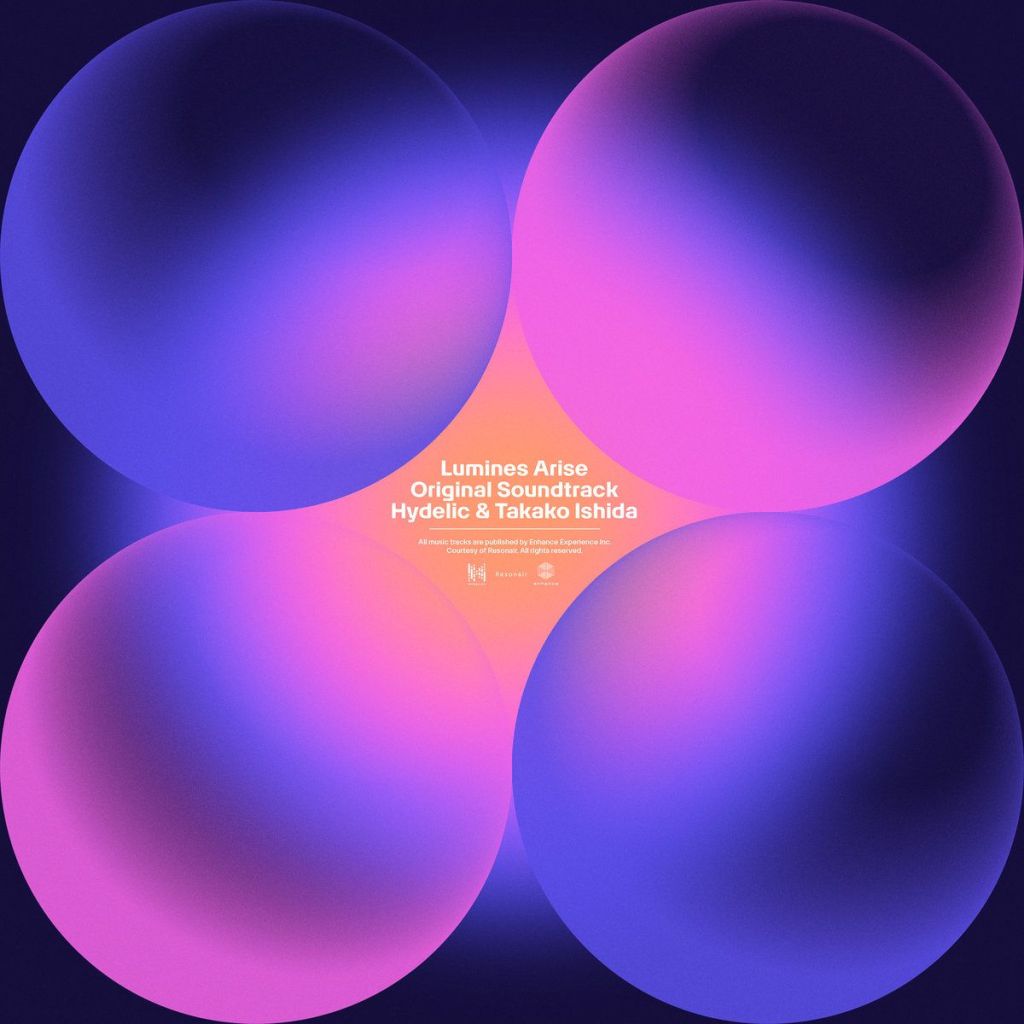
In Öoo, I loved that the music changes when you collect a fly (which is one of the game’s primary puzzle “items”) or even when you acquire your second bomb (which is arguably the only actual upgrade in the game). When a fly is collected, the music will layer a sort of buzzing sound to it. It’s these subtle details that really make the difference for me. Each area has a unique theme that sort of builds on the previous tracks; Area 6 is especially my favorite. Dear me, I was…’s soundtrack, composed by Satoshi Okubo, is simply pleasant to listen to and a lovely compliment to the artwork. I do love the ending theme, especially. It once again sounds like something that would play during the credits sequence of a Xenoblade Chronicles game. Now, for some quick-hits; Lumines Arise’ssoundtrack is pure catharsis, the music is quite lovely in Hirogami (even though a lot of tracks are reused throughout the game), and Silent Hill f has a beautiful, yet haunting opening sequence. The track, “Mayoi Uta”, composed by Akira Yamaoka, has hints of a motif from the first game’s self-titled intro track.
Sword of the Sea is at its best when you’re just cruising around the sand on your sword, taking in the visuals and listening to Austin Wintory’s score. Herdling’s OST is exceptional and one of my favorites of the year. The developers released some behind the scenes videos on the making of the game’s soundtrack on YouTube. I would be remiss if I didn’t mention Clair Obscur: Expedition 33’s soundtrack, composed by Lorien Testard. As boring as it is to say, Alicia and Lumiere are some of my favorite tracks in the game. Spring Meadows – Nightfall has a sort of early RPG forest dungeon feel to it and Ancient Summer Sanctuary – Gestral Summer Party sounds like it was influenced by modern pop songs, maybe? I also really like the campfire themes for each character. Sciel’s really stuck with me for whatever reason. The amount of different battle tracks and lyrical pieces is quite overwhelming. I wish I resonated with the soundtrack more than I did, however.
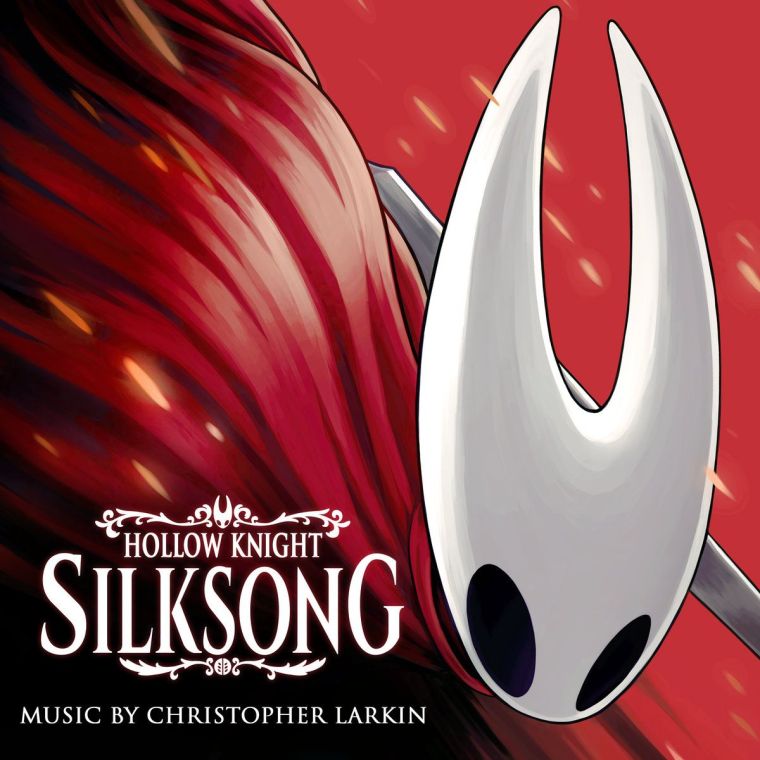
Hollow Knight Silksong, however, has my favorite video game OST of the year. Silksong is divided into three acts. Act I feels like a reprisal of the first game. It’s an impossibly polished trek through bug-ridden tunnels and caverns overgrown with moss, but it’s ultimately familiar territory. Then there’s Act II. When I first stepped into the Citadel and made my way to the Choral Chambers and High Halls, I had to put my controller down. The music that plays in these locations, composed by Christopher Larkin, sent chills down my spine. It feels like, at times, Larkin is channeling the legendary Hitoshi Sakimoto with some of these pieces. When I saw a group of rank and file bugs marching towards me dressed in divine garbs, it was over for me. If you already didn’t know, I love Bayonetta. Silksong captures one of my favorite things about the Bayonetta games and that’s the importance that was placed on the enemy designs/bestiary. The enemy placement and the sort of hierarchical structure of the bugs you face, their purpose and place in the game’s world, reminded me of why I felt so enamored by the angels in Bayonetta. These bugs have placed their undying faith into a cosmic entity that has stripped them of their free will, yet I found myself too, as the player, transfixed (haunted) by the beauty of the architecture, the mystery behind the weave, and the music that permeated its halls.
My “Favorite Multiplayer/CO-OP Games” of 2025
My favorite games of the year that I played with others.
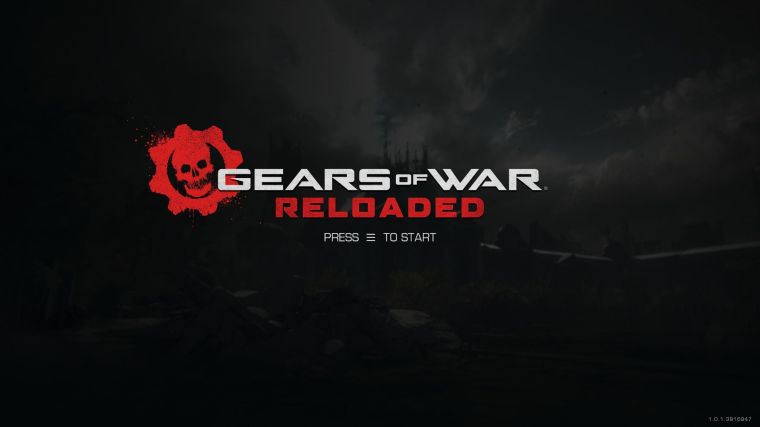
I reconnected with some old friends a year or so ago who I first met during the Xbox 360 era. One of those friends I would play Gears of War (GoW) with, almost religiously, along with my brother. So, I couldn’t pass up an opportunity to revisit Gears of War: Reloaded and all of its 2006 glory. The original GoW is a formative game for me. Not only was it where I met some of my best gaming friends online, it’s the first game my brother and I won a tournament in (it was at our local GameStop, so don’t get too excited). It also released during my college years and as someone who took a lot of night classes, we found ourselves staying up until daybreak, plugging away at that ridiculous “Seriously” (10,000 kills) achievement for years. It’s safe to say that the first GoW is one of my favorite games of all time. I completed the game with that same friend from my Xbox 360 days on Insane difficulty and collected all COG Tags. I’ve unlocked all trophies outside of the multiplayer ones, too. I’ve played some multiplayer matches with my brother and my aforementioned friend, and it was like travelling back in time. The “locker room” chat is just as vile and offensive as it was back in 2006. Whether you’re playing Warzone, King of the Hill or really any other mode, the multiplayer is as fun (and frustrating) as it’s ever been. There’s still very few games that can match the feel of using the Longshot to pop an enemy’s head. The sound effect and feedback is just *chef’s kiss*. I think the original GoW is an all-timer.
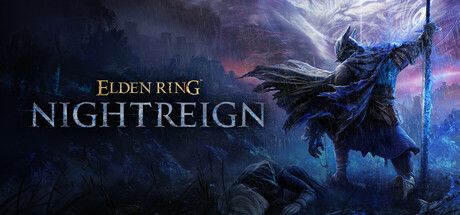
The other co-op game I played a decent amount of (but didn’t finish, unfortunately) this year was ELDEN RING NIGHTREIGN. I’m an old From Software head. I’ve been playing their games since the PS1 days and while I’m thrilled that they’re still around and more successful than ever, a big part of me misses their diverse catalog of games. Sure, we’ve had a new Armored Core game (finally) and an experimental PSVR game (Déraciné), but other than those two games, they’ve more or less been a Souls-pumping machine, for better or for worse. I was super skeptical and mostly uninterested in NIGHTREIGN when it was first revealed. A squad-based multiplayer title that borrows elements from modern-day battle royal games while also reusing assets from their own games? I was there for Chromehounds at launch, so I’ve made my mistakes in the past (okay, that game was probably really cool, but it just wasn’t for me). To my surprise, NIGHTREIGN somehow works and it’s actually really fun (at least with friends)! My group of three got to the very last boss, but we could not beat him before the end of the year. The game has been updated a bunch since I last played it, too. I’d love to return to NIGHTREIGN and finish it, but a “run” can be quite long, so you’ve got to be committed.
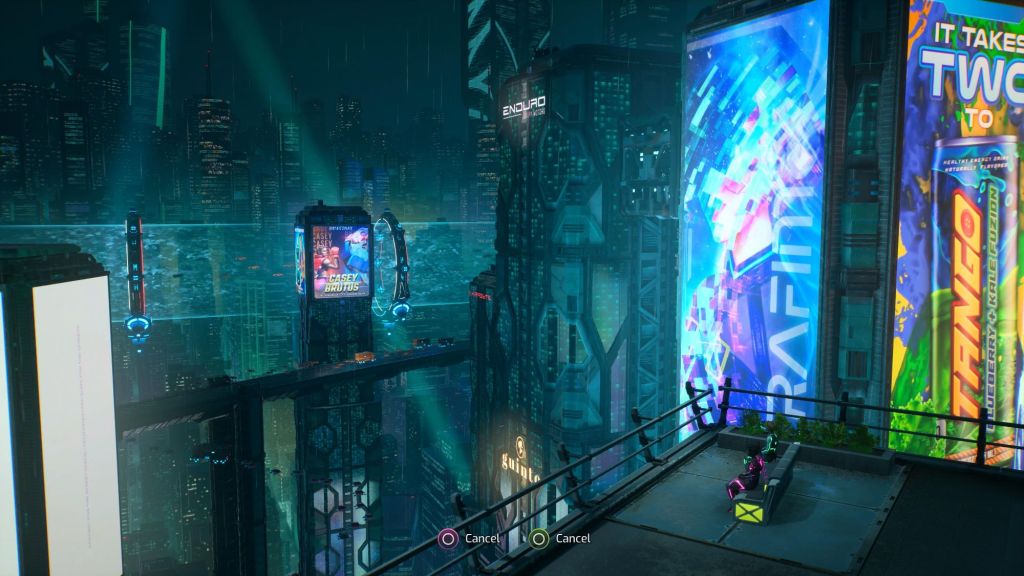
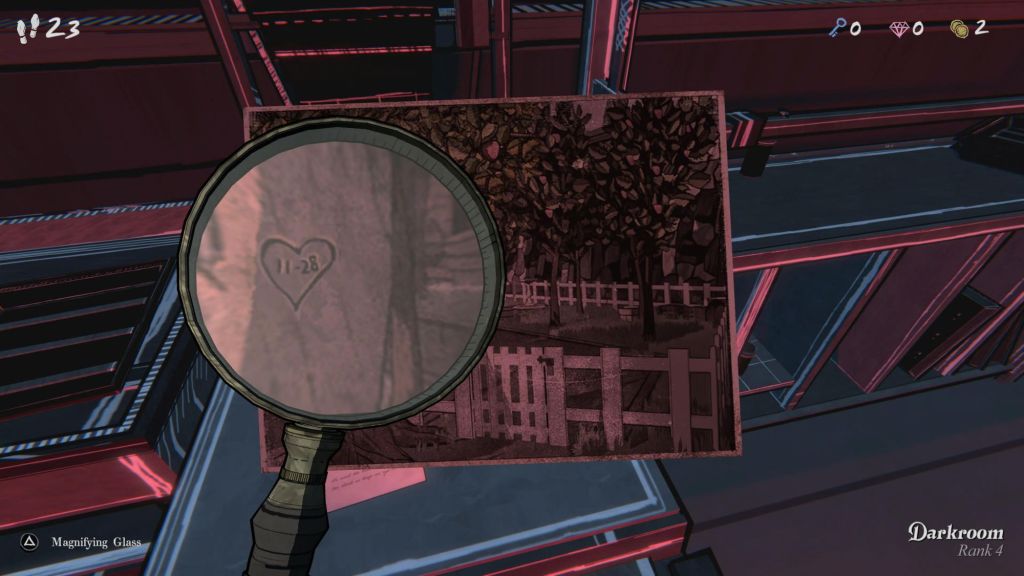
I think I would get in big trouble if I didn’t say that my favorite multiplayer experiences this year were with my husband playing Split Fiction, Blue Prince, and Lego Voyagers. My husband did not grow-up playing video games and while he supports my obsessive hobby, he’s not as acclimated with the medium as I am, obviously. His biggest struggle is playing any game that requires the player to use both analog sticks, particularly when it comes to camera movement in a 3D space. Split Fiction looks family-friendly on the surface and clearly has broad appeal, but it’s actually a pretty hardcore 3D action-platformer that asks A LOT from the player! We only managed a section or two per sitting before he became too frustrated to progress. Split Fiction would have likely made my Top 10 this year, but my husband insists that he wants to see it through, so we’ll get there eventually. The same thing can be said for our time spent with Blue Prince, but for different reasons. While Blue Prince is a single-player game, it’s also a wonderful couch co-op experience. We would play a day (or three) before calling it quits, however. We never made it to Room 46 (which is apparently where the game “truly begins”), but we were taking notes and screenshots along the way. I will say that the randomness (RNG) factor sort of demotivated me from booting the game up on occasion. While there’s no “wasted” attempt, so to speak, it’s clear that the game will sometimes not give you what you’re looking for. We’ll uncover the secrets to the mansion one of these days.
WINNER: The Games I Played With My Husband
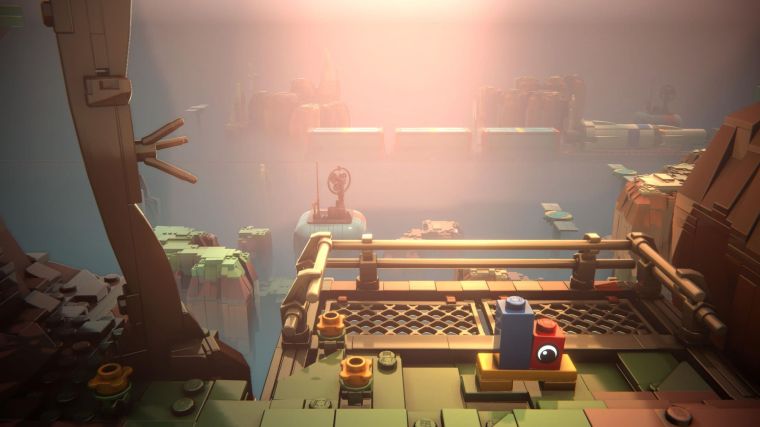
Finally, we played half-way through Lego Voyagers and it’s great. My husband is a huge Lego fan, so I couldn’t not force him to play this game with me! You could argue it sort of falls in the same camp as Split Fiction, but it’s not a split-screen adventure. This might sound like an odd comparison, but it’s more or less a cinematic puzzle-platformer in the same vein as games like Limbo, INSIDE, or Another World, but with cute Lego characters instead. The actual “Lego-building” aspect isn’t super complicated, either. You play as two tiny Lego pieces that can attach themselves to other inanimate Lego bricks to form bridges and the like in order to progress and solve environmental puzzles. Voyagers is a lot more palatable for my husband for a variety of reasons. For one, you don’t have direct control over the camera as it’s fixed in a isometric-view and dynamically moves along with the player. Secondly, there’s no major fail state and you instantly respawn when you die, so it’s a lot more forgiving than say something like Split Fiction. We will definitely finish this one, hopefully within the first half of 2026.
My “Favorite Ongoing Game” of 2025
The MMO/live-service game I played the most during the year.
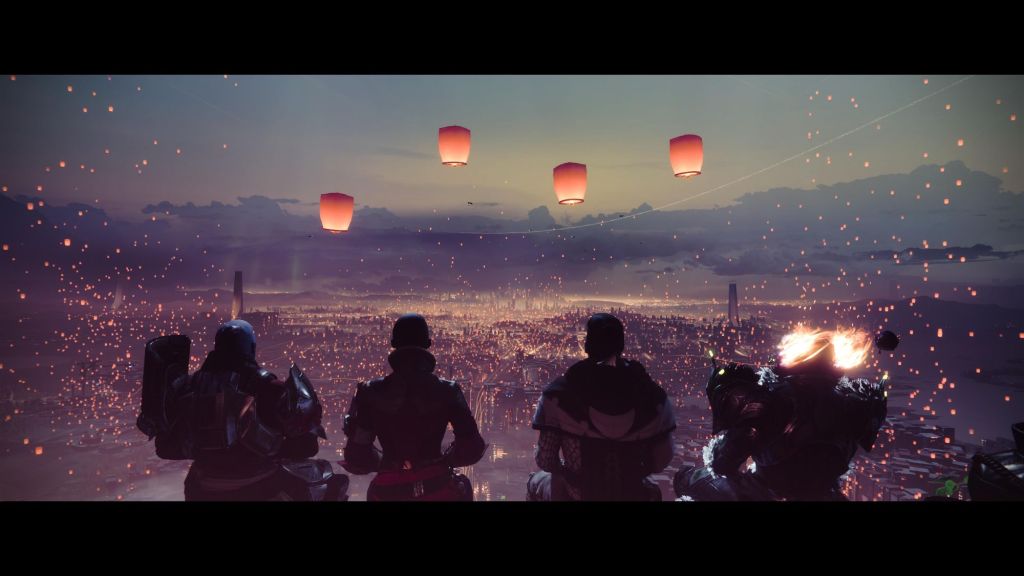
All alone… where has my clan gone? =(
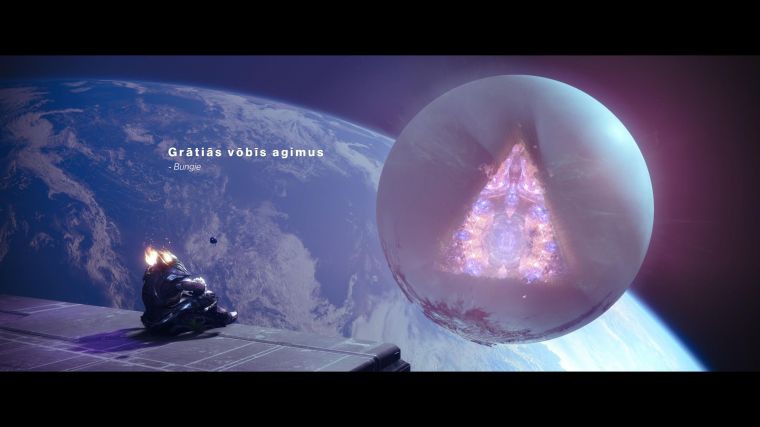
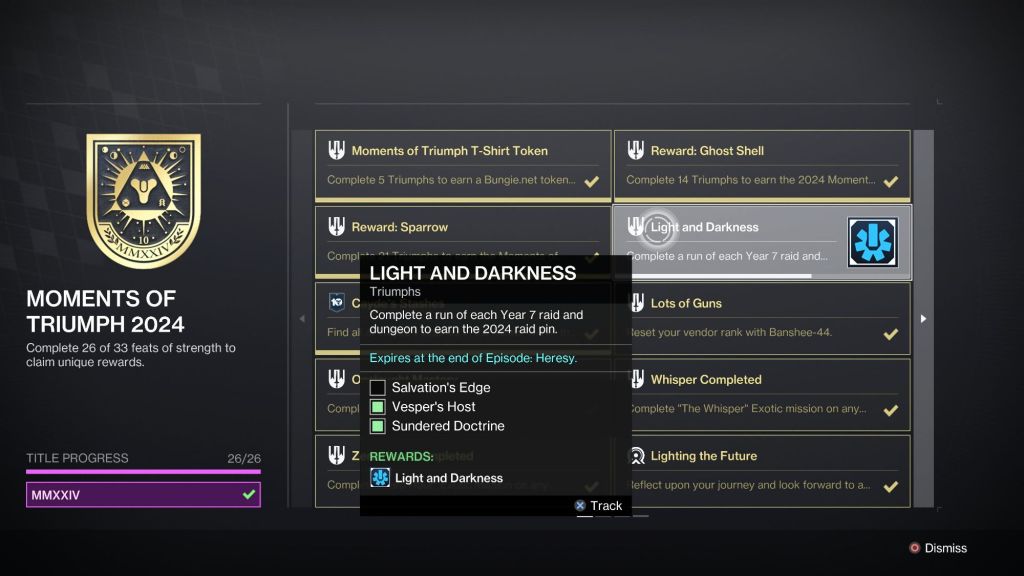
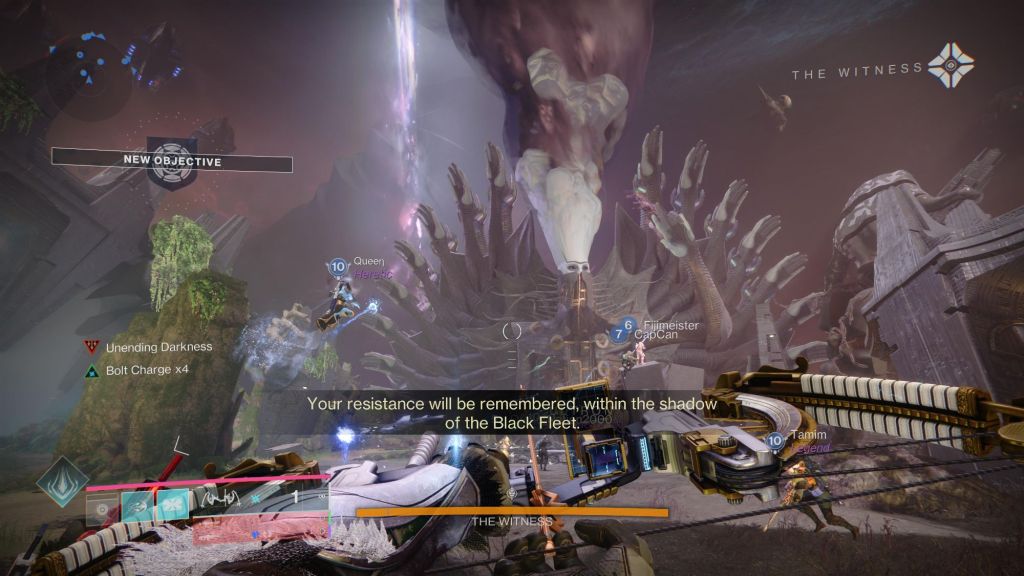
I’d hate to say it, but it’s probably going to be Destiny 2 again this year (at least according to my “Year-In-Review” from the big platform holders). I can’t really say it’s my “favorite ongoing game”, however, as I don’t necessarily enjoy playing it anymore? This past April through June, leading up Destiny 2’s Year of Prophecy, I more or less caught up with the previous year of content. In the span of a few months, I crammed-in the campaign missions on Legendary difficulty with random players, finished all three Episodes (Echoes, Revenant, and Heresy) along with their respective Seals, and earned my Moments of Triumph 2024 (despite forgetting to order my damn exclusive shirt from Bungie’s store for the very first time). The mini-raid style fight where guardians are summoned to take down The Witness (The Final Shape’s main antagonist) was really cool to experience, even if it was way after the fact (people were still fighting him)! The ending sequence to The Final Shape also felt like some sort of real closure, despite Bungie’s efforts to begrudgingly keep the game “alive”.
Destiny 2 has become a game where I check-in and either play solo or with random people from the in-game Fireteam Finder (LFG — which was pretty damn helpful at the time, if I must say so). I no longer play with my clan, sadly, which means I haven’t raided in a few years. This is coming from someone who did “Flawless” raids back in 2020 (which means no one can die during any encounter). I haven’t quite convinced myself yet, but this might be the end of Destiny 2 for me. I played the first story mission in the Year of Prophecy/Edge of Fate expansion near launch, but quickly turned it off, and I haven’t gone back since. When Moments of Triumph 2025 rolls around in a few months, will I repeat the same measures I took last year to secure my digital badges of participation? Who knows. With that said, since I’ll apparently never learn, I already pre-ordered Marathon. I still think Bungie makes some the best-feeling shooters on the market, so it’s hard to let go. I’m hoping they have learned from their mistakes with Destiny 2 (at least in terms of content vaulting and other FOMO nonsense), but only time will tell.
My “Favorite DLC/Expansion/Update” of 2025
The DLC/Expansion/Update I Played/Enjoyed the Most in 2025.
There were a lot of expansions, updates and DLCs this year. I did not, however, find the opportunity to play the majority of them. Astro Bot’s Vicious Void Galaxy released throughout the year and as much as I loved the base game, I’m sort of ready for Team ASOBI’s next project at this point. I’d also rather have a themed world similar to what they did with Ape Escape, God of War and Uncharted, for example, instead of the challenge room-like gauntlets they kept releasing. I’m still at the second to last boss in Lies of P, so there was no way I was going to play Lies of P: Overture anytime soon, but I hear it’s exceptional. Another Crab’s Treasure Year of the Crab dropped earlier in the year and although it was in my Top 10 in 2024, I just didn’t make the time for it this year. I don’t think the developer addressed an issue I had with the display/tracker for one of the game’s collectables, so that was a little disappointing to see. By the time Indiana Jones and the Great Circle: Order of the Giants released, I had enough of Indy’s exploits having put 30+ hours into the base game earlier in the year. These four were the ones I wanted to play the most, but I’m sure I’m forgetting about others.
For whatever reason (perhaps out of morbid curiosity), I did play through the DLC/expansion from the Nikoderiko: The Magical World – Director’s Cut, which includes a new world called the Secret World, among other updates and fixes. This director’s cut also added a new Hard mode, which is miserable! In order to truly 100% the game now, you need to complete Hard mode at 100%. The problem, however, is that each stage now contains a new, very frustrating twist. The first stage, for example, is now mirrored and an enemy chases you that kills you in one hit. In another level, the entire level is pitch black, outside of a small light radius that surrounds your character. The levels weren’t particularly designed well to begin with, so these new elements only make them even more of a headache to traverse. I will say that the Secret World finally makes use of all of your collectables that served no purpose in the original release. The Keys and Purple Gems now unlock new stages in the Secret World, which is a feature that should have been there in the first place. What a mess!
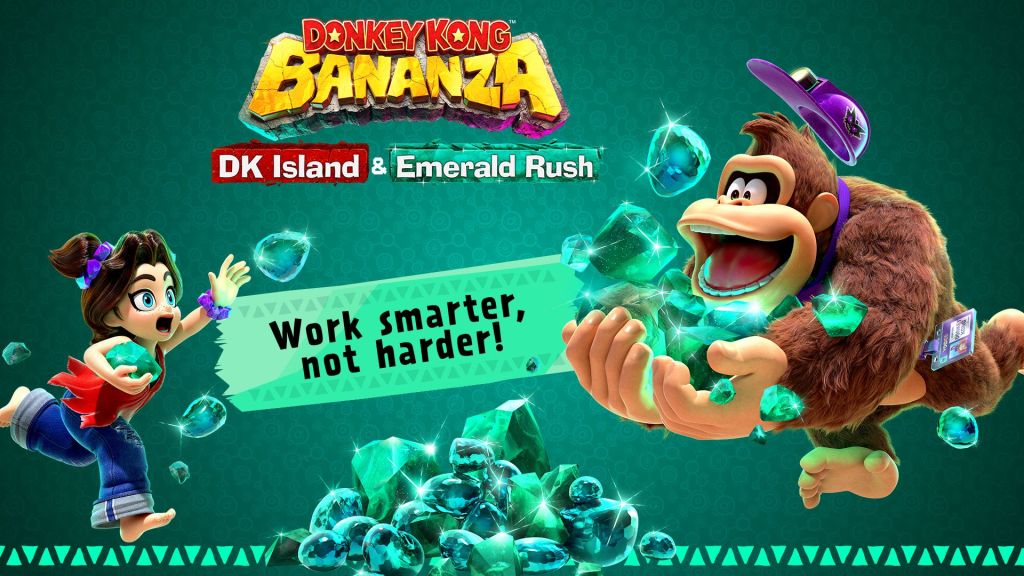
WINNER: A tie between Star-Crossed World and……DK Island & Emerald Rush
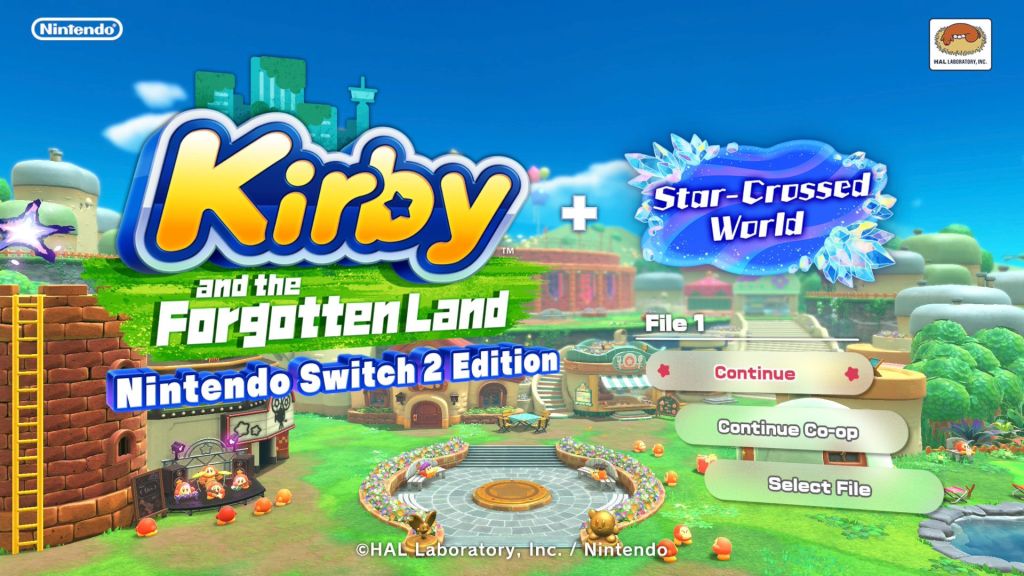
That brings us to Kirby and the Forgotten Land + Star-Crossed World and Donkey Kong Bananza: DK Island & Emerald Rush for the Switch 2, the two expansions I did play/make time for. To address the elephant in the room; there was enough time between the vanilla release of the Forgotten Land and its “Nintendo Switch 2 Edition” for it not to feel like a gross, cash-grab of sorts. DK Island & Emerald Rush, however, despite the quality of the mode/DLC, feels a bit more disingenuous considering the timing of its release (which was only a few months after Bananza came out). There was a bit of online discourse surrounding the release of DK Island & Emerald Rush. While I don’t disagree with the sentiment that it feels a little crummy for Nintendo to ask for more money (and it was a pricey piece of content; $20), it’s actually a fairly well-made mode that offers a ton of content for what it is.
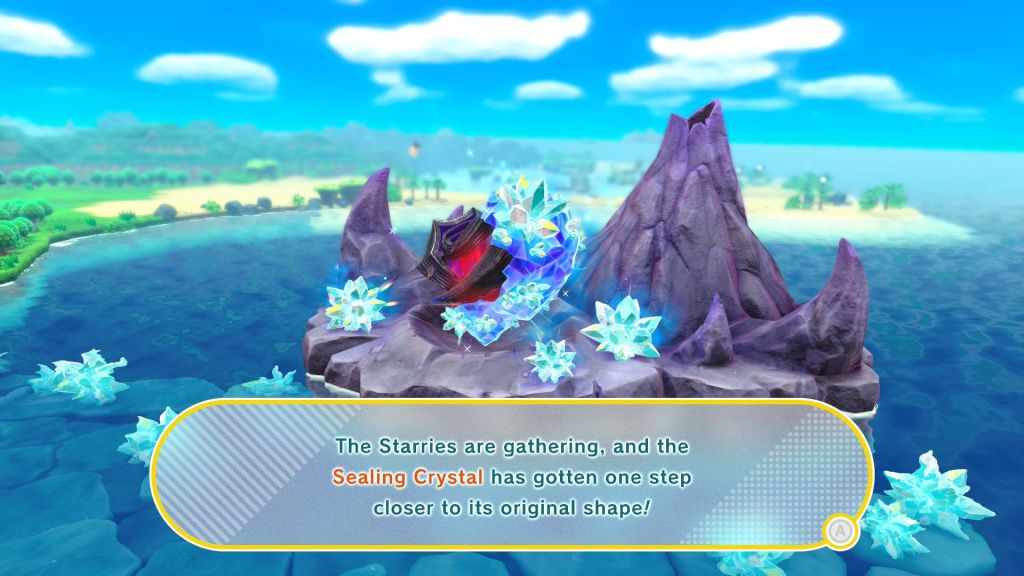
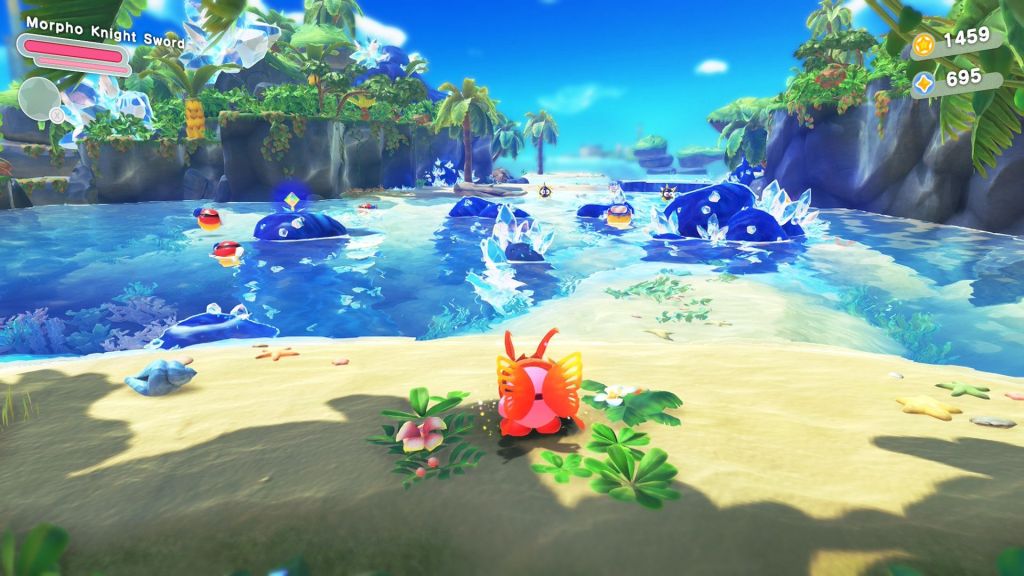
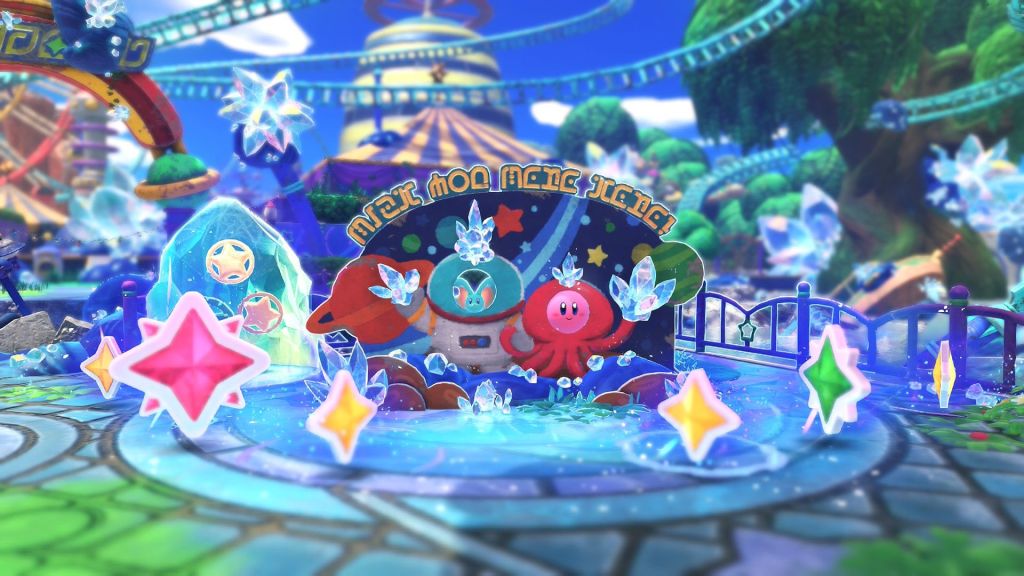
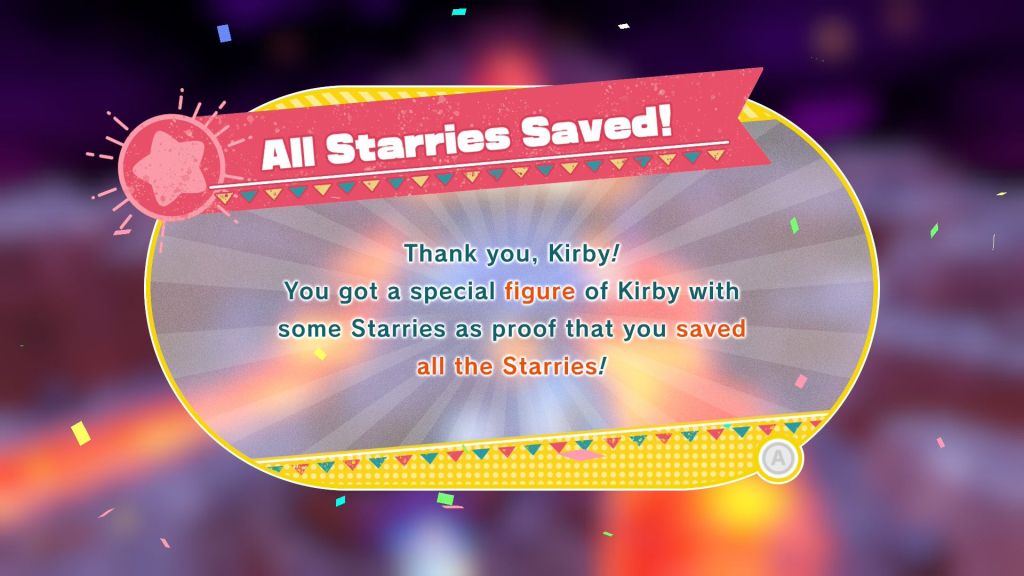
I loved Kirby and the Forgotten Land. It was easily one of my favorite games of the year when it released and hopefully it’s a new direction Nintendo and HAL Laboratory will continue to develop moving forward. Star-Crossed World begins with a cutscene showing a heart-shaped meteor made of crystal crashing into the ocean. As the meteor breaks-up in the atmosphere, crystals are dispersed across the land, which alters the state of various stages throughout the game. The new collectable, Starries, are needed to restore the seal on the meteorite in order to prevent total destruction, and so the adventure begins. I liked the Star-Crossed World expansion, albeit somewhat short-lived, it’s more or less remixed levels from the base game with a few unique power-ups, a new final boss, and some extras. The expansion’s new “gimmick” has Kirby more or less running over crystal flowers, which create the titular Star-Crossed roads that lead to new routes within preexisting levels. I was a little disappointed that the main bosses don’t get harder/remixed versions, though.
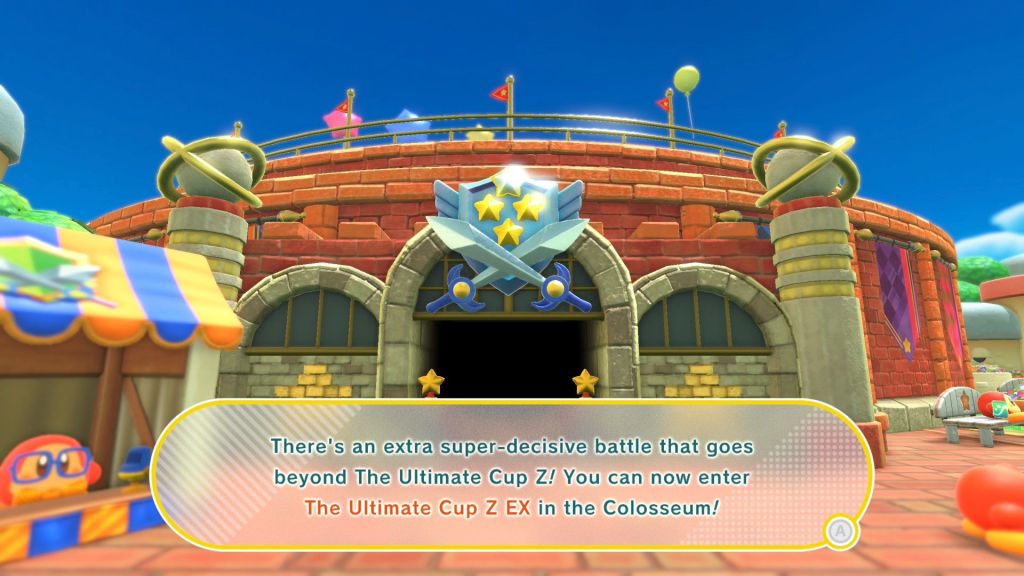
Visually, it looks very nice on the Switch 2 and performs much better than the base game; the dark blue color palette used for the crystals provides this pristine, cosmic feel to the environment, too. When the Kirby levels start to feel a bit more ominous and serious, you know you’re in it because of the music. I’ll never tire of the arpeggiation in Kirby tracks, the key/pad progression and all that jazz. I completed the expansion with everything collected, but I did not unlock all of the new figures or finish The Ultimate Cup 2 EX coliseum challenge, which is apparently very difficult. I also wish the expansion provided an alternative/faster way to farm Rare Stones, so that you could max out all of your transformations. At the moment, the best way to do this is to grind the various arena challenges, which is far too time consuming unless you’re an ultra completionist (which I’d like to think I am still, but not in this case)! I liked Star-Crossed World well-enough, but I’m definitely ready for a sequel.
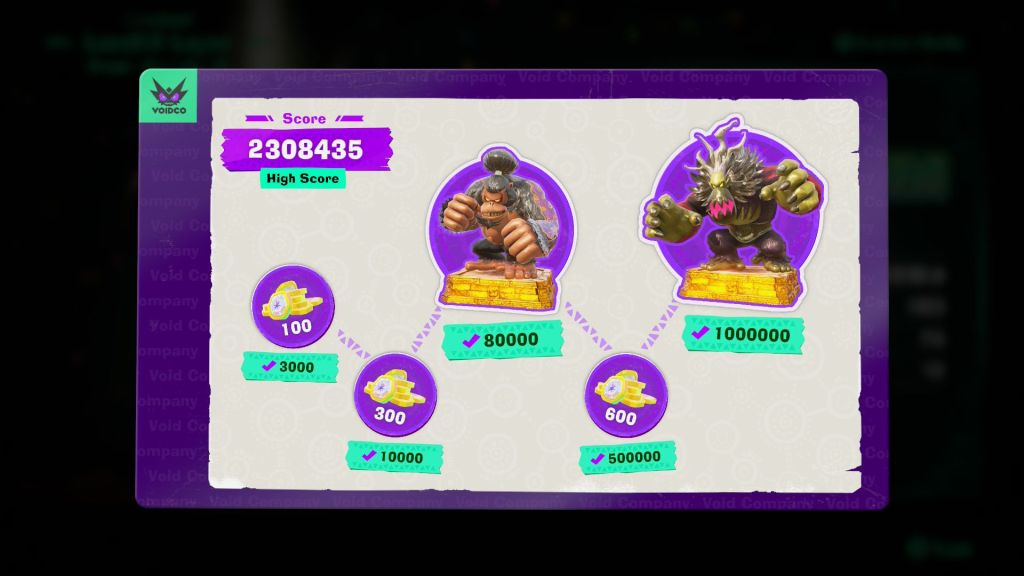
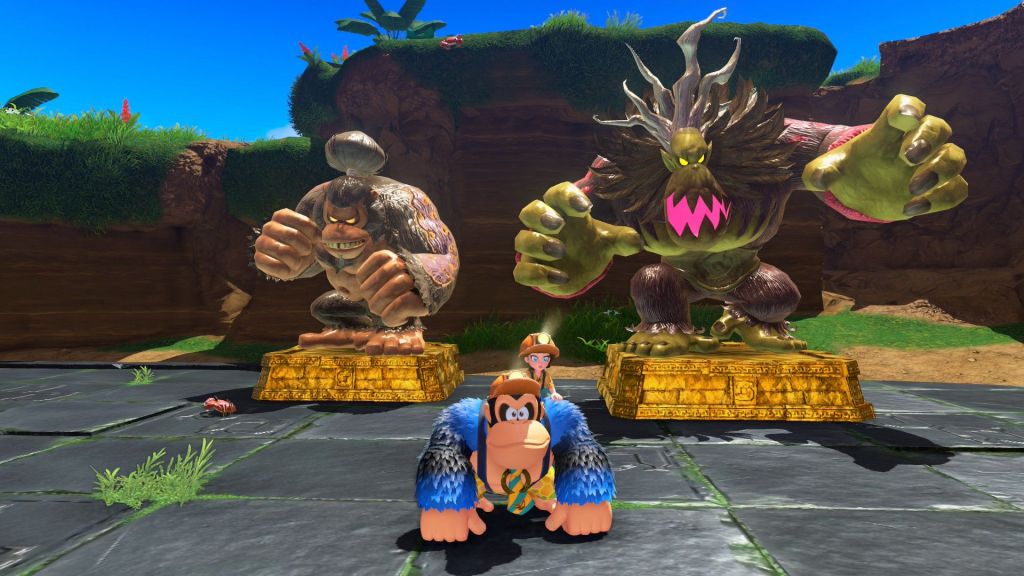
Donkey Kong Bananza: DK Island & Emerald Rush, however, I’m a bit more conflicted on. I typically don’t like run-based games or rogue-likes and that’s what this DLC is. VoidCo got the boot at the end of Bananza, so he’s made his way to DK’s home to start a new business. For many players, including myself, DK Island was a huge disappointment. The island acts as a hub of sorts to the Emerald Rush mode. It’s a bit of a letdown because DK Island is beautifully-crafted and closely resembles the home of our favorite Kongs to a tee. Although you can unlock fast-travel barrels around the island, there are no Banandium Gems to collect. Instead, you’ll unlock figures/statues that can be placed around the island with the currency you earn from participating in Emerald Rush. The statures are extremely detailed and while you can knock them around and pose in front of them for pictures, that’s all there is to do.
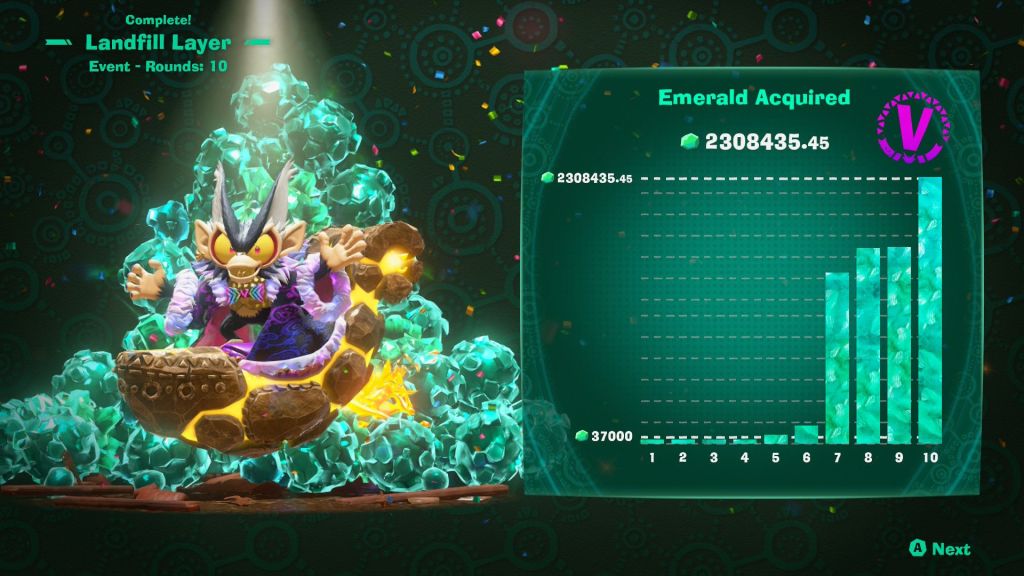
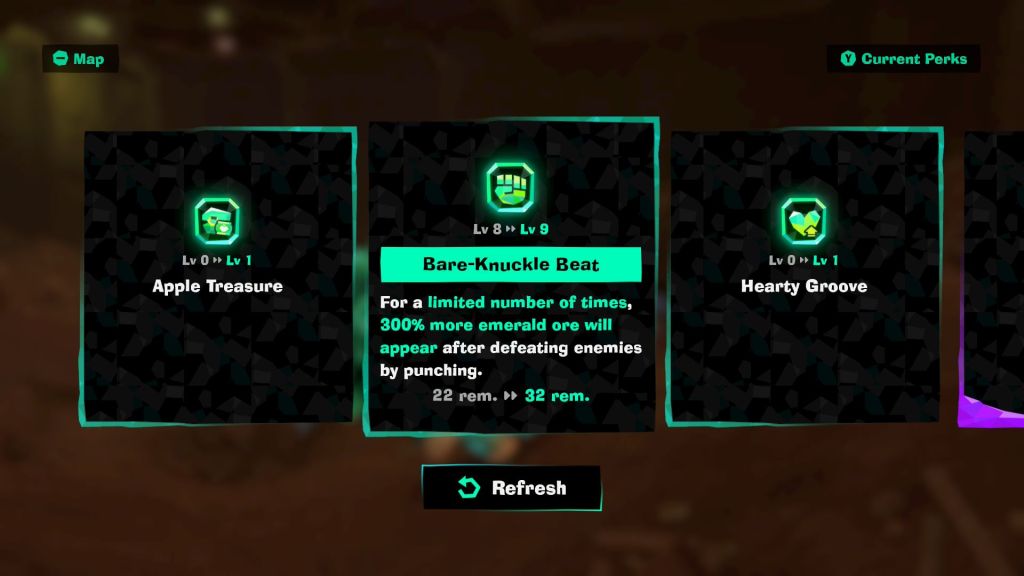
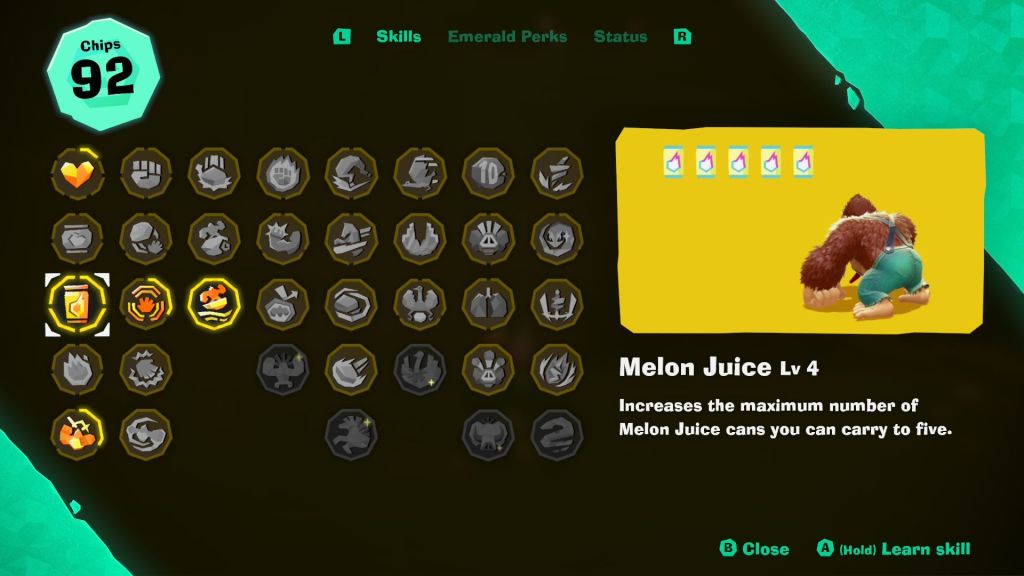
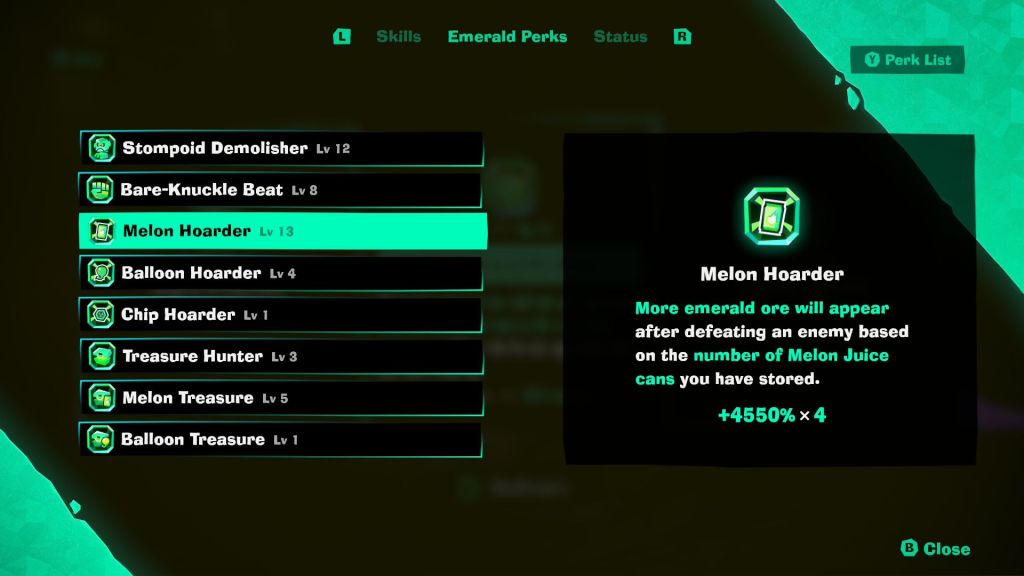
Emerald Rush is a run-based, rogue-like mode where you play an existing level from the base game under certain restrictions. When you select a stage, you’ll start the level with no skills/perks. By completing challenges issued by VoidCo, you’ll get the opportunity to choose from three randomized perks. This mode is all about the synergy between your perks and the skills that you unlock. The chips you collect in the environment can be used to unlock any skill from the skill tree. Your goal is to obtain the highest multiplier while earning emerald from challenges or other means along the way. Let’s say you choose to focus on the “Melon Hoarder” perk, which gives you more emerald based on how many Melon Juice cans you’re carrying. Well, if you max out your Melon Juice carrying capacity skill and then combine that with say the “Bare-Knuckle Beat” perk (which increase emerald drops by 300% for a limited amount of enemies defeated), forget about it! It’s actually a lot to wrap your head around at first, but if you read the perk descriptions carefully and stack certain modifiers, you’ll be raking in the emerald FAST, which ultimately will net you the coveted “V” Rank for the stage.
Nintendo has toyed with season pass-like features in games like Splatoon and even now with Kirby Air Riders, but I’m still surprised when I see it. DK Island & Emerald Rush is no stranger to these features, either. Every other month or so, there’s an online event featuring two unique statues you can’t earn anywhere else. You typically have about a week to participate in the event and then they’re gone. It’s not clear yet if these figures will be in rotation at some point down the road, perhaps on an annual basis until the game is “finished”. Nintendo hasn’t really communicated anything, though (big surprise). I managed to earn all of the unique figures up until the most recent event that took place in January of 2026. While I do actually like the mode, I was feeling a bit burned-out on the FOMO (sound familiar)? I think Emerald Rush is a lot of fun and it can be quite addicting if you engage with all of the sub-systems at play here. Would I have preferred DK Island to be a single-player experience chock-full of collectables and fun platforming sequences? Of course. But this wasn’t so bad, either.
My “Favorite Games I Played/Finished in 2025 That Didn’t Release in 2025”
My “Late to the Party” picks for the year; my favorite games I played/finished during the year that didn’t technically release during the year.
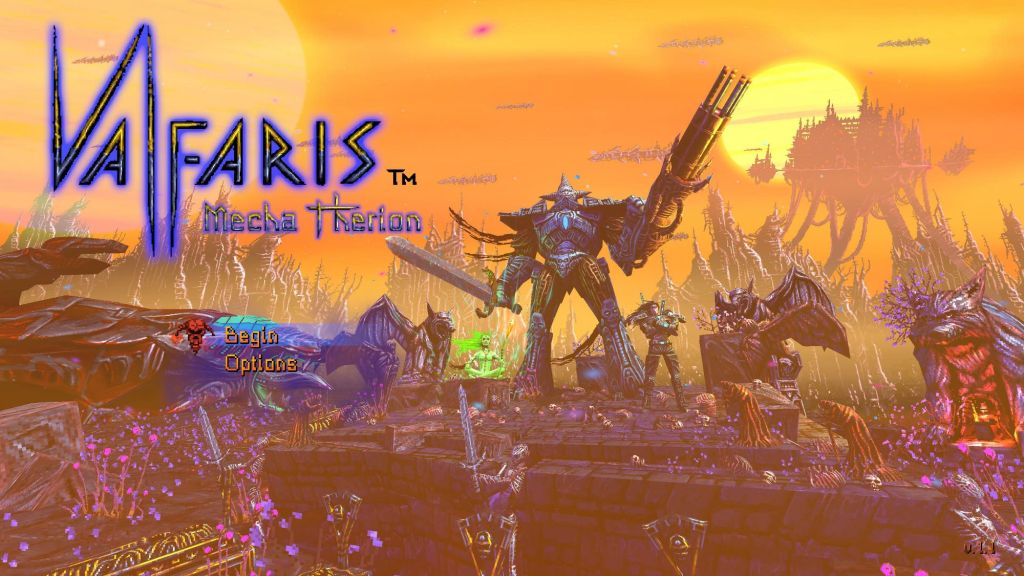
I played/finished a bunch of games for the first time in 2025 that technically didn’t release in 2025, including Mouthwashing, Symphonia, Electric Fairyland, Valfaris Mecha Therion, ENDER LILIES: Quietus of the Knight, and A Juggler’s Tale, just to name a few. Mouthwashing is a compelling, first-person, narrative-driven adventure game that did not leave a good taste in my mouth after finishing it. Symphonia is a challenging, almost Celeste-like 2D platformer with a focus on instrumentation and the power of music. Electric Fairyland is a low-poly 3D platformer that feels like the type of game you’d discover on your aunt’s PC in the late 90s/early 2000s (I also made a video about it). Valfaris Mecha Therion is an awesome 2.5D arcade shooter that feels like it could have sat alongside games like G-Darius, R-Type Delta or even Einhander on the PS1. ENDER LILIES has some of the worst level design/maps in any Metroidvania/Metroid-like I’ve ever played, but it laid the groundwork for an incredible sequel. Finally, A Juggler’s Tale is a surprisingly competent 2D cinematic platformer in the same vein as Limbo, INSIDE, or Another World.
WINNER: A tie between Epic Mickey: Rebrushed…and Banishers: Ghosts of New Eden
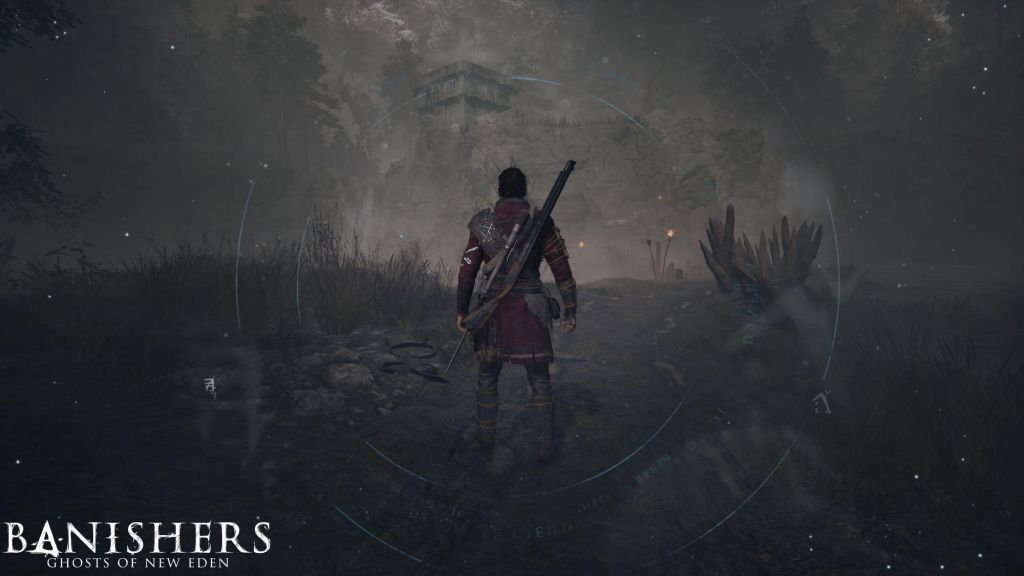
At the end of the day, Disney Epic Mickey: Rebrushed and Banishers: Ghosts of New Eden were my “Favorite Games I Played/Finished in 2025 That Didn’t Release in 2025”. Interestingly, both games feature black & white morality choices that impact certain aspects of the game. Mickey can choose to Paint or Thin and Red can choose to Banish or Blame. Even though Epic Mickey is a fairly basic 3D platformer and the move-set isn’t particularly interesting, I simply enjoyed running around, painting/thinning enemies and objects in the environment. I don’t think it scratches a Power Wash Simulator itch or anything like that, but I can’t help myself from smiling when I thin a wall and reveal a big red treasure chest behind it. Although my time spent with Banishers was ultimately ruined by a glitched quest, I really wanted to love this game. I think if Banishers was half the length, chilled-out on the GoW 2018 influences and was a bit more refined, it could have been a (cult) classic. The fact that the game is centered around an interracial couple (and also contains LGBTQ characters) likely didn’t help with its sales, which is a shame because there’s definitely something worth praising here.
My “Favorite Retro Games” of 2025
The old-ass game I enjoyed revisiting the most during the year.
PlayStation 2 (PS2) is considered retro, right? A lot of PS2 games still feel modern today, including Jak and Daxter: The Precursor Legacy (J&D). J&D, developed by Naughty Dog, is a 3D platformer in the same vein as Super Mario 64 (SM64) or Banjo-Kazooie. The game follows Jak and his sidekick, Daxter, on a quest to turn Daxter back into his human(elf?)-self. The game begins with Jak and Daxter exploring ancient Precursor ruins when Daxter accidently falls into a pit of Dark Eco, a black, goopy substance that transforms Daxter into a rodent. Eco is an important resource in the world of J&D (think of it like oil or electricity) as it powers many objects, including Jak himself. Eco comes in a variety of flavors, such as Green Eco and Blue Eco, which restores Jak’s health and grants him increased movement speed, respectively. Across the land, there are Eco Vents for Jak to make use of, some of which must be activated first before using them. Unlocking some of the Eco Vents reminded me of hitting the colored switches from Super Mario World on the Super Nintendo Entertainment System (SNES) to gain access to new areas. Okay, maybe that’s not the best comparison.
The main collectable in J&D are Power Cells. They are essentially the Power Stars or Jiggies from SM64 or Banjo-Kazooie, respectively. The Power Cells, well, power objects and the sort in the world of J&D. Many of them are out in the open to collect, but a lot of them require a few additional steps. When you collect a Power Cell, J&D will do a unique animation to celebrate their newly acquired item. It’s something that SM64 first established and has been a feature in pretty much all 3D platformers since; when Mario obtains a Power Star, he’ll do a little twirl and give the peace sign. While this animation is happening, the controls are taken away from the character and the camera zooms-in on the player. It’s something I truly value/look for when playing a 3D platformer, both new and old. In J&D, there are many unique animations that play out when you collect a Power Cell. Jak will pump his fist usually while Daxter performs some sort of facsimile of a popular dance move. Fun times.
Each time I revisit J&D, I’ve always walked away with a new perspective. One of the game’s biggest selling-points at launch was the fact that the game had a seamless world with little-to-no loading times. Coming off of their previous series, Crash Bandicoot, J&D was quite the evolution for its time. It’s not quite SM64 levels of an “aha” moment, but it does do a few interesting things considering the sub-genre. J&D has a lot of adventure game elements that I really appreciate, especially comparing it to the 3D platformers that came before it. In Sandover Village, the first major area in the game, there’s a boat that will take you to a cursed area called Misty Island. To use the boat, you must first find the fisherman who owns it. The fisherman can be found in the Forbidden Jungle, which is a level you can access after you complete the tutorial area. When you first meet him, he’ll ask you to complete a fishing mini-game before he’ll allow you to use his boat. It’s this sort of quest-like structure that sets it apart from its contemporaries. These types of adventure game ideas are more present in the first half of the game, but it’s a design element that’s mostly carried throughout. I wish Naughty Dog developed these ideas more in the sequels, but I’ll talk about Jak II and 3 at a later date…
At this point, I must have replayed J&D at least a half-dozen times. The last version I played was the PS4 port from more than five years ago. With the release of the more recent PS2 emulation on the PS4/PS5, I figured it was time for yet again another revisit. I haven’t played J&D on original hardware in well over two decades, so I couldn’t tell you exactly what’s wrong with the new emulation. Although it’s been improved, industry experts have reported that it’s still not the definitive way to experience the PS2 classic. I completed J&D, once again, at 100% with the Platinum trophy earned. For trophy enthusiasts, the set for this version is slightly different from the previous versions, so if you’re looking for yet another excuse to revisit this game, have at it. Naughty Dog just announced their next game, Intergalactic: The Heretic Prophet. The naming methodology isn’t lost on me, either (Jak and Daxter: The Precursor legacy —> Intergalactic: The Heretic Prophet). I doubt this means anything in terms of the type of game Intergalactic will be, but a part of me hopes the game has some J&D DNA, at the very least. I just want a modern-day game from Naughty Dog that allows me to perform a double-jump, please.
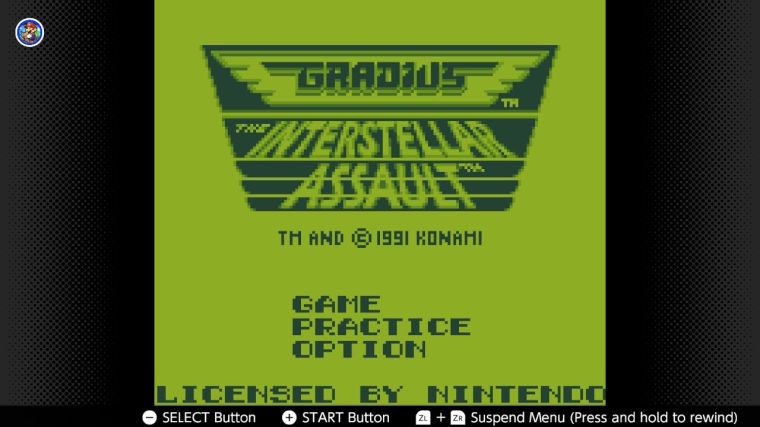
WINNER: Gradius: The Interstellar Assault
Each year, I try to keep at least one “retro” game in-rotation. If I’m not playing something old, I feel like I begin to lose sight of things. I think playing games from previous generations, particularly ones you’ve never played before, keeps you grounded and gives you perspective on the “state of things”, so to speak. Gradius: The Interstellar Assault was my favorite retro game of the year. It was developed by Konami and released back in 1991 for the Game Boy (GB). The Interstellar Assault is a 2D side-scrolling shoot ’em up and the second Gradius release on the GB. Despite owning a GB as a kid, I never played The Interstellar Assault. My first shoot ’em up/arcade shooter was Sky Shark on the Nintendo Entertainment System (NES) followed by Sagaia on the Sega Genesis. When you begin the game, the player can choose from three different shot types; Missile, Double, and Laser. From there, you can select between three different options, typically some sort of normal, twin or tail (shots fired from behind) variant. I always opted for the Twin Laser, though.
The Interstellar Assault is a fairly standard shoot ’em up, but there are some cool level ideas here and there. The game begins with an auto-scroller level where a giant spaceship chases after you while you have to navigate an asteroid belt. In the second stage, a giant warship captures your ship and a machine strips you of your power-ups. The game is also shockingly cinematic. After you defeat a particular boss, you’re treated with a cut scene where it shows your ship blasting off from a giant star cruiser to a nearby planet à la Super Metroid. There’s also seamless stage transitions and a level where the screen scrolls along with the ship, which was rather impressive for its time considering the hardware. The music is fine, given the hardware’s sound limitations, but there’s nothing here I would listen to outside of when I’m playing the game.
While your ship doesn’t respawn on the spot when you die, there are checkpoints throughout the level. There are surprisingly infinite credits on all difficulties so you can bang your head against the wall until you finish it, which wasn’t really the standard for the time. In most old-school arcade shooters, after you reach a certain points threshold, you gain an extra life, which is at 80,000 points in this game. If you die and lose your power-ups, however, you’re sort of screwed. The game loops after beating it so you can continue increasing your high score (I’m pretty sure the game bumps up the difficulty on consecutive loops, too). I completed the game on each difficulty; Easy, Normal and Hard. I also managed to 1CC both Easy and Normal difficulties but got to the second to last stage on Hard difficulty before I blew all of my lives (if you’re unfamiliar with the term, “1CC” is simply an abbreviation for completing the game on a single credit; 1 Credit Clear). One final little detail I thought was really ahead of its time; when you beat the game on Hard difficulty, the end credits are slightly different (the Vic Viper will blast off into the background right before the shooting star appears and the “END” graphic is shown). Very cool. Gradius: The Interstellar Assault is a competent arcade shooter for the GB and one that I thoroughly enjoyed playing for the first time in 2025.
See you at GOTY and Part II of Gaming in 2025: In-Review Part II…
Just a friendly bear who works in financial reporting that would rather be playing, writing or talking about video games. https://twitch.tv/unexpectedenemy








 UnexpectedGames
1 Comment »