Gaming
What I’ve Been Playing (Q3) 2025
Thoughts & impressions on the games I played/finished during Q3 of 2025, including Donkey Kong Bananza, Öoo, Earthion, NINJA GAIDEN: Ragebound, Mario Kart World, and more…
 UnexpectedGames
Just a friendly bear who works in financial reporting that would rather be playing, writing or talking about video games. https://twitch.tv/unexpectedenemy

Thoughts & impressions on the games I played/finished during Q3 of 2025, including Donkey Kong Bananza, Öoo, Earthion, NINJA GAIDEN: Ragebound, Mario Kart World, and more…

Our summer concluded with a trip to New Orleans for our very first Southern Decadence. After a busy summer of travel, I was ready to slow down and get cozy with my endless rotation of games as we approached the holiday season. The third quarter of 2025 was just as jampacked as the previous half of the year in terms of new game releases, both big and small. I’m still in the middle of Ninja Gaiden 4, SHINOBI: Art of Vengeance, Absolum, BIRDCAGE, Hypogea, and Gears of War: Reloaded, just to name a few, so I can’t quite speak to those games just yet. Just like with the last quarter, I finished a handful of games that I won’t be writing about here, so please look forward to those updates by the end of the year (hopefully). I once again managed to finish more than 10 games during the third quarter of 2025. So, here are some thoughts/impressions on a handful of the games I managed to play/finish during the months of July through September.

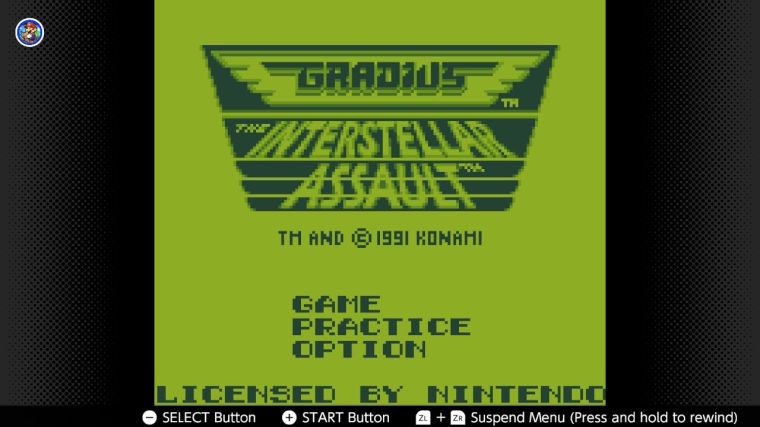
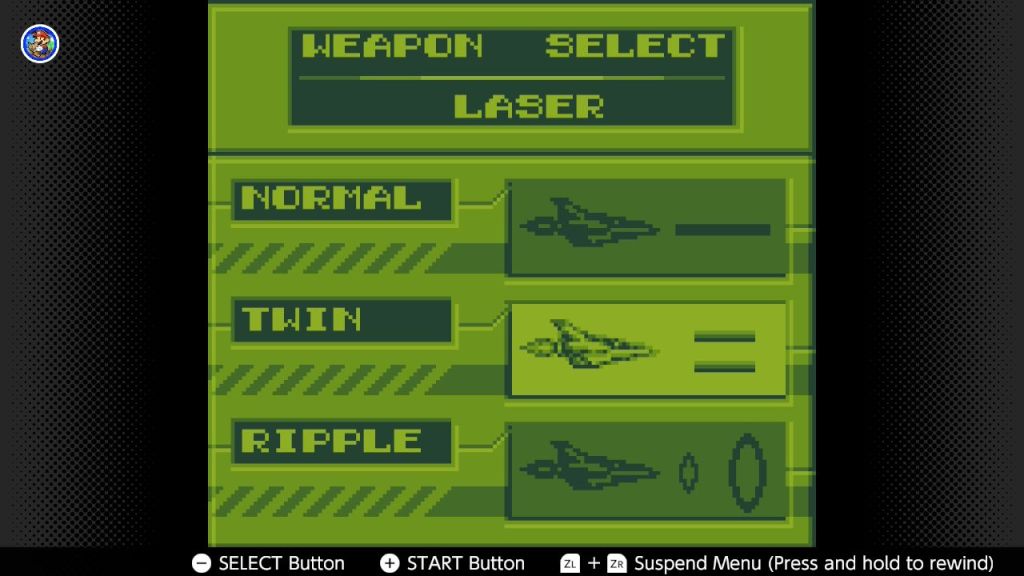
Gradius: The Interstellar Assault, developed by Konami, released back in 1991 for the Game Boy (GB). The Interstellar Assault is a 2D side-scrolling shoot ’em up and the second Gradius release on the GB. Each year, I try my best to play a retro game, particularly one I’ve never played before. As much as I enjoy staying on top of all the new releases, playing something “old” keeps my grounded (and sane). Despite owning a GB as a kid, I never played The Interstellar Assault. My first shoot ’em up/arcade shooter was Sky Shark on the Nintendo Entertainment System (NES) followed by Sagaia on the Sega Genesis (more on those two later…). When you begin the game, the player can choose from three different shot types; Missile, Double, and Laser. From there, you can select between three different options, typically some sort of normal, twin or tail (shots fired from behind) variant. I always opted for the Twin Laser, though.
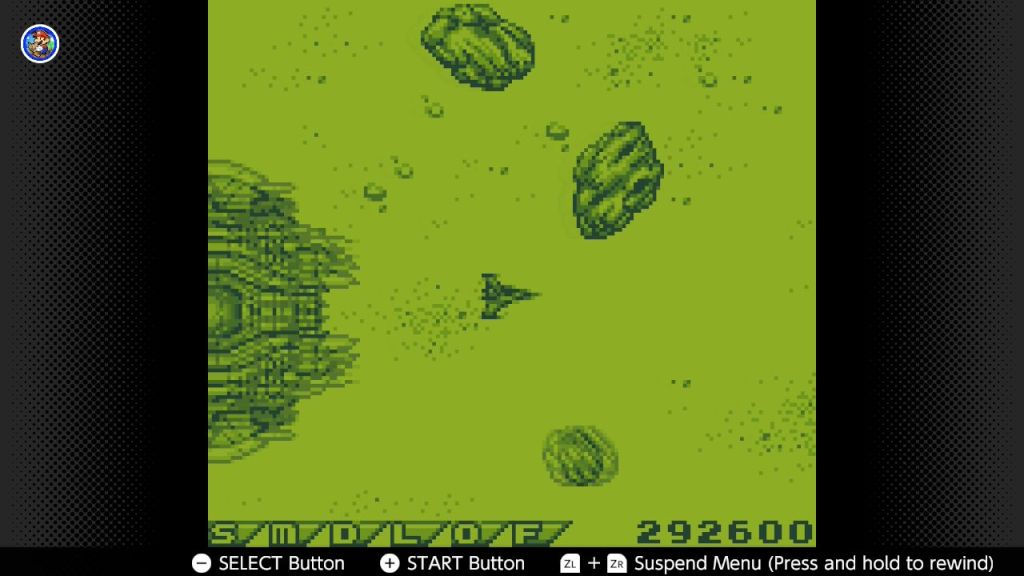
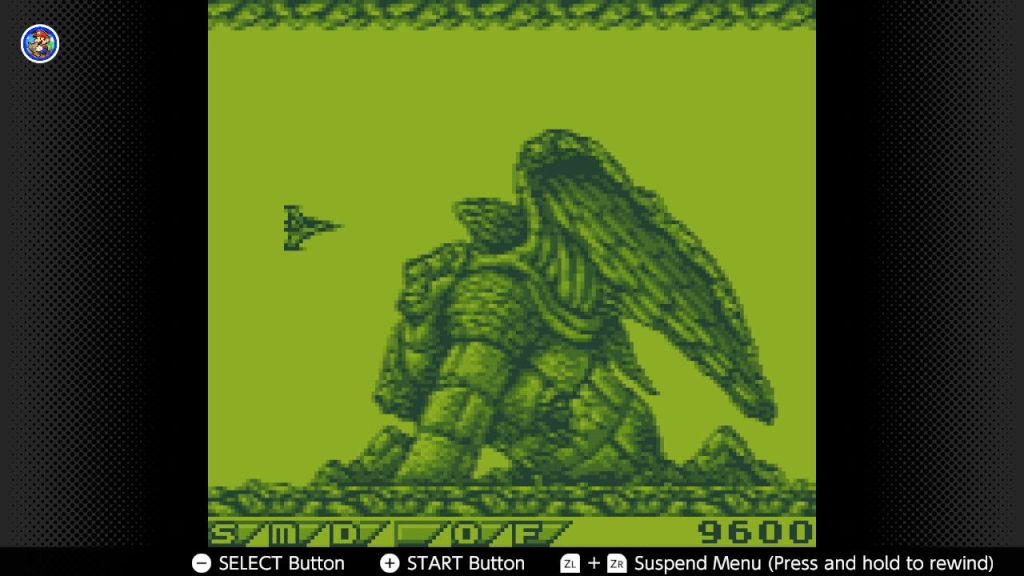
The Interstellar Assault is a fairly standard shoot ’em up, but there are some cool level ideas here and there. The game begins with an auto-scroller level where a giant spaceship chases after you while you have to navigate an asteroid belt. In the second stage, a giant warship captures your ship and a machine strips you of your power-ups. The game is also shockingly cinematic. After you defeat a particular boss, you’re treated with a cut scene where it shows your ship blasting off from a giant star cruiser to a nearby planet à la Super Metroid. There’s also seamless stage transitions and a level where the screen scrolls along with the ship, which was rather impressive for its time considering the hardware. The music is fine, given the hardware’s sound limitations, but there’s nothing here I would listen to outside of when I’m playing the game.
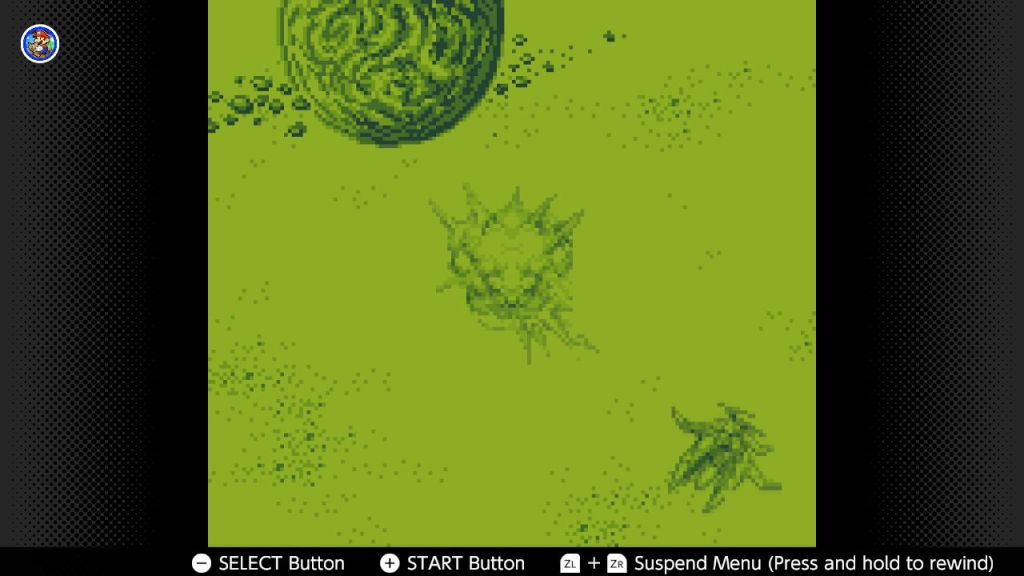
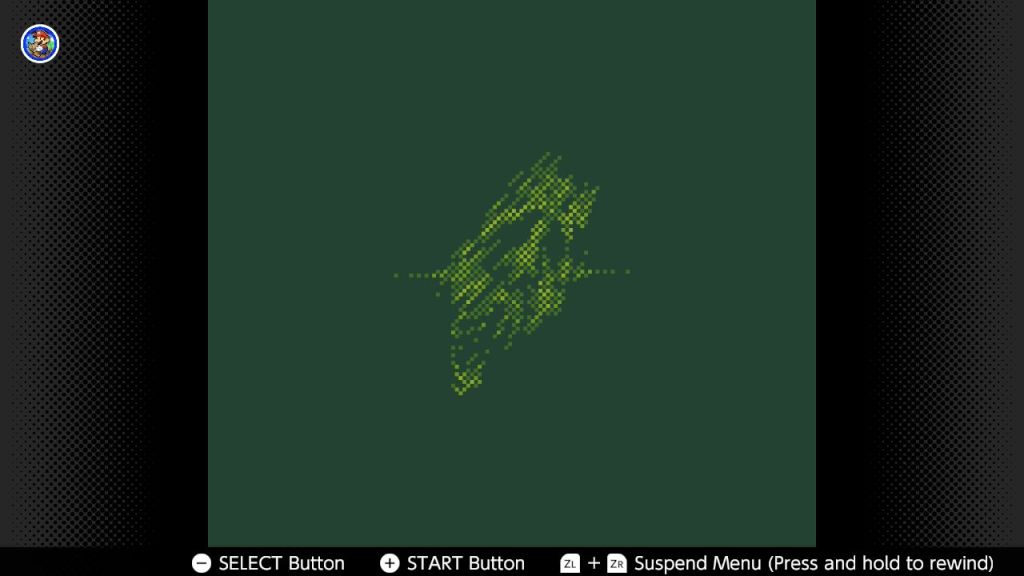
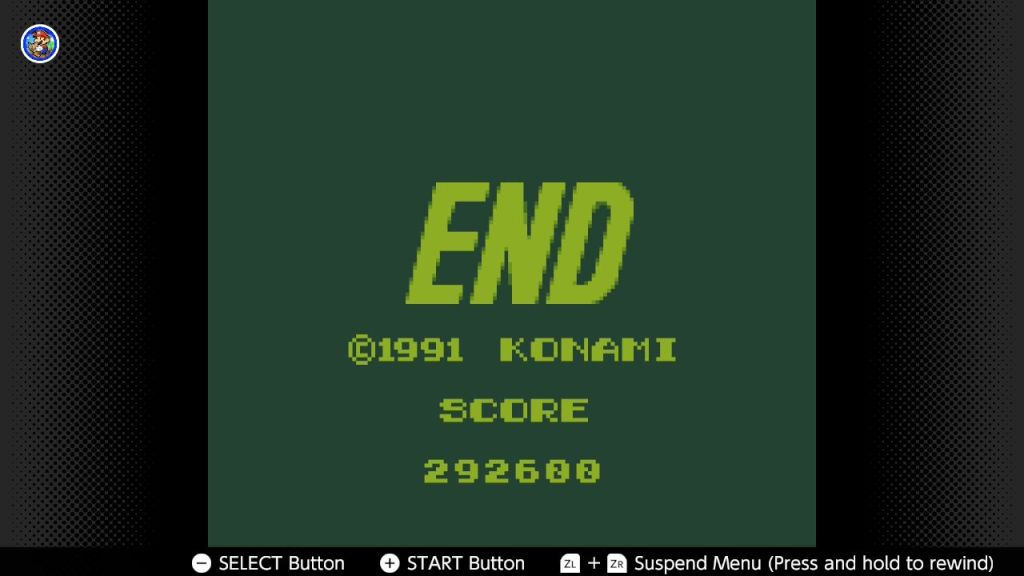
While your ship doesn’t respawn on the spot when you die, there are checkpoints throughout the level. There are surprisingly infinite credits on all difficulties so you can bang your head against the wall until you finish it, which wasn’t really the standard for the time. In most old-school arcade shooters, after you reach a certain points threshold, you gain an extra life, which is at 80,000 points in this game. If you die and lose your power-ups, however, you’re sort of screwed. The game loops after beating it so you can continue increasing your high score (I’m pretty sure the game bumps up the difficulty on consecutive loops, too). I completed the game on each difficulty; Easy, Normal and Hard. I also managed to 1CC both Easy and Normal difficulties but got to the second to last stage on Hard difficulty before I blew all of my lives (if you’re unfamiliar with the term, “1CC” is simply an abbreviation for completing the game on a single credit; 1 Credit Clear). One final little detail I thought was really ahead of its time; when you beat the game on Hard difficulty, the end credits are slightly different (the Vic Viper will blast off into the background right before the shooting star appears and the “END” graphic is shown). Very cool. Gradius: The Interstellar Assault is a competent arcade shooter for the GB and one that I thoroughly enjoyed playing for the first time in 2025.
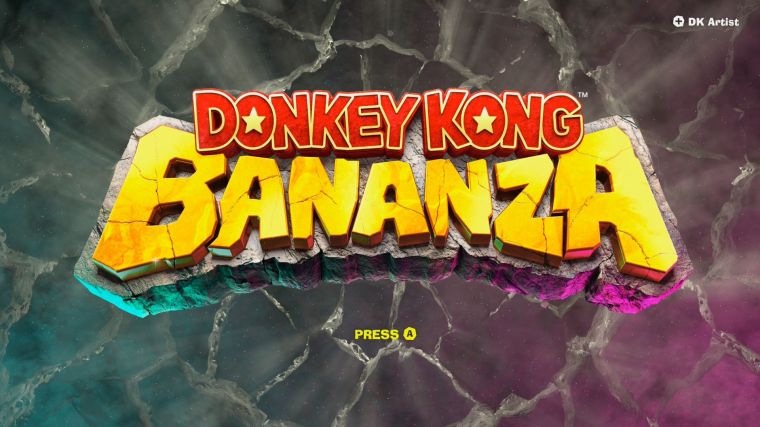
Donkey Kong Bananza, developed by Nintendo, is the first 3D Donkey Kong platformer in over 20+ years. I wrote about this last quarter, as I just finished a replay of Donkey Kong Country Returns HD, but 2D/3D platformers are my bread & butter. They are my ultimate comfort food gaming, so to speak. Donkey Kong Country (DKC) might not be as important to me as an adult compared to when I was a kid, but I’m still rather fond of the series as a whole. I can recall the Christmas where I got the Super Nintendo Entertainment System (SNES) game as a kid and I played all the way up to Gorilla Glacier in a single sitting. I’ve gotten 101% numerous times over the years and while Donkey Kong Country 2: Diddy Kong’s Quest is arguably a better game/sequel, I’ll always have a soft spot for the first game. I more or less share a similar sentiment for Retro Studio’s DKC titles. I haven’t revisited Donkey Kong 64 since I was a teenager, but I have really fond memories of that game, despite its divisiveness amongst the fanbase. There was definitely a Thanksgiving where I played DK64 for hours and loved every minute of it. When Nintendo finally announced a new 3D Donkey Kong game, developed by the Super Mario Odyssey team (which they took forever to confirm), I was beyond elated. Bananza’s opening starts off the shores of DK Island on the remote Ingot Island. DK and his fellow apes are mining for bananas when suddenly, a giant drill-like meteor descends from the sky and creates a massive hole, taking DK and everything else along with it. After finding an odd, purple rock (who later becomes Pauline — she’s on the cover of the game and the reveal happens very early, so this isn’t really a spoiler), the game begins.
DK’s move-set is relatively simple; he can run, jump and smash forward, downward and upward. The main “gimmick” in Bananza is its nearly completely destructible terrain. DK can quite literally obliterate each environment in the game. I think from afar, you could argue that it all looks a mess. When you’re smashing through the environment with no disregard, creating tunnels through the game’s many spaces, leaving chunks of land suspended in air (which I do take slight issue with), the landscape from a bird’s-eye view can look like a child tore through a playpen. With that said, it’s super impressive how the level designers incorporated traditional stage design within semi-open environments that are all nearly completely destructible. Due to the different types of (unbreakable) terrain, the designers managed to carve-out interesting platforming sequences and scenarios, which also typically make use of the animal transformation you’ve just unlocked. In one of the game’s worlds (layers), for example, there’s acid rain falling from above, so you need to grab hardened terrain and hold it over your head so you don’t take damage. If you rip a chunk of sand, however, it will dissolve too quickly than if you were to use rock-type terrain. It’s clever ideas like this that carry throughout the adventure as you journey further into the depths. I do wish, however, that these stage ideas lasted a bit longer than they do.
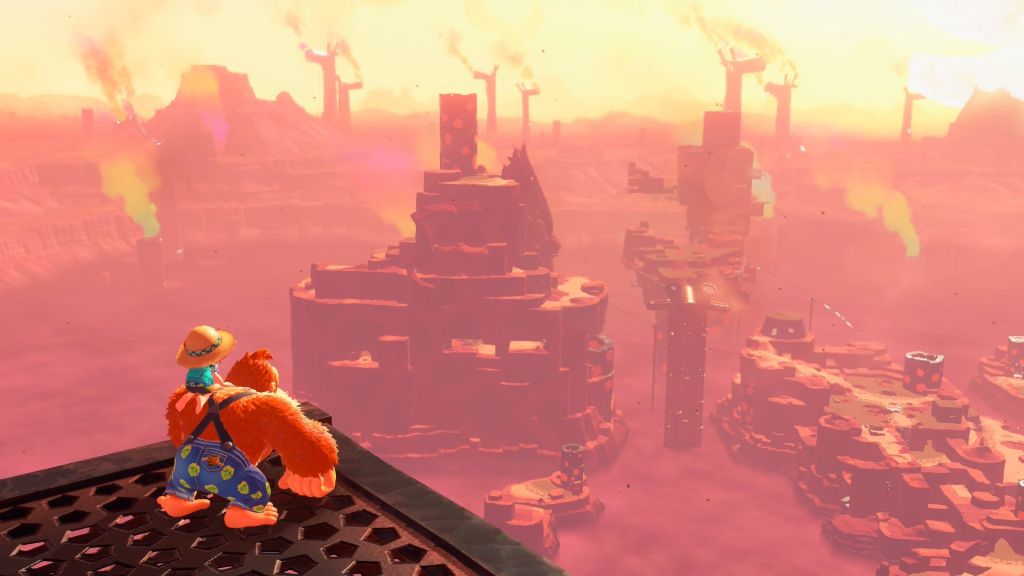
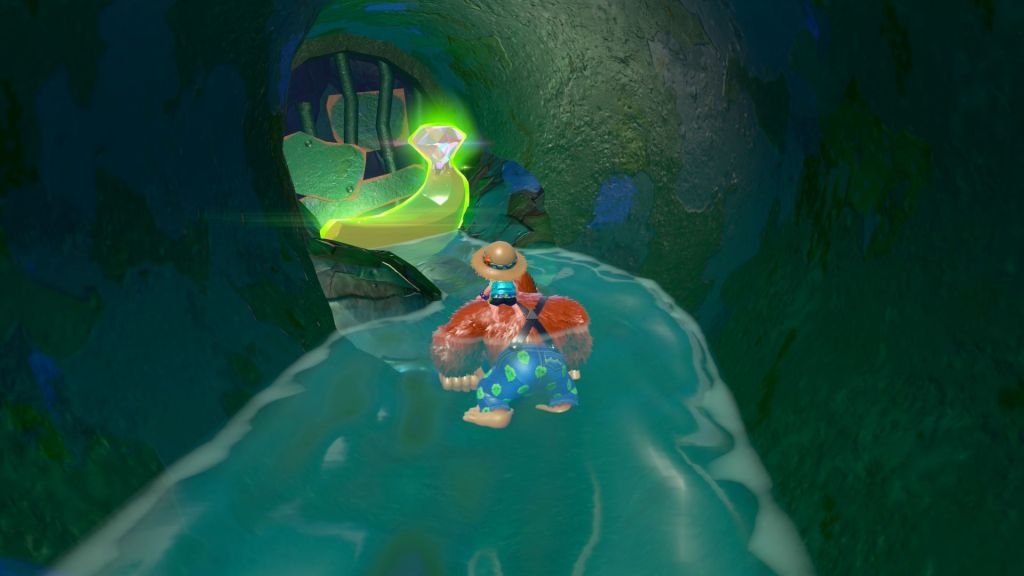
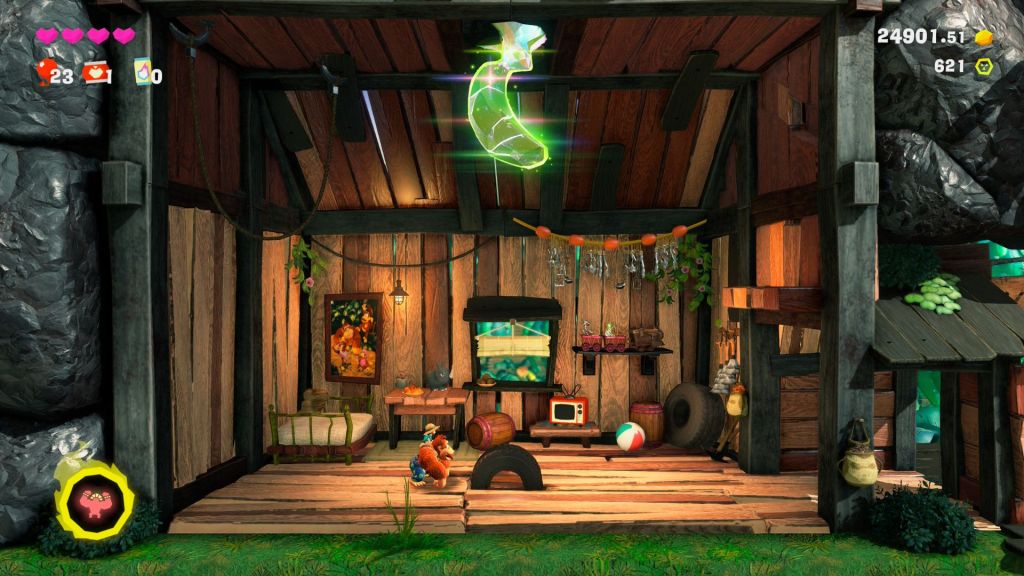
Speaking of the depths, between each major new world (layer), there’s typically a “Sinkhole” area which leads to the next level. The track that plays in these spots is this sort of dissonant, unsettling, atmospheric piece that carries a tone that’s both mysterious and foreboding. The music in general is fairly memorable (especially in the final few hours of the game, along with the credits theme, which sounds like something out of a Xenoblade Chronicles game). The first world, Lagoon Layer, has the most perfect opening track. This piece instills a great sense of adventure and carries some of the older DK soundtrack motifs. I think the art direction is generally good, too. In the Canyon Layer, for example, there are smoke stacks in the shape of giraffes that can be seen in the distance. I will say that perhaps each world lacks a thematic focal-point most mainline 3D Mario games have, especially when compared against the kingdoms from Super Mario Odyssey, for example. There’s nothing in Bananza that quite captures the moment when you land in Seaside Kingdom and see the giant soda fountain in the distance. But take the Forest Layer, for example, which more or less positions a giant, egg-shaped hotel at the center of its world. The golden exterior of the hotel glistens from the artificial sun (lights) in the sky (yes this is actual lore teased within the game), just begging for a giant ape to tear down its luxurious walls. I think Bananza does it best to provide memorable visual landmarks, but because you can literally destroy most of the terrain and structures in the game, I’d imagine it was difficult from a designer’s perspective to create landmarks that were meant to leave a lasting impression.
Each layer contains these bite-sized “aha” moments nestled within the stages (particularly in the sub-layers of each world, which almost act as traditional “stages”), but for whatever reason, the developers seemed to opt for extremely tight-pacing instead. On top of that, while there are a ton of unique bosses in the game, they’re far too easy. DK can eat through boss phases if you’re skilled enough, which was one of my biggest disappointments with the game. Similar to how I felt about the Power Moons from Super Mario Odyssey, the Banandium Gems, the game’s primary collectable, still feel somewhat unrewarding to collect. With that said, I can’t deny the hit of dopamine you get when you discover one, along with the accompanying, “Oh, Banana!”, which is yet another callback to DK64. When you’re down to the last few Banandium Gems, the game, however, turns into a randomly generated digging-fest. When you’re breaking/digging through any layer of terrain, a treasure chest can appear. The contents of the chest might contain a Balloon (which saves you from pitfalls), gold, or even a map. On the rare occasion, you’ll obtain a Treasure Map, which puts either a Fossil or Banandium Gem you’ve yet to discover on your map. I think the game is more fun if you don’t fixate on looking at the map, but once you’re down to the last few collectables, the act of finding the Fossils and Banandium Gems starts to become a bit tedious.
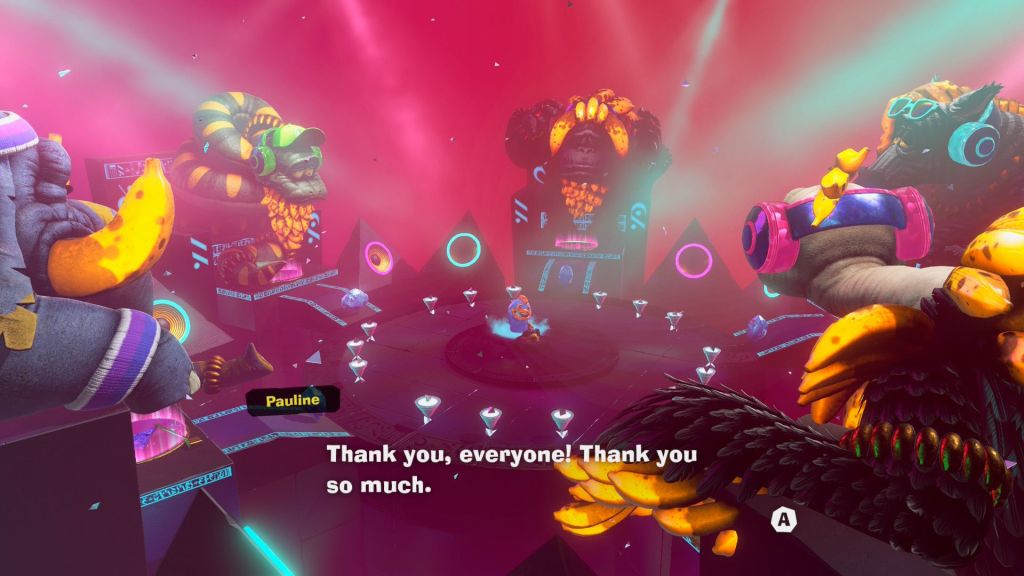
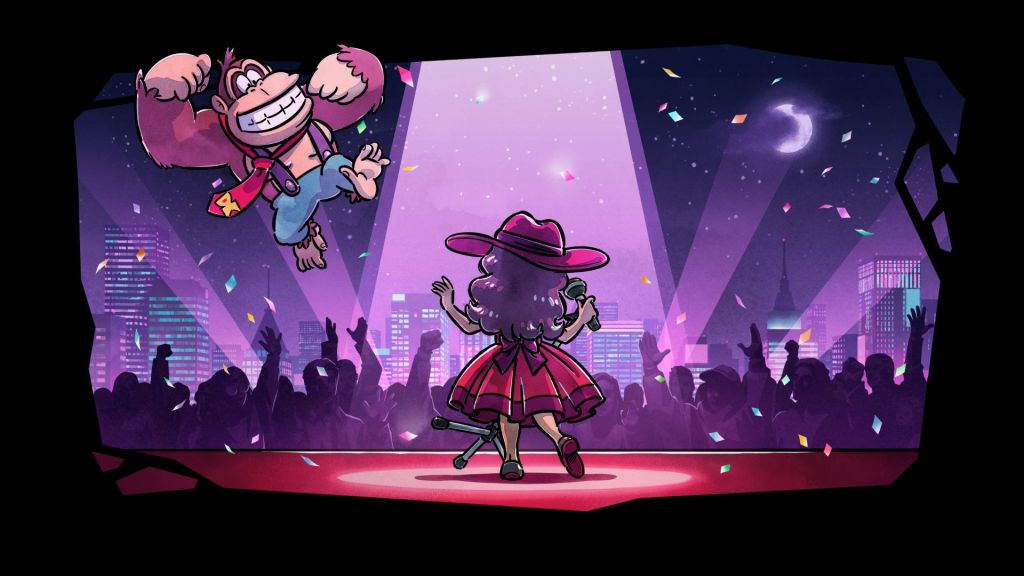
I was 100%’ing each layer as I progressed until I hit a certain point. Halfway through the game, I decided to mainline the primary layer objectives so I wasn’t potentially spoiled on the final “reveal”. The last few hours of Donkey Kong Bananza is sort of incredible and perhaps one of the greatest moments in Nintendo’s history. I still can’t believe Nintendo went there, but they did. I hope the path they’ve carved is just the beginning in terms of potential sequels/games, but I’ll leave it at that for now. I didn’t really touch on the new group of baddies, VoidCo (they’re okay), or how you collect music records for giant animal DJs who grant you new transformations, which is interesting considering the game’s focus on music. I will add that I loved diving into a sinkhole, chasing after one of those large banana bunches that falls into the pit after beating a boss (I love the brief piece of music that plays when this happens). That sense of “what’s next” or “what is the next layer going to look like?” felt exciting and kept me playing. I completed Donkey Kong Bananza with the “true ending” and collected over 600 Banandium Gems. I’ve since dabbled with the DK Island & Emerald Rush DLC (that was conveniently released shortly after the game’s launch), but more on that later. A big part of me would have enjoyed 100%’ing the game, but there are just too many other games I wanted to play for the first time still. I hope I don’t shelve Bananza for another 8 years (like I did with Super Mario Odyssey’s post-game), but when I’m ready to munch on some Banandium Gems again, I’ll have a whole lot of game left to sink my teeth into. Now, I’m ready for whatever is next for Mario.
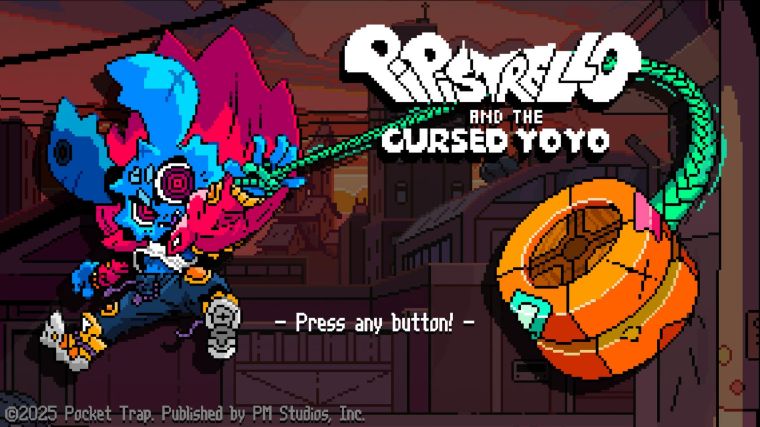
Pipistrello and the Cursed Yoyo, developed by Pocket Trap, is a 2D, top-down Zelda-like from the developers behind Dodgeball Academia. Pippit, the game’s main character, is a famous yoyo star who’s dream career has been more or less funded by his auntie. Pipistrello Industries, his family’s business, has solely provided electricity to the citizens of New Jolt City for well over a decade, yet the people have grown tired of the monopoly due to unfair cost increases. The game begins with Pippit returning home to find a gang of business owners breaking into his auntie’s home to exact their revenge. Using an experimental soul-sucking machine that his auntie built, her soul is stolen in order to power Mega-Batteries so that the businesses can prosper without her influence. Pippit interrupts the sequence, however, which traps his auntie’s soul inside his yoyo. From there, Pippit sets out to infiltrate the business owner’s properties so that he can retrieve the Mega-Batteries and undo the curse. The story is definitely unique in the grand scheme of Zelda-likes (you’re sort of a “bad guy”, in a sense). One of the bosses’ headquarters is a fast-food burger joint where a Mega Battery has been used to churn out the most addictive food with maximum efficiency. This leads to employees being overworked and disgruntled, which the game humorously touches on. There’s certainly a degree of social commentary throughout the game and it’s all rather refreshing. I’m fairly certain the majority of the world is sick of the monster-in-charge and his ridiculous tariffs, so it’s pretty easy to relate to the people of New Jolt City.


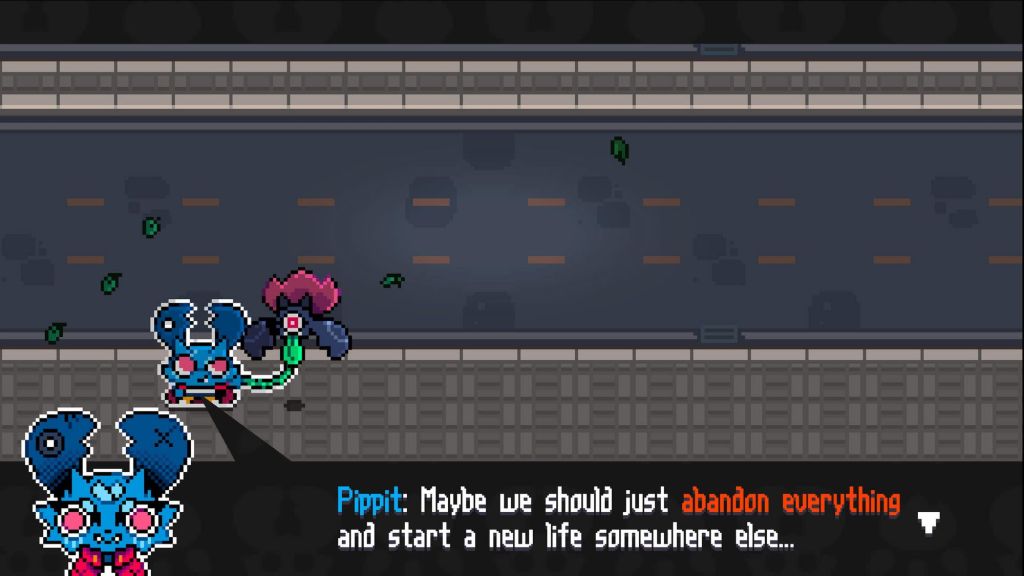
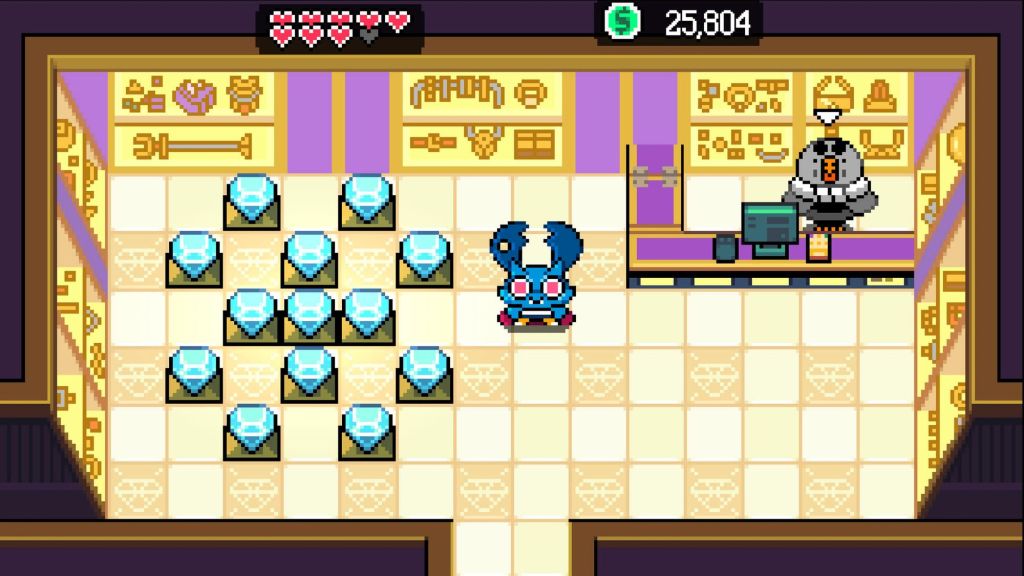
Pipistrello utilizes beautifully, chunky pixel art with its Game Boy Advance (GBA)-inspired aesthetics. The music fits the game’s aesthetics and sounds like something you’d hear on the GBA. The writing is also certainly better than a few other indie games I’ve written about lately. Pipistrello is a BIG game. The map is extremely dense as well, almost to its detriment. The overworld itself acts as a hub to the four large districts that surround it. You can tackle two different areas at a time, so it can be rather non-linear as well. Underneath the city is a sprawling network of sewers that connects the entire game together. There are manholes you jump down into in order to access the sewer, but you’ll find switches and the sort which create shortcuts and wrap-arounds all over the game’s world. Pipistrello definitely scratches that Metroid-itch, even if it aligns itself to being more of a Zelda-like than anything else. On top of this, you’ll use your yoyo to navigate the environment and backtrack to previously inaccessible areas to find new goodies, including max health upgrades and diamonds. The diamonds were one of my favorite collectables in the game. When you discover one, you have to more or less carry it back to your base without dropping it in water, for example. Once you return the diamond to your base, it will be stored there forever until you find a shop in one of the towns where they will exchange bags of money for your haul. There’s a finite amount of them to collect and they get neatly displayed in the shop, which I thought was a cool touch.
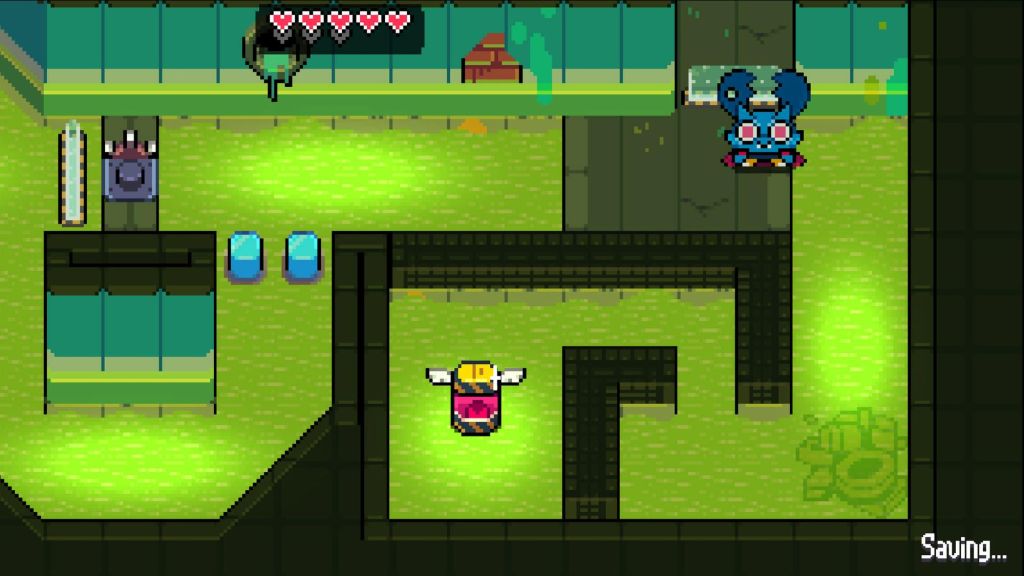
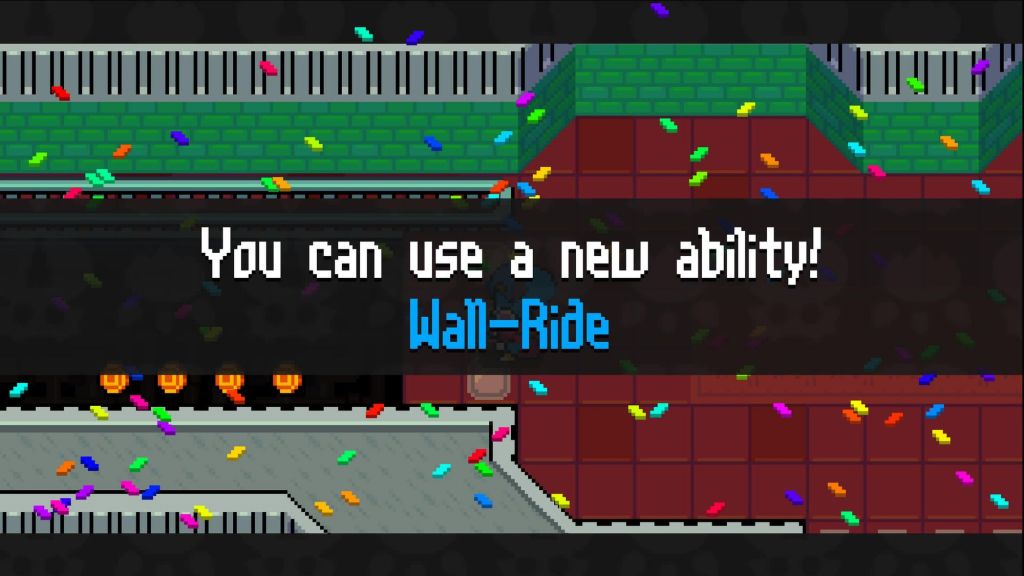
I think one of the coolest aspects of Pipistrello is how the traversal abilities are unlocked. As you progress through the game, characters you meet along the way (or your auntie herself) will inspire you to learn new yoyo tricks, many of which act as new forms of traversal (such as the Wall-Ride ability). I also think Pipistrello is oddly balanced in terms of its difficulty, however. The game utilizes a Badge system where you can discover and equip new accessories for your character. Some of these badges might upgrade your maximum health or attack power, but others can break the game (and the game describes them as so!). Similar to the Petal Containers, which increase your maximum hearts by one (after 8 are collected – sheesh!), there are BP Containers which increase the amount of Badges you can equip. Then there is the contract and debt system. You have to pay off a loan first before you can permanently learn a new ability from a skill tree. The upgrades, however, come with temporary handicaps to your character, such as less maximum health or reduced attack power. By defeating enemies, collecting coins and finding bags of money throughout the game, a part of what you collect is converted as payment for the ability until it’s yours to keep. The problem, however, is that you only have so much health (which are represented by Zelda-like hearts), so if you want to unlock all of the abilities, you’re almost always playing with very low health or some other handicap. While the game isn’t particularly challenging, there’s a lot of trial & error, particularly when it comes to the platforming sequences over pits and the sort. I saw the Game Over screen A LOT, but more often than not, it was due to falling into pits or some other environmental hazard because my health was always so low. I can’t say I was a big fan of the whole system overall.
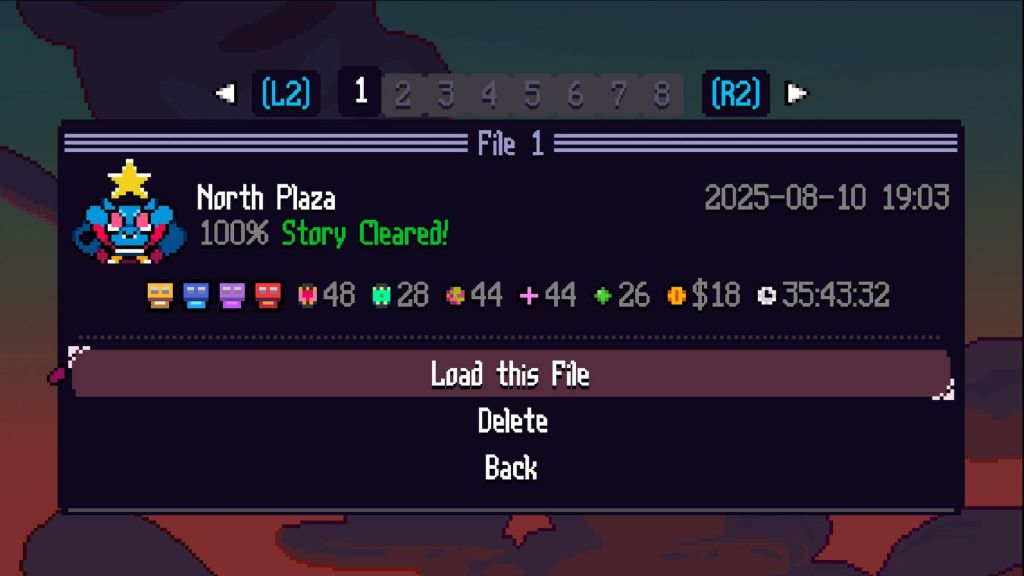
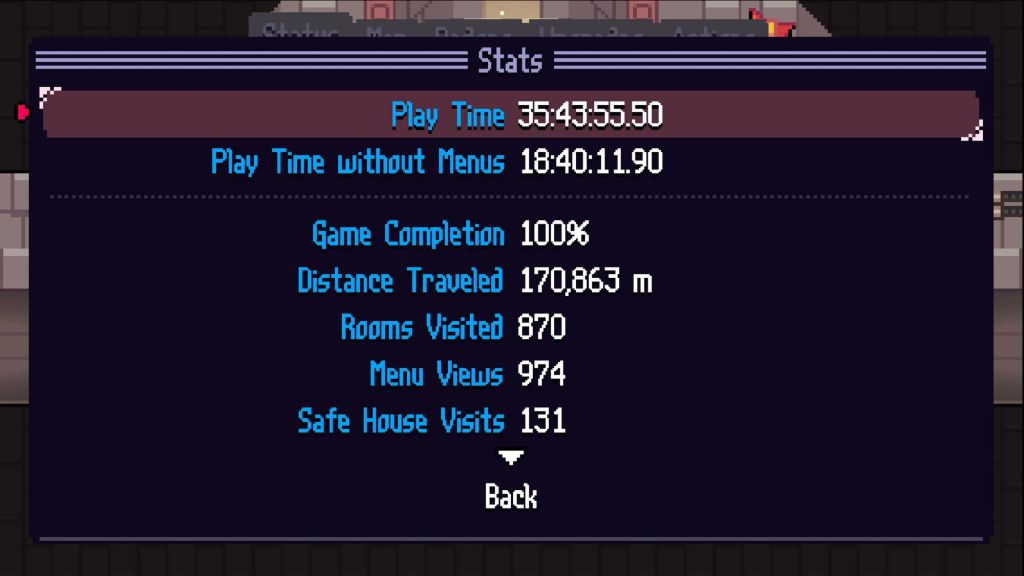
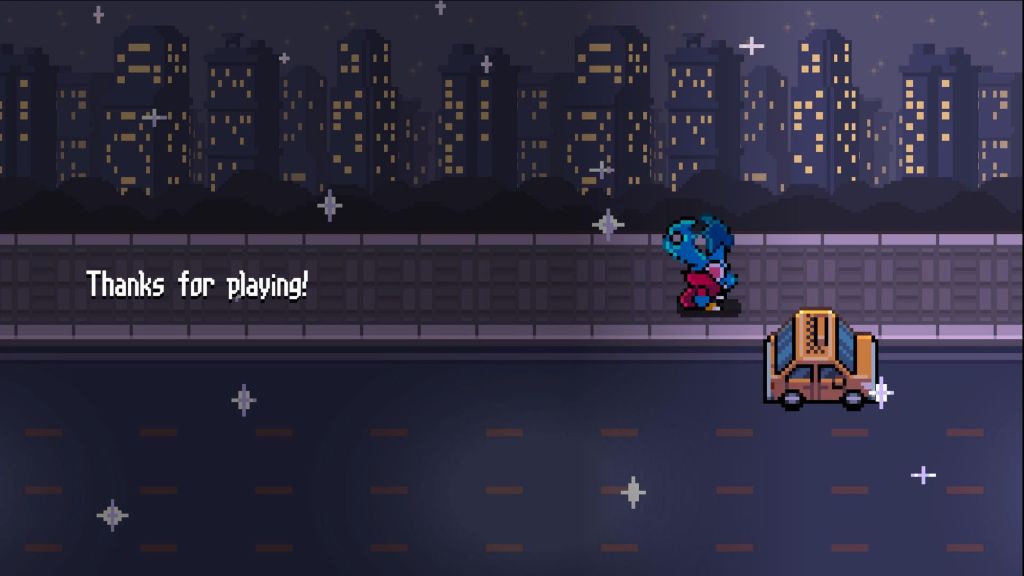
I completed the game at 100% with the Platinum trophy earned on the default difficulty settings, which took me around 35 hours, so it’s definitely not a short game. While there is a new game+ feature, I really don’t see the point of revisiting the game after you’ve collected and done everything the game has to offer. There are a ton of difficulty/accessibility options, but yet again, just like in ENDER MAGNOLIA, they’re presented as multipliers/sliders that can be adjusted from the game’s main menu at any time. I’ve said this a lot lately, but I will always prefer preset “Easy”, “Normal”, and “Hard” difficulty options in games. I want to play the developer’s intended difficulty and while I liked the game, I didn’t love it enough to replay it under wildly customizable conditions. I can’t imagine playing this game with less total hearts or more damage taken, for example. I suppose if Pipistrello became one of your new favorite games and you wanted a miserable self-imposed challenge where all of these limitations suddenly became more enticing, but the idea of replaying this game with more challenging modifiers doesn’t sound appealing to me at all. Now, if the developers perhaps tied a trophy or a unique unlockable to a preset “Hard” difficulty, maybe I would have taken up the challenge… I would love a sequel to this game, but regardless, I am very much looking forward to seeing what these developers do next. On to the next game…
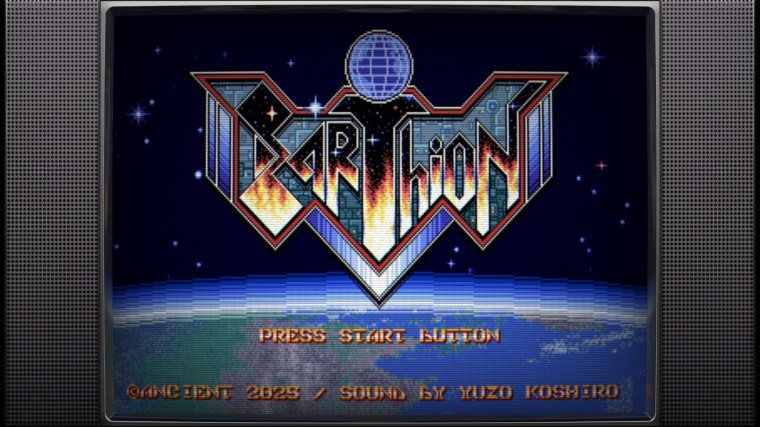
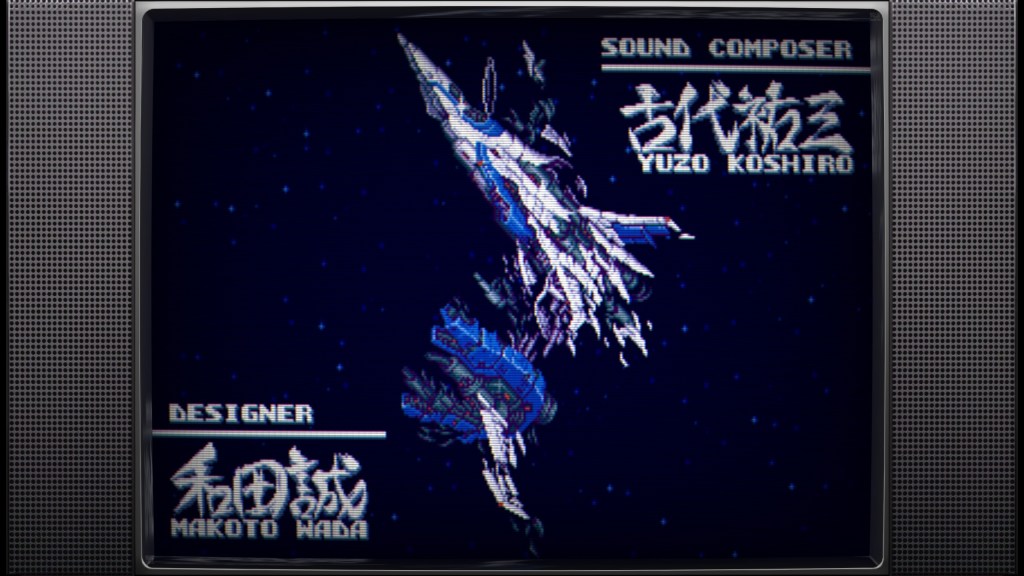
Earthion, developed by Ancient, is the latest arcade shooter/shoot ’em up by Yuzo Koshiro and company. My very first arcade shooter/shoot ’em up was Toaplan’s Sky Shark on the NES. I have a very faint memory of walking into a Toys “R” Us with my father and brother after spending the day at some theme park (that wasn’t Hersheypark). For whatever reason, we grabbed the ticket for Sky Shark, perhaps because my father loved model airplanes, World War II and was in the Marines. Fast forward to Christmas a few years later and my parents gifted us the Sega Genesis (with Sonic the Hedgehog packed-in) along with Taito’s Sagaia, which is technically a Darius game. If you’re not familiar with the franchise, Darius is a horizontal (side-scrolling) shoot ’em up which predominantly featured giant mechanized fish. The game also had branching paths, so there was a ton of replay value. At that point, my love for side-scrolling/vertical shooters was solidified. Years later, my brother and I somehow received the Lords of Thunder promotional tape in the mail, which we became obsessed with. We were likely never going to own (or know someone) who had a TurboGrafx-CD/TurboDuo, but we watched that tape over and over again until we memorized the lines.
There has been a surprising amount of shoot ’em ups/arcade shooters over the past few years, particularly from the indie space, so what does Earthion do to differentiate itself from its contemporaries? I would say that it’s simply an authentically-made shoot ’em up, perhaps a step above other recent games in this space. Most importantly, Earthion’s controls are tight and responsive. You get three credits on Normal difficulty, which you cannot increase (only your starting lives can be adjusted from within the options, up to six). You have a normal shot, a shield and a special weapon. Special weapons are dropped from enemies, along with green crystals which increases both your normal shot and special weapon power levels (up to 3 levels at the start). The shield regenerates over time, if you don’t get hit, but it also recharges if you collect the green crystals. There’s a really interesting upgrade system between stages where if you collect a special item (I forget its name, but it takes up a weapon slot and doesn’t do anything else otherwise) and finish a level, you can upgrade your normal weapon, shield and special weapon capacities. You can also exchange the special item for an extra life instead. There’s a nice risk/reward system at play here, if you’re confident enough to get through a stage and its boss with only one special weapon. You can upgrade your ship to unlock more special weapon shots or increase your normal shot/shield levels instead, so you can more or less make your own build based on your play style.
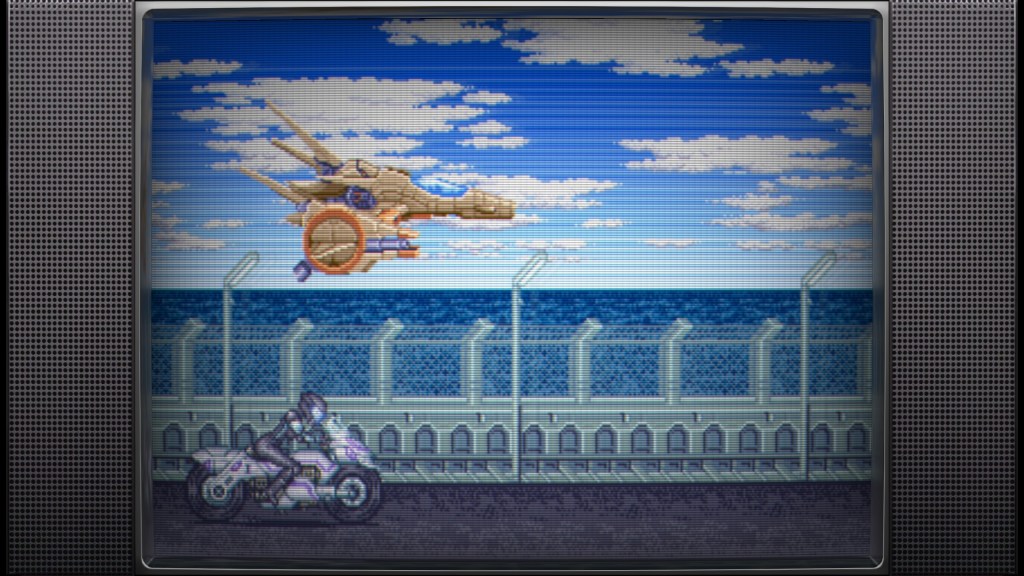
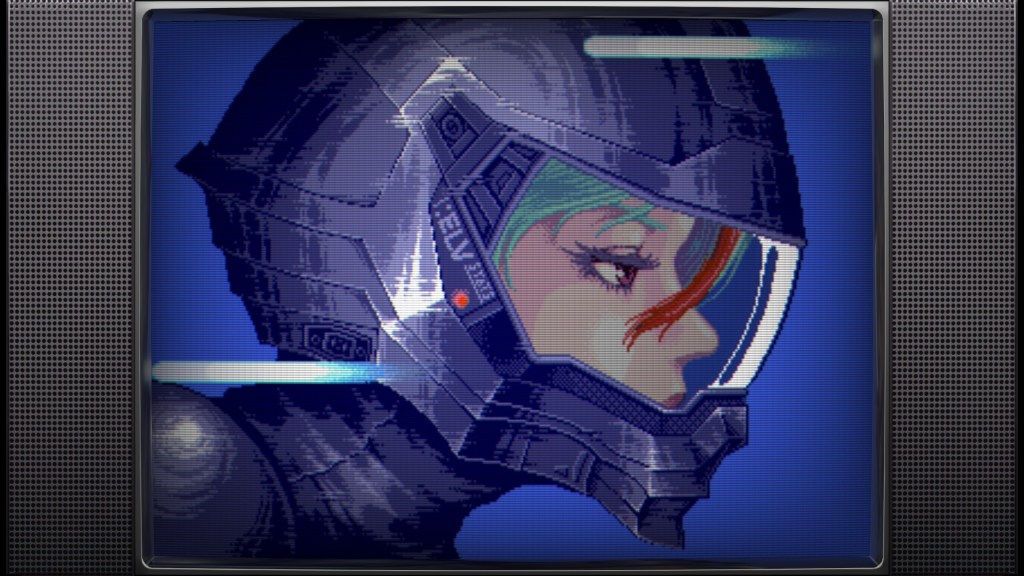
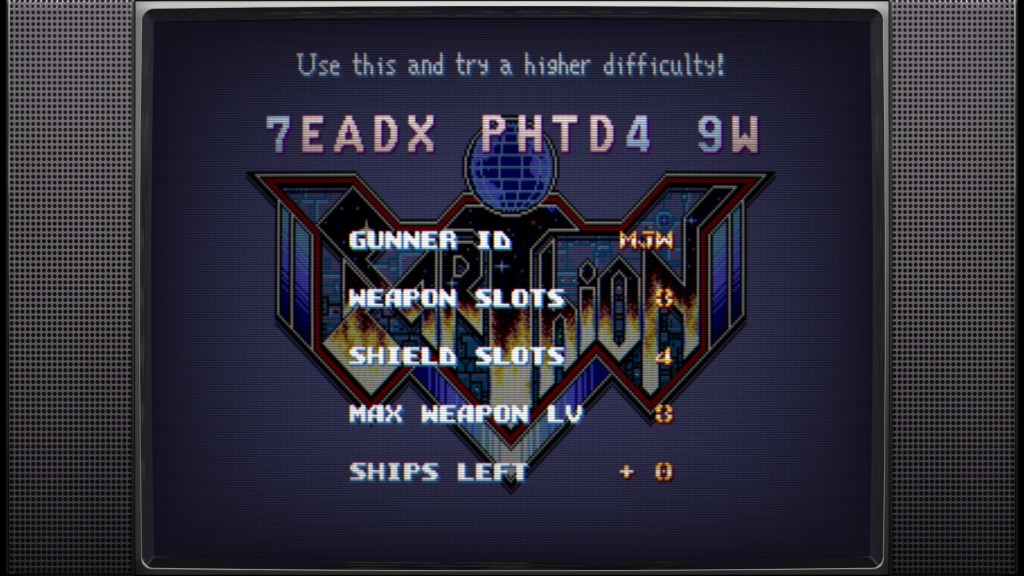
Interestingly enough, I don’t think there’s a way to earn extra life’s/credits for hitting certain points thresholds, which is usually a shoot ’em up staple. There are hidden items in the levels (some of which carry 1-ups!) along with invisible items/green crystals if you shoot at “empty” spaces (usually a nook) within the stage. Levels are also the perfect length with the occasional sub-boss or unique stage gimmick (like blowing up skyscrapers in an overgrown city so that they fall down and you don’t crash into them). Passwords are notorious with old-school games, but they don’t exactly work how you’d expect them to here. The game has a unique “Password” system too where when you exhaust all of your credits on a run (or when you finish the game), a PW is generated which when inputted, you’ll start with whatever power-ups and ship upgrades you had (the game sort of tells you after you beat the game to use the password when starting a higher difficulty!).
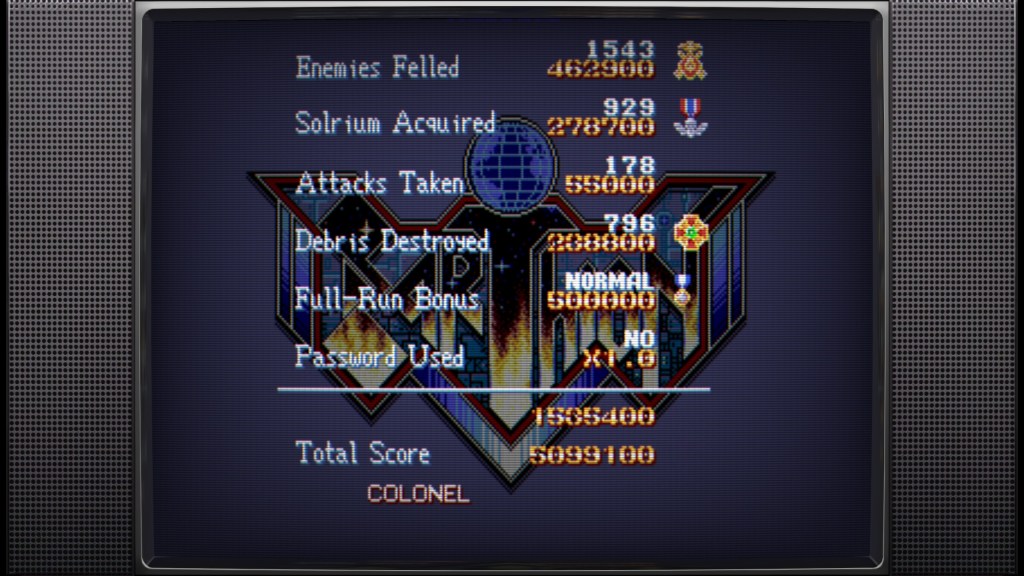
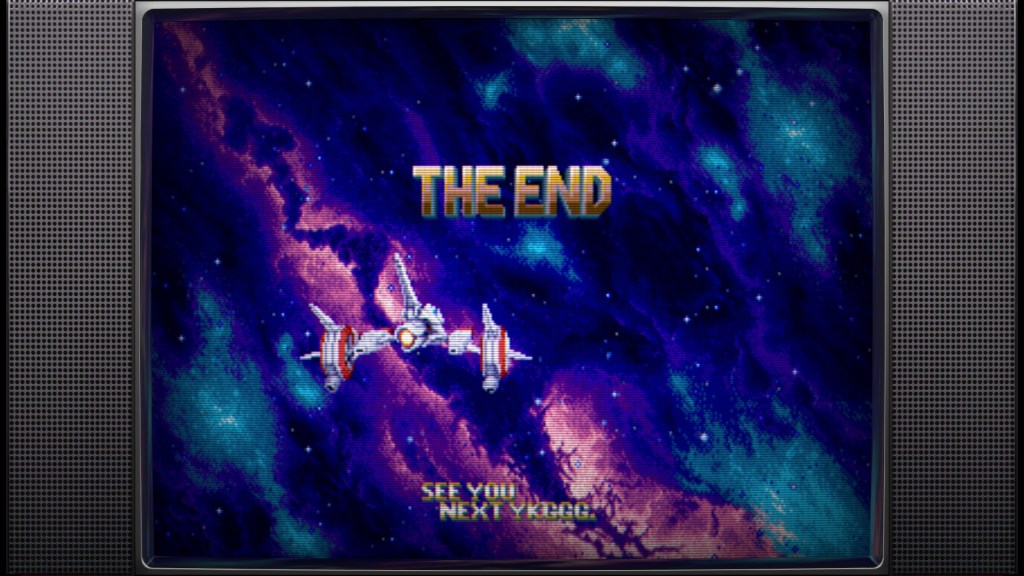
There’s four difficulties and the steam achievements/trophies ask you to defeat certain bosses with specific special weapons, so the game does ask the player to experiment with the various power-ups at your disposal. Earthion is extremely colorful, has nice art direction, detailed illustrations, and a great use of parallax scrolling. One of the biggest draws here is that the music is composed by the legendary Yuzo Koshiro. I think the soundtrack is great and it sounds like something you’d hear out of the 16-bit generation, but I can’t say a single track stayed with me after beating the game, unfortunately. There’s also a Challenge mode, but I haven’t touched it yet, so there’s definitely some good replay value here outside of leaderboard chasing. I was going to wait for the physical release before I played this on PS5, but I couldn’t resist (so now I own both versions digitally). Earthion was one of my most anticipated games of the year and it more or less met my expectations. I finished the game on Normal difficulty while using one credit and nearly all of my lives on my second credit. Ultimately, I’d love to 1CC the game, but for now, I’m happy to blast off into the sunset.

NINJA GIADEN: Ragebound, developed by The Game Kitchen, is a 2D action-platformer and arguably the first Ninja Gaiden (NG) side-scroller in over 30 years. The Game Kitchen is mostly known for their Metroid-like/Metroidvania series, Blasphemous. I love those games, so I had high expectations for Ragebound. It wasn’t clear leading up to the game’s release whether or not it was going to be yet another Metroid-like/Metroidvania. SHINOBI: The Art of Vengeance, which is a series that has traditionally been stage-based, actually incorporated a more Metroid-y design, something more akin to the likes of Castlevania: Order of Ecclesia. Considering The Game Kitchen’s pedigree and legacy here, I expected Ragebound to be a Metroid-like/Metroidvania, but it’s not! Instead, it’s a fairly linear, stage-by-stage 2D action-platformer with levels that overstay their welcome, unfortunately. I think Ragebound looks fine visually, but considering the extremely detailed (and often huge and grotesque) sprite-work we got in the Blasphemous games, I’ve got to say I feel somewhat disappointed in that respect.

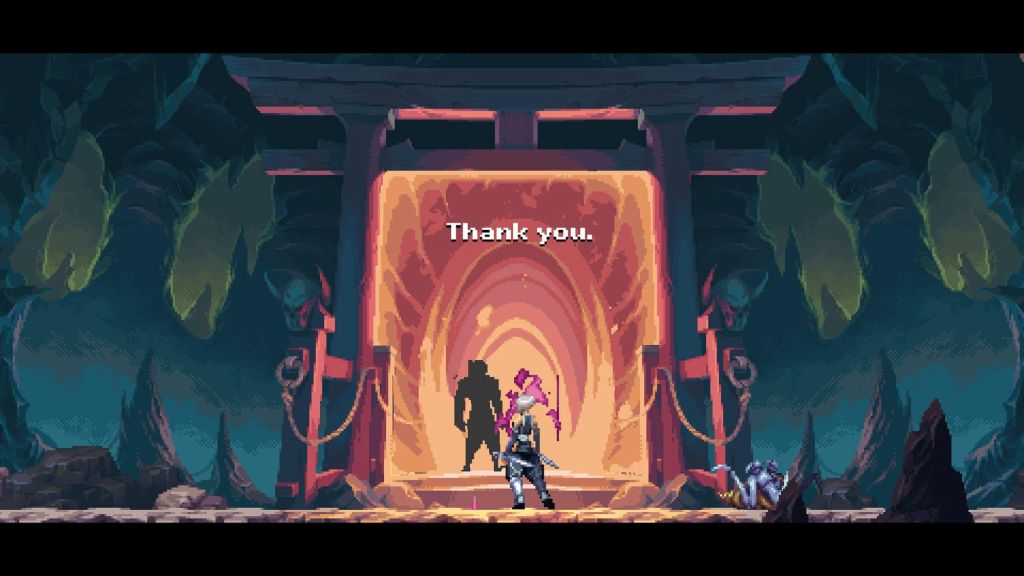
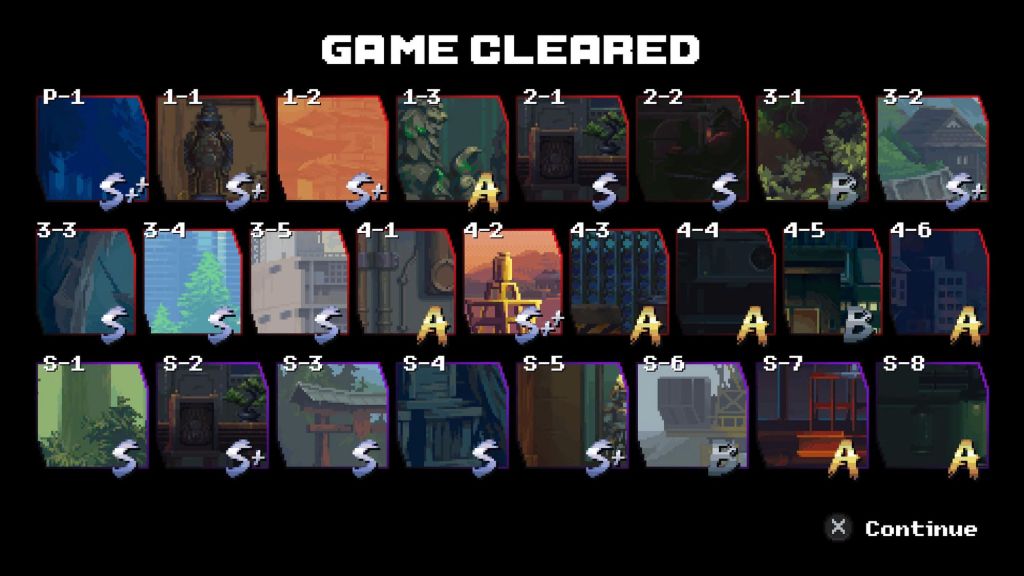
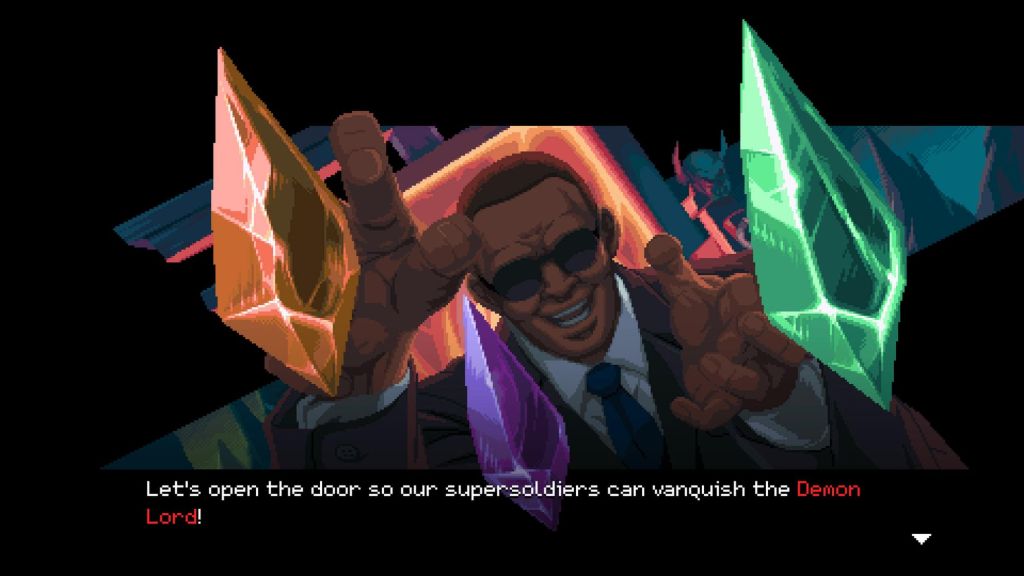
The game generally feels good to play; the somersault kick is satisfying to pull off and gaining Hypercharge energy from certain enemies to destroy stronger (often shielded) enemies provides a nice breezy, flow to the action. With that said, the Hypercharge system does sort of make you wait around for the required enemy to spawn, so perhaps the flow of the game isn’t as breezy as it’s made out to be. While you can go back to certain screens, this is a linear action game through and through. My biggest issue with Ragebound is its level design. They are simply way too long and are clearly meant to be strung together in the most efficient way possible. With that said, it did feel good to rack up a 127 kill chain on one of the levels. There are also Crystal Skulls, Scrolls and Golden Scarabs to collect in most levels, which unlock new skins, secret levels and the ability to purchase items from Muramasa’s shop, respectively. Talismans can be purchased and equipped, which grant passive effects. The Last Chance amulet, for example, increases your melee damage by 75% when your health is low. Stages contain challenges (like beating a level without dying or killing a certain amount of enemies, for example), but the challenges are simply tied to the ranking system (and do not stay checked-off or tracked on the world map screen).
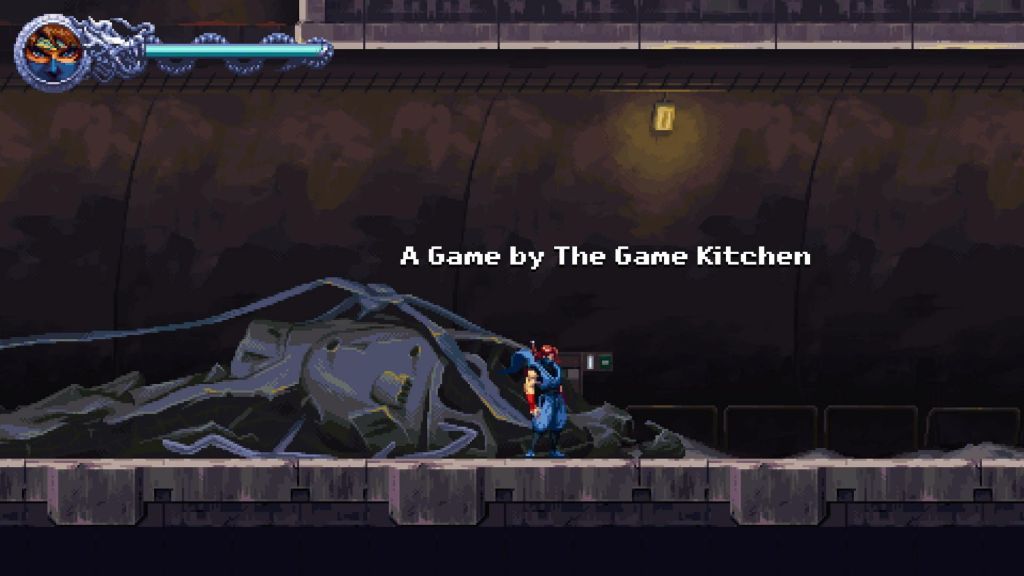
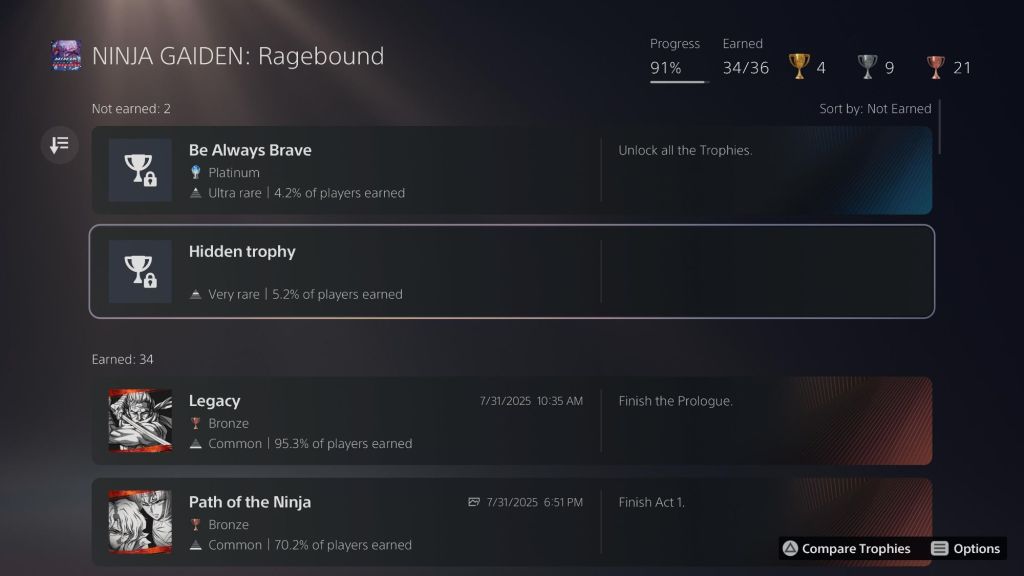
NINJA GAIDEN: Ragebound is fun when played relatively casually, but if you want to get the most out of the game, you’ll need to engage with its super strict ranking system. Each level contains three challenges, one of which is usually for taking no damage during a level. Every level has hidden Crystal Skulls and Golden Scarabs to collect, which must always be collected when going for the best rank. In addition to these tasks, you must also complete the stage under its par time. The problem I have with the ranking system is that it’s all or nothing, there’s no wiggle room. Collectables are weighed higher than other categories for some reason, but when you need to hit every criteria perfectly, why even bother weighing them differently? I suppose you could argue that it’s there for people who are happy to net an “A” or even a regular “S” rank, but I think the whole system needed another pass. On top of all of this, you need to equip certain Talismans that act as handicaps in order to earn the coveted S++ Rank. It’s all rather ridiculous. Although the story doesn’t really matter in a NG game, the writing feels so throwaway and juvenile. I didn’t find any of the music particularly memorable, either. At the end of the day, I completed the game on Normal difficulty with everything collected, finished all of the Secret Ops, and managed to score a handful of the S++ ranks. Sadly, Ragebound was one of my most disappointing games of the year.
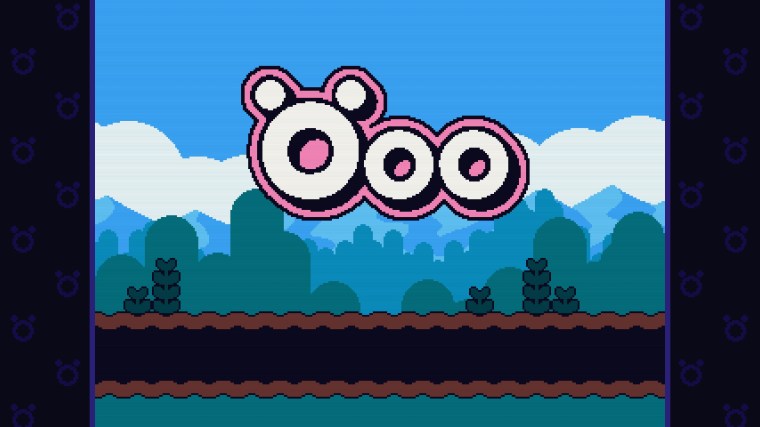
Öoo, developed by Nama Takahashi, is a 2D puzzle-platformer where you play as a tiny caterpillar that can produce bombs from its body. The game begins with a caterpillar resting in their cozy little home. After what appears to be a good night’s rest, you wake up and crawl out to the branch extending from your tiny abode. A juicy red apple appears in sight, when suddenly, a giant bird comes and snatches you away. From there, the game begins in the mouth of the giant bird that gobbled you up. The developer’s previous game, ElecHead, was also a 2D puzzle-platformer, but instead of using its body to navigate rooms and solve environmental puzzles, the character used their head (naturally). This developer clearly likes to marry its playable character to the game’s core mechanics. What’s shocking about Öoo is that there is little-to-no character progression. It’s technically a Metroid-like by design, but not in a traditional sense. The most impressive thing about the game is that you technically have all of your abilities at the start. The game, however, will teach you new maneuvers organically as you progress and by learning how to manipulate your bombs (and surroundings), previously inaccessible areas will suddenly become accessible. A lot of the time, you’ll come to a room that splits to the left or right. The left path is clearly a dead-end, but the right path is solvable. By the time you reach the end of the right path, however, you’ll discover yet another dead-end. This room will likely contain a teleporter so that you can fast-travel (likely to a point right before the aforementioned room split). At this point, you should have learned how to solve the previously “unsolvable” room on the left path, which is when the game showed its true genius.
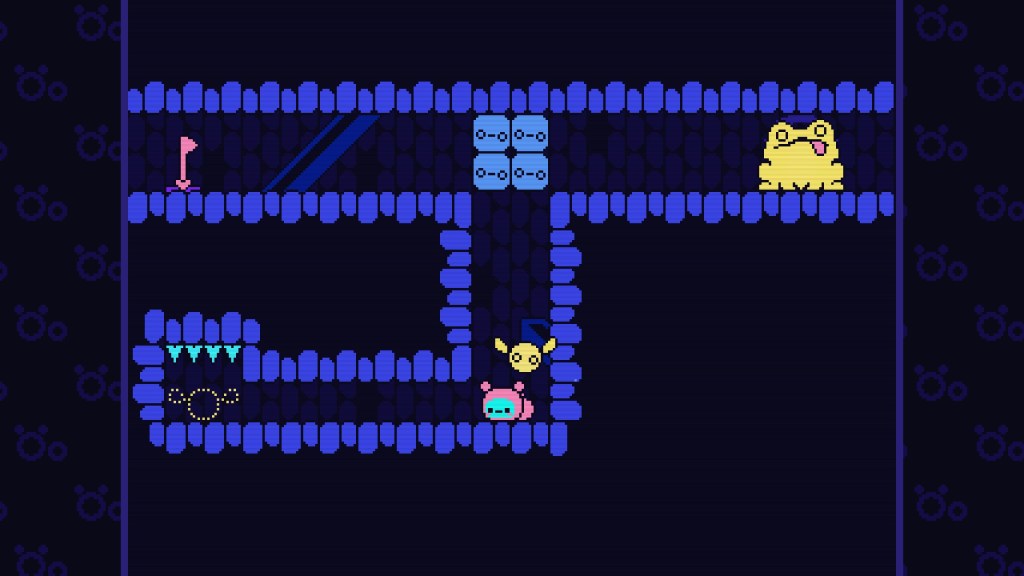
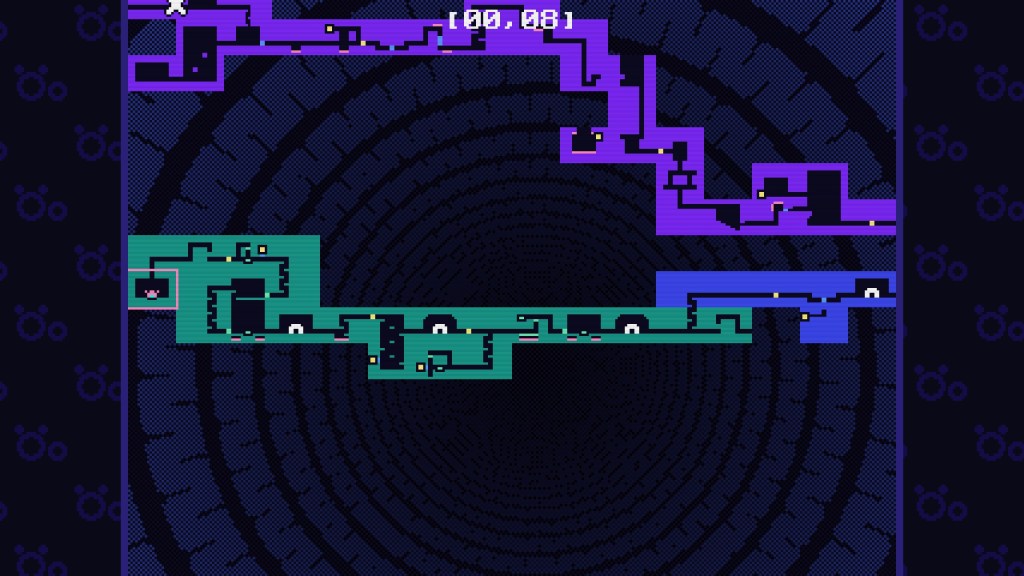
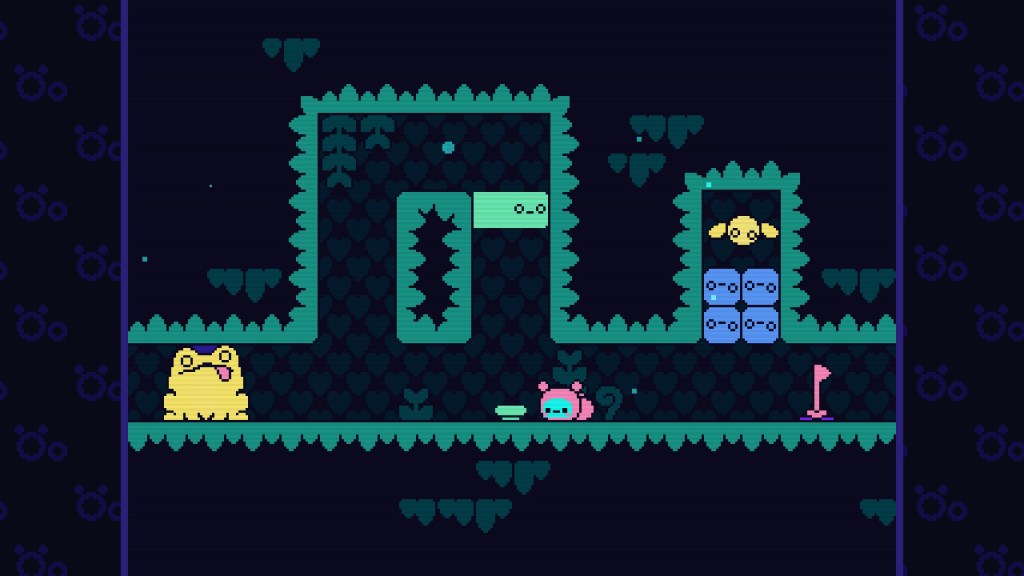
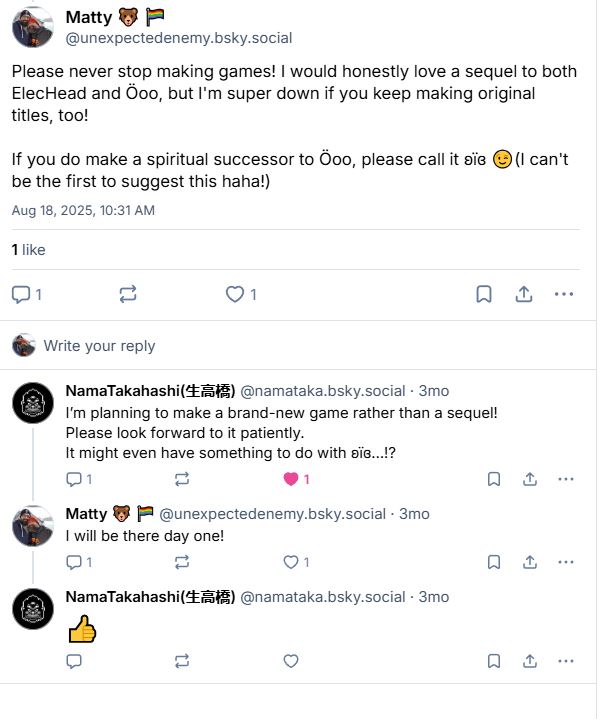
Öoo is, once again, a masterclass in minimalism. It’s better if I don’t write about every little detail here so that you, the reader (and hopefully future player), can discover all of its mysteries on your own. One tiny detail I will share — I loved that the music will change when you collect a fly (which is one of the game’s primary puzzle “items”) or even when you acquire your second bomb (which is arguably the only actual upgrade in the game). When a fly is collected, the music will layer a sort of buzzing sound to it. It’s these subtle details that really make the difference for me. Each area has a unique theme that sort of builds on the previous tracks; Area 6 is especially my favorite. If I had to fault the game for anything (and I’m really grasping for straws here) is that it’s perhaps a bit too short. There are also no hidden collectables or anything to find (outside of an Easter egg that references the developer’s last game), so it’s a rather linear, one-and-done experience. I completed the game with all Steam Achievements unlocked at around four hours. With that said, it’s one of the most agreeable games I’ve played all year. If you’re a 2D puzzle-platformer fan to any degree, you MUST play this game. It’s simply the perfect palate cleanser to all of the horrible things in 2025. Finally, on BS (that’s Bluesky for Tim), the developer recently stated that he already began work on his next project. I sent him a message saying that I hope they name their next game “Project Butterfly” and I that they retain the stylized way of writing the game’s name, accent mark and all. So, here’s to ʚїɞ, or whatever comes next. I’ll be there day-one.
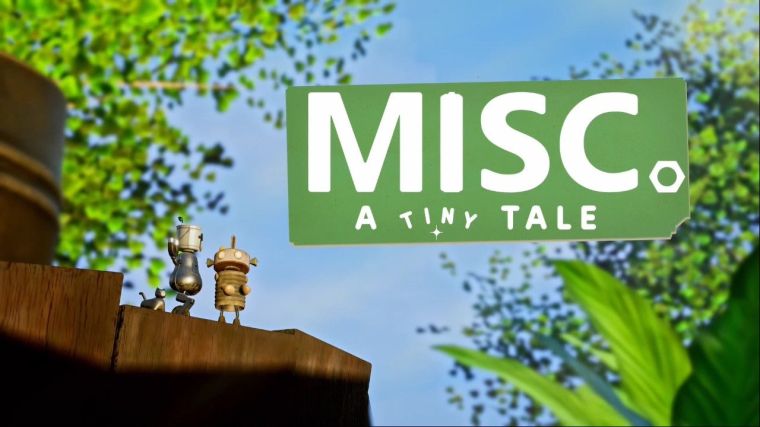
Misc. A Tiny Tale, developed by Tinyware Games, is a 3D platformer that’s heavily inspired by Nintendo’s very own Chibi-Robo. In Misc., a bunch of sentient robots live in a post-apocalyptic world where no humans remain. One night, two robot friends witness an explosion in the sky, which causes golden gear-like objects to disperse across the land. With your best friend in tail, you set off to find the cause of the explosion, which turns into a journey of self-discovery. To my surprise, Misc. is an LGBTQ story. Your best friend robot, Bag Boy, quite literally wears a bag over his head because he’s felt “different” all his life. At one point, you’ll meet two robots who are more or less gay “gym bros” and one of your golden Cog objectives is to more or less matchmake them. There’s also a shocking amount of well-produced vocal themes throughout the game that play during (what are supposed to be) emotional moments in the story. Whether they land or not will depend on the player (they didn’t make me feel one way or the other), but their inclusion was certainly a choice.
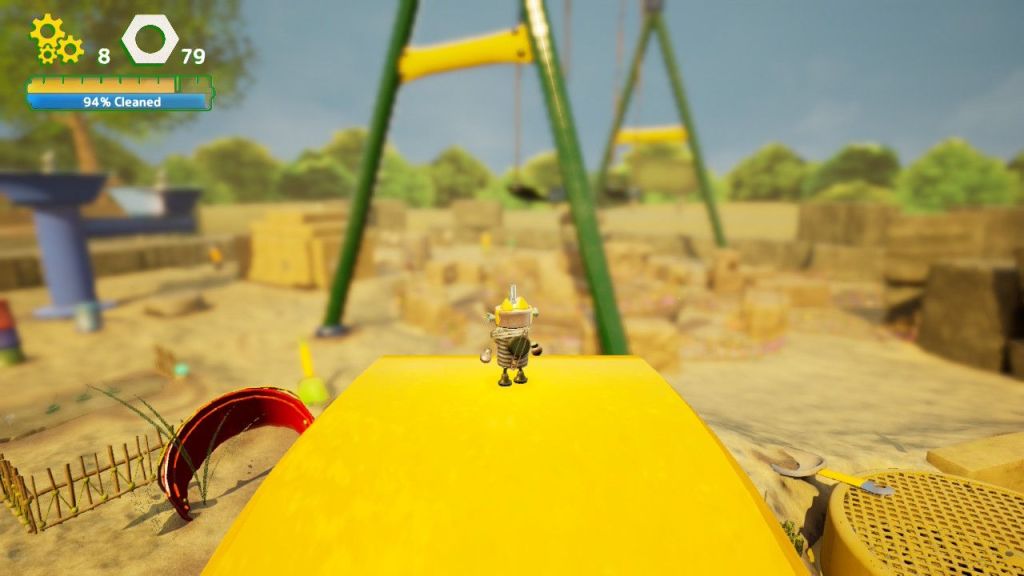
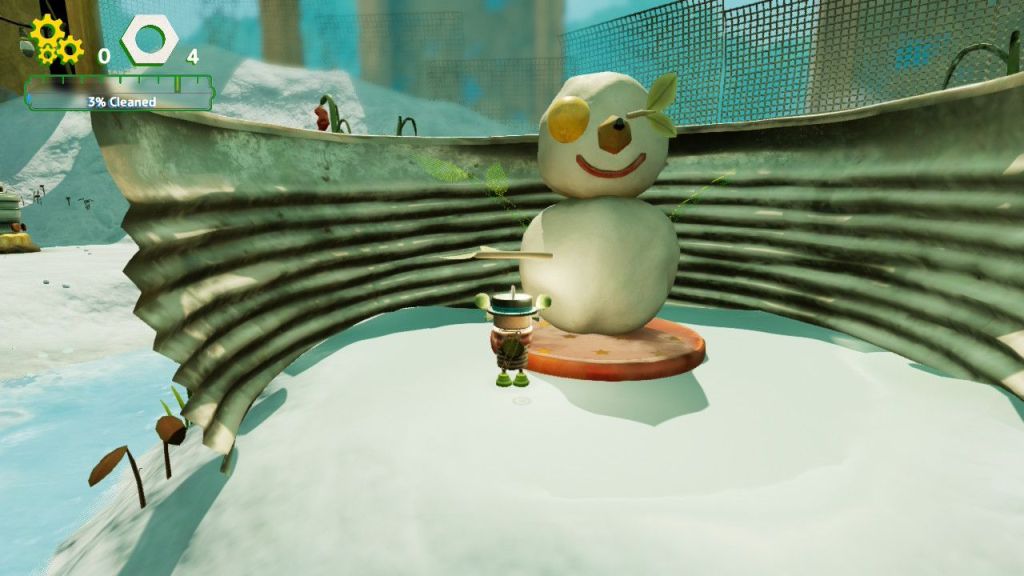
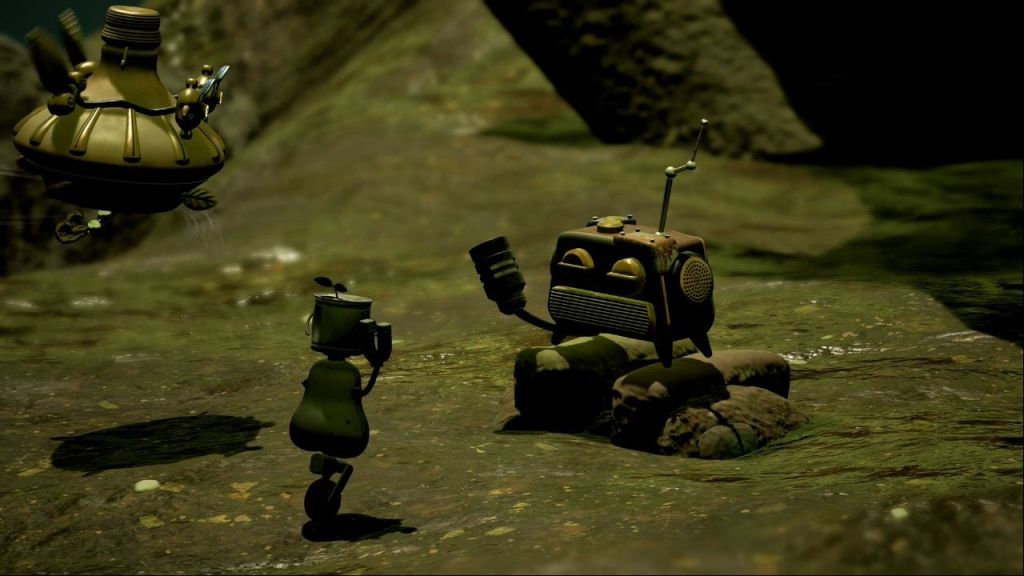
Misc. is more or less a collect-a-thon at its core. While it takes inspiration from Chibi-Robo, it’s more of a traditional 3D platformer with stage-based objectives and trinkets to collect. Each world has a handful of objectives to complete, which includes cleaning-up all of the junk in a level and finding all of the golden Cogs. In one world, for example, you’ll decorate a snowman to earn one of its golden Cogs. A lot of the time, you’ll simply find golden Cogs in hard to reach places or tucked away in nooks and crannies (which were my favorite ones to collect). You’ll also meet a lot of robotic NPCs (with surprisingly great animations) who will ask you to find items or solve some other task for them in order to earn their reward. You can recycle trash and junk you pick-up for nuts (the game’s currency), which can be used to purchase items from a vendor. Finally, there’s various oil spills and the sort to clean-up with your brush, which nets you another golden Cog if you hit 100% in each world.
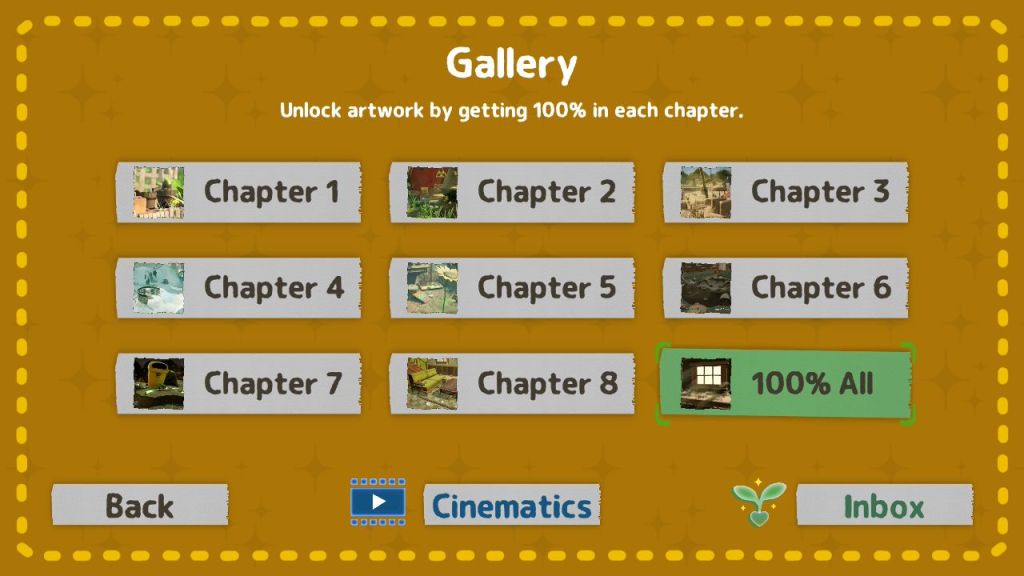
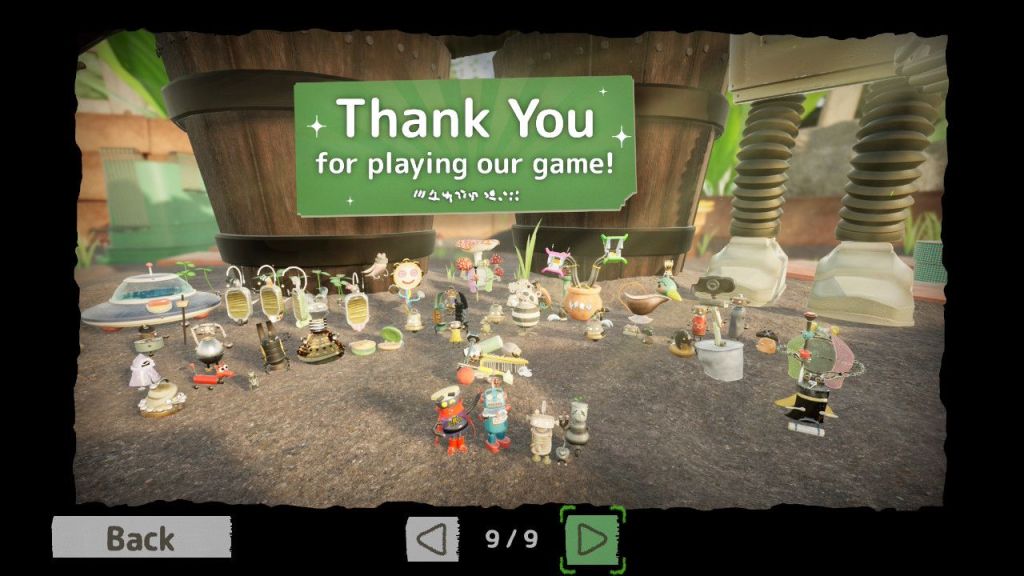
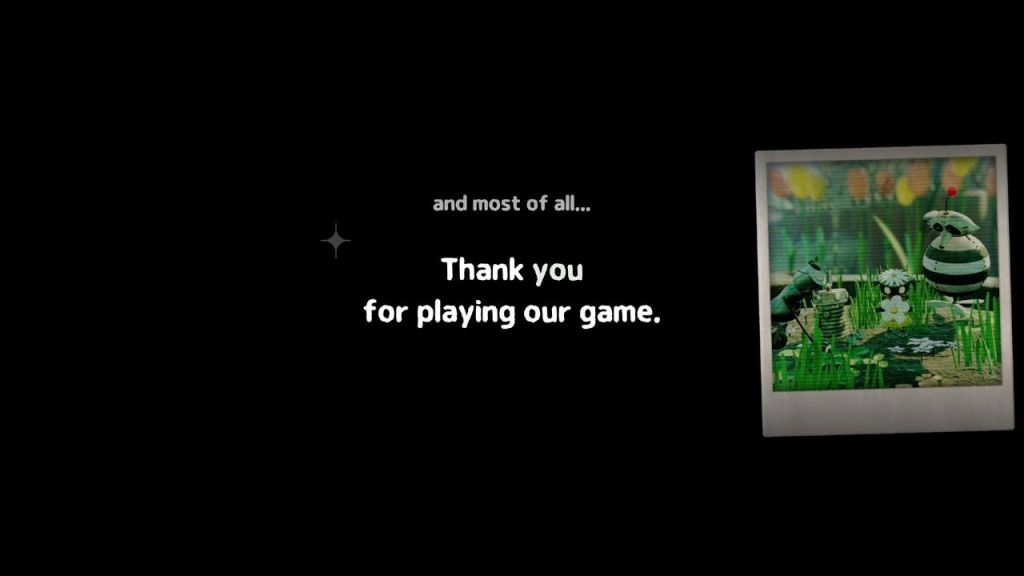
There is combat in Misc. and “enemies” to fight, but you don’t take damage and there’s technically no fail state. When you’re hit, you simply get knocked back. While the characters animate fairly well, the overall look of the game is fairly generic-looking. Each environment almost feels like an Unreal/Unity Engine template, with its photorealistic visuals and use of depth of field. It isn’t a particularly colorful game, either. Misc. took me around 10 hours to complete and contains a chapter select so you can revisit any level you’ve beaten to find any missed goodies. When you fully complete a chapter, you unlock a gallery page as well. There’s also a cinematics viewer and an inbox with messages and affirmations to read, written by the characters you meet along the way. I completed the game at 100% with everything unlocked. While the game didn’t hit me in an emotional way, I ultimately enjoyed my time with it, even if it was a bit by-the-numbers. I hope the developer gets an opportunity to make another game.
When I first beat Super Mario Odyssey (SMO) back in 2017, I more or less dropped the game. I dabbled in the post-game content until I became exhausted and shelved the game for good, until now. That’s right, as of 2025, I’ve finally 100%’ed SMO. When Donkey Kong Bananza was first revealed and everything was pointing towards it being developed by the Odyssey team, I figured it was time for a revisit. Although I’ve become (slightly) more selective when it comes to 100%’ing games, SMO was the only mainline Mario title I’ve never fully completed. SMO, and now DKB, are heavy on the collect-a-thon aspects of 3D platformers. SMO was rightfully criticized for having the player merely look over an edge to find a Power Moon (the game’s main collectable and equivalent to Super Mario 64’s Power Star). Perhaps that’s exaggerating a bit, but the Power Moons were plentiful and you were almost always happening upon one with little-to-no effort made. If you remove the collecting aspect from SMO, it’s still an exceptionally well-made game. Mario’s move-set, in particular, still feels like a dream. I’ll never tire of tossing my cap and then long-jumping to it for that additional bounce.
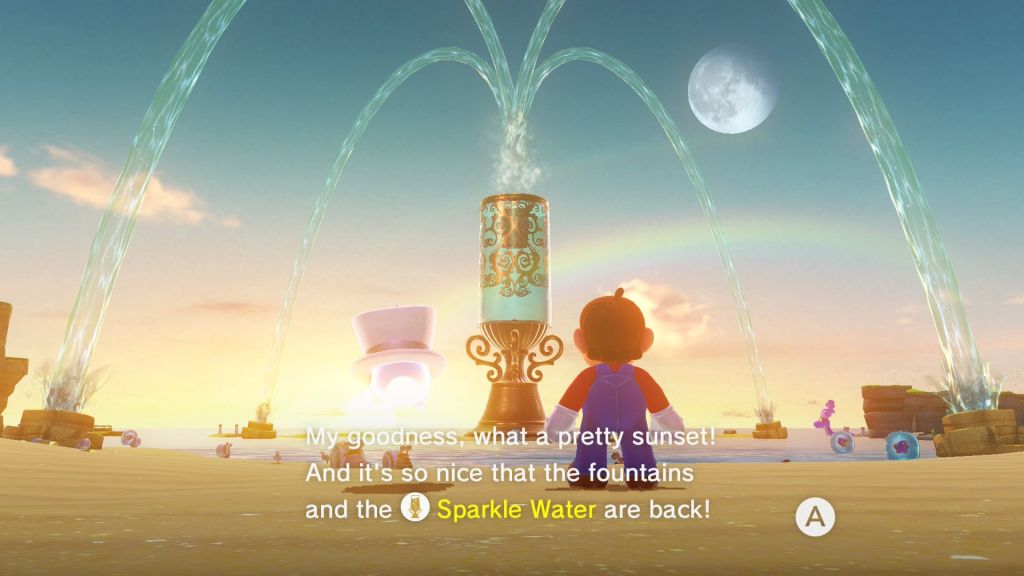

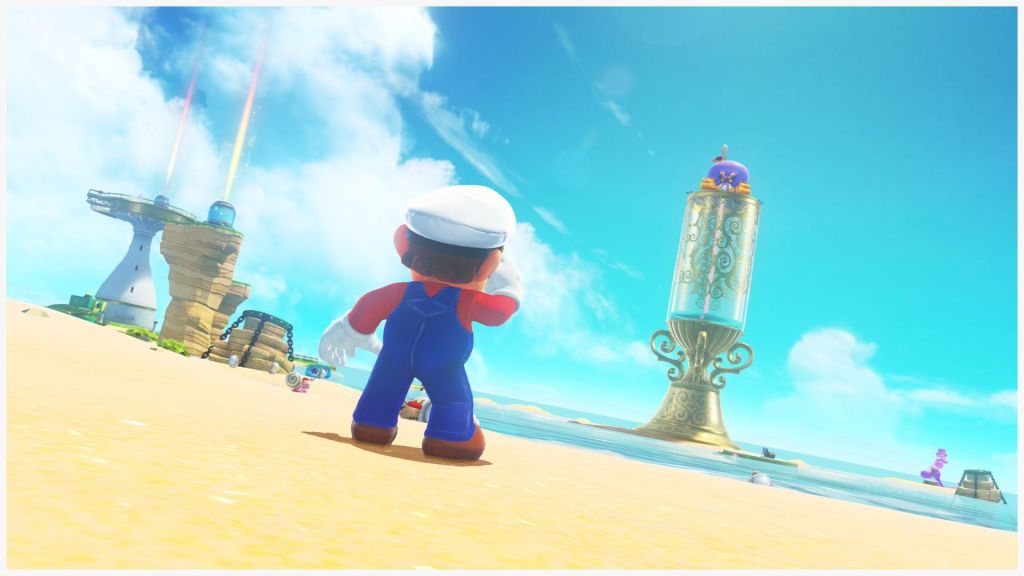
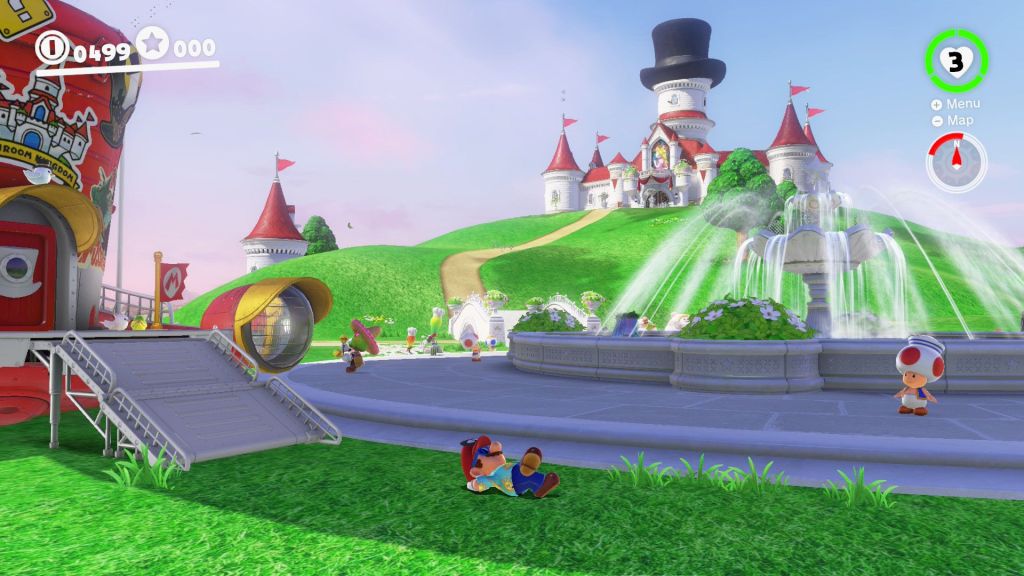
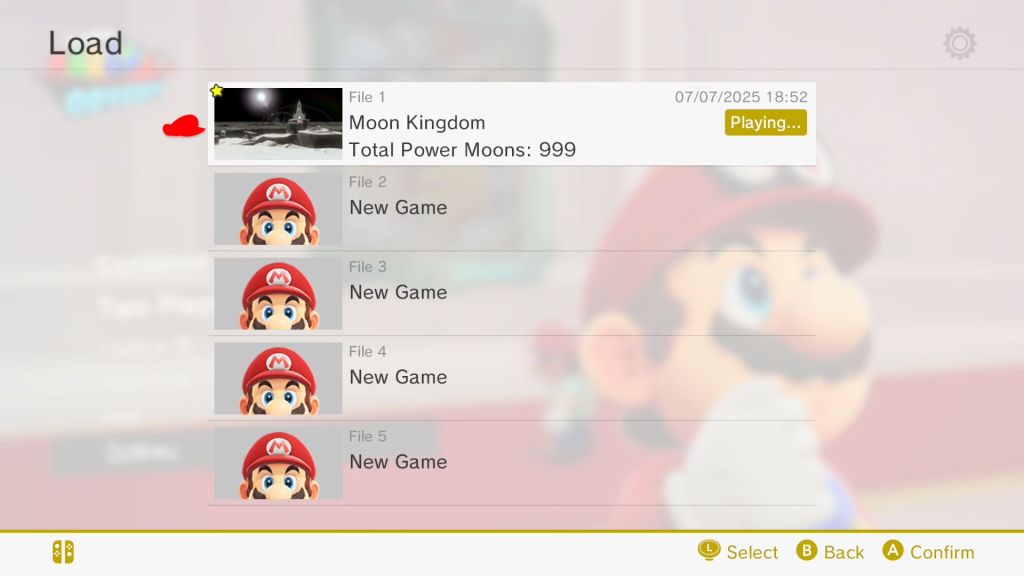
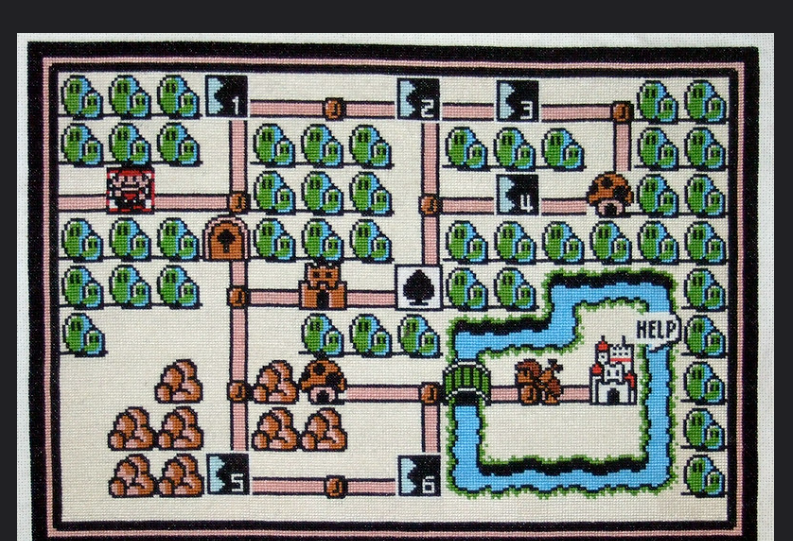
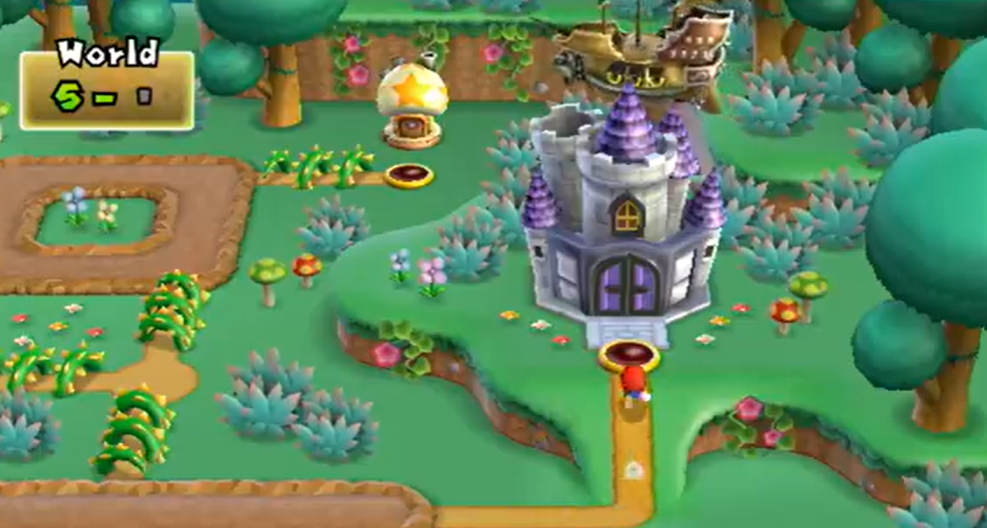
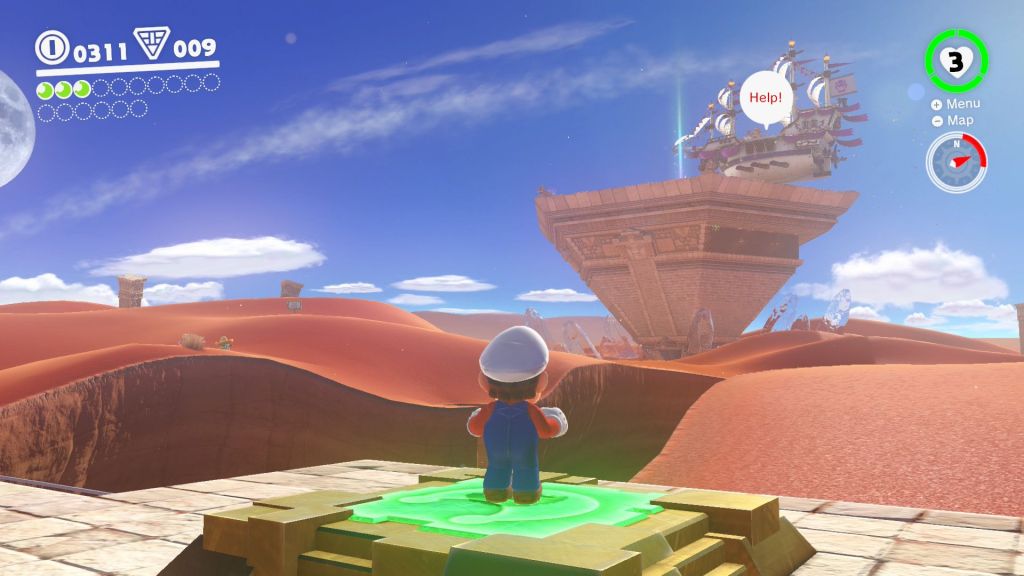
After beating DKB and 100%’ing my SMO save file from 2017, I wanted to replay the main story path and collect only the essential Power Moons required to reach Bowser and complete the game. I really enjoyed my time revisiting the base game. When playing SMO casually, it’s a fairly well-paced experience. I still really like each kingdom’s background story and how they tie into the wedding items Bowser is in search of. I replayed the updated version of SMO on Switch 2 and it looks really nice and clean, too. The art direction is still a bit all over the place but there’s something about it that works for me. I will always love when you first land in a kingdom with the Odyssey and you get those wide-angle shots of the area that’s ahead of you. I also noticed on this playthrough that the Broodals fly their airship around the major objective in each kingdom, almost as if it was a callback to the “Castle” stages from the older 2D Mario titles (such as Super Mario Bros. 3 and New Super Mario Bros. Wii). Similar to how the developers would approach DKB in the future, I also appreciated how they baked traditional “courses” inside of the semi open-world spaces. As you’re completing the primary Power Moon objectives, the game more or less sets up the next “level”, so to speak. It was an interesting evolution to the 3D Mario formula back in 2017 and it still feels like a relatively novel approach in 2025.
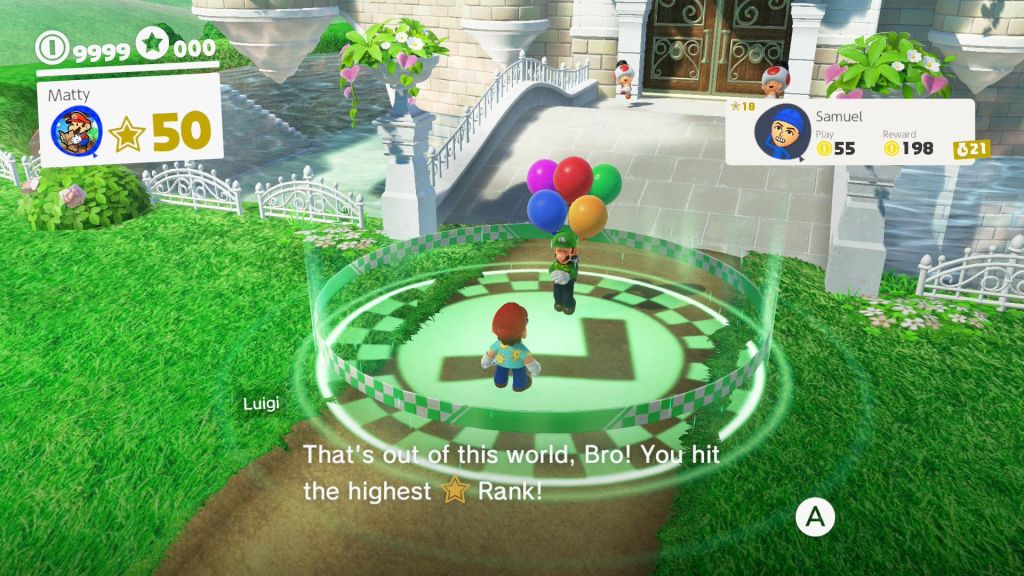


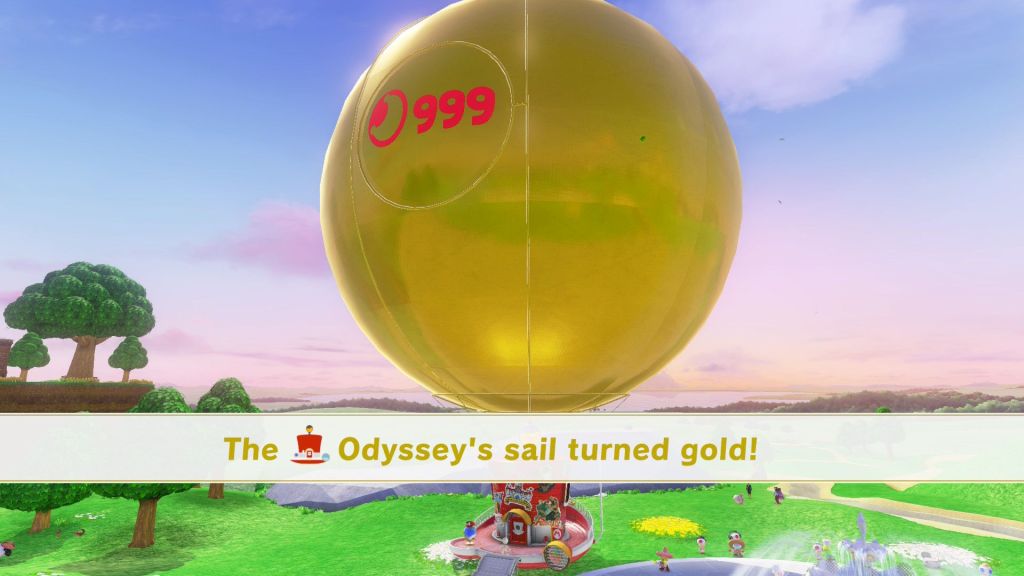
Finally, I’d be remiss if I didn’t talk about my time spent with Luigi’s Balloon World. Yes, I begrudgingly reached max level (50) and it was a MISERABLE grind. If you’re not familiar with the mode, in Balloon World, you’ll either seek or place balloons for other players to find under relatively strict time limits. If you find the balloon, you’ll net a bunch of coins. To reach the highest rank, you need to find 800 balloons, which is completely out of control. It’s most likely the last objective you’ll achieve to net the maximum rank. I surprisingly had no issue having people find my balloons (I was playing this mode prior to DKB’s release, so perhaps there was an influx of players). Searching for balloons did become problematic at times as players found ways over the years to clip them into walls and other objects. I’m too old for out-of-bounds business, so I definitely wasted a few hours looking for balloons I would have never found. If you’re trying to purchase all of the costumes in the game, this is a good method (distraction) as you work your way towards unlocking everything because you’ll have more than enough coins leftover by the time you reach Rank 50. The main reason why I bothered with this mode? Luigi’s balloons turn gold when you reach the Level 50, so I had to do it in order for the game to be considered 100% complete. Mainline Nintendo games, particularly Mario titles, love rewarding players with unique dialogue and gold menus, crowns or frames around their profiles when completing the game at 100% and Super Mario Odyssey is no different. Was it worth it? Probably not, but I did it anyway!
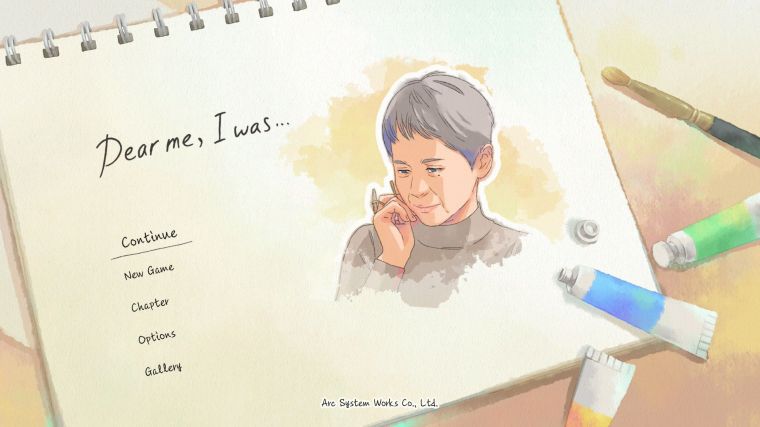
Dear me, I was…, developed by Arc System Works Co., Ltd., is an “interactive” visual novel of sorts that follows a young woman’s life from childhood into adulthood. I put quotations around “interactive” as the actual gameplay elements aren’t much to write home about. When the game does ask for player input, you simply click on objects to progress scenes or swipe a cursor across a space to paint a picture, for example. The game utilizes a beautiful watercolor aesthetic and has a lovely soundtrack, though. The game’s artist is Taisuke Kanasaki, of Hotel Dusk and Trace Memory/Another Code fame, who incorporated a style of rotoscoping to tell its story. The main character appears to be bi-sexual, but it’s not super clear as there’s no spoken dialogue in the game. In her high school years, it appears she befriends a fellow female student who’s also an artist. They seem to form some sort of relationship, but it eventually fades, time passes, and new relationships are formed, although there’s still appears to be a longing for something that could have been.



The soundtrack, composed by Satoshi Okubo, is simply pleasant to listen to and a lovely compliment to the artwork. I do love the ending theme, especially. It sounds like something that would play during the credits of a Xenoblade Chronicles game. Dear me, I was… is sort of a one-and-done experience with no replay value, however, unless you simply loved the story and wanted to see the artwork again. Fortunately, there’s a chapter select and you do unlock a Gallery after beating the game for what it’s worth. I love bite-sized, short narrative-driven experiences like this, so I wouldn’t say no to another game in this style. The game takes, at most, an hour to complete, but in an age where AI art slop permeates all creative mediums, I think Dear me, I was… is worth shelling out a few bucks for real art from a real person.
Mario Kart World, developed by Nintendo, is Switch 2’s debut Mario Kart title. My brief history with this series; prior to Mario Kart World, the most time I’ve spent playing Mario Kart was probably Mario Kart 64 on the N64. Before that, Super Mario Kart on the SNES. I’ve dabbled with the portable games, most notably Mario Kart DS on the Nintendo 3DS and I suppose I played a decent amount of Mario Kart 8 on Wii U (before it got ported to the Switch). I’ve never touched Mario Kart: Double Dash on the Nintendo GameCube (GC) and I maybe turned on Mario Kart Wii once or twice. So with that said, when Mario Kart World was first introduced and the Free Roam mode was revealed, I started to feel excited about Mario Kart again. I’m not a huge racing game fan, so the standard Gran Prix formula isn’t supper appealing to me anymore. Free Roam, which is the game’s adventure mode of sorts, looked enticing leading up to the game’s release. Some people thought this was going to be the return of something more akin to Diddy Kong Racing on the N64. Perhaps Nintendo was hiding a campaign of sorts with cutscenes and other surprises in this mode. The reality, however, was not exactly what people were asking/looking for…

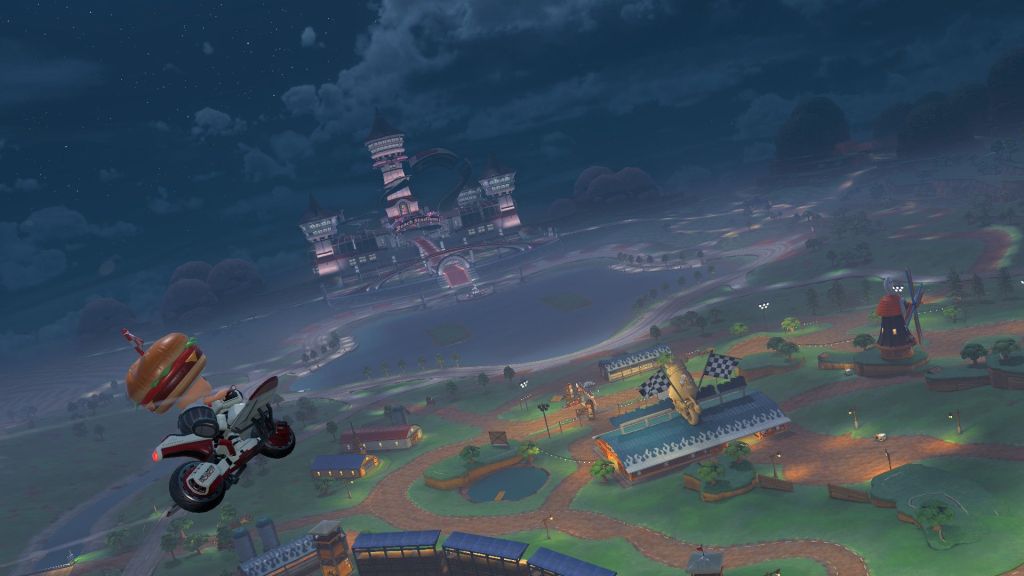
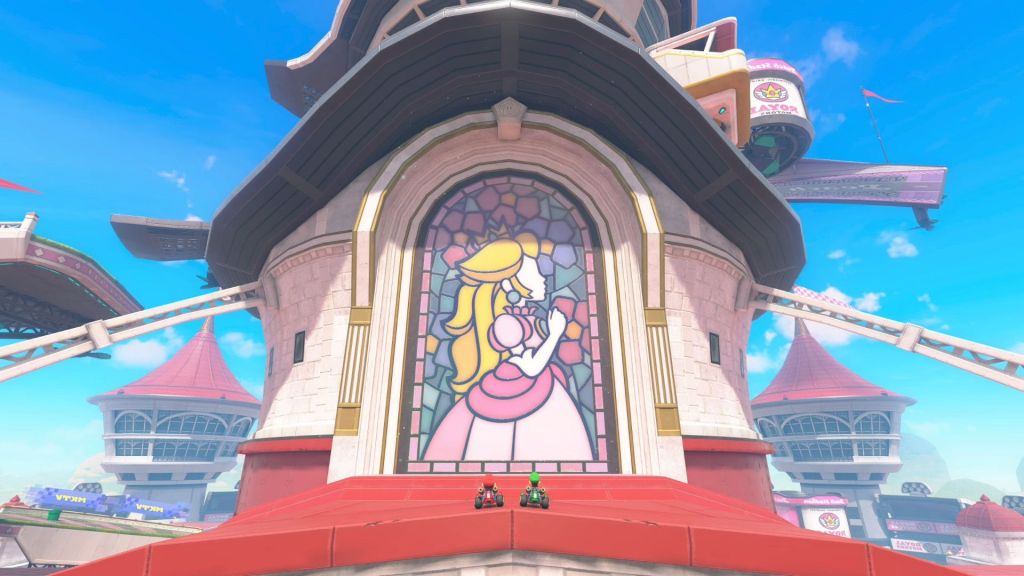
First and foremost, Mario Kart World looks incredible. For the system’s debut release, it paints a fairly nice picture for Nintendo’s first-party games going forward. The game is extremely colorful, performs like a dream, and has beautiful lighting, especially at dawn and dusk as there is a day & night cycle. New to this entry are seamless track transitions where you’re more or less driving from one point of the large open world to the next. Because of this, some of the courses are more or less straight paths which connect the drivers to the next course. Typically, the second course in a Grand Prix will only contain a traditional course track in its final lap, which many people found extremely disappointed after the fact. I was mostly okay with how it was implemented, but I will say the world itself and the general art direction feels a bit safe and boring. It’s not as dry as say the earlier New Super Mario Bros. games, but it’s somewhere in-between those games and the creativity and “weirdness” we saw in Super Mario Bros. Wonder or even Odyssey, to a degree. The game has been patched a lot since the time of writing this, but I mostly played through and 3-starred Grand Prix prior to the developer’s nerfing the “unfair” AI. It was pretty ridiculous, mind you, more so during the Knockout Tour races. To place first in the Knockout Tour races was a lesson in frustration; the worse you played, the better off you were towards the end of the rally as the AI’s rubber-banding wouldn’t play as aggressively. To earn a 3-Star rating at the end of the rally, you have to be in first at each checkpoint, which is quite the feat (until you realize you don’t really have to cut corners or use fancy rail/wall grinding techniques to stay in first place). What a mess!
The saving grace in Free Roam is the soundtrack. The composers went to town on Mario Kart World and some of the best music in the game is oddly (but thankfully) housed in the game’s Free Roam mode. I think Mario Kart World is worth playing for the OST alone. I wasn’t quite sold on Free Roam after my first few hours with it, but the more I played, explored (and listened), the more it started to speak to me. I became addicted to finding the ? Panels, especially. Each of the main courses, which are organically placed within the open-world, can be fully explored outside of the traditional racing parameters. Each course hides these ? Panels which ask the player to simply ride over them in order to activate them. Your reward? A lousy sticker, of which only one can be placed on your kart at a time (ridiculous). Discovering the ? Panels is the reward in and of itself, though, as lame as that sounds. The courses are designed in a way to make you utilize Mario Kart World’s newest techniques, such as the rail and wall grind maneuvers, in order to find many of the hidden collectables. Not only are the ? Panels placed in tucked-away corners or on walls, there are hidden Peach Medallions to find and P-Switch challenges to complete (which are the equivalent to MKDS’s Mission Mode, from my understanding). The Peach Medallions require the most skill to collect in terms of “platforming”, but the P-Switches feel like uninspired, throwaway challenges that sometimes last less than a minute.
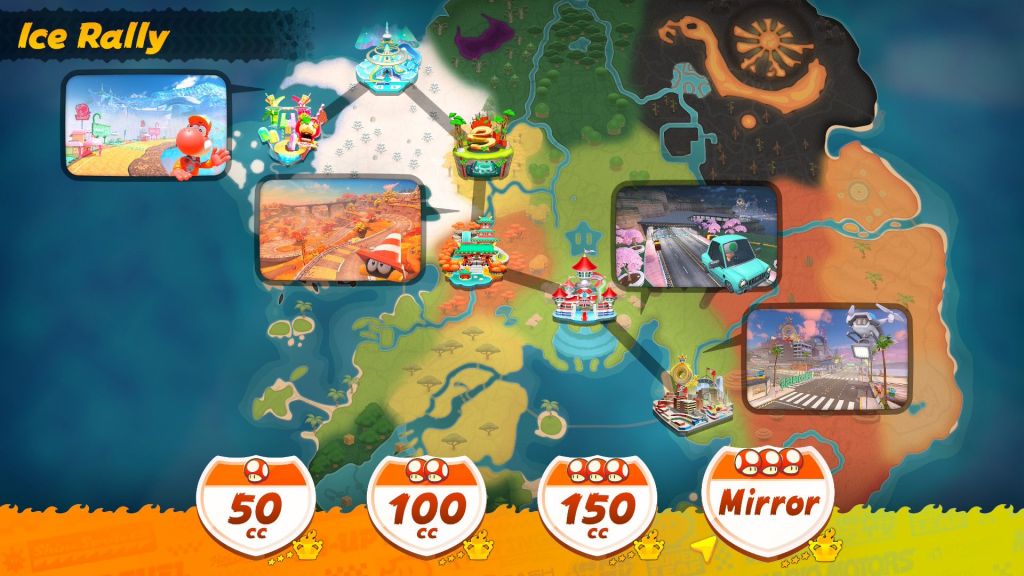
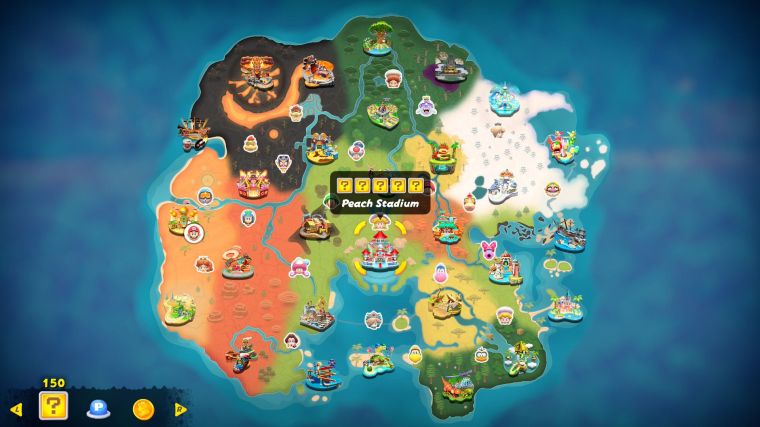
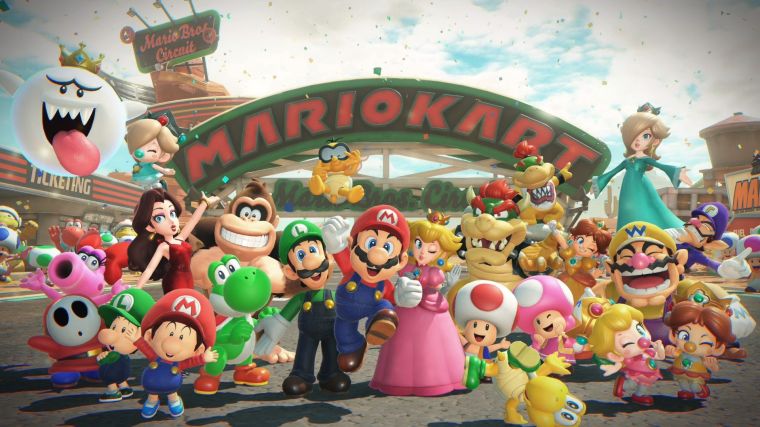
I completed all of the Grand Prix/Knockout Tours on 150cc/Mirror Mode with 3 Stars. I also beat all of the Time Trials, unlocked all of the characters (thanks to a recent update involving the usage of the secret UFOs…) and got all of the ? Panels in Free Roam. I did collect and complete my fair share of Peach Medallions and P-Switch challenges, respectively, but I wasn’t in any rush to complete the game at 100% due to the time commitment required (while some of the P-Switch challenges are challenging, the majority aren’t particularly interesting to engage with). It will be curious to see if Mario Kart World will be the long-term, never-ending investment that Mario Kart 8 Deluxe was for the original Switch. I’m not convinced that will be the case here, but it was the system’s launch title, so it’ll no doubt have legs for a very long time. For now, I think it’s an essential title for the Switch 2 and an interesting peek into the future of the hardware and what we can expect from Nintendo moving forward. With that said, play it for the OST alone.

Dunkadillo, developed by Thomas K. Young, is the latest 2D platformer from the creator of Dadish. The game begins when your little fish friend is taken by a giant squid while you’re chilling out by a kiddie pool playing on your phone. You play as an armadillo that bounces around like a basketball. The goal of each stage is to reach the basketball hoop at the end of the level. Along the way, you’ll have to navigate short levels comprised of platforming challenges, simple switch-based “puzzles” and the occasional enemy to defeat. Dunkadillo is a fairly basic platformer, but the most interesting thing about the way it plays is that there is no neutral state, you’re constantly bouncing. You can perform an additional jump mid-air to gain some extra height (it sort of acts as a double jump), but that’s the extent of the mechanics. Aesthetically, the game sort of captures that early Sonic the Hedgehog-look with its checkered tile sets and polygonal sunflowers in the foreground. I was reminded of Ohsat’s Go! Go! PogoGirl while playing the game, which also had a similar visual style. It’s interesting to see the impact Sonic continues to have on a lot of indie developers today.
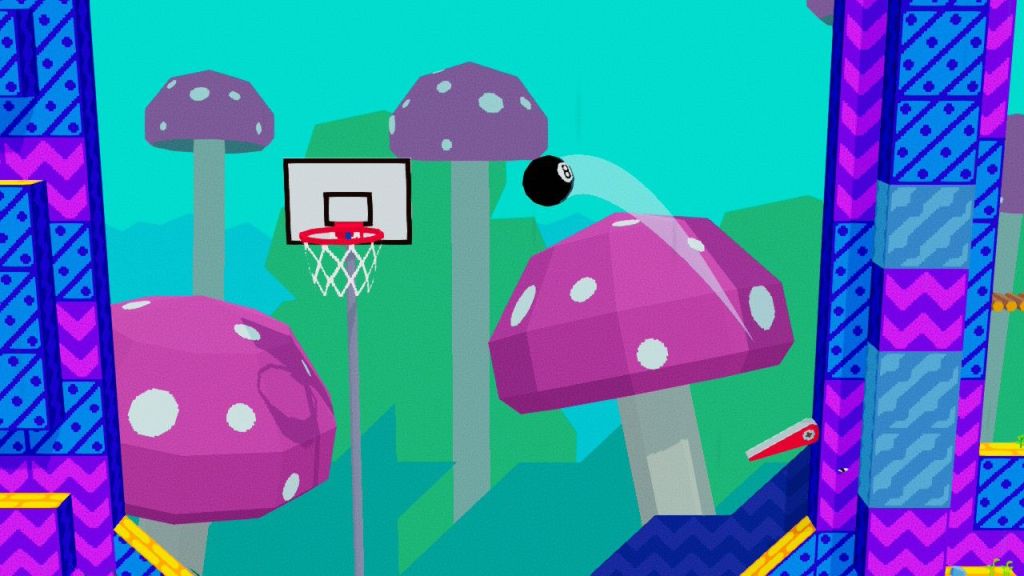
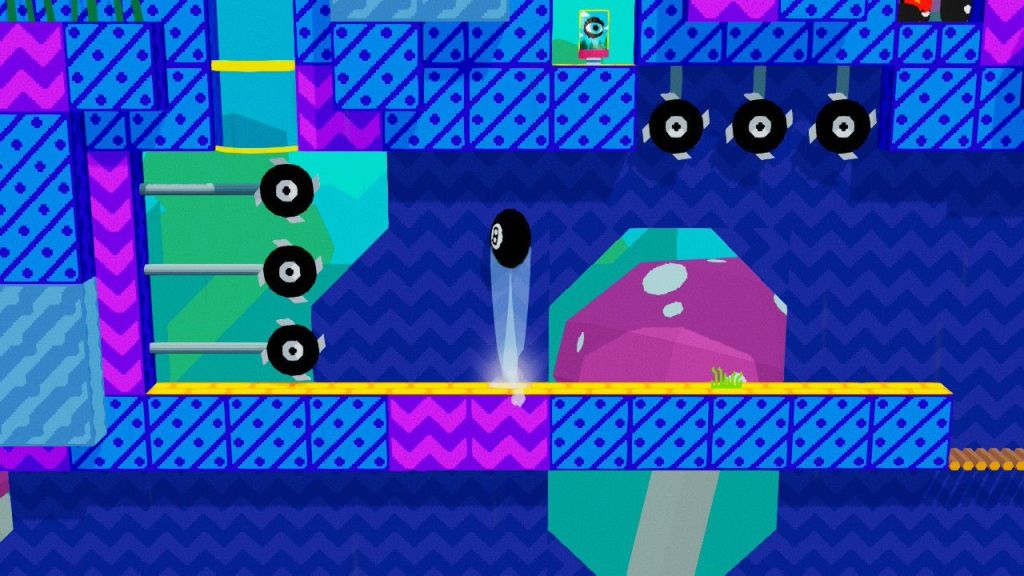

My issue, once again, with Dunkadillo (and dozens of other 2D indie platformers as of late) is that its levels lack any sort of coherent vision or cohesiveness. Despite levels taking place within themed worlds (such as a mushroom forest or some Green Hill Zone facsimile), the individual stages just feel like a collection of basic platforming ideas you could apply to any given world. Why not incorporate some sort of mushroom-like mechanic (like bouncing on top of the mushroom caps or avoiding their spores) in the mushroom-themed world? Instead, you’ll more or less find the same hazards and obstacles you could arguably place in any other world; spike pits, buzz saws, and the sort. With that said, the game does try to introduce new mechanics and ideas as things progress. At some point, a stage will introduce buzz saws that retract whenever you bounce, so you need to time your jumps properly. As someone who loves boss warning screens in games (particularly in shoot ’em ups/arcade shooters), I was pleasantly surprised to see that Dunkadillo (unnecessarily) contains them as well! When you begin a boss stage, “BAD BOY APPROACHING” will flash across the screen in big, bold red font along with a slim, yellow and black caution tape strip below it. Well done Thomas K. Young.
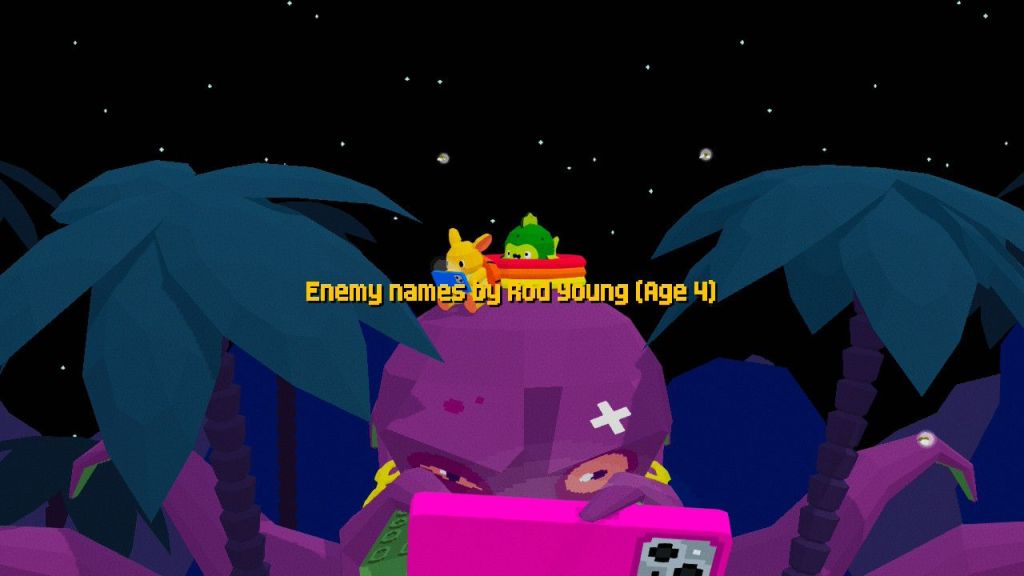
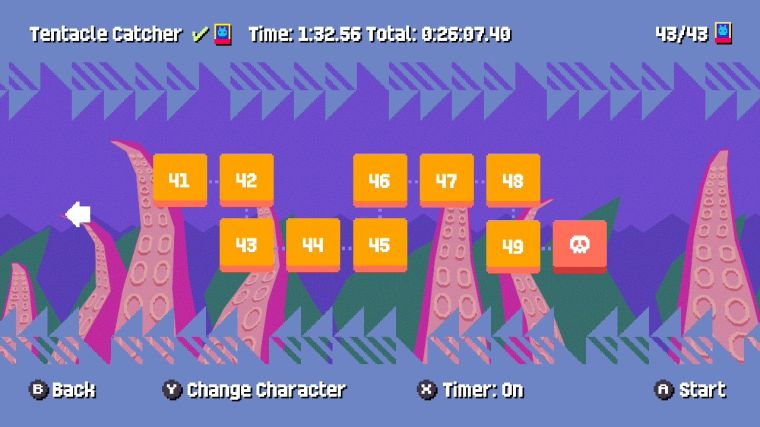
In each level, there’s also hidden cards to collect, which unlock new skins/costumes based on how many you’ve collected. After you beat the game, you can replay stages with a timer and a total time is added to the stage select screen for all of the levels. I completed the game twice with all 43/43 cards collected and a time of 26 minutes. I thought it was cute that the developer dedicated the game to his kids (I believe one of his kids came up with the enemy names, too?). It’s these types of personal touches you’d only see in the indie space, so at least there’s a degree of humanity behind the creation of the game. That’s all we can ask for in these dark times. I will likely revisit the developer’s previous games at some point (as I’ve yet to play through any of the Dadish titles), but Dunkadillo is yet another inoffensive, unremarkable 2D platformer that may or may not be worth your time.

See you next quarter…
–Matty

Just a friendly bear who works in financial reporting that would rather be playing, writing or talking about video games. https://twitch.tv/unexpectedenemy
 UnexpectedGames
2 Comments »