Gaming
My Top 10 Games of 2024 (GOTY)
My Top 10 Games of 2024, including my “Honorable Mentions”, “Favorite Remaster”, and more…
 UnexpectedGames
Just a friendly bear who works in financial reporting that would rather be playing, writing or talking about video games. https://twitch.tv/unexpectedenemy

My Top 10 Games of 2024, including my “Honorable Mentions”, “Favorite Remaster”, and more…

2024 was the year of BIG-ASS games. What’s that old adage, “Sometimes less is more?”. Developers both big and small just couldn’t help themselves with their 50 to 100 hour experiences. It didn’t help that I was interested in a lot of them (I’m part of the problem, clearly). In 2023, the industry was still in dire straits, but I’m here to report that things haven’t really gotten any better. For an industry and medium that I love and adore, it’s difficult to feel good about it all when the people responsible for all of my favorite works are at the whims of an unjust, chaotic business that just couldn’t care less about anything but the bottom-line. With that said, arriving at my Top 10 this year was just as hard of an endeavor as it was last year, if not more challenging. I do not put a lot of stock into making lists, though. It’s just a fun thing to do that’s been normalized by the gaming community at large and the process of making lists helps me organize my thoughts, so it’s a win-win for everyone.
Before we get to the fun stuff, I just wanted to say that I’ve been generally frustrated with how I write about videogames. I often find myself “reviewing” games in a traditional sense, but I don’t rate games and give them scores nor do I have any intention to publish a review on Metacritic, for example. I often try to explain a game’s mechanics, but sometimes it’s relatively surface-level. Because I write about every game that I play/finish, I simply don’t have the time/energy to go “all-in” on every game, so to speak. When I read reviews, opinion-pieces and guides on various sites, I feel like I’m not being thorough, detailed or analytical enough, which then sends me in an imposter syndrome spiral where I question myself and ask, “What the fuck am I even trying to say anymore?” I do enjoy discussing a developer’s pedigree; what the studio worked on previously and how they likely arrived at their latest release, for example. I’m also still a completionist at heart, so I typically write about what I accomplished in a game from someone who has 100-percented more games than they would like to admit. Finally, I try my best to incorporate some personal stories into my writings, like with my piece on Nine Sols, SquareSoft’s Summer of Adventure & The “Souls-ification” of the Metroidvania Sub-Genre. So, if you’re reading this, thank you again if you’ve taken the time to even read a single paragraph since I started doing this back in 2017.
Finally, my thoughts and feelings about certain games can change on a daily/weekly basis, so take the ordering of things here with a massive grain of salt. Similar to MinnMax’s “The Two Tens“, and just like the past few years, I was originally going to make a Top 20 list for 2024. As I mentioned, there were just too many great games this year and I didn’t get a chance to play everything that I wanted to, so making my Top 10 was difficult. To save time, I also copied what I had originally written for most of the games listed below, but with some slight editing. If you want to read what I had originally written about the following games in more detail during Q1, Q2, Q3 and Q4 of 2024, you can read about it here, here, here, and here, respectively! Also, if you want to read my companion piece to this post, you can find my overall thoughts on gaming in 2024 here. If you’d like the “TLDR”, scroll to the bottom of this post. So, without further ado, here are my favorite games of 2024, but first…

Last year, I restricted my “B-Side” to ten games, but for 2024, it was too difficult of a task. So, here’s 20 games that my alter ego from another timeline would have finished and considered for my Top 10/Honorable Mentions.
Banishers: Ghosts of New Eden, developed by DON’T NOD, is a 3rd-person, action-adventure game that takes place in 1600s Massachusetts. Just like Jusant before it, Banishers is quite the departure from their work on the Life is Strange series, at least in terms of its scope and setting. The game’s production values feel similar to that of Asobo Studio’s A Plague’s Tale; Naughty Dog-lite, if you will. The setup for the game is fairly interesting. It’s not much of a spoiler, but you play as two ghost hunters named Antea Duarte and Red mac Raith. The pair find themselves in a small, colonial village named New Eden. The introduction sequence is quite lengthy and ultimately ends with Duarte becoming a ghost. After a brief time jump, you resume control of Raith and begin your quest to find a way to bring your partner back to life. The story and setting reminded me of one of my favorite PS1 era games, Koudelka. The gameplay itself felt similar to the post-2018 God of War games, but not as polished obviously. It’s sort of a character-action game with some light RPG elements. I wanted to play more of it, but it released during a bad time of the year for me, so it was banished to the bookshelves, much like the rest of the games here.
Falcom’s games, particularly the Ys franchise, is like comfort food for me. They’ve been making games for decades and while most of their releases feel like low-to-mid budget experiences, they’ve come a very long way over the years in terms of their production values and scope. I’ve talked about this in previous posts, but Falcom’s The Legend of Heroes series appears to have had a major influence on the Ys games, for better or worse. Prior to Ys VII, most of the games had you playing as just Adol, the main protagonist in the series. Ys VII introduced a party-based system along with a much stronger focus on narrative and story. In addition to these changes, the combat system had a complete overhaul by introducing a damage type system that felt like a glorified version of rock-paper-scissors (which many games are arguably guilty of). While there’s nothing inherently wrong with this new approach for the franchise, it’s not exactly what I come for when playing an Ys game. I play Ys for the rolling blue skies, fast-paced action, killer soundtracks, and no-nonsense pacing.
Ys X finally released in North America in the latter half of 2024. Prior to the game’s launch, a demo was released which allowed players to carry their progress over to the full game. Ys X was one of my most anticipated games of 2024, but I was spinning far too many plates towards the end of the year to give the game the time it deserved. While I don’t think it’s as long as the more recent entries that came before it, it’s still not a short game by any stretch of the imagination. Before the end of the year, I got to Chapter 5 and while I’ve been enjoying my time with it, I just couldn’t include it on my top 10 list, let alone honorable mentions. I appreciate that they’ve made some big changes to the franchise with this entry, however. There’s only two party members this time around, so it feels a bit more focused and in-line with the older games. While the Assassin’s Creed comparisons are justified, Ys X’s focus on ocean exploration, manning a ship and incorporating naval combat reminds me of Konami’s Suikoden IV back on the PS2. Finally, to make matters worse, a few months after its release in the west, Falcom just announced an enhanced version that’s currently only slated for a Japanese release.

According to my PS5 dashboard, I’ve played around 40% of Slitterhead, the debut release from Bokeh Game Studio. The game comes from Keiichirō Toyama who is known for their work on Silent Hill, Siren and Gravity Rush. Similar to my thoughts on Kunitsu-Gami: Path of the Goddess, Slitterhead truly feels like a PS2 era game. While it’s clear the game was made on a budget, Slitterhead feels like a complete package and it’s super polished to boot. The game is mission-based and has you exploring small-to-mid sized stages within the city walls of Kowloon. It’s an extremely weird action game where you become the body snatcher by possessing humans in order to hunt down the titular Slitterheads, mantis-like creatures who have a mysterious agenda. It’s kind of the coolest game of 2024, if I’m being completely honest, and I feel ashamed of myself for not having made more time for it (I’m mostly kidding). Speaking of mind-swapping and the collective subconscious, 1000xRESIST is undoubtedly going to be one of my favorite games of all time… once I actually sit with it. It’s certainly become the cult-classic, indie-darling of the year for all of the sickos out there, along with Mouthwashing and Artic Eggs, whatever the fuck those games are about (I’m probably going to be obsessed with them).

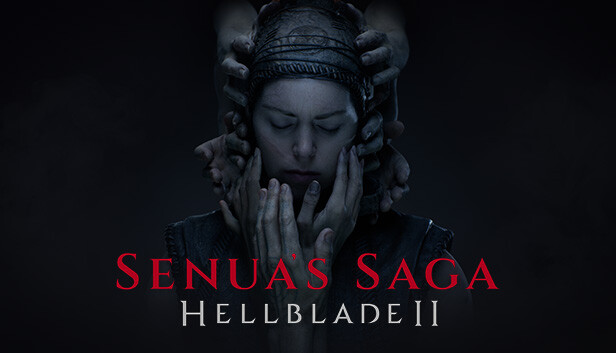
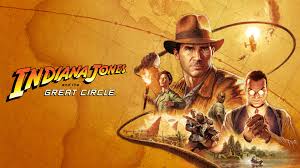
I was convinced that Senua’s Saga: Hellblade II was going to be Microsoft’s/Ninja Theory’s answer to God of War 2018. I was relatively shocked to hear that the game is more or less the same as the first game, at least in terms of its structure and scope. Grant it, I haven’t played the game yet, but I hear the combat is somehow worse (or less interesting?) than the original release. Ninja Theory isn’t one of my favorite developers, but with Hellblade, they sure as hell knew what they were doing when it came to setting the tone, motion capture performances and audio/visual design. I really wanted to play Hellblade II this year, but I also intended to revisit the first game before the sequel released (and it just didn’t happen). Speaking of the two or three Xbox exclusives that released in 2024, I also downloaded Machine Game’s Indiana Jones and the Great Circle for my Xbox Series X through Game Pass (the desktop I’m typing on right now is an Xbox, mind you). Considering the game came out in December, there was no known universe where I would have found the time to finish Indiana Jones before the end of the year. I did play up to the Vatican/Italy portion of the game, however, it’s relatively early in the campaign so I can’t speak to the game as a whole. Perhaps I should just wait for the inevitable PS5 rereleases of both Hellblade II and Indiana Jones before I play them for real, for real.
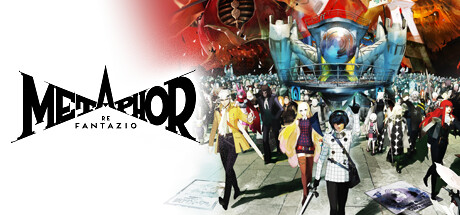
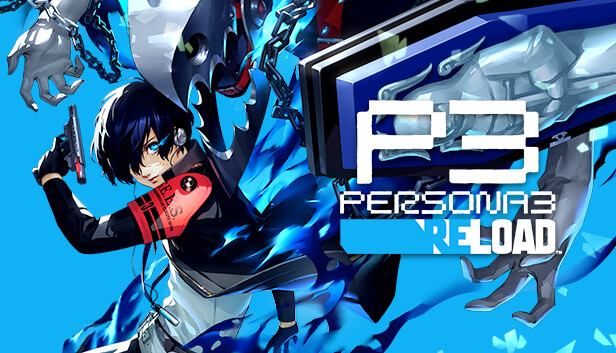
Sega/Atlus had a busy year this year and no, I’m not talking about the Keanu Reeves DLC in Sonic X Shadow Generations. I’m a big fan of Vanillaware. 13 Sentinels was my 2020 GOTY. When the developers announced Unicorn Overlord, a spiritual successor (in some sense) to Ogre Battle with Basiscape/Hitoshi Sakimoto behind its music, it immediately became one of my most anticipated games of 2024. I played the game for around 10 hours on Expert difficulty (which may have been a mistake) and while it felt like a very approachable strategy RPG out of the gate, once you unlock “Gambits”, Pandora’s box has been opened and I became immediately overwhelmed by all of the options at my disposal. While I’ve dipped my toes into various Persona games since the original game back on PS1, I’ve actually never finished one before. Because I don’t know any better, I picked-up Persona 3 Reload at launch, but it’s remained sealed since. Remember what I said about 2024 being the year of too many “Big-Ass” games. There was no reality where I would have found time for that game, as much as I wanted to play it. I also generally prefer Shin Megami Tensei (SMT) proper; SMTIII: Nocturne and the Digital Devil Saga games are more my speed. I played somewhere in the ballpark of 7-10 hours of Metaphor: ReFantazio before the year wrapped-up. It’s about kingdoms, class structures, and politics, but it generally leans more into the high-fantasy realm than the Persona titles did. I’m looking forward to playing more of it in 2025.
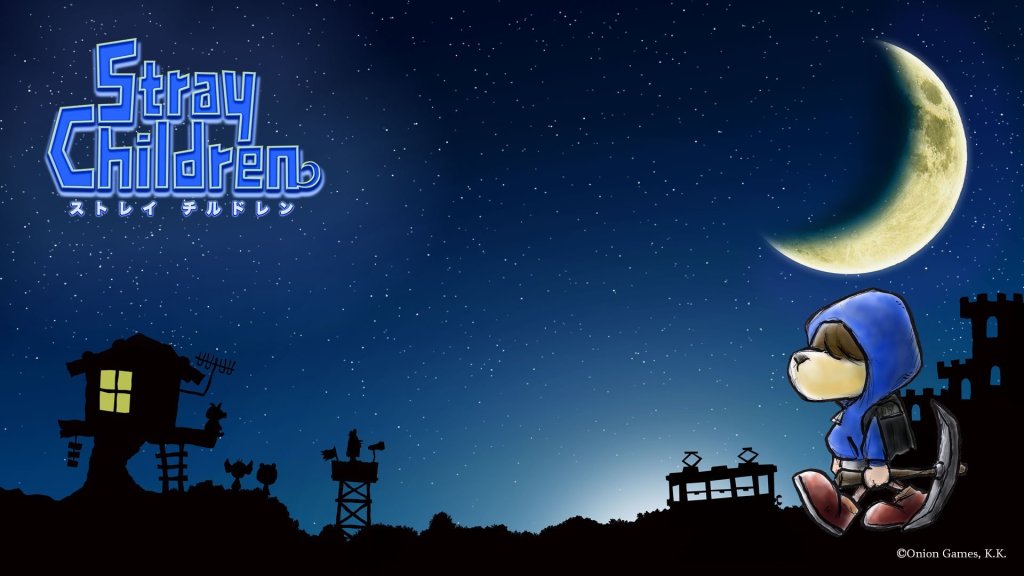
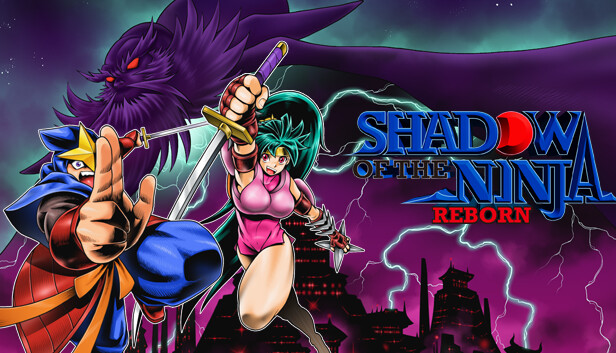
Stray Children, by Onion Games, the developers behind games like Black Bird, Million Onion Hotel, Dandy Dungeon – Legend of Brave Yamada and more, released their latest game on the Nintendo Switch at the very end of the year. Directed by the legendary Yoshiro Kimura, Stray Children is more or less a spiritual successor to the cult-classic PS1 game, Moon: Remix RPG Adventure. Onion Games is one of my favorite developers and anything directed by Kimura immediately resonates with me. I hope the game gets an official localization in 2025 because I can’t imagine I won’t fall in love with it. Despite having played the Ninja Gaiden games on the Nintendo Entertainment System (NES), I somehow never played Shadow of the Ninja. Shadow of the Ninja – Reborn, however, can be best described as both a remake and an entirely new game. The sprite-work and background art is beautiful and there’s an item unlock system where you can purchase powerups/sub-weapons for subsequent playthroughs, which seems like an addicting gameplay loop. It’s the type of game I’d like to eventually master/1 credit clear (1CC), but I know that will be no easy task. I played up to the third stage before putting it down, so I can’t wait to play more of it in 2025.
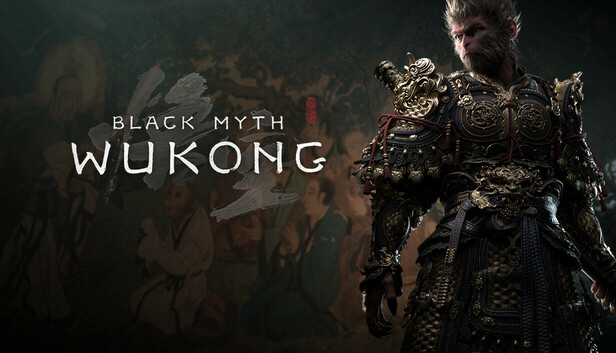
Black Myth: Wukong had a lot of controversy surrounding its release. When I first saw the game revealed many years ago, I didn’t know what to make of it. It looked like one of those games that only shows up at Geoff Keighley’s shows, only to become a fever dream that will likely never see the light of day (remember DokeV?). When Wukong launched, I’m not exactly sure why I stayed away from it. It’s very likely my kind of shit, considering it’s a character-action game at its core. I typically like games that are centered around the Chinese novel “Journey to the West”. It’s also yet again another “traditional” console game from an Asian territory that typically only makes mobile titles (see also Stellar Blade), which I find extremely interesting. Perhaps all of the bad blood surrounding the developer at the time turned me off from the project as a whole, although I do try my best to separate the art from the artist. With that said, I plan to play the game in 2025, so look forward to my thoughts on Wukong 3-6 months from now.
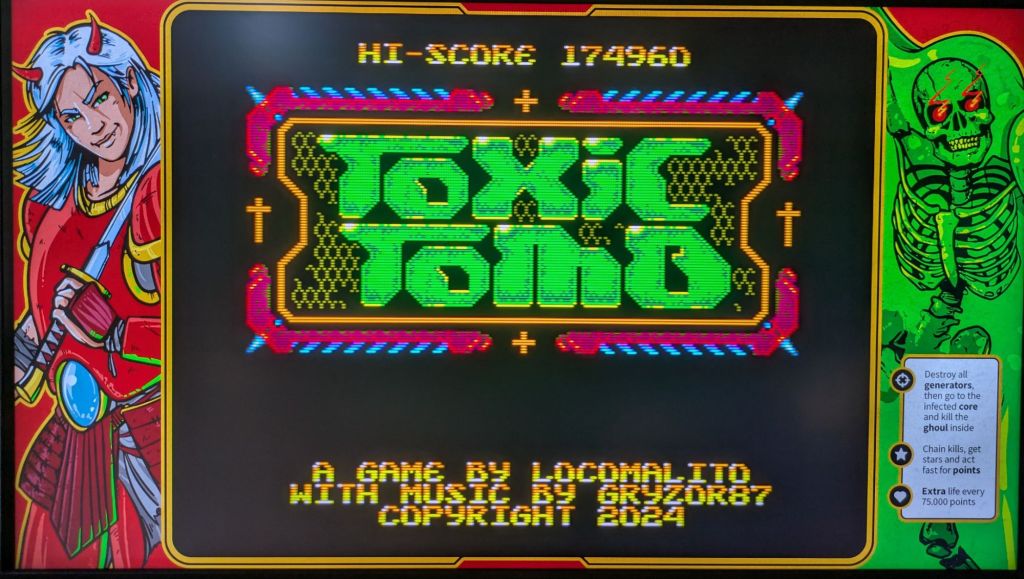
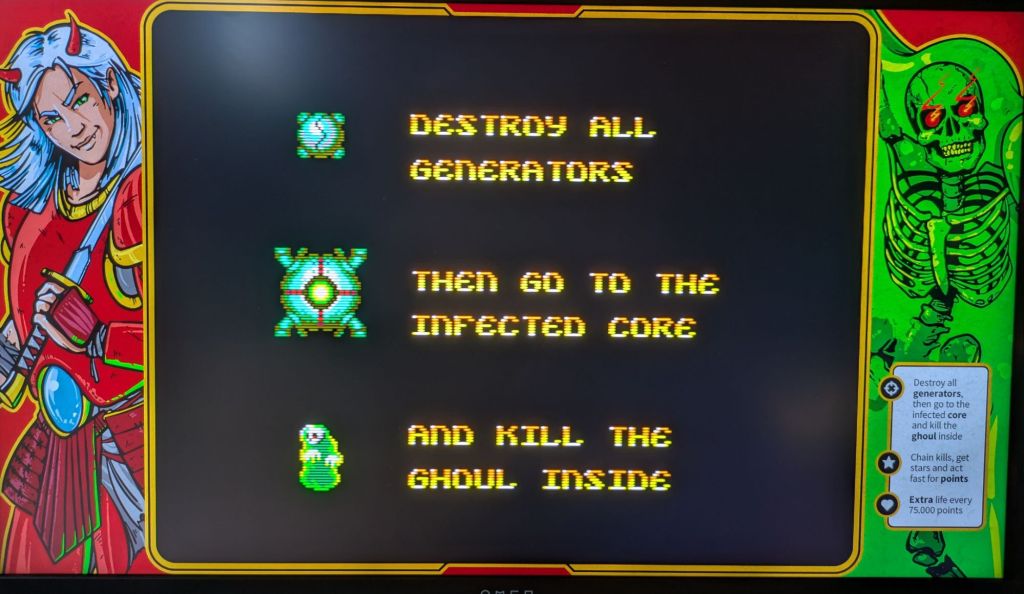
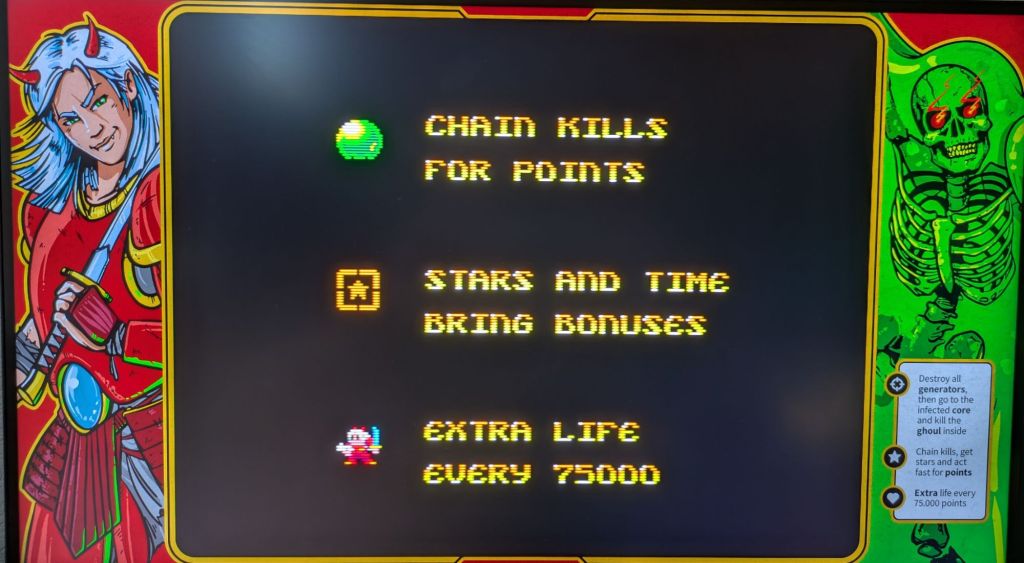
Toxic Tomb, developed by Locomalito, is a 2D, modern-day, retro-inspired arcade shooter where you control a tiny exterminator through a series or 10 levels. Each level introduces at least one new enemy type, which culminate in unique boss encounters. A level is single-screen and if you reach the edge of the screen, it will loop the player back to the other side. It’s very similar to how old arcade games like Fantasy Zone worked. The goal of each stage is to destroy all of the Generators before attacking the Infected Core. After you “destroy the core”, the Ghoul (boss) is revealed. You can chain kills together, but the window to do so is very short. Collecting stars and finishing a stage quickly can net you bonus points. At every 75,000 points, you gain an extra life. Unlikely other vertical/horizontal arcade shooters, there’s no options to adjust the points thresholds needed for an extra life/credit, so it’s a relatively challenging experience.

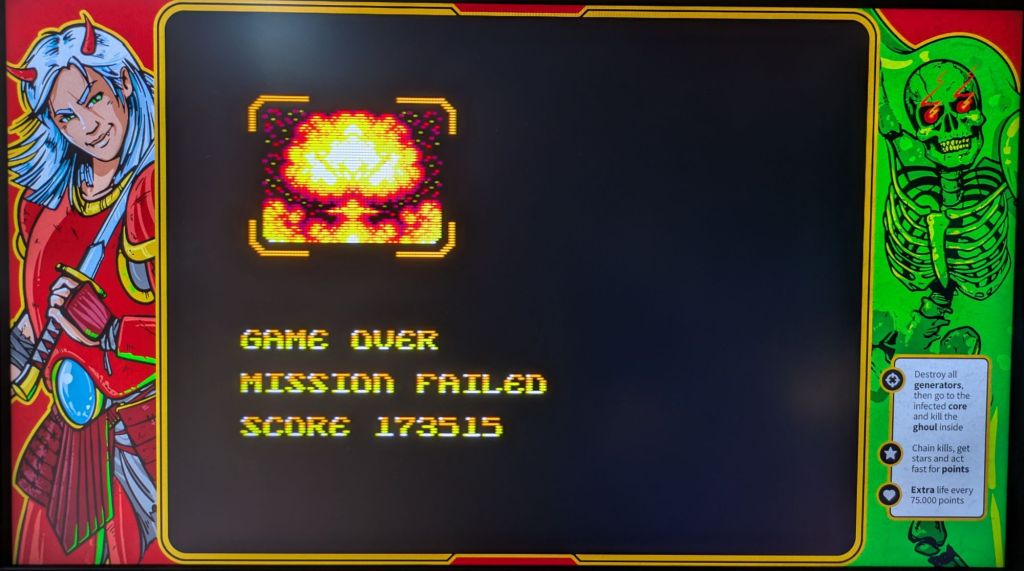
There’s a really cool risk/reward mechanic where once you do enough damage to the boss, they will enter a state where you can kill them in one hit. When you’re within close proximity to an enemy, you can perform a melee attack with your blade. Doing this on a boss’s kill-state gives you more points and marks the boss as “X” on the stage results screen. I’m not sure what impact this has on your playthrough since I’ve yet to finish the game, but I can’t imagine it’s only for extra points. The pixel graphics are great, the music by GRYZOR87, as per usual, is very catchy, and the gameplay is addicting. I’ve only made it to around half-way through the game before losing all of my lives, as the game is meant to be finished in one-sitting. Locomalito is a somewhat prolific indie developer who doesn’t get the love and respect he deserves. Most of his games are free on his website, too. With each run, I tend to make it to a new level for the first time, so with enough practice, I should be able to clear the game at some point.
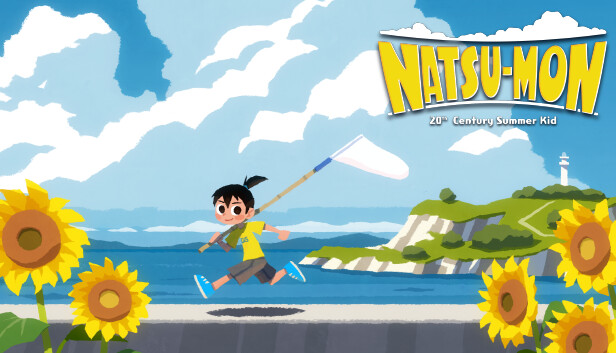
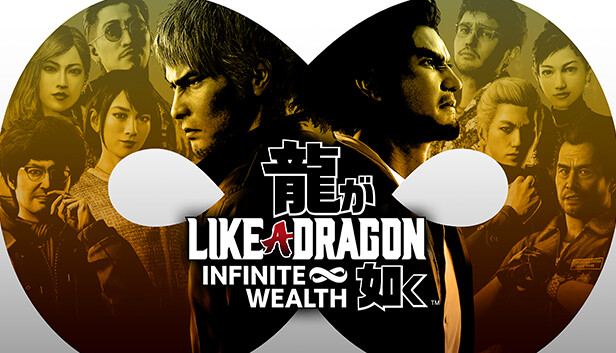
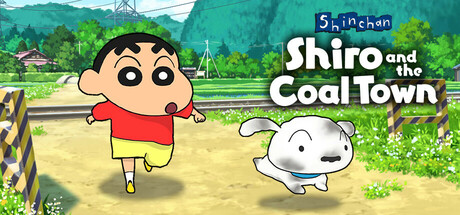
I’m going to cheat and count Natsu-Mon: 20th Century Summer Kid and Shin chan: Shiro and the Coal Town as one game. Okay, maybe not. It’s probably not fair to say that 20th Century Summer Kid is the same game as Shiro and the Coal Town, but they share the same space in my head. A few years ago, my brother and I watched Tim Roger’s review of Boku no Natsuyasumi for the PlayStation 1 (PS1). I’ve always known about the series, but I’m fairly certain none of the games ever officially released in the west. After watching Tim’s video, it solidified my need for Boku no Natsuyasumi or anything adjacent to it, honestly. I’ve been writing about how nearly every “worthwhile” Japanese game these days have either been localized and released in the west or have received a fan translation, at the very least. Gone are the days where cool-looking games get announced in Japan only to never leave its shores. Remember when we had to more or less petition Sega for Yakuza 3-5 back on the PS3 in North America? Speaking of Yakuza, Like a Dragon: Infinite Wealth (LaD) is another game that would have likely made my top 10 this year, if I was caught-up with the series. I refuse to jump ahead as I’ve yet to finish Yakuza 5, so it’ll be awhile before I actually play a Yakuza/LaD game during the year it releases (read my companion piece to see where I’m at with Yakuza 5… for the second time…).
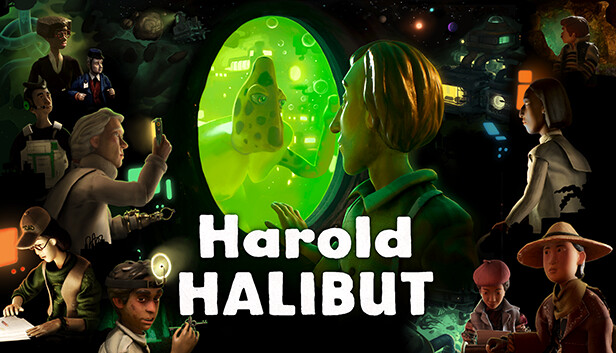
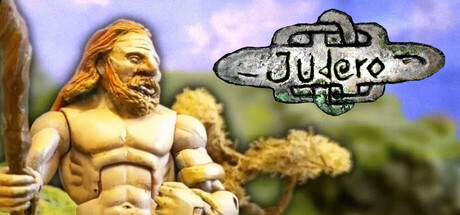
FANTASIAN was my 2021 GOTY. Part of the reason why I loved it so much was because of how it was made. Mistwalker built handmade dioramas and took photographs of their creations to establish the world that you’re playing in. 2024’s Harold Halibut received a similar treatment and was clearly a labor of love, ten years in the making, to be exact! I haven’t quite seen something like Harold Halibut since The Neverhood. The game utilizes stop-motion/Claymation techniques to present its SCI-FI setting and world. From the little I heard, the voice acting and script seemed superb. At its core, Halibut is a PC style adventure game. From what I’ve played, the early parts of the game had you walking back and forth between areas of a ship, talking to NPCs, watching dialogue sequences play out, and solving simple fetch quests and the sort. The walking/running speed felt deliberately slow, so you really have to buy into the whole package to find value in the experience. It’s yet another game I downloaded through Game Pass on my Xbox Series X, but will likely purchase it on PS5 when I’m ready. Then there’s Judero, an action-adventure game inspired by the rich folk history of the Scottish Borders. It’s yet another handcrafted experience made with action-figures and Claymation. From what I’ve seen/read about Judero, it’s very much going to be my jam.
A single game you could play and write about all year.
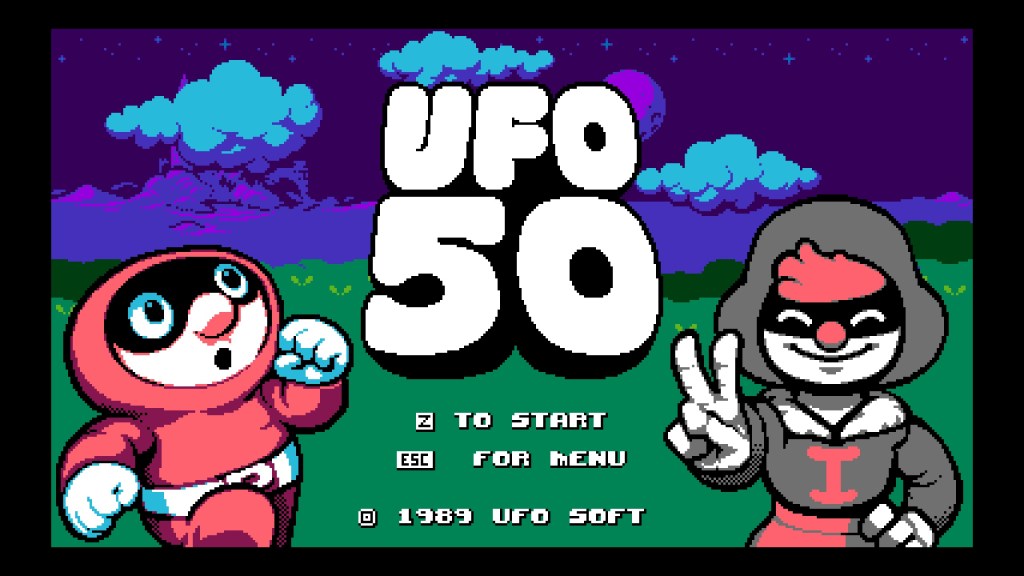
UFO 50, developed by Mossmouth, is one hell of a game, 50 of them for that matter! UFO 50 features fifty unique, bite-sized games, including 2D platformers, strategy games and even lengthy RPGs. It’s a collaborative effort by six developers who took several years to create. It sort of feels like buying one of those game bundles from Humble Bundle, you know, those Steam key packages that comes with two dozen indie games you’ve likely never heard of and might never play? What’s wild about UFO 50 is that each title has its own title-screen and credits; they’re full-ass games! I have to be very careful with this game, though. While the collection is clearly meant to have the player jump from one game to the next, as someone who already deals with choice paralysis for regular-ass games, UFO 50 is one big, enticing bag of trouble.


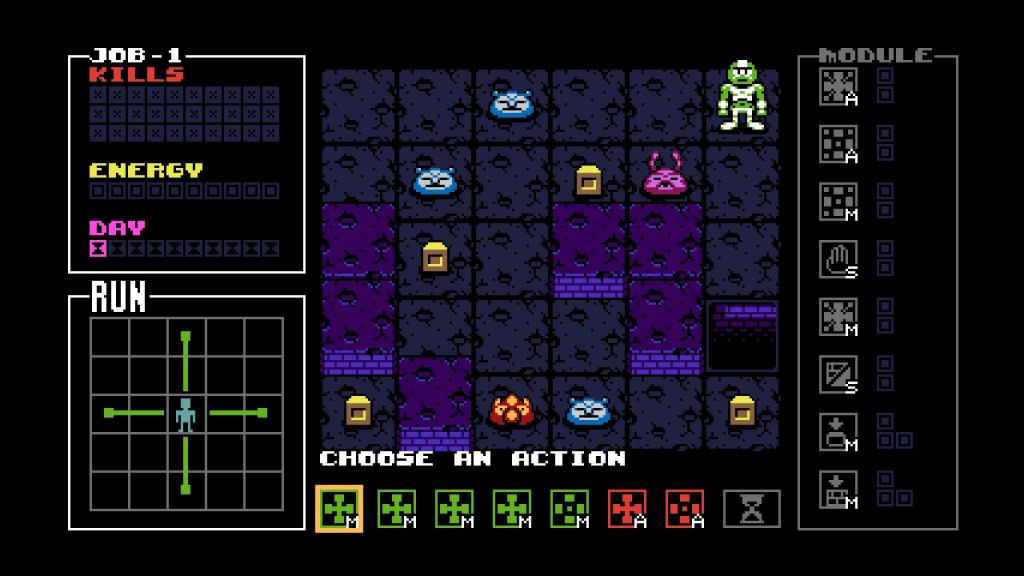
You could play each game from UFO 50 to completion and likely spend an entire year doing so. That’s part of the reason why I could never consider the game as a single entry on any list. I would feel compelled to write about each game individually, which is what I plan to do once I take the time to sit with the collection. Since I’m a boring person, I started from the top left and worked my way to the right. So with that said, I’ve only played a bit of Barbuta and Bug Hunter. They both seemed super interesting for their respective sub-genres, but I didn’t immediately fall in love with either of them. The former is challenging 2D platformer that feels like something along the lines of Faxanadu on the NES. The latter is a grid-based strategy game where you spend energy to select randomly-generated commands in order to squash bugs. I plan to play more UFO 50 in 2025, so maybe you’ll see a game or two (or three) on my list next year for “My Favorite Games I Played/Finished in 2025 That Didn’t Release in 2025“.
A “demo” I spent an inordinate amount of time with this year.

I wrote about The Big Catch back in January of 2023, thinking it was going to release the following year. There was never an official release date, however, only wishful thinking on my end. Games take a long time to make, especially debut titles from independent studios. Fast forward to IGN Live 2024 where The Big Catch was re-revealed alongside a brand new trailer and a publisher announcement. In 2025, XSEED/Marvelous will be publishing Filet Group’s debut release, The Big Catch. At the moment, The Big Catch appears to be exclusive to PC/Steam, but I can’t imagine it won’t find its way to other platforms, considering the type of game that it is. 2025 is looking to be another great year for games and while I’m looking forward to highly anticipated releases like Dynasty Warriors Origins, Monster Hunter Wilds, Split Fiction and whatever is in store for the Nintendo Switch 2, The Big Catch is what I’m arguably most excited about.
After the latest trailer and publisher reveal this past summer, the Filet Group released a prologue/demo of sorts called “Tacklebox” for PC/Steam. According to an update on their Kickstarter page, Tacklebox was supposed to be a backer reward for those who pledged. After much deliberation, the team decided to release it to the public (with the promise of creating a new reward for backers down the road). I didn’t hear about the game until after the Kickstarter was already funded, so I’m thrilled I got the opportunity to play a slice of the game along with everyone else. I’m here to report that The Big Catch is shaping up to be one of the best 3D platformers I’ve ever played and it’s also one of the most challenging and rewarding experiences I’ve had all year. I am currently drafting a separate blog post for the game, so keep an eye out for it soon…
The remaster I played and enjoyed the most during the year.
Remasters, remakes and ports are a dime a dozen these days. 2025 saw many rereleases in a variety of forms, some better than others. A part of me wanted to revisit LOLLIPOP CHAINSAW RePOP, but I didn’t hear too many great things about the port. I did hear that Shadows of the Damned: Hella Remastered is a fairly decent rerelease, however, I haven’t played it yet. The first Dead Rising game on the Xbox 360 is a masterpiece. Although I’ve read that the Dead Rising Deluxe Remaster is more approachable/forgiving than the original release, it’s missing a lot of what made the first game special. I played Disney Epic Mickey back on the Nintendo Wii to 100% completion. Even if it was disappointing in a lot of ways, I didn’t hate it. Since I’m a 3D platformer sicko, I really wanted to play Disney Epic Mickey Rebrushed, but it just wasn’t in the cards this year. I also picked-up the Tomb Raider 1-3 Remastered collection and played the first stage of Tomb Raider 1. I don’t think I was in the right state of mind to revisit these games either, but it’s cool that you can change the visuals and controls from classic to modern on the fly.
Did Horizon Zero Dawn Remastered need to exist? Probably not, but the remaster sure looks pretty. I was nearly tempted to revisit the first game, but I ultimately decided against it because there were far too many new releases in 2024 that I wanted to play for the first time. The Legacy of Kain: Soul Reaver 1 & 2 Remastered collection released in December, so there was no way I was going to start in then. I really want to replay Soul Reaver 1, though. They apparently added new and cut content including a map and a day/night cycle, respectively. Revisiting Soul Reaver 2? Not so much. Beyond Good & Evil was one of my favorite sixth generations action-adventure titles, so of course I was excited to see release of Beyond Good & Evil – 20th Anniversary Edition. It was sort of a Zelda-like with a really great cast of characters and an interesting SCI-FI setting. I haven’t heard too many people talk about the quality of the remaster, however. Finally, although they’re considered remakes, I really wanted to play both Romancing SaGa 2: Revenge of the Seven and Dragon Quest III HD-2D Remake, but I was already in the middle of a half-dozen other RPGs when they released, so off to the archives they went. So, which game was my favorite remaster of 2024?
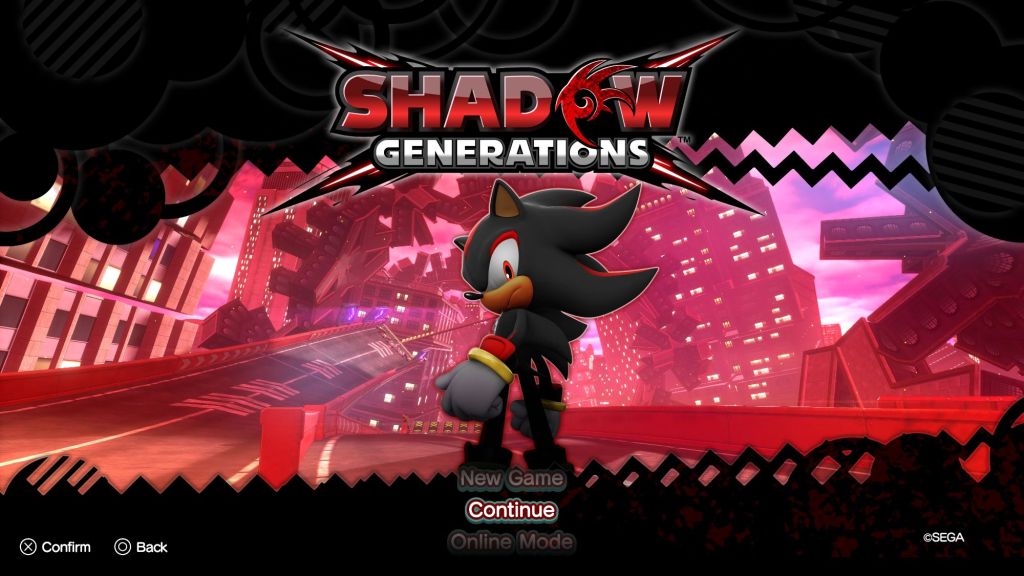
SONIC X SHADOW GENERATIONS, developed by Sonic Team, is a remaster of the 2011 Sonic Generations game and my favorite remaster of 2024. I first played Sonic Generations back on the Xbox 360 and completed it at 100% with all of the achievements unlocked. Unfortunately, I don’t think the original game has aged as well as I expected it to. The physics in Shadow Generations are vastly improved. Shadow has a proper double jump, for example, instead of the awkward forward-jump Sonic has in Generations. The disparage in quality could also speak to how much better Shadow Generations is compared to the vanilla content. Shadow Generations is basically the Bowser’s Fury of the Sonic Generations remaster. It’s a standalone, “full” game that can be accessed immediately from the title-screen. I’m not going to even begin to describe the story setup here, but the game begins in a white, Matrix-like room of sorts where only a single island/stage can be accessed. Similar to Sonic Generations, Shadow Generations consists of remixed levels from previous 3D Sonic games including Sonic Forces, Sonic Adventure 2, and even Sonic the Hedgehog (2006). The music, as always, is a treat.
It’s shocking how similar Shadow Generations feels to Bowser’s Fury. The white room is basically a big lake that evolves and expands as you progress through the campaign. The lake can even be traversed once you obtain a particular ability, which reminded me of jumping on Plessie from Bowser’s Fury. One of the big additions to Shadow Generations are the “Doom” abilities; new techniques Shadow learns over the course of the campaign that can be used both in the stages and in the hub area. “Doom Surf”, for example, allows Shadow to seamlessly cross surfaces of water. The “Doom Spears” are used to target switches and enemies with protective barriers. In the hub area, there are tons of treasure chests to discover which require the main collectables found in the stages. There’s also challenges which make use of all of your Doom abilities, but they’re more or less time trials based around obstacle courses. The stage design in Shadow Generations is 3D Sonic at its best. Each level has the numerous routes and shortcuts you’d come to expect, but the dynamic camera angles and perspective changes truly elevate the experience. There’s some really nice visual effects at play here too where the stages twist, turn and collapse on itself in real-time. It almost feels like you’re playing something made by Platinum Games.
This time around, I only rolled the initial credits on the Sonic Generations portion of the game. While I do enjoying collecting all of the red rings and going for S-Ranks, I’ve already done it all in the original version. I’m also not too hot on hunting down the new hidden Chao. The game may provide in-game hints for the Chao, but they’re some of the worst collectables to ever grace a 3D Sonic game. The last thing I want to do while playing a modern 3D Sonic title is to stop on a dime and look for miniature stuffed animals hanging out on a ledge in the corner of the screen. I completed Shadow Generations at 100% with all collectables. I still have two or three S-Ranks to earn on some of the late-game stage variations in Shadow Generations, but I did earn both no-damage trophies in both games (which wasn’t fun!) I will echo the sentiment that Shadow Generations could have been its own game and doesn’t particularly need the original release to do the heavy lifting, so to speak. I hope Sonic Team learned a lesson here and we’ll see the changes made in Shadow Generations carried forward to the next mainline release.

10 games I played/enjoyed during the year that would have made my Top 10, but ultimately didn’t make the cut. Disclaimer: For the sake of time, I copied and pasted what I had already written throughout the year for my entries here. Next year, I hope to be more concise with my writeups.

#HM10. Indika, developed by Odd Meter, is a 3rd-person, narratively-driven adventure game depicting the life of a nun living in a Russian Orthodox monastery during an alternative 19th-century Russia. If you like games like A Plague Tale and have an appreciation for film, you’re going to be right at home here. Others have said this already, but I’ll echo the sentiment; Indika feels like “A24: The Video Game“. The cinematography and camera work, especially, feels inspired. I don’t think I’ve ever seen a game do what this game does in terms of its presentation style. If there were ever a game that feels like an interactive movie, this is it. Indika is a weird, humorous and sometimes horrifying depiction of one woman’s struggle with their devotion to religion. At times, it reminded me of a SWERY game with its irreverence, jankiness and strange cast of characters. The game itself is about 3-4 hours long and most of the time it has you running from point-A to point-B solving simple environmental puzzles along the way. There are biblical collectables with scripture verses and such, which grant you “points” which can be used to “level-up” a nonsensical skill tree, but none of it matters and there’s no reward of benefit for finding any of the items. The developers actually tell the player not to focus on gathering “points” because it’s pointless, yet it’s still a system you can engage with. “Perhaps the same can be said of all religion?”.
The most interesting thing about the game mechanically is having the ability to shift reality once the “devil” starts speaking to you. During particular sequences, your character can start praying by holding down a button and the environment will shift in real-time, creating paths through otherwise impassible areas. When you’re not praying, the environment remains in this sort of Hell-like landscape where everything is drenched in red and in ruin. It’s here where the devil will continue to berate you with insults and doubts. This shifting reality gameplay mechanic is only used a few times, and considering the size and scope of the team, it’s honestly one of the most impressive things about the game. I think modern-day Silent Hill developers could learn a thing or two from Indika. The dialogue is actually quite funny and the performances are surprisingly good throughout. What also took me by surprise are these beautifully pixelated vignettes, which are interwoven between particular chapters. It’s here where you’ll learn more about the main character’s past in addition to performing mini-game-like sequences such as riding a bike around town or collecting coins in a top-down, Pac-Man-like maze. They’re really nice moments in an otherwise dark and depressing game. I completed the game with the Platinum trophy earned and I only had to look up a trophy or two since I couldn’t make sense of the descriptions for how to unlock them.
Despite going to a Catholic/private grade school for 8 years of my life, I fortunately did not have super religious parents. If I recall correctly, we were the type of family that started out by going to Sunday church religiously. At some point, we shifted to going to church only on the holidays and then eventually, we stopped going all together. By 6th or 7th grade, my brother and I, along with some of the “bad” kids in our (very small) classrooms, started to wear black nail polish and Marylin Manson t-shirts. The nuns and principal made us turn our t-shirts inside-out on dress-down day once. I even recall one kid taking one of those Cheez Whiz spout-top cans and spraying it over the sacramental bread during communion. We were those kind of bad kids. As we’ve gotten older, my father become more spiritual towards the end of his life. My mom is still relatively religious, but she doesn’t talk to us about it. My siblings, as far as I know, feel the same way about it all as I do. Suffice it to say, I have a strange relationship with religion, so in some ways I could connect with the themes in the game, but in other ways, I could not.
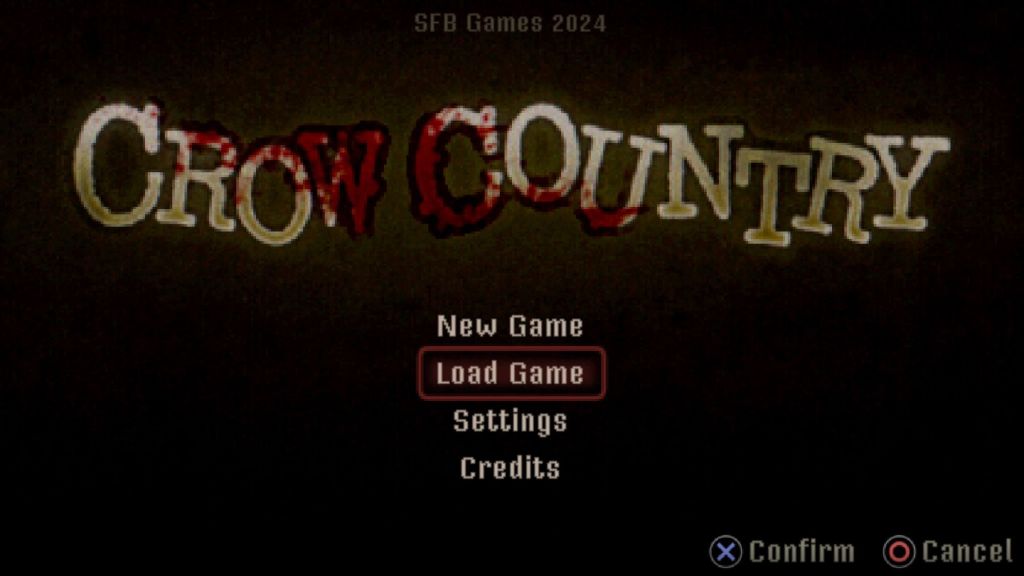
#HM9. Crow Country, developed by SFB Games, is a top-down, survival-horror game with a PS1 era aesthetic that feels like a love-letter to the older Resident Evil (RE) and Silent Hill (SH) games. The game takes place at an abandoned amusement park where you play as Mara Forest who arrives at the titular Crow Country to investigate the disappearance of the park’s owner. Crow Country has all the makings of a great survival horror game location; the game takes place in a super dense, interconnected space filled with themed areas, attractions, utility rooms, and other amenities. Naturally, much of the park is locked-up, so you’ll have to find keys and other items in order to unlock shortcuts and gain access to new areas. Most of the game is spent running around, collecting items, shooting monsters and solving puzzles. The puzzle difficulty can be quite challenging at times, even more so than engaging with any of the monsters. A lot of the puzzles require the player to pour over memos and notes left behind in order to solve them. You’ll often find yourself looking at all of the objects and props in the environment, as they can also provide clues, too. There’s one puzzle in particular where you need to count body parts on monsters that are projected in a haunted house themed attraction, but when you press a button to project the images, they only show for a brief second or two. Most of the puzzles are unique and quite satisfying to solve.
One thing I’m torn about is the game’s difficulty. Considering the sub-genre’s relatively challenging legacy, Crow Country is a surprisingly approachable and rather easy “survival horror” game. Even on the game’s “Survival Horror” difficulty, there’s no limited saves or inventory management. While you can only hold a certain amount of each restorative item, which I believe is 5, the game seems designed in a way to always provide the player with enough ammo and healing items to get by. There are trashcans and wooden crates scattered around the map and from my understanding, they will perpetually generate what you need if you start to run out of something. The crates are sort of a gamble, however, as while they can potentially contain an item, they require a single bullet to destroy. If you start to run low on ammo, searching trashcans will usually yield handgun ammo, at the very least. You’ll also find random shotgun shells and med-kits in corners of the map that also seem to respawn, whether on fixed intervals or, again, when you’re running low on them. Finally, enemies can be killed quicker if you are within close proximity and you can even pop heads if you target the monster’s melon (although, nothing here feels as good as the head-pops from the older Resident Evil games). There’s simple risk/reward systems at play here and it makes the game more interesting on the surface.
The soundtrack, by Ockeroid, is most-excellent. “Locally Feared Lawsuit Attorney” is one of my favorite tracks of the year; I can’t stress how much this piece taps into those brief moments of respite, which is something the original RE games captured so well. The “save room” music is great, too. Crow Country is an extremely enjoyable, yet light survival-horror experience. It’s not exactly replicating the survival horror games of yesterday, but there’s enough of that DNA here for veterans of the sub-genre to enjoy. More importantly, it’s very approachable for newcomers. I completed the game with an A Rank earned which unlocked a “Crow Bar’ and “Crownade Launcher”. Someone clearly loves old RE games and their unlocks. The ranking requirements aren’t too bad, either. The game ranks you based on heals, hints and lives used, in addition to how many secrets you’ve discovered. Discovering all of the secrets is the hardest thing about the game, honestly. There are many hidden elements tucked away in each area of the park and I somehow discovered them all on my own, which felt really good. I was tempted to go for the S Rank, but there were just too many other games I wanted to play during the year. The developer released an update to the game with some fixes and even a “Hard” mode, but I’ll revisit it down the road some day. Maybe everything will be okay…
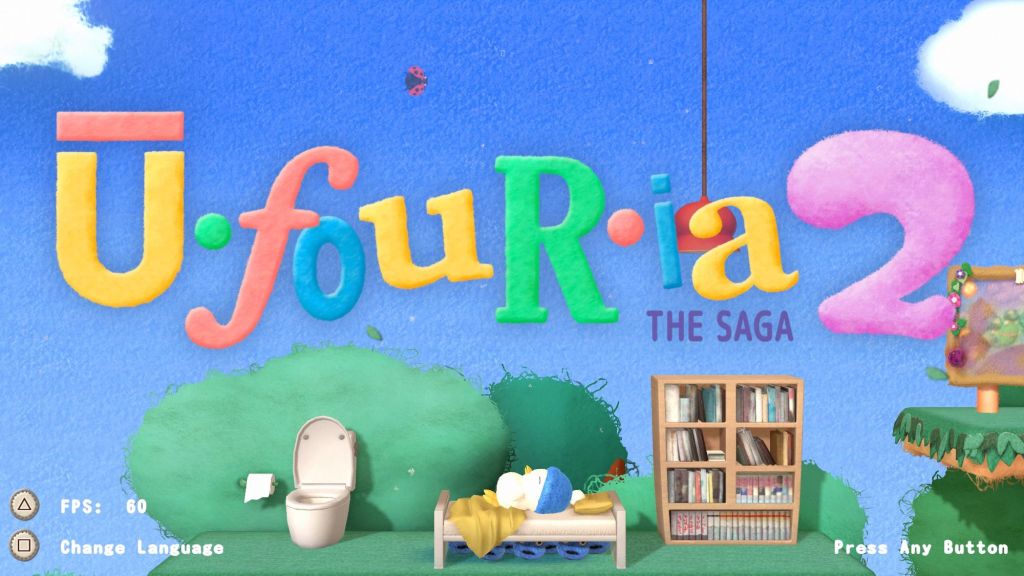
HM8. Ufouria: The Saga 2, developed by Sunsoft, is a sequel to the 1991 NES release that never saw the light of day in North America. Sunsoft is back with one of the most unsuspecting reboots of 2024 and it’s a super jolly affair. Ufouria: The Saga 2 is a simple 2D platformer with Metroid-like elements. You start as the cute and loveable Hebe (who I think is a penguin?) and along the way, you’ll meet your friends who will join you on your quest (after you buy them something they need). Ultimately, you’ll control up to four different characters who come with unique combat and traversal abilities. One friend can swim in water while another can float to out-of-reach platforms, for example. One of your buddies can even freeze enemies so that they can use them as a stepping stone. The game starts in a giant tree (where Hebe lives) and branches outward to a dozen or so stages. It’s a really cozy hub of sorts that gets updated based on the items you purchase from a vending machine. This vending machine provides the primary gameplay loop and it’s quite addictive, even if the whole experience is relatively short-lived. Every time you purchase a new item, you’re also treated to a cute vignette where Hebe and his friends talk about what they just bought and its hear where the writing shines.
The level design isn’t much to write home about, but it’s not without its interesting hooks and tucked-away secrets. From what I could gather, Ufouria: The Saga 2, unlike its predecessor, consists of randomly generated layouts (similar to the old Tenchu games, if you’re familiar). I believe the levels themselves are hand-crafted, however, each time you enter an area, the layout will be different. Levels consist of simple platforming sequences, enemies to kill and coins to collect. There are also Utsu-cans, which are the game’s main collectable. These cans are needed to progress through the game and are required to purchase new items from the vending machine, but a lot of them are optional for completion’s sake. While Ufouria: The Saga 2 feels like a 2D platformer made to be someone’s first game, its charm, writing and personality makes up for any of its shortcomings. The writing and characters are so endearing, it’s hard not to smile while watching these goofs interact with each other. The game also has a really nice art style with its use of feltwork and pixel-like beads. Sunsoft feels like it’s been making a comeback as of late and I’m here for it.

#HM7. Minishoot’ Adventures, developed by SoulGame Studio, is a twin-stick, top-down shoot ’em up with a twist. Instead of being a traditional horizontal/vertical arcade shooter, Minishoot’ Adventures is an exploration-based adventure game with Zelda-like elements; an unsuspecting hybrid of genres that’s arguably never been done before. There’s been games like Sigma Star Saga on the GBA, which was an action-adventure, almost Zelda-like game with both on-foot action and horizontal shooter sequences, but there’s been nothing quite like Minishoot’ Adventures from what I’ve played over the years. At the start of the game, you awaken as a ship and learn that the world has been taken over by a hostile force of alien machines. A disembodied voice speaks directly to you and reveals that you’ve been granted powers to fight back against the oppressive force that’s taken over the planet. What’s interesting about the game is that you never see the pilot of your ship. It’s sort of implied that both you, your allies and the enemies are sentient space ships. To simply cut to the chase; Minishoot’ Adventures is a joy to play.
It just feels good to fly around and shoot down enemies. Unlike a lot of shooters, Minishoot’ Adventures is not an arcade-like experience. Instead, it’s a rather approachable and beginner-friendly hybrid of sorts. You’re constantly being rewarded for shooting down enemies and exploring the map. Destroying enemies earns you red crystals, and once enough have been collected, you’ll gain a skill point that can be used to upgrade your ship’s abilities. A lot of the ship upgrades are actually the types of power-ups you’d find in traditional arcade shooters; ship speed, fire rate, boost power and more can be permanently upgraded. Over the course of the game, you’ll slowly unlock pieces of the map, shortcuts and wraparounds. The entire game is interconnected like one big Zelda overworld. The Zelda inspiration is strong here too; there’s even a screen near the hub area that is pretty much a tribute to the screen from Zelda 1 south of the starting point where you enter a cave to get your sword. My only major issue with Minishoot’ Adventures is that the enemies, bosses and environments all sort of blend together. Most of the ships you’re fighting volley projectiles at you in random, wave-based, or bullet-hell-like patterns. Some enemies might dash or hop around the screen while others have barriers to block your attacks. There’s no bestiary either, which the game could have benefitted from in terms of providing additional lore/details for the ships you’re fighting. The art style is simple and clean, but the color palate could have used some variety. There’s just a bit too much yellow, brown and green.
MINOR SPOILERS: Not every game has to do what NieR did back in 2010. Although it sort of fits the narrative in Minishoot’ Adventures, I’m not the biggest fan of the “ultimate” reward for doing everything the game has to offer. After you beat the true final boss and complete the arena, which basically means 100%’ing the game, you’re given the decision to delete your save file. The story suggests that the ship that was awakened and granted powers before you rejected the offer of relinquishing their power to the giant, god-like orb in the sky. It’s definitely a cool idea and was something I was not expecting at all, but after playing the game for 15+ hours on the hardest difficulty, collecting and upgrading everything in the game, I didn’t exactly feel compelled to feed the game’s larger narrative. Minishoot’ Adventures doesn’t exactly earn its meta-narrative here, at least not for me. It’s a twin-stick shooter with Zelda/Metroid-like elements at its core, not the emotional investment NieR was. What’s even more frustrating is that there’s a single steam achievement for deleting your save file, so at the time of writing this, I am sitting at 33/34 achievements earned. I might pull the trigger at some point (if I can backup my save file on a thumb-drive, just like I did with NieR on PS3 back in 2010), but for now, I’m good.
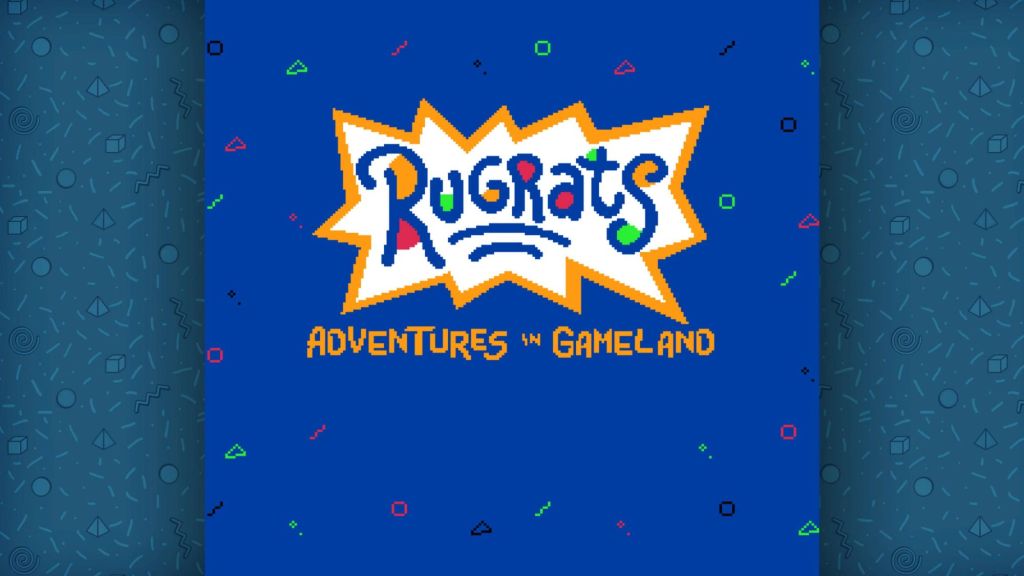
#HM6. Rugrats: Adventures in Gameland, developed by The Media Indie Exchange and Wallride, is a 2D retro-inspired platformer based on the Nickelodeon cartoon. In Adventures of Gameland, it’s just another day in the Pickle’s household. While the parents get dinner ready and grandpa falls asleep, Angelica, the older “bossier” kid has ordered the Rugrats to do her bidding. Suddenly, on the TV, a commercial starts playing for a new “Reptar” video game. If you’re unfamiliar with what a “Reptar” is, think of it like a cooler Barney for kids in the Rugrats universe. From there, the babies set off to collect the “money” they need hidden in the house, thinking they will be able to purchase the video game behind the TV. The game does a decent job at depicting what it’s probably like being a baby; everything is big, loud and scary. For a baby, the space underneath the refrigerator is probably like taking a trip to outer space and that’s exactly the types of ideas Adventures in Gameland plays with. Each level starts with an intro sequence where you have to figure out how to enter the stage in the “real world”. There’s no enemies and it’s usually comprised of a screen or two where you need to do a little platforming to find the entrance to the level proper. It’s here where you’re usually greeted by a pixelated rendition of each parent from the cartoon and it’s all rather charming. I really like the conceit of the game.
Adventures in Gameland is a really short, mildly difficult NES-style 2D platformer. After the introduction level, which is basically paying homage to the cartoon’s title-card sequence, you can select from a handful of stages based on specific rooms from the house. The map screen is very Mega Man-like in its presentation; you can enter the attic, kitchen, backyard, and more. Each level culminates with a classic boss character from the cartoon, too. After selecting your stage, you can choose to play as either Tommy, Chuckie, Phil or Lil. Each character has different stats; Jump and Lift. The higher the “Jump” stat, the bigger the jump. Tommy is rather balanced, naturally, and think of Chuckie as the Luigi of the Rugrats universe. I believe the “Lift” stat effects how quickly you pick-up objects. Once you select your character, the game will show an introduction screen to the stage in a similar fashion to how the cartoon displayed the episode name before the show started. Very cool. The game is pretty simple; you can walk, jump and pick-up objects in the environment to throw at enemies. The goal of each stage is to collect all 4 “Reptar” coins hidden throughout the level and find the screwdriver so you can lift the “baby playpen” door guarding the boss of the stage.
The stages are surprisingly semi-non linear, too. Each screen is connected and you can even go back to previous screens if you missed something (which wasn’t always the case in a lot of NES era platformers). The boss portraits may look intimidating to a kid, but they’re mostly pushovers, even on the highest difficulty. It’s fun to see particular characters from the show represented as boss-like characters, though. I was always scared of “Big Boy” Pickles from the “Angelica’s Worst Nightmare” episode. He’s terrifying! The boss track in Adventures in Gameland is wild as well. Hearing double bass drums while playing a Rugrats game in 2024 was not on my bingo card. Speaking of the soundtrack, the music kind of rules. I especially liked the Living in the Fridge track, but all of the music is pretty good and very catchy. You can play the game in “8-bit” or “HD” mode, which changes both the visuals and soundtrack. I prefer the “8-bit” graphics mode with the borders, but I like the “HD” audio tracks when it comes to the soundtrack. The game is also 2-player, but I played it by myself, so I can’t speak to how the multiplayer is.
The “hardest” thing about Adventures in Gameland is probably unlocking the character-specific trophies for holding 4 cookies at once. Your health is represented by a baby bottle (of course) and once it’s depleted, unless you have a cookie, it’s game over. The cookies essentially act as consumable “energy tanks” from Super Metroid. Considering the type of game Adventures in Gameland is, it can be quite frustrating finishing a level without getting hit in order to retain all of your cookies. Enemies will respawn constantly off-screen and some levels are a bit more challenging than others. Fortunately, the game saves your cookie stock after you beat a level, so if you can manage one of the levels with few hits, you can easily replay the stage a few times until you collect your four cookies. If you’d like my GameFAQS PRO Tip of the Day; Somewhere in Dream Land is probably the easiest level to grind cookies. After you beat a stage once, you don’t have to fight the boss again, either. I completed the game on Big Kid difficulty with all coins collected and the Platinum trophy earned. I would absolutely play a sequel to this game.
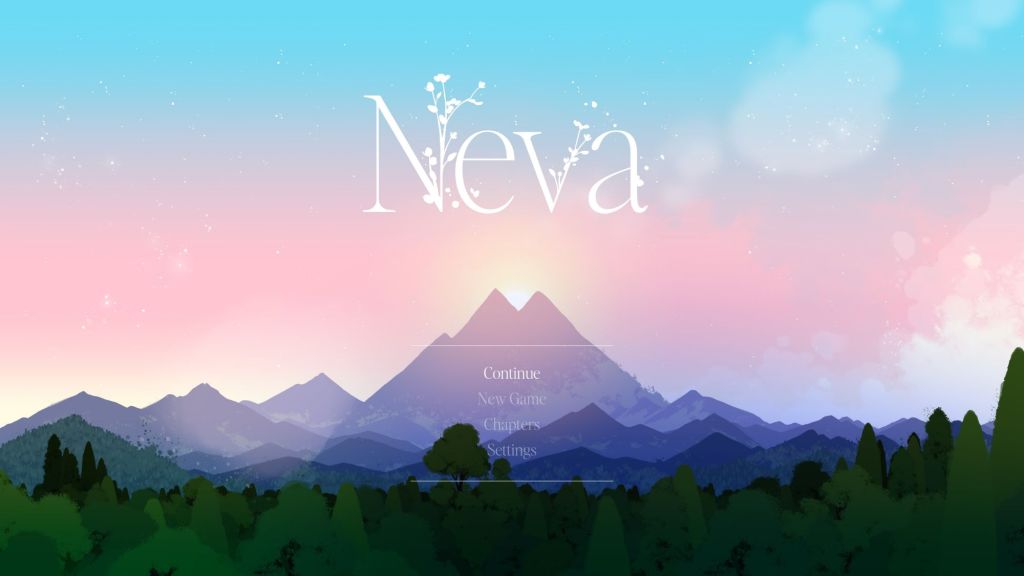
#HM5. Neva, developed by Nómada Studio, is a 2D action-platformer from the creators of GRIS. Just like their first game, NEVA is a minimalistic adventure game with no spoken dialogue. Everything is told through the art, cinematics, animations and environmental storytelling. The game is visually stunning, even more so than GRIS. Nearly every frame looks like a painting. The game takes place over a year and each chapter represents one of the seasons. You play as a woman called “Alba”, who appears to be some sort of warrior guardian of the forest. The game opens with a stunning animation sequence depicting Alba and Neva fighting off a wave of dark creatures. Neva, your wolf-like guardian spirit grows along with you as the seasons change. It’s all handled very organically, too. In the Summer, Neva is basically a pup and is insecure about their actions. When jumping large gaps, Alba has to sort of guide and assist Neva, almost like how a guardian/parent would do. In the next season, Neva has grown and becomes more independent. You’ll find Neva running ahead of you, jumping across gaps without aid. While GRIS was arguably about motherhood, I believe Neva is simply about parenthood/guardianship.
The game itself is a simple 2D action-platformer with some light puzzle elements. Neva certainly fits the bill of a cinematic-platformer as it’s not unlike games like Another World, Heart of Darkness or INSIDE, for example. As I mentioned above, it’s similar to GRIS in terms of structure and pace, but even more so than the developer’s first game as the puzzle-solving takes a backseat to the action-platforming elements. Combat takes place in small arena-like rooms and while there isn’t a ton of enemy variety, the encounters are just interesting enough to keep you engaged. Alba can swing their sword, roll and even perform an air dash. You can also regain health by attacking enemies, otherwise, there’s no way to restore your character’s health outside of hitting a checkpoint. The camera zooms out far at times too, so some of the platforming can feel a bit tricky, although the game never asks a lot from the player in terms of traversal. As per usual, the music by Berlinist is exceptional. Neva is a brisk, five hour jaunt. It’s a very approachable game and nearly perfectly-paced. I completed the game at 100% with all flowers collected and the Platinum trophy earned. Similar to how I felt about GRIS, I just wish the game resonated with me a bit more than it did.

#HM4. Prince of Persia: The Lost Crown, developed by Ubisoft Montpellier, is the latest entry in the long-running Prince of Persia franchise. It’s a competently-made, 2D action-platformer/Metroid-like that’s perhaps a bit too long for its own good. I honestly couldn’t tell you what happened in The Lost Crown. It didn’t help that the game was very long, considering the subgenre it’s derived from. I also played it off and on for about a month, so perhaps it’s my fault for not following the story too well. There’s kings, queens, warring nations, and a prince who’s been kidnapped. The game also sets up a motley crew of sorts at the beginning, where everyone is on the same side with a single agenda, but you ultimately end up fighting a lot of your allies by the end. Just like some of the other entries in the franchise, time travel is involved here and a lot of the game’s lore and backstory is dumped into collectable items accompanied by huge walls of text, which isn’t always my favorite storytelling device in games. With that said, the performances are good. Your main character, Sargon, is likeable, and the cutscenes and animations are great, too.
The best things about The Lost Crown is how it feels to control the Prince and the immaculately designed boss battles, which are arguably two very important factors when it comes to a Metroid-like. The exploration is great and the character-progression and traversal upgrades are doled out at a decent pace, even if the classic double jump maneuver is given to you rather late in the game. It just feels good to jump around, swing on poles and slide under enemies. You can also upgrade your main character with “Amulets”, which essentially act as passive/active abilities; one amulet might increase your attack power when at full health while another might indicate on the screen when a treasure chest is nearby. These amulets are game-changers on the highest difficulty and I found myself enjoying the process of tinkering with my build to kill bosses in an efficient manner. There are also side quests to complete, costumes to find and hidden coins to collect (similar to the strawberries from Celeste), including some rather challenging platforming sequences to overcome. Prince of Persia: The Lost Crown truly feels like the complete package, so it’s even more tragic that the team has been disbanded by Ubisoft.
I completed the game at 100% on Immortal difficulty and as much as I enjoyed my time with it, I don’t think this is a game I will want to replay anytime soon due to its length. It took me somewhere between 35 and 40 hours to see and do everything the game had to offer. Unlike Super Metroid or other games in this subgenre, it doesn’t have unique end-screens based on how quickly you finished the game or how many items you collected. I’m sure speed-runners will find their way through the game in an efficient manner, whether through legitimate means or sequence-breaking glitches, but its overall length doesn’t exactly lend itself to traditional replay value. The developers eventually released additional free content, including a paid expansion called “The Mask of Darkness” (which was great). For whatever reason, even though I enjoyed the game, I don’t feel compelled to come back to The Lost Crown for the “Speedrun” or “Permadeath” modes. As I said, the game is far too long to even consider replaying the game under those conditions. Perhaps I’m just not the audience anymore for features like this, however. Although I ultimately took issue with some aspects of the game, I would have absolutely played a sequel.
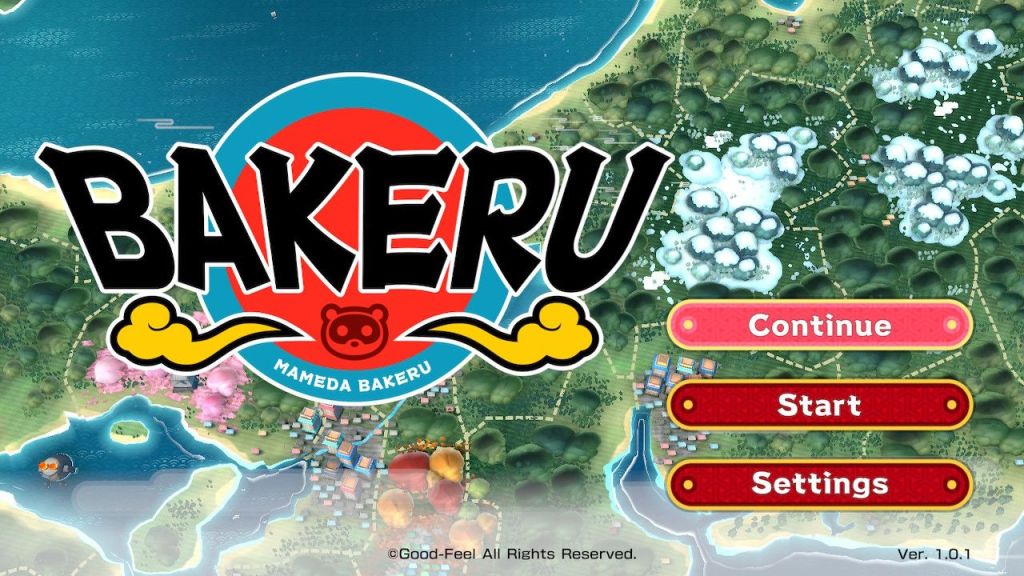
#HM3. Bakeru, developed by Good-Feel, is a 3D action-variety-platformer and a spiritual successor to the Mystical Ninja/Goemon games by Konami. Bakeru was first revealed during a Japanese Nintendo Direct. The game was unceremoniously announced back in 2020, and for many years, there was rarely an update on whether or not the game still existed. The game finally launched in November of 2023, but only in Japan. With each passing year, I feared it was going to stay exclusive to the east. It almost felt like we had another “Operation Rainfall” on our hands. We now live in a time period where pretty much every notable Japanese game gets localized, so I found it odd that Nintendo of America continued to not acknowledge its existence. Now that I’ve finally played/finished the game, I sort of understand why it took so long to come west and why Nintendo of America likely opted out of the localization efforts. Bakeru is very Japanese, but I say that with the upmost respect. After an introduction sequence, you’re introduced to Oracle Saitaro and his Festival Troops. Saitaro and his gang are planning to take over Japan with their festival of shenanigans, so it’s up to Bakeru and company to put a stop to his evil schemes. Along the way, Bakeru will encounter legendary characters from Japanese fairy tales, including Urashima Tarō and Momotarō, for example.
Considering the developer’s legacy, a lot of the game feels like it’s a studios first attempt at making a 3D game. The levels are surprisingly big and sprawling, yet relatively flat. While Bakeru is sort of a 3D platformer at heart, it’s more action-oriented than I was expecting and there’s a lot of gameplay variety (or AGS, if you’ve read one of my quarterly updates). Bakeru’s main weapon is a pair of taiko drumsticks. You can perform consecutive attacks by pressing the shoulder buttons in a almost rhythmic-like fashion. You can also perform perfect guards/perfect dashes and then immediately launch right into a counter-attack. By defeating special bosses (based on the aforementioned Japanese fairy tale heroes) in the first part of the game, you learn unique powers in an almost Mega Man-like fashion. These abilities are treated like transformations and require consumable energy in order to activate. One of the transformations allows you to shrink to a mouse-sized character so that you can access hidden areas. This is the only transformation that allows you to interact with the environment, which I found relatively disappointing. The other powers are simply used for combat. I particularly liked the gun-slinging transformation as it allows you to completely decimate enemies from afar.
While most stages are your standard 3D platforming affair, there are rail-shooter levels and Mario Kart-like racing tracks to break-up the pacing. These diversions aren’t anything to write home about, but they’re mostly inoffensive, never overstaying their welcome. The game has a handful of these types of stages, however, so they sort of lose their luster after the first few levels. There’s A LOT of stages in Bakeru and most of them are BIG. I think the game is perhaps a bit too long and is a little one-note throughout, but it does do a lot of little things that I appreciate. For one, the enemies really bring the game to life. At times, it almost feels like you’re playing a Treasure game. Considering Good-Feel’s legacy with Konami, it’s no surprise that I feel this way. While most enemies don’t pose a threat (the game is relatively easy), there’s a ton of personality in their actions. In most stages, enemies are sort of “doing their own thing” until you so rudely interrupt them. In a hot springs/bath house level, for example, some enemies might be chilling in the water, relaxing on beach chairs or even scrubbing the floors.
What’s weird about the stage design is that there is so much detail and a ton of background assets that you simply can’t reach or interact with. The Nintendo Switch has seen better days. Bakeru doesn’t exactly run the best on the now-dated hardware. When there’s a lot going on, there’s definitely a degree of slowdown. The size of the levels can’t be helping its performance issues either, so I wonder why they made the levels so big to begin with. With that said, the game has such a nice, clean, colorful look to it. It’s well-animated with expressive characters and fun cinematics. There’s no English voiceovers, but the localization seems decent. What’s interesting about Bakeru as that it’s also sort of an educational game. For one, the game has you exploring all 47 prefectures of Japan. In every level, there are literal pieces of poop to collect, which unlock general facts called Scoop Trivia, most of which are about Japan, its history and geography. Bakeru also has a lot of composers who contributed music to the game, including Satoshi Okubo, Kosuke Inoue, Shinji Yoshikawa, and Eri Tanaka, just to name a few. I’m not super familiar with their work, but a lot of the tracks are evocative of the types of pieces you’d hear in the Mystical Ninja/Goemon games. Wakayama is pretty chill, too.
These little buggers are relatively well hidden, too. In addition to collecting literal pieces of shit, you can also find hidden Tanuki in a handful of the stages. The Tanuki are pretty tough to find, too. They often disguise themselves as scenery in the environment, like a trash can or signpost. After you whack them enough, the Tanuki will reveal itself and join you back on the ship. The more Tanuki you collect, the more upgrades you can access for your Bunbuku robot form. At certain points in a stage, you can purchase consumable items that can temporarily boost your attack power and even maximum health upgrades with the coins you collect. The Bunbuku upgrades are the most expensive purchases in the game, however, including an end-game gold cosmetic for your ship and robot, respectively. Just like in the Mystical Ninja/Goemon games, you’ll face kaiju-sized bosses while piloting your robot. These encounters feel like a basic 3D fighting game where you can punch, guard and dodge. They’re not very difficult, but it’s certainly a highlight and a spectacle nonetheless. I completed Bakeru at 100% with everything collected; all souvenirs, Scoop Trivia and Bunbuku upgrades. In classic Nintendo fashion, you get nice gold icons on your profile if you’ve collected everything in the game. Between the two Good-Feel games this year; Princess Peach Showtime! and Bakeru, I much prefer the latter. Here’s hoping Good-Feel continues to provide interesting platform-adventure games for the successor to Switch.
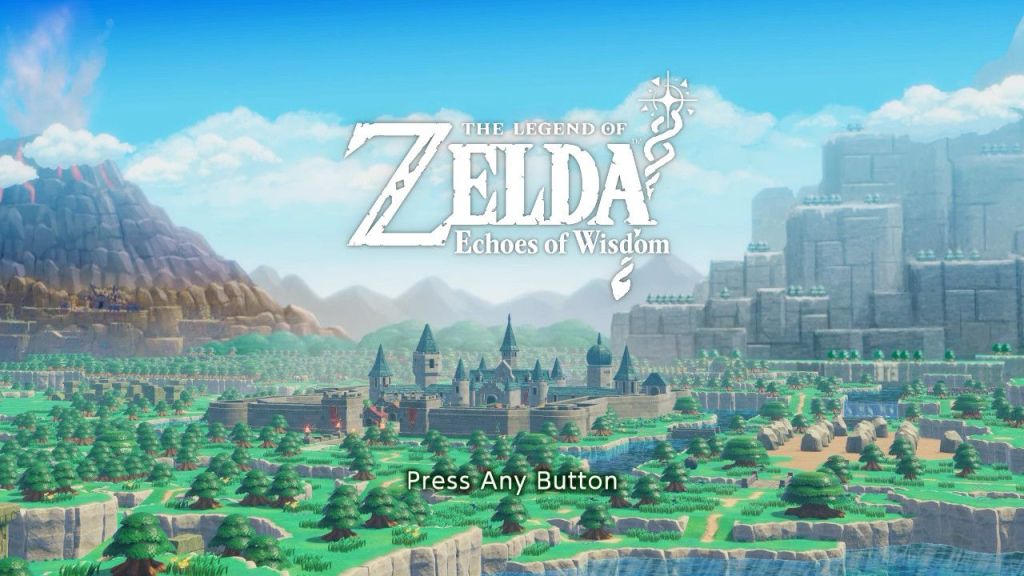
#HM2. The Legend of Zelda: Echoes of Wisdom (EoW), developed by Nintendo/Grezzo, is a traditional, top-down Zelda game that attempts to distill the design philosophies established in Breath of the Wild/Tears of the Kingdom, for better or worse. According to Nintendo, the game officially takes place before the first Legend of Zelda on the Nintendo Entertainment System (NES). I’m not one to dwell on the official timeline, but it feels strange that this game apparently predates the events of the “first” game chronologically. I like the stories and characters in Zelda games well enough, but it’s not exactly what I’m here for. In EoW, the game begins with Link attempting to destroy Ganon, but he ends up getting captured and succumbs to the “Still World”. All over the land, parts of Hyrule are being consumed by rifts; purple voids that devour the land and spirit away the denizens of Hyrule, if they get swallowed up by it. Sometimes, evil imposters of those taken by the rifts remain on the surface to cause problems. Along the way, Zelda will encounter classic Zelda species like the Zora, Gorons and the Gerudo to help her mend the world and save Link.
The big gimmick in EoW are the Echoes; objects and monsters that you can learn and summon at will. The bed is one of the first Echoes you learn in EoW, for example, and it pretty much carries you throughout the entire game, at least in terms of traversal. I’m not sure why they made the bed so easy to summon. To conjur any Echo, you need to expend one of Tri’s triangles. By completing both main and optional rifts around Hyrule, you’ll gain more triangles for Tri, including upgrades to lower the cost of higher-level echoes. Once you upgrade Tri to an extent, you can get around the world with little to no effort. The bed also allows you to sleep and recover hearts. There’s even Zelda’s own bed as an Echo which increases the amount of hearts and their recovery speed. On Hero mode, you cannot obtain hearts from cutting grass or destroying enemies. You must either refill your health by sleeping in beds, drinking potions, using fairies or obtaining heart containers. The bed is simply overpowered no matter how you look at things. With that said, enemies and environmental hazards can easily destroy your beds, so at the very least, you need to find both a safe place and enough room to use them properly.
EoW’s combat is fine for a first attempt (as it’s something that’s technically never been done before in the Zelda franchise), but it needs a lot of work. Zelda herself doesn’t have a primary attack (unless you transform into “Link”, but more on that later). Similar to summoning objects to traverse the land or solve puzzles, you can learn any enemy in the game as an echo (after you beat them for the first time). While the echo/enemy AI is mostly competent, I often felt like the echoes were a bit too slow and the “dance”, so to speak, between the enemies and echoes just didn’t feel totally engaging. What seems rather divisive amongst the community is the “Link” transformation or what the game calls “Swordfighter” form. Zelda more or less transforms into Link and can swing a sword and ultimately use a bow for ranged combat and even throw bombs (which I never used). She can also create “automations”, which I also never engaged with because I didn’t discover them until late in the game and the game doesn’t really ask anything from you in terms of encounter composition or boss designs once you learn a handful of the stronger echoes. That’s one of the game’s main problems, you have so many options at your disposal, but there’s rarely a need to experiment with any of it.
I completed EoW at 100% with everything collected; all Echoes and heart containers collected, and side quests completed. I also finished all of the arena-based challenges under their par times in order to earn unique stamps on the menu screen. Additionally, I made all recipes, even though I rarely had to use any potions (even on Hero difficulty). In classic Nintendo fashion, you do get a special message for concocting all of the potions. At the end of the day, if a Zelda game has themed dungeons with handcrafted puzzles, heart containers to collect and good music, I’m likely to have a good time. EoW mostly hit those beats for me, but I was left wanting something more from it. Last year, The Legend of Zelda: Tears of the Kingdom claimed my #1 spot for game of the year (GOTY). This year, EoW has been relegated to my honorable mentions. As much as I like the new direction Zelda has taken with BotW/TotK, I do hope Nintendo continues to make less ambitious, “smaller” Zelda games like EoW to accompany their big-budget, more ambitious releases.
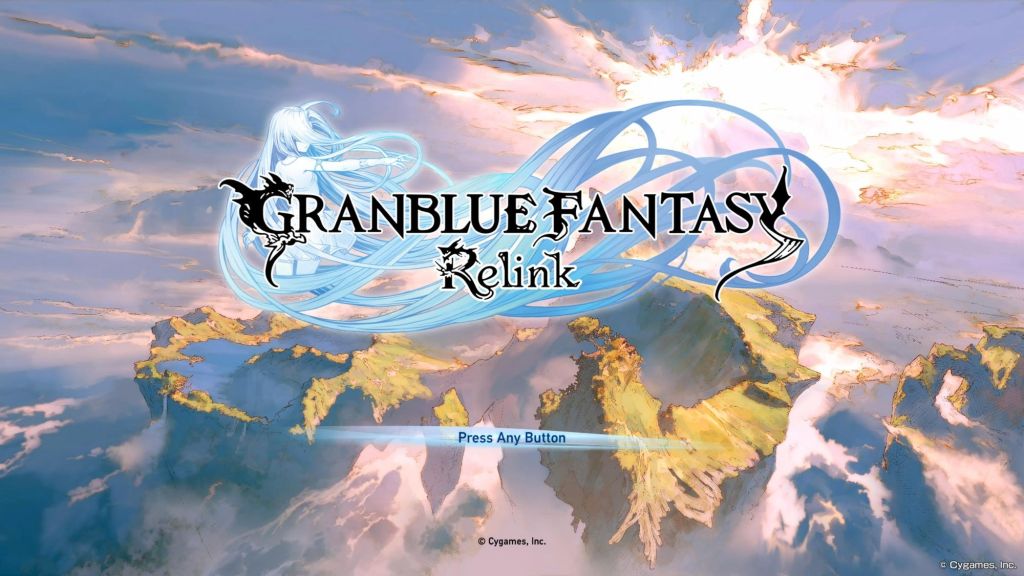
#HM1. Granblue Fantasy: Relink, developed by Cygames, Inc., is the console adaption of the popular mobile game, now an action-RPG in the same vein as Ragnarok Odyssey back on the PS3/Vita. Relink has an interesting development history. At one point, Platinum Games was working on it, but they were eventually removed from the project. Relink is an action-RPG at its core, but there’s a lot of character-action game elements, which can certainly be attributed to Platinum’s DNA. I’m also not familiar with the mobile game, but I know it has Gacha elements. It’s interesting to see how the developers distilled some of the mobile game features into a game made for consoles. Relink has a surprisingly competent single-player campaign. The game consists of 10 chapters packed with beautifully directed cinematics, amazing set-pieces and incredibly epic boss battles. Similar to how I felt about Dragon’s Dogma II, Relink does things Final Fantasy XVI was trying to do, but better. The game also has a colorful, almost painterly-like, watercolor aesthetic. The character models are expressive and stylish, and the overall look of the game is just super clean. There are a ton of characters to play as in Relink, too. I mostly stuck with Gran (the captain) for the majority of my single-player playthrough.
While you start with a small crew of Skyfarers, you can unlock more by earning special cards/tickets from completing quests and such. What I didn’t expect is that each character, although they may share elemental affinities, play completely differently from each other. One character, Rackam, has a gun that can charge powerful shots based on a unique meter that can overheat. Each character also has unique weapons and skill trees where you can further customize their capabilities. The skill trees are very big and a lot of the passive stat upgrades and new abilities can’t be unlocked until you access the post-game difficulties. You can only equip four abilities at once, but there’s a lot to choose from once you start unlocking a lot of the abilities. Gran is arguably a support class, with his healing circle and spells that buff the party’s strength and defensive powers. Some have said that the single-player campaign is sort of a tutorial for the end-game content, but I don’t entirely agree with that sentiment. I completed the story mode on Hard difficulty and unlocked Chapter Zero, a post-game epilogue of sorts with some additional story beats. In addition to more quests on higher difficulties, you can replay the story chapters to discover any remaining treasure chests, hidden slime pots, and Wee Pincers (the little collectable hermit crabs). I really enjoyed my time with Relink and I hope to play a lot more of it in 2025.

The 10 games that resonated with me the most this year. Disclaimer: For the sake of time, I copied and pasted what I had already written throughout the year for my entries here. Next year, I hope to be more concise with my writeups.
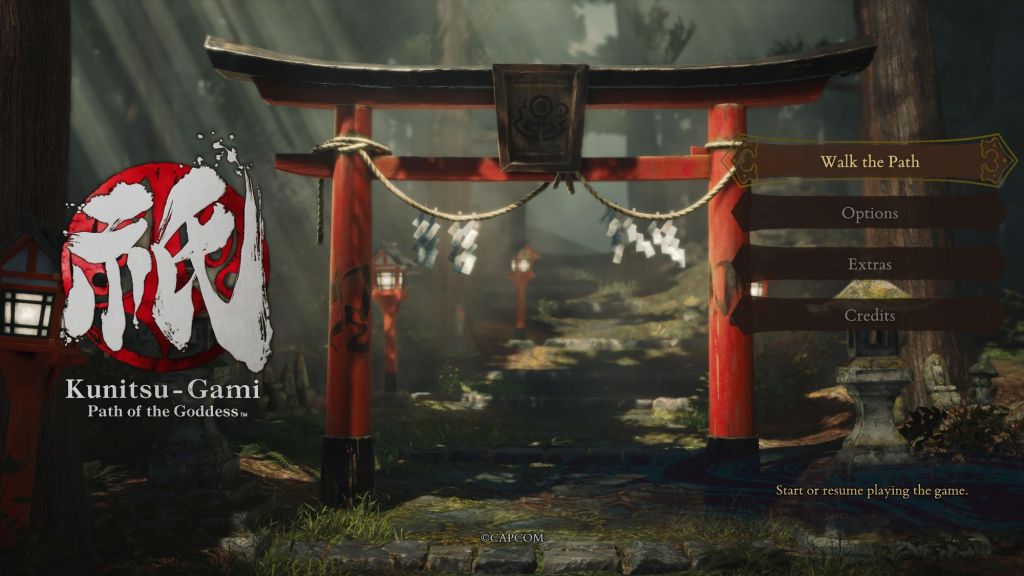
#10. Kunitsu-Gami: Path of the Goddess, developed by Capcom, is a hybrid of genres that blends real time strategy game (RTS) mechanics with light character-action game elements. I’ve been saying this a lot lately, but Kunitsu-Gami truly feels like a PS2 era game, something that would have sat alongside Capcom’s very own Chaos Legion, for example. It was clearly made on a budget, but you can tell that a lot of love and care was put into it as well. In Kunitsu-Gami, you play as Soh, a warrior who is assigned to protecting the divine maiden, Yoshiro, who must descend Mt. Kafku in order to cleanse the various villages of “defilement”, a darkness that has plagued the land. The game primarily consists of RTS levels and traditional boss stages. The RTS levels are comprised of a day and night cycle. During the day, it’s Soh’s job to gather resources, assign rolls to villagers, and generally prepare for the ensuing night of horror. Crystals, one of the game’s primary resources, are used for a variety of means, including assigning roles to villagers or carving the titular path of the goddess. The goal of each stage is to get the goddess to the gate and crystals are required to carve the path. Since assigning villagers roles also requires crystals, you’ll find yourself making tradeoffs, seeing how few villagers you need to “get to the goal”, in a sense.
When dusk falls, demons and monsters pour out of various gates and they only have one goal in-mind; to destroy the maiden. By placing villagers in certain positions, they’ll attack, defend and act independently based on their role’s traits and characteristics. The Archer role, for example, has a bow and can attack enemies from afar, including flying monsters. The Woodcutters use their axes to attack enemies aggressively when they’re within range. One of my favorite roles is the Sumo Wrestler who are more or less tanks that draw enemies towards them. After a stage has been purified, the space turns into a base where you can enter and explore at your own pace. It’s here where you’ll repair various buildings and structures to earn items and other goodies like “Musubi”. The Musubi are used to upgrade your villager’s roles, which can include increased HP, attack power or enhancements to their respective abilities. Certain buildings/structures take multiple days to restore, so you need to play a new mission (or replay a previous one) in order to make progress. Each stage reveals optional objectives after you complete it for the first time, too. Some of them are fairly challenging and might ask you to not have Yoshiro take damage or use no healing items (rations), for example. There’s a great gameplay loop here and it all feels very rewarding to engage with.
One aspect I really appreciate about Kunitsu-Gami was how it was made. Apparently, the makers created real miniatures which were then scanned and turned into 3D models. It’s a similar approach to how FANTASIAN was made. That personal, innovative touch goes a long way with me. Finally, the monster/demon designs look incredible. I completed Kunitsu-Gami with everything there was to do on the first playthrough; all Talismans unlocked, all abilities purchased for Soh, all unique treasure chests opened and all optional challenge objectives completed for each stage. There is a new game+ that’s apparently more difficult, but it’s the only way to max out your villager’s roles. There’s even a true final boss at the end of the second playthrough, so to earn the Platinum trophy, you at least have to play it twice. I might replay the game in 2025, but for now, I was happy to roll credits. Capcom continues to be on a roll lately. Alongside their big, “AAA” releases, it’s nice that they’re still tasking smaller teams to create experimental, genre-blending experiences that remind us of the “good ol’ days”. I’m not sure how well Kunitsu-Gami did financially, but I hope we get more games like this from Capcom in the future.
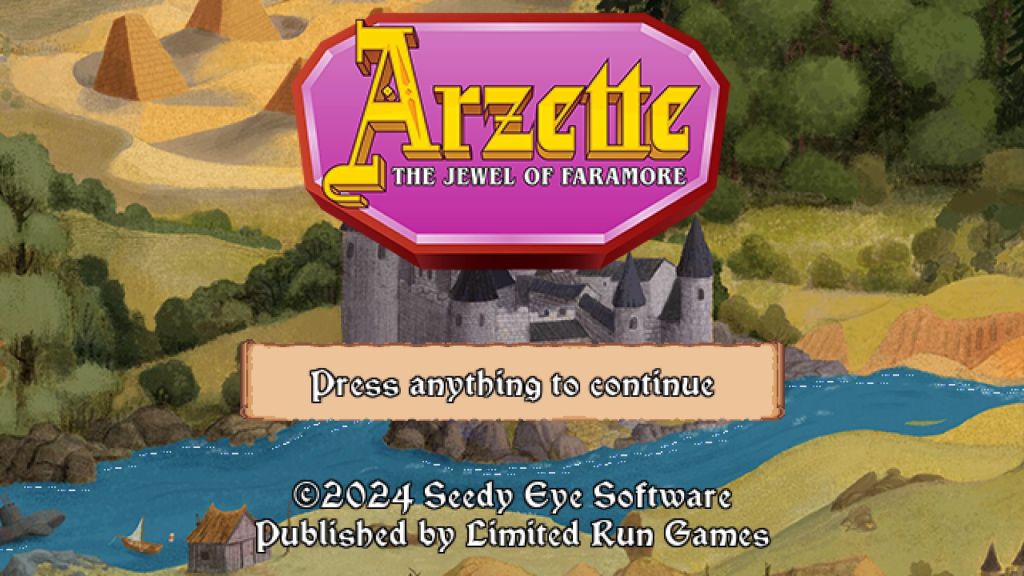
#9. Arzette: The Jewel of Faramore, developed by Seedy Eye Software, is a tribute to those terrible Zelda CD-I games no one played. I impulse purchased this game digitally since I didn’t want to wait 6-12 months for the physical copy from Limited Run Games (LRG) (I double-dipped, by the way). Anyway, this game rules and I completely devoured it in about a week or so. Like most people, I haven’t played the Zelda CD-I games, but I’ve seen people stream the games before and I’ve watched YouTube videos about them, too. Despite being a spiritual successor to those games, Arzette feels more akin to games like Wonder/Monster Boy and Zelda II: The Adventures of Link.
Arzette is a simple game, but it’s fun and doesn’t overstay its welcome. It also nearly captures the immediacy of the old Ys titles; you’re constantly barreling forward, killing enemies in just a few hits and NPC and stage interactions are kept to a minimum. There’s a lot of character upgrades and pieces of equipment that you don’t really need to finish the game, but it’s fun to collect everything and complete all of the side quests since the levels are short and you can quickly blast through the stages once you gain some of the traversal abilities. You’re also typically rewarded with a new animation or additional dialogue, at the very least. I will say, I’m not exactly in the camp that finds the animation to be “so bad, it’s funny”. I understand it was purposely made to capture how offensive and embarrassing the original CD-I games were, but the animation and performances are quite an improvement over the games Arzette is supposed to be “mocking”.
I ultimately liked the game way more than I was expecting to, but the OST by Jake Silverman honestly carried me through it more than anything. I often found myself eager to unlock new stages since you’re almost always greeted by an original track. It’s also a game where I would sit and idle for twenty minutes or so just to listen to the music loop in each stage. A game’s soundtrack is typically a primary qualifier to be considered for my GOTY, so it’s no surprised it’s at the top of my list. Who doesn’t love a classic desert theme? That baseline and the turnaround at 26 seconds takes me places. Then there’s this wonderful town piece. You’ll often find yourself returning to this place, so you better make sure the music is super chill and pleasant. I could sit and idle with this piece for hours. When you make it to the “snow levels“, you know you’re “in it now”. Again, the change at 32 seconds sends me flying. The arpeggiation and all that jazz, I can’t get enough of it. Is that Secret of Mana in the backing, too? Arzette and its OST really left a lasting impression on me early in the year.
I would absolutely play a sequel that’s a bit more ambitious (or maybe that defeats the point of it, I don’t know). I finished the game at 100% on Normal difficulty at around 5 hours without having to resort to a guide, which felt good. The hardest thing about the game is the boss rush mode and finding some of the hidden coins, but I haven’t tried the other modes you unlock after you beat the game yet. I’m assuming Hero/Classic difficulties will be challenging, so there’s good replay value here. Arzette is a great game underneath the “bit” and can honestly stand on its own.
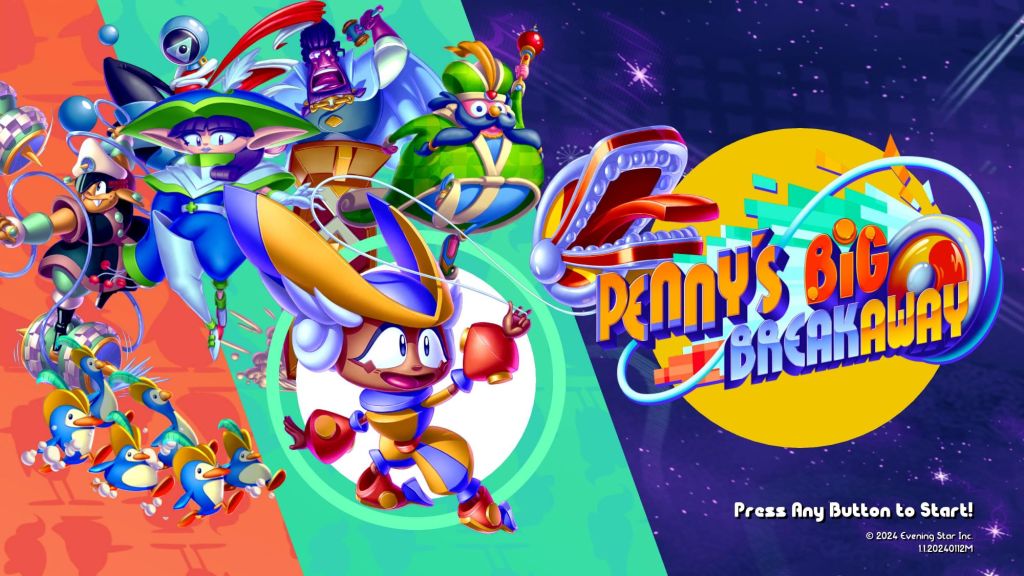
#8. Penny’s Big Breakaway, developed by Evening Star Inc, is a 3D platformer lead by staff who previously worked on Sonic Mania. Penny’s Big Breakaway is nearly everything I expected/wanted it to be and more. It specifically captures Sega’s “blue skies” essence and has a Treasure-like playfulness to it; the game would have easily sat alongside the likes of Ristar, Mischief Makers or Dynamite Headdy, respectively. Like any good 3D platformer, the controls and overall feel of the character movement is paramount and the developers nailed it here. While it takes some time to get used to how the yo-yo functions, once you understand and master Penny’s move-set, the stage flow and momentum feels just right. The camera is also fixed and follows your character, so while you can backtrack though stages to a degree, you’re sort of expected to keep moving forward. The game also employs my favorite camera technique that other 3D platformers utilize at the start of a stage; in most 3D Mario and Ratchet & Clank games, for example, the camera is pulled back to showcase the area but will snap back behind the player once they start moving. Penny”s Big Breakaway looks beautiful, too. It’s bright, colorful and expressive. The game has a sort of painterly-like aesthetic that’s hard to describe. The character models, while low-poly, pack a lot of personality.
In each level, there are Show Pieces to collect, the game’s main collectables, and Dilemmas to solve, which are mini-objectives to solve. Some Dilemmas might ask you to perform a certain amount of tricks during a particular stretch of the stage while another might ask you to take an item and deliver it to an NPC further ahead without taking damage. For the most part, if you’re playing the stages as intended, all of the collectables and mini-objectives sort of funnel/feed into each other which results in a really satisfying “perfect run” of sorts, if you can manage the ask. At the end of the level, there’s a 3-tiered platform that almost looks like a cake and depending on where you land, you must perform a short, but finnicky and not-very-fun QTE, which the game considers “Buskin'”. Hot tip for my readers; use the D-pad exclusively for the cardinal directions, but for the quarter-circles, use the analog-stick (obviously). I found the analog-stick to be far too sensitive when the game asks you to press up, down, left or right. After you “busk”, your points are then tallied and you’re given bonus points based on certain conditions met; how fast you finished the level, if you took zero damage, how well you “busked”, and how many coins/collectables you collected are all taken into consideration for your final score.
Unfortunately, while the game does a lot of things right, it’s far from perfect. The scoring/ranking system could use a lot of work, for example. In principle, it has all of the right ideas; by performing certain maneuvers/tricks, you’ll begin a combo which racks up points. The more you vary your techniques, your score will continue to increase, including your multiplier, which I believe increases by 1.0 for every 10 combos. If you perform the same trick over and over again (like bouncing up and down on the same trampoline), you’ll receive less points (there is still a reason to do this – read ahead!). As soon as you hit the ground, you drop your combo, so you’re supposed to keep things moving while stringing together each section of the stage, and the levels are (mostly) designed around this idea. The problem, however, is that you can essentially find any flat, open area and indefinitely string moves together to your heart’s content. When you hold R2 mid-air, you’ll perform a technique where you’ll land on your yo-yo and begin rolling, which keeps your combo going. From there, you can launch yourself back in the air, do a few aerial maneuvers, and rinse and repeat. You can use this method to build your total combo to well over 100+, which will net you a very large bonus at the end of the level, but do you really want to play the game like this?
Each level has a threshold to beat, which unlocks artwork in a Scrapbook if you manage to break the high score. For the most part, if you play the levels as intended, perform tricks, land decent combos, collect and do everything the level has to offer, you’ll meet the requirements for each unlock. Some stages, however, have ridiculous requirements and I found myself abusing the method I described earlier to “pad” my score out by the end of the level. It wasn’t exactly fun to stop right before the goal to grind out a 100+ combo, but it almost felt necessary for particular levels, especially for the unlockable bonus stages. Finally, I would be remiss if I didn’t talk about the soundtrack by Tee Lopes and Sean Bialo. The music in Penny’s Big Breakaway brought me back to being a kid again, playing Ristar in my basement on the Sega Genesis, dancing to the music before going to my little league game. I do wish each stage had an original track, but because each world’s theme is so good and thematic, I ultimately didn’t mind. There aren’t many games that can invoke this feeling from me, so the soundtrack alone makes Penny’s Big Breakaway a pretty big deal.

#7. Stellar Blade, developed by SHIFT UP, is a character-action game set in a post-apocalyptic sci-fi world. Aesthetically and story-wise, the game feels directly inspired by Yoko Taro’s NieR, but Stellar Blade is ultimately a much different game. For one, I love the fact that it’s from a Korean studio that was previously known only for its mobile titles. It’s really cool that we’re starting to see “real console games” from studios in parts of the world that normally don’t get much representation, particularly out of Asia that aren’t Japanese, for example. While Stellar Blade certainly falls into the same camp as other modern character-action games like Devil May Cry, Ninja Gaiden and Bayonetta, it’s sort of an amalgamation of old ideas and modern-day game trappings. It’s got semi-open, interconnected spaces with shortcuts to unlock, puzzle-platforming sequences to solve, bosses to conquer and various skill trees to upgrade. There’s also fishing, collectable soda cans to discover, fast-travel points to unlock and side quests from NPCs in a hub town to complete (most of which have you fetching items from corpses or killing monsters). Stellar Blade has it all, for better or worse.
Before I talk more about the game itself, I feel compelled to touch on how a part of the community responded to the game at launch (and no, I’m not talking about Eve’s doll-like proportions or her revealing outfits). This is purely anecdotal, but from what I could gather online, it feels like we are slowly mourning the loss of traditional character-action games. People can’t seem to help themselves but to call a game a “Souls-like” if they see a 3rd-person action game where you square-off against an enemy, whether it’s humanoid or beastly in nature. It doesn’t help if the game has some sort of currency-retrieving mechanic when you die or enemies that respawn when resting at a campfire (the latter of which Stellar Blade is guilty of). I can’t blame developers for incorporating Souls-like elements into their action games today, either. From Software’s games print cash and have clearly been a success, so these post-Souls elements in “traditional” character-action games are likely here to stay. I’m more disappointed in the community at large for automatically making surface-level comparisons and being incapable of distinguishing elements of post-Souls action games from regular ol’ action titles, but I digress.
Stellar Blade is a pretty competent action game and generally feels good to play. Her sword is stored in a hair clip, which is pretty cool. You can perform light and heavy combo attack strings, dodge and guard enemy attacks. By defeating enemies or searching corpses, you’ll earn skill points (SP). After a successful perfect dodge, “Blink”, or “Repulse” technique is used (more on the latter two techniques below), you’ll gain “Burst Energy”. Burst Energy is used for “Beta” skills, which are special attacks that you can learn from one of the skill trees, of which there are five; Attack, Beta, Burst, Tachy, and Survival. There are active/passive skills to learn in each skill tree, but not all of the trees are available at the start. Eve’s got a decent sprint, once she picks-up speed, and can even perform double jumps and air-dashes to get around the environment with ease. There’s a good amount of traditional 3D platforming at play here, but you’ll often find yourself climbing-up yellow-painted footholds and ledges, just like any other modern-day action-adventure title (which is another controversial piece of gaming discourse I won’t be discussing here today). Eve can also swim and the segments where you’re underwater are surprisingly not awful and don’t overstay their welcome. For all the sickos out there, unfortunately, Eve does not get soaked or drip when resurfacing and jumping to dry land. As a gay man, I couldn’t care less, although if we’re talking “attention to details”, it is a little disappointing and an odd omission considering *gestures at everything else*.
As mentioned above, attacks can be parried or dodged, which creates openings for counterattacks. Enemies can flash blue or purple before unleashing devastating attacks, both of which can be countered if the aforementioned Blink and Repulse techniques are used, respectively. Sometimes, a weakness (enemy core) will be exposed (which immobilizes the enemy for a brief period of time). When this occurs, it’s best to use your guns (which you unlock relatively early in the game) and aim directly at the weak-point. Eve and most enemies have a shield, which once broken, both the player and enemy will sustain increased damage. Basic attacks and Beta skills will reduce an enemy’s shield, which allows you to deal more direct damage. Stellar Blade’s got a pretty good rhythm to its combat, although the Devil Trigger-like “Tachy Mode” could use a revision. You can sort of stun-lock enemies/bosses with particular moves when in Tachy Mode, which cheapens some of the encounters. Eve can also equip up to two customizable “Exospines”, which more or less act as pieces of armor. These exospines can offer passive bonuses like reduced damage, increased attack power, or more effective recovery when healing. There’s a lot of customization here, but some of it feels a bit too bloated and unnecessary. Similar to how I feel about the open-world areas, I would have much preferred a less busy gear/combat system and something more akin to Devil May Cry.
Stellar Blade is at its best when you’re following the main questline and at its worst when you’re out in the open-world. The main story quests are relatively linear. You’ll often find yourself in enclosed spaces with some light narrative, a degree of puzzle-platforming and decently-paced combat encounters which culminate in excellent boss battles. In-between these scenarios, you’ll be exploring mostly-empty landscapes with strange enemy placements and environments that take way too long to traverse on foot. It’s here where you’ll find the majority of the games collectables; soda cans and memory sticks, the latter of which provide some additional world-building/lore. There aren’t many of these open-world areas, but a lot of it certainly feels like an afterthought. I would have preferred a much less-bloated, more compact experience overall. If there’s a Stellar Blade 2, I hope the developers focus on the more linear, set-piece-driven main questline scenarios because that’s where the game shines.
Something that stood out to me and resonated with me more than anything was a sequence found near the end of the game. Over the course of the game, you learn about an abandoned orbital elevator/tower that’s pretty important to the overall plot. In some instances, you can even see the tower beckoning the player in the distance. Eventually, Eve and company find themselves infiltrating this location and it’s one of the most memorable moments of the year for me. The entire area feels like a final dungeon from an old-school JRPG. In one part of the orbital elevator section, there’s a track called “Cargo Lift 121” and it sounds like something out of Chrono Trigger, orchestra hits and all. Then there’s pieces that play in this area called “Maintenance Corridor” and “Raphael Space Center“. They sound like something Keiki Kobayashi would have composed for an Ace Combat soundtrack. The way the track builds and releases perfectly captures what’s at stake here. I wish the entire game was more like the orbital elevator sequence, but unfortunately, it’s not.
I completed Stellar Blade with nearly everything completed and collected, including all soda cans, fish, and nearly all of the memory sticks. I did miss a side quest or two, which I’ll have to mop-up on new game+, but my first playthrough was quite lengthy, so I’m in no rush to revisit the game anytime soon. The developers have updated the game quite a bit since, including a boss rush mode and additional costumes. There’s a NieR crossover/collaboration that’s now available at the time of writing this, but I’ve yet to check it out. As much as I like NieR, I sort of wish we got original content instead. I do hope Stellar Blade did well enough for SHIFT UP to produce a sequel, because there’s definitely something here that’s worth revisiting.
#6. Another Crab’s Treasure, developed by Aggro Crab, is a beginner-friendly Souls-like about a crab and, well, his treasure. The game starts with Kril minding his own business on a nearby shore. Suddenly, a loan shark appears and confiscates his home (shell) in order to pay taxes to Magista, the duchess of Slacktide. Eventually, Kril finds himself in the City of New Carinia on “Trash Day”. A garbage patch passes over the cardboard skyscrapers above and rains plastics and junk onto the citizens below. More importantly, a cereal box depicting a treasure lands at the center of the town, catching the eye of those looking for their big break. Naturally, Kril sees this as an opportunity to collect the treasure in exchange for his home, which has been sold off to a nearby “Prawn” (get it?) shop. There’s many twists and turns along the way and the cast of characters is so memorable and likeable. Without spoiling anything here, the story does goes places.
In Another Crab’s Treasure, trash is ironically a commodity. Microplastics are everywhere and everyone wants them (even if its causing them all to go mad). The microplastics are used to purchase a variety of goods, including upgrades to your stats. When enemies are defeated, they burst into colorful confetti (microplastics), which are essentially your “souls”. Like other games in the post-Souls sub-genre, once you are defeated, you need to perform a “runback” to the spot where you died in order to recover your trash. Like any good Souls-like, there are shortcuts and wrap-arounds to unlock that make getting around much more pleasant. The level design in general is tight and well-paced. You’re almost always running into a sub-boss or a fun platforming sequence as you make your way to the main objective in each area. The enemy variety is decent too, although you do fight your fair share of crabs throughout. The visuals remind me of a PS2 era licensed SpongeBob 3D platformer, but much better and more stylized, of course. The game is very colorful and vibrant. The voice acting is great and while every line isn’t voiced, they use Banjo-Kazooie-like gibberish for most dialogue, which is both smart and fitting considering their budget, I presume.
The main gimmick/hook in ACT is its shell system. Since Kril lost his home, he can pick-up various shells scattered about the ocean floor as temporary protection. Sometimes, it’s something practical like a soda can, but you’ll also gain access to party cups, tennis balls, banana peels, tissue boxes and more. Each shell has defensive properties and weight. The defense stat dictates how much damage your shell can take before it breaks. The weight impacts your movement/dodging capabilities. Think of larger shells, like the valve, as a heavy build from a Souls game. In addition to providing protection, each shell comes with a unique ability. The soda can has an ability called “Fizzle”, which emits bubbles that home in on the enemy to deal damage from afar. The tissue box comes with an ability to cure status ailments, for example. There are a lot of abilities, but there’s also a lot of crossover between the shells. Many shells share the same abilities, so the only difference then is the aesthetics, weight and defensive properties. You can also find “Stowaways”, which are barnacles (accessories) that more or less attach to your shell and provide passive upgrades to your character’s stats. I just love how much thought went into marrying gameplay ideas to aspects of ocean life.
Although ACT is a Souls-like with some character-action game elements, it feels like a 3D platformer at its core. There’s a lot of platforming in ACT and while some of it is automated (particularly with the Fishing Line), a lot of it isn’t. Kril can float/hover for a short period of time by flapping his little claws after he jumps. Little bubbles are left in his trail as he flies through the water, which is a nice little detail. Speaking of small details, Heartkelp Pods are your restorative items and if you idle for long enough, Kril will start juggling one of the pods. Once you start moving, Kril fumbles and drops the pod on the ground making you physically pick the item back up. It’s totally unnecessary, but the unique animation is super cute and funny. Kril also obtains a Fishing Line that acts as a grappling-hook, which allows him to reach previously inaccessible areas (and can also be used in combat). Making a game take place entirely underwater is no small effort. Most games have “underwater” levels, but ACT takes place entirely in the ocean. There’s a moment or two where you surface inside underwater caves and you lose the ability to float in the air. During these sequences, being “out of water” makes you feel more vulnerable, which would be the case for any ocean critter. I wish the game played more with this concept, but like a lot of ideas in ACT, it doesn’t overstay its welcome.
ACT isn’t the most polished game, even after its many patches/updates, but it’s certainly greater than the sum of its parts. As someone who’s still a completionist-at-heart, there are particular collectables that are currently unobtainable, though. In each area, there are a finite amount of purple Umami Crystals to collect. These crystals are used to learn new skills from three separate skill trees, in addition to “Adaptations”, which are powerful special moves that you can learn from a variety of sources. One of the larger, more open areas is apparently missing five Umami Crystals, so you technically can’t “complete” the area. In one of the final zones, you can obtain more Umami Crystals than what the total fraction displays on the fast-travel screen. In terms of what I used my Umami Crystals on, at first, I focused on the “Way of the True Crab” skill tree as it housed perfect guard skills and was focused on counter-attacks. The Parry technique is really interesting as you have to hold the block button, but then release it just before the enemy lands their attack. The parry animation and sound is super crunchy and feels incredibly satisfying to pull-off. Enemies also have a stamina gauge of sorts which once depleted, you can topple (stagger) the enemy and deal massive damage. The other skill trees focus on other areas of combat, one of which incorporates the Fishing Line. There are enough Umami Crystals in the game to learn everything, so you ultimately don’t have to pick and choose.
ACT simply commits to the bit and I love it for that. It’s poignant and thoughtful; Kril melts my sometimes very cold heart. I just love the characters so much and the overall message of the game. Kril’s final act of empathy solidified him as one of my new favorite characters of all time. The music, composed by feasley, is also one of my favorite things about the game. There’s something so tragic about the title screen music (which also plays during an impactful sequence near the end of the game). The first major area track is also very memorable. The audible count-in really sets the tone. Expired Grove is simply one of my favorite pieces of the year. With so many 50-100 hour games in 2024, my 30-some hour adventure with Kril and the gang felt like a breath of fresh air. I completed Another Crab’s Treasure with everything collected, all skills learned and the Platinum trophy earned. The developers have more plans for updates (presumably in 2025), so I can’t wait to dive back in. I thought I was tired of Souls-likes, but all I need was Kril and his friends in the end.
#5. FINAL FANTASY VII REBIRTH, developed by Square Enix, is part two of the Final Fantasy VII: Remake project. Picking up right where Remake ends, Rebirth takes place from the time you leave Midgar to the aftermath of The Temple of the Ancients. A brief history on “where I’m at with Final Fantasy” before I talk about the game itself: Although the Nintendo Entertainment System (NES) was my first home console, I started playing Final Fantasy (FF) on the Super Nintendo Entertainment System (SNES). FF IV, VI (II and III in North American) and Mystic Quest were my first FF experiences as a kid. I ultimately gravitated towards Chrono Trigger and Secret of Mana/Evermore at the time, but my brother took a liking to the FF games, so I watched him play them more than I did myself. I ultimately circled back to the older games, but I still have a few blind spots, at least in terms of the “mainline” FF titles (FFII, III and V, specifically, although I’ve dipped my toes into each of them). Like many others, the PS1 FF games is where I arguably became a fan of the series. Dear reader, may I suggest opening the following track in a separate tab before reading any further? Bow Wow Wow is quite the essential listening material while you digest my ramblings on FFVII Rebirth. But first, my history with the franchise, if you will…
I was fortunate enough to get a PS1 along with FFVII and Resident Evil 2 back in the late 90s on the same day. FFVII somehow felt more mature, grittier and cooler than the SNES games. Part of that reason was probably because I was an angsty teen when I first played the game and Cloud’s sort of can’t-do attitude resonated with me (and was further cemented by Squall’s “Whatever-ness” in FFVIII). While FFVII was arguably as impactful as Super Mario 64 was for the Nintendo 64 (N64), I still think I prefer FFVIII out of the original PS1 “trilogy”. Although I take issue with the level scaling and Junction system, I just love the setting, soundtrack and overall tone of the game. I liked FFIX, but I don’t cherish it as much as others do. I’m sort of traumatized by the (Brady Game’s PlayOnline guide…) thought of completing the game at 100%. There’s just so much missable content in FFIX and while I shouldn’t let that cloud my judgment (see what I did there?) on the game as a whole, it’s what comes to mind when I think about revisiting Zidane and the gang. As far as the FF games on PS2 and beyond; I’ve been hot and cold on FFX over the years, but I think I look back on it rather fondly as time has passed. It’s interesting to see how much influence FFX has had on JRPGs in particular, almost similar to the impact FFVII had at the time. Mistwalker’s games, Lost Odyssey and FANTASIAN, for example, feel like spiritual successors to FFX in many ways. I don’t think we would have had games like Xenosaga or Shin Megami Tensei: Digital Devil Saga on the PS2 without the success of FFX, either.
Although the “Ivalice Alliance” titles are not quite considered “mainline”, I do still love FFXII. Even though Matsuno had to ultimately “leave” the project, I am still a sucker for most games composed by Hitoshi Sakimoto. FFXII’s soundtrack is enough for me to hold it in high regard, which is ironically how I feel about FFXIII, too. Sure, the loss of “HD Towns” and the linear structure/design of FFXIII was certainly a conversation-piece back when it first released, but it was sort of ahead of its time in many respects and has aged well in other areas. FFVII Remake is a rather linear, forward-moving game with very little room to breathe, which was ironically the overall sentiment for FFXIII at the time. I think FFXV is a multi-media mess, but I really appreciate certain aspects of its design. For one, I think FFXV did a decent job at placing classic monsters from the FF universe in an open-world setting. A Behemoth, for example, was a unique, set-piece-like encounter that felt organic. You simply did not encounter them randomly or in packs like you did on the world maps from the older games and I thought that was an interesting step forward. I also thought the Summons were handled better than how they’re used in the FFVII Remake project (but more on that later). Finally, I’ve never played a minute of FFXI and I’ve played maybe two hours of FFXIV, but enough about the older games, what do I think about Rebirth?
The combat system in Rebirth continues to be one of the best aspects of the FFVII Remake project. It’s more or less the same version of the Active Time Battle (ATB) system first introduced in FFVII Remake, but certain enhancements and tweaks have been made. You still build the ATB meter by landing regular attacks. When a charge has been reached, you can perform an ability, cast a spell or use an item. The game still freezes the combat in slow-motion when selecting a command and it looks and sounds just as cool as it did in the first game, with the impressive amounts of particle effects on display and distorted voices, respectively. By exploiting an enemy’s weakness, you can apply Pressure to the monster, which ultimately puts the enemy into a Staggered state. When an enemy is Staggered, they become immobile for a brief period of time so you can inflict massive damage. These systems apply to the bosses as well, but instead of using an elemental/status ailment to apply Pressure, there are sometimes unique variables in the environment that you can interact with to exploit their weakness. During one boss fight, you might have to switch to Barret so that they can target the monster while it’s on the ceiling and in a late-game boss encounter, giant pillars can be brought down to damage the enemy.
Speaking of variety, the bestiary is quite robust in Rebirth. While the regular fodder enemies might not leave a lasting impression, there are optional “Fiend Intel” battles to engage with, which are usually variations of existing monsters but with special “Combat Assignments” thrown in to make things more interesting (like beating said monster under a time limit). In addition to the weapons, accessories and Materia you can equip for each character, new to Rebirth are Folios; a skill tree for each character with various passive upgrades/active abilities that you can learn. One such ability and new to Rebirth are the Synergy Skills and Abilities; flashy cooperative attacks between two characters. Synergy Skills don’t consume ATB charges and instead, they increase the meter more quickly than regular attacks. Additionally, Synergy Abilities can enhance Cloud’s relationship with each of the characters, which impacts various scenes during particular parts of the game and other hidden aspects that aren’t revealed until after you finish the game. While switching between characters during battle is still incentivized in order to maximize combat efficiency, whenever I was given full control, my party typically consisted of Cloud, Aerith and Tifa. There are a handful of new party members in Rebirth (Yuffie, Red XIII, and Cait Sith) which makes the combat system more engaging, but Cid and Vincent unfortunately take a backseat for now.
Once I learned Aerith’s Radiant Ward ability (which turns her basic attacks into lasers that charge the ATB meter more quickly and makes her immune when casting spells) and I gave her the Prayer Materia, it was smooth sailing. I would typically give Cloud and Tifa Crescent Moon Charms (which reduces damage taken while not actively controlled in battle) and then take control of Aerith most of the time. It was kind of over for me after that and I’d rarely find myself changing my approach to win most battles for a good portion of the game. In Rebirth, the further you progress and the larger your party becomes, you’ll be asked to split the party into separate groups in order to traverse particular dungeon-like spaces. Each dungeon typically has a “gimmick” that is tied to a character. Red XIII can run-up special walls while Yuffie has a grappling-hook that can be used to access out-of-reach areas, for example. More often than not, your party will eventually meet-up after a switch is pulled and a shortcut is made, but it’s during these moments where you’ll encounter one of the most frustrating aspects of Rebirth; inventory management; you spend a lot of time in the menus while playing Rebirth. I generally welcomed the dungeon design here, especially coming off of FFXVI last year with its complete lack of anything that could have resembled a “dungeon” in a traditional sense. There’s also an “Item Transmuter” that allows you to make all sorts of gear with the Monster Hunter-style resources you collect from the open-world.
FFVII was one of the first games to arguably introduce “mini-games” into the RPG lexicon. Anecdotally, while many games obviously had mini-game-like distractions and the sort before FFVII, I don’t feel like I heard people talk about them the same way they did post-FFVII. I was sort of an avid “hater” of mini-games from the PS1 era RPGs. I felt like it was something emphasized in the original FFVII release and developers from that point forward just couldn’t help themselves but to include mini-games in some fashion or form. I didn’t feel like engaging with the Gold Saucer and I thought Cloud and the gang snowboarding was perhaps one of the dumbest things I’ve ever seen. I’ve cooled off on my “hatred” for mini-games as I’ve gotten older, however. Today, I’m mostly indifferent when I encounter them. In Rebirth, Square Enix somehow managed to make most of the mini-games and side distractions not completely miserable. Rebirth is very combat-heavy and the open-world exploration can become a bit repetitive if you’re exhausting each region as you progress. I quickly got to the point in Rebirth where I welcomed any sort of mini-game or “Alternative Gameplay Style” (AGS), which is a term I coined for myself.
What do I mean by this exactly? AGS is any sort of unique gameplay sequence that strays from the core mechanics. Bayonetta, for example, is a 3rd-person, character-action game by Platinum Games. During one of the late-game chapters, the game suddenly switches to a Space Harrier-like shooter sequence. In my book, that would be an AGS. Rebirth does this a lot, even outside of the segregated mini-games that can be accessed in Costa Del Sol or the Gold Saucer. In certain chapters, Rebirth will introduce new gameplay mechanics accompanied by tutorial windows/instructions. You’ll control giant vacuum cleaners to clean-up Mako spills in one instance and then you’ll be tasked at carrying huge plugs around to connect generators in another. It’s these brief, almost brainless diversions that attempt to “mix-up” the pacing. You’ll even get the opportunity to pilot the Tiny Bronco in both plane and boat form. I consider all of these examples of AGS. They’re not quite “mini-games” as some people would suggest and I don’t always consider them “puzzles” in a traditional sense, either. Regardless, Rebirth is constantly introducing something new to the players, for better or worse.
Regarding the ever-popular Queen’s Blood; I’m not as much of a fan as seemingly every other person online. I simply don’t like card games. I’ll probably never play Balatro, the deck-building, rogue-like card game that’s become one of the indie darlings of 2024, no matter how often you try to put it in front of my face. I typically only like card-based systems in already-established genres, like how they’re handled in Baten Kaitos or Lost Kingdoms, for example. In those games, the cards act like battle commands from a traditional JRPG battle system or face-button attacks in an action-RPG, respectively. Triple Triad from FFVIII is probably the better card game, even if I don’t remember the particulars (I have no memory of the one from FFIX, either). With that said, I did engage with Queen’s Blood whenever the opportunity presented itself just because the game itself is so combat-heavy and the repetitiveness of the open-world sort of lends itself to taking more than one distraction at a time. I prefer the early-to-mid game of Queen’s Blood, however. Some of the mechanics they introduce in the latter half of the game make it a bit too complicated for my liking. Managing your regular inventory is already a game in of itself. I wasn’t particularly in the mood to manage yet another inventory of cards with their own values and properties. If there’s one thing I could say about Rebirth as a whole; there’s perhaps a bit too much game here.
It was an exciting prospect to see how the Rebirth team was going to approach their modern-day take on the pre-rendered backgrounds from the original game and I think they mostly nailed it. Walking out of the Mythril Cave and seeing Junon in the distance for the first time fully represented in glorious HD visuals was truly breathtaking. The same can be said for many other locations in Rebirth; the Gold Saucer, Kalm, and Cosmo Canyon, just to name a few. Prior to actually playing the game, I think another exciting aspect of Rebirth was how they were going to recreate/interpret the “overworld” from the original game. In most “traditional” FF titles and older JRPGs in general, towns, dungeons and other important locations were typically represented by miniature representations on an overworld/world map. In Rebirth, the entire game is interconnected, divided up into several regions. While you can fast-travel to particular locations you’ve unlocked, you’ll often have to engage with region-specific forms of transportation to travel between areas by taking Chocobo Carriages or a Ferry. In each region there are also unique Chocobos you can tame providing new ways to traverse the environment. In one region, the native Chocobo can walk-up special walls while in another area, the Chocobo can use jet streams to hover above water. It’s one of the few “Ubisoft-style” open-world elements that I always looked forward to, aside from the optional Fiend hunts.
Speaking of Ubisoft-style open-world elements, each region has numerous Assassin’s Creed-style “Towers” to discover. Usually, you need to kill all of the monsters surrounding the Tower before you activate it. After doing so, more “intel” is marked on the map in the surrounding areas. What’s weird (and frustrating for my OCD-like tendencies) is that the cloud/fog coverage doesn’t fully get removed from the map screen when the Towers are activated. Similarly, there are “Lifesprings” scattered about each map, and once again, you’re presented with another ring-like QTE where you time a button-press when an outer ring overlaps with an inner ring. Exciting stuff. There are “Dig Sites”, which are basically hidden treasure caches for your Chocobos to spelunk. It’s sort of reminiscent of the Hot & Cold mini-game from FFIX, but somehow less fun/interesting? Then there’s the Moogstools, yet another mini-game like contraption where you get spirited-away to tiny magical islands where Moogles try to attack you while you attempt to round them up like sheep in a herd. It’s kind of fun, I guess? Another interesting aspect of the open-world is that there are no stray treasure chests hidden throughout the map. Instead, they are grouped together in special cache locations, some of which are tricky to find. Finally, there are these “Protorelic” quests in each region, which are much more involved side quests that are ultimately tied to an optional end-game boss.
You can’t talk about Final Fantasy without discussing Summons. FF has always been known for its visual flairs, Summons in FF games were always one of the highlights. In the older games, Summons were typically represented by large sprites that didn’t particularly animate. The huge sprites would appear over the screen accompanied by dazzling spell effects, but it wasn’t until FFVII where Summons kind of became a “spectacle”. Experiencing the jump from 2D to 3D and witnessing the Summons from FFVII in all of their polygonal glory was a sight to behold. It was arguably as monumental-feeling as it was playing Super Mario 64 for the first time. As the years passed, although I always looked forward to seeing which Summons were going to represented in the sequels, the big-deal factor started to dwindle. When Summons began acting like party members that fought alongside you, à la FFXII or even FFX, you could tell a fundamental design shift was occurring. In Rebirth, there are Summon Crystals, which are basically quick-time-events (QTE) where you time button presses around a circular ring. These mini-games are tied to obtaining the Summon Materia for each region. These Summon shrines are relatively well-hidden, but the game does a decent job of placing special-looking blocks in the environment to sort of funnel the player towards their locations. By completing these QTE sequences, you can lower the difficulty of the Summon when battling them in Chadley’s stupid virtual reality (VR) simulator.
I simply don’t like Chadley. It’s one of my least favorite things about the FFVII Remake project as a whole. I couldn’t care less about the lore implications, either. The VR battlegrounds where you fight the Summons in order to obtain them isn’t what I was looking for with the remakes. Additionally, the mini-game in Rebirth where you gain “intel” from their respective shrines is incredibly repetitive and unexciting, particularly because it’s mostly the same QTE process (only slightly more challenging) in each region. Similar to the more recent FF entries, Summons in Rebirth will fight alongside you for a period of time. Once their meter depletes, they will unleash their powerful, cinematic move where everything freezes and it feels like an old FF game again. I’m fine with how they’re implemented into the battle system (I like how they provide stat boosts to your characters), but I don’t like how much of a backseat they seem to take in regards to the story. I don’t quite remember how the original game handled Summons when it came to the lore, however, it’s disappointing coming off of how well-integrated they were in FFXVI and FFXV, for example.
The non-playable characters (NPCs) also feel like they are from a different universe. The main cast look like superheroes standing next to the common folk populating the various towns. It’s an issue I feel FFXV established and has since carried to the FF7 Remake project. Some of the townspeople in FFXV also felt like they walked out of a dressing room from some wholesale department store in North America. Why are a lot of the NPCs dressed like they just shopped at Kohl’s or American Eagle? Sure, people look appropriately dressed in the slums of Midgar, the citizens of Costa Del Sol look like they’re ready for the beach, and the people of Cosmo Canyon don the appropriate robes and garbs, but everyone still feels like they’re from another planet when standing next to Cloud or Barret. In the older games, the main character sprites had either a distinct article of clothing (like Locke’s headband from FFVI) or unique colors that differentiated them to a degree from the “unimportant folk”. In the original FFVII release, all characters appeared to have a similar amount of polygons on display, but perhaps Cloud’s shoulder-pad and Barret’s gun-arm stood out a bit more next to the regular Joes inhabiting Gaia. I’m not sure what the answer is here, but it’s impossible not to bring attention to it as it certainly stops me in my tracks when I start to think about it for too long.
I haven’t played the original FFVII for many years, so a lot of the plot-points that happen during the “middle” part of the game is relatively muddy for me. I want to say that the game hits most of the main beats from the PS1 release, with some caveats and liberties taken, of course. I will echo the sentiment and say that there isn’t much of a driving force for the overall plot. You’re kind of just chasing “shadows” of Sephiroth around the world. Visiting Barret’s home mining town and seeing how they handled his past in “HD” was cool to see and the arrival at the Gold Saucer felt reminiscent of a scene or two from FFXIII. One of the biggest highlights of the game for me was the Junon parade sequence. The cinematography during that whole sequence was so incredibly well done. The big question on everyone’s mind was how they were going to handle the events that take place in the Temple of the Ancients, however, which is where Rebirth ends. Something happens with a particular character at this location in the PS1 release and given the fact that they’ve already changed a lot of the story here, most fans truly did not know what to expect. I’d like to think they handled the “reveal” fairly well, even if it leaves me somewhat confused still. I will say, I always looked forward to the Zack portions of the game because the End of the World theme that plays during his segments is the best. Speaking of the soundtrack, the collection of composers who contributed music to the game certainly did it justice. There are so many dynamic battle tracks and one-off pieces that play during side quests, for example. I am always down for more Masashi Hamauzu tracks in FF titles, especially.
Square Enix more or less “did the thing” with Rebirth, for better or worse. After 110+ hours, I finished Rebirth on Dynamic difficulty with all but one side quest completed. There’s still a ton of optional content left to complete, however, a lot of what I have left to do are the arena-based challenges. Another end-game task is completing Johnny’s Treasure Trove, which are basically in-game trophies tied to nearly all aspects of completing the game. I think I had nearly half of them acquired before I called it quits, but as I mentioned earlier, there’s a lot of game here. There’s also the Hard mode difficulty, which is something I never even attempted in FFVII Remake, so I’m in no rush to revisit this game anytime soon. I’m looking forward to seeing the conclusion to the “trilogy”, but I’m hoping for less bloat/filler content in the third game. As much as I liked Rebirth, I’m not as attached to the story and characters as I used to be and a good portion of the second entry is exhausting, particularly if you engage with everything that the game has to offer. Rebirth has many high highs, but a lot of low lows. It’s one of the few games I spent more than 100 hours playing this year, so it had to do something right (or maybe I just had some sort of twisted more obligation to see it through). Until next time, Sephiroth!
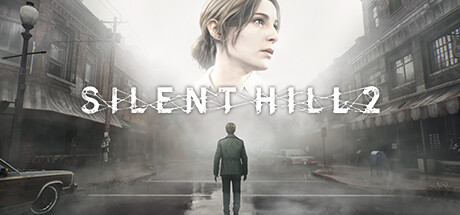
#4. Silent Hill 2 (SH2), developed by Bloober Team/Konami, is a remake of the most beloved survival horror games originally released back on the PS2. If you’re unfamiliar with SH2, it’s about a man named James Sunderland who receives a letter from his dead wife asking him to come back to the titular town of Silent Hill. One could say that the town of Silent Hill is more or less a reflection of those who inhabit it. James is a tortured soul and Silent Hill is his personal hell. If you’ve never played the game before, I’ll just leave it at that as it’s perhaps one of the best stories ever told in a videogame. The SH2 remake had a lot going against it. I haven’t finished all of Bloober Team’s games, but from the few I’ve played (Layers of Fear, The Medium and Blair Witch), they’re mostly hit or miss. SH is a very special property and similar to Resident Evil, the series has had its fair share of disastrous “westernized” attempts. Prior to the game’s release, things weren’t looking great. There appeared to be a focus on combat, which is something that SH isn’t particularly known for. Sure, the games contain guns and melee weapons, but it’s not what SH is about. With that said, the combat still retains a degree of jank (as it should), although having invincibility frames (i-frames) on your dodges feels/looks a little weird.
Bloober Team typically excels in the visuals department and the SH2 remake is quite the looker. SH2 remake has perhaps the best use of fog in any game to date. The town of Silent Hill is a character in and of itself and the fog plays an important role in its very existence. The way the fog wraps itself around a building has an intoxicating pull on the player. You’re drawn to what mysteries and atrocities lie behind the fog’s veil, but it’s also the furthest thing you want to be away from. The game generally looks incredible; the character models, voice acting and motion capture are phenomenal. The new enemy designs from Masahiro Ito are spectacularly horrifying as is the new music/arrangements from Akira Yamaoka. The audio design is exceptional; every waking moment of the game feels oppressive and heavy and that’s due in part to the sound design. There’s a moment in the Wood Side Apartments where you first encounter Pyramid Head behind a barred door. As you approach him from the other side, the screen becomes darker and the sound sort of dampens and becomes distorted. I was playing the game with a 5.1 surround system and his presence felt like it was in my actual family room. Terrifying stuff.
The game itself is expanded a lot, too. SH2 remake feels like a brand new game in some respects. The remake also plays with fan’s expectations by showing you “glimpses of the past” (images of puzzles and paths you took in the original release) while taking certain liberties when it comes to area progression and puzzle-solving. Speaking of the puzzles, they’re just the right difficulty (on Standard) and still contain the clever and poetic writing style you’d come to expect. My favorite puzzle would have to be in the Toluca Prison, which is a late-game area. As you explore the prison, you’ll collect weights, which are used to solve a puzzle in the prison’s courtyard. Ultimately, you’re presented with plaques that have descriptions about individuals who have sinned in life. After matching the descriptions to complete a story, you then need to decide who was justified in their actions. There are six nooses in the surrounding area and if you pull the incorrect one, you fall into a pit filled with enemies. The puzzles are so engaging and thoughtful that I found myself thinking that the remake could potentially be better than the original PS2 release (I ultimately considered the two games separate experiences, which is a similar sentiment I shared for the recent Resident Evil remakes from Capcom).
I completed the SH2 remake on Standard mode for both Combat and Puzzles with the “In Water” ending. The SH2 remake contains all of the original endings plus new ones. While there are some trophies that require you to complete the game under certain conditions (like beating it under a certain time limit, without using your radio, or even firing your long-range weapons), the ranking system is strangely absent (even though the game still contains a results screen after you finish it where stats of various categories are tracked). The older SH games always had a ranking system based on stars. Getting a 10 Star Rank in a SH game is nothing to scoff at, either (I’ve never done it before). I will echo the sentiment that there’s perhaps too much of a focus on combat and the volume of enemies feels a bit too high, but overall, the SH2 remake by Bloober Team is certainly not a disappointment and can arguably stand alongside the original release as a modern-day survival horror classic. Silent Hill 2 is not only one of my favorite games of 2024, but also my “Favorite Remake” of 2024.
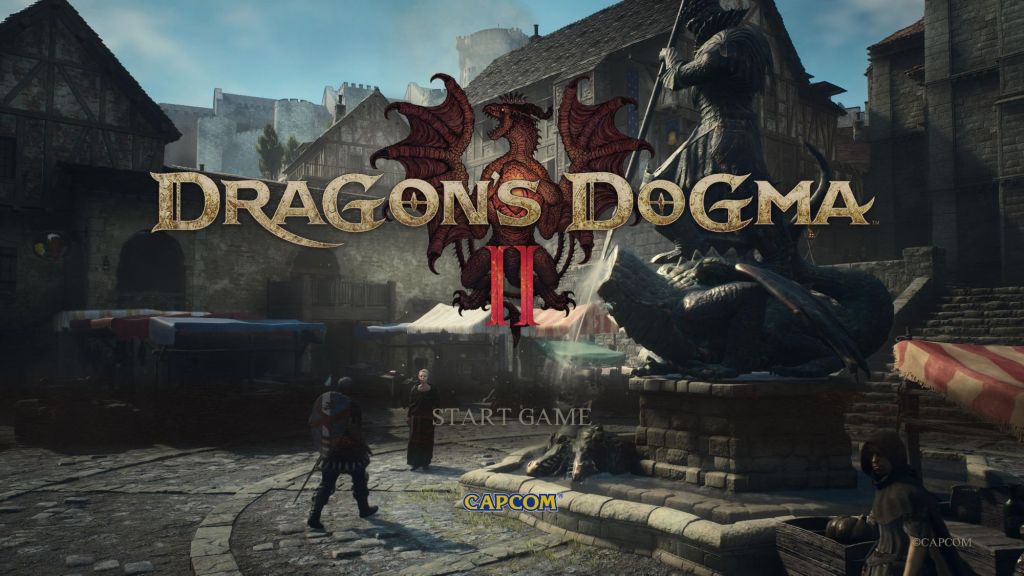
#3. Dragon’s Dogma 2 (DDII), developed by Capcom, is the sequel to the original Dragon’s Dogma released back in 2012 for the PS3 and Xbox 360. If you’re not familiar with Dragon’s Dogma, both games are generally about the endless cycle of battle between the “Arisen”, a chosen one of sorts who commands “Pawns”, and a dragon of Godly status. That’s all you really need to know. In the middle of this eternal engagement between human and beast, various kingdoms and races remain locked in perpetual, mortal conflict (like the elven kingdom with two dozen people living there). DDII almost feels like a reboot/remake of the first game. Before I talk about DDII itself, I have to give Capcom and the director/person(s) responsible some credit for sticking to their vision for the sequel. Considering the title screen simply says “Dragon’s Dogma” until you reach a certain point in the end-game, it’s a confusing, creative choice, especially for new players as it almost suggests that you’re not playing the sequel. With that said, it’s quite ambitious to hide the actual title of the game behind a “true ending” sequence that most players will likely never see.
The Pawns in Dragon’s Dogma’s universe are expendable allies who serve the Arisen that you can summon from the “Rift”, a dimensional realm of sorts where Pawns gather made by players from around the world. Pawns are Dragon Dogma’s attempt at incorporating some sort of passively-online multiplayer. You can’t control the Pawns, but they’re pretty competent allies, all things considered. I can’t recall if the Pawns did this in first game or its expansion, Dark Arisen, but in DD2, they will comment on particular things based on their own Arisen’s journeys. If the Pawn you summoned found a chest or cave in their game, for example, they will mention it conversationally if you haven’t discovered said item/path in your quest. This also applies to the main Pawn you create for yourself, who you have more control over in terms of class customization and the sort. If they get summoned to another player’s realm, they might come back with items or information to benefit your playthrough. It’s a really neat mechanic and it’s a perfect example of the marriage between gameplay and narrative.
There are a handful of new Vocations (classes) in DDII, but my favorite would have to be the Warfarer class. The Warfarer is a multi-class Vocation where you have access to every skill you’ve learned across the other Vocations. While you’re still limited to the four face buttons in terms of the options you have at your disposal, the one skill unique to Warfarer is the Rearmament ability, which allows you to swap weapons on the fly. When you swap to a different weapon, however, you retain any of the core skills you learned. The Mage class, for example, has a Core ability that allows you to float for a brief period of time. This skill is almost essential for getting around and reaching out-of-reach locations. The discipline (exp) you earn while playing as the Warfarer not only increases your rank for the Warfarer Vocation, but it’s also shared (to a degree) across the other Vocations you’ve already learned. When you unlock this class, you can essentially create a hybrid build of many different Core skills and weapon abilities, which makes the game far more fun and interesting than sticking to just one class. The discipline gained for the other Vocations is at a much slower pace while playing as a Warfarer, but it’s just far too versatile not to use.
There’s a lot to talk about when discussing Dragon’s Dogma II, but I’m mostly going to speak to the world design. Dragon’s Dogma II has one of the most compact, densely populated open-worlds I’ve ever experienced. The map itself is shockingly small (once you realize the scope of the game), but it’s expertly packed with enemy encounters, treasures and other goodies waiting to be discovered. I would love to speak to the person(s) responsible for placing the treasure chests, Golden Trove Beetles and Seeker Tokens throughout the world. You’re constantly rewarded by exploring every nook & cranny and the risk/reward for venturing late into the night, trekking from one campfire to the next, becomes this intoxicating cycle of push & pull that’s hard to pull yourself away from. With all that said, I do think DDII is an update or two away from being something truly spectacular. I think the game needs a Hard mode, more enemy variety and better encounter compositions. If the world had a half-dozen or so unique areas or dungeon-like landmarks, something akin to the “Legacy Dungeons” from Elden Ring, for example, it would have been amazing. Sure, there’s the Dragonsbreath Tower, Medusa’s lair, the Sphinx questline and a few other notable moments, but there’s just one too many similarly-structured caves and roads to counterbalance the “good stuff”. The game would certainly benefit from a Dark Arisen-like expansion.
One aspect I’m slightly torn on in Dragon’s Dogma 2 is the quest structure. Quests are not separated in the menu as “main” or “side”, for example. All quests get dumped into a single list/menu. When you first boot the game up, there are load screens that display one of your active quests, but it’s not super clear if it’s just any quest from your current list or if it prioritizes “main” quests to progress the story. I had to look up a partial solution to one of the game’s quest and I felt really disappointed in myself that I didn’t spend a bit more time exploring before looking at the guide. One of the early-game quests has your party trekking to a village of thieves where you’re tasked to gather information on the false Arisen that has taken your place. At one point, there’s a little girl who stops to talk to you, but she quickly runs into a secret room in her house and locks the door behind her. Most quests in Dragon’s Dogma 2 don’t hold your hand and the guide-posting is relatively limited. Sometimes, the map will highlight the general area with a yellow circle, so typically you can find the solution somewhere within that general area. If you’re ever stuck, more often than not, resting at an inn will move things along if you think you’ve encountered a buggy quest or a step won’t complete.
At the end of the day, I spent 115 hours with the game. I found more than 170 Seeker Tokens, have all Vocations for my main character above level 5, have made decent progress with my main Pawn’s Badges, and unlocked all but three trophies (two of which will require a second playthrough). To earn all of the Pawn Badges, you have to play through the game at least 5 times to earn the badge dedicated to the Sphinx (as she appears once per playthrough). In the end-game area, there’s a merchant who will sell you all of the best weapons and armor for each Vocation. Furthermore, dragons (who drop materials needed to upgrade all of the best equipment) will continuously spawn after enough time has passed in this “Unmoored World”, so you can grind to your heart’s content while completing all of the post-game objectives in order to see the true ending. With that said, there’s apparently a time limit in the post-game world, but I initiated the final credits sequence before reaching that point. As I discussed earlier, while a part of me could keep playing the game for another 100 hours, grinding levels and purchasing all the gear, there’s really no reason to when there’s no ultimate dungeon or hard secret boss to challenge. I really hope Capcom has more plans for a proper expansion (and a Hard mode), because I want more excuses to spend time in this world.
#2. Astro Bot, developed by Team ASOBI, is the follow-up to 2020’s Astro’s Playroom; a full-fledged 3D platformer and to the surprise of many, not a PlayStation VR (PSVR) title. PlayStation has made attempts at mascot-like characters for many years. From Crash Bandicoot and Spyro the Dragon to Ratchet & Clank and Jak & Daxter, PlayStation consoles have seen their fair share of marsupials, dragons, robots and raccoons over the years. In 2013, however, Astro arguably made its first appearance in Japan Studio’s The Playroom for the PS4, a free downloadable mini-game collection for the system’s launch that made use of augmented reality (AR). In 2016, Astro would make its true debut, however, in The Playroom VR. While The Playroom VR was yet another collection of mini-games to showcase the capabilities of PSVR, the popularity of a single level featuring everyone’s favorite robot would soon elevate the little guy to spectacular heights. In 2018, Astro Bot: Rescue Mission released, which cemented its place as one of the greatest 3D platformers of all time and a crowning achievement of what the PSVR could offer. In the godforsaken year that was 2020, Astro’s Playroom graced the launch of the PS5 as a freely installed tech demo of sorts that was far beyond anything we could have ask for at the time.
So, how did we get here? Japan Studio was a Japanese 1st-party development studio known for some of PlayStation’s most creative and iconic franchises to date. Games like Ape Escape, Patapon, LocoRoco, Gravity Rush and even Knack have provided unique experiences not found on any other platform. When the original Ape Escape launched for the PlayStation back in 1999, it required Sony’s DualShock controller in order to play. For those who may not remember a time before analog controls, the Dual Analog Controller (and by extension, the DualShock) allowed developers more freedom in both character control, controller feedback and camera movement applications. Ape Escape was one of the few games that took full advantage of the controller’s capabilities. Players could make over/underhanded swings with their net to capture monkeys, twirl a hula-hoop by rotating the right analog stick to stun enemies and even control an R.C. Car to solve puzzles by utilizing both analog sticks. It was kind of a big deal. This wasn’t the last time Sony and Japan Studio would experiment with their hardware of choice. The PlayStation Eye and Move were utilized in The Eye of Judgment and Kung Fu Rider for the PlayStation 3 (PS3), respectively. Although the Eye was replaced by a more traditional camera on the PlayStation 4 (PS4), the Move controllers were used for PS4 games that made use of the peripherals. Despite the success of the PlayStation Portable (PSP) and Vita’s missteps, Japan Studio was always at the forefront representing each platform to the best of their abilities. With games like Patapon, LocoRoco, Gravity Rush and Soul Sacrifice (the later two of which made use of Vita’s Touchpad), some could argue that even Sony’s portables got the same love and attention as their console counterparts.
I would be remiss not to mention Puppeteer, another gem of a game released back on the PS3 by Japan Studio, which also happened to make use of 3D T.V.s. At the time, Puppeteer was considered a showcase/centerpiece for the (now dated) technology. To say that Japan Studio wasn’t always on the cutting-room floor is an understatement. Their games were mostly well-received critically despite not always being commercially successful. As I previously mentioned, in 2016, the developers behind The Playroom VR created a compilation of experimental multi-player games to showcase the many applications of Sony’s new virtual reality machine. The game received much praise, but one mini-game in particular caught the attention of many fans (including myself). “Robot Rescue” was a simple yet elegant platformer that consisted of a single stage. It wasn’t the most revolutionary platformer by any stretch of the imagination, but the VR implementations made it captivating and the experience was charming nonetheless. The Playroom VR was ultimately a demo-reel, a promise of what could be done with the technology and oh, what little did we know! In 2018, Team ASOBI brought us Astro Bot: Rescue Mission for the PSVR and in 2020, we saw the launch of Astro’s Playroom with the PS5. Fast forward to 2024 and it’s been quite the journey for our little robot friend.
Astro Bot is sensory overload, to say the least. It’s an audio/visual tour de force that made me put the controller down many times in awe. As I mentioned earlier, Astro Bot is a competent and clever 3D platformer that’s enriched by PlayStation’s history/legacy. In Astro Bot, a green alien named Space Bully Nebulax dismantles Astro’s mothership (the PS5) and steals the CPU causing a massive explosion. The parts of the PS5, now scattered, have been claimed by huge bosses, both familiar and new. Using your DualSense controller, Astro and friends embark on a journey to reclaim their home. You’ll fly around a Super Mario Galaxy-like hub world consisting of Nebulas where themed stages await. The stages in Astro Bot are the perfect length and ideas are rarely, if ever, reused. In one stage, you’ll gain the ability to shrink down to the size of a mouse with a single press of a button, which allows you to access new areas in real-time. In another stage, themed after a casino, you’ll gain a power-up that allows you to slow-down time so that you can time your jumps across dolphins breaching the water’s surface. It’s all extremely clever stuff, as if it were something out of a mainline 3D Mario game by the EAD Tokyo team. In each stage, there are also hidden VIP Bots to collect, some of which are references to many first and third-party characters who have graced a PlayStation console at some point over the years.
One discourse surrounding this game’s almost universal praise is the fact that it’s somewhat of an IP graveyard. It’s true, with the closure of Japan Studio and many of the characters featured here not having a new title, in some cases, for decades, one could argue that there’s a “monkey’s paw” type situation at play here. “You all miss Ape Escape, Wild ARMs and the Legend of Dragoon? Well, here’s a stage themed around one of the games, but we can’t do this for all of them, so here’s a bunch of robots dressed like the characters you still love!”. While I certainly don’t agree with this sentiment, I can understand why people might feel this way. I do feel that the cameo appearances are handled with the utmost care and PlayStation Studios/Team ASOBI could have taken a much more disingenuous approach. It’s not like there are links to the PSN store page to purchase the referenced games within Astro Bot. The figurines you collect don’t even reference the respective game in a direct manner. ASOBI instead opted for a more creative approach, like naming one of the Bots the “Sword of Dreams”, which is supposed to be Alundra, the main character from the cult-classic PS1 Zelda-like. In the hub world, the VIP Bots each have items that you can purchase from the “Gatcha Lab” with the coins that you collect. These items unlock demonstrations/unique animations for each VIP Bot located in the Crash Site. It’s super fun to run around the hub while interacting with all of the Bots, too. There are a lot of deep cuts for super fans hidden in these demonstrations and they’re beautifully animated to boot.
Utilizing PS5’s new controller capabilities (haptic feedback and adaptive triggers), just like Astro’s Playroom before it, Astro Bot continues to illustrate the potential of the new hardware while simultaneously letting you explore PlayStation’s history/legacy. Similar to how I felt about Astro Bot: Rescue Mission and Astro’s Playroom, Astro Bot might appear to be a relatively simple, yet traditional 3D platformer, but because of the hardware (in this case, the DualSense controller), Astro Bot is like nothing else you’ll play in 2024. Vibration, gyro controls, IR pointers and the like have graced controllers for decades, but the DualSense continues to provide an unmatched level of feedback that has yet to be challenged. It’s honestly what the HD Rumble for Nintendo Switch’s Joy-Cons should have been. To put it simply; every action you take in Astro Bot, whether it’s walking, running or jumping, has a particular texture/feel to it. You’ll run across sand, grass or even metal plating and each tile-set, so to speak, has a particular feel on the controller. This level of detail extends to every element the game throws at you including the wind and rain. There’s no greater feeling than watching Astro Bot run through 100s of apples or dice as you watch the physics system take over in all of its glory. Simply moving your character and interacting with the environment is intoxicating.
I completed Astro Bot at 100% with the Platinum trophy earned. I also completed the Stellar Speedway DLC that was recently added for free. The Stellar Speedway nebula consists of five challenge stages that test your speed-running capabilities. The levels are extremely well designed and most of them make use of the backpack abilities from the main game, like the Octo-Balloon and Elephant. I used to love time trials in games like Crash Bandicoot 2: Cortex Strikes Back and Donkey Kong Country Returns, for example. Despite how well-designed these levels are for cutting corners, I have no intentions to master them and I couldn’t care less about being at the top of the leaderboards. I still made an attempt to beat the best times from the people on my friend’s list, but I have no interest in keeping up with the best. I think I would have preferred this mode if there was some sort of medal system that rewarded Bronze, Silver and Gold Medals based on how quickly you completed the stages. With that said, there are two birds that sort of race alongside you when you start the stage. Beating these birds to the goal are tied to earning the special VIP Bots situated at the end of the stage, so in a sense, they’re kind of like “developer times”, but not quite what I’m looking for.
The soundtrack (and sound design) is pretty spectacular in Astro Bot. I really like the Astro track in particular. It’s just a really good piece to kick off a 3D platformer; it’s got a great sense of adventure behind it. It’s also hard not to enjoy the Bot of War track for the “BOY” drop alone. Finally, I can’t believe the final sequence plays a remix of Rising Blue Lightning from Thunder Force V. My mind pretty much melted at that point. Going forward, I would love to see Team ASOBI make new games in the same vein as Astro Bot, but perhaps using long-forgotten PlayStation IP instead. Considering the fact that there are former Ape Escape developers on the staff and that they created a full-fledged world in tribute of the franchise kind of speaks for itself. They also created an incredible-looking 3D model for the Jumping Flash character. I still think that series would be best suited for PSVR2, but a new Jumping Flash game using the character model from Astro Bot could be an amazing prospect. At the end of the day, Astro Bot and the DualSense is what Ape Escape was to the DualShock. Team ASOBI’s latest 3D platformer starring Astro and company is a masterclass in craftsmanship, particularly when it comes to showcasing a platform’s peripheral while paying tribute to the games that came before it. As a kid, I never could have imagined that a game would feature some of my most beloved characters like Klonoa, Alundra and Ape Escape, yet here we are.
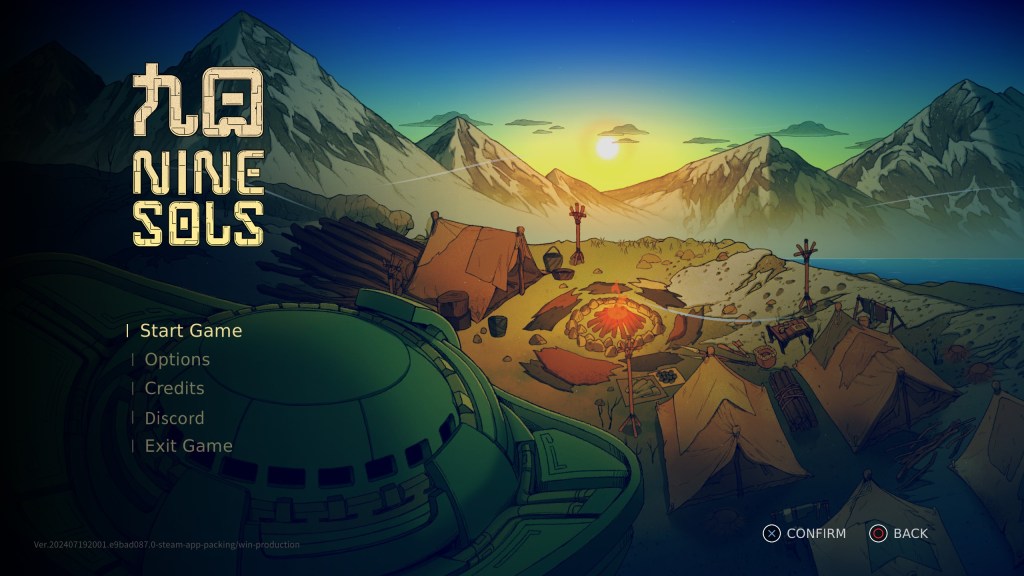
#1. Nine Sols, developed by Red Candle Games, is a 2D Metroid-like with an emphasis on counter-based combat. According to the developers, it was heavily inspired by Sekiro: Shadows Die Twice, Hollow Knight and Katana ZERO. Considering the developers previous horror-focused releases, Nine Sols is quite the departure in terms of tone, setting and genre. The game blends sci-fi with Taosim and Far Eastern mythology described as “Taopunk”. In Nine Sols, a race of cat-like people left their home world due to a virus in hopes of survival amongst the stars. Although there are many twists and turns along the way, the game primarily takes place on an advanced space station of sorts called “New Kunlun”. It’s here where members of the titular “Nine Sols” have been assigned roles and locations on the station based on their expertise and earthbound titles. These “Sols” are essentially the main antagonists, a group of sophisticated individuals who the main character, Yi, must take down in order to exact his revenge and achieve his goals. Although the interior of the ship can feel a bit claustrophobic and clinical in terms of its overall design and aesthetic, each area is thematically centered around one of these “leaders”.
In one instance, you’ll find a warehouse sector full of artifacts pillaged from the character’s home world ruled by an elderly archivist of sorts. In another instance, you’ll find yourself in an entertainment district where all of the rich and privileged citizens dance and party their final days away, lead by royal siblings who just couldn’t care less. One of the Sols, named Kuafu, is an engineer you befriend after beating the first major boss. This big, fluffy cat is in charge of supplying power to the space station, but because the two characters share some sort of history together, he ultimately assists Yi on his quest by providing the main character with weapon upgrades. Establishing the “presence” of an antagonist seems like a difficult prospect in videogames, even today. Generally speaking, villains are often sequestered in a far-away “castle” only ever appearing during pivotal story moments or cut-away cinematics where evil plans are being discussed after “meanwhile…” is written in white text on a black background. In Nine Sols, when you enter a new area of the space station, you’re almost always greeted by the Sol inhabiting that section via a Metal Gear Solid-like codec screen where Yi and the antagonist exchange not-so-nice pleasantries. As you encounter more Sols and defeat them in battle, you’re presented with these beautifully illustrated vignettes showcasing their past where you learn more about how they rose to power. It’s super compelling stuff.
Visually, the game uses a beautiful mix of 2D, hand-drawn sprite-work and 3D polygonal backgrounds. The lighting is also very impressive. You’ll often pass computer screens and other contraptions in the background that flash and illuminate the surroundings adding a nice layer of depth to the environments. Characters are expressive and animated, particularly in their dialogue portraits, too. As if the game wasn’t stylish enough already, there are manga-style panels to illustrate important scenes, particularly before/after boss battles. Additionally, there are these beautiful flashback sequences that are seamlessly integrated into the game. As Yi explores certain areas, he’s reminded of his time spent with his sister, Heng, and they are some of the more touching moments in an otherwise dark and depressing story. Considering the developer’s legacy, having been known for horror games previously, Nine Sols is a fairly violent and horrifying experience. There’s one scenario in the game involving a particular Sol that’s more or less a horror sequence with jump scares and twisted imagery. Nine Sols clearly had a vision as it all somehow feels super cohesive despite the hybrid of art and presentation styles at play here. The writing/localization is quite excellent, too. It’s one of the few games I played this year where I was always looking forward to the next piece of dialogue.
The cast in Nine Sols is extremely memorable. There’s Shuansuan, an “Apeman” (human), who you save during the introduction sequence. Shuansuan is crucial to Yi’s personal development and some of the most heart-warming and interesting conversations in the game take place between the two. Shennong, another Apeman, begrudgingly joins you and shares stories and drinks with you when you feed him poisonous foods (which increase your maximum health bar). There’s even a home base where you often return to in order to advance the story, but it’s here where you’ll get to know everyone more based on the amount of optional content you engage with. By completing side quests and finding particular items, you’ll befriend each character and learn more about their pasts, perspectives, philosophies and more. Finally, while the game isn’t fully voice-acted, the characters will speak a word or two at the start of particular sentences, which is a common technique used in a lot of games that might not have the budget for every line to be spoken (I’d like to think it was more of a stylistic choice in this case). Nine Sols is an emotionally powerful game and so is its music. There are a ton of vocal themes, particularly when you’re fighting one of the many bosses. A lot of the tracks that play during the cinematics are also very beautiful. The credits theme by Collage really messed me up, too.
Nine Sols doesn’t do anything particularly new in terms of being a Metroidvania/Metroid-like. It’s fairly by-the-books in terms of its overall structure and design. The map is divided into segments, but the entire game is interconnected with shortcuts and wrap-arounds. You have a familiar called the “Mystic Nymph”, which is a digital bird-like companion who can access out-of-reach switches to lift gates or move platforms. While you do unlock the ability to fast-travel mid-game, it can become a bit difficult to navigate the environment in the early portions of the adventure. The main objective is typically made clear to the player, but I did find myself getting lost and retreading parts of the map until I exhausted all available paths. With that said, you do have to earn the ability to see what you’re missing for each segment of the map by discovering helper robots in each region. You can either pay for their map details or destroy them and steal their chip. After you obtain their data, each map will show you how many available treasure chest you discovered and how many unique enemies you’ve destroyed, for example.
Although you increase your maximum health through the aforementioned method with an NPC, you do gain traditional experience points by defeating enemies. When you “level-up”, you’re granted a skill point which can be used to unlock new abilities (there are also special items you can discover which grant you skill points immediately). You’ll learn core skills at certain points in the game such as gaining the ability to perform charged strikes, which can break enemy barriers and other environmental gates. In addition to this, you’ll also learn an air dash and the coveted double jump (which is also unlocked towards the end of the game and has become somewhat of a trend in Metroid-likes as of late). A lot of these core skills have upgrades on the skill tree that further enhance their properties. Then there are the “Jades”, which are basically the “Charms” from Hollow Knight that grant you passive/active bonuses (think of them like accessories in an RPG). Each Jade has a cost to equip, but by collecting/purchasing additional “Computing Power”, you can customize Yi with a variety of Jades, making a customized “build”, if you will. One of the Jades impacts your healing animation, for example, shortening the amount of time it takes to heal yourself so you can get back to the fight uninterrupted. Another Jade increases the gold earned when defeating enemies. Many of the Jades are specifically engineered to enhance your countering/parrying capabilities, however, which is a system the developers clearly wanted players to engage with and master.
What differentiates Nine Sols from other games in the sub-genre is its focus on counters/parries. The developers weren’t kidding when they said Sekiro was an inspiration to them, at least in terms of the combat system. While there’s an easier “Story” mode, I played through the game on Standard difficulty, which honestly felt like the game’s “Hard” mode. It’s a brutal, unyielding game on this difficulty, particularly when you’re up against one of the game’s many bosses. You absolutely have to engage with and master the ability to block and parry enemy attacks. If you guard a regular attack, you gain a “Qi charge”. At some point, the game introduces you to un-blockable attacks where an enemy becomes engulfed in a green flame before they attack. To counter these hard-hitting attacks, you’ll learn an aerial kick or what’s called an “Unbounded Counter”, both of which grant you Qi charges when successfully performed. A Qi charge lets you use a “Talisman” attack; a glyph that you can apply to enemies when you dash through them to cause major damage. There are a handful of Talisman attacks including one that will automatically explode after a certain amount of time and another that you can manually detonate (which is what I ultimately used near the end). If you don’t “spend” your built-up Talisman attacks, you’re sort of wasting opportunities to deal massive damage to an enemy. It creates these sort of risk/reward combat scenarios where you have to simultaneously play defensively and be the aggressor.
Once you meet the game on its own terms, countering/parrying becomes this natural flow state that feels supremely rewarding. The game gives you a lot of options to overcome its many challenges, but you have to be ready to commit in order to make any sort of headway against your enemies. I completed Nine Sols on Standard difficulty at around 35 hours. I beat the true final boss with all side quests completed and with everything collected, upgraded and maxed out. My hands and feet were shaking when I saw the credits roll. Nine Sols is my favorite game of the year and quite possibly my favorite Metroid-like/Metroidvania I’ve played from the past decade or so. If you’ve been following my blog and reading my posts for the past few years, you can see that I clearly stop and start many games during any given year. Nine Sols, however, captivated me and held my attention almost exclusively, which I can’t say for a lot of games today. I loved it so much, I even wrote a dedicated post about the game here where I share personal stories and the like. The future is bright for Red Candle Games and I can’t wait to see what they do next.
If you jumped to the end of the post to get the “TLDR”, here you go:
10. Indika
9. Crow Country
8. Ufouria: The Saga 2
7. Minishoot’ Adventures
6. Rugrats: Adventures in Gameland
5. Neva
4. Prince of Persia: The Lost Crown
3. Bakeru
2. The Legend of Zelda: Echoes of Wisdom
1. Granblue Fantasy: Relink
10. Kunitsu-Gami: Path of the Goddess
9. Arzette: The Jewel of Faramore
8. Penny’s Big Breakaway
7. Stellar Blade
6. Another Crab’s Treasure
5. FINAL FANTASY VII REBIRTH
4. Silent Hill 2
3. Dragon’s Dogma II
2. Astro Bot
1. Nine Sols

See you next year…
-Matty

Just a friendly bear who works in financial reporting that would rather be playing, writing or talking about video games. https://twitch.tv/unexpectedenemy
 UnexpectedGames