Just a friendly bear who works in financial reporting that would rather be playing, writing or talking about video games. https://twitch.tv/unexpectedenemy
Thoughts & impressions on the games I played/finished during Q4 of 2024, including Bakeru, Another Crab’s Treasure, Granblue Fantasy: Relink, Dragon’s Dogma II, Silent Hill 2, Kunitsu-Gami: Path of the Goddess, and more…
…and The Game Award: Presented by Indie Developer Hideo Kojima Goes to…
It’s the end of 2024 and the Keighley’s have come and gone. I somehow finished 62 games and have once again met my goal of completing “52 games in 1 year”. I said it in my last post, but it’s still where I find myself sitting as I ring in the new year; my teenager/early twenties-something self would have had a field day with all of these amazing new releases. My late 30s-something self today continues to be exhausted and paralyzed by choice. I started, but haven’t finished Fear the Spotlight, Ys X: Nordics, Metaphor: ReFantazio, Slitterhead, Banishers: Ghosts of New Eden, The Plucky Squire, Visions of Mana, Shadow of the Ninja – Reborn, Rise of the Ronin, Indiana Jones and the Great Circle, Unicorn Overlord, Sand Land, Destiny 2: The Final Shape expansion, Elden Ring: Shadow of the Erdtree DLC and many more. Many of these games would have likely made my Top 10 list for 2024. At the time of writing this post, I definitely won’t have cohesive thoughts on a lot of these games until some time in 2025 (and that’s being generous). My #1 choice for GOTY also hasn’t changed (if you follow me on socials, it’s not hard to guess what my favorite game of the year is). With that said, here are the games I somehow managed to play/finish during the fourth quarter of 2024:
Game #47 of 2024: Frogun Encore
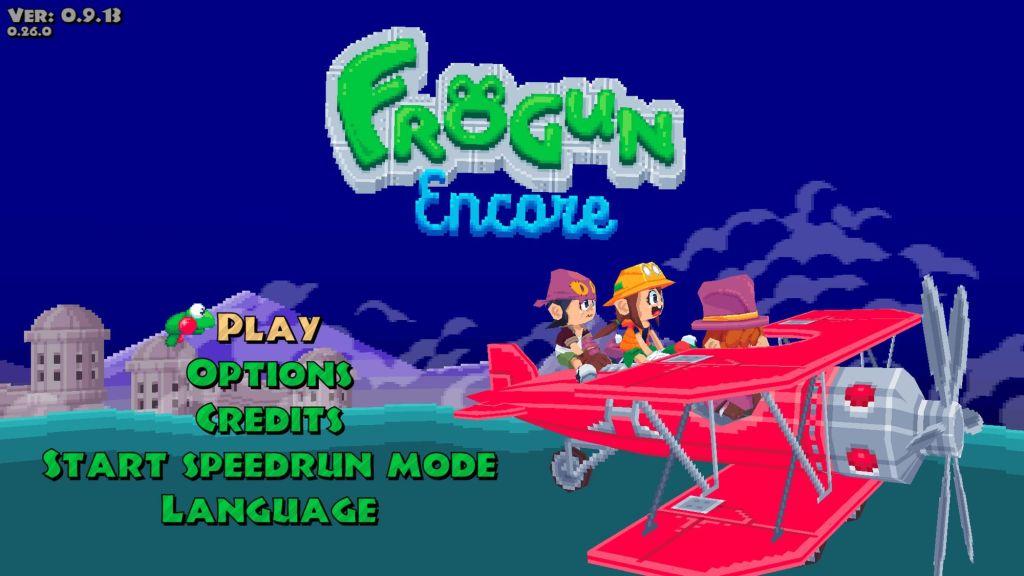
Frogun Encore, developed by Molegato, is a top-down, 3D platformer of sorts that feels more like an expansion/refinement of the first game than a proper sequel. Encore takes place three years after the events of the first game. As Renata, you decide to take a vacation in “Jake’s Town”, which was your “rival” from the first game, but now you’re friends, I guess? Beelzebub, the antagonist from the first game, is going to be resurrected by the “fly bois”, a new gang of baddies. At first-glance, the game looks almost identical to the original Frogun game. I couldn’t tell you if the visuals have been improved, but both games have this sort of cartoony aesthetic that feels reminiscent of Mega Man Legends. Stages feel like big obstacle courses suspended over bottomless pits. The backgrounds appear to be static images themed after the environment you’re in. It’s sort of a globe-trotting adventure; you’ll explore facsimiles of Egypt and Greece, for example. The main gimmick/hook of the game is the titular Frogun; a pistol with a long tongue that allows you to grapple enemies and objects (including walls) in the environment to get around.
Despite Encore being more or less the same as the original release, the camera/controls have been vastly improved. Instead of having the ability to rotate the entire camera in a stage, the camera is now fixed and will automatically change perspective during particular parts of a level. Some of the platforming felt more frustrating and fun due to the camera controls in the first game, so it’s a welcome change here. The goal of each stage is to simply make it to the end of the level. Along the way, you’ll face enemies, platform challenges and other environmental hazards. If you fall of a ledge, you restart at the nearest checkpoint. For each level, there are optional goals to complete, which require you to beat the stage under a particular par time and collect all of the green crystals and coins, for example. You don’t have to earn them all at once, either. I typically found myself playing the stage thoroughly, collecting all of the goodies first and then making a no death, speed-run of the stage to net the other objectives. Each stage has a Medal which get decorated based on the objectives that you complete. This is where I found the game to be more fun and engaging as it’s a relatively easy platformer otherwise.
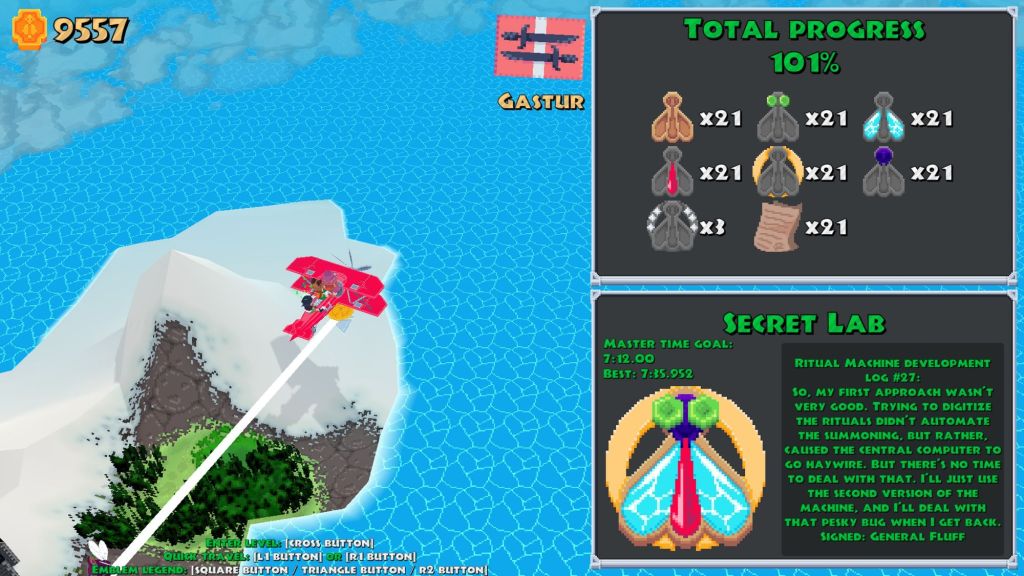
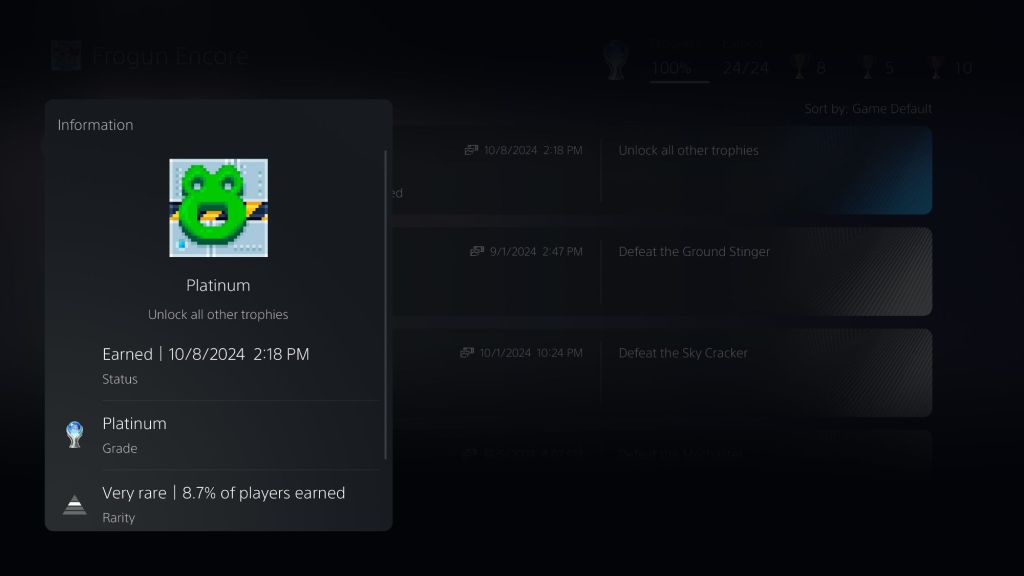
I’ve been trying to write about the music for each game I finish, but I can’t recall any track from Encore resonating with me, at least in terms of feeling compelled to share something here. I completed the game at 101% with the Platinum trophy earned, but I did not complete all of the Master Time Goals. There’s no trophies tied to doing the harder time trials, but your stage medal does get decorated with diamonds if you do manage to beat them. The total in-game percentage might even go beyond 101%, but I can’t confirm that. In the past, I would have gone for true Master Time Goals, but I just don’t like the game enough to be bothered with it all right now.
Game #48 of 2024: Bakeru
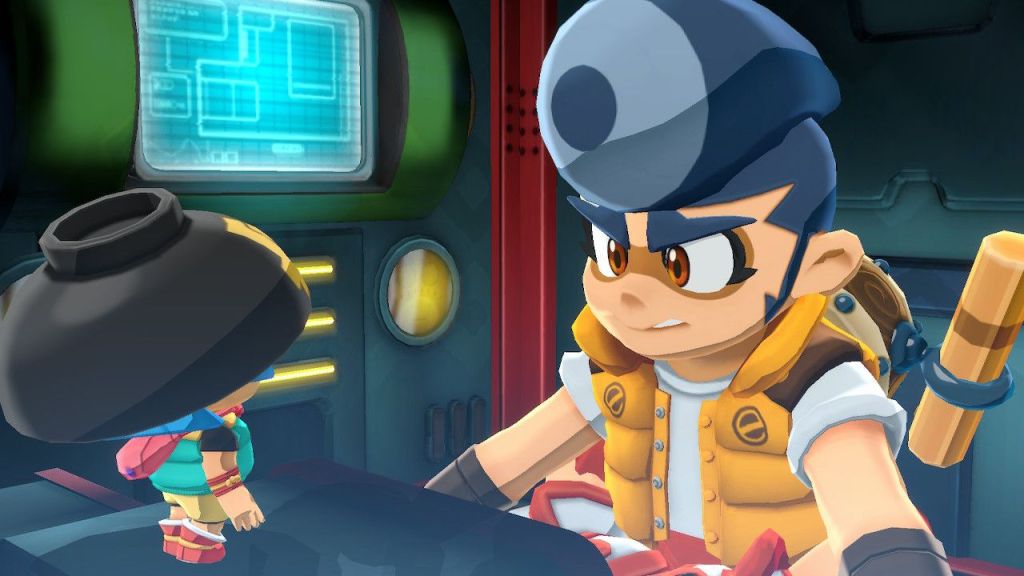
Bakeru, developed by Good-Feel, is a 3D action-variety-platformer and a spiritual successor to the Mystical Ninja/Goemon games by Konami. Bakeru was first revealed during a Japanese Nintendo Direct. The game was unceremoniously announced back in 2020, and for many years, there was rarely an update on whether or not the game still existed. The game finally launched in November of 2023, but only in Japan. With each passing year, I feared it was going to stay exclusive to the east. It almost felt like we had another “Operation Rainfall” on our hands. We now live in a time period where pretty much every notable Japanese game gets localized, so I found it odd that Nintendo of America continued to not acknowledge its existence. Now that I’ve finally played/finished the game, I sort of understand why it took so long to come west and why Nintendo of America likely opted out of the localization efforts. Bakeru is very Japanese, but I say that with the upmost respect. After an introduction sequence, you’re introduced to Oracle Saitaro and his Festival Troops. Saitaro and his gang are planning to take over Japan with their festival of shenanigans, so it’s up to Bakeru and company to put a stop to his evil schemes. Along the way, Bakeru will encounter legendary characters from Japanese fairy tales, including Urashima Tarō and Momotarō, for example.
Considering the developer’s legacy, a lot of the game feels like it’s a studios first attempt at making a 3D game. The levels are surprisingly big and sprawling, yet relatively flat. While Bakeru is sort of a 3D platformer at heart, it’s more action-oriented than I was expecting and there’s a lot of gameplay variety (or AGS, if you’ve read my last quarterly update). Bakeru’s main weapon is a pair of taiko drumsticks. You can perform consecutive attacks by pressing the shoulder buttons in a almost rhythmic-like fashion. You can also perform perfect guards/perfect dashes and then immediately launch right into a counter-attack. By defeating special bosses (based on the aforementioned Japanese fairy tale heroes) in the first part of the game, you learn unique powers in an almost Mega Man-like fashion. These abilities are treated like transformations and require consumable energy in order to activate. One of the transformations allows you to shrink to a mouse-sized character so that you can access hidden areas. This is the only transformation that allows you to interact with the environment, which I found relatively disappointing. The other powers are simply used for combat. I particularly liked the gun-slinging transformation as it allows you to completely decimate enemies from afar.
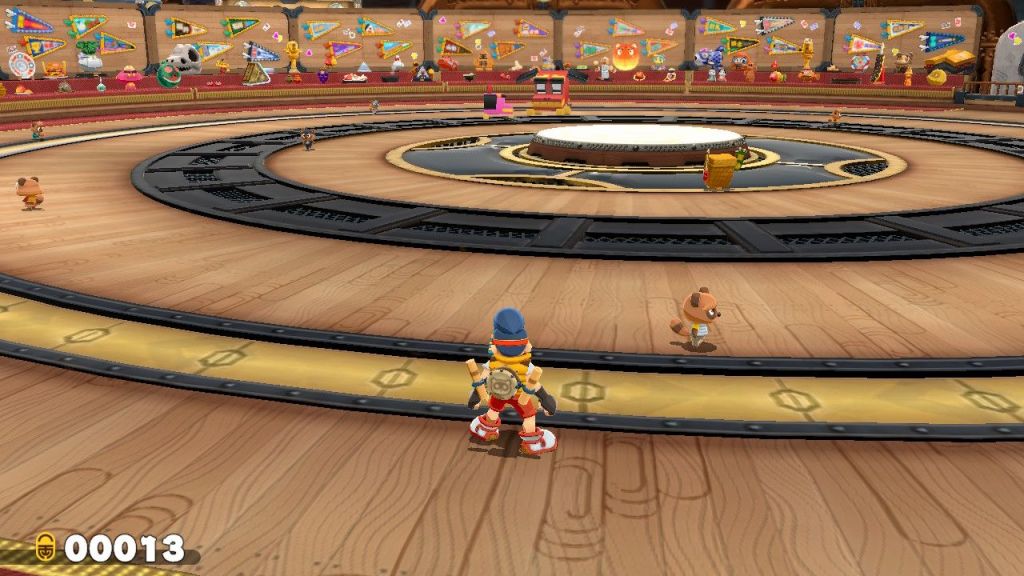
While most stages are your standard 3D platforming affair, there are rail-shooter levels and Mario Kart-like racing tracks to break-up the pacing. These diversions aren’t anything to write home about, but they’re mostly inoffensive, never overstaying their welcome. The game has a handful of these types of stages, however, so they sort of lose their luster after the first few levels. There’s A LOT of stages in Bakeru and most of them are BIG. I think the game is perhaps a bit too long and is a little one-note throughout, but it does do a lot of little things that I appreciate. For one, the enemies really bring the game to life. At times, it almost feels like you’re playing a Treasure game. Considering Good-Feel’s legacy with Konami, it’s no surprise that I feel this way. While most enemies don’t pose a threat (the game is relatively easy), there’s a ton of personality in their actions. In most stages, enemies are sort of “doing their own thing” until you so rudely interrupt them. In a hot springs/bath house level, for example, some enemies might be chilling in the water, relaxing on beach chairs or even scrubbing the floors.
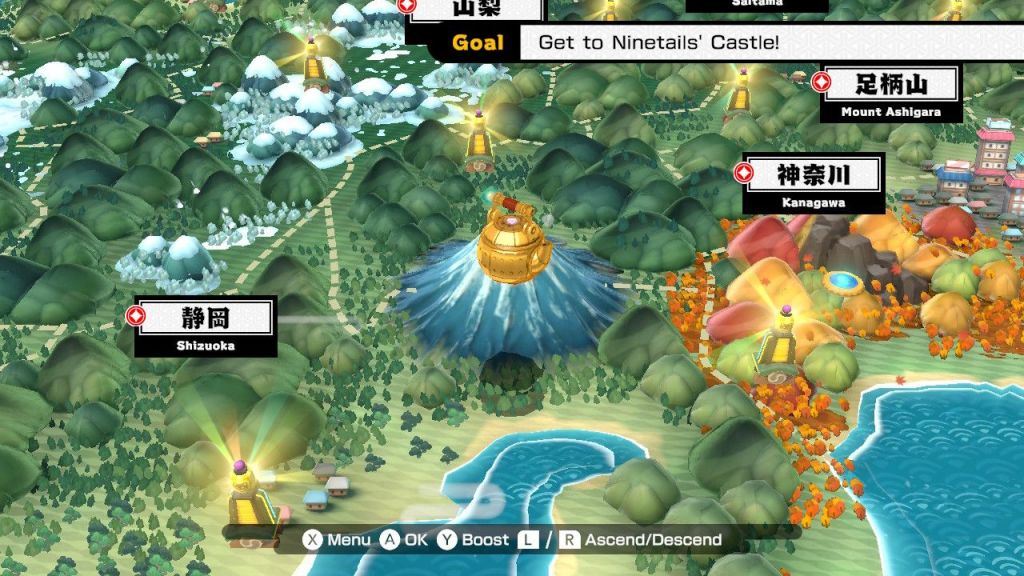
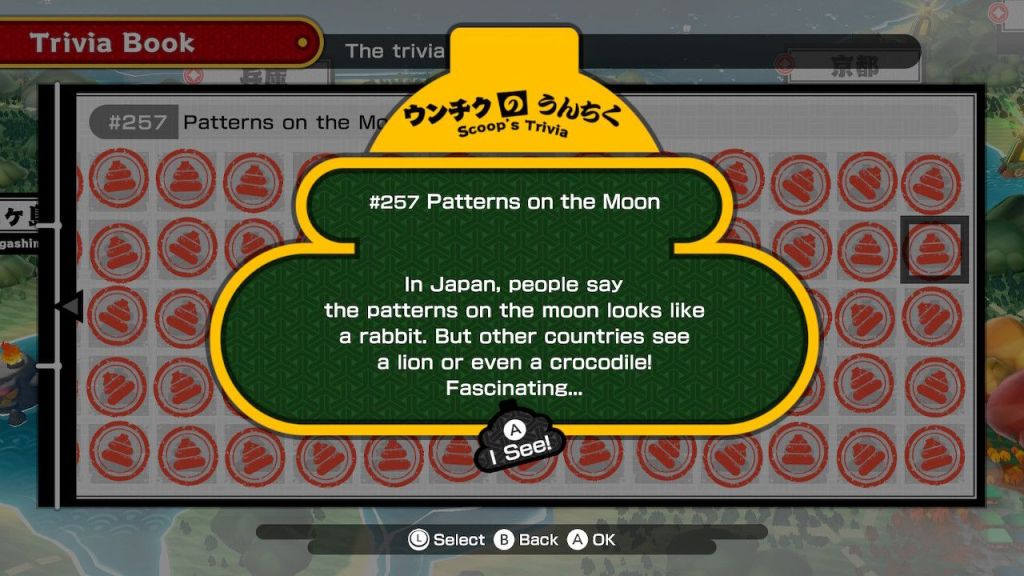
What’s weird about the stage design is that there is so much detail and a ton of background assets that you simply can’t reach or interact with. The Nintendo Switch has seen better days. Bakeru doesn’t exactly run the best on the now-dated hardware. When there’s a lot going on, there’s definitely a degree of slowdown. The size of the levels can’t be helping its performance issues either, so I wonder why they made the levels so big to begin with. With that said, the game has such a nice, clean, colorful look to it. It’s well-animated with expressive characters and fun cinematics. There’s no English voiceovers, but the localization seems decent. What’s interesting about Bakeru as that it’s also sort of an educational game. For one, the game has you exploring all 47 prefectures of Japan. In every level, there are literal pieces of poop to collect, which unlock general facts called Scoop Trivia, most of which are about Japan, its history and geography. Bakeru also has a lot of composers who contributed music to the game, including Satoshi Okubo, Kosuke Inoue, Shinji Yoshikawa, and Eri Tanaka, just to name a few. I’m not super familiar with their work, but a lot of the tracks are evocative of the types of pieces you’d hear in the Mystical Ninja/Goemon games. Wakayama is pretty chill, too.
These little buggers are relatively well hidden, too. In addition to collecting literal pieces of shit, you can also find hidden Tanuki in a handful of the stages. The Tanuki are pretty tough to find, too. They often disguise themselves as scenery in the environment, like a trash can or signpost. After you whack them enough, the Tanuki will reveal itself and join you back on the ship. The more Tanuki you collect, the more upgrades you can access for your Bunbuku robot form. At certain points in a stage, you can purchase consumable items that can temporarily boost your attack power and even maximum health upgrades with the coins you collect. The Bunbuku upgrades are the most expensive purchases in the game, however, including an end-game gold cosmetic for your ship and robot, respectively. Just like in the Mystical Ninja/Goemon games, you’ll face kaiju-sized bosses while piloting your robot. These encounters feel like a basic 3D fighting game where you can punch, guard and dodge. They’re not very difficult, but it’s certainly a highlight and a spectacle nonetheless.
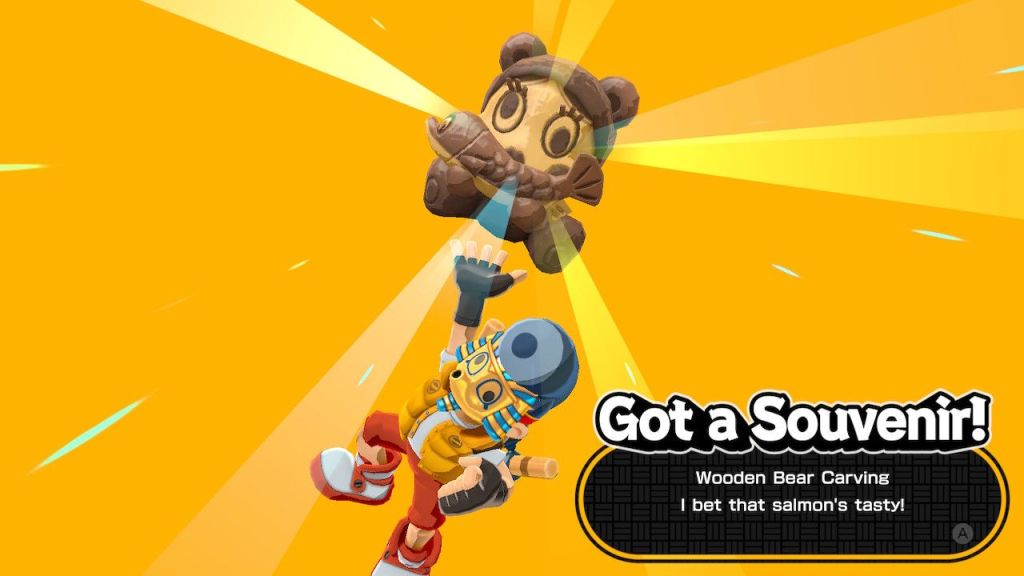
I completed Bakeru at 100% with everything collected; all souvenirs, Scoop Trivia and Bunbuku upgrades. In classic Nintendo fashion, you get nice gold icons on your profile if you’ve collected everything in the game. Between the two Good-Feel games this year; Princess Peach Showtime! and Bakeru, I much prefer the latter. Here’s hoping Good-Feel continues to provide interesting platform-adventure games for the successor to Nintendo Switch.
Game #49 of 2024: GRIS
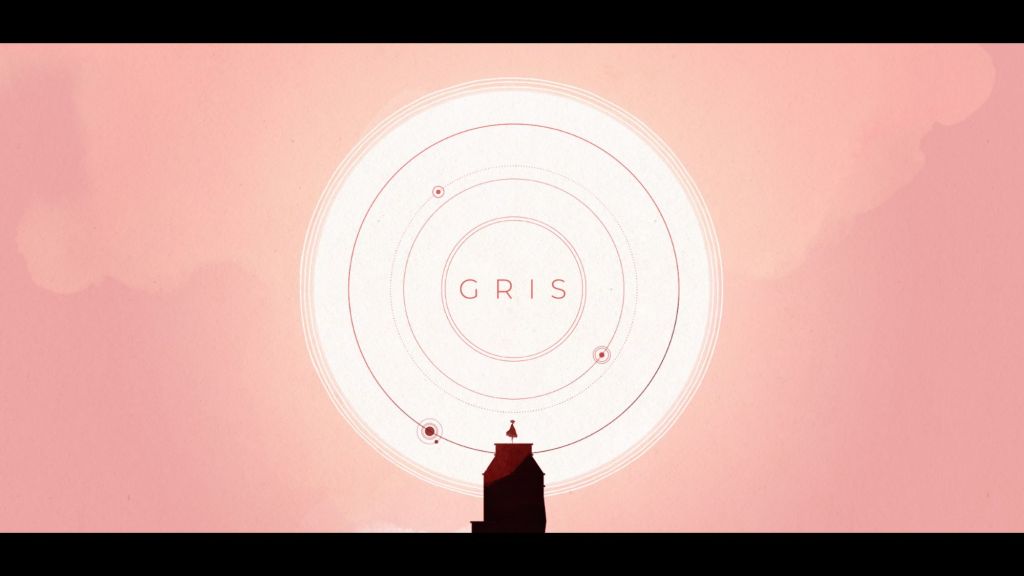
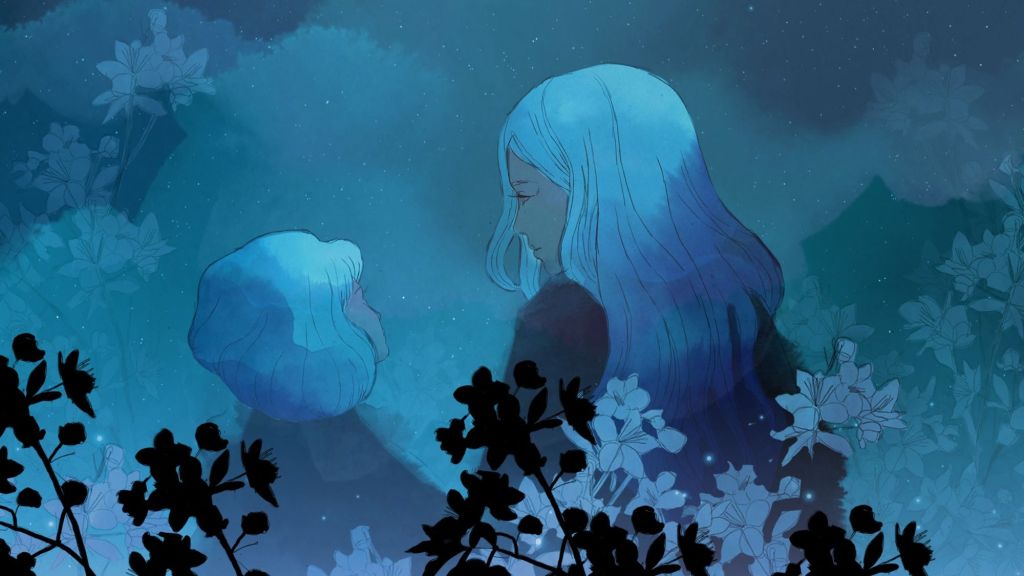
GRIS, developed by Nómada Studio, is a beautifully illustrated 2D puzzle-platformer of sorts depicting the four stages of grief; denial, anger, depression and acceptance. I played the game first on Switch at launch, but I never collected everything until my recent replay on the PS5. GRIS has no combat and there’s no spoken dialogue. It’s truly a minimalistic experience. At its core, GRIS is a relatively simple 2D platformer. While you do gain Metroid-like abilities, it’s not the type of game were you’re backtracking to older areas in order to discover new things. The abilities that you do learn are more or less used within their stages. When you’re in the “anger zone”, so to speak, your character learns how to turn into a block and you can then break certain cracked floors and objects in the background. There’s even a water area centered around depression and you learn the ability to swim by turning into a stingray. One could surmise that you’re sort of “swimming through your depression”, although that’s sort of my surface-level takeaway. The soundtrack, by Berlinist, is emotional and provocative. It’s the type of music I wouldn’t normally listen to outside of the game, but it’s hard not to get pulled in while you’re playing it.
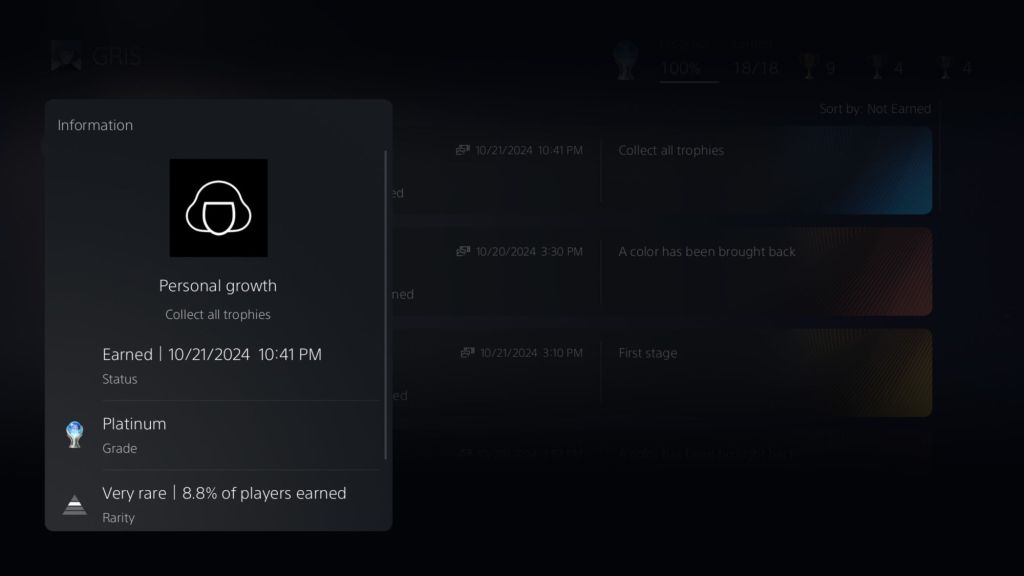
I wish the story resonated with me more than it did. It’s certainly an emotional game about motherhood and a lot of the scenes are really powerful, particularly because of the art and music. With that said, it’s a fairly breezy experience that’s hard to put down due to its exceptional pacing (which is something their more recent game excels at, too). I completed GRIS with everything collected at 100% with the Platinum trophy earned. I did have to look-up a few of the trophies because they’re tied to some pretty obscure interactions. There’s a trophy at the start of the game where you have to walk backwards through the first area and kneel down in front of a broken statue. You have to not move the controller or press any buttons until the trophy pops. I don’t think I would have ever figured that out on my own. There are also hidden glyphs scattered about the stages, which are tied to earning the true ending. After you beat the game, there’s a chapter select which allows you to replay each level in case you missed anything, which is very much appreciated. I like GRIS, but every time I revisit the game, I have trouble connecting with it themes.
Game #50 of 2024: Frog Detective: The Entire Mystery
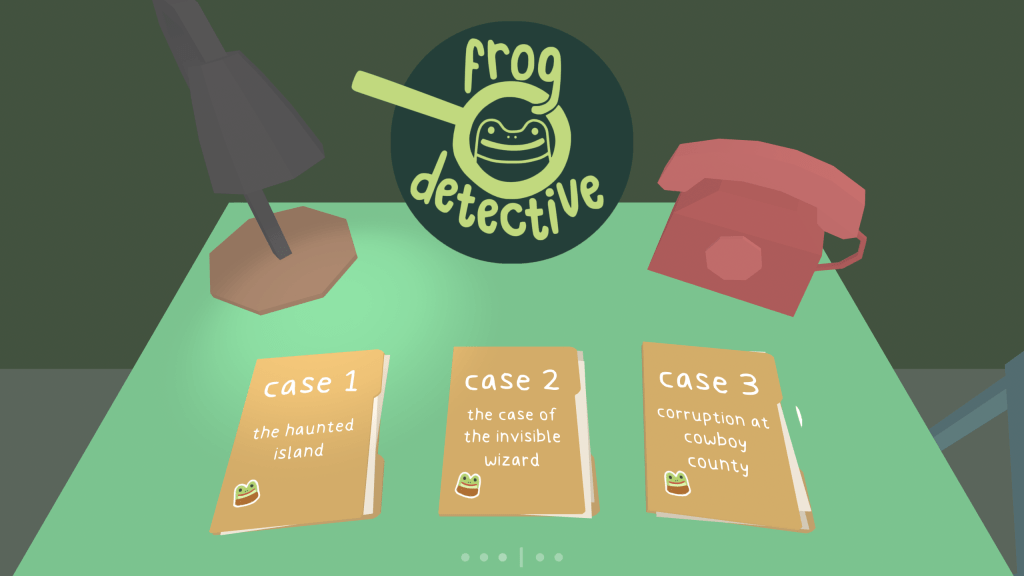
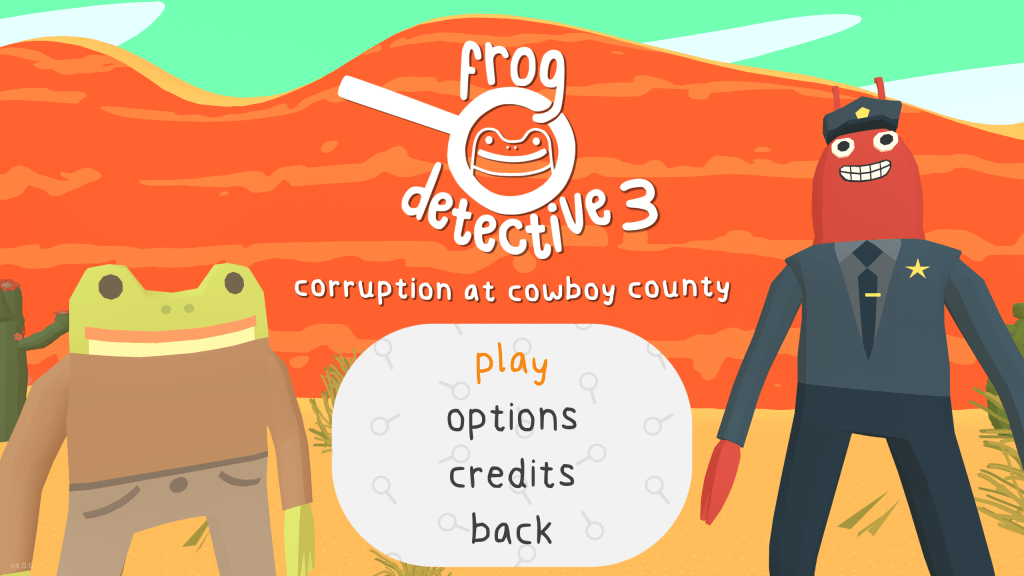
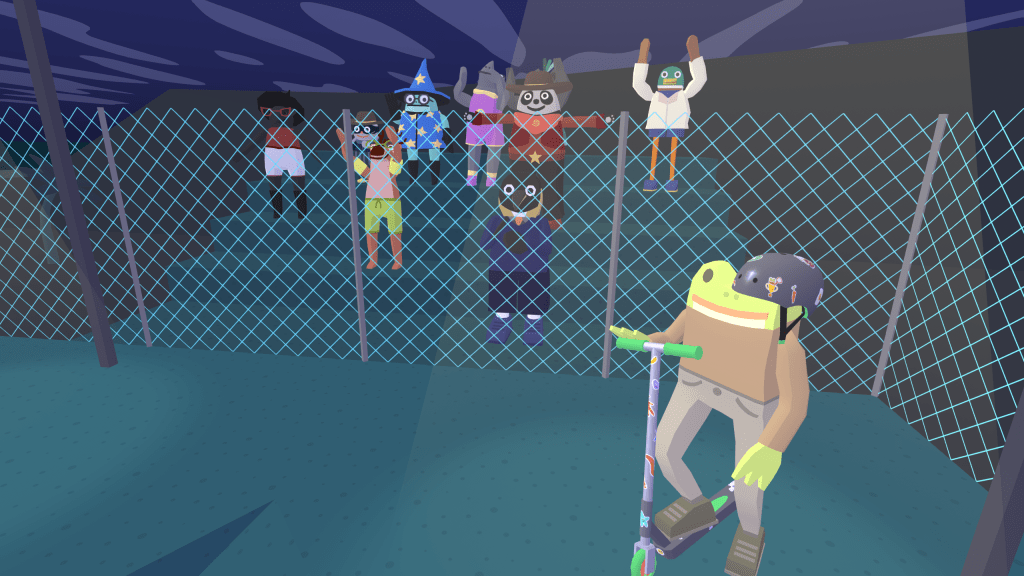
Frog Detective: The Entire Mystery, developed by Worm Club and Thomas Bowker, is a first-person, narrative-driven adventure game. The games feel rooted in classic point and click, PC-style adventure games. Frog Detective was initially released on PC/Steam, but as separate/individual cases. I’ve always known about the series, but for whatever reason, I held off on playing any of them until “The Entire Mystery” released on Xbox Game Pass. Frog Detective is all about the characters and stories. While there is continuity between the cases, they’re mostly standalone stories with unique characters and plot-points (although the final chapter attempts to bring it all together, so to speak).
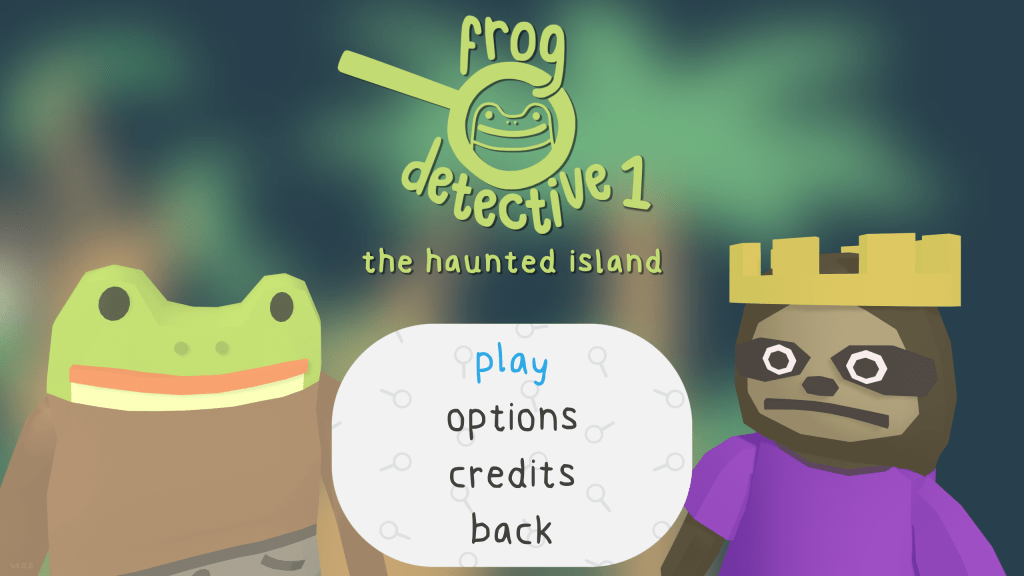
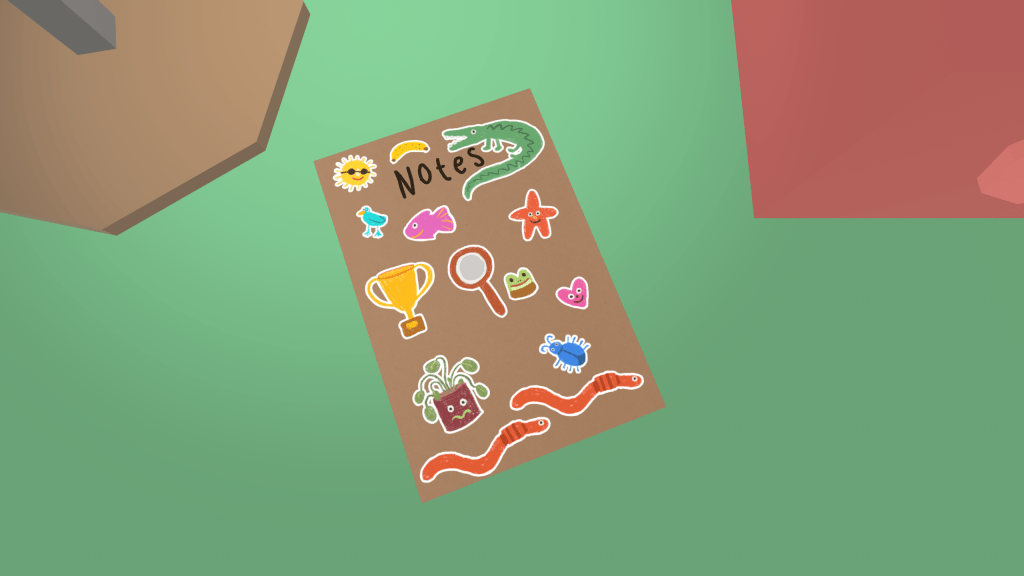
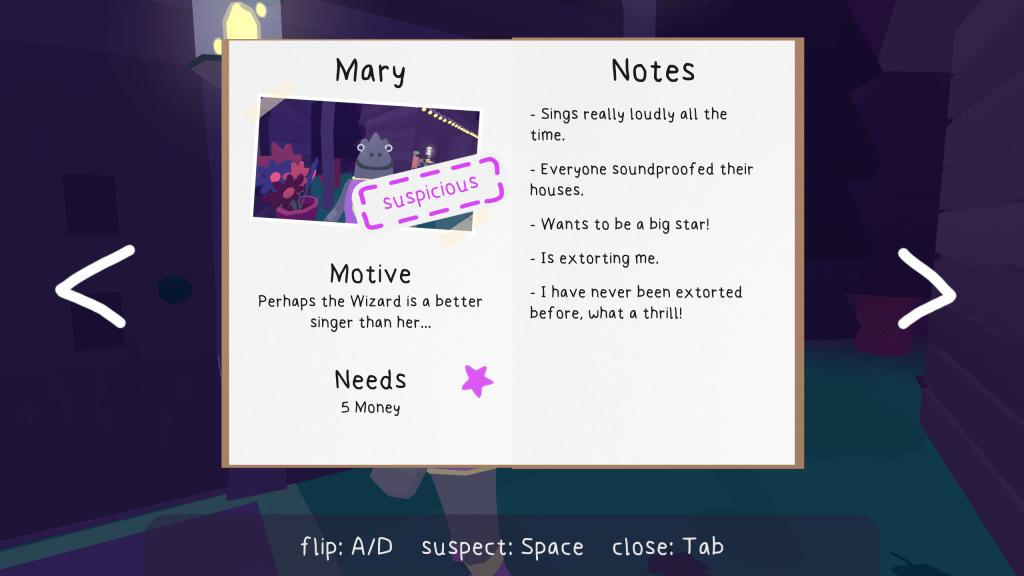
I think Frog Detective 1 “the haunted island” is the least interesting title in the series. You arrive at an island where its inhabitants think they’re hearing ghost noises. The conclusion is ultimately very cute and silly, which can be said about all of the cases. From the second case onward, each case has the Detective arriving at a location where you then interview suspects, noting their motives/needs in a handy notebook (that you can even customize with stickers!), which ultimately leads to narrowing down the suspect. The second case, “the case of the invisible wizard” has you searching for clues to find a new resident who’s moved into a town in a forest. In the third case, “corruption of cowboy county”, an underlining story involving Lobster cop comes to the surface with a shocking finale.
As I mentioned above, at one point, you’re given the opportunity to decorate your case file (notebook) with decals and stickers. It’s actually a really fun moment and I spent more time customizing my notebook than I was expecting to. The best way to describe the writing style in Frog Detective is that it’s purposely dry. The game breaks the fourth wall at times, too. Another mechanic I enjoyed was how the Detective updates his notebook with details like “Motive” or “Needs” based on the people he interviews. You don’t really need to pour over your notes to solve the cases, however. The game sort of plays itself and mostly has you walking back and forth talking to particular NPCs, exchanging items and the sort. Finally, the soundtrack, by Dan Golding, is very jazzy. It feels like I needed to smoke a cigarette and grab an adult beverage after every session with Frog Detective.
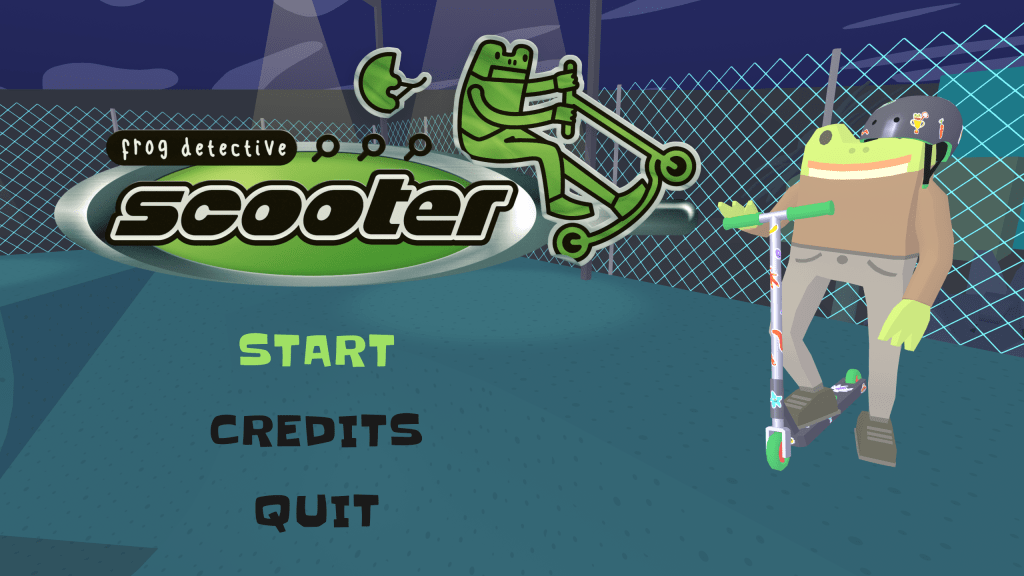
When you finish all of the cases, you unlock Frog Detective Scooter, which is basically a skateboarding mode in the same vein as the old-school Tony Hawk games. The controls are surprisingly decent and there’s a relatively difficult high score to beat, but it’s not clear to me if there’s a reward for doing so. I think the mini-game is just for fun and breaking the high score is simply for bragging rights, as you need to chain the entire stage in one long combo by collecting all of the magnifying glasses without losing your streak. It’s pretty challenging.
I downloaded and played Frog Detective: The Entire Mystery through Game Pass and completed all three cases with all 1000/1000 achievements unlocked on my Xbox Series X. Each game takes about two hours or so to complete, maybe a bit more if you try to earn all of the achievements without looking at a guide (as some are optional and may require a replay of a particular scene). I don’t know what this developer has been up to since, but I will certainly keep my magnifying glass on them for the foreseeable future.
Game #51 of 2024: Turnip Boy Robs a Bank
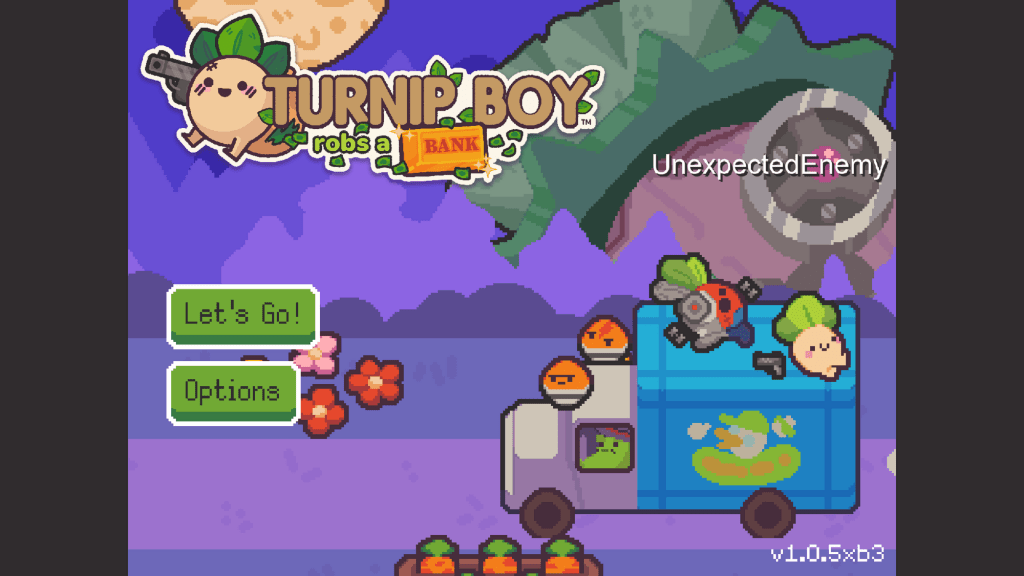
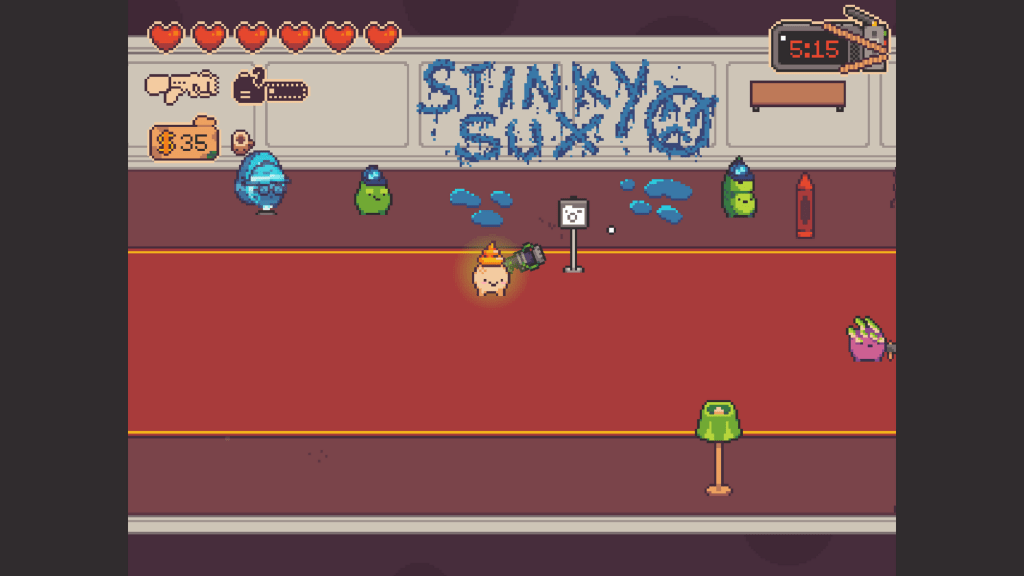
Turnip Boy Robs a Bank, developed by Snoozy Kazoo, is a 2D, top-down, rouge-like, twin-stick shooter of sorts. While the first game was a miniature Zelda-like experience, Turnip Boy Robs a Bank takes a more hybrid approach to genre-splicing. Even though I completed the first game at 100%, I couldn’t tell you exactly what happened in the story, but it definitely goes places. The sequel more or less picks-up after Turnip Boy Commits Tax Evasion, but this time, he has teamed up with the Pickled Gang to perform the greatest heist of all time at the Botanical Bank.
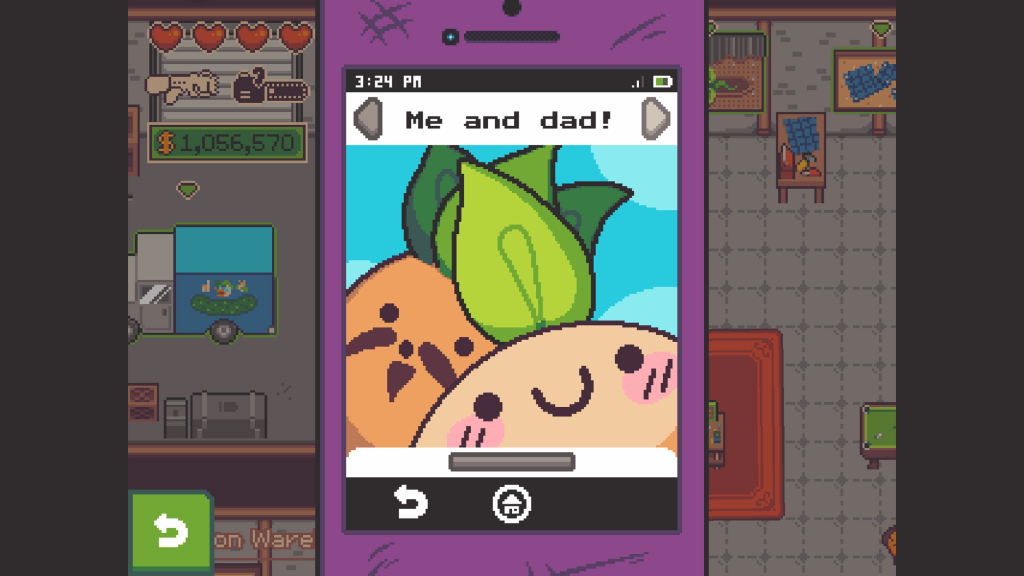
I miss you dad.
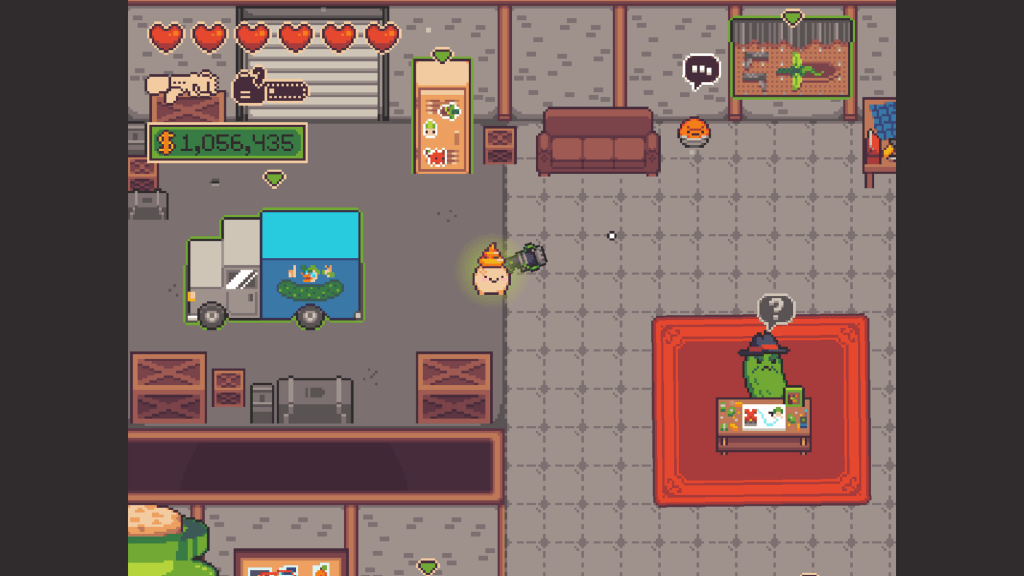
Turnip Boy Robs a Bank has a really addicting gameplay loop. You can purchases upgrades from your base of operations, including special items like a diamond pickaxe or C4 from the “dark web”. These unique items are mostly used to access new areas of the bank in order to progress the story. After you defeat each boss in their respective region of the bank, you unlock shortcuts that allow you to get around more efficiently. Meanwhile, because you can access later parts of the bank earlier, you’ll gain higher-valued items and cash more quickly, which all funnels back into the upgrade system. Some of the upgrades include additional time for your clock (so that you can spend more time in the bank), maximum health upgrades, increased melee/ranged weapon damage, and more. For each weapon you pick-up and escape with, you can either store them for a future run or dismantle them to unlock new weapons that you can bring with you on your next run (think of it like a loadout).
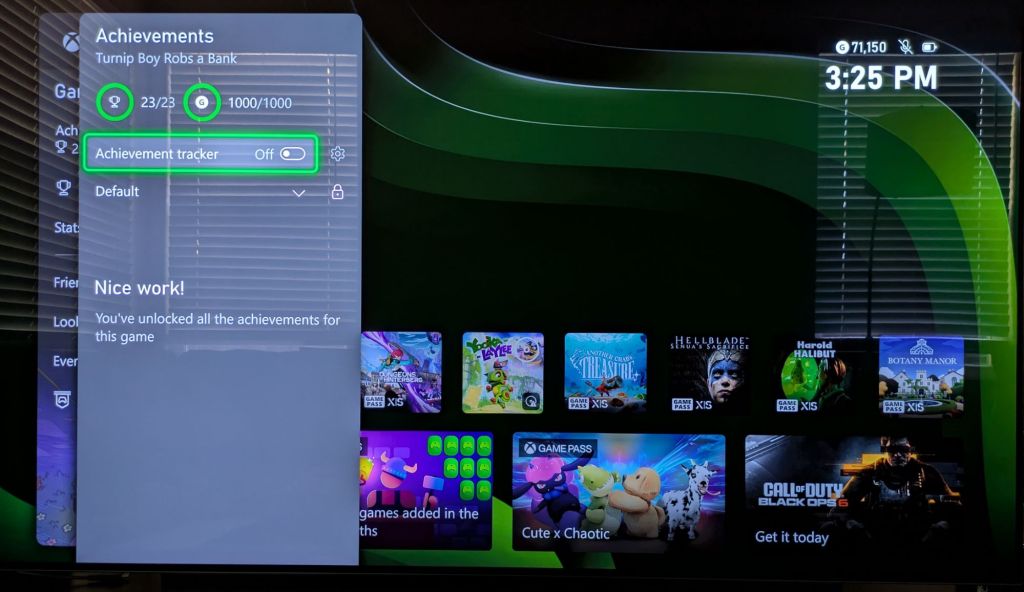
It was nearly impossible to put the game down once you make a few runs and defeat a handful of the bosses. The dopamine rush is real. I would be remiss if I didn’t speak to the soundtrack, composed by James Currier. I like Berry Time and The Bandit, especially. You can even change the music for each run as you unlock new in-game tracks. I often put Air on repeat because I liked it so much. I downloaded and played Turnip Boy Robs a Bank through Game Pass and completed the game with all 1000/1000 achievements unlocked on my Xbox Series X. I think I spent somewhere in the ballpark of 10 hours to fully complete the game. Unlike the first game, there’s no endless mode (which was added after the fact) or any additional reason to “run” the bank, unless you just really like the core gameplay loop.
Game #52 of 2024: Nicoderiko: The Magical World
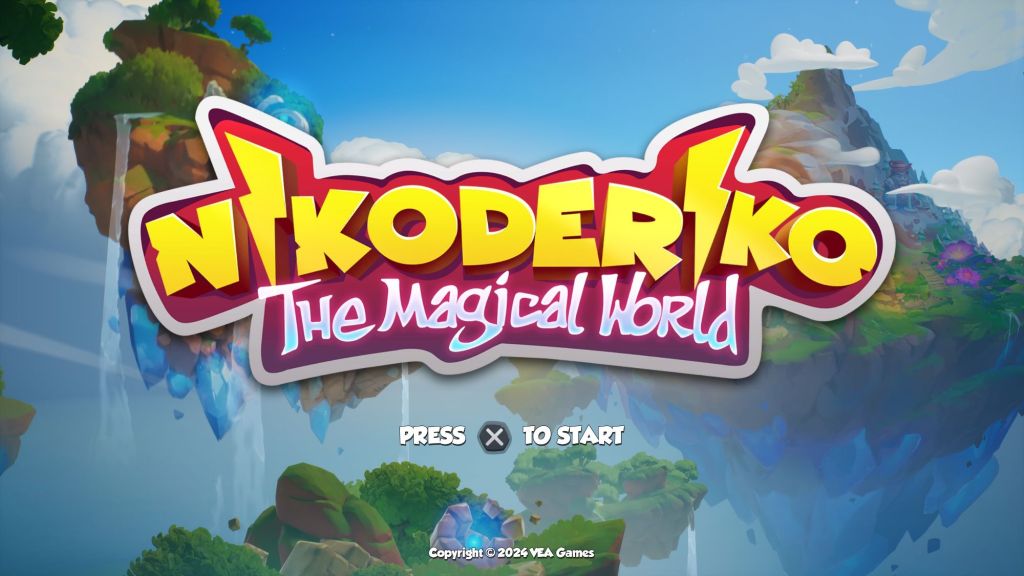
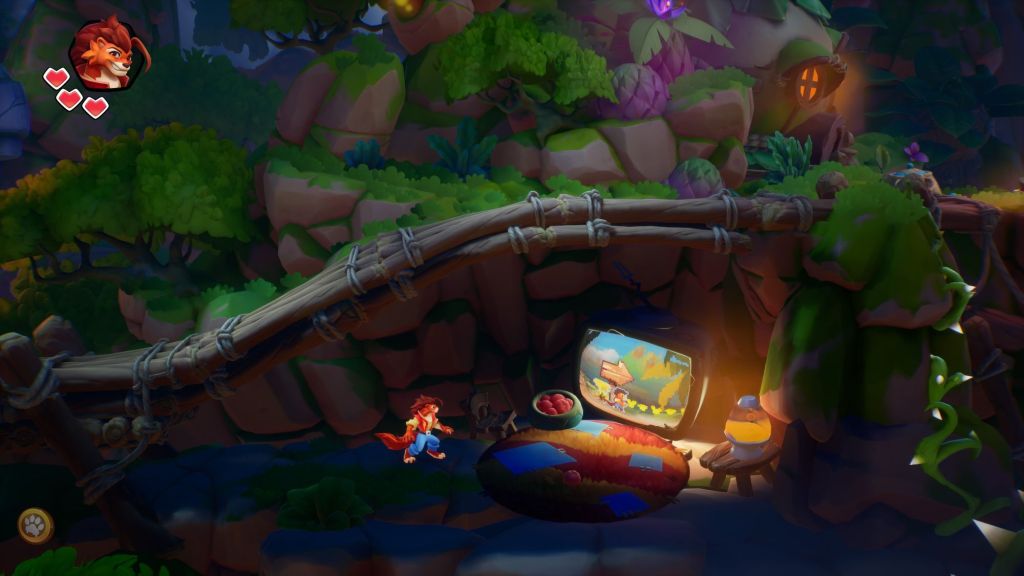
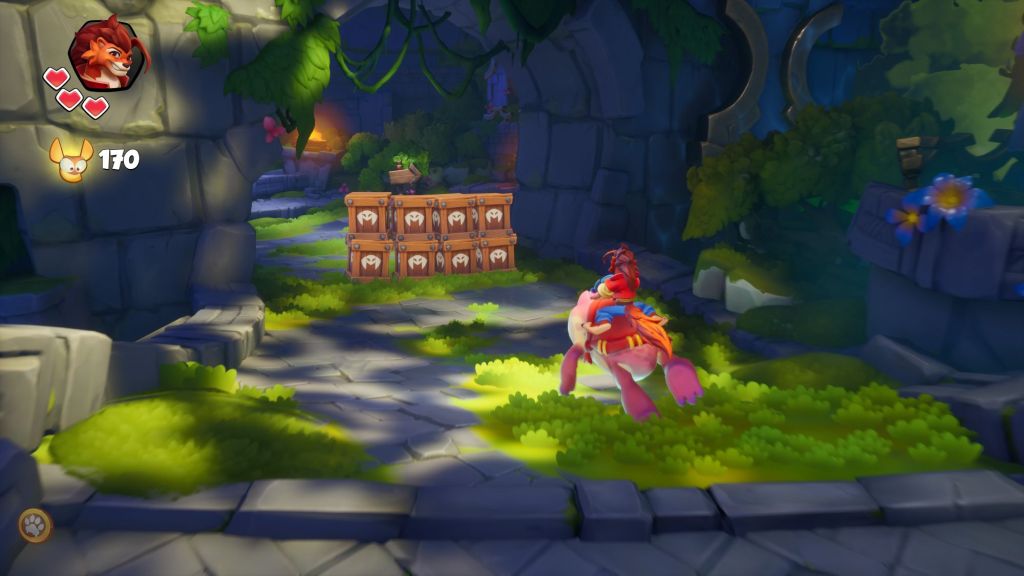
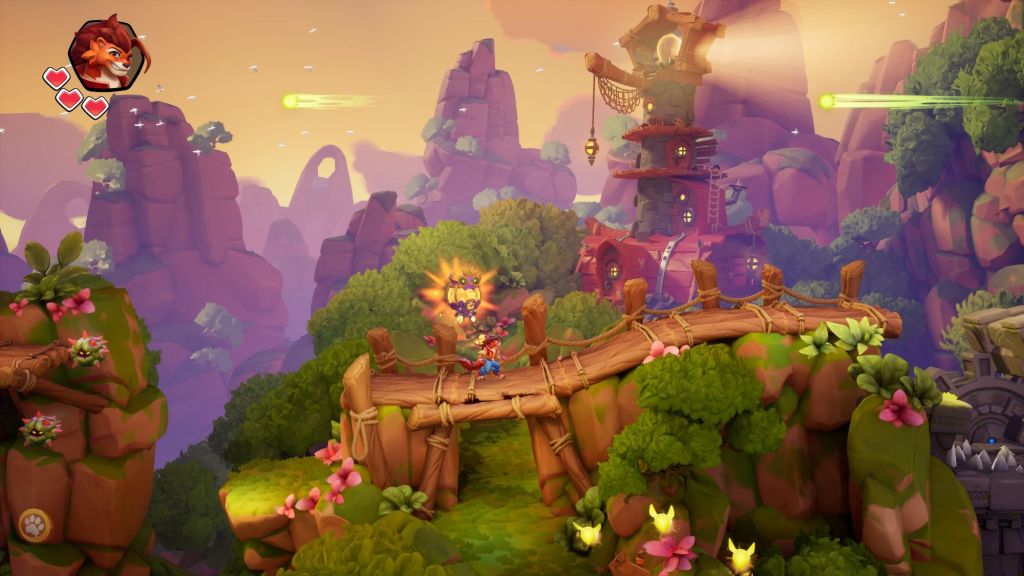
Nikoderiko: The Magical World, developed by VEA Games, is a 2.5/3D platformer in the same vein as the classic Donkey Kong Country (DKC) games. Nikoderiko is perhaps the perfect example of wearing your inspirations perhaps a bit too closely on your sleeve. While Rare’s DKC games were clearly an inspiration here, Nikoderiko takes a lot of cues from Retro Studio’s releases. So, what is Nikoderiko exactly? Niko and his friend, Luna, are mongooses. Mascot platformers based on anthropomorphic animals have been a staple of the genre for decades. Mongooses like to hunt snakes, so of course the villain, Baron Grimbald, is a cobra and his underlings are a bunch of snakes. While an attempt was made here, it all feels like a poor imitation of the Kremlings from the DKC titles. Niko and Luna are simply treasure hunters in search of gold and trinkets. They arrive in the titular “Magical World” to obtain its riches but are stopped in their tracks by the Baron and his gang. Time for adventure, I guess?
Nikoderiko’s main hook is the fact that it’s both a 2.5D and 3D platformer. The game is mostly on-rails, but will occasionally transition to a 3D perspective. I want to stress the word “occasionally“. The 3D segments, although somewhat reminiscent of the Crash Bandicoot games, are extremely short-lived and the gameplay doesn’t really change or do anything interesting with the perspective change. With that said, the game is colorful and looks relatively nice from afar. The animations are serviceable, but they’re not great. At the end of the level, both characters do a little victory dance as your collectables are tallied. It’s an extremely awkward animation and it doesn’t help that Luna’s tail clips into Niko when she does her spin. I played the game on PS5 and the load times are decent. The controls are mostly fine, too; Niko and Luna can slide, perform wall jumps, hang from hooks, ground pound and even glide through the air. It’s even got that DKC style pit-jump where you’ve got some airtime right when you step/slide off of a platform to extend your jump. The characters never quite feel like they are standing on any surface, however. There’s just a lack of physicality with the environment, so it all feels relatively floaty.
The level design is mostly fine and while the stages don’t overstay their welcome (thankfully), most levels lack polish and focus. One general critique I have so far is the overall approach to level design and flow. The second level, for example, introduces these sleeping rock platforms that can be woken-up by using a ground pound. The level plays with this idea in a handful of ways at the start, but then you suddenly find yourself in a dark cave where the game goes 3D. In this cave, there are mushrooms that will light the way and illuminate your surroundings once you’re within proximity of them and it actually looks rather nice. The designers could have made an entire level out of this idea instead of cramming it into the second stage along with the sleeping rock platforms. This critique isn’t exclusive to this game, either. I’ve found that a lot of indie developers struggle with either making levels that are far too long for their own good or have too many ideas crammed into one and lack focus, especially in the 2D/3D platformer space. Nintendo usually does this very well with their Mario games and the Retro Studios DKC games are no stranger to this approach, either. I don’t understand why it’s so hard to introduce an idea in a level, play with it, ask the player to master the concepts within the stage, and then move on!
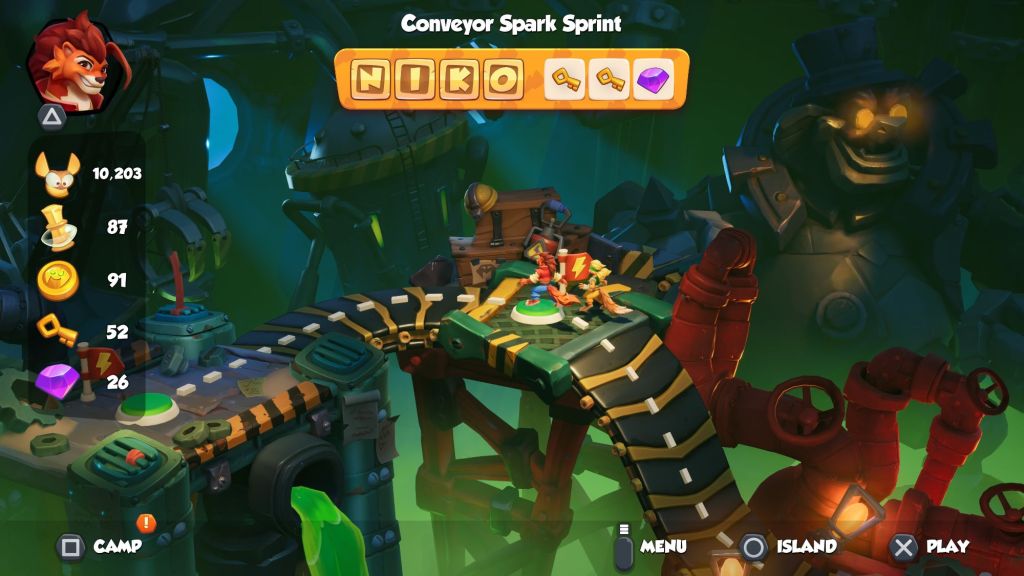
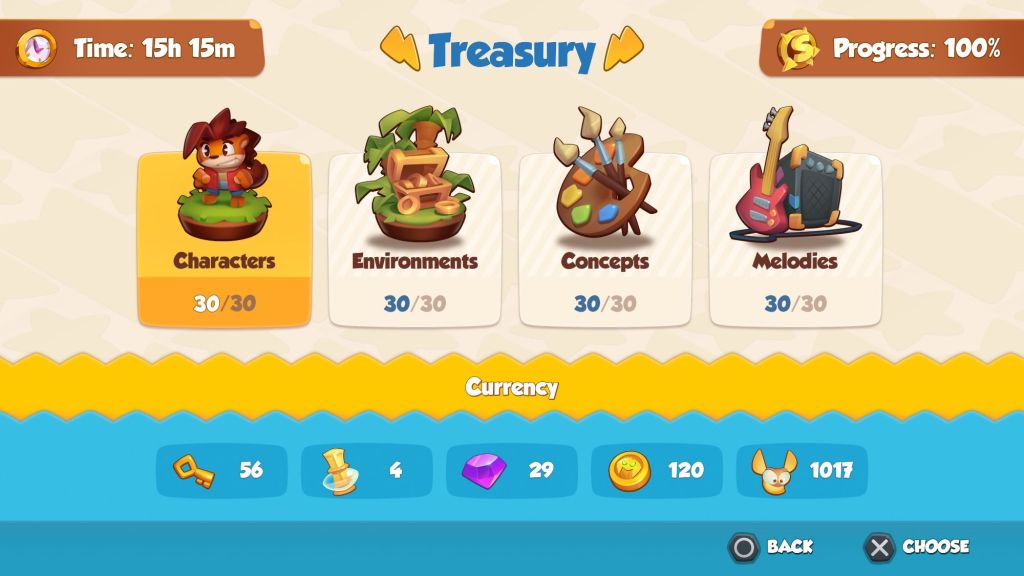
Each stage is littered with goodies to collect and bonus areas to discover, often hidden in various nooks & crannies. One thing I did appreciate about the game is that there are a lot of background/foreground objects that can be broken by performing a ground-pound. Your reward for breaking these objects is typically Fireflies, the game’s main currency, but there are also Keys, gems and letters that spell “NIKO” to collect. What’s completely wild and unacceptable is that the Keys, Gems and NIKO letters aren’t used for anything and are simply there for completion purposes only. Unlike Crash Bandicoot, you don’t use gems to access secret levels. The fireflies, artifacts and special coins found in the stages can be spent at an in-game shop to unlock artwork, 3D character models and more extras. A “regular” chest gives you a chance at earning a particular set of unlocks while the “epic” chests promise better rewards. They’re sort of presented like loot boxes, but it’s more or less their way of presenting a “Gacha” mechanic, similar to the “Gatcha Lab” from Astro Bot, for example. The special coins are used to purchase mounts (rideable animals a la DKC) and can be summoned mid-stage (although they are kind of useless).
Why would anyone read all of this?
Nikoderiko sometimes hones in on a particular concept and doesn’t repeat the idea, but it all feels like the “Greatest Hits of DKC”. There’s one level that’s basically Stop & Go Station from the original DKC and there’s another level where the lights flicker on and off, which is reminiscent of Blackout Basement. There’s even a dedicated minecart stage. It’s so egregious and in almost every instance, the lack of polish, creativity and craftsmanship is evident. Obtaining 100% in-game completion is exhausting as well. For one, you have to collect 15,000 fireflies and not spend them. You then need to purchase nearly all of the unlockables from the Treasury. My GameFAQs Pro-Tip? Replay the first level’s bonus room until you have enough of the currencies to unlock everything. When you finish the bonus room, the game will spit you back out right in front of it. Rinse and repeat for a few hours and you’ll have yourself a Merry Little Christmas. It took me around 15 hours to achieve the in-game 100% completion, but there’s a no-death trophy I’ll likely never bother attempting.
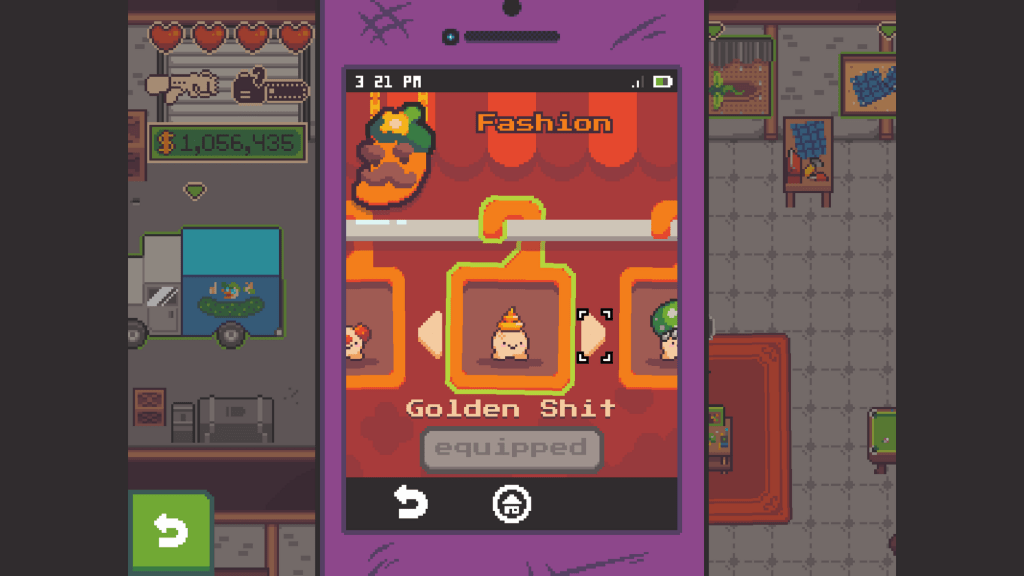
Mobile game-adjacent menus.
Nikoderiko isn’t a very difficult game, but there’s a lot “game over” pits and the lack of polish certainly doesn’t lend itself to attempting a “no death” run. While I certainly could use my PlayStation Plus subscription to backup my save file before making attempts, I just don’t like the game enough to even consider wasting my time with such an endeavor. Out of morbid curiosity, excluding the “no death” trophy, I did manage to complete Nikoderiko: The Magical World at 100%. 2D/3D platformers are arguably my favorite types of games, so I feel obligated to “check ’em all out”, so to speak. There’s just nothing cool about Niko’s character design, though. He reminds me of Robbie from the 90s Dinosaurs show, yet somehow infinitely less stylish. Finally, the music, composed by legendary composer, David Wise, feels totally phoned-in and uninspired (I do kind of like the Sacred Forest track, even if it feels like a derivative of his work on the DKC games). I truly don’t understand how/why this game was made and I can only recommend it to genre aficionados looking to scrape the absolute bottom of the barrel.
Game #53 of 2024: Neva
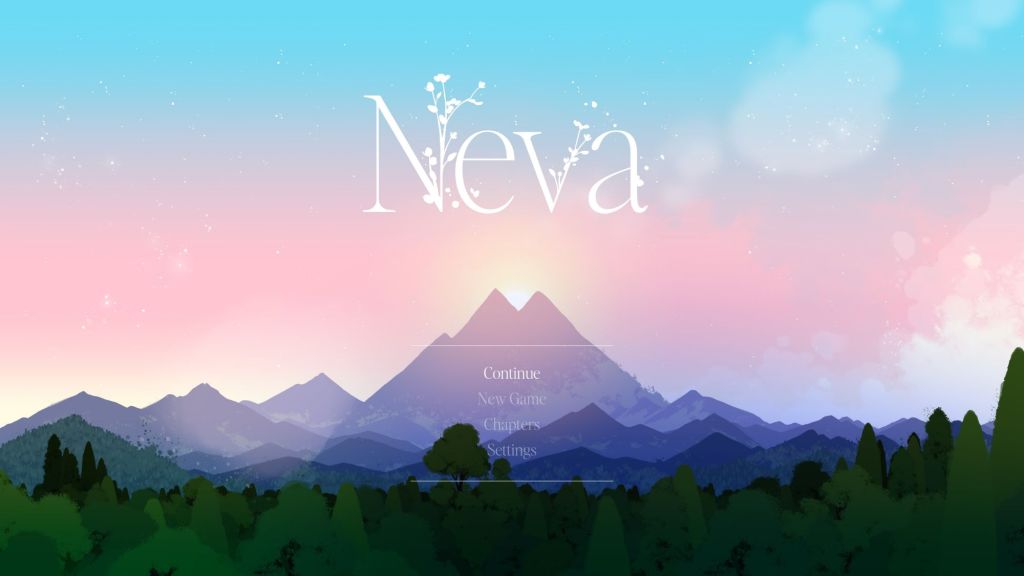
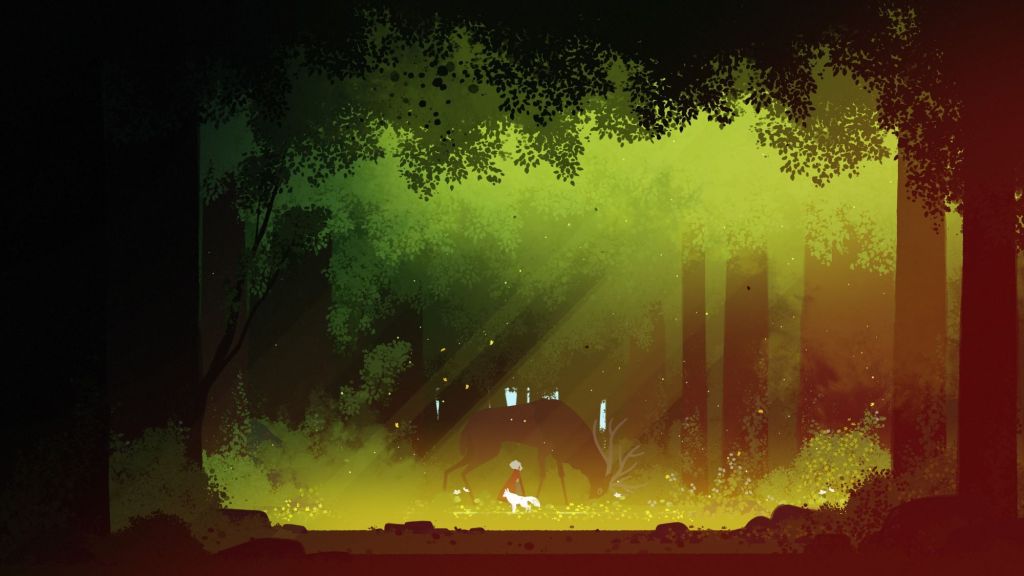
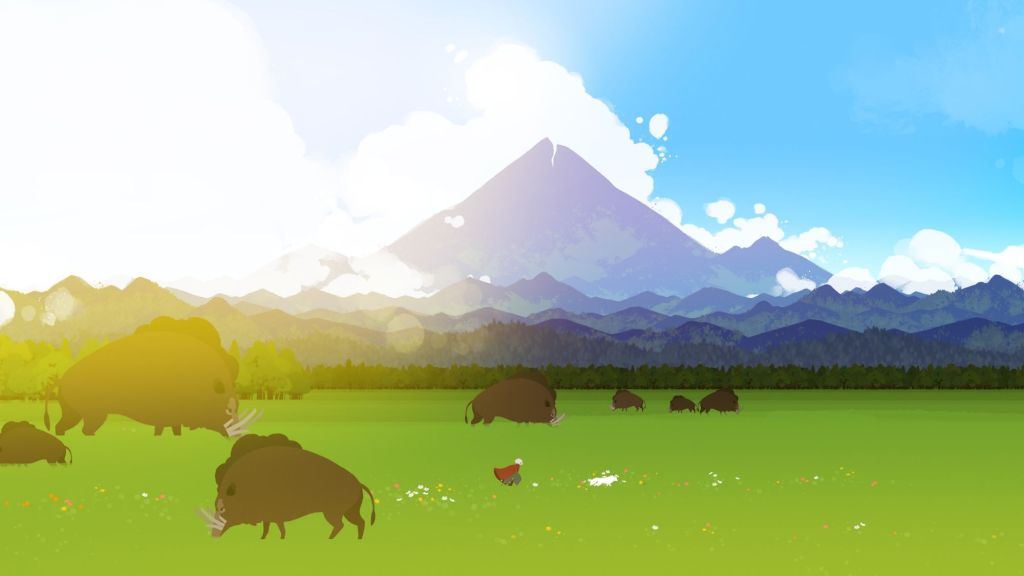
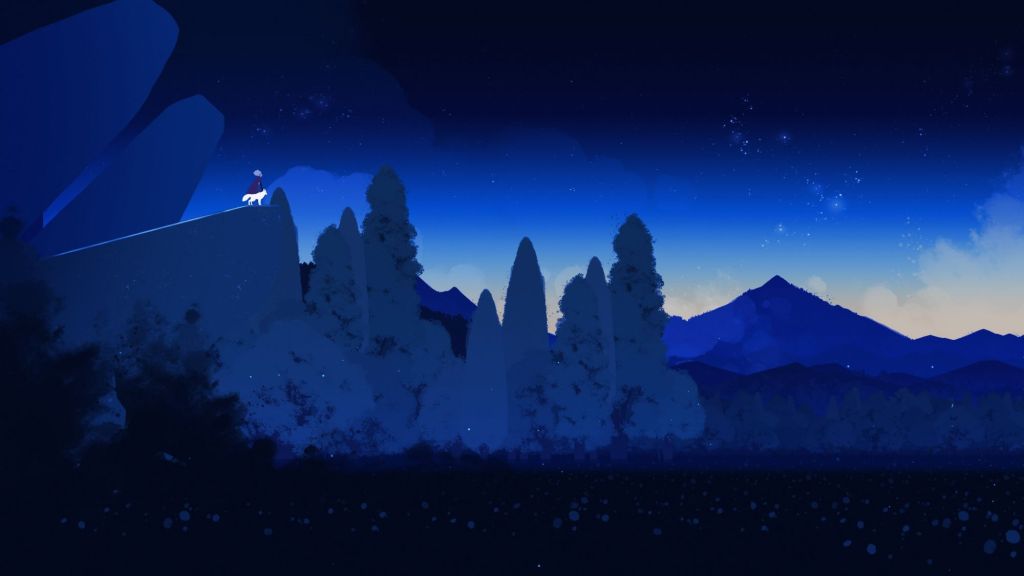
Neva, developed by Nómada Studio, is a 2D action-platformer from the creators of GRIS. Just like their first game, NEVA is a minimalistic adventure game with no spoken dialogue. Everything is told through art, cinematics, animations and environmental storytelling. The game is visually stunning, even more so than GRIS. Nearly every frame looks like a painting. The game takes place over a year and each chapter represents one of the seasons. You play as a woman called “Alba”, who appears to be some sort of warrior guardian of the forest. The game opens with a stunning animation sequence depicting Alba and Neva fighting off a wave of dark creatures. Afterwards, the game begins in the Summer and ends in the Spring. Neva, your wolf-like guardian spirit grows along with you as the seasons change. It’s all handled very organically, too. In the Summer, Neva is basically a pup and is insecure about their actions. When jumping large gaps, Alba has to sort of guide and assist Neva, almost like how a guardian/parent would do. In the next season, Neva has grown and becomes more independent. You’ll find Neva running ahead of you, jumping across gaps without aid. While GRIS was arguably about motherhood, I believe Neva is simply about parenthood/guardianship.
The game itself is a simple 2D action-platformer with some light puzzle elements. Neva certainly fits the bill of a cinematic-platformer as it’s not unlike games like Another World, Heart of Darkness or INSIDE, for example. As I mentioned above, it’s similar to GRIS in terms of structure and pace, but even more so than the developer’s first game as the puzzle-solving takes a backseat to the action-platforming elements. Combat takes place in small arena-like rooms and while there isn’t a ton of enemy variety, the encounters are just interesting enough to keep you engaged. Alba can swing their sword, roll and even perform an air dash. You can also regain health by attacking enemies, otherwise, there’s no way to restore your character’s health outside of hitting a checkpoint. The camera zooms out far at times too, so some of the platforming can feel a bit tricky, although the game never asks a lot from the player in terms of traversal. As per usual, the music by Berlinist is exceptional. Neva is a brisk, five hour jaunt. It’s a very approachable game and nearly perfectly-paced. I completed the game at 100% with all flowers collected and the Platinum trophy earned. Similar to how I felt about GRIS, I just wish the game resonated with me a bit more than it did.
Game #54 of 2024: Another Crab’s Treasure
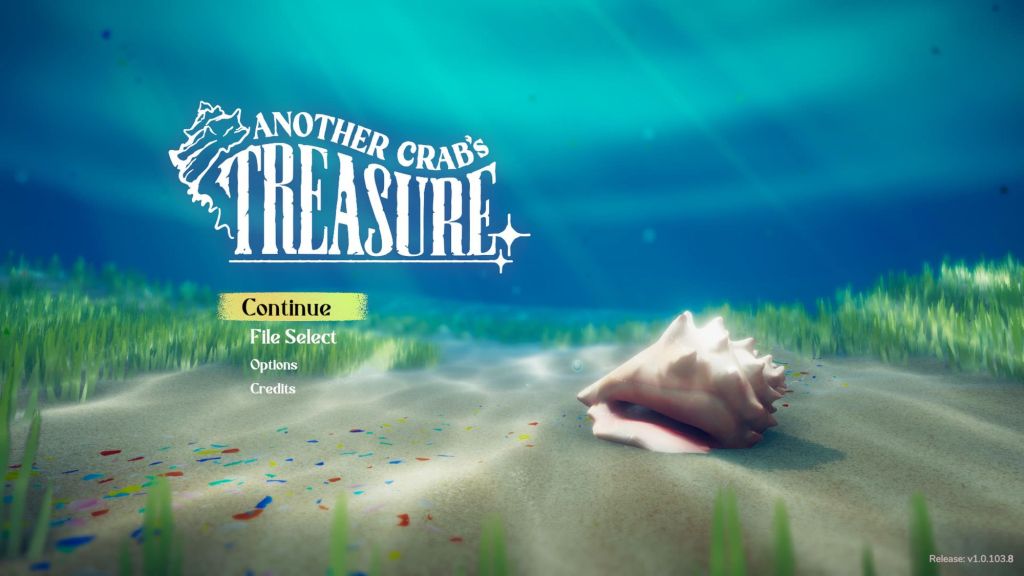
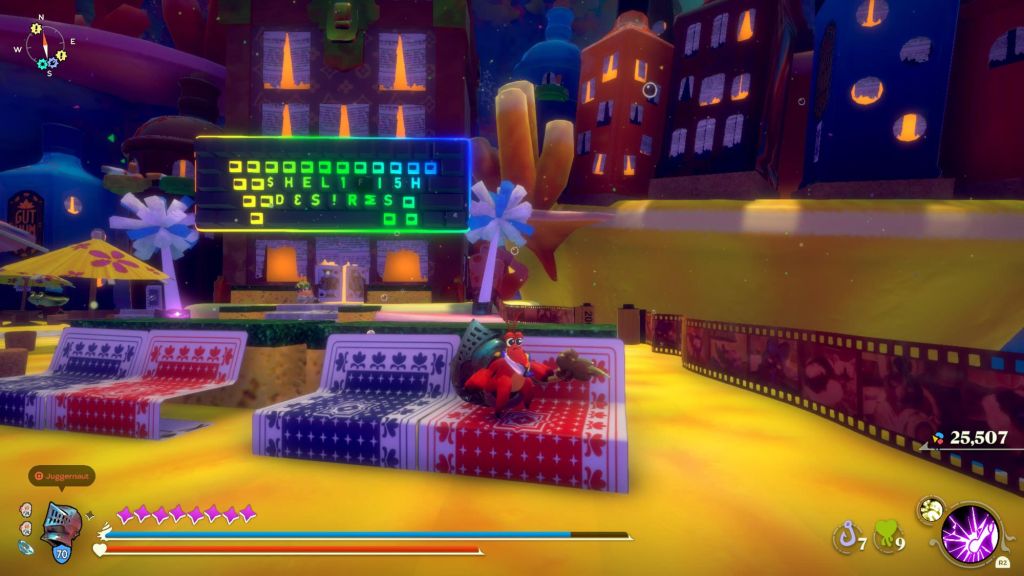
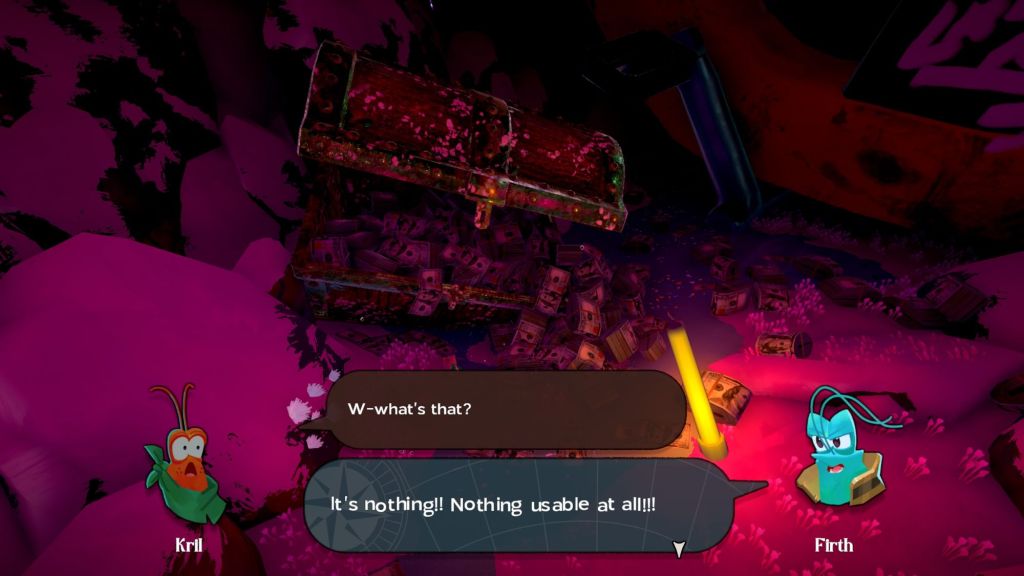
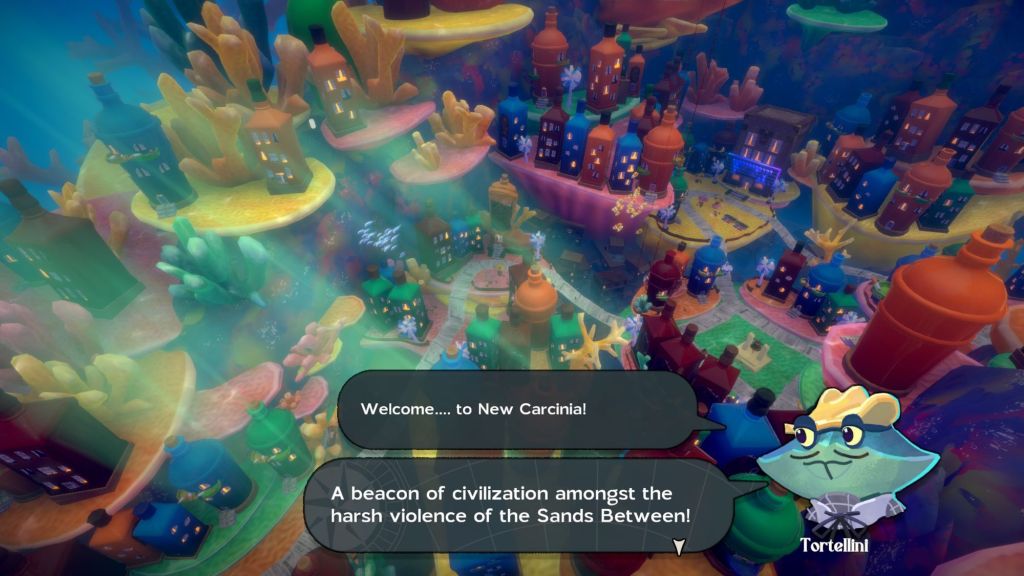
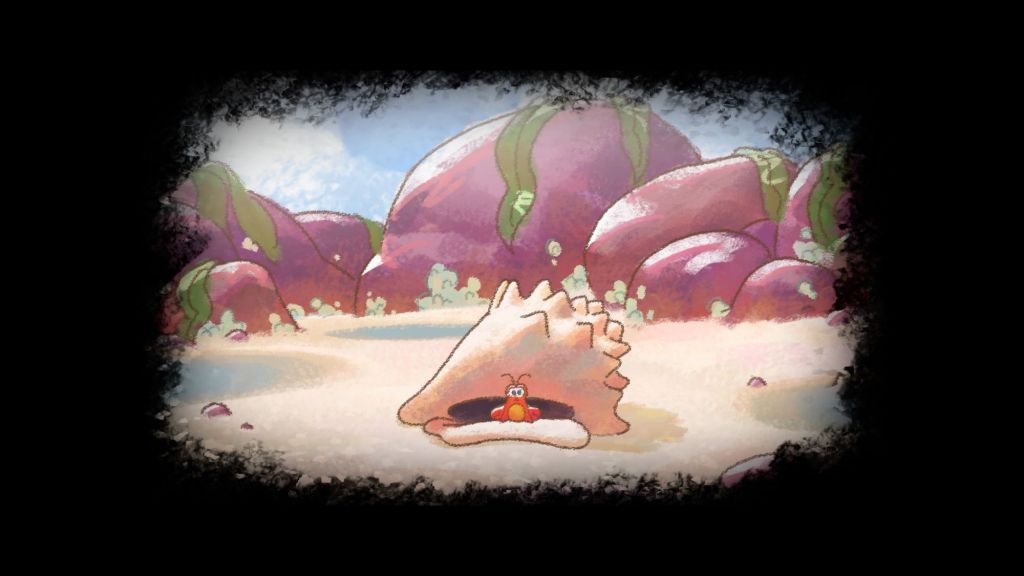
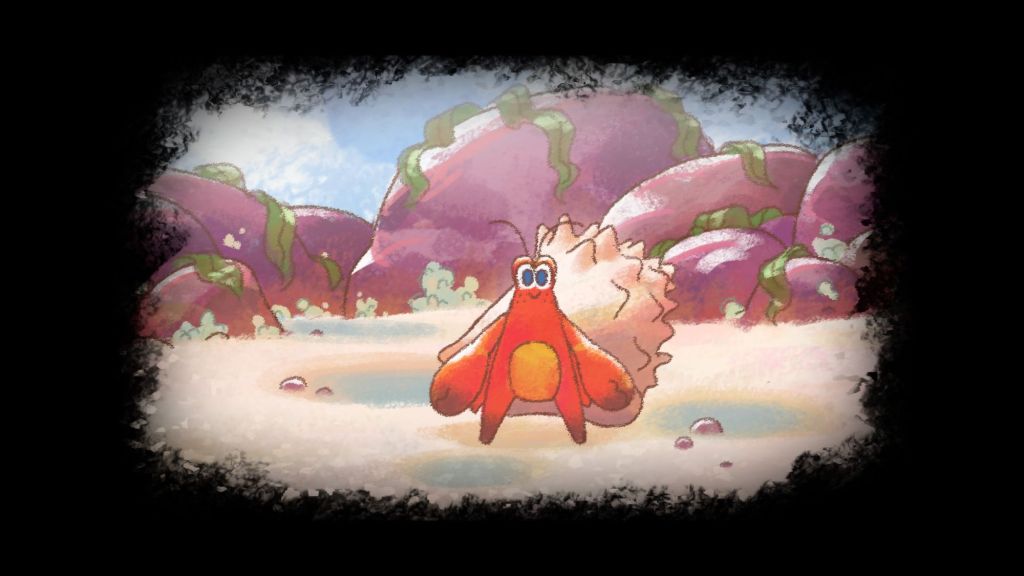
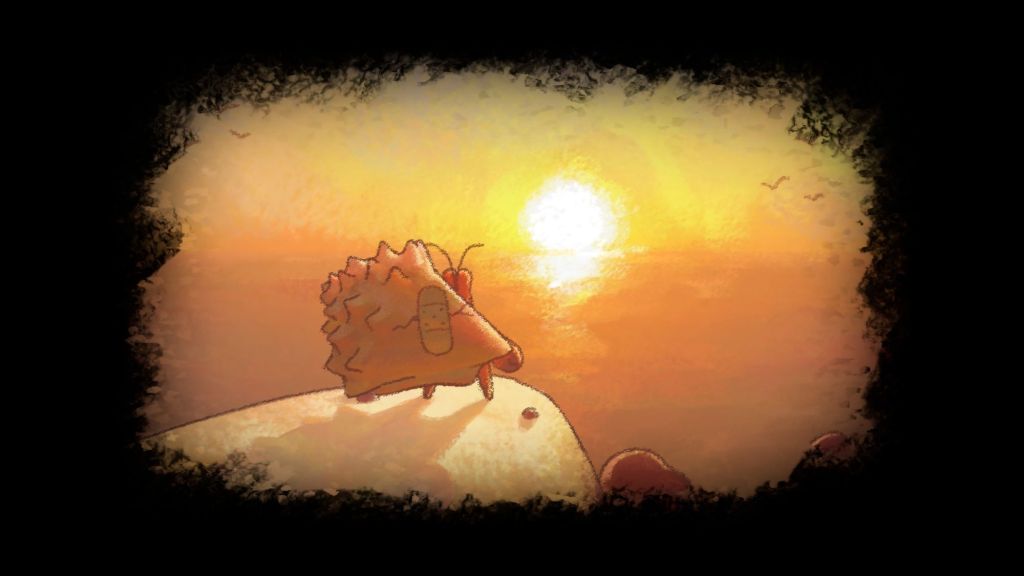
Another Crab’s Treasure, developed by Aggro Crab, is a beginner-friendly Souls-like about a crab and, well, his treasure. The game starts with Kril minding his own business on a nearby shore. Suddenly, a loan shark appears and confiscates his home (shell) in order to pay taxes to Magista, the duchess of Slacktide. Eventually, Kril finds himself in the City of New Carinia on “Trash Day”. A garbage patch passes over the cardboard skyscrapers above and rains plastics and junk onto the citizens below. More importantly, a cereal box depicting a treasure lands at the center of the town, catching the eye of those looking for their big break. Naturally, Kril sees this as an opportunity to collect the treasure in exchange for his home, which has been sold off to a nearby “Prawn” (get it?) shop. There’s many twists and turns along the way and the cast of characters is so memorable and likeable. Without spoiling anything here, the story does goes places.
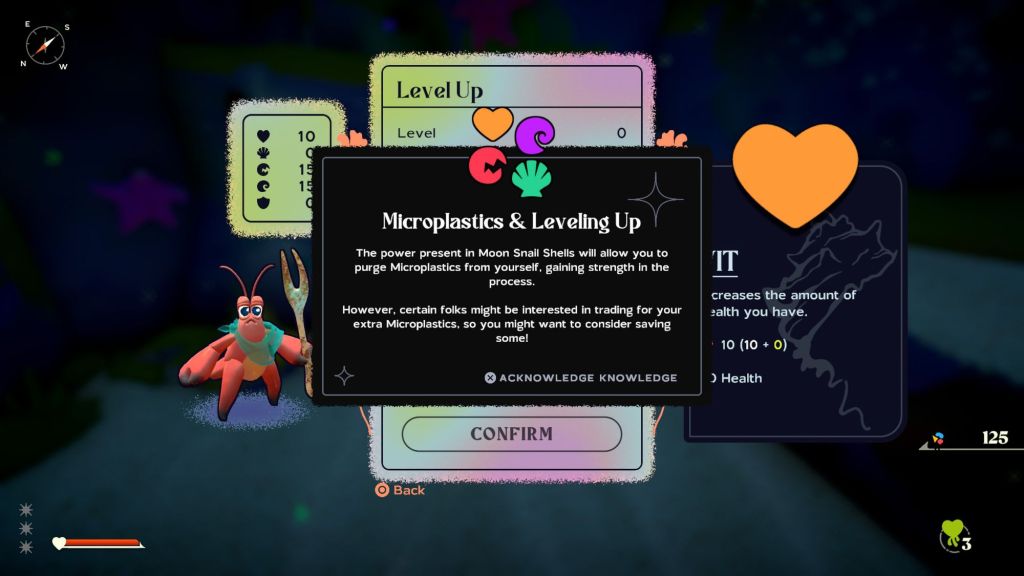
In Another Crab’s Treasure, trash is ironically a commodity. Microplastics are everywhere and everyone wants them (even if its causing them all to go mad). The microplastics are used to purchase a variety of goods, including upgrades to your stats. When enemies are defeated, they burst into colorful confetti (microplastics), which are essentially your “souls”. Like other games in the post-Souls sub-genre, once you are defeated, you need to perform a “runback” to the spot where you died in order to recover your trash. Like any good Souls-like, there are shortcuts and wrap-arounds to unlock that make getting around much more pleasant. The level design in general is tight and well-paced. You’re almost always running into a sub-boss or a fun platforming sequence as you make your way to the main objective in each area. The enemy variety is decent too, although you do fight your fair share of crabs throughout. The visuals remind me of a PS2 era licensed SpongeBob 3D platformer, but much better and more stylized, of course. The game is very colorful and vibrant. The voice acting is great and while every line isn’t voiced, they use Banjo-Kazooie-like gibberish for most dialogue, which is both smart and fitting considering their budget, I presume.
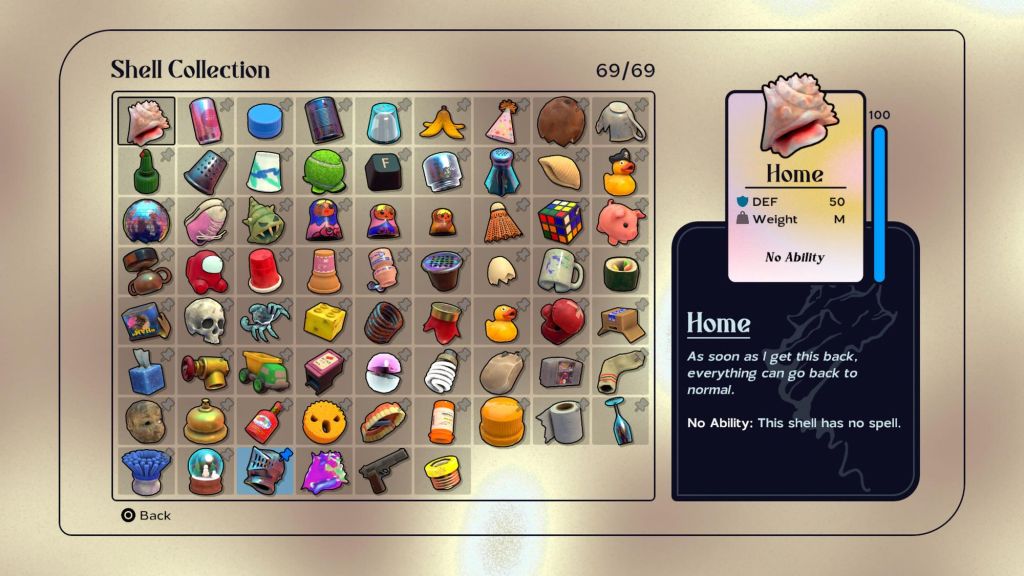
The main gimmick/hook in ACT is its shell system. Since Kril lost his home, he can pick-up various shells scattered about the ocean floor as temporary protection. Sometimes, it’s something practical like a soda can, but you’ll also gain access to party cups, tennis balls, banana peels, tissue boxes and more. Each shell has defensive properties and weight. The defense stat dictates how much damage your shell can take before it breaks. The weight impacts your movement/dodging capabilities. Think of larger shells, like the valve, as a heavy build from a Souls game. In addition to providing protection, each shell comes with a unique ability. The soda can has an ability called “Fizzle”, which emits bubbles that home in on the enemy to deal damage from afar. The tissue box comes with an ability to cure status ailments, for example. There are a lot of abilities, but there’s also a lot of crossover between the shells. Many shells share the same abilities, so the only difference then is the aesthetics, weight and defensive properties. You can also find “Stowaways”, which are barnacles (accessories) that more or less attach to your shell and provide passive upgrades to your character’s stats. I just love how much thought went into marrying gameplay ideas to aspects of ocean life.
Although ACT is a Souls-like with some character-action game elements, it feels like a 3D platformer at its core. There’s a lot of platforming in ACT and while some of it is automated (particularly with the Fishing Line), a lot of it isn’t. Kril can float/hover for a short period of time by flapping his little claws after he jumps. Little bubbles are left in his trail as he flies through the water, which is a nice little detail. Speaking of small details, Heartkelp Pods are your restorative items and if you idle for long enough, Kril will start juggling one of the pods. Once you start moving, Kril fumbles and drops the pod on the ground making you physically pick the item back up. It’s totally unnecessary, but the unique animation is super cute and funny. Kril also obtains a Fishing Line that acts as a grappling-hook, which allows him to reach previously inaccessible areas (and can also be used in combat). Making a game take place entirely underwater is no small effort. Most games have “underwater” levels, but ACT takes place entirely in the ocean. There’s a moment or two where you surface inside underwater caves and you lose the ability to float in the air. During these sequences, being “out of water” makes you feel more vulnerable, which would be the case for any ocean critter. I wish the game played more with this concept, but like a lot of ideas in ACT, it doesn’t overstay its welcome.
ACT isn’t the most polished game, even after its many patches/updates, but it’s certainly greater than the sum of its parts. As someone who’s still a completionist-at-heart, there are particular collectables that are currently unobtainable, though. In each area, there are a finite amount of purple Umami Crystals to collect. These crystals are used to learn new skills from three separate skill trees, in addition to “Adaptations”, which are powerful special moves that you can learn from a variety of sources. One of the larger, more open areas is apparently missing five Umami Crystals, so you technically can’t “complete” the area. In one of the final zones, you can obtain more Umami Crystals than what the total fraction displays on the fast-travel screen. In terms of what I used my Umami Crystals on, at first, I focused on the “Way of the True Crab” skill tree as it housed perfect guard skills and was focused on counter-attacks. The Parry technique is really interesting as you have to hold the block button, but then release it just before the enemy lands their attack. The parry animation and sound is super crunchy and feels incredibly satisfying to pull-off. Enemies also have a stamina gauge of sorts which once depleted, you can topple (stagger) the enemy and deal massive damage. The other skill trees focus on other areas of combat, one of which incorporates the Fishing Line. There are enough Umami Crystals in the game to learn everything, so you ultimately don’t have to pick and choose.
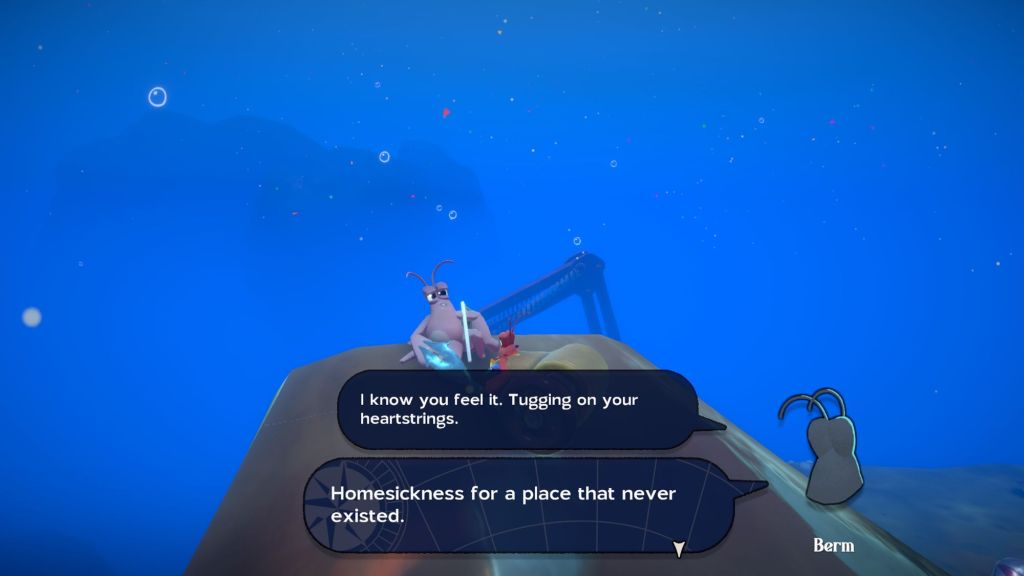
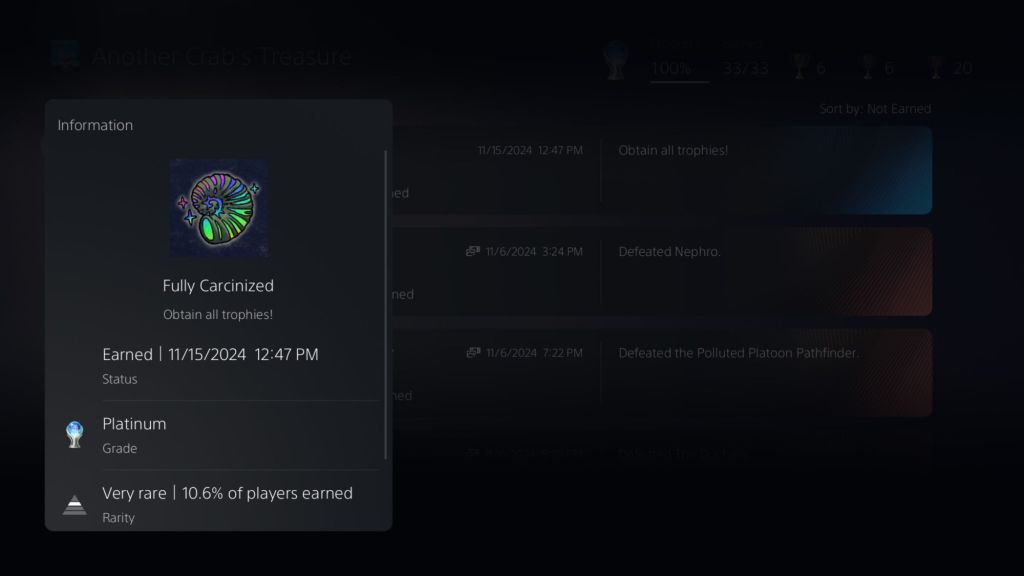
ACT simply commits to the bit and I love it for that. It’s poignant and thoughtful; Kril melts my sometimes very cold heart. I just love the characters so much and the overall message of the game. Kril’s final act of empathy solidified him as one of my new favorite characters of all time. The music, composed by feasley, is also one of my favorite things about the game. There’s something so tragic about the title screen music (which also plays during an impactful sequence near the end of the game). The first major area track is also very memorable. The audible count-in really sets the tone. Expired Grove is simply one of my favorite pieces of the year. With so many 50-100 hour games in 2024, my 30-some hour adventure with Kril and the gang felt like a breath of fresh air. I completed Another Crab’s Treasure with everything collected, all skills learned and the Platinum trophy earned. The developers have more plans for updates (presumably in 2025), so I can’t wait to dive back in. I thought I was tired of Souls-likes, but all I need was Kril and his friends in the end.
Game #55 of 2024: The Legend of Zelda: Echoes of Wisdom
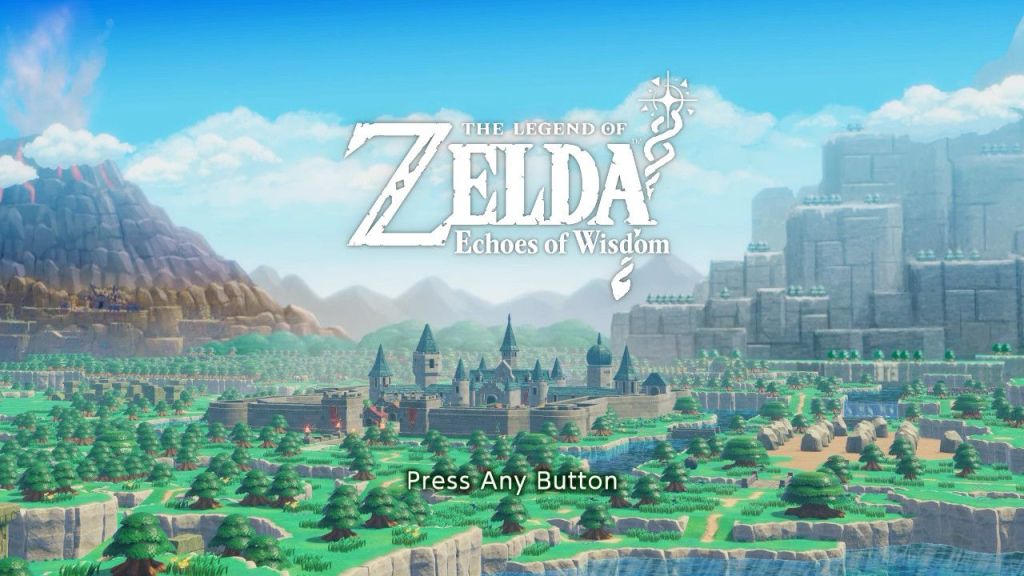
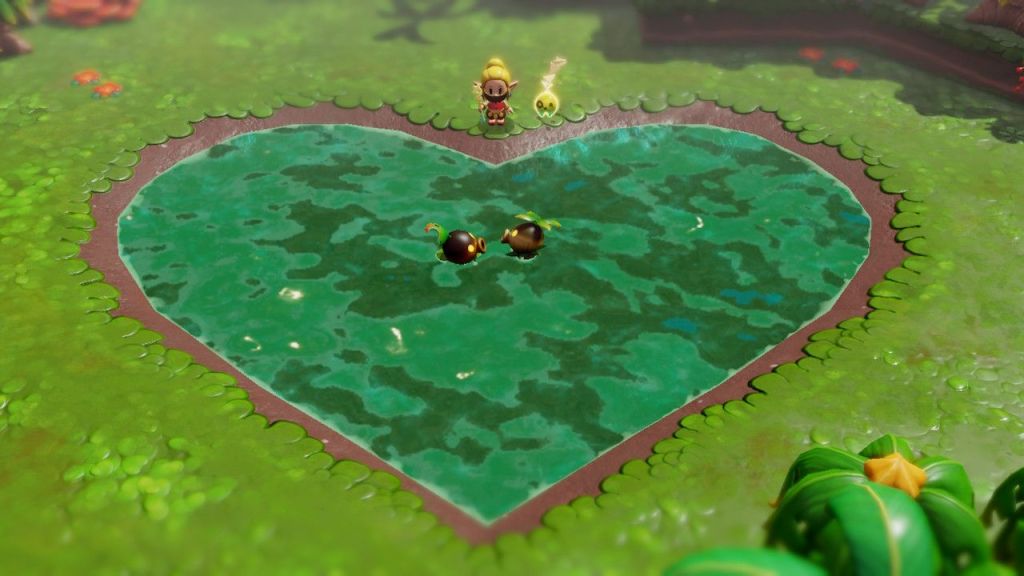
The Legend of Zelda: Echoes of Wisdom (EoW), developed by Nintendo/Grezzo, is a traditional, top-down Zelda game that attempts to distill the design philosophies established in Breath of the Wild/Tears of the Kingdom, for better or worse. According to Nintendo, the game officially takes place before the first Legend of Zelda on the Nintendo Entertainment System (NES). I’m not one to dwell on the official timeline, but it feels strange that this game apparently predates the events of the “first” game chronologically. I like the stories and characters in Zelda games well enough, but it’s not exactly what I’m here for. In EoW, the game begins with Link attempting to destroy Ganon, but he ends up getting captured and succumbs to the “Still World”. All over the land, parts of Hyrule are being consumed by rifts; purple voids that devour the land and spirit away the denizens of Hyrule, if they get swallowed up by it. Sometimes, evil imposters of those taken by the rifts remain on the surface to cause problems. Along the way, Zelda will encounter classic Zelda species like the Zora, Gorons and the Gerudo to help her mend the world and save Link.
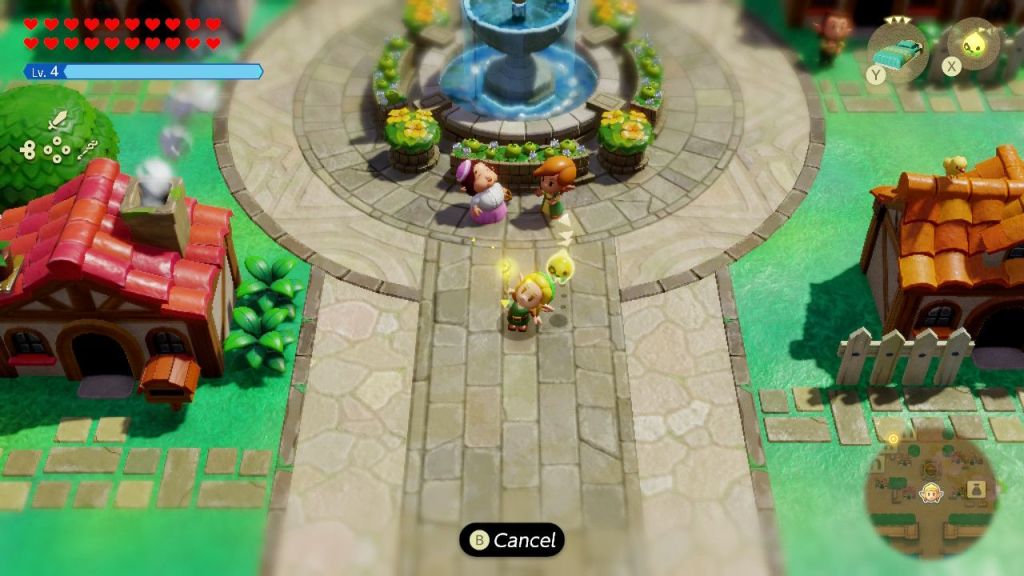
The big gimmick in EoW are the Echoes; objects and monsters that you can learn and summon at will. The bed is one of the first Echoes you learn in EoW, for example, and it pretty much carries you throughout the entire game, at least in terms of traversal. I’m not sure why they made the bed so easy to summon. To conjur any Echo, you need to expend one of Tri’s triangles. By completing both main and optional rifts around Hyrule, you’ll gain more triangles for Tri, including upgrades to lower the cost of higher-level echoes. Once you upgrade Tri to an extent, you can get around the world with little to no effort. The bed also allows you to sleep and recover hearts. There’s even Zelda’s own bed as an Echo which increases the amount of hearts and their recovery speed. On Hero mode, you cannot obtain hearts from cutting grass or destroying enemies. You must either refill your health by sleeping in beds, drinking potions, using fairies or obtaining heart containers. The bed is simply overpowered no matter how you look at things. With that said, enemies and environmental hazards can easily destroy your beds, so at the very least, you need to find both a safe place and enough room to use them properly.
EoW’s combat is fine for a first attempt (as it’s something that’s technically never been done before in the Zelda franchise), but it needs a lot of work. Zelda herself doesn’t have a primary attack (unless you transform into “Link”, but more on that later). Similar to summoning objects to traverse the land or solve puzzles, you can learn any enemy in the game as an echo (after you beat them for the first time). While the echo/enemy AI is mostly competent, I often felt like the echoes were a bit too slow and the “dance”, so to speak, between the enemies and echoes just didn’t feel totally engaging. What seems rather divisive amongst the community is the “Link” transformation or what the game calls “Swordfighter” form. Zelda more or less transforms into Link and can swing a sword and ultimately use a bow for ranged combat and even throw bombs (which I never used). She can also create “automations”, which I also never engaged with because I didn’t discover them until late in the game and the game doesn’t really ask anything from you in terms of encounter composition or boss designs once you learn a handful of the stronger echoes. That’s one of the game’s main problems, you have so many options at your disposal, but there’s rarely a need to experiment with any of it.
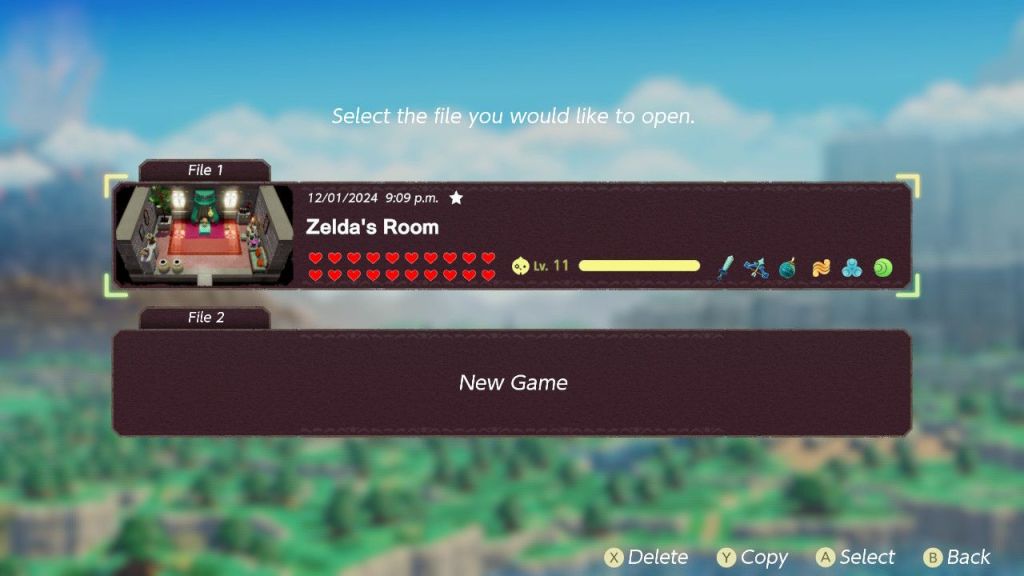
I completed EoW at 100% with everything collected; all Echoes and heart containers collected, and side quests completed. I also finished all of the arena-based challenges under their par times in order to earn unique stamps on the menu screen. Additionally, I made all recipes, even though I rarely had to use any potions (even on Hero difficulty). In classic Nintendo fashion, you do get a special message for concocting all of the potions. At the end of the day, if a Zelda game has themed dungeons with handcrafted puzzles, heart containers to collect and good music, I’m likely to have a good time. EoW mostly hit those beats for me, but I was left wanting something more from it. Last year, The Legend of Zelda: Tears of the Kingdom claimed my #1 spot for game of the year (GOTY). This year, EoW has been relegated to my honorable mentions. As much as I like the new direction Zelda has taken with BotW/TotK, I do hope Nintendo continues to make less ambitious, “smaller” Zelda games like EoW to accompany their big-budget, more ambitious releases.
Game #56 of 2024: Kunitsu-Gami: Path of the Goddess
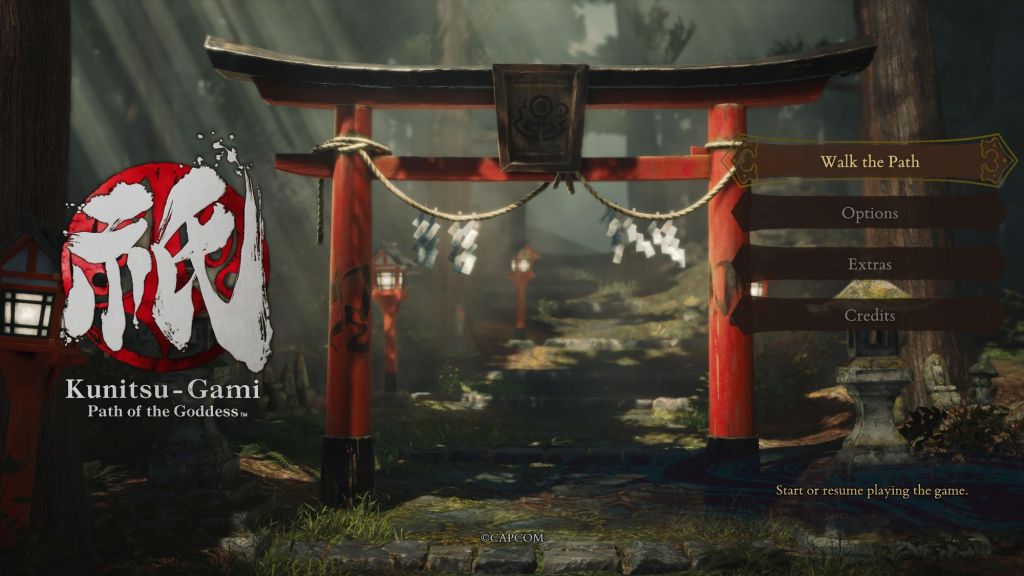
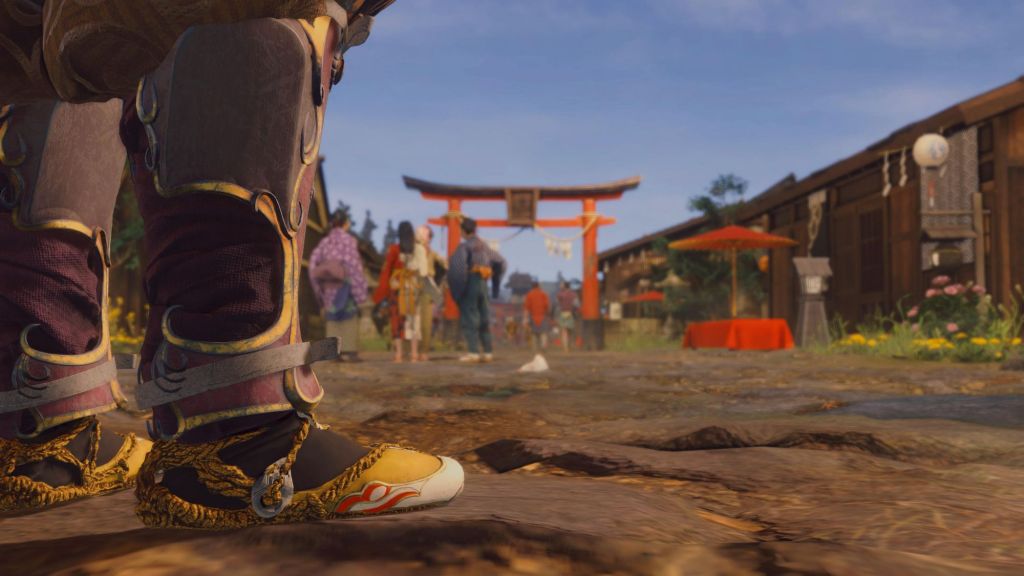
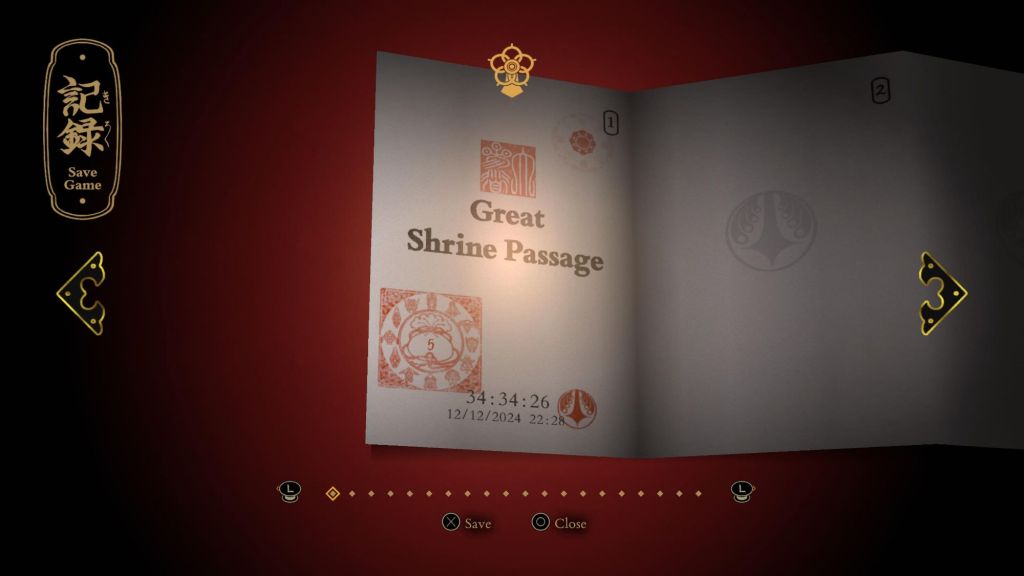
Kunitsu-Gami: Path of the Goddess, developed by Capcom, is a hybrid of genres that blends real time strategy game (RTS) mechanics with light character-action game elements. I’ve been saying this a lot lately, but Kunitsu-Gami truly feels like a PS2 era game, something that would have sat alongside Capcom’s very own Chaos Legion, for example. It was clearly made on a budget, but you can tell that a lot of love and care was put into it as well. In Kunitsu-Gami, you play as Soh, a warrior who is assigned to protecting the divine maiden, Yoshiro, who must descend Mt. Kafku in order to cleanse the various villages of “defilement”, a darkness that has plagued the land. The game primarily consists of RTS levels and traditional boss stages. The RTS levels are comprised of a day and night cycle. During the day, it’s Soh’s job to gather resources, assign rolls to villagers, and generally prepare for the ensuing night of horror. Crystals, one of the game’s primary resources, are used for a variety of means, including assigning roles to villagers or carving the titular path of the goddess. The goal of each stage is to get the goddess to the gate and crystals are required to carve the path. Since assigning villagers roles also requires crystals, you’ll find yourself making tradeoffs, seeing how few villagers you need to “get to the goal”, in a sense.
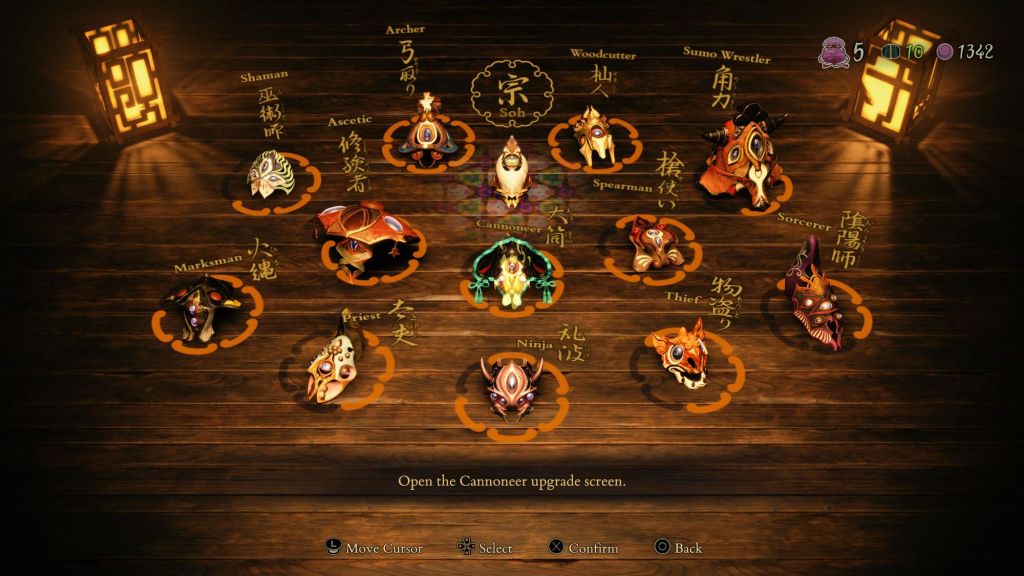
When dusk falls, demons and monsters pour out of various gates and they only have one goal in-mind; to destroy the maiden. By placing villagers in certain positions, they’ll attack, defend and act independently based on their role’s traits and characteristics. The Archer role, for example, has a bow and can attack enemies from afar, including flying monsters. The Woodcutters use their axes to attack enemies aggressively when they’re within range. One of my favorite roles is the Sumo Wrestler who are more or less tanks that draw enemies towards them. After a stage has been purified, the space turns into a base where you can enter and explore at your own pace. It’s here where you’ll repair various buildings and structures to earn items and other goodies like “Musubi”. The Musubi are used to upgrade your villager’s roles, which can include increased HP, attack power or enhancements to their respective abilities. Certain buildings/structures take multiple days to restore, so you need to play a new mission (or replay a previous one) in order to make progress. Each stage reveals optional objectives after you complete it for the first time, too. Some of them are fairly challenging and might ask you to not have Yoshiro take damage or use no healing items (rations), for example. There’s a great gameplay loop here and it all feels very rewarding to engage with.
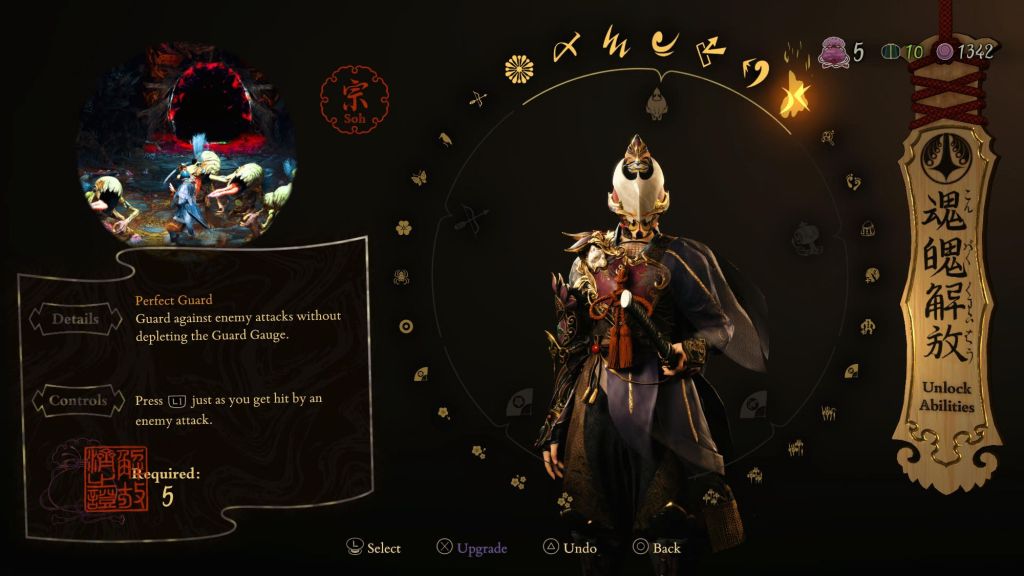
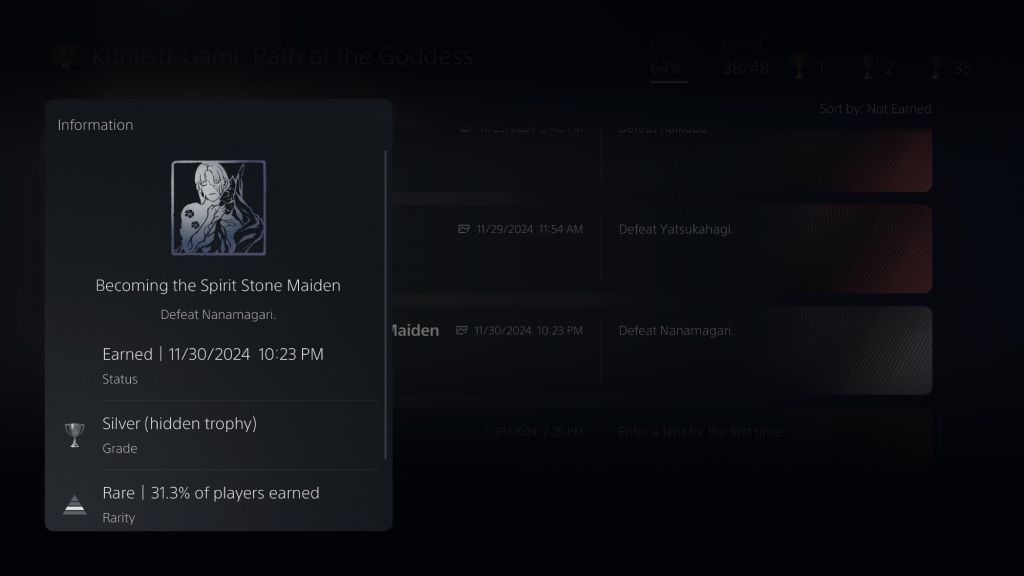
I completed Kunitsu-Gami with everything there was to do on the first playthrough; all Talismans unlocked, all abilities purchased for Soh, all unique treasure chests opened and all optional challenge objectives completed for each stage. There is a new game+ that’s apparently more difficult, but it’s the only way to max out your villager roles. There’s even a true final boss at the end of the second playthrough, so to earn the Platinum trophy, you at least have to play it twice. I might replay the game in 2025, but for now, I was happy to roll credits. Capcom continues to be on a roll lately. Alongside Capcom’s big, “AAA” releases, it’s nice that they’re still tasking smaller teams to create experimental, genre-blending experiences that remind us of the “good ol’ days”. I’m not sure how well Kunitsu-Gami did financially, but I hope we get more games like this from Capcom in the future.
Game #57 of 2024: Chicken Journey
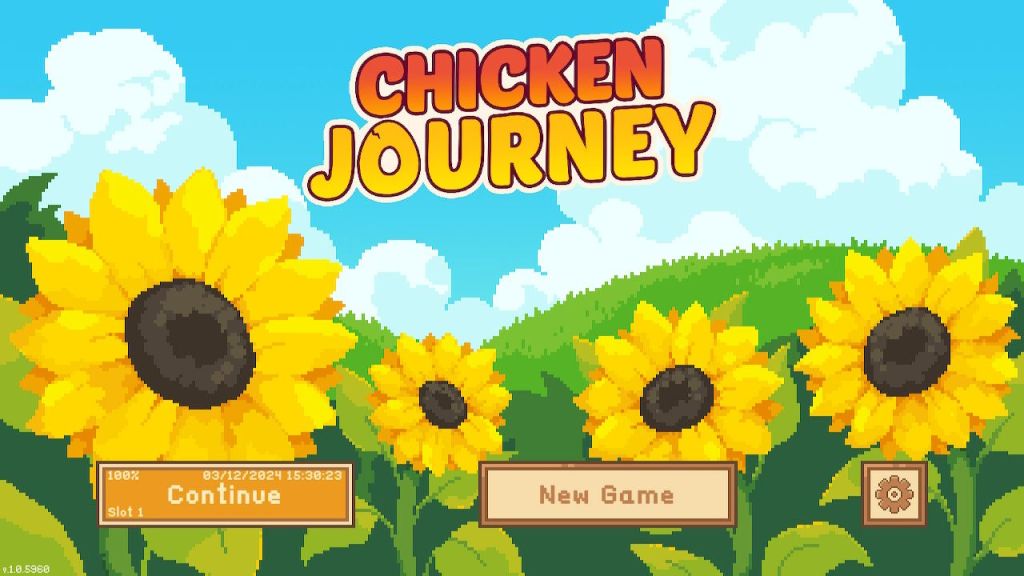
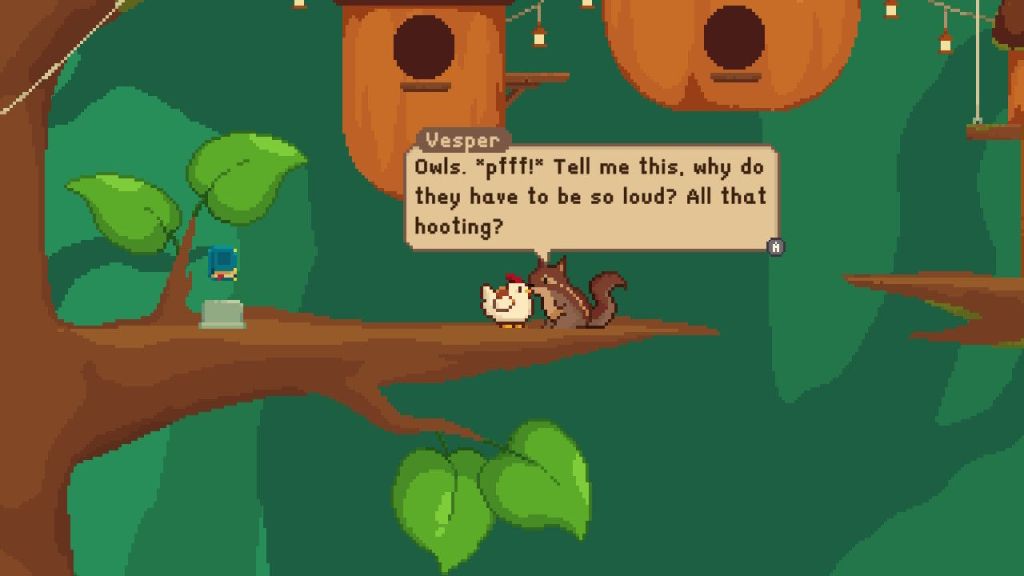
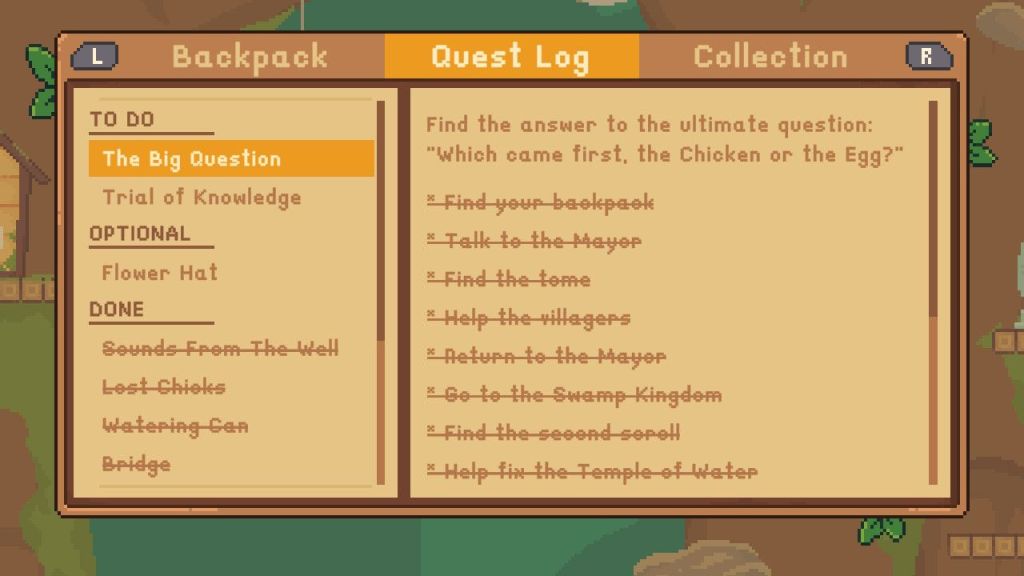
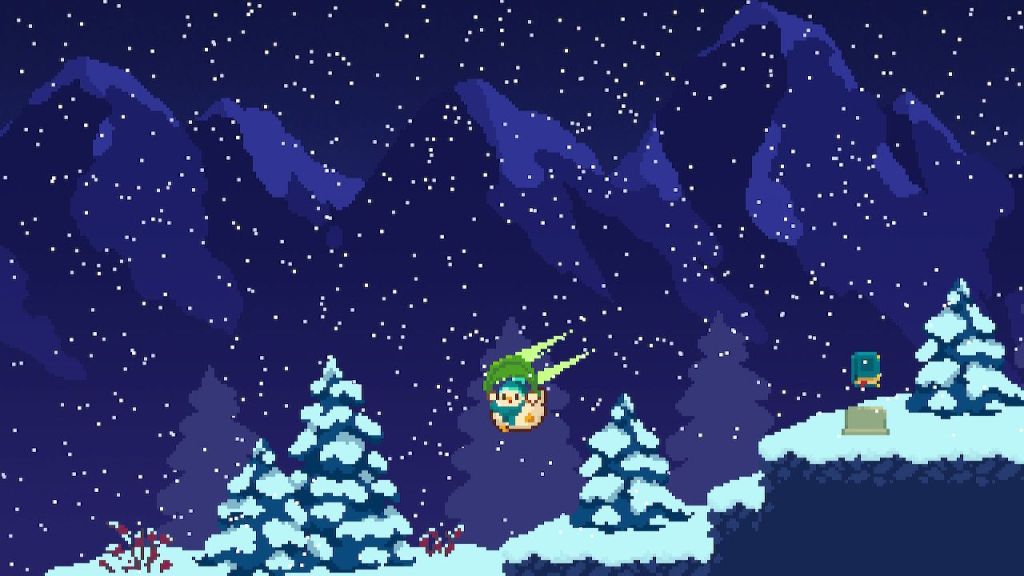
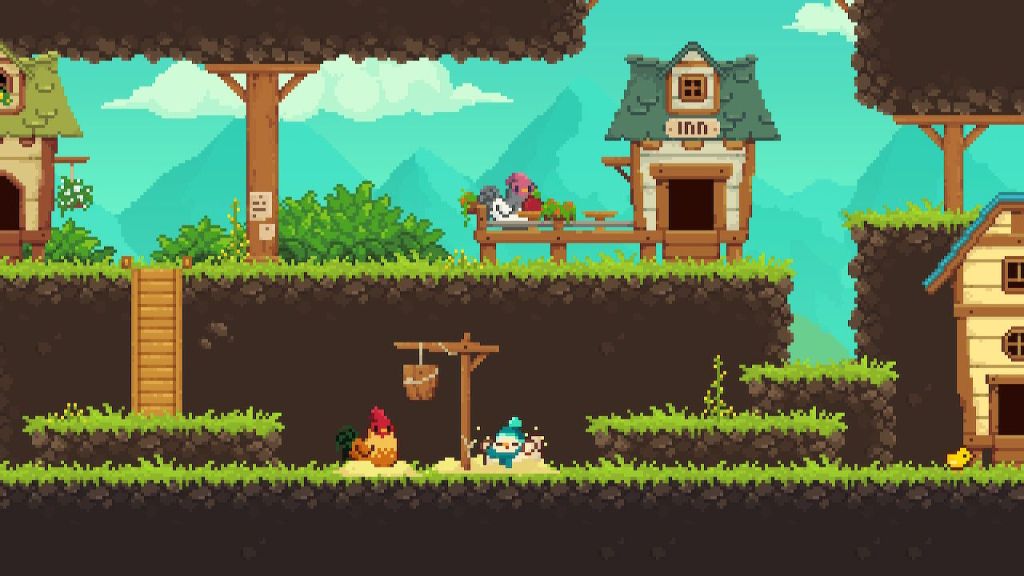
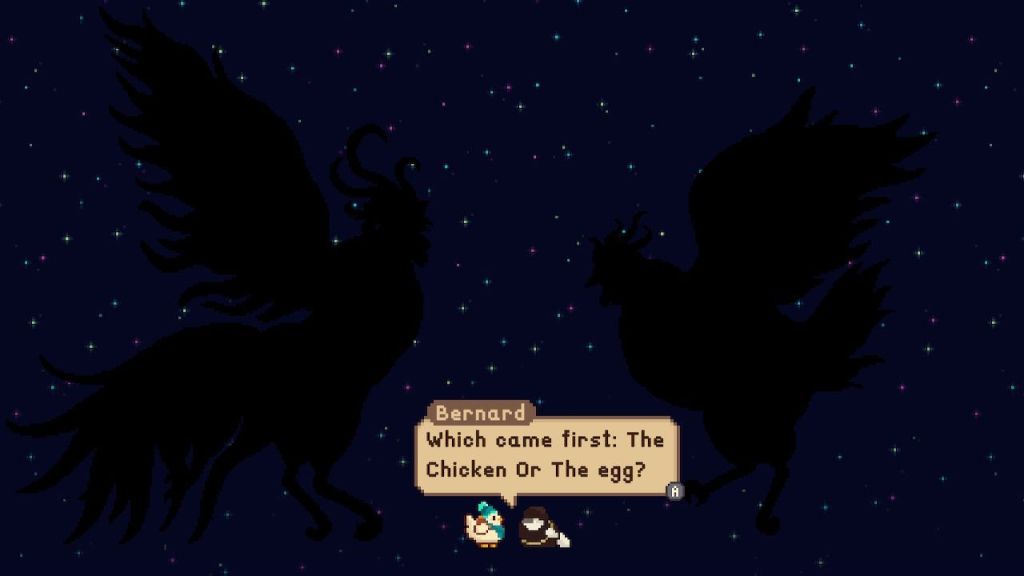
Chicken Journey, developed by Loonyware, is a 2D puzzle-platform that poses the question, “Which came first: the chicken or the egg?”. Chicken Journey is a simple adventure game with some light puzzle-platforming elements. You can walk, jump, peck, interact with NPCs, use items to solve quests and even glide with a leaf. The platforming isn’t very complicated and while you have no health, there’s no real fail state and checkpoints/autosaves are plentiful. While the game is very colorful and the pixel art is fine, the soundtrack doesn’t leave a lasting impression. Chicken Journey is an interconnected, almost Metroid-like adventure where you’ll traverse forests, swamps, ruins, caves and more. Each major area contains a town, a primary dungeon of sorts, consisting of various puzzles and platforming challenges, and a fast-travel point that you eventually unlock so that you can get around faster.
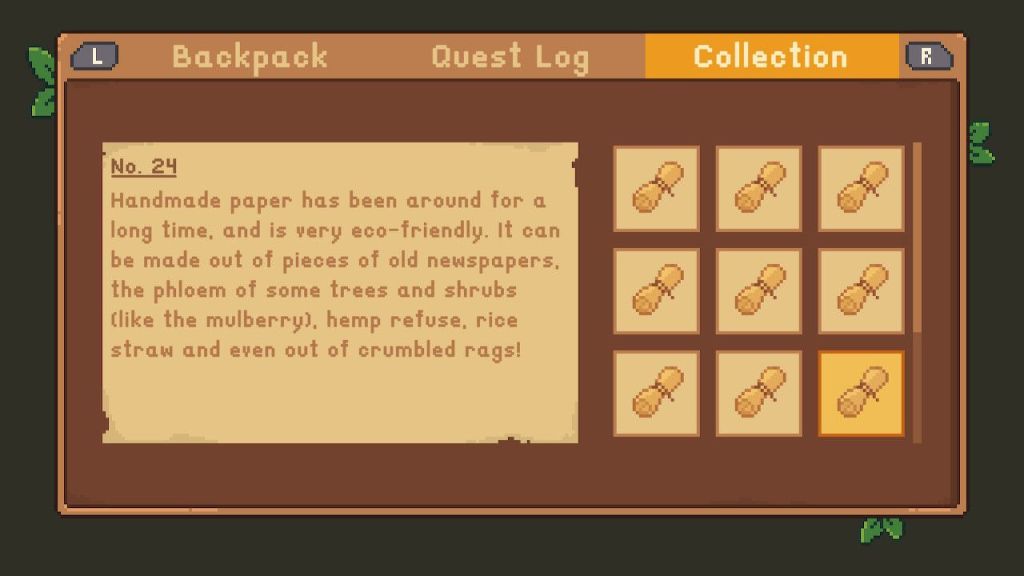
The various towns you encounter are inhabited by animal friends, too. In a late-game quest, you’ll arrive at a village suspended in trees where owls and squirrels cohabitate. The squirrels are mad at all the noise the Owls have been making, especially at night. You’ll eventually discover a sound-dampening item that completes the quest, but I can’t recall if I simply had to talk to a few NPCs or complete a puzzle-platforming challenge to obtain it. The majority of the game has you fetching items from characters or completing dungeon-like spaces in order to solve most of the story quests, however. In each area, there are also hidden scrolls to collect, some of which are relatively tricky to discover (many of them are hidden by illusionary walls, but the scroll’s sparkle usually gives away their location). Similar to Bakeru, some of the scrolls contain real-world trivia or other factoids about chickens and the like.
I completed Chicken Journey at 100% with all scrolls collected. I am not sure what counts towards the game’s completion percentage, but I think it’s a combination of main story progress, side quests completed, and scrolls collected. Chicken Journey doesn’t do anything particularly new and while I’ll likely never revisit it down the road, it’s a super chill adventure game that doesn’t overstay its welcome. The ending is pretty funny, too.
Game #58 of 2024: SONIC GENERATIONSGame #58 of 2024: SHADOW GENERATIONS
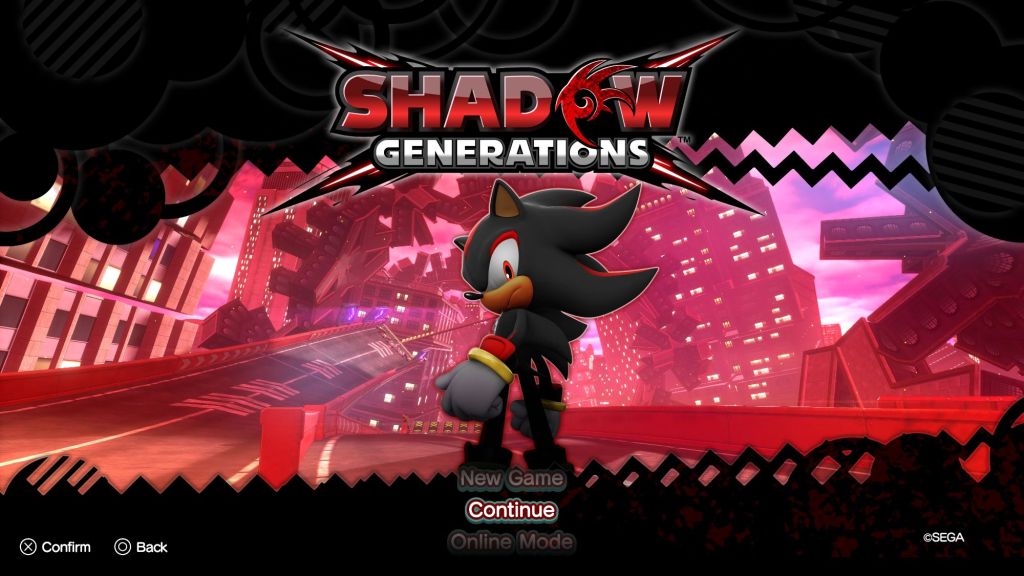
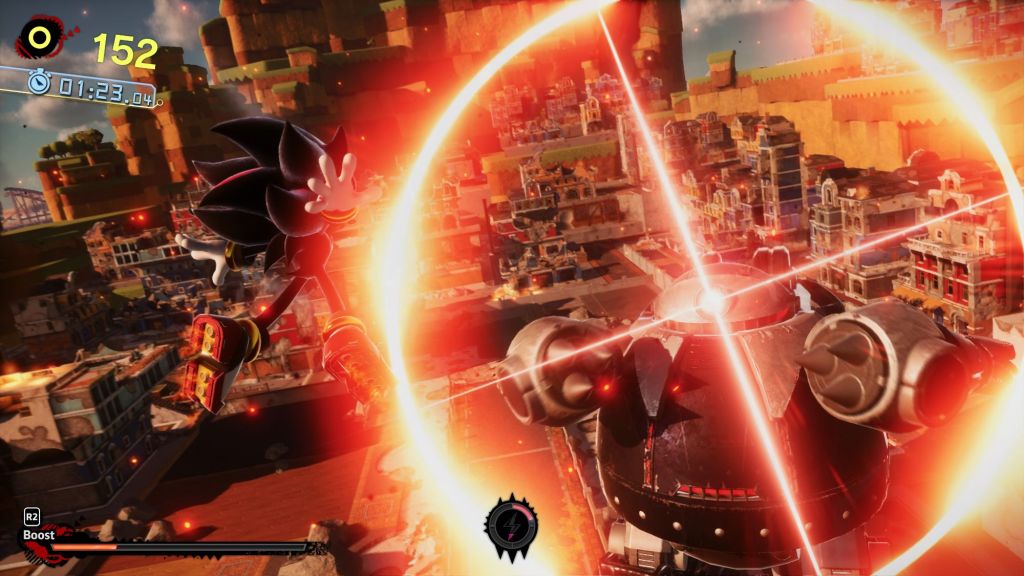
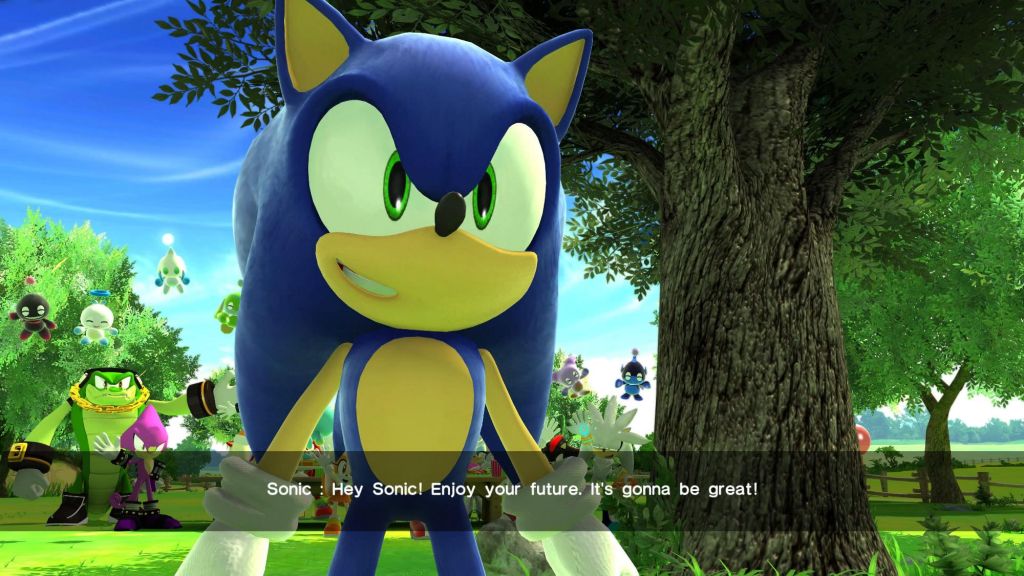
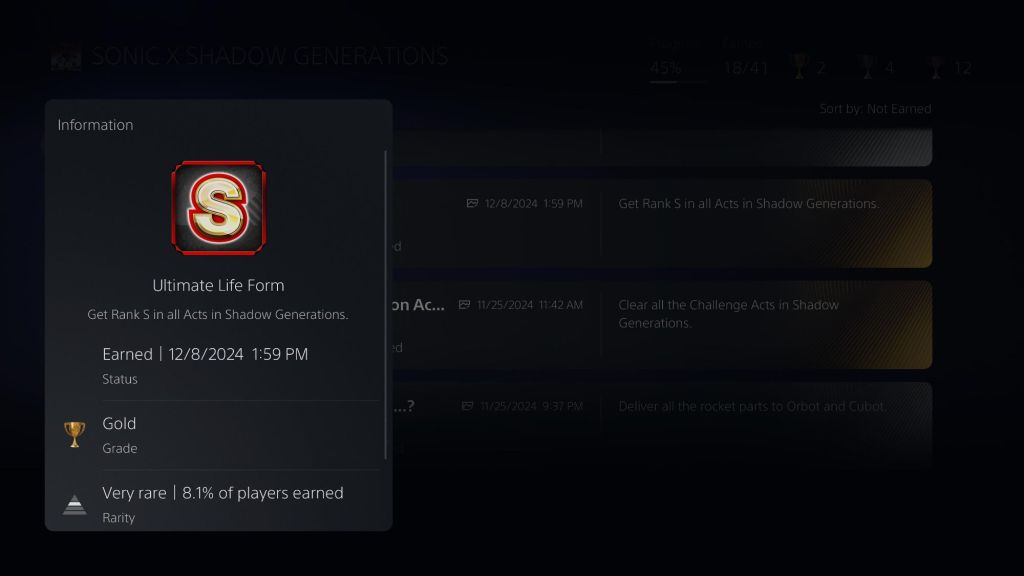
SONIC X SHADOW GENERATIONS, developed by Sonic Team, is a remaster of the 2011 release. I first played Sonic Generations back on the Xbox 360 and completed it at 100% with all of the achievements unlocked. Unfortunately, I don’t think the original game has aged as well as I expected it to. The physics in Shadow Generations are vastly improved. Shadow has a proper double jump, for example, instead of the awkward forward-jump Sonic has in Generations. The disparage in quality could also speak to how much better Shadow Generations is compared to the vanilla content. Shadow Generations is basically the Bowser’s Fury of the Sonic Generations remaster. It’s a standalone, “full” game that can be accessed immediately from the title-screen. I’m not going to even begin to describe the story setup here, but the game begins in a white, Matrix-like room of sorts where only a single island/stage can be accessed. Similar to Sonic Generations, Shadow Generations consists of remixed levels from previous 3D Sonic games including Sonic Forces, Sonic Adventure 2, and even Sonic the Hedgehog (2006). The music, as always, is a treat.
It’s shocking how similar Shadow Generations feels to Bowser’s Fury. The white room is basically a big lake that evolves and expands as you progress through the campaign. The lake can even be traversed once you obtain a particular ability, which reminded me of jumping on Plessie from Bowser’s Fury. One of the big additions to Shadow Generations are the “Doom” abilities; new techniques Shadow learns over the course of the campaign that can be used both in the stages and in the hub area. “Doom Surf”, for example, allows Shadow to seamlessly cross surfaces of water. The “Doom Spears” are used to target switches and enemies with protective barriers. In the hub area, there are tons of treasure chests to discover which require the main collectables found in the stages. There’s also challenges which make use of all of your Doom abilities, but they’re more or less time trials based around obstacle courses. The stage design in Shadow Generations is 3D Sonic at its best. Each level has the numerous routes and shortcuts you’d come to expect, but the dynamic camera angles and perspective changes truly elevate the experience. There’s some really nice visual effects at play here too where the stages twist, turn and collapse on itself in real-time. It almost feels like you’re playing something made by Platinum Games.
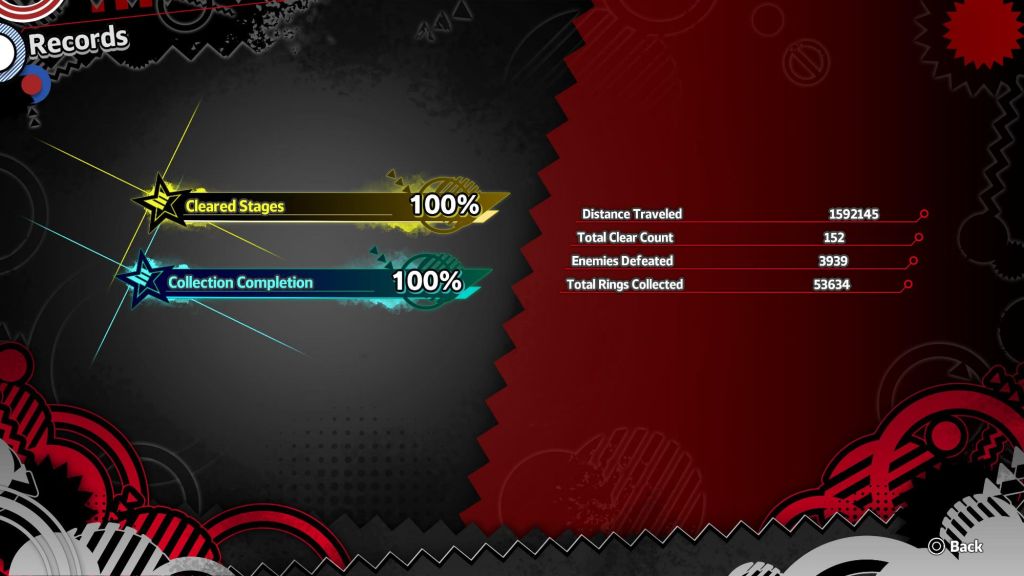
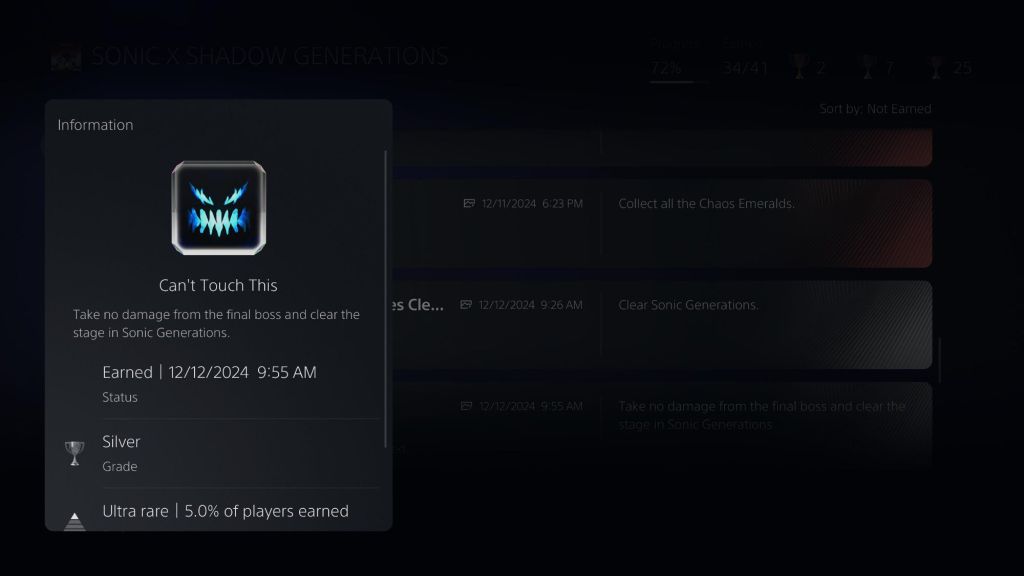
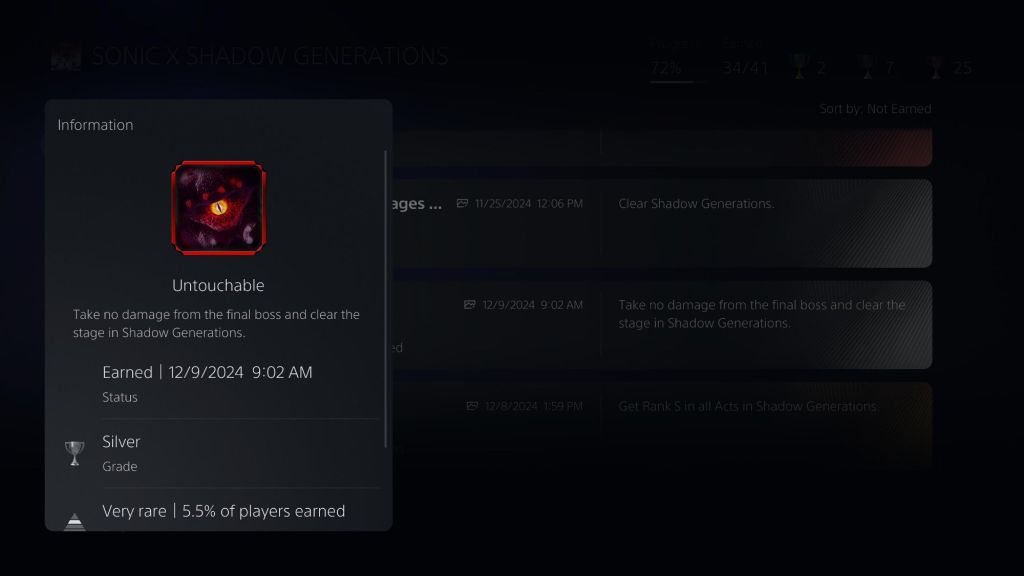
This time around, I only rolled the initial credits on the Sonic Generations portion of the game. While I do enjoying collecting all of the red rings and going for S-Ranks, I’ve already done it all in the original version. I’m also not too hot on hunting down the new hidden Chao. The game may provide in-game hints for the Chao, but they’re some of the worst collectables to ever grace a 3D Sonic game. The last thing I want to do while playing a modern 3D Sonic title is to stop on a dime and look for miniature stuffed animals hanging out on a ledge in the corner of the screen. I completed Shadow Generations at 100% with all collectables. I still have two or three S-Ranks to earn on some of the late-game stage variations in Shadow Generations, but I did earn both no-damage trophies in both games (which wasn’t fun!) I will echo the sentiment that Shadow Generations could have been its own game and doesn’t particularly need the original release to do the heavy lifting, so to speak. I hope Sonic Team learned a lesson here and we’ll see the changes made in Shadow Generations carried forward to the next mainline release.
Game #59 of 2024: Dragon’s Dogma 2
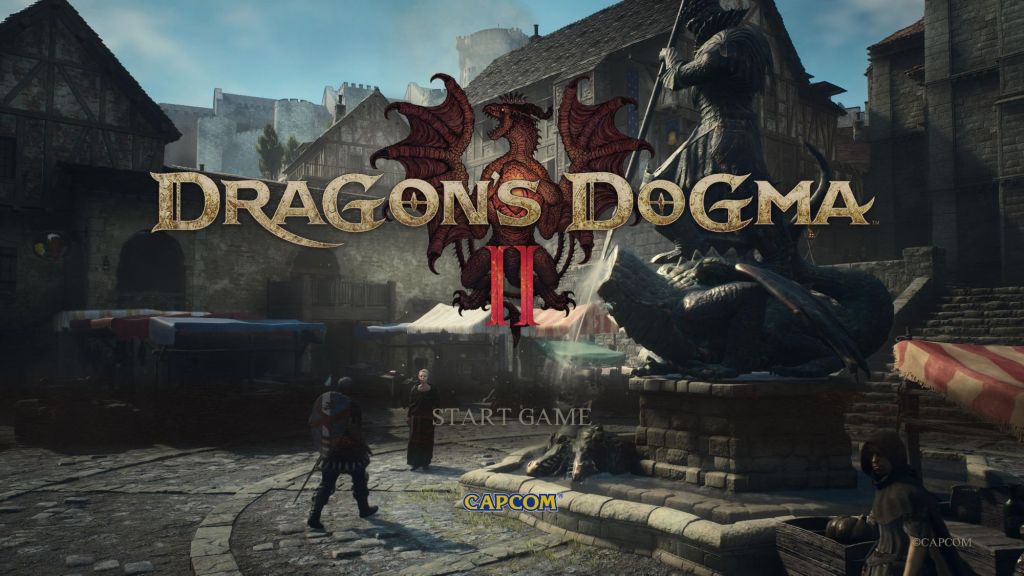
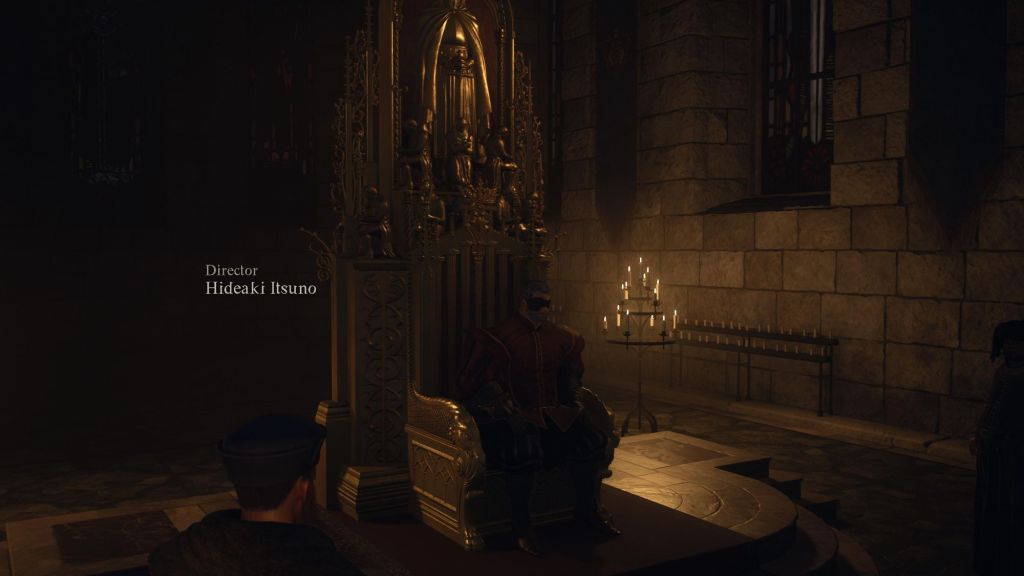
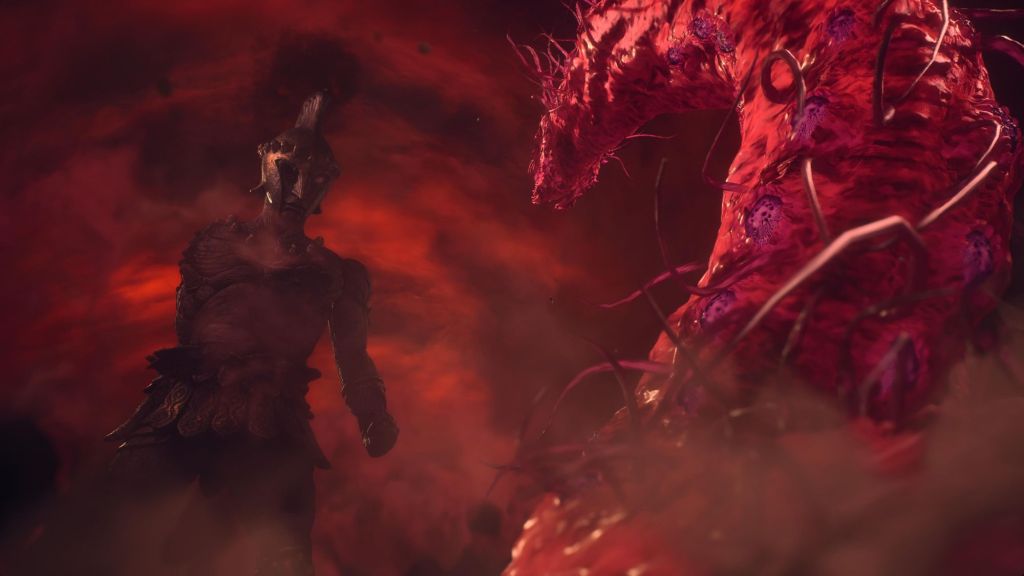
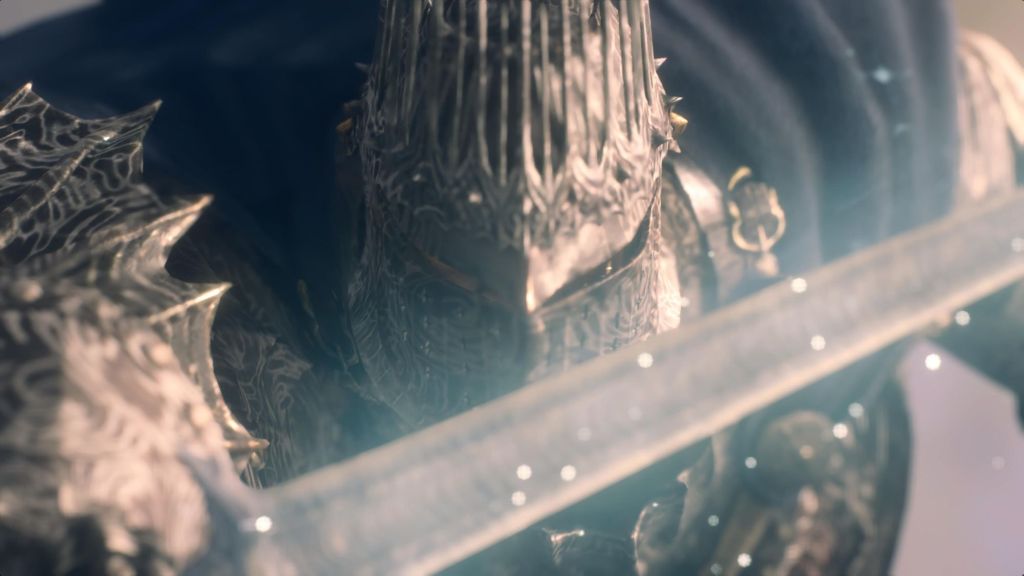
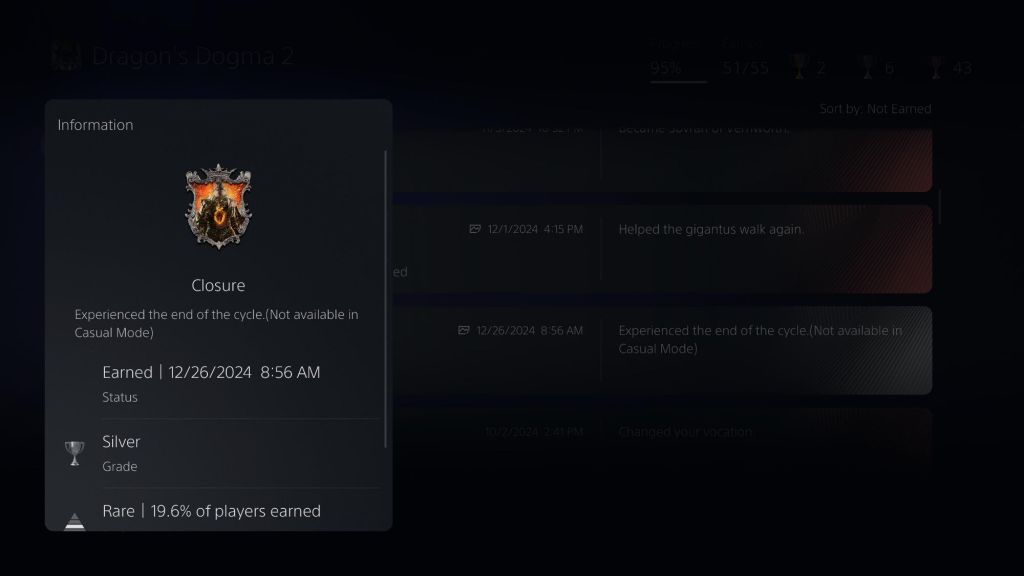
Dragon’s Dogma 2 (DDII), developed by Capcom, is the sequel to the original Dragon’s Dogma released back in 2012 for the PS3 and Xbox 360. If you’re not familiar with Dragon’s Dogma, both games are generally about the endless cycle of battle between the “Arisen”, a chosen one of sorts who commands “Pawns”, and a dragon of Godly status. That’s all you really need to know. In the middle of this eternal engagement between human and beast, various kingdoms and races remain locked in perpetual, mortal conflict (like the elven kingdom with two dozen people living there). DDII almost feels like a reboot/remake of the first game. Before I talk about DDII itself, I have to give Capcom and the director/person(s) responsible some credit for sticking to their vision for the sequel. Considering the title screen simply says “Dragon’s Dogma” until you reach a certain point in the end-game, it’s a confusing, creative choice, especially for new players as it almost suggests that you’re not playing the sequel. With that said, it’s quite ambitious to hide the actual title of the game behind a “true ending” sequence that most players will likely never see.
The Pawns in Dragon’s Dogma’s universe are expendable allies who serve the Arisen that you can summon from the “Rift”, a dimensional realm of sorts where Pawns gather made by players from around the world. Pawns are Dragon Dogma’s attempt at incorporating some sort of passively-online multiplayer. You can’t control the Pawns, but they’re pretty competent allies, all things considered. I can’t recall if the Pawns did this in first game or its expansion, Dark Arisen, but in DD2, they will comment on particular things based on their own Arisen’s journeys. If the Pawn you summoned found a chest or cave in their game, for example, they will mention it conversationally if you haven’t discovered said item/path in your quest. This also applies to the main Pawn you create for yourself, who you have more control over in terms of class customization and the sort. If they get summoned to another player’s realm, they might come back with items or information to benefit your playthrough. It’s a really neat mechanic and it’s a perfect example of the marriage between gameplay and narrative.
There are a handful of new Vocations (classes) in DDII, but my favorite would have to be the Warfarer class. The Warfarer is a multi-class Vocation where you have access to every skill you’ve learned across the other Vocations. While you’re still limited to the four face buttons in terms of the options you have at your disposal, the one skill unique to Warfarer is the Rearmament ability, which allows you to swap weapons on the fly. When you swap to a different weapon, however, you retain any of the core skills you learned. The Mage class, for example, has a Core ability that allows you to float for a brief period of time. This skill is almost essential for getting around and reaching out-of-reach locations. The discipline (exp) you earn while playing as the Warfarer not only increases your rank for the Warfarer Vocation, but it’s also shared (to a degree) across the other Vocations you’ve already learned. When you unlock this class, you can essentially create a hybrid build of many different Core skills and weapon abilities, which makes the game far more fun and interesting than sticking to just one class. The discipline gained for the other Vocations is at a much slower pace while playing as a Warfarer, but it’s just far too versatile not to use.
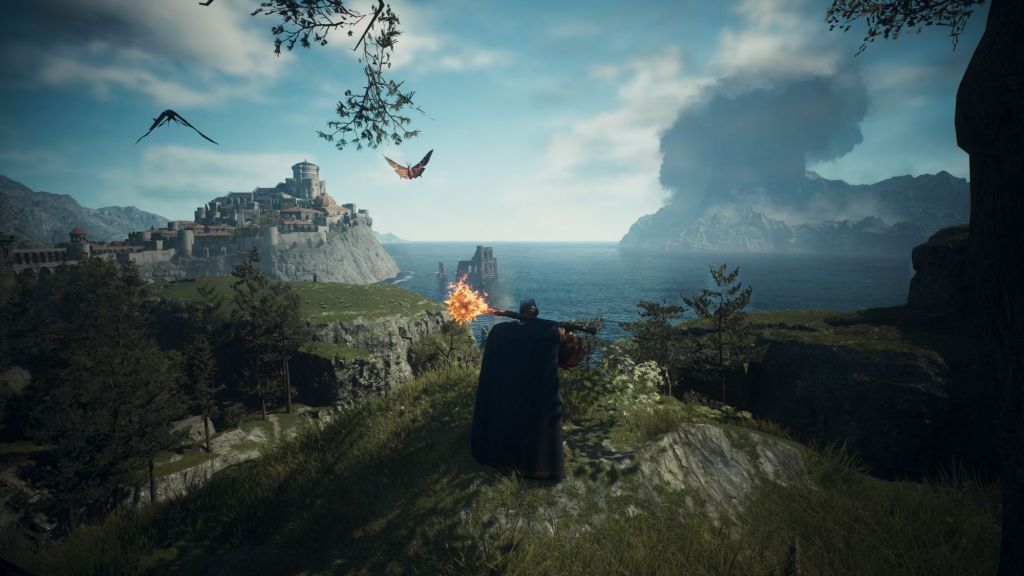
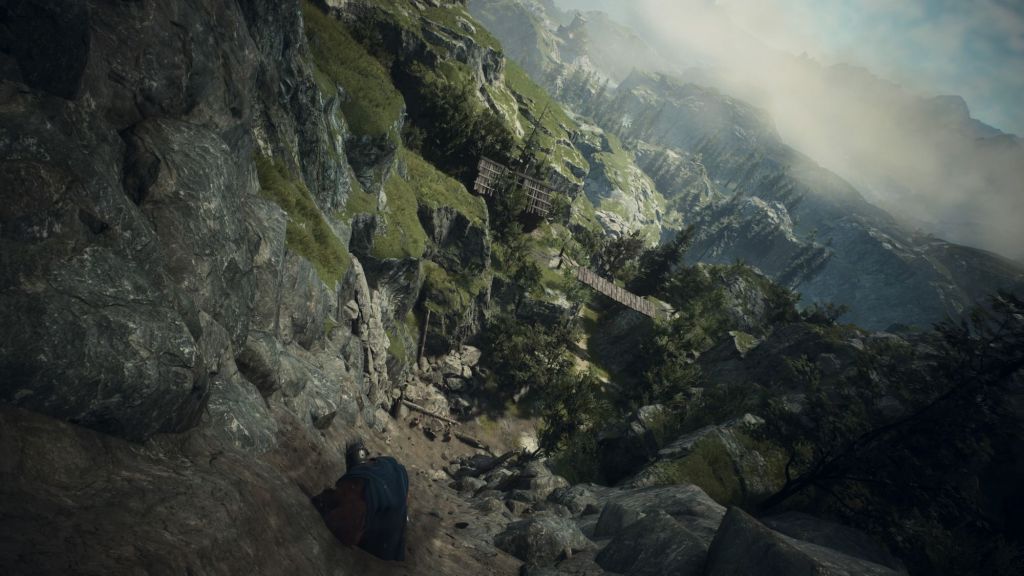
There’s a lot to talk about when discussing Dragon’s Dogma II, but I’m mostly going to speak to the world design. Dragon’s Dogma II has one of the most compact, densely populated open-worlds I’ve ever experienced. The map itself is shockingly small (once you realize the scope of the game), but it’s expertly packed with enemy encounters, treasures and other goodies waiting to be discovered. I would love to speak to the person(s) responsible for placing the treasure chests, Golden Trove Beetles and Seeker Tokens throughout the world. You’re constantly rewarded by exploring every nook & cranny and the risk/reward for venturing late into the night, trekking from one campfire to the next, becomes this intoxicating cycle of push & pull that’s hard to pull yourself away from. With all that said, I do think DDII is an update or two away from being something truly spectacular. I think the game needs a Hard mode, more enemy variety and better encounter compositions. If the world had a half-dozen or so unique areas or dungeon-like landmarks, something akin to the “Legacy Dungeons” from Elden Ring, for example, it would have been amazing. Sure, there’s the Dragonsbreath Tower, Medusa’s lair, the Sphinx questline and a few other notable moments, but there’s just one too many similarly-structured caves and roads to counterbalance the “good stuff”. The game would certainly benefit from a Dark Arisen-like expansion.
One aspect I’m slightly torn on in Dragon’s Dogma 2 is the quest structure. Quests are not separated in the menu as “main” or “side”, for example. All quests get dumped into a single list/menu. When you first boot the game up, there are load screens that display one of your active quests, but it’s not super clear if it’s just any quest from your current list or if it prioritizes “main” quests to progress the story. I had to look up a partial solution to one of the game’s quest and I felt really disappointed in myself that I didn’t spend a bit more time exploring before looking at the guide. One of the early-game quests has your party trekking to a village of thieves where you’re tasked to gather information on the false Arisen that has taken your place. At one point, there’s a little girl who stops to talk to you, but she quickly runs into a secret room in her house and locks the door behind her. Most quests in Dragon’s Dogma 2 don’t hold your hand and the guide-posting is relatively limited. Sometimes, the map will highlight the general area with a yellow circle, so typically you can find the solution somewhere within that general area. If you’re ever stuck, more often than not, resting at an inn will move things along if you think you’ve encountered a buggy quest or a step won’t complete.
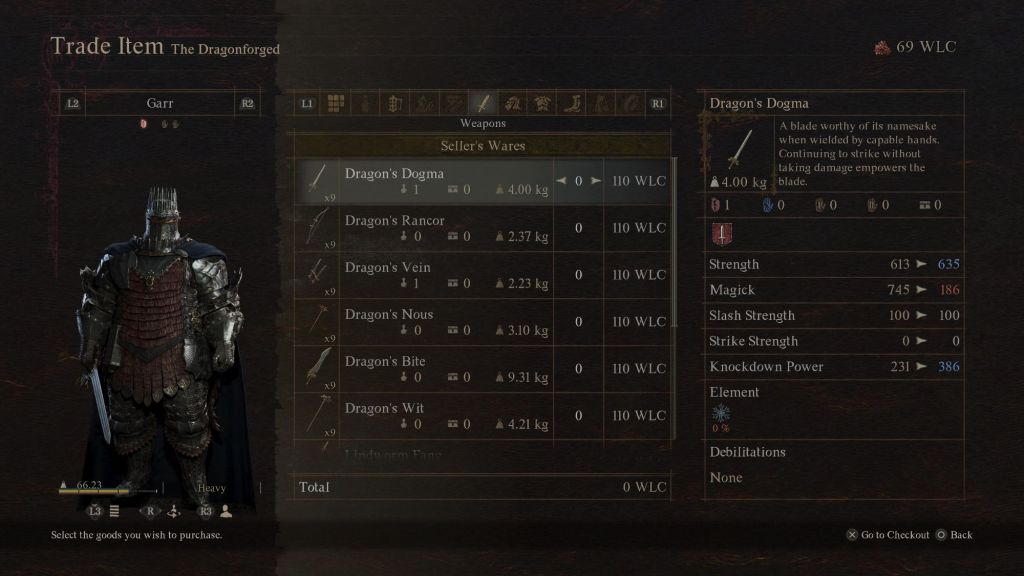
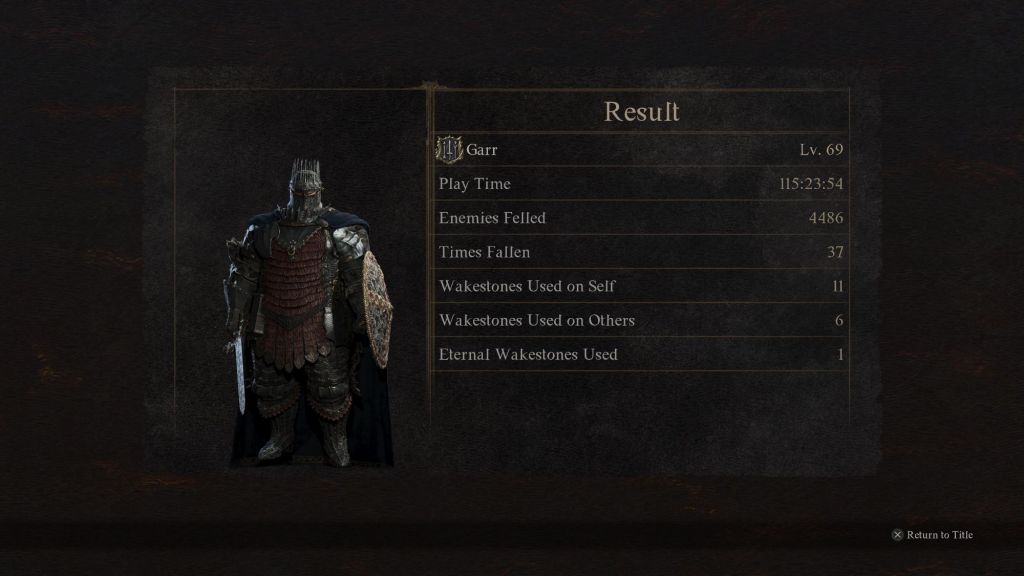
At the end of the day, I spent 115 hours with the game. I found more than 170 Seeker Tokens, have all Vocations for my main character above level 5, have made decent progress with my main Pawn’s Badges, and unlocked all but three trophies (two of which will require a second playthrough). To earn all of the Pawn Badges, you have to play through the game at least 5 times to earn the badge dedicated to the Sphinx (as she appears once per playthrough). In the end-game area, there’s a merchant who will sell you all of the best weapons and armor for each Vocation. Furthermore, dragons (who drop materials needed to upgrade all of the best equipment) will continuously spawn after enough time has passed in this “Unmoored World”, so you can grind to your heart’s content while completing all of the post-game objectives in order to see the true ending. With that said, there’s apparently a time limit in the post-game world, but I initiated the final credits sequence before reaching that point. As I discussed earlier, while a part of me could keep playing the game for another 100 hours, grinding levels and purchasing all the gear, there’s really no reason to when there’s no ultimate dungeon or hard secret boss to challenge. I really hope Capcom has more plans for a proper expansion (and a Hard mode), because I want more excuses to spend time in this world.
Game #60 of 2024: Silent Hill 2
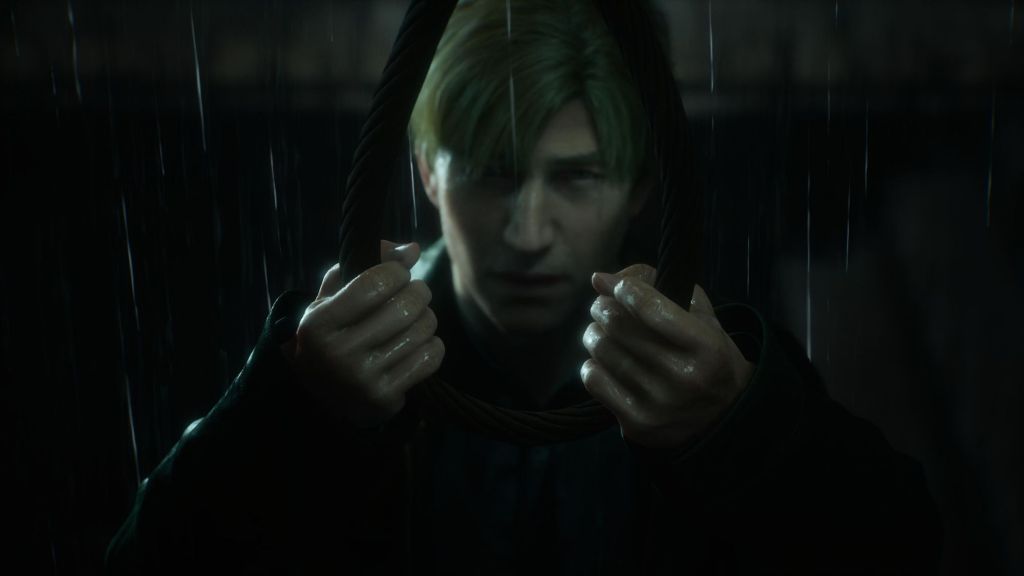
Silent Hill 2 (SH2), developed by Bloober Team/Konami, is a remake of the most beloved survival horror games originally released back on the PS2. If you’re unfamiliar with SH2, it’s about a man named James Sunderland who receives a letter from his dead wife asking him to come back to the titular town of Silent Hill. One could say that the town of Silent Hill is more or less a reflection of those who inhabit it. James is a tortured soul and Silent Hill is his personal hell. If you’ve never played the game before, I’ll just leave it at that as it’s perhaps one of the best stories ever told in a videogame. The SH2 remake had a lot going against it. I haven’t finished all of Bloober Team’s games, but from the few I’ve played (Layers of Fear, The Medium and Blair Witch), they’re mostly hit or miss. SH is a very special property and similar to Resident Evil, the series has had its fair share of disastrous “westernized” attempts. Prior to the game’s release, things weren’t looking great. There appeared to be a focus on combat, which is something that SH isn’t particularly known for. Sure, the games contain guns and melee weapons, but it’s not what SH is about. With that said, the combat still retains a degree of jank (as it should), although having invincibility frames (i-frames) on your dodges feels/looks a little weird.
Bloober Team typically excels in the visuals department and the SH2 remake is quite the looker. SH2 remake has perhaps the best use of fog in any game to date. The town of Silent Hill is a character in and of itself and the fog plays an important role in its very existence. The way the fog wraps itself around a building has an intoxicating pull on the player. You’re drawn to what mysteries and atrocities lie behind the fog’s veil, but it’s also the furthest thing you want to be away from. The game generally looks incredible; the character models, voice acting and motion capture are phenomenal. The new enemy designs from Masahiro Ito are spectacularly horrifying as is the new music/arrangements from Akira Yamaoka. The audio design is exceptional; every waking moment of the game feels oppressive and heavy and that’s due in part to the sound design. There’s a moment in the Wood Side Apartments where you first encounter Pyramid Head behind a barred door. As you approach him from the other side, the screen becomes darker and the sound sort dampens and becomes distorted. I was playing the game with a 5.1 surround system and his presence felt like it was in my actual family room. Terrifying stuff.
The game itself is expanded a lot, too. SH2 remake feels like a brand new game in some respects. The remake also plays with fan’s expectations by showing you “glimpses of the past” (images of puzzles and paths you took in the original release) while taking certain liberties when it comes to area progression and puzzle-solving. Speaking of the puzzles, they’re just the right difficulty (on Standard) and still contain the clever and poetic writing style you’d come to expect. My favorite puzzle would have to be in the Toluca Prison, which is a late-game area. As you explore the prison, you’ll collect weights, which are used to solve a puzzle in the prison’s courtyard. Ultimately, you’re presented with plaques that have descriptions about individuals who have sinned in life. After matching the descriptions to complete a story, you then need to decide who essentially was justified in their actions. There are six nooses in the surrounding area and if you pull the incorrect one, you fall into a pit filled with enemies. The puzzles are so engaging and thoughtful that I found myself thinking that the remake could potentially be better than the original PS2 release (I ultimately considered the two games separate experiences, which is a similar sentiment I shared for the recent Resident Evil remakes from Capcom).
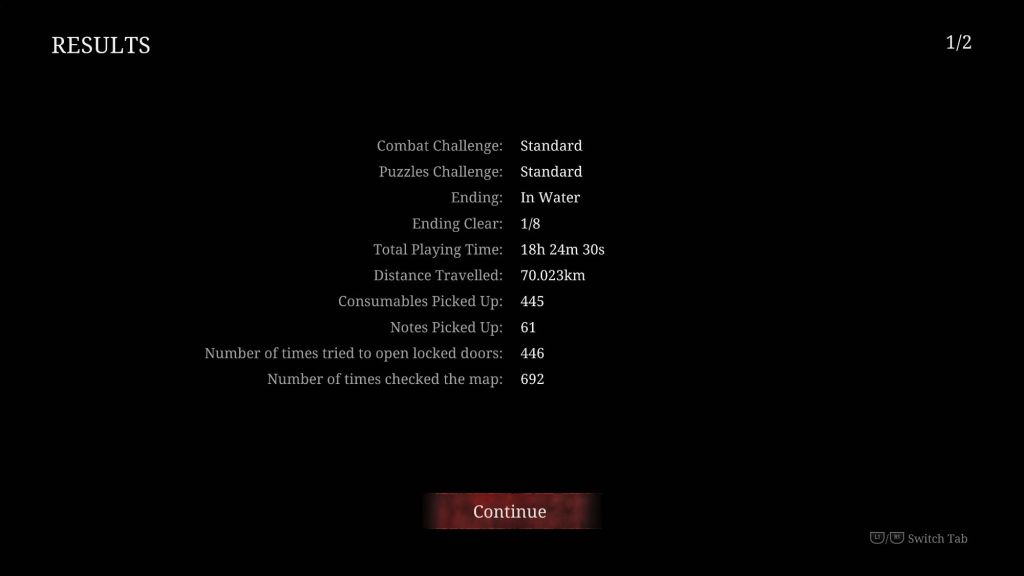
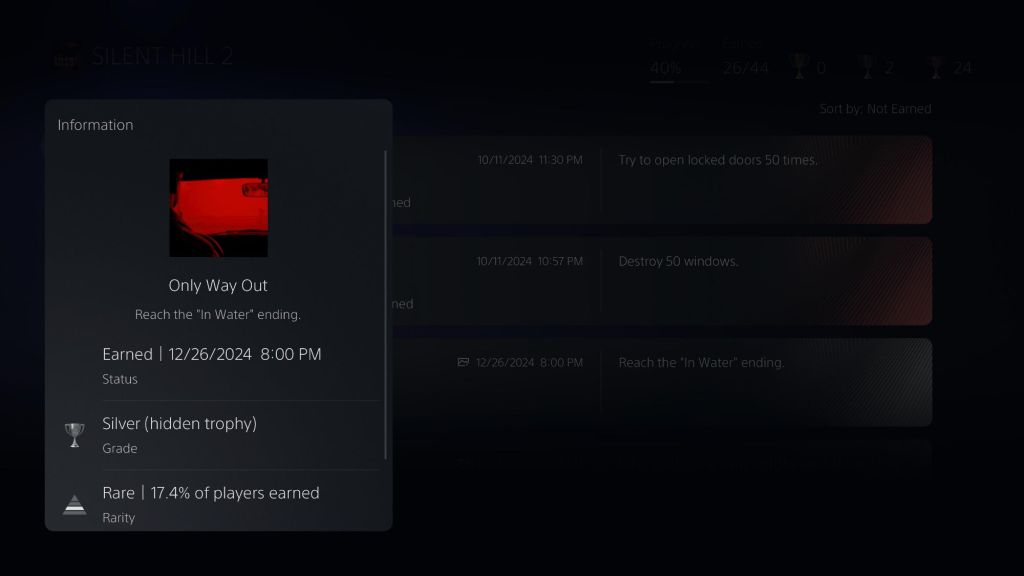
I completed the SH2 remake on Standard mode for both Combat and Puzzles with the “In Water” ending. The SH2 remake contains all of the original endings plus new ones. While there are some trophies that require you to complete the game under certain conditions (like beating it under a certain time limit, without using your radio, or even firing your long-range weapons), the ranking system is strangely absent (even though the game still contains a results screen after you finish it where stats of various categories are tracked). The older SH games always had a ranking system based on stars. Getting a 10 Star Rank in a SH game is nothing to scoff at, either (I’ve never done it before). I will echo the sentiment that there’s perhaps a bit too many enemies at times, but overall, the SH2 remake by Bloober Team is certainly not a disappointment and can arguably stand alongside the original release as a modern-day survival horror classic.
Game #61 of 2024: Jumping Flash!
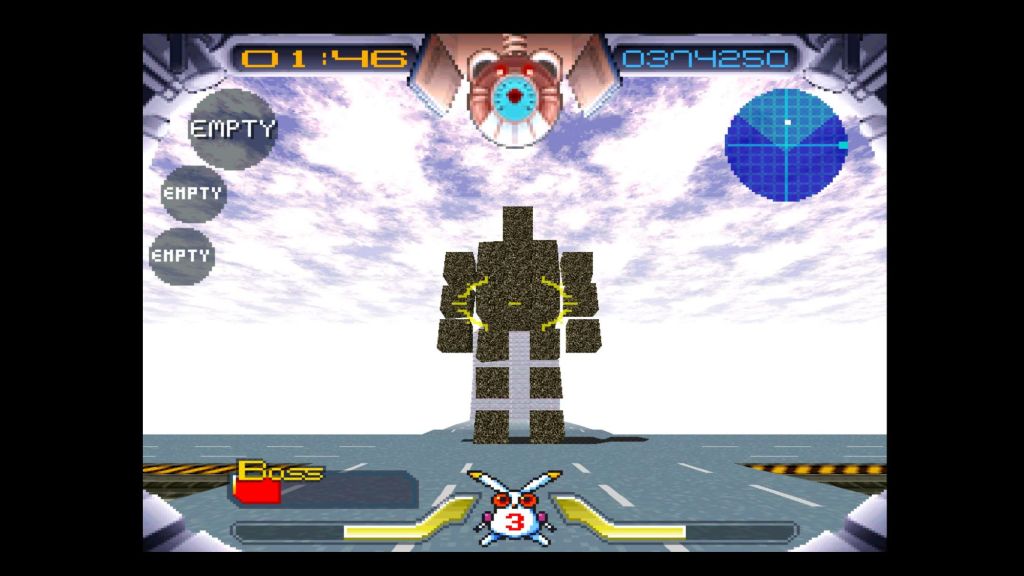
Jumping Flash!, developed by Exact and Implicit Conversions Inc., is a first-person, 3D platformer-shooter of sorts, which originally released back on the PS1 in 1995. I’m fairly certain I rented this game from Blockbuster when I was a kid, but I don’t recall beating it until I was an adult and owned a copy for myself. Considering Jumping Flash! released one year prior to Super Mario 64, being a first-person, 3D platformer where you shoot bullets and double jump as a giant robot bunny was a lot to digest back in the mid 90s. First-person Japanese games weren’t the most common thing, either. Jumping Flash! has certainly retained its cult-like status over the years, yet somehow Sony hasn’t forgotten about it. Not only is the game available on modern PlayStation platforms, Robbit is featured in Team ASOBI’s very own Astro Bot! I decided to revisit the game back in April since it was recently rereleased for the PS4/PS5. Jumping Flash! feels like an old arcade game in the purest sense. The game is comprised of six themed worlds consisting of thee stages, each world culminating with a boss battle. The goal of the stage is to collect all four “Jetpods”, which look like giant metallic carrots. Along the way, you’ll blast enemy robots while collecting coins and powerups, platforming over death pits and other hazards as you navigate the levels. That’s all there is to it, although the scoring system has more depth to it than you might expect.
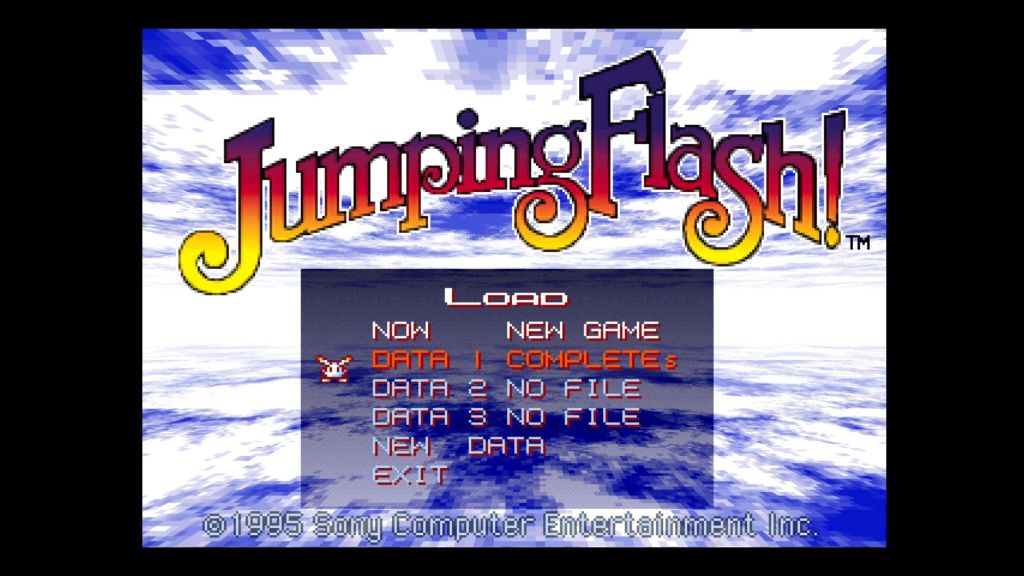
I’ve beaten Jumping Flash! a few times in the past, but for my revisit on PS5, I must have cleared it at least four times across its various modes. Just this year, I discovered there’s an unlockable mode called “Hyper Mode”, which I’m pretty sure I’ve never seen before. While I earned the Platinum trophy this time around, there’s additional modes to unlock/conquer if you wanted to truly complete the game at 100%. To unlock Hyper Mode, you apparently need to score over 3 million points on Extra difficulty, which is the game’s Hard mode. On a casual playthrough, I typically net around 1.5 million, so I’m not exactly sure how I’m supposed to double that score. From what I’ve read, you need to farm enemy kills and complete the bonus rooms for extra points. Something I also learned this year that if you collect the Jetpods in the correct order (spelling “EXIT”), you gain more points at the end of the stage. On Extra difficulty, you have less time to complete the stage, so it sort of requires you to have a complete understanding of enemy/item locations in order to gain the most points. Furthermore, since Robbit can bounce on top of enemies, you apparently earn more points for beating bosses (and stages?) without shooting or taking hits. For unlocking Hyper mode, you also earn an “H” on your file select screen, which I love (and very much want for myself). Maybe I’ll give it an attempt in 2025, but for now, it was fun revisiting one of PS1s most unique launch titles.
Game #62 of 2024: Granblue Fantasy: Relink
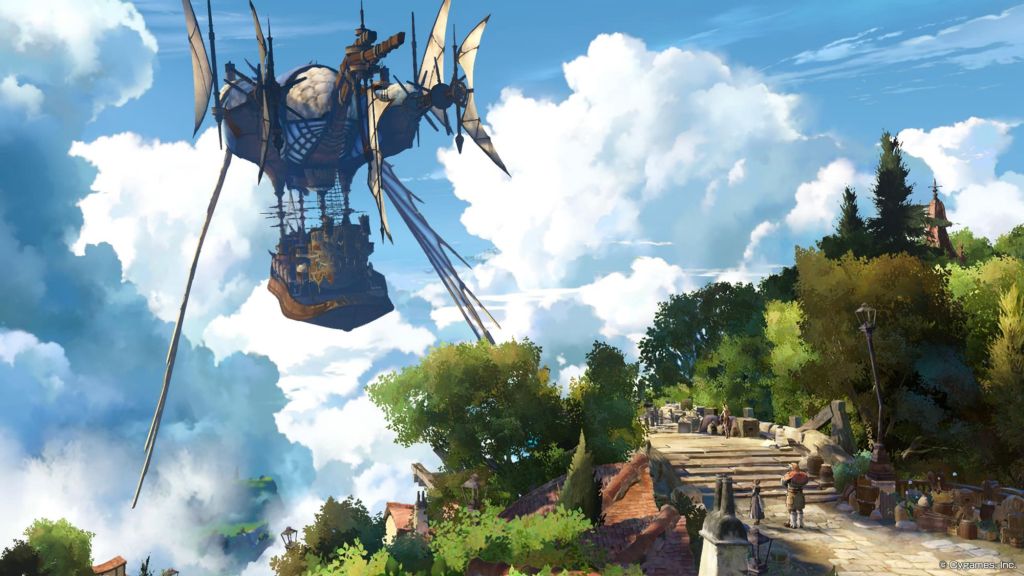
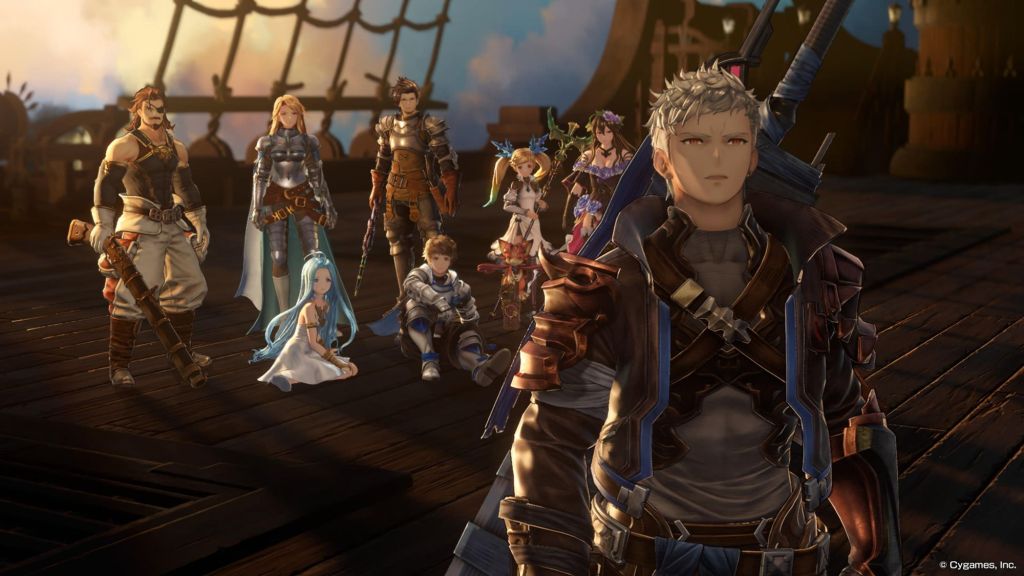
Granblue Fantasy: Relink, developed by Cygames, Inc., is the console adaption of the popular mobile game, now an action-RPG in the same vein as Ragnarok Odyssey back on the PS3/Vita. Relink has an interesting development history. At one point, Platinum Games was working on it, but they were eventually removed from the project. Relink is an action-RPG at its core, but there’s a lot of character-action game elements, which can certainly be attributed to Platinum’s DNA. I’m also not familiar with the mobile game, but I know it has Gacha elements. It’s interesting to see how the developers distilled some of the mobile game features into a game made for consoles. Relink has a surprisingly competent single-player campaign. The game consists of 10 chapters packed with beautifully directed cinematics, amazing set-pieces and incredibly epic boss battles. Similar to how I felt about Dragon’s Dogma II, Relink does things Final Fantasy XVI was trying to do, but better. The game also has a colorful, almost painterly-like, watercolor aesthetic. The character models are expressive and stylish, and the overall look of the game is just super clean. There are a ton of characters to play as in Relink, too. I mostly stuck with Gran (the captain) for the majority of my single-player playthrough.
While you start with a small crew of Skyfarers, you can unlock more by earning special cards/tickets from completing quests and such. What I didn’t expect is that each character, although they may share elemental affinities, play completely differently from each other. One character, Rackam, has a gun that can charge powerful shots based on a unique meter that can overheat. Each character also has unique weapons and skill trees where you can further customize their capabilities. The skill trees are very big and a lot of the passive stat upgrades and new abilities can’t be unlocked until you access the post-game difficulties. You can only equip four abilities at once, but there’s a lot to choose from once you start unlocking a lot of the abilities. Gran is arguably a support class, with his healing circle and spells that buff the party’s strength and defensive powers. Some have said that the single-player campaign is sort of a tutorial for the end-game content, but I don’t entirely agree with that sentiment. I completed the story mode on Hard difficulty and unlocked Chapter Zero, a post-game epilogue of sorts with some additional story beats. In addition to more quests on higher difficulties, you can replay the story chapters to discover any remaining treasure chests, hidden slime pots, and Wee Pincers (the little collectable hermit crabs). I really enjoyed my time with Relink and I hope to play a lot more of it in 2025.
Just a friendly bear who works in financial reporting that would rather be playing, writing or talking about video games. https://twitch.tv/unexpectedenemy



























 UnexpectedGames
1 Comment »