Gaming
What I’ve Been Playing (Q2) 2024
Thoughts and impressions on the games I played/finished during Q2 of 2024.
 UnexpectedGames
Just a friendly bear who works in financial reporting that would rather be playing, writing or talking about video games. https://twitch.tv/unexpectedenemy

Thoughts and impressions on the games I played/finished during Q2 of 2024.

The first half of 2024 has been inundated with big ass games… and they’re all games I want to go full gremlin mode on. My teenager/early twenties-something self would have had a field day with all these amazing new releases. My late 30s-something self today is exhausted and paralyzed by choice. I started, but haven’t finished Final Fantasy VII: Rebirth, Banishers: Ghosts of New Eden, Rise of the Ronin, Dragon’s Dogma II, Unicorn Overlord, Sand Land, Nine Sols, Destiny 2: The Final Shape expansion, Elden Ring: Shadow of the Erdtree DLC and more. I likely won’t have thoughts on these games until the end of the year, considering their size and how I’ve been engaging with them (or lack thereof). I’ve also travelled a lot during the first half of the year due to my father’s illness, so things haven’t been particularly easy. With that said, playing and finishing games has continued to be one of the few things that keeps me afloat, so here are the games I somehow managed to play/finish during the second quarter of 2024:

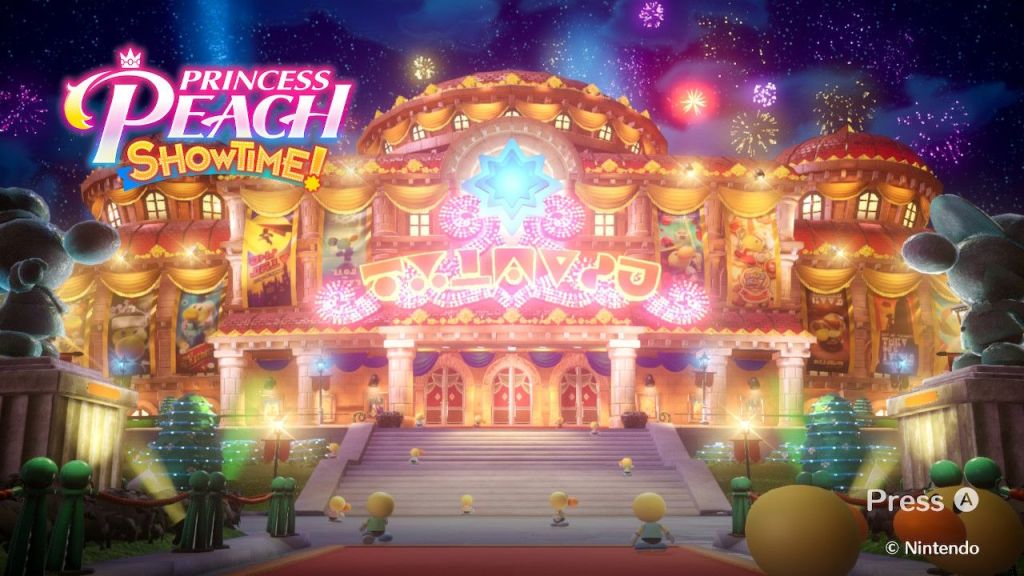
Princess Peach: Showtime!, developed by Nintendo and Good-Feel, is a 3D action-platformer and the first game since the Nintendo DS title, Super Princess Peach, that stars Princess Toadstool. Peach has been known to send a letter or two in the past, but this time, she’s the one receiving the invitation! The game begins with Peach being cordially invited to the Sparkle Theatre to watch a bunch of plays. Shortly after her arrival, everything is thrown into disarray when Madame Grape and her “Sour Bunch” takes over the theater. If you’re wondering if the game takes place in the Mushroom Kingdom, it isn’t specified where the Sparkle Theatre and its denizens of “Theets” is located exactly. The game sort of treats the island where the theater is located like it’s Isle Delfino from Super Mario Sunshine (SMS). During the intro cinematic, you can see a toad carrying her briefcase, as if they flew into the island ala SMS. The main gimmick in Princess Peach: Showtime! is Peach’s ability to don a variety of costumes, which grant her new forms with unique powers. Peach can turn into a cowgirl, a baker, a ninja and even a detective. The cowgirl can whip enemies and ride a horse through set-piece-like sequences while the baker is more or less an elevated Mario Party mini-game where you decorate cakes. I think the ninja costume is most reminiscent of director Etsunobu Ebisu’s legacy, considering it’s his first appearance as a game director since Mystical Ninja Starring Goemon on the Nintendo 64 (N64). The way the jumping feels and the accompanying “whooshing” sound effect Ninja Peach makes reminds me the most of Goemon and friends.
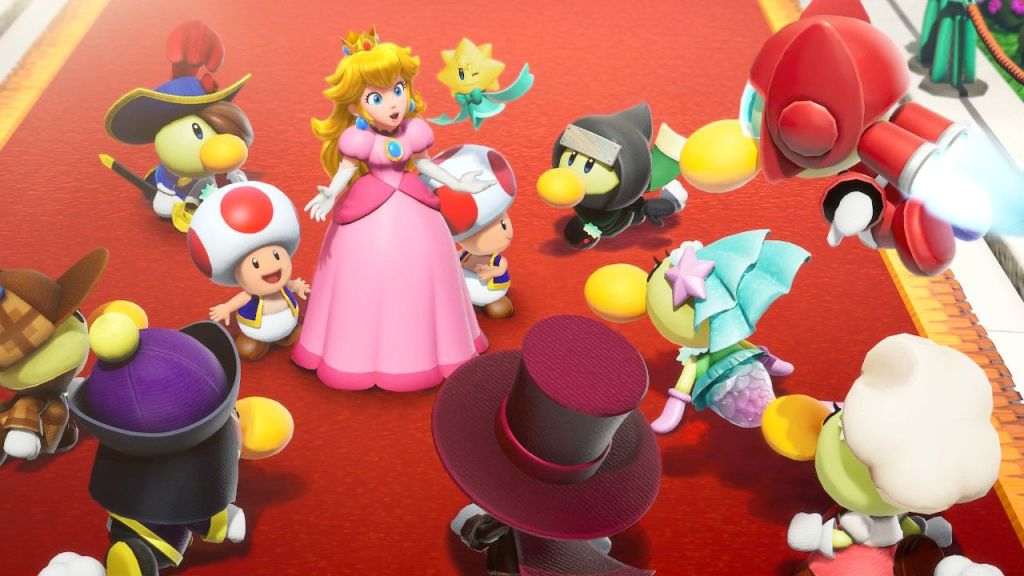
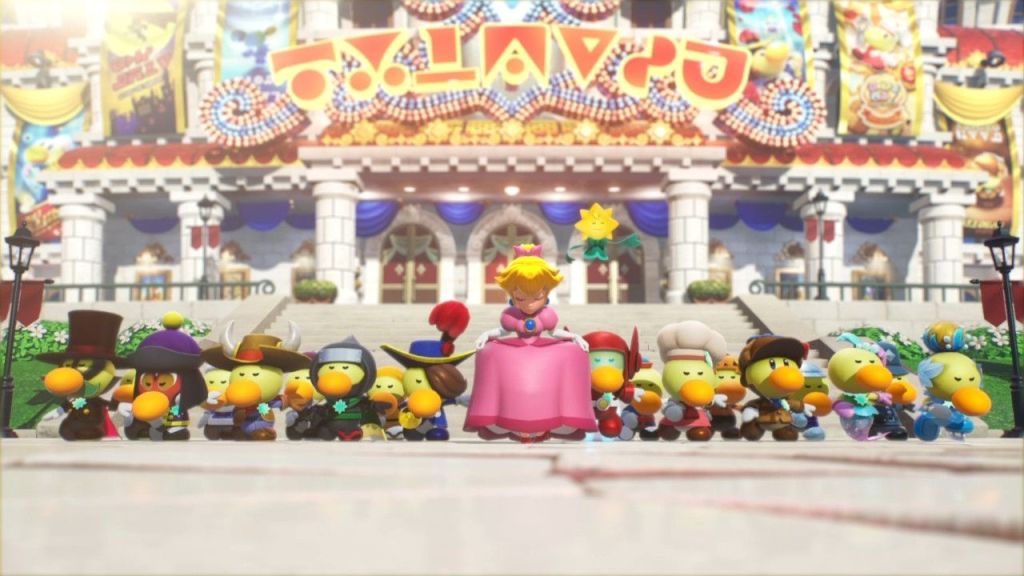
In Princess Peach: Showtime! each level is known as a “Play” and each play takes place on a stage, which are filled with props, enemy encounters, set-piece sequences, NPCs to interact with, collectables and other tangible materials to interact with. Visually, Princess Peach: Showtime! is gorgeous, although not every performance here is great. The Nintendo Switch continues to show its age as the game will chug along during particular sequences. The environments feel and look almost as richly textured and detailed as Luigi’s Mansion 3, although certainly not as interactive. Considering the developer’s legacy, having made Kirby’s Epic Yarn and Yoshi’s Woolly World before this, for example, there’s definitely a hand-crafted feel to the aesthetic, which is also reminiscent of Paper Mario. There are even parts of the game that reminded me of Japan Studio’s Puppeteer on the PlayStation 3, particularly when the perspective shifts to 2.5D. Sometimes, the stages will rotate and you’ll often find yourself standing under a spotlight or some other impressive stage-lighting. The overall presentation is great and the game does a good job of not reusing ideas when it can. I do wish there was more of a theatrical aspect to the game, however. I was expecting an audience in the foreground, something akin to the battles in Paper Mario: The One-Thousand Year Door, but you’re only ever greeted with the occasional applause for finding and solving particular sequences. While I don’t think the music is particularly bad or anything, the game is sorely missing Tomoya Tomita’s touch. I just can’t picture a Good-Feel game without his compositions and I’m sad he’s no longer affiliated with Nintendo and the team.

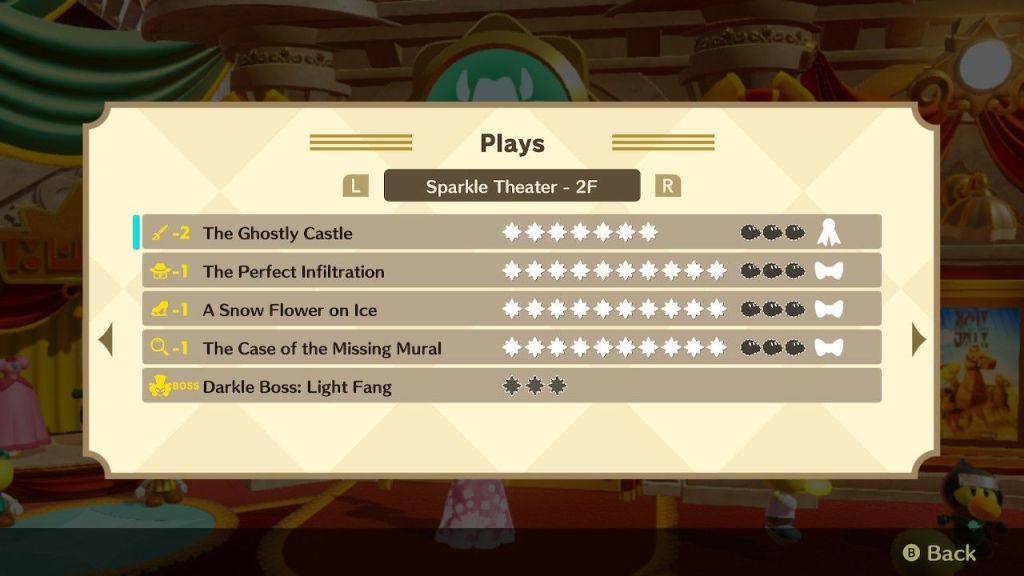
I completed the base game with all Sparkle Gems collected, including the challenges that earn you various Ribbons for getting gold ranks. There’s a fairly extensive post-game, however, and how it works seems to be relatively divisive; after you beat the game, each level gets populated with hidden ninja characters and a new shop becomes available where you can trade your excess Sparkle Gems for cosmetic decorations for the theater. There are also new boss challenges, which require you to replay each boss in the game under certain conditions, like taking no damage. The problem, however, is that there’s no way to skip cutscenes or jump to particular parts of the stage to find what you’re missing more quickly. You have to replay the entire level from start to finish while collecting whatever you’re missing in order to 100% the game. You can’t even quit the stage to retain a collectable if what you’re missing was right at the start. I made sure I replayed each level the first time around to collect everything, not knowing how the post-game worked. All of the set-pieces, flavor text and extended animations are fine and lovely the first time around, but it’s kind of a drag for completionists and certainly doesn’t respect the player’s time. I don’t think it’s my favorite Good-Feel game, but I’m glad it exists and I hope the developer’s previous game, Otogi Katsugeki Mameda no Bakeru: Oracle Saitarou no Sainan!!, somehow makes it to the west.

Mario vs. Donkey Kong, developed by Nintendo/NST, is an enhanced port/remake of the original Game Boy Advance (GBA) game first released back in 2004. While it’s certainly no Donkey Kong ’94, one of my favorite original GB games and arguably one of the best Mario/Donkey Kong games ever made, it’s not without its charm. Mario has a fairly decent move-set here that’s fairly similar to the way he controlled in DK’94; he can perform a sideways somersault, climb ropes and even perform a handstand which is primarily used to deflect falling bricks. The controls are tight and responsive, but the game feels a little sterile at times and lacks a personality to a degree. I do like all the sound effects; the way Mario seems to pitter-patter and make different sounds on particular floor-tiles creates a nice tactile feel to the game. The backgrounds are rendered nicely, perhaps in 3D(?) this time around, too. The music is mostly pleasant with some nice jazzy themes. I never played the original GBA game, so I don’t have the greatest frame of reference here in terms of what’s new/different. It’s the small details that go a long way when there’s not much else going on here, however.

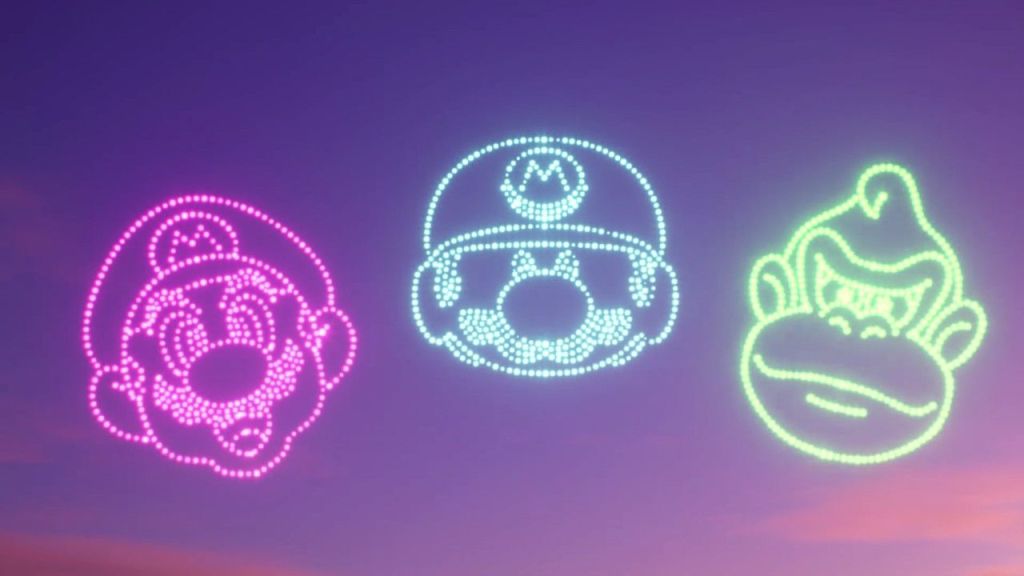
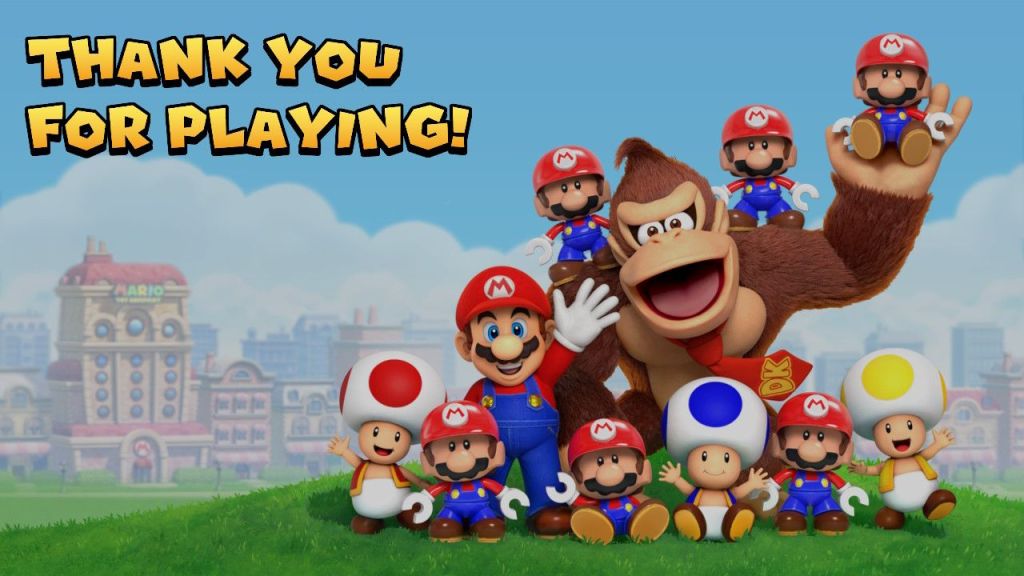
I completed all of the regular levels with all presents collected and gold stars earned. After beating the game, you unlock the same 8 worlds again, but this time they are more challenging and only consist of one screen. Unlike the regular levels, you don’t collect a key to gain access to the second part of the level. There’s now a mini-mario who holds a key that you must guide to the exit safely. In addition to this, there are now time trials for each stage and expert levels, which unlock based on how many gold stars you collected. You essentially need to replay the game 3 times to complete it at 100% and that’s a feat I’m not particularly interested in right now, considering the two dozen other games I’ve had in rotation since starting this. I had planned to play this game on a recent plane ride, considering its bite-sized nature, the game is certainly suited for hyper-focusing to pass the time, but I ultimately did not play it on my trip. Instead, I finished the game on my couch portably, sitting next to my husband while he watched one of his shows. There’s simply A LOT of content here and it should satisfy most traditional puzzle-players and fans of the series considering the price-point. I liked the game more than I was expected to, but it’s still no Donkey Kong ’94.
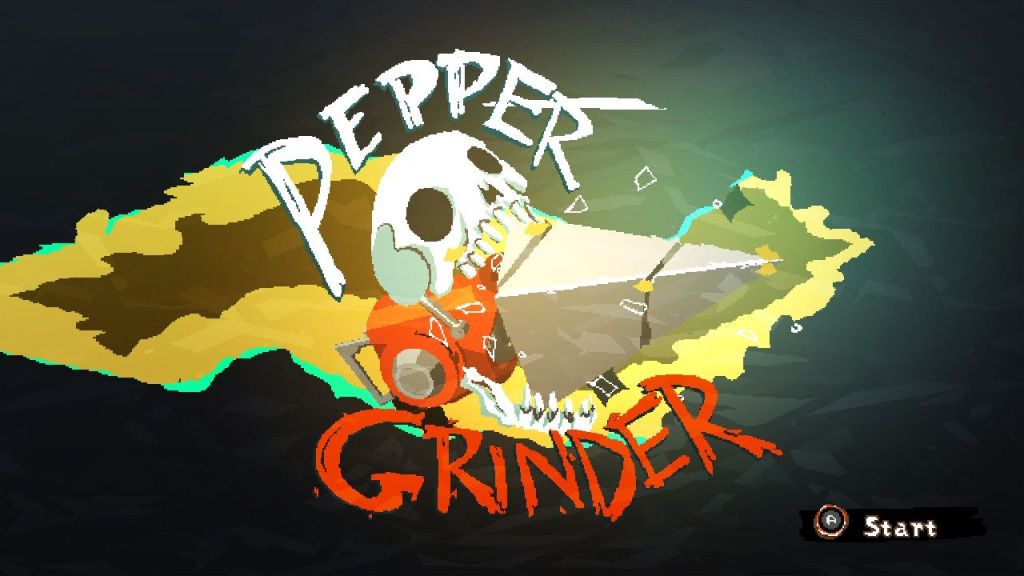
Pepper Grinder, developed by Ahr Ech and MP2 Games, is a 2D action-platformer where your primary weapon and means of traversal is a drill. The game starts with your main character washed ashore with treasure, which is presumably yours(?), strewn about the beachline. Before you regain consciousness, a bunch of baddies make off with the treasure and from there, your adventure begins. That’s all there is to it; there’s really no spoken dialogue or any cinematics, really. The game takes place across four themed worlds consisting of 4-5 levels, including a boss. Each level has 5 hidden coins to collect, which can be used to unlock secret levels or customizable background art. There’s even a gumball-like machine where you spend coins, the game’s currency, to unlock stickers, which can be used to decorate the artwork backgrounds you unlock. You can even purchase temporary health upgrades from a more expensive gumball machine if you’re having trouble with the game. From there, each level contains a relatively challenging time trial with bronze, silver and gold rewards, most of which unlock music tracks and more stickers for your artwork backgrounds.
If you’re familiar with the blue hedgehog’s outing on the Nintendo Wii, Pepper Grinder feels like someone took the Yellow Wisp from Sonic Colors and made an entire game centered around it. One of the most important aspects of a 2D/3D platformer is if it simply feels good to control your character and Pepper Grinder nails it, for the most part. It’s a very forward-moving game; levels are tightly designed to make you drill smoothly from one section to the next, but there are the occasional hiccups that break the momentum. Sometimes, the game will make you fight enemies and combat isn’t exactly what you’re here for. There are instances where you drill can turn into a Gatling gun and the game suddenly becomes a run ‘n gun Contra-like. They’re not the best sequences in the game, but I suppose they change the pace a bit. Despite the game’s colorful aesthetic, it’s also surprisingly gory, as you’ll find yourself ripping enemies apart, fragging them with your drill. The soundtrack, by Xeecee, is good too; a lot of electronic music that fits the energy of the game, naturally.
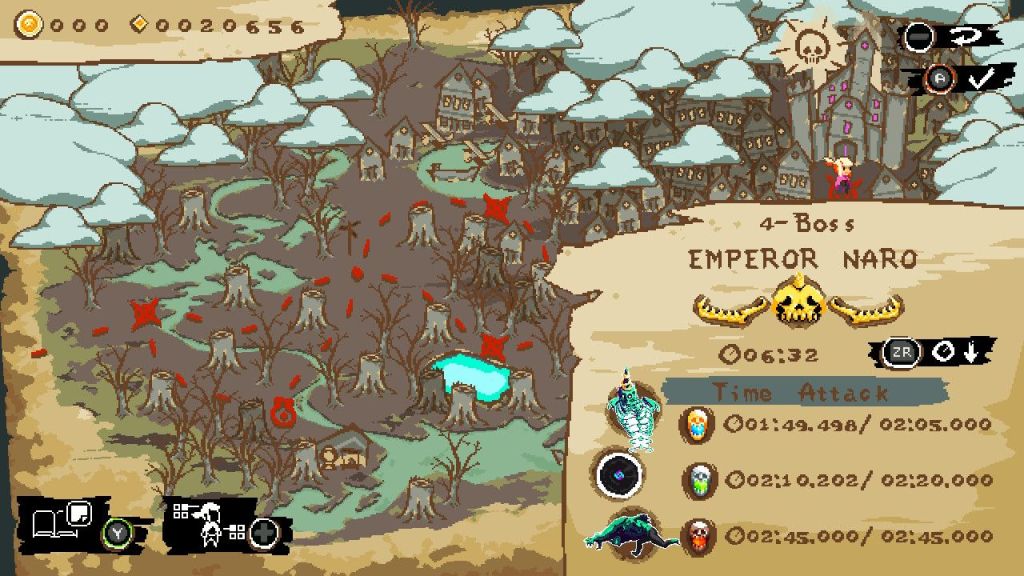
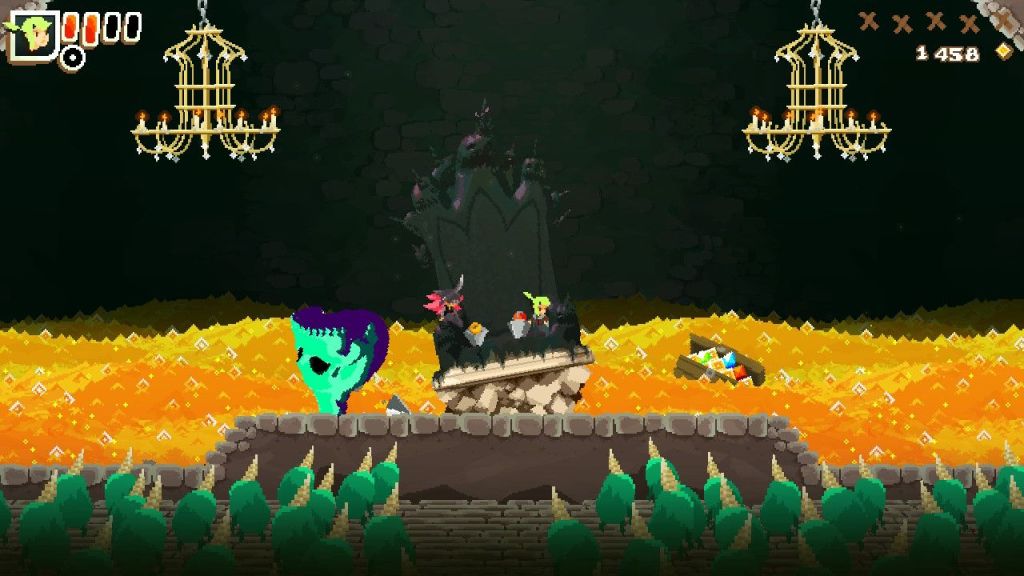
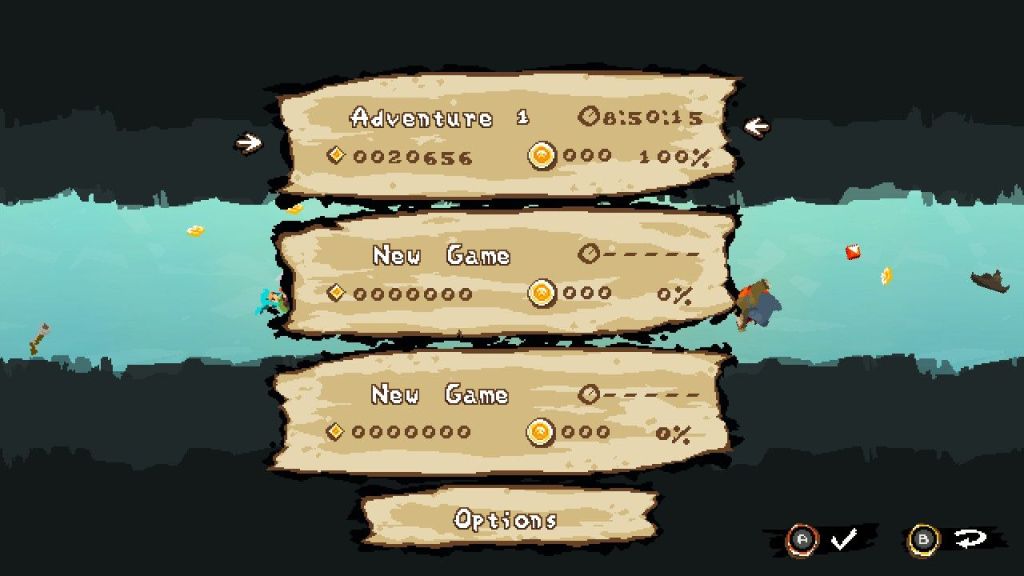
I completed Pepper Grinder at 100% with all hidden coins, music tracks, and stickers collected. I even managed to get gold ranks in every stage, including the bosses, which was relatively challenging at times. Some stages had really easy target times, while others felt far too unforgiving. Perhaps the time trial requirements need a patch or two, but they’re all doable with enough perseverance. While it feels really good to speed through a level, some of the controls and gimmicky traversal sections can feel a bit inconsistent, which causes you to retry the same level over and over again until you get that “prefect run”. It was typically the cannons and grapple hooks causing issues for me, but the levels are fortunately short enough that retrying them from the beginning isn’t a huge setback. I really liked Pepper Grinder, but I wasn’t blown away by it and it’s certainly not my favorite indie game of the year. Hopefully Ahr Ech and MP2 Games get the opportunity to make a sequel or a new game down the road.
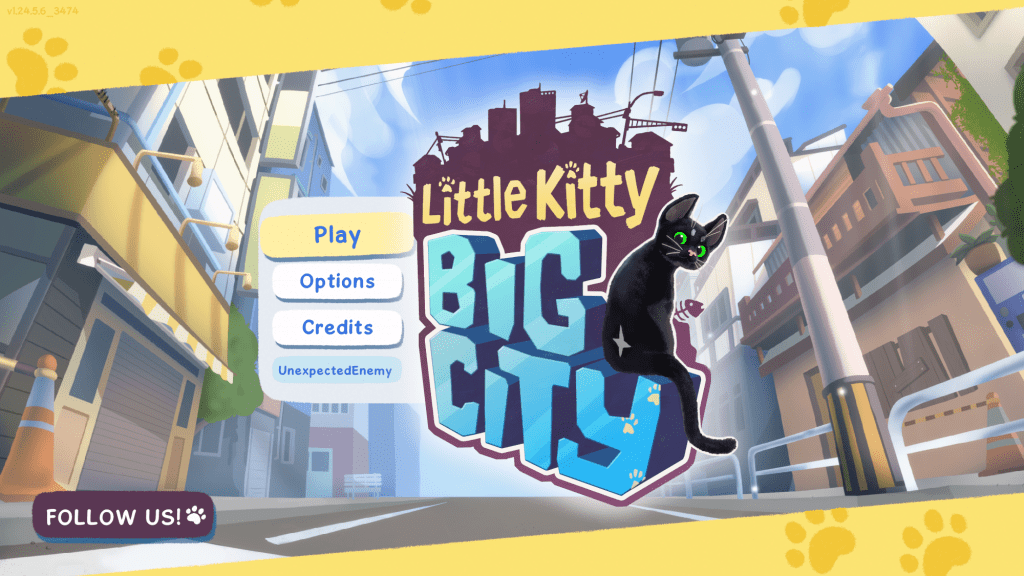
Little Kitty, Big City, developed by Double Dagger Studio, is a 3D platformer of sorts with adventure game elements, not unlike 2022’s Stray. Unlike Stray, however, which ultimately favored traditional PC-style point ‘n click adventure games, Little Kitty, Big City feels more like the “cat simulator” everyone wanted Stray to be. With that said, it’s very much in the same vein as A Short Hike, The Spirit and the Mouse, Lil Gator Game and even Untitled Goose Game. You play as the titular Little Kitty who’s curled-up on their windowsill when they suddenly stretch too far and fall to the city streets below. To get back to your owner and most importantly, your favorite napping spot, you must make your way through what appears to be a handful of back alleys in some facsimile of Tokyo. Along the way, you’ll help other animals with their problems in a checklist-like nature, while also being a nuisance to humans. In one instance, a duck lost all of their ducklings, so you must find them hidden in the city and escort them back to a pond. While you’re doing this, you can chase birds for feathers (which activate fast-travel sewers operated by a raccoon), trip humans so they drop their phones, and collect shiny objects to trade for items (hats, of course) with a crow.
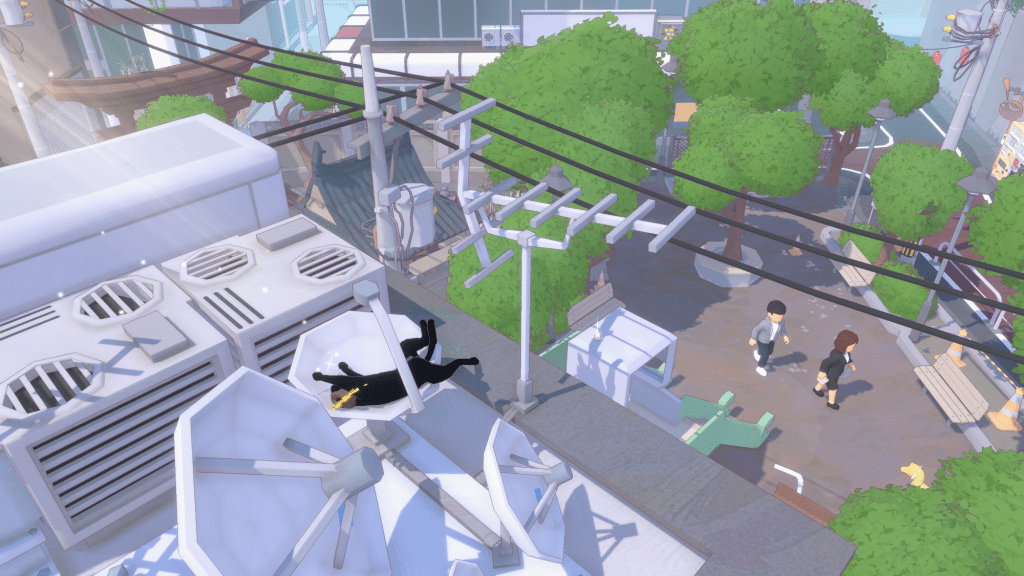
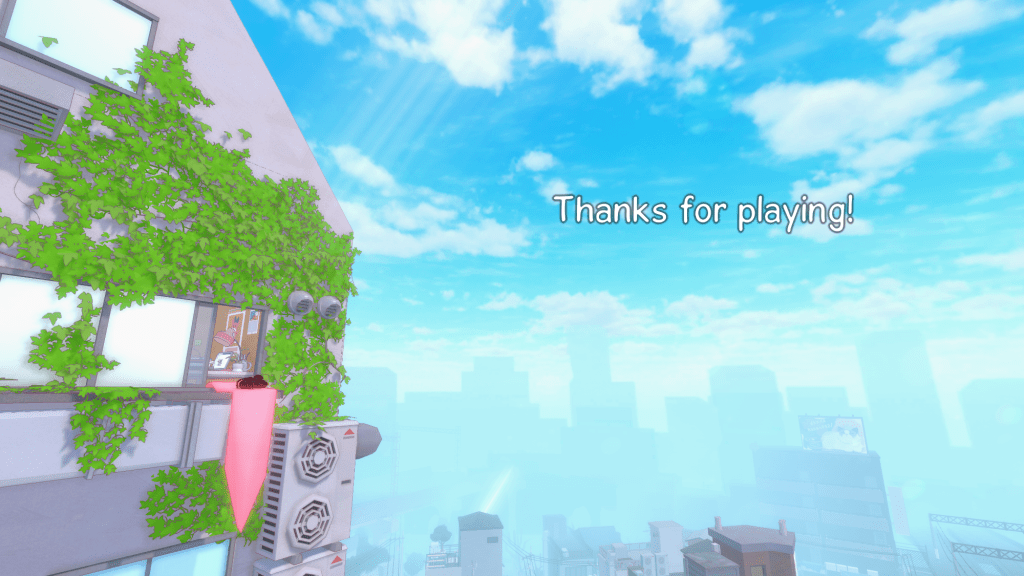
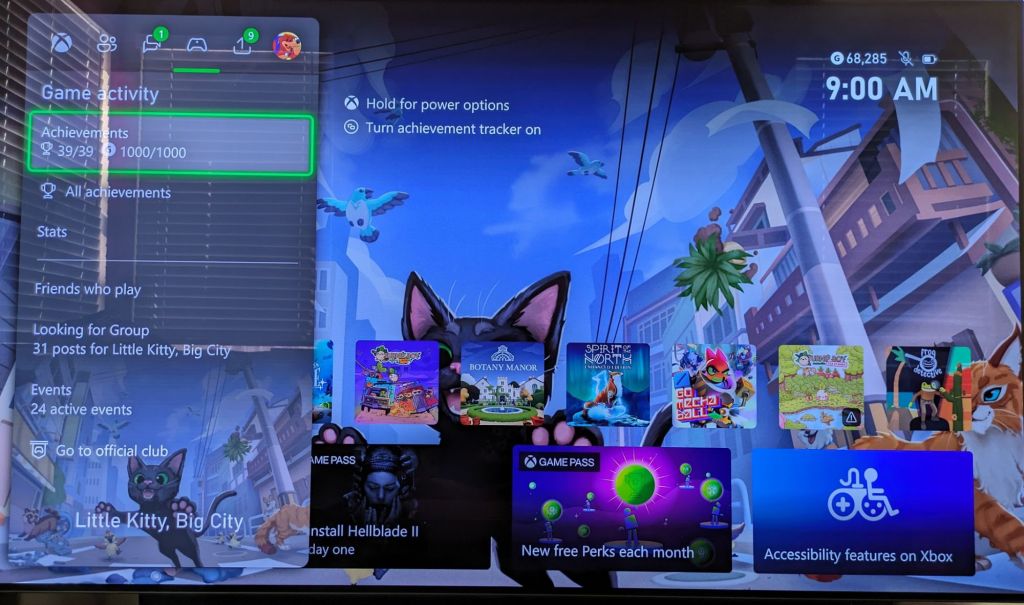
Something I found super refreshing about Little Kitty, Big City is that there’s no sad story or lesson to be learned by the end of the game. Although this is generalizing to a degree, I think a lot of indie developers have a tendency for there to be some emotional twist or gut-wrenching realization to the story they’re telling. Your owner isn’t dying or you’re suddenly not moving away or anything like that once the credits roll. Sometimes it’s just nice to have a game where you just sort of exist and nothing is seemingly wrong. I’ve dealt with an ailing father this year who ultimately passed recently, so I’m not exactly resonating with tragic stories in videogames right now. At some point, I will likely post a creative piece inspired by the game’s photo mode. Little Kitty, Big City is one of the few games I felt compelled to take “action-shots”, so to speak (it’s probably because of all of the cute hats you can wear) and there’s a story I want to tell with the in-game pictures I took. I downloaded the game from Game Pass on my Xbox Series X and completed it with everything collected at 100%, all 1000/1000 achievements earned. I really liked it.
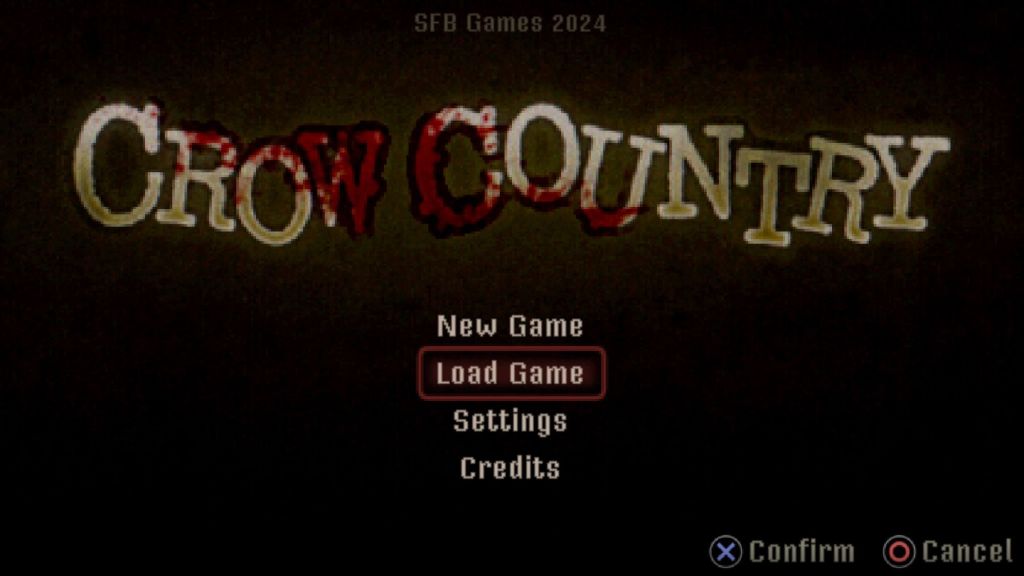
Crow Country, developed by SFB Games, is a top-down, survival-horror game with a PS1 era aesthetic that feels like a love-letter to the older Resident Evil (RE) and Silent Hill (SH) games. The game takes place at an abandoned amusement park where you play as Mara Forest who arrives at the titular Crow Country to investigate the disappearance of the park’s owner. Crow Country has all the makings of a great survival horror game location; the game takes place in a super dense, interconnected space filled with themed areas, attractions, utility rooms, and other amenities. Naturally, much of the park is locked-up, so you’ll have to find keys and other items in order to unlock shortcuts and gain access to new areas. Most of the game is spent running around, collecting items, shooting monsters and solving puzzles. The puzzle difficulty can be quite challenging at times, even more so than engaging with any of the monsters. A lot of the puzzles require the player to pour over memos and notes left behind in order to solve them. You’ll often find yourself looking at all of the objects and props in the environment, as they can also provide clues, too. There’s one puzzle in particular where you need to count body parts on monsters that are projected in a haunted house themed attraction, but when you press a button to project the images, they only show for a brief second or two. Most of the puzzles are unique and quite satisfying to solve.
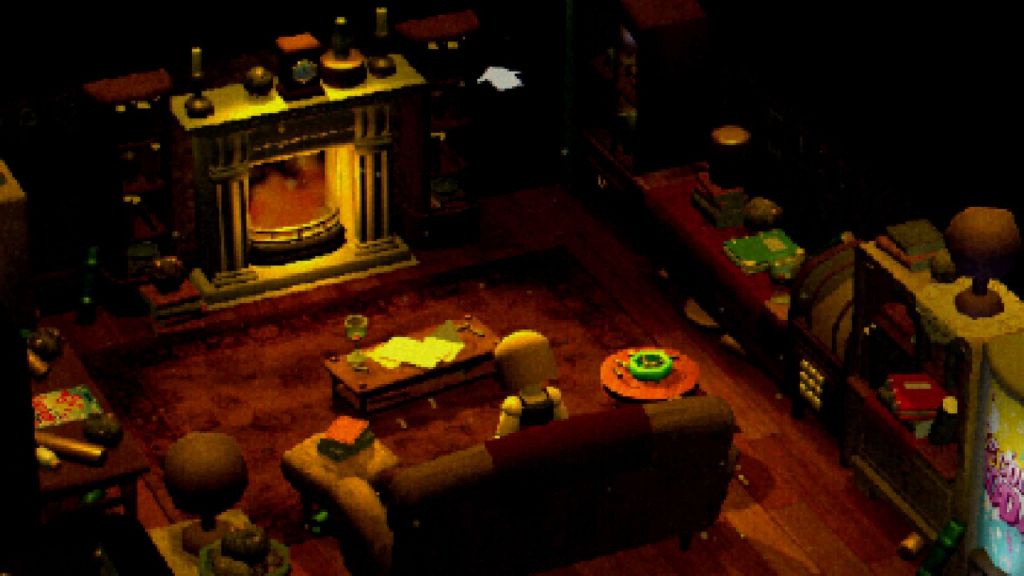
One thing I’m torn about is the game’s difficulty. Considering the sub-genre’s relatively challenging legacy, Crow Country is a surprisingly approachable and rather easy “survival horror” game. Even on the game’s “Survival Horror” difficulty, there’s no limited saves or inventory management. While you can only hold a certain amount of each restorative item, which I believe is 5, the game seems designed in a way to always provide the player with enough ammo and healing items to get by. There are trashcans and wooden crates scattered around the map and from my understanding, they will perpetually generate what you need if you start to run out of something. The crates are sort of a gamble, however, as while they can potentially contain an item, they require a single bullet to destroy. If you start to run low on ammo, searching trashcans will usually yield handgun ammo, at the very least. You’ll also find random shotgun shells and med-kits in corners of the map that also seem to respawn, whether on fixed intervals or, again, when you’re running low on them. Finally, enemies can be killed quicker if you are within close proximity and you can even pop heads if you target the monster’s melon (although, nothing here feels as good as the head-pops from the older Resident Evil games). There’s simple risk/reward systems at play here and it makes the game more interesting on the surface.
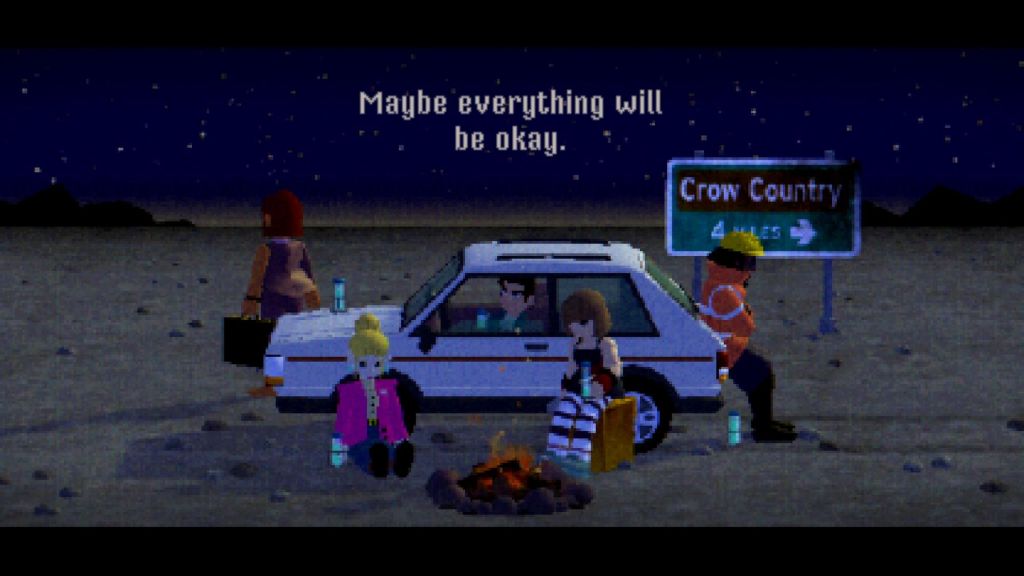
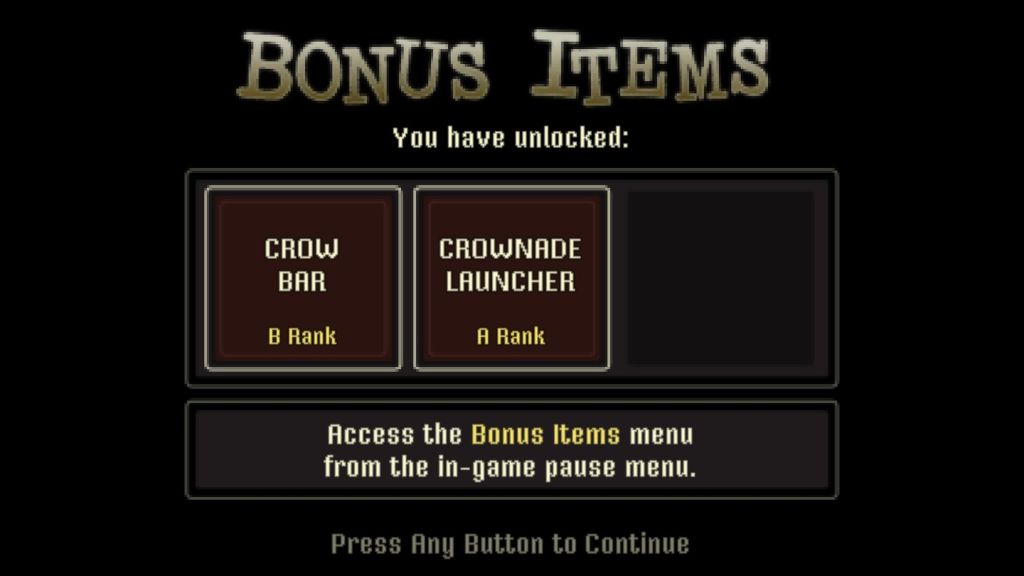
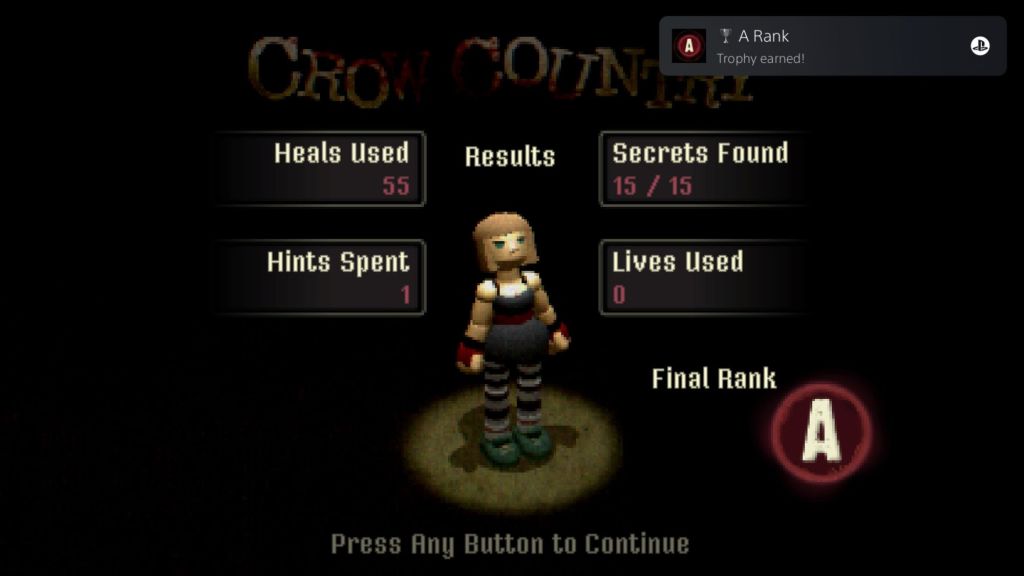
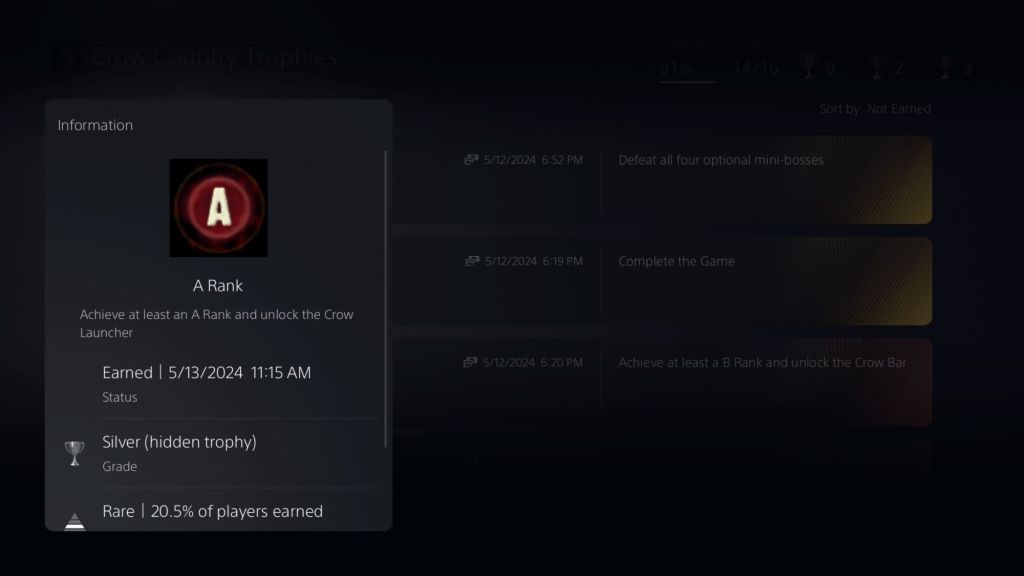
The soundtrack, by Ockeroid, is most-excellent. “Locally Feared Lawsuit Attorney” is one of my favorite tracks of the year; I can’t stress how much this piece taps into those brief moments of respite, which is something the original RE games captured so well. The “save room” music is great, too. Crow Country is an extremely enjoyable, yet light survival-horror experience. It’s not exactly replicating the survival horror games of yesterday, but there’s enough of that DNA here for veterans of the sub-genre to enjoy. More importantly, it’s very approachable for newcomers. I completed the game with an A Rank earned which unlocked a “Crow Bar’ and “Crownade Launcher”. Someone clearly loves old RE games and their unlocks. The ranking requirements aren’t too bad, either. The game ranks you based on heals, hints and lives used, in addition to how many secrets you’ve discovered. Discovering all of the secrets is the hardest thing about the game, honestly. There are many hidden elements tucked away in each area of the park and I somehow discovered them all on my own, which felt really good. I’m tempted to go for the S Rank, but there’s just far too many other games I want to play right now. The developer is planning to update the game with some fixes and even a “Hard” mode (which, at the time of writing this, might already be available), but I’ll revisit it down the road. Maybe everything will be okay…
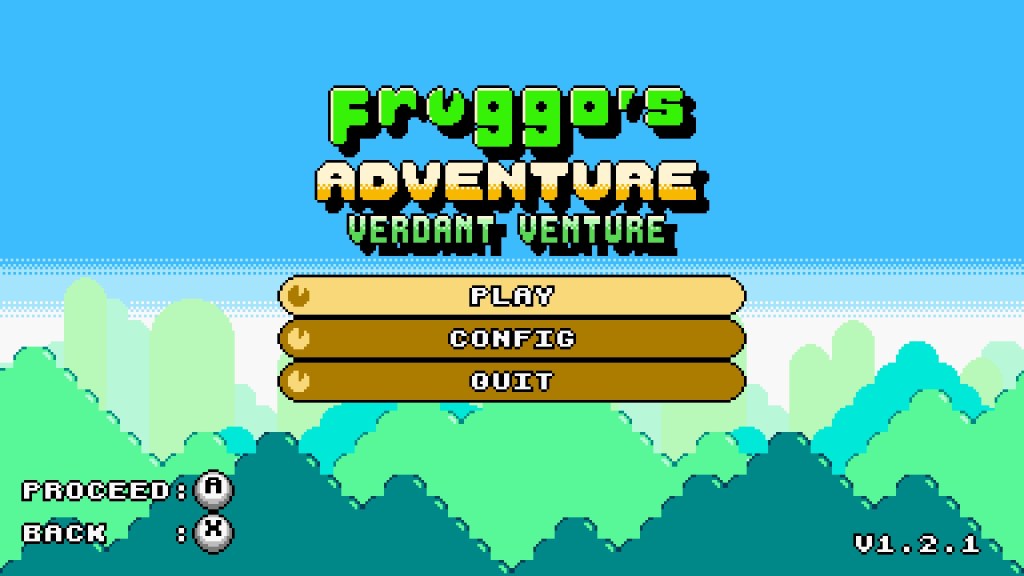
Froggo’s Adventure: Verdant Venture, developed by SmellyFrog, is a 2D platformer that wears its love for NES era Kirby on its sleeve. An evil witch is mistaken for stealing something out of Froggo’s well (presumably their home?), so the little frog sets off on a quest to recover their stolen goods. The story isn’t anything to write home about, but you’re not exactly here for a compelling reason to jump around as a frog and collect things. As Froggo, you can walk, jump and use your tongue for both combat and traversal purposes. If you gobble up a monster, you can spit them out and they’ll bounce around the environment hitting other enemies and objects along their path. The tongue is also a grapple-hook of sorts that can be used to cross gaps at specific points in a level. The game has a nice, colorful aesthetic to it and the map screen feels like it’s straight out of Kirby’s Adventure on the NES.
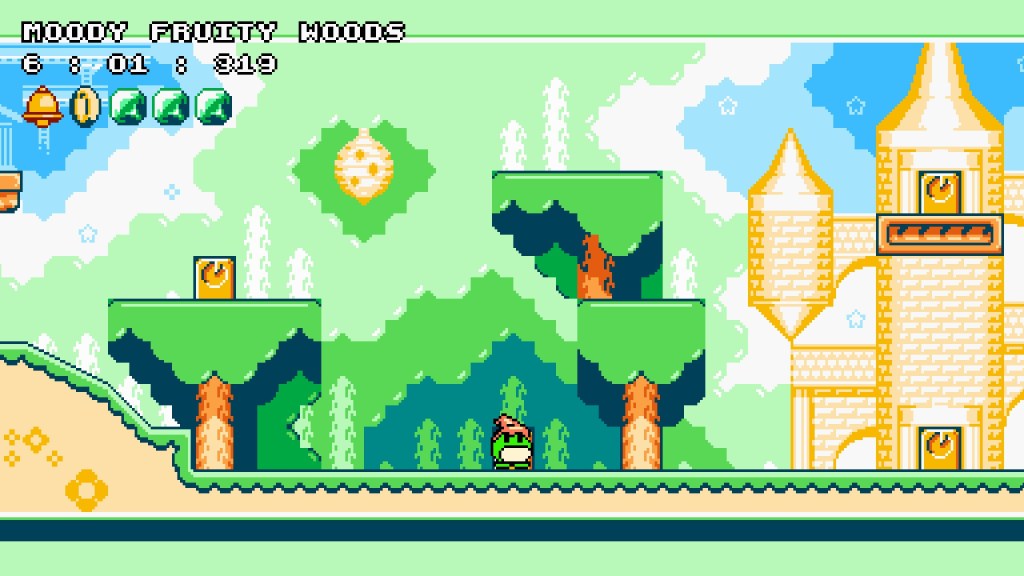
I completed the game at 100% with all of the gems collected and all Steam achievements unlocked. The hardest thing about the game was collecting one of the coins on the Moody Fruity Woods level. In each level, there are a fixed amount of coins to collect. If you find all of the coins, you’re rewarded with a gem. There’s an advanced movement technique called “grab and kick” that’s more or less required to collect this coin and it took me quite a few tries to wrap my head around. You have to use your tongue on an enemy/object, but right before you pull yourself towards them, I believe you have to mash the jump button to sort of launch yourself? It’s hard to describe and it’s really not necessary to use outside of this one collectable.
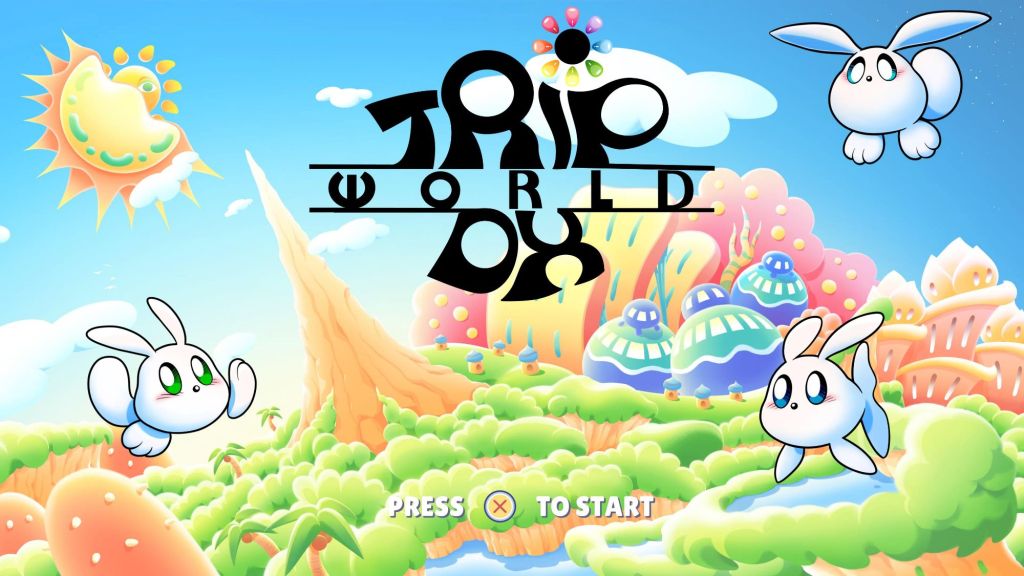
Trip World DX, developed by Sunsoft, is the forgotten sibling game to Gimmick! Having never officially released in North America until 2023, Trip World is a strange 2D platformer where you play as a little rabbit-like creature who’s on a journey to retrieve a special flower that’s fallen into the wrong hands. The best way to describe Trip World is that it’s Kirby-adjacent. Trip can run, jump and kick enemies, but they can also transform into a variety of forms. These forms, however, are rarely used or required to finish the game. By default, Trip can transform into a helicopter of sorts to fly higher or a fish to swim in water. There’s also fruit scattered around the stages that can turn Trip small, large or even into a bouncing ball. The levels are mostly short and sweet and go from left to right, although there is a bit of verticality. Outside of the fruit, there’s really nothing to collect in the levels. It’s not really a game that’s packed with secret rooms or anything of the sort. Each stage has some platforming hazards to overcome and enemies to defeat, although you’ll often find yourself jumping over everything since combat isn’t exactly the game’s strong suit. Finally, each level culminates with a boss battle, most of which are relatively easy (until the boss rush in the final level).
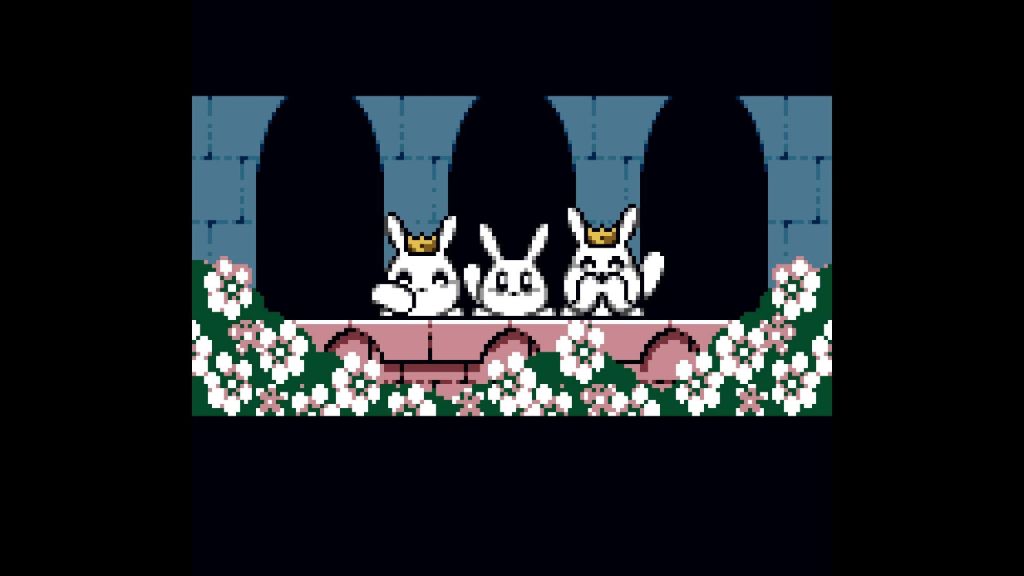

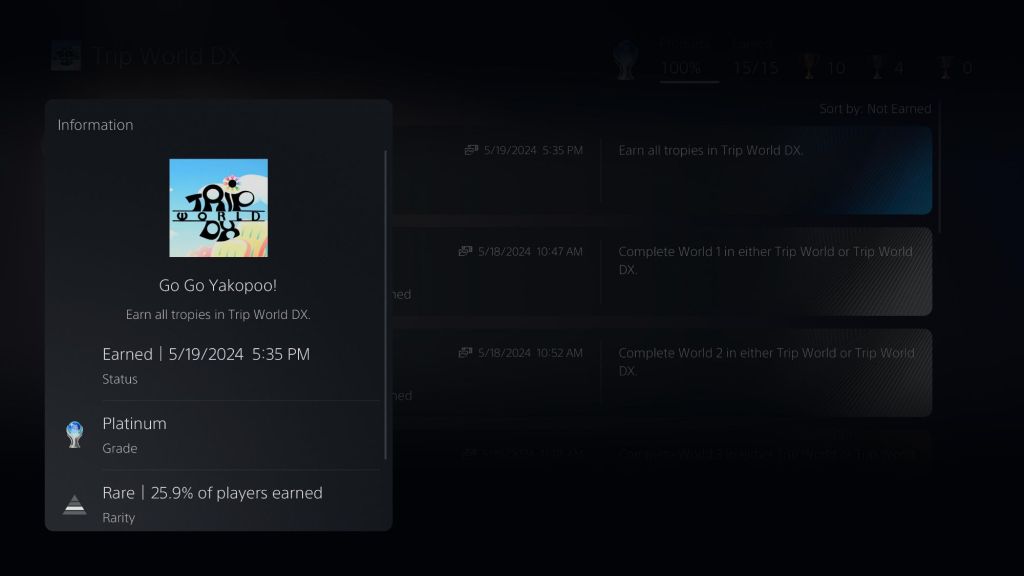
New to this “DX” version is a selection of artwork, development materials and even an interview with one of the original creators. You can also play the original GB game or the “modernized” DX version with color. Since the PS4 version has trophies, one trophy asks the player to turn Trip into all forms during a single playthrough. I can’t imagine anyone figuring this out on their own as there are hidden transformations based on the combination of fruits that you can collect. A cherry, for example, might change Trip into a bite-sized variant of our furry little friend, but each transformation only lasts for a short period of time before you revert back to your default state. With that said, in certain levels, the fruit seems to be placed in particular areas so you can string together combinations of fruit, so to speak. To earn this hard-to-earn trophy, you need to rush from fruit to fruit in any given level to see what transformations you can learn. Is there any point to do this from a gameplay perspective? Perhaps not, but it’s at least interesting from a design perspective even if it doesn’t seem fully realized here. Trip World can be completed in about an hour or so, so it’s a relatively short romp if you’re looking to play through a relatively chill retro 2D platformer. I completed the game without using save states/rewinds with the Platinum trophy earned. Similar to how I felt about Gimmick!, I don’t see myself returning for a replay anytime soon, unfortunately.
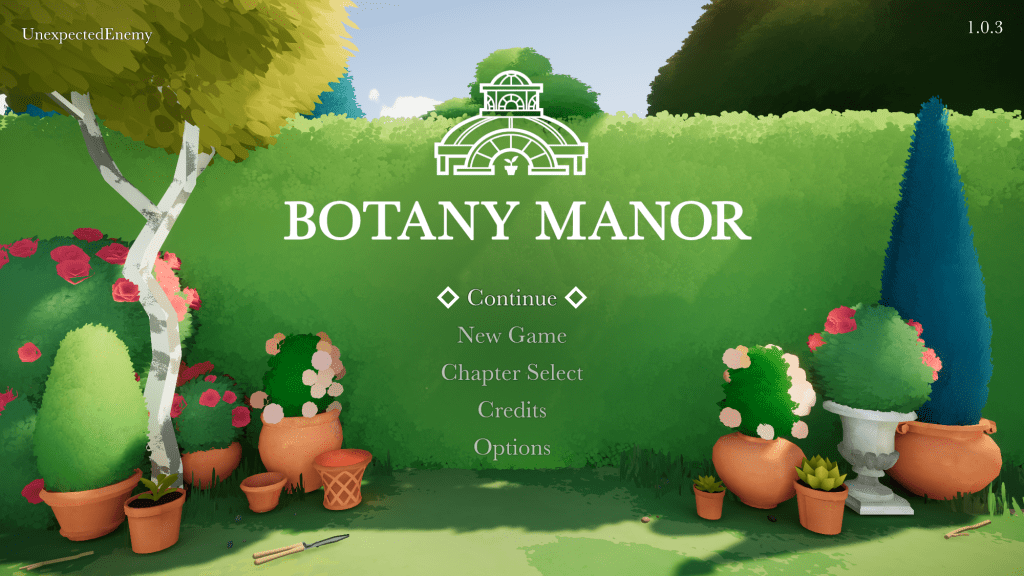
Botany Manor, developed by Balloon Studios, is a first-person adventure game where you grow plants in a Victorian English manor as botanist Arabella Greene. Most of the story is told through notes and letters left around the manor, but there’s an underlining plot about how woman have no place in this profession, considering the period in which the game took place, yet your character wants to prove themselves by becoming a publisher and writing a book. Botany Manor is a very colorful game with its use of soft shading; it’s just very a pleasant and calming to look at. The goal of the game is to grow all of the plants in the manor. Structurally, it feels like you’re in a Resident Evil-style mansion; there’s shortcuts, secret entrances, and gated areas that require keys and such to progress. In order to grow a plant, you’ll first need to find a seed. Once you collect a seed, there are stations located around the mansion which will provide you with empty pots, soil and a watering can. From here, you need to explore the manor and look for clues and information on how to grow the plants. In one instance, you might have to open and close windows in a tower so the right amount of wind flow helps grow a particular plant. In other instances, you actually have to play music or use More Code. The game certainly doesn’t hold your hand, but once you grow your first plant, it’s pretty much the same process for the rest of the game.
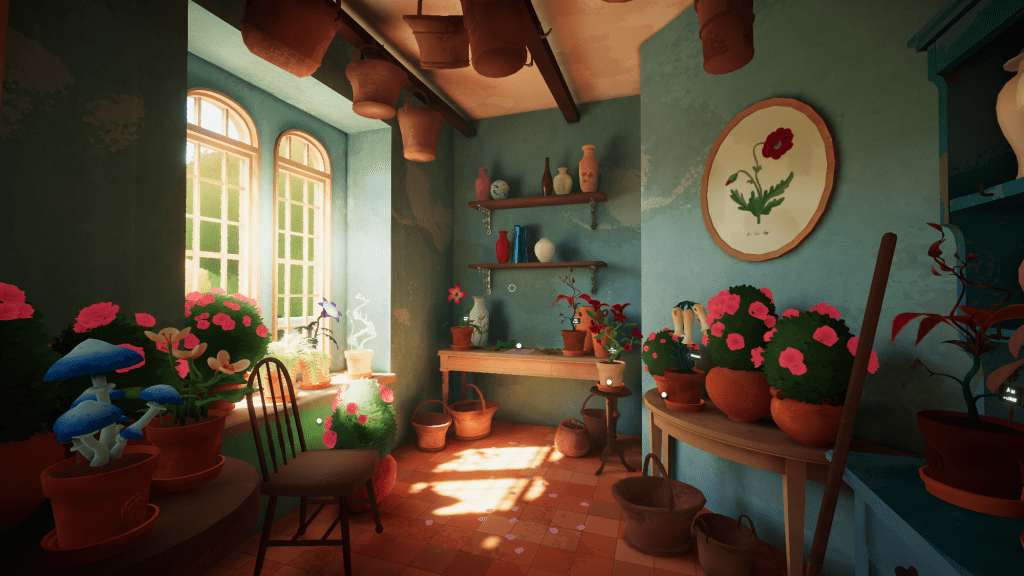

Figuring out what the game is asking you to do in order to grow the plants is where things get tricky, however. What’s somewhat frustrating about Botany Manor and how the “clue system” works; some hints for growing one plant might not always be in the same area as where you’re supposed to grow the flower and while the clues get transcribed to a book that you can reference at any time, the full descriptions (which often need to be re-read) aren’t available to read from the book menu itself. So, you’ll often find yourself running back and forth to where the clues were originally located and either commit some of the information to memory or write it down physically on a note pad. What’s nice about Botany Manor is that while there is a chapter select option, the whole game is interconnected and you’re never locked out of an area. It’s also somewhat non-linear as you’ll discover a few seeds at once which can be grown in any order. There are a few hidden achievements that require some experimentation and exploration, which are fund to discover. I somehow figured everything out on my own, but I nearly had to look up one of the solutions because what the game wanted from me wasn’t clearly communicated. With that said, I really enjoyed my time with the game. I downloaded the game from Game Pass on my Xbox Series X and completed it at 100% with all 1000/1000 achievements earned.
Yellow Taxi Goes Vroom, developed by Panik Arcade, is a 3D platformer of sorts where you play as a wind-up miniature taxi. “Morio” is in trouble, you see, as “Alien Mosk” has created hazardous Gears, which is ruining everything. It’s your job to collect all of the gears, infiltrate “Tosla’s” headquarters and put an end to Alien Mosk’s evil ambitions. The story setup in Yellow Taxi Goes Vroom is clearly a parody on Elon Musk and Tesla, if that wasn’t already abundantly clear. I typically don’t like parodies of real-life people, places or things and the humor is perhaps a bit too irreverent and right on the edge of being one big meme, but fortunately, the game itself rules. Yellow Taxi Goes Vroom is a classic 3D collect-a-thon through and through. You start in a hub world after a basic tutorial or two, which then branches out into a variety of themed stages, including seaside beach towns, sewers, industrial centers, and even an arcade. The goal of each stage is to collect all of the hidden Gears, which are essentially the Power Stars or Jigsaw Pieces from Super Mario 64 (SM64) and Banjo-Kazooie, respectively. Most of them are right out in the open, but they typically require you to navigate the environment in order to obtain them. Similar to the Power Stars in SM64, a certain amount of Gears are required to unlock the next level. There are also 3 hidden Golden Rabbits in each main stage, which are required to unlock even more challenging stages in the post-game, but more on that later.
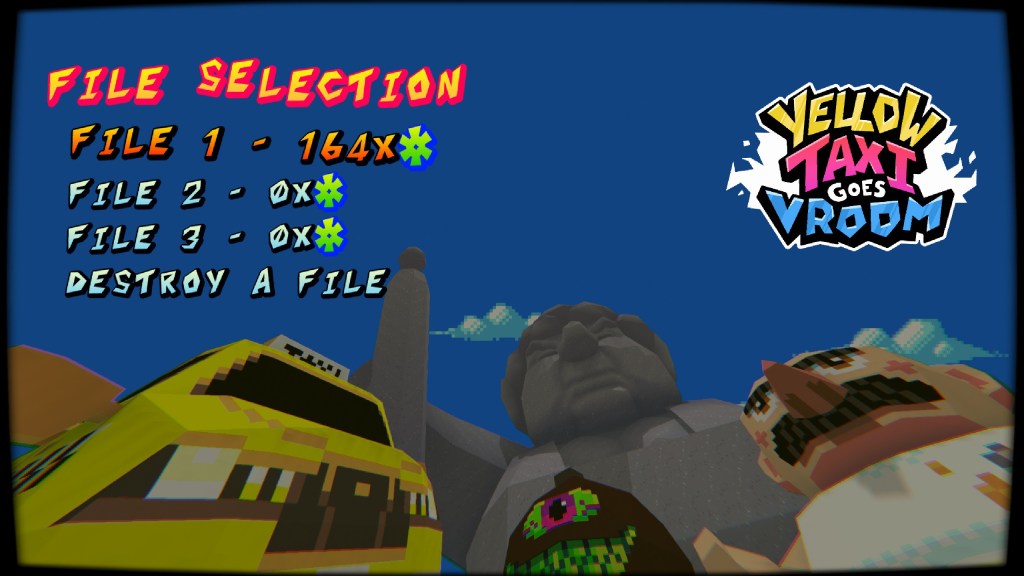
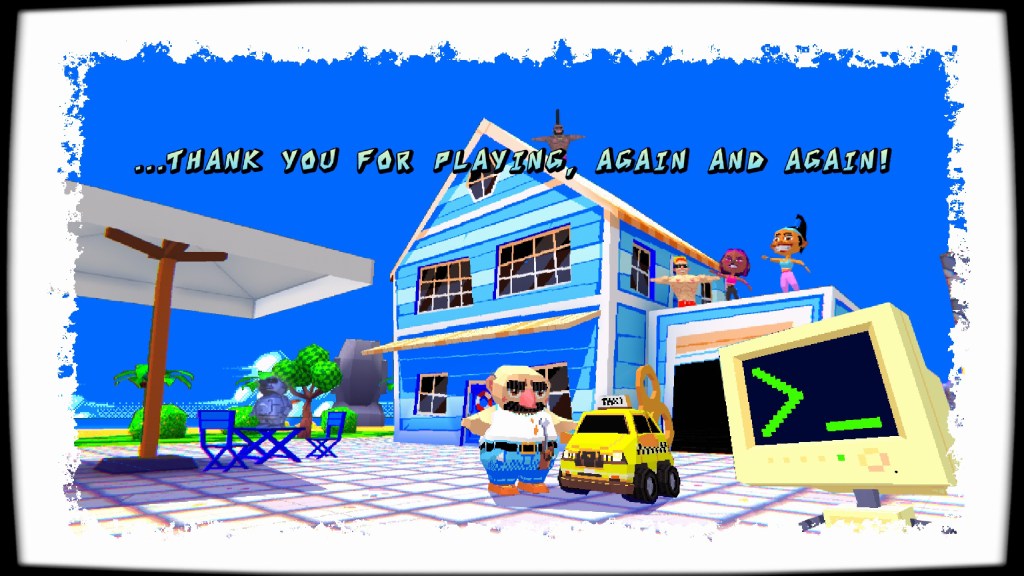
Considering it’s a 3D platformer, the most interesting thing about the game is that there’s no jump button. Instead, you must use your acceleration and the environment to get around, particularly the slopes and ramps found throughout the stages. I found the game to be quite intimidating at first. They don’t exactly tell you how to control the taxi and there are quite a few advanced techniques, which you eventually learn over the course of the game and are required to master in order to make progress. Once I learned how to “jump”, which I believe the game calls “backflipping”, it was over for me; everything clicked. In addition to essentially performing a double jump, you eventually learn how to do a turbo boost. After performing the initial spin/boost technique, there’s a small window where you can press down on the acceleration button again, which activates the turbo boost. All of these advanced techniques are required to collect everything in the game and the aforementioned Golden Bunnies are often found in locations that can only be reached once you master the entire move-set.
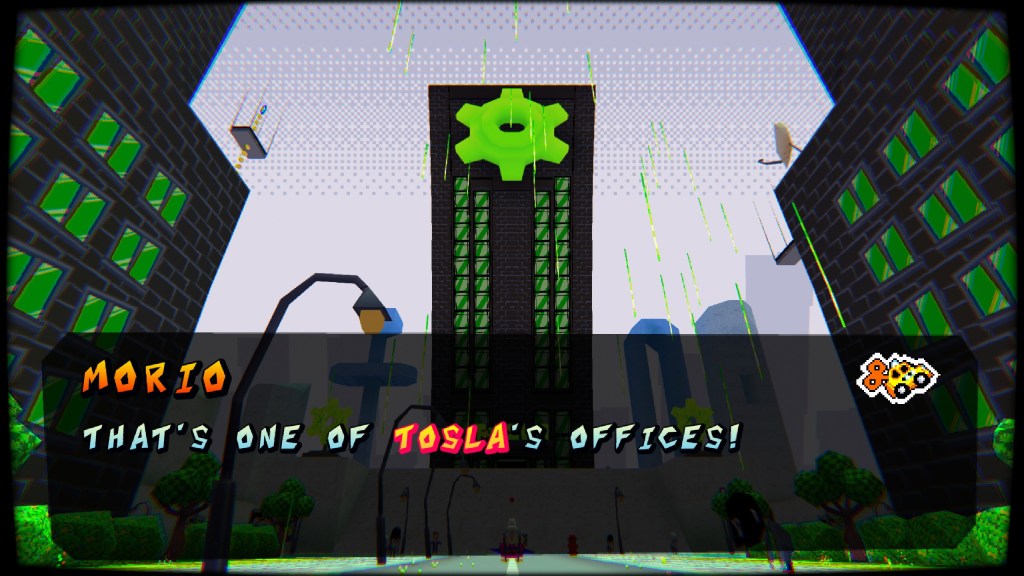
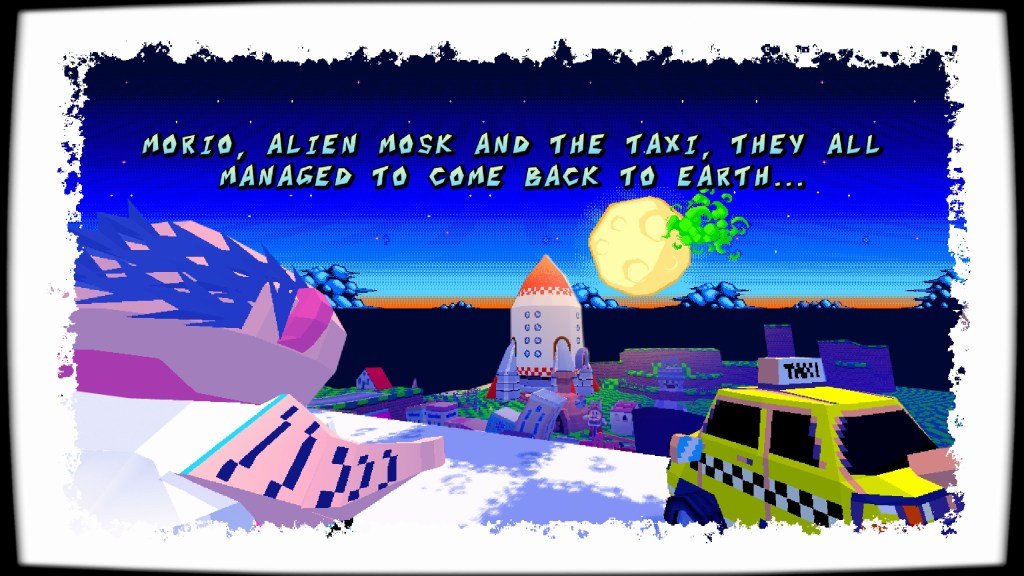

Yellow Taxi Goes Vroom, on a casual playthrough, is relatively forgiving. If you fall into a “death pit”, you’ll respawn at a checkpoint and the only penalty is the loss of coins. Coins are used to purchase hats for your taxi, of course; no modern-day indie game can go without having hats as some sort of unlockable. The game is also extremely colorful/vibrant and complimented by a nice pixelated look with backgrounds that feel like they’re stripped right out of Sega’s own Outrun. The developers aren’t exactly hiding their disdain for Elon Musk, either, which I can appreciate. The entire game is sort of poking fun at how terrible of a company Tesla is, calling it “Tosla” and how the “Gears” coming from the company are ruining everything. They also lean heavily into Elon Musk’s space exploration infatuation by making him an alien. I completed the game with 164 Gears collected, but there’s so much more to do in the post-game. After you finish the game, a set of bonus levels become available based on how many of the Golden Bunnies you collected. The few extra levels I tried were tough, so there’s plenty here if you’re one who enjoys 100%’ing games. Yellow Taxi Goes Vroom feels like the type of indie game and 3D platformer that will become huge once it gets ported to consoles (presumably Switch). I will certainly buy it again if a PS4/PS5 version becomes available in the near future.

Minishoot’ Adventures, developed by SoulGame Studio, is a twin-stick, top-down shoot ’em up with a twist. Instead of being a traditional horizontal/vertical arcade shooter, Minishoot’ Adventures is an exploration-based adventure game with Zelda-like elements; an unsuspecting hybrid of genres that’s arguably never been done before. There’s been games like Sigma Star Saga on the GBA, which was an action-adventure, almost Zelda-like game with both on-foot action and horizontal shooter sequences, but there’s been nothing quite like Minishoot’ Adventures from what I’ve played over the years. At the start of the game, you awaken as a ship and learn that the world has been taken over by a hostile force of alien machines. A disembodied voice speaks directly to you and reveals that you’ve been granted powers to fight back against the oppressive force that’s taken over the planet. What’s interesting about the game is that you never see the pilot of your ship. It’s sort of implied that both you, your allies and the enemies are sentient space ships. To simply cut to the chase; Minishoot’ Adventures is simply a joy to play.
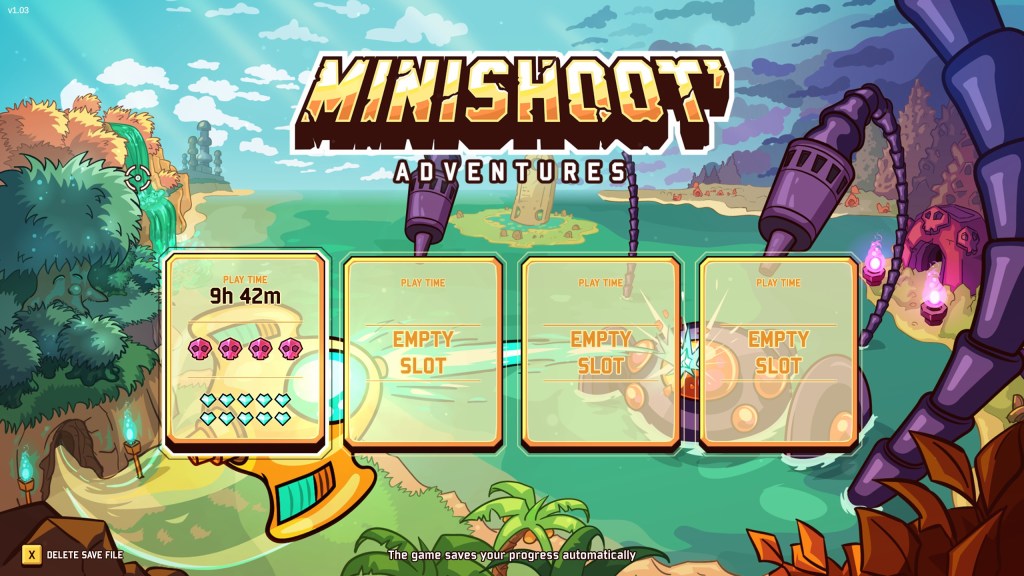

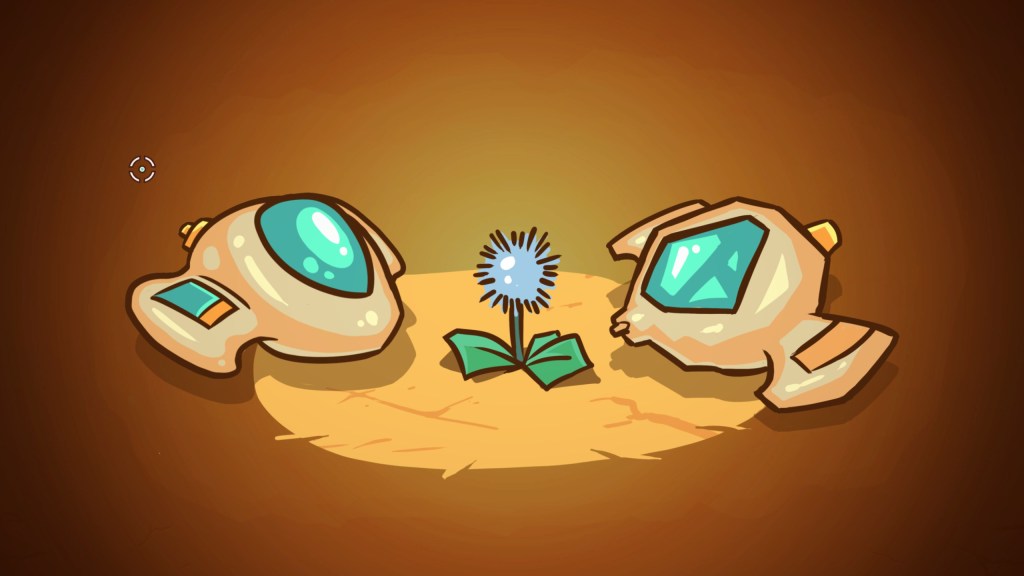
It just feels good to fly around and shoot down enemies. Unlike a lot of shooters, Minishoot’ Adventures is not an arcade-like experience. Instead, it’s a rather approachable and beginner-friendly hybrid of sorts. You’re constantly being rewarded for shooting down enemies and exploring the map. Destroying enemies earns you red crystals, and once enough have been collected, you’ll gain a skill point that can be used to upgrade your ship’s abilities. A lot of the ship upgrades are actually the types of power-ups you’d find in traditional arcade shooters; ship speed, fire rate, boost power and more can be permanently upgraded. Over the course of the game, you’ll slowly unlock pieces of the map, shortcuts and wraparounds. The entire game is interconnected like one big Zelda overworld. The Zelda inspiration is strong here too; there’s even a screen near the hub area that is pretty much a tribute to the screen from Zelda 1 south of the starting point where you enter a cave to get your sword. My only major issue with Minishoot’ Adventures is that the enemies, bosses and environments all sort of blend together. Most of the ships you’re fighting volley projectiles at you in random, wave-based, or bullet-hell-like patterns. Some enemies might dash or hop around the screen while others have barriers to block your attacks. There’s no bestiary either, which the game could have benefitted from in terms of providing additional lore/details for the ships you’re fighting. The art style is simple and clean, but the color palate could have used some variety. There’s just a bit too much yellow, brown and green.
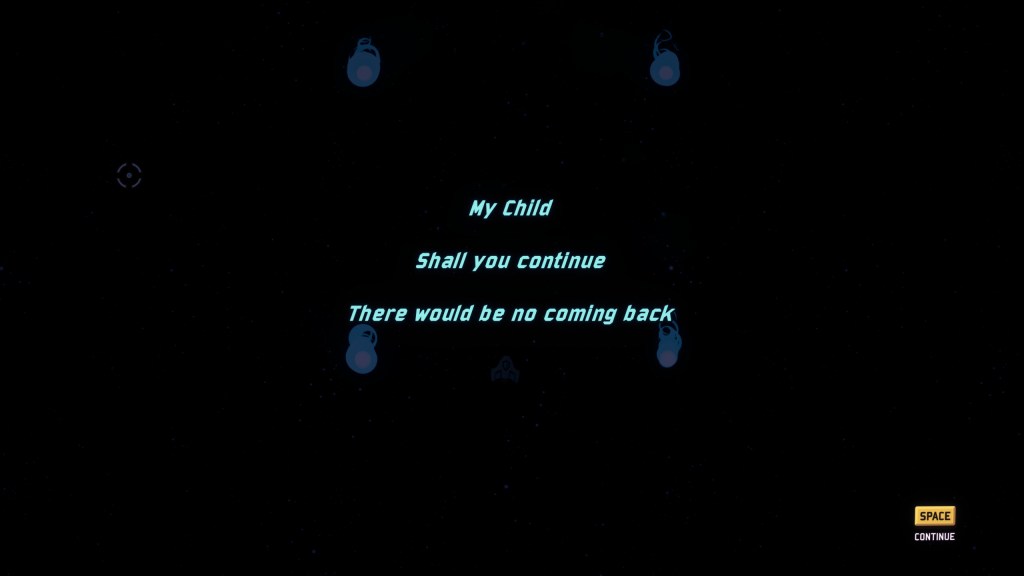
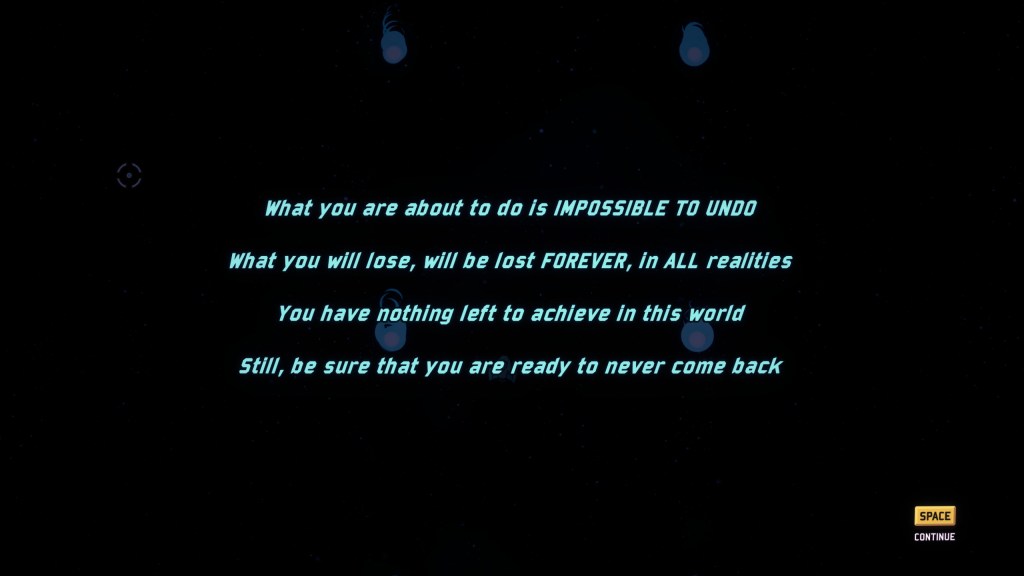
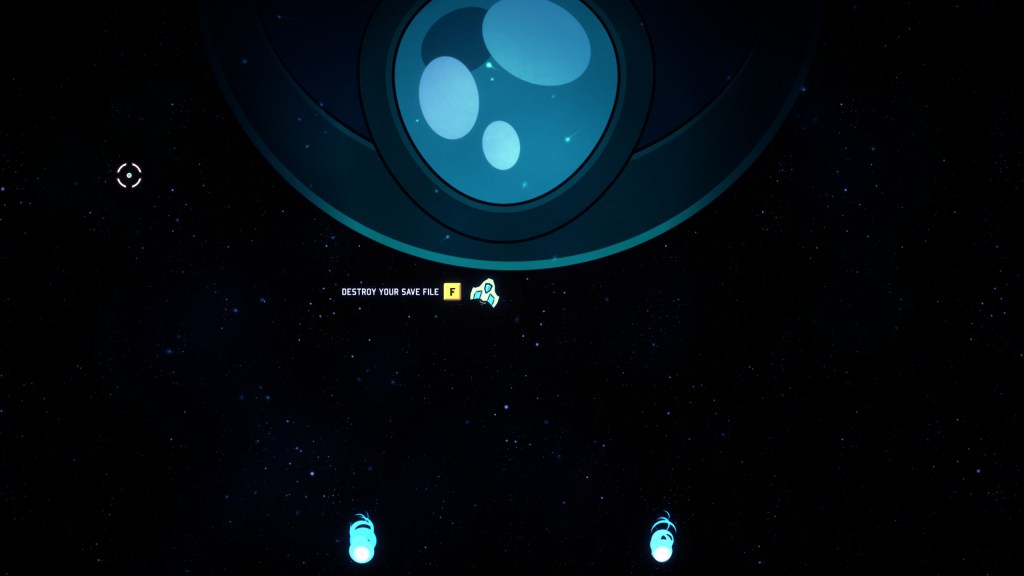
Not every game has to do what NieR did back in 2010. Although it sort of fits the narrative in Minishoot’ Adventures, I’m not the biggest fan of the “ultimate” reward for doing everything the game has to offer. After you beat the true final boss and complete the arena, which basically means 100%’ing the game, you’re given the decision to delete your save file. The story suggests that the ship that was awakened and granted powers before you rejected the offer of relinquishing their power to the giant, god-like orb in the sky. It’s definitely a cool idea and was something I was not expecting at all, but after playing the game for 15+ hours on the hardest difficulty, collecting and upgrading everything in the game, I didn’t exactly feel compelled to feed the game’s larger narrative. Minishoot’ Adventures doesn’t exactly earn its meta-narrative here, at least not for me. It’s a twin-stick shooter with Zelda/Metroid-like elements at its core, not the emotional investment NieR was. What’s even more frustrating is that there’s a single steam achievement for deleting your save file, so at the time of writing this, I am sitting at 33/34 achievements earned. I might pull the trigger by the end of the year (if I can backup my save file on a thumb-drive, just like I did with NieR on PS3 back in 2010), but for now, I’m good.

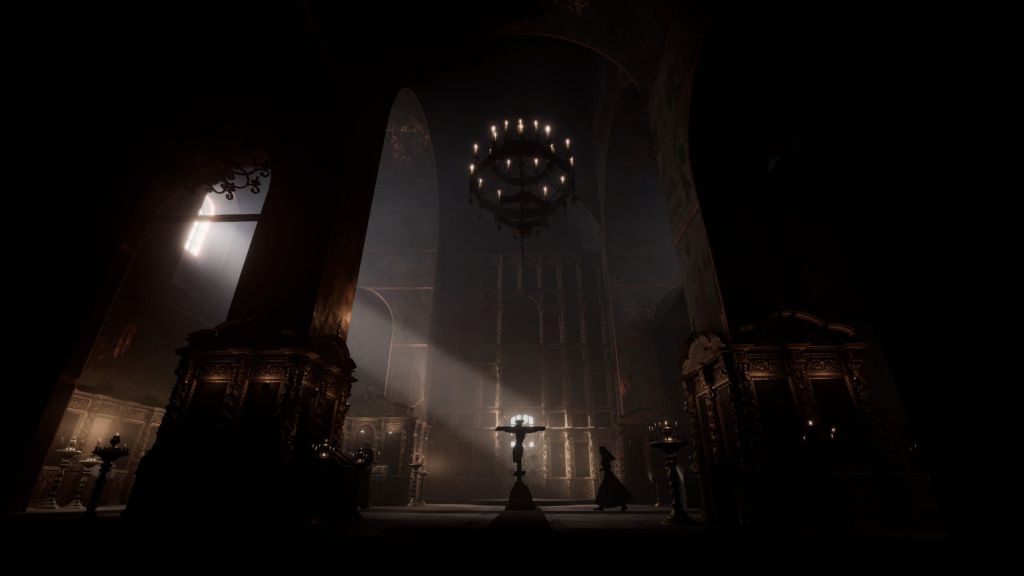
Indika, developed by Odd Meter, is a 3rd-person, narratively-driven adventure game depicting the life of a nun living in a Russian Orthodox monastery during an alternative 19th-century Russia. If you like games like A Plague Tale and have an appreciation for film, you’re going to be right at home here. Others have said this already, but I’ll echo the sentiment; Indika feels like “A24: The Video Game“. The cinematography and camera work, especially, feels inspired. I don’t think I’ve ever seen a game do what this game does in terms of its presentation style. If there were ever a game that feels like an interactive movie, this is it. Indika is a weird, humorous and sometimes horrifying depiction of one woman’s struggle with their devotion to religion. At times, it reminded me of a SWERY game with its irreverence, jankiness and strange cast of characters. The game itself is about 3-4 hours long and most of the time it has you running from point-A to point-B solving simple environmental puzzles along the way. There are biblical collectables with scripture verses and such, which grant you “points” which can be used to “level-up” a nonsensical skill tree, but none of it matters and there’s no reward of benefit for finding any of the items. The developers actually tell the player not to focus on gathering “points” because it’s pointless, yet it’s still a system you can engage with. “Perhaps the same can be said of all religion?”.
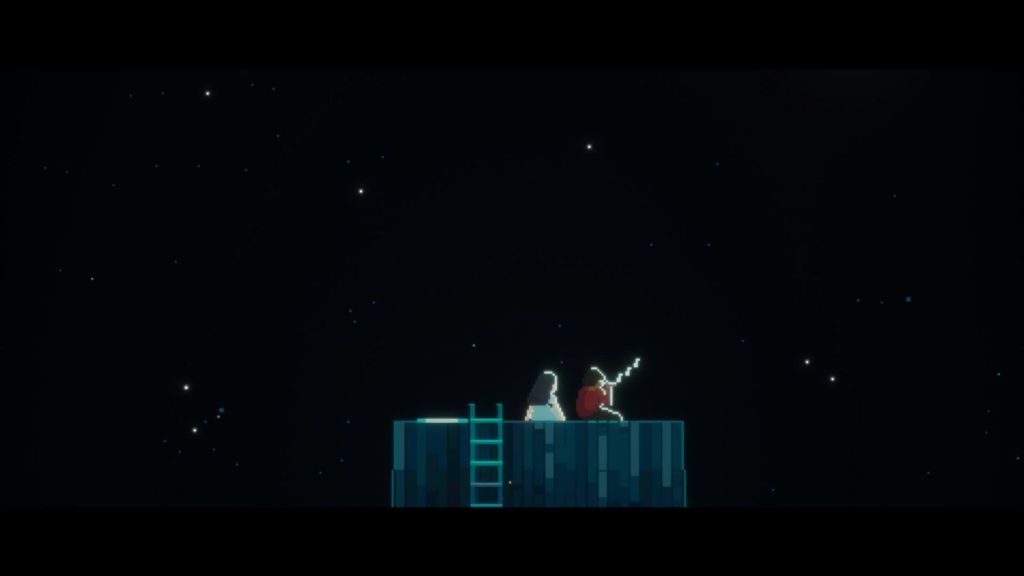
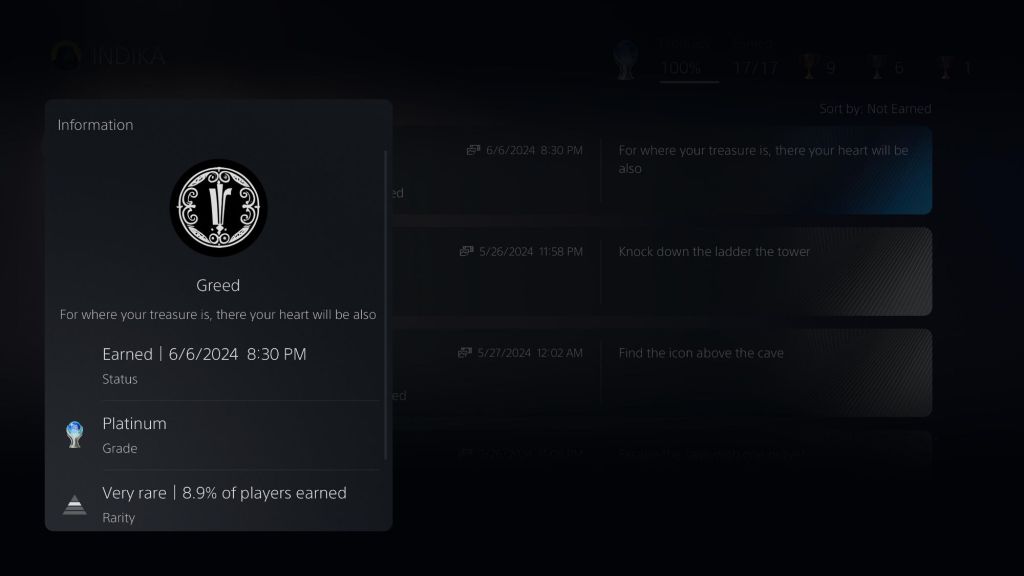
The most interesting thing about the game mechanically is having the ability to shift reality once the “devil” starts speaking to you. During particular sequences, your character can start praying by holding down a button and the environment will shift in real-time, creating paths through otherwise impassible areas. When you’re not praying, the environment remains in this sort of Hell-like landscape where everything is drenched in red and in ruin. It’s here where the devil will continue to berate you with insults and doubts. This shifting reality gameplay mechanic is only used a few times, and considering the size and scope of the team, it’s honestly one of the most impressive things about the game. I think modern-day Silent Hill developers could learn a thing or two from Indika. The dialogue is actually quite funny and the performances are surprisingly good throughout. What also took me by surprise are these beautifully pixelated vignettes, which are interwoven between particular chapters. It’s here where you’ll learn more about the main character’s past in addition to performing mini-game-like sequences such as riding a bike around town or collecting coins in a top-down, Pac-Man-like maze. They’re really nice moments in an otherwise dark and depressing game. I completed the game with the Platinum trophy earned and I only had to look up a trophy or two since I couldn’t make sense of the descriptions for how to unlock them.
Despite going to a Catholic/private grade school for 8 years of my life, I fortunately did not have super religious parents. If I recall correctly, we were the type of family that started out by going to Sunday church religiously. At some point, we shifted to going to church only on the holidays and then eventually, we stopped going all together. By 6th or 7th grade, my brother and I, along with some of the “bad” kids in our (very small) classrooms, started to wear black nail polish and Marylin Manson t-shirts. The nuns and principal made us turn our t-shirts inside-out on dress-down day once. I even recall one kid taking one of those Cheez Whiz spout-top cans and spraying it over the sacramental bread during communion. We were those kind of bad kids. As we’ve gotten older, my father become more spiritual towards the end of his life. My mom is still relatively religious, but she doesn’t talk to us about it. My siblings, as far as I know, feel the same way about it all as I do. Suffice it to say, I have a strange relationship with religion, so in some ways I could connect with the themes in the game, but in other ways, I could not.

Tales of Kenzera: ZAU, developed by Surgent Studios, is a 2D Metroid-like about overcoming grief and loss. You take control of Zau, a young shaman who makes a deal with the God of death to bring his father (Baba) back from the dead. The game takes place in an African fantasy world inspired by Bantu tales. The game’s mythology is something I’m not familiar with, so similar to how I felt about Raji: An Ancient Epic, it’s nice to see more games about people and parts of the world that often don’t get much exposure. Unfortunately, the game itself is rather middling and a bit by-the-books in terms of the sub-genre. Zau can run, jump and dash through the environment, but he also comes equipped with two masks, which can swapped on the fly. The Sun and Moon masks are fire and ice, respectively. The Sun mask is better for close encounters while the Moon mask is more suited for ranged combat. There are unique skills tied to both elements and most enemies are weaker to one type over the other, so you’re always swapping between the two. Like most Metroid-likes, you’ll also gain traversal abilities, like learning the ability to glide or freeze water, which lets you access or backtrack to new areas to find hidden upgrades or other collectables. There’s nothing particularly bad here, but it’s also a bunch of ideas you’ve seen before in many games before it, especially if you’re an enthusiast.
One of the most baffling design decisions, especially for a Metroid-like, is the fact that the map is fully revealed when you enter a new area. While hidden secrets aren’t shown until you discover them, the map itself is immediately unlocked. It’s really difficult to know where you’ve been since the map doesn’t slowly reveal itself as you explore, which makes backtracking for secrets and such more difficult. You can’t even place marks on your map to indicate that there was something in a location for you to come back to. Coming off of this year’s Prince of Persia: The Lost Crown, which solved this issue and then some, it just feels like a massive oversight here. My biggest problem with the game, however, is the focus on combat. While it’s certainly competent and you have a slew of options at your disposal, most of the combat takes place in these Super Smash Bros.-like arenas where the camera, at times, feels far too zoomed out. I’ve been wearing glasses for nearly my entire 38 years on this earth and the camera decision made here is similar to how I feel about the size of text in far too many games today; everything is just too small! I did like it enough to complete the game on the highest difficulty available at 100% with everything collected.

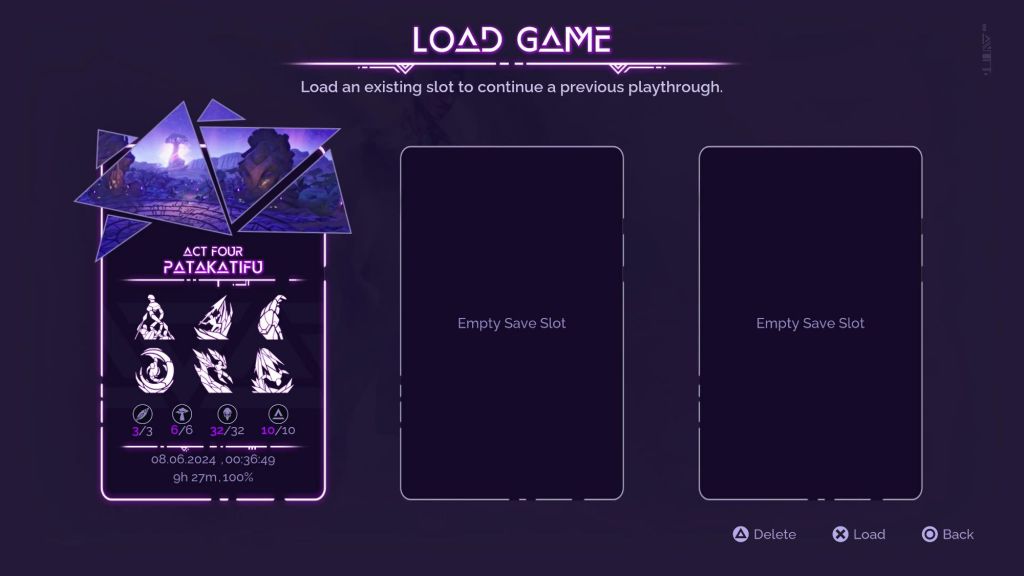
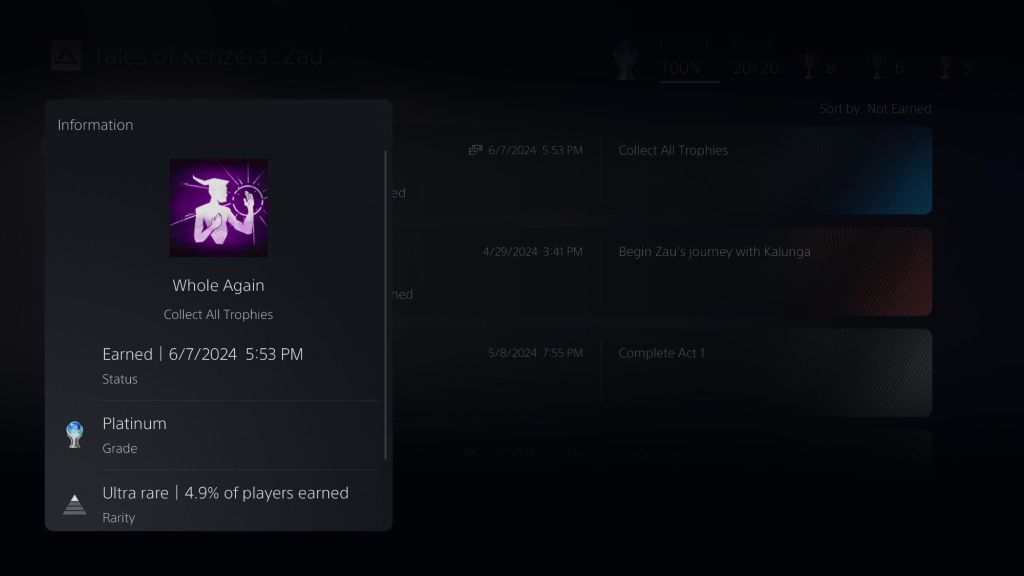
At the time of writing this, my father passed away in the middle of June. He was diagnosed with stage 4 pancreatic cancer earlier this year and despite chemo treatments, he only survived for about 6 months. I started playing this game when my dad first started his treatments. I recently got married back in November of 2023 and I have been primarily living in California now with my husband. My father lived back home in Pennsylvania so it wasn’t exactly an easy commute to go see him. Fortunately, I had siblings who still lived there and my father had sisters who also lived very close to him. I have a lot of guilt for not being there to help my family and show more support in his final few months. Even though he would tell me over the phone that he understood and it wasn’t realistic for me to be there all the time, I had a certain family member who thought otherwise. I wish I could have been there more for my dad, but I at least got to be by his bedside and hold his hand when he passed. Although I didn’t think much of the game itself, the story Tales of Kenzera: Zau was trying to tell will likely stay with me for some time.
Hollow Knight: Voidheart Edition, developed by team cherry, is a 2D Metroid-like about a bunch of bugs trying to survive in a cursed kingdom. I’ve started and stopped playing this game many times over the years, but finally, nearly seven years later, the 2017 indie darling clicked. My brother and I always wanted to make a game about a forgotten land/kingdom beneath a well. To my surprise, Hollow Knight quite literally has you jumping into a well after the introduction sequence and from there, you’re greeted with a sprawling underground network of caves and ruins infested with bugs and insects that want to kill you. Despite its high praise, Hollow Knight has a few rough edges that doesn’t exactly make it the most welcoming game in the “Metroidvania” sub-genre. For one, the map system is a bit obtuse. You not only need to purchase a map for each area by locating a map-maker in each biome, but you also need an item to update the map itself when resting at benches. Speaking of benches, chilling out with bugs as they ponder their existence is one of my favorite things about the game. A lot of Hollow Knight is just hanging out with insects in cool-looking areas, sitting with your thoughts. I found myself hanging out in the City of Tears listening to its track on loop because I liked it so much. The game also incorporates a lot of those post-Souls ideas like losing your currency at death and having the ability to retrieve your “souls”, so to speak. I also can’t not think about Castlevania: Symphony of the Night (SotN) when playing any newer Metroidvania game and one thing that’s dawned on me recently is the “Souls-ification” of the sub-genre.
I’ve found Hollow Knight, Blasphemous and other recent games in this space to have leaned more into environmental storytelling and lore found in item and bestiary descriptions to tell their story (and that’s on top of the aforementioned “retrieve your souls after death” nonsense that’s infected all of these games). I had no clue what was happening in the game until my brother showed me part of a lore video on YouTube. Is it my fault for playing too many games at once and not giving Hollow Knight the time it deserves? Perhaps. But I think I was simply never wired for this type of exposition, particularly when it came to playing Metroid-likes. SotN and Koji Igarashi’s Castlevania games since have sort of trained my brain in a way that’s not indicative of how a lot of these games are made today. For one, in SotN, Alucard could perform a back-dash. Every kid I knew who played the game growing-up got around the castle much quicker by back-dashing down corridors. This maneuver sort of lent itself to a “steamrolling” playstyle I’ve since inherited and I fear it’s something my brain cannot undo. 2D games in general aren’t the types of experiences where I will stop, sit and ponder whether or not the statue in the background has some sort of vital meaning to the plot. I sort of wish games in this sub-genre would be a bit more deliberate in their storytelling. It’s why I hold Nine Sols in such high regard, the recently released Metroidvania from Red Candle Games (the developers behind Detention and Devotion). The story setup is made abundantly clear very early on and while there’s still world-building found in terminals and such, you’re not scrambling through monster descriptions in a menu to go “Ahh, so that’s what’s going on!”.
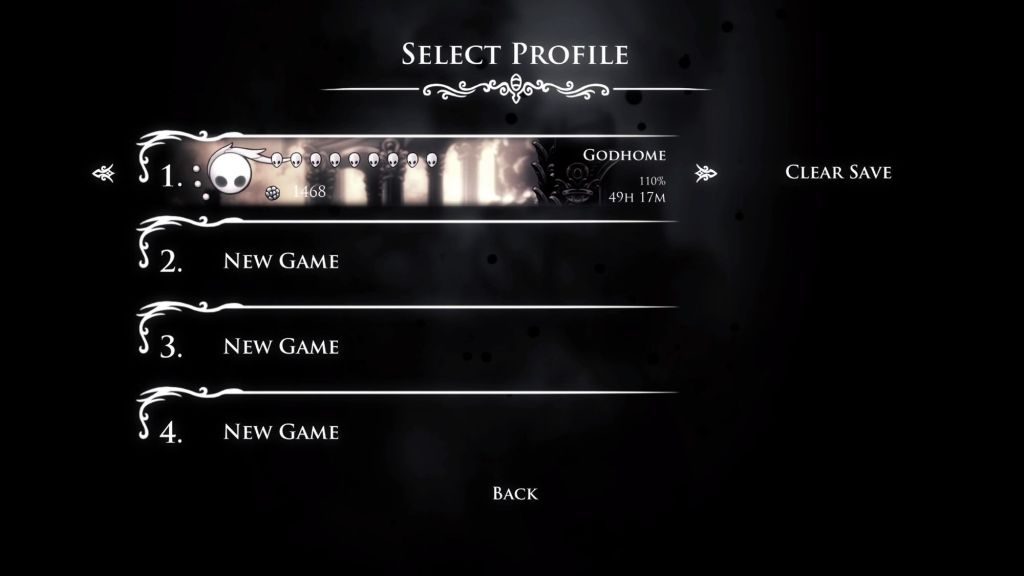


Having finally played Hollow Knight after all these years, it was difficult to analyze the game for its “vanilla” experience. The game has been updated a lot since its initial release and all of the new content is seamlessly integrated into the base game. I feel like I might have had a different impression of the game had I played it at launch versus experiencing it today. Regardless, there is a lot of game in Hollow Knight. I spent nearly 50 hours going for the coveted 112% completion and I still couldn’t manage to see and do everything the game had to offer. I got all trophies except for the ones related to the final boss rush rooms, which are a part of the “Godhome” DLC. I managed to complete the game and beat the “true final boss” at 110%, but I just didn’t have it in me to obtain those last 2 percentage points. The boss rush content is hard and while the combat is fine in Hollow Knight and there are many different “build” combinations with the Charms you have at your disposal, I am just too old and tired to bang my head against this wall. Congrats to those who have accomplished the monumental task of earning 112% in Hollow Knight, but for now, I am happy to be in the camp with the rest of the ants sitting under a magnifying glass waiting for Silksong to release as the sun scorches this godforsaken earth into oblivion.
Bloodstained: Curse of the Moon, developed by ArtPlay and Inti Creates, is the 2D, classic-style sibling game to Bloodstained: Ritual of the Night. I’ve written about this game many times over the years. Similar to how I’ve been trying to play an old-school Mega Man (MM) game from the MM: Legacy Collection each year, I often make time for a replay of Curse of the Moon to see one of its many endings and unlock the corresponding trophy that goes along with it. Well, I can finally put this game to rest just like how the Belmont’s used to put Dracula to an early grave every other year or so. This time around, I finished the game while sacrificing each character along the way. If you’re not familiar with Curse of the Moon, after you finish each of the first 3 stages, one of the additional playable characters introduces themselves to you and you’re given the option to ask them to tag along or kill them and take their ability. It’s a simple risk/reward system where the more allies you have, the longer you’re survive, as you can swap to a new character mid-game. Each character comes with their own health bars, unique abilities and sub-weapon options. It’s been said many times, but the developers at ArtPlay were clearly inspired by Castlevania III. This “evil” playthrough of sorts is a bit difficult since you essentially have one health bar. With that said, your fallen comrades grant you their abilities when you murder them, so you’ll gain a double jump and other traversal abilities, which ultimately makes for an even quicker playthrough. Each level is comprised of multiple paths that make use of each character’s traversal ability, so it’s interesting to see what Zangetsu is capable of and how quickly you can navigate a stage when he has all the other character abilities at his disposal.
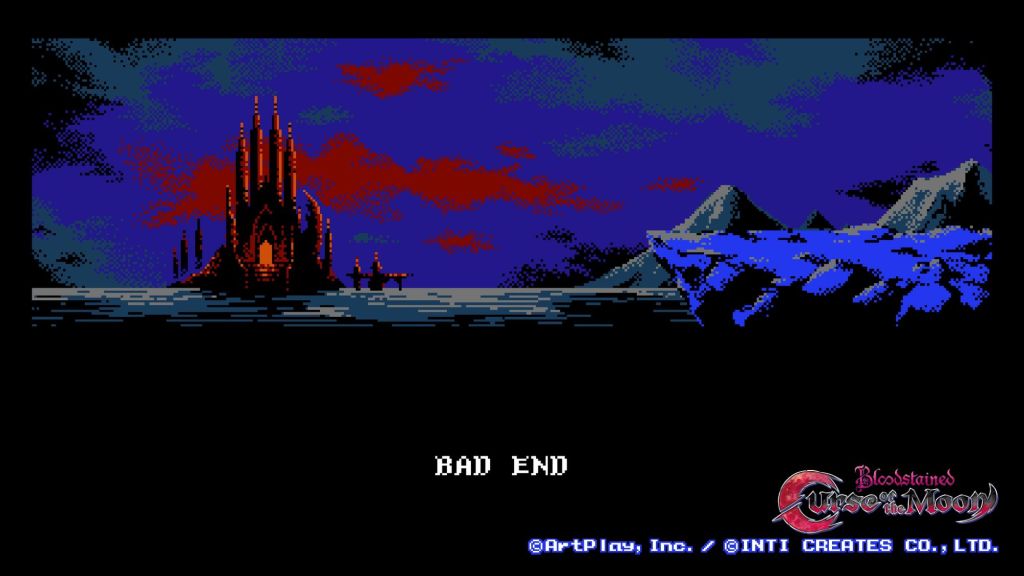
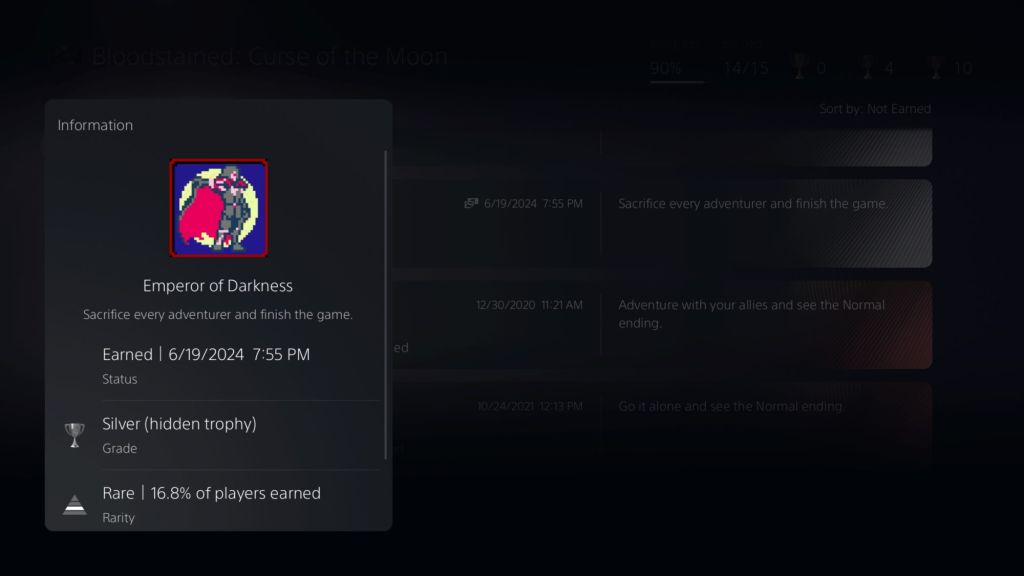
In addition to finishing the game again and seeing an ending I’ve never seen before, I also unlocked and finished the Boss Rush mode for the first time. The Boss Rush mode was fairly challenging, despite the game not being too difficult considering its legacy. The Boss Rush mode gives you all 4 characters right out of the gate and you start in a room where all sub-weapons for each character is up for grabs, along with two health restorative hearts. What’s tricky is that once you grab a sub-weapon, you only have it available for the next fight. So, if you picked one up by accident or it’s not the right sub-weapon for the boss, it’s gone for good until you finish the run or fail. It took me at least 5 or 6 tries to finish the Boss Rush mode after experimenting with particular sub-weapons against certain bosses. I learned new things about how to fight the bosses, so I found the whole mode to be quite rewarding. With that said, I have no reason to ever play this game again since I now have 100% of the trophies earned. Perhaps it’s time to finally play Bloodstained: Curse of the Moon 2 after all these years of neglect.

Sly Cooper and the Thievius Raccoonus, developed by Sucker Punch, is a 3D platformer where you play as an anthropomorphic raccoon named Sly. As someone who played the developer’s first game back in the day on N64, Rocket Robot on Wheels, Sly is certainly a departure in more ways than one. Unlike its Super Mario 64-like predecessor, Sly Cooper is a linear, stage-based 3D platformer with tight level design, beautiful art direction and solid controls. It sort of feels like the natural evolution to what Naughty Dog established with Crash Bandicoot back on the PS1. You’re always moving forward, but this time around, you can rotate the camera and even walk backwards through a stage! While the levels are a bit more open and collectables can be found off the beaten path, each level follows Crash’s forward-moving design philosophy. You’re sort of funneled into stationary enemies that repeat basic attack patterns until you swat them away. It’s here where the Crash Bandicoot influences sort of end, however, and the game becomes its own thing.

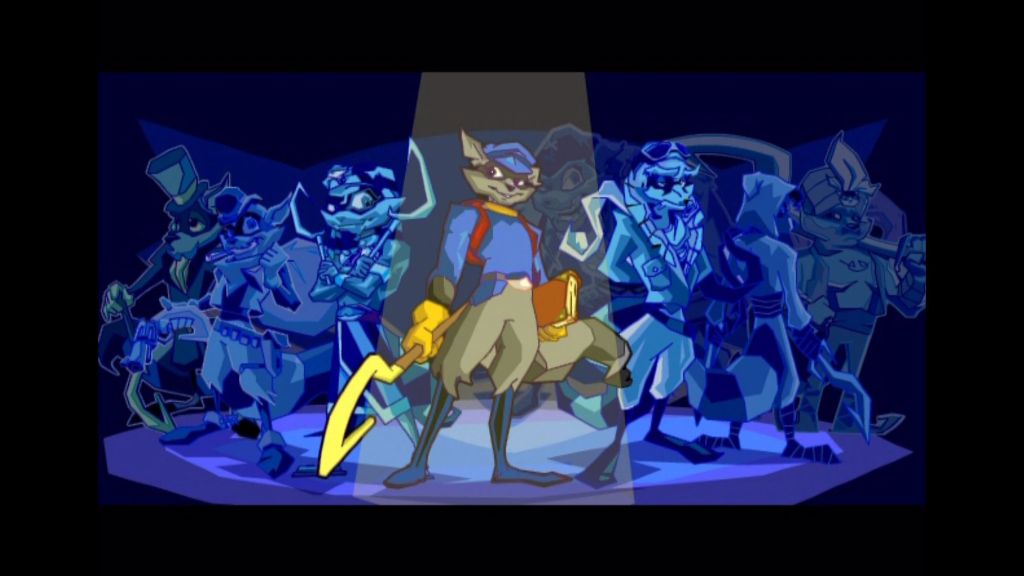
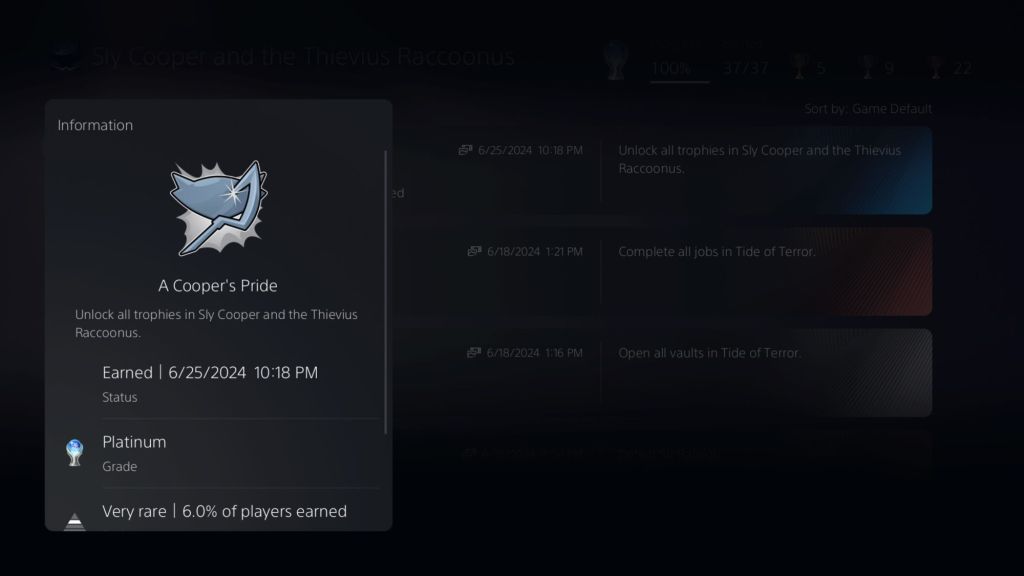
The goal of each level is to collect a key at the end of the stage. Hidden “Clue Bottles” can be collected along the way and if you break them all, Bentley, the brains of the crew, will provide you with a code that can be used to unlock a safe which houses a new ability for Sly. The abilities are written on torn pages of the titular Thievius Raccoonus and along with gaining a new move, you’ll learn about one of your thieving ancestors. This is at least the third time I played this game to 100% completion; once back on the original PS2 release, a replay on the PS3 Sly Collection, and now the native PS5 version thanks to the PlayStation Plus Classics catalog. It’s just so much fun to swing your cane around, breaking bottles and other pieces in the environment, hooking onto swings and hearing that little clink sound; it just feels good to play. The Master Thief Sprints (the game’s time trials) were way more challenging than I remembered, too. Similar to how I feel about the first Jak & Daxter game, I could probably replay new versions of this game every 5-10 years and never get tired of it. Both this game and J&D, unlike their GTA-ified sequels, have aged gracefully. Ratchet & Clank, although part of Sony’s fearsome threesome of mascot platformers on the PS2, has always stayed relatively consistent and rarely strayed too far from its roots, but that’s a conversation for another day. I really hope the franchise returns one day in some fashion or form, but I’m not holding my breath.

Daxter, developed by Ready at Dawn, also known for God of War: Chains of Olympus and The Order: 1886, took one of the PS2 era mascots by Naughty Dog and gave the ottsel his own game. I bought my PSP for Daxter because I loved Jak & Daxter (specifically the first game), but I could never finish it because of PSP’s controls and form factor. I have big hands and the analog sticks were atrocious; they certainly did not lend themselves to 3D games, particularly platformers. To my surprise, PlayStation has been making more of an effort to increase their classic catalog of games and so here we are. Now that I’ve experienced the game in its entirety, Daxter, although impressive for its time for being a “console-sized” portable game, is a fairly average 3D platformer today that’s truly for the gremlins and sickos out there.
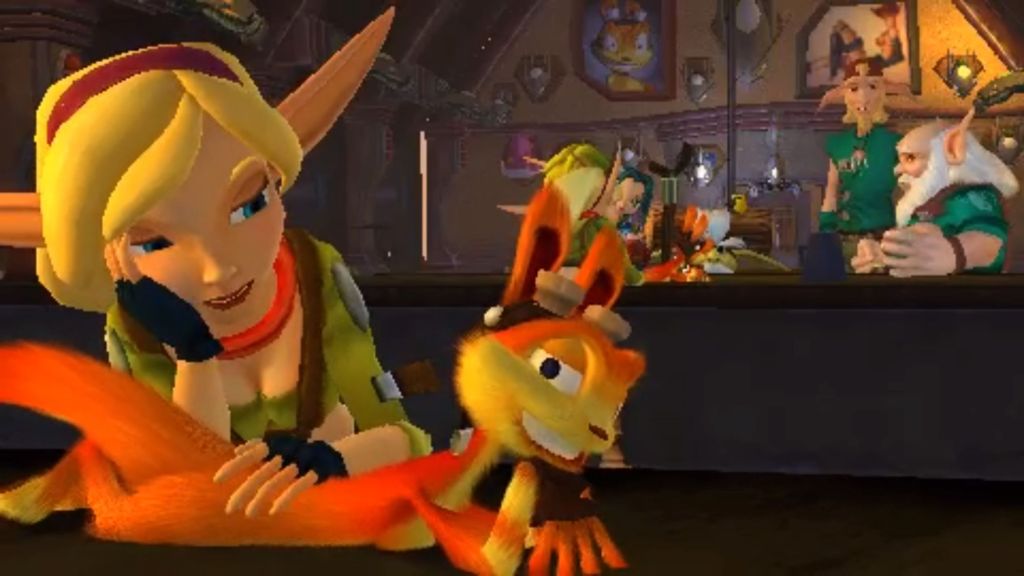

The game takes place right after the first game when Jak & Daxter jump through a portal and arrive in Haven City, a dark and futuristic world powered by Eco (an important resource in the J&D world). Jak is immediately kidnapped and imprisoned while Daxter gets away and becomes a bug exterminator? From there, Daxter performs odd jobs around the city, killing bugs and learning what he can of Jak’s whereabouts. There’s really no connective tissue between Dexter’s new bug squashing job and the disappearance of Jak. The whole conceit of the game feels like a lame excuse to simply let Daxter have his own game. Oh, and I’d be remiss if I didn’t mention the “Gex-ification” of Daxter. While Daxter was known for being a sarcastic, often crude side-kick in the previous games, he’s far more offensive in this game than any of Naughty Dog’s affairs. There’s a new elf-like woman who’s clearly designed to be the “hot girl” for all the prepubescent teens who needed something more edgy back in 2006. Her design is pretty funny too; she’s got that unnecessary g-string sticking out of her jeans for no reason and a fairly busty chest, who Daxter just so happens to nearly face-plant into after diving head first into a pipe during one of the earlier stage sequences.
The game itself is just fine. Daxter by no means is as agile or fluid without his old buddy Jak, so he moves extremely slow, almost at a snail’s pace. Getting around the Haven City hub-town streets and alleyways felt like a chore. While you unlock a scooter early on, if you misplace it and forget where it was, there’s no mini-map to locate it or whistle-like prompt to call it back. I had to save and load my file so it respawned at a fixed-point, which was supremely frustrating. Fortunately, the “open-world” is rather condensed compared to the larger, more open cityscape from Jak II. Haven City branches outward to traditional/confined, point-A to point-B levels. It’s here where you’ll use your exterminator pack to defeat enemies and navigate the environment. The saving grace for Daxter’s movement is his ability to use his bug-spraying device as a jet-pack of sorts. Hovering over hazardous pits, collecting Precursor Orbs along the way is fun. You’ll also earn upgrades over the course of the game, which lets you turn your bug-spraying device into fire, for example. There’s a degree of Metroid-like elements here where you’ll need to return to old levels to access out-of-reach areas since you can hover further and higher with particular spray types. Scattered about the stages you’ll also find bug cages and vials, which are used for a weird bug-battling mini-game. It’s more or less a glorified battle of rock-paper-scissors. It’s certainly no insect battling from Yakuza or Boku No Natsuyasumi.
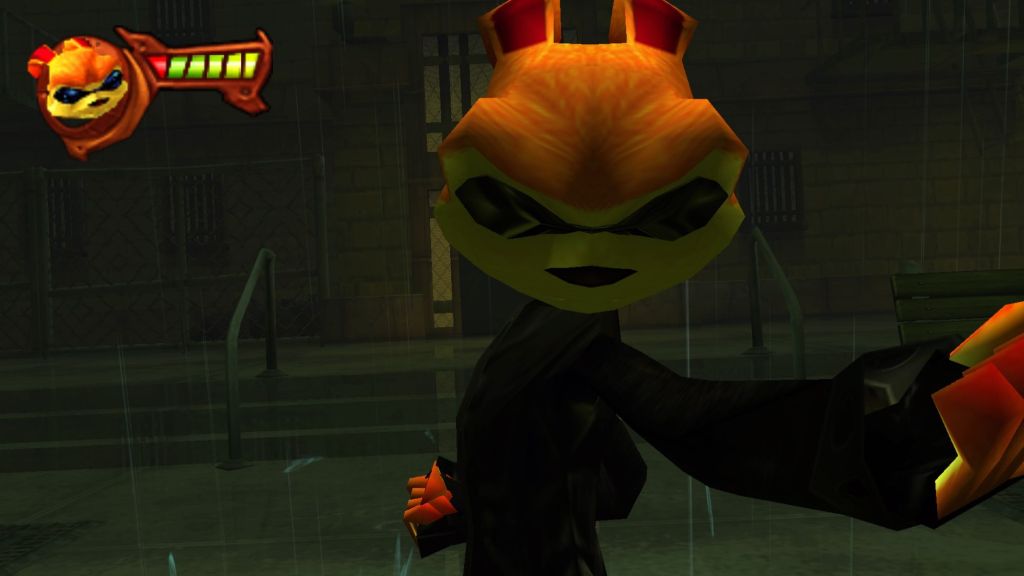
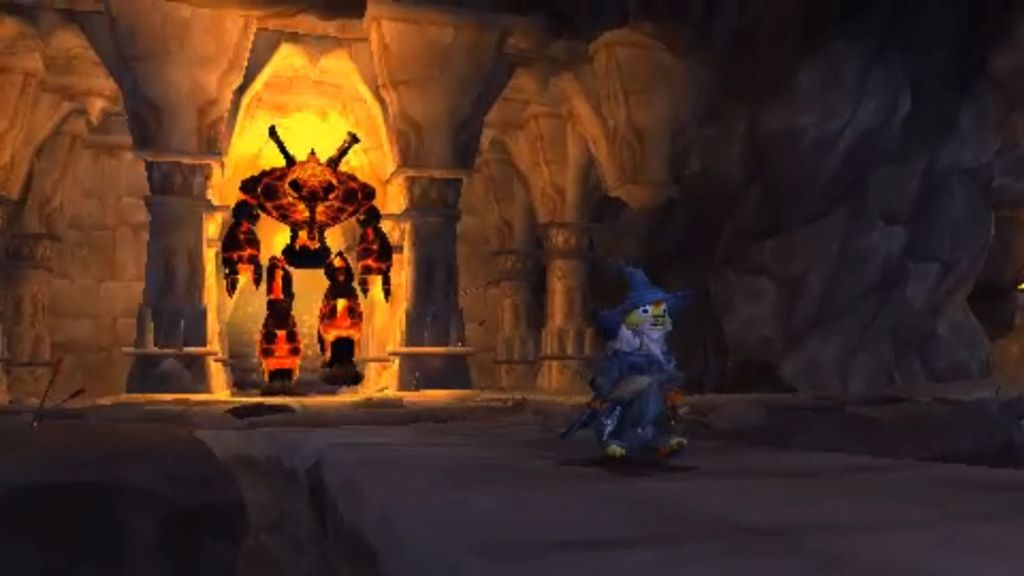
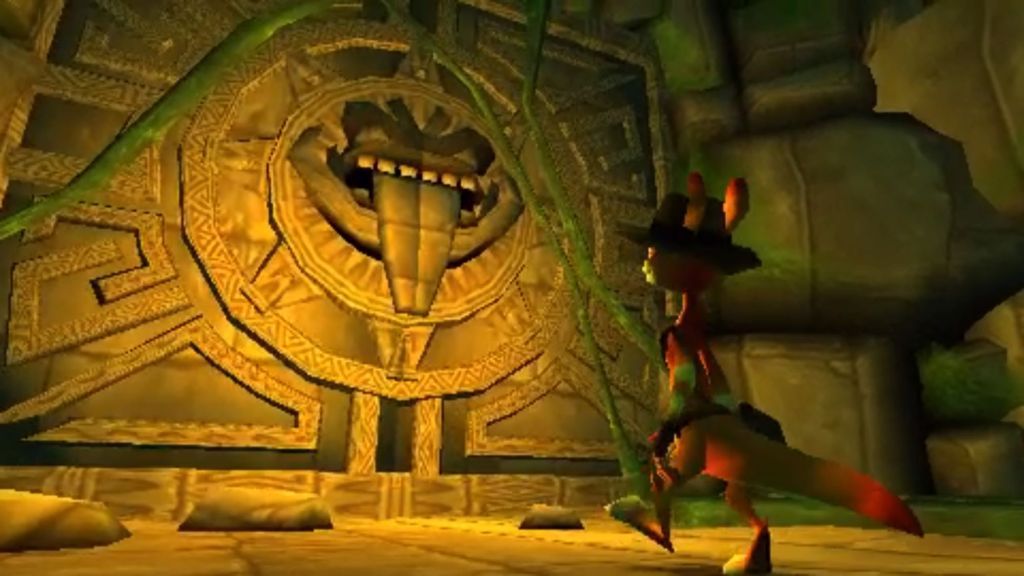
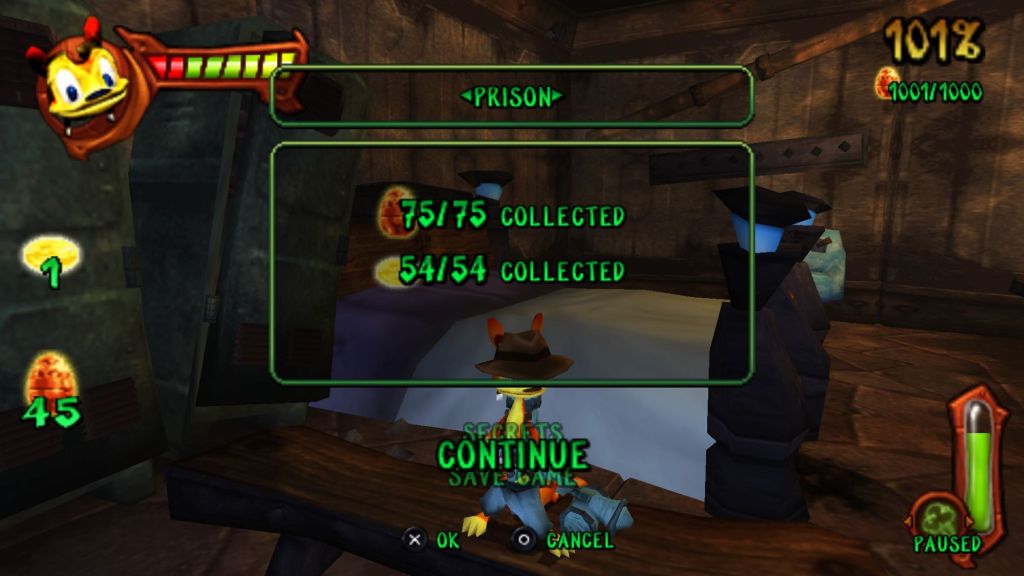
Then there’s the mini-games, which are all direct references to everyone’s favorite movies from the early 2000s and before; The Matrix, The Lord of the Rings and even Indiana Jones are all here. Daxter dresses the part for each mini-game, but they’re all QTE variants with surprisingly difficult points thresholds to earn the best ranks. If you finish each mini-game once, you unlock new upgrades and such, including permanent increases to your maximum health. The movie mini-games all take place during his dreams when you rest in the bed at your bug headquarters. Daxter will even make quips and jokes about the movies once he wakes up. It’s all very reminiscent of the Gex character played by Dana Gould and I’m not entirely sure how I feel about it. Seeing Daxter act like he’s Neo from The Matrix is like the last thing I wanted to the series being associated with. Talk about destroying any sort of identity this franchise had. I played the entirety of Daxter at low volume, hanging out with my brother while I was visiting home for my dad’s funeral. There was something comforting and nostalgic about playing it while my brother was grinding Diablo 2 on his PC for the umpteenth time. It felt like the old days when my dad used to be in the basement with us while we gamed and he worked on his model plane kits. I completed the game at 101% with the Platinum trophy earned, but I’ll probably never take Daxter out for another spin.
See you next quarter…
-Matty

Just a friendly bear who works in financial reporting that would rather be playing, writing or talking about video games. https://twitch.tv/unexpectedenemy
 UnexpectedGames
2 Comments »